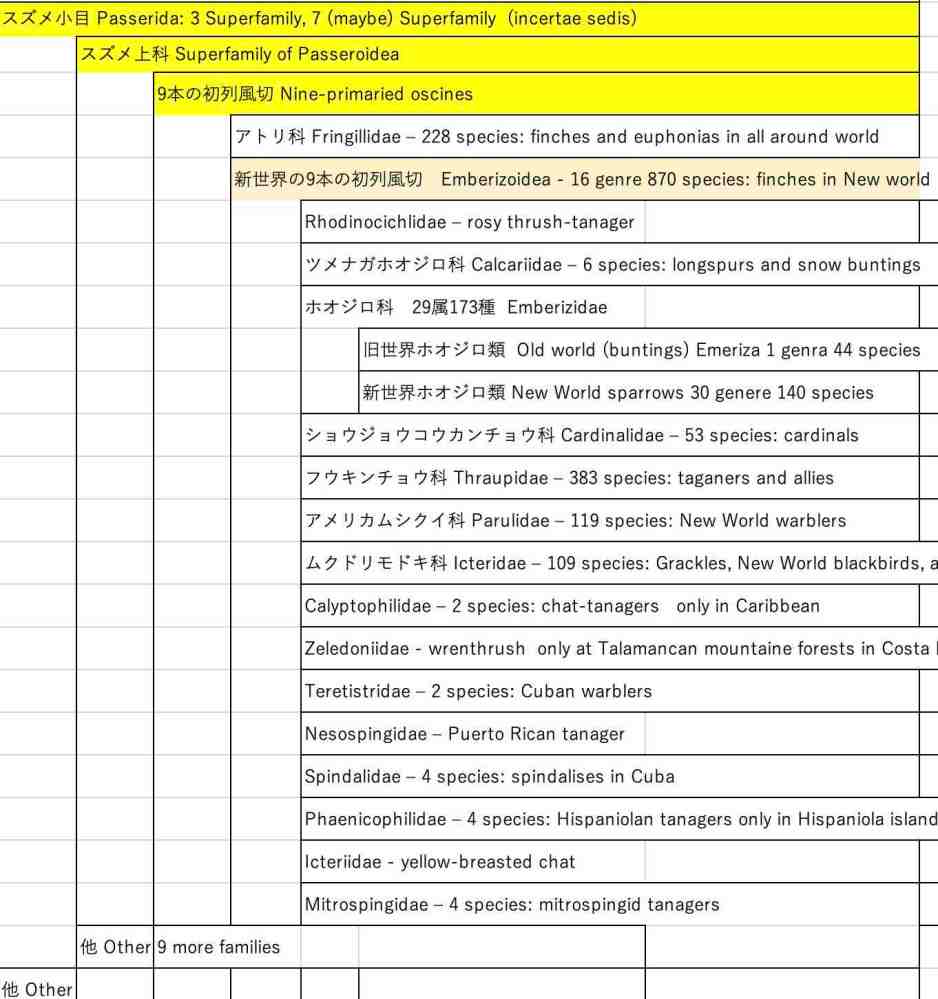
新世界の9本の初列風切を持つ鳥のグループは総称してフィンチとよく言われます。そして、このグループには870種もの鳥が所属しています。The New World Nine-primaried Oscines (Emberizoidea) group is often collectively referred to as the finches. And as many as 870 species belong to this group.
Screenshot
とは言え、この辺の分類には自信がありません。専門家の間でも未だに流動的だからです。 However, I am not sure about the classification of this area. It is still in flux, even among experts.
ニシフウキンチョウのオス Western Tanager male
実際、スズメ目は全体の鳥の種の半分以上をしめていて、その中でも更にスズメ亜目、スズメ小目、スズメ上科と分類されています。そして、それぞれの見かけが非常に似ている。 In fact, the order Passeriformes comprises more than half of all bird species, which are further classified as the suborder Passeri, the infraorder Passerida, and the superfamily Passeridea. And each looks very similar.
ニシフウキンチョウのメス Western Tanager female
ともあれ、次回から、このグループの中から独断で5つの科を選んでご紹介します。 In any case, starting with the next issue, I will introduce five families from this group, selected from my own bird picture collection.
スズメ上科には以下の10の科が分類されています。 The following 10 families are classified in the superfamily Passeroidea.
Screenshot
ただ、そのほとんどが旧世界の鳥なのでスキップしますが、ここでは例外の一例としてイエスズメを紹介します。 However, since most of them are Old World birds, I will skip them, but here is an example of an exception: the House sparrow.
イエスズメはもともと旧世界の鳥でしたが、移入され、今ではほぼ全ての大陸に定住しています。多分、よく見かける鳥だとは思うのですが、そのためか、私の鳥コレクションの中にはこのショットしかありませんでした。 The House Sparrow was originally an Old World bird, but it has been introduced and is now settled on almost every continent. It is one of the most common birds, but perhaps that is why this shot was the only one in my bird collection.
さて、本題です。9本の初列風切ファミリーは更にアトリ科と新世界の9本の初列風切ファミリーに分類されています。今日はその中のアトリ科について書きます。また、「9本の初列風切」羽については以前、書きましたので、ご興味があったらそちらをご覧ください。(羽の数) Now, to the main topic: the Nine-primaried oscines family is further divided into the Fringillidae family and the Emberizoidea family. Today, I will write about the Fringillidae family. I have written about the “Nine-primaried” feathers before, so if you are interested, please refer to that article. (Number Of Feathers)
Screenshot
アトリ科の鳥は総称してフィンチと呼ばれています。特徴は小さい鳥ですが、円錐形の頑丈な嘴を持っている事です。固い木の実も噛み砕くのに最適です。 Birds of the family Fringillidae are collectively known as finches. They are characterized by their small but sturdy conical bill. It is ideal for chewing even hard nuts.
アトリ科には228種もの鳥が分類されていますが、ほとんどが旧世界のとりなので、ここでは私の鳥コレクションから5種を紹介します。 There are 228 species of birds classified in the family Fringillidae but since most of them are Old World birds, here are five species from my bird collection.
トップバッターはメキシコマシコです。この鳥も飽きるほど家の周りで見られます。 The top hitter is the House Finch. This bird can also be seen around the house to the point of boredom.
上の写真は全てメキシコマシコのオスです。春先には赤い色が更に引き立ちます。それに比べると、メスは地味です。 All of the photos above are of male House Finches. The red color is even more striking in early spring. In comparison, the female is more subdued.
そして、働き者です。巣作りの忙しい時、オスにも頑張ってもらいましょう。 And the females are hard workers. Work harder you male finch!
こちらはヒメキンヒワです。一番小さい鳥のグループに入ります。 This is a Lesser Goldfinch. It is in the smallest group of birds.
下の写真もヒメキンヒワです。頭の黒さにばらつきがあるのでヒメキンヒワと断定する事ができませんでした。見かけがとても似ているオウゴンヒワも北米に生息しているからです。でも、オウゴンヒワは黒い頭がもっとくっきりしているそうです。 The photos below are also of Lesser Goldfinches. I was unable to determine that they are also Lesser Goldfinches because of the variation in the blackness of its head. This is because a very similar-looking Goldfinch is also found in North America. However, I heard that the black head of Goldfinch is much sharper.
次に登場するのはチャバライカルのご夫婦です。 Next up is a couple of Black-headed Grosbeak.
オスもメスも共に卵を温めます。また、多くの場合、メスの鳴き声はオスの簡易バージョンなのですが、時にはフルバージョンを鳴くといわれています。きっと卵を温める際の敵を欺く作戦ではないかと言われています。 Both males and females warm their eggs. In most cases, the female’s song is a simplified version of the male’s, but sometimes it is said that she makes a full version of the male’s song. It is said that this may be a strategy to deceive enemies when laying eggs.
次はキビタイシメのご夫婦です。一度しか見た事がありません。山岳地帯やカナダに生息しているようですが、冬はアメリカ南部にも飛んでくるようです。 Next is a couple of Evening Grosbeaks. I have only seen them once. They seem to live in the mountains of the U.S. and Canada, but in winter they seem to fly to the southern United States.
それにしても、キビタイシメという日本語名はどこから来たのでしょうか。語源がわかりません。 (relevant to only for Japanese language.) Still, where did the Japanese name “kibitaishime” come from? I do not know the etymology.
最後に紹介するのはルリイカルです。この鳥を初めて遠くに目撃した時は、自分の目を疑いました。こんなに美しい鳥がいていいの? Lastly, I would like to introduce you to the Blue Grosbeak. When I first spotted this bird at a distance, I couldn’t believe my eyes. How could such a beautiful bird exist?
日本語名の「ルリイカル」はこの鳥にピッタリです。ただの青い鳥ではないのです。瑠璃のような深い青い色の鳥なんです。 The Japanese name “Ruriikaru” which defines a specific shade of blue fits this bird perfectly. It is not just a blue bird. It is a bird with a deep blue color like lapis lazuli.
例えばキビタイシメに比べると2分の1の大きさで小さい鳥です。それでも越冬するために中南米まで飛んでいくそうです。今年も春になったら来てくれるでしょうか。 It is a small bird, one-half the size of, for example, the Evening Grosbeak. Even so, they fly to Central America to overwinter. I wonder if they will come again this spring.
冬の飛行は遅れがちです。なぜなら滑走路の積雪状況とか、主翼に付着した雪や氷を取り除かなければいけないからです。 Flights in winter tend to be delayed because of the snow conditions on the runway and the need to remove snow and ice from the wings.
氷を取り除く作業。Calgary の飛行場で、初めて見た。 First time I saw de-icing work at an airport in Calgary.
この日、私たちは早朝にBanff のホテルを出て、レンタカーを返しに行ったりして、飛行場の待合室に着いたのはフライト1.5時間前でした。 We left our hotel in Banff early that morning to return our rental car and arrived at the waiting room of the airport two hours before our flight.
そして、主翼の氷を取り除く作業などもあって、出発は最終的に5時過ぎとなりました。 And with the removal of ice from the main wings, the final departure time was after 5:00 pm.
冬の飛行機の旅はこんなものなんですね。 So this is what winter air travel is like.
乗客も落ち着いて、機内も外も真っ暗になった頃、誰かが突然叫びました。 When the passengers had settled down and it was dark, both inside and outside the plane, someone suddenly shouted.
「イーロンマスクがたった今Falcon 9を発射したよ、外見なよ!」 ”Elon Musk just launched Falcon 9, look out the window!”
うそー!!! No way!!!!
本物を見ると、やっぱり興奮するものなんですね。心臓がバクバクしていました。フライト時間が延期されてなかったら見られなかった光景、思いがけないプレゼントでした。 Seeing the real thing is still exciting, isn’t it? My heart was racing. It was an unexpected gift, a sight I would not have seen if the flight time had not been delayed.
スペースフライト情報のサイトによると、6時9分に打ち上げられたということです。この写真は2月10日、午後6時15分に撮っているので、打ち上げ後6分過ぎた時のことでした。このサイト参照。https://spaceflightnow.com/launch-log/ According to the Spaceflight Information website, it was launched at 6:09 pm. This photo was taken on February 10 at 6:15 PM, so it was six minutes past launch.
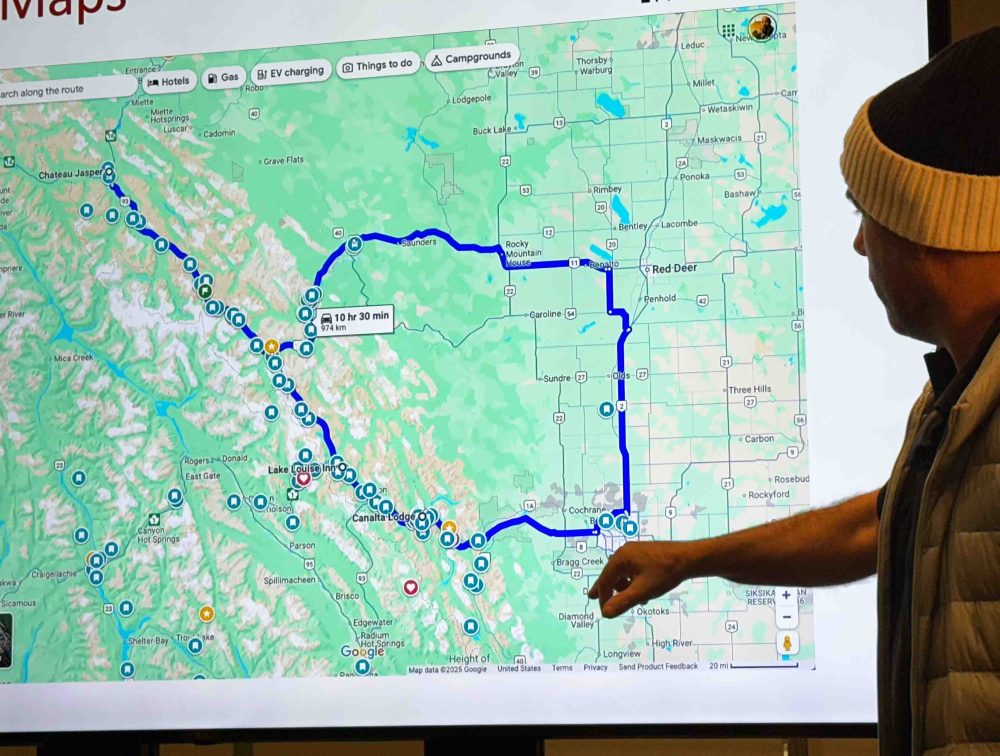
写真ワークショップの予定地の地図です。 Here is a map of the proposed sites for the photo workshop.
地図上、右下のカルガリーから出発し、北上してNordeggで2泊しました。その後、私たちが病のため皆と別れてRed Deer という街で治癒中、他の人たちはJasperへと向かい素晴らしい写真を撮っていました。😢 We started in Calgary, bottom right on the map, and headed north to Nordegg where we stayed for 2 nights. Then while we were recovering from the flu in a town called Red Deer, others were heading to Jasper to take some great photos. 😢
もちろん、私たちだってカナディアンロッキーの冬景色を諦めるわけには行きません。皆がLake Louise に行く時に合わせて合流することにしました。復活だ! Of course, we were not about to give up the winter scenery of the Canadian Rockies. We decided to meet up with the others when they got to Lake Louise. It’s time to come back!
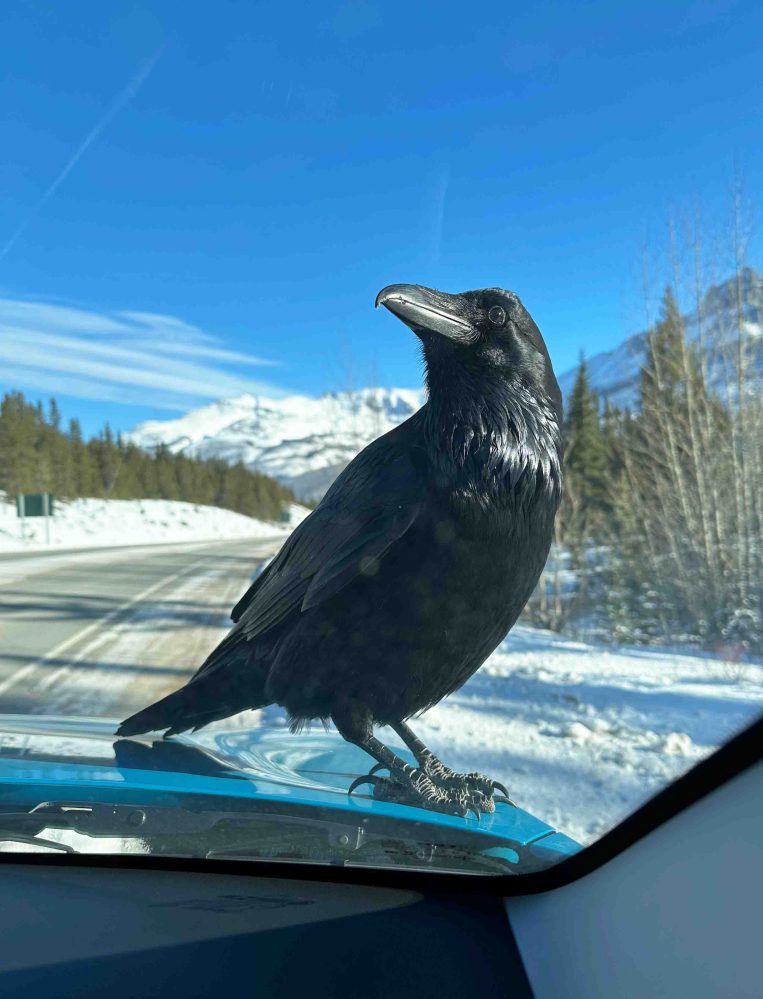
すでにワークショップの半分以上が消化されていました。それでも、野生の馬やワタリガラスに出会ったりして、私たちができる限りの時間を楽しんでいたと思います。 More than half of the workshop had passed already. Still, I think we enjoyed our time as much as we could, meeting wild horses and ravens.
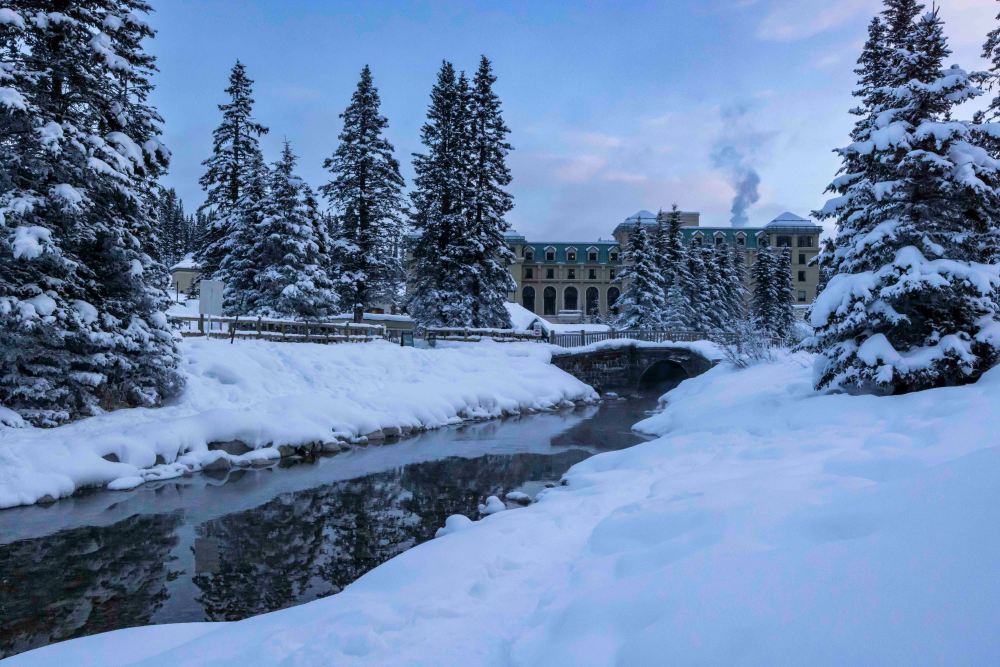
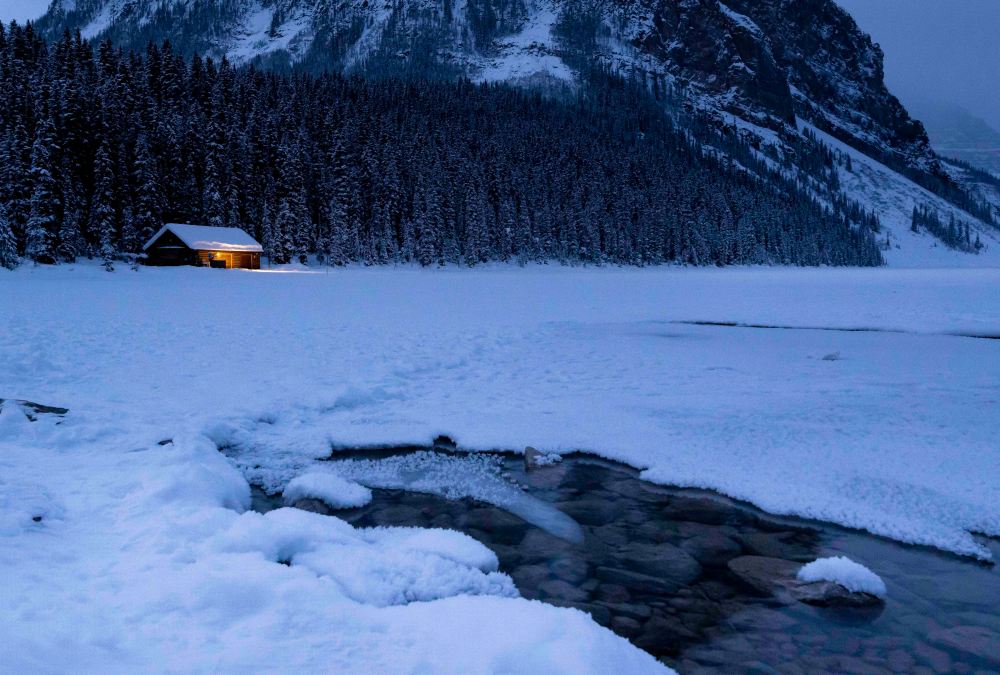
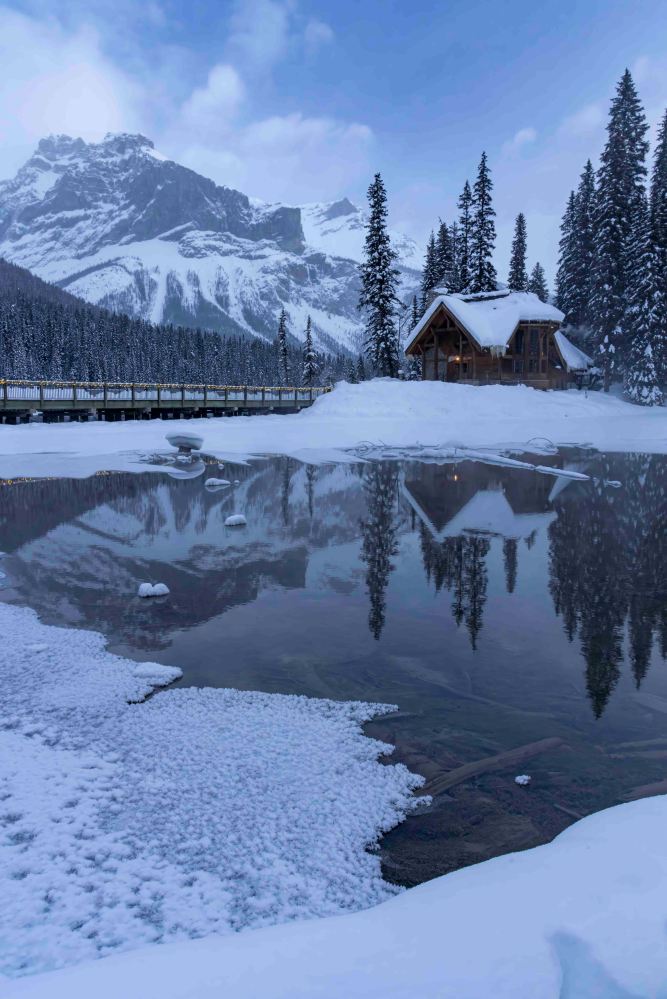
皆と合流した翌朝、夜明け前、フェアマウントホテルの目の前に広がる湖とその後ろの山を撮る予定でした。 The morning after we met up with everyone, just before dawn, we planned to take pictures of the lake in front of the Fairmont Hotel and the mountains behind it.
あいにく全く天候が悪く、朝日を受けた山肌はみえませんでした。 Unfortunately, the weather was not good at all, and we could barely see the mountain’s surface in the morning sun.
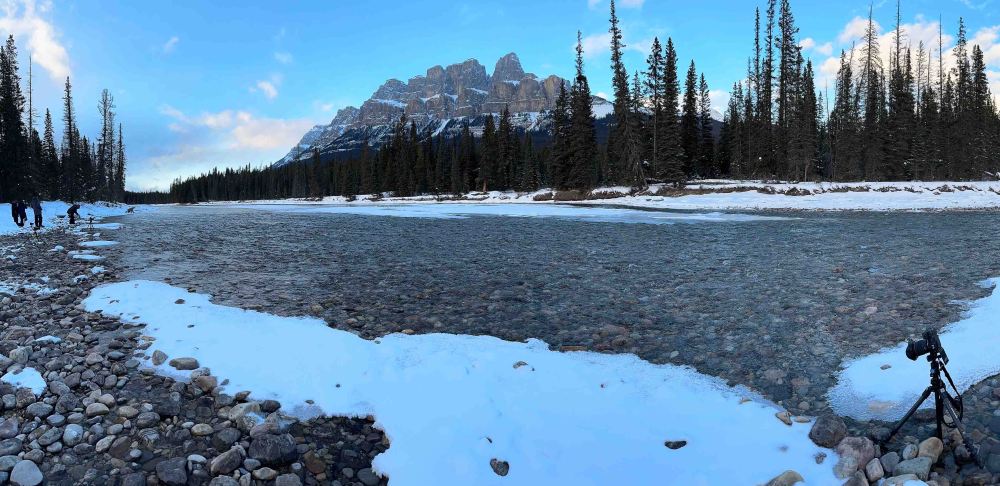
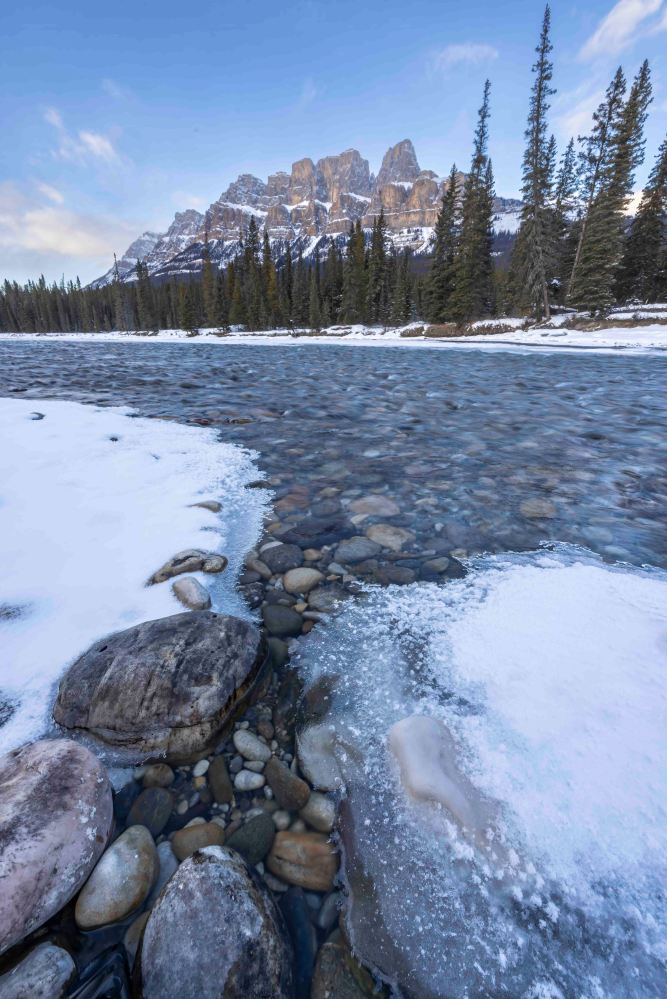
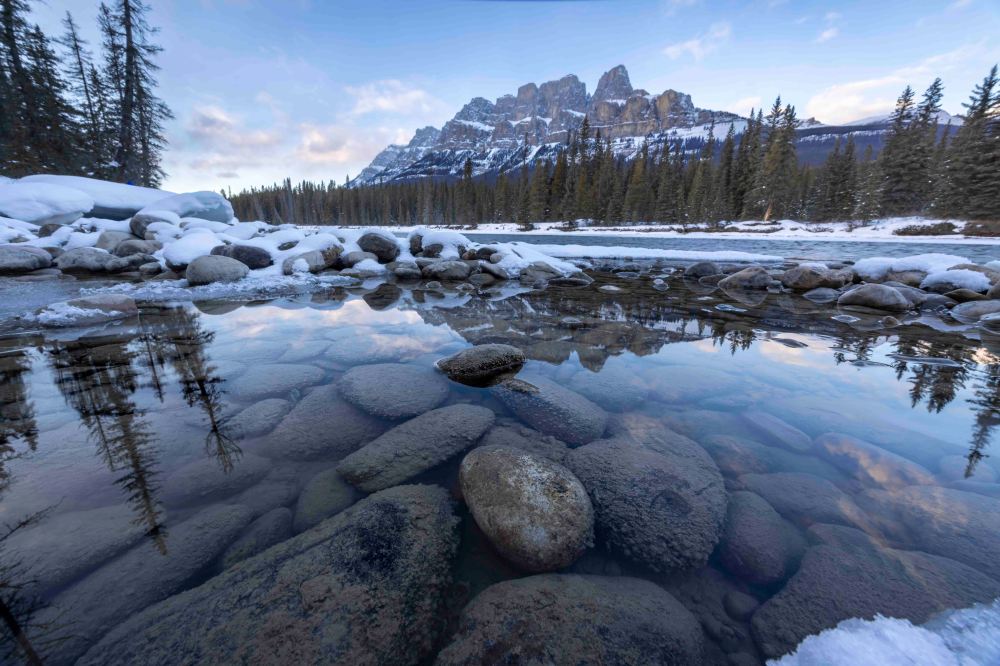
夕暮れ、今度は河原から Castle Mountain を撮影することにしました。下の写真、右に見えているのが私の三脚です。 At dusk, we decided to photograph Castle Mountain from the riverbank. In the photo below, you can see my tripod on the right.
そこから撮ったショットがこちら。 Here is the shot taken from there.
岩壁にうっすらと光があたってますが、光は届いてくれませんでした。 There is a faint light on the rock wall, but the light did not reach us.
とりわけ風景写真の撮影は、どうしても一人の世界に入ってしまうように思えます。でも、みんなと別行動をとっていたわたしたちには、他の写真家たちとの会話が新鮮で、楽しいものとなりました。 Especially when shooting landscapes, it seems that we are always in our own world. However, for us who had been separated from everyone else, it was refreshing and enjoyable to talk with other photographers.
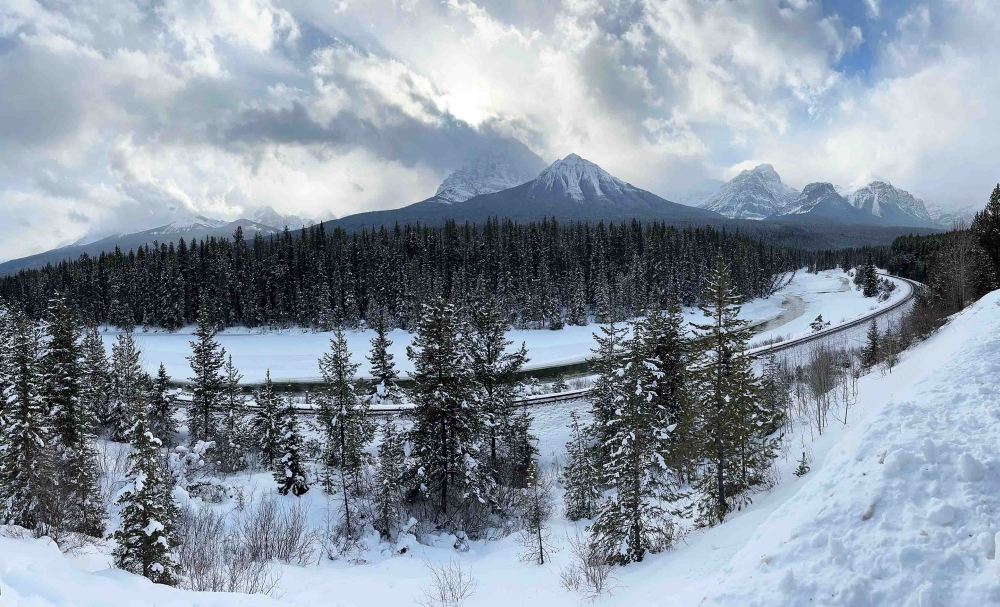
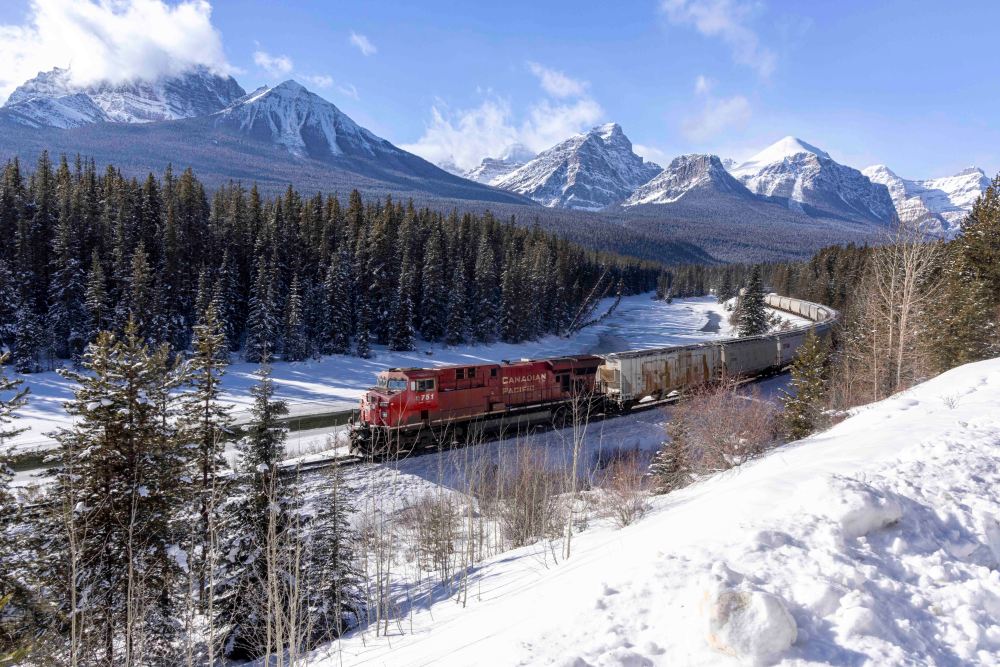
列車を延々と待ち続けた朝でした。でも、天候も悪いし、列車も来なかったので諦めました。 It was a morning of endless waiting for the train. But the weather was bad and the train never came, so we gave up.
翌日、もう一度同じ場所に行き、河原まで降りて行った時の写真。私だけなら絶対に降りていかなかったと思います。 The next day, we went to the same spot again and I took this picture when I went down to the riverbank. If I were alone, I would never have gone down there.
そして、河原から15分ぐらいかけて上まで登り終えた時に、奇跡が起きました。待ち続けていた列車が突然来たんです! Then, when I had finished climbing to the top, which took about 15 minutes from the riverbank, a miracle happened. The train we had been waiting for suddenly came!
皆と狂喜しました。 We were all overjoyed.
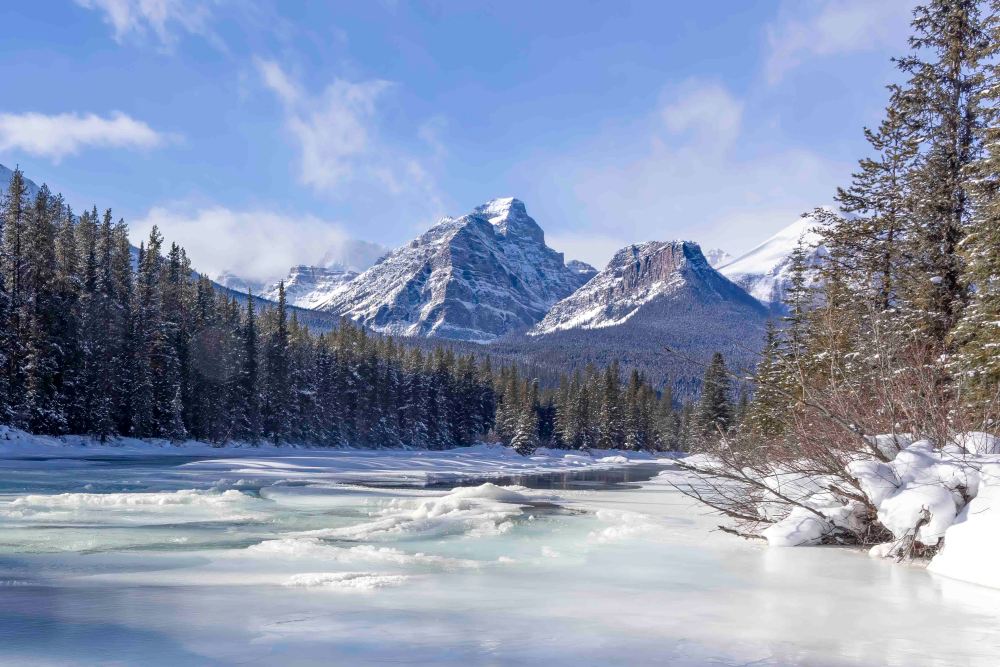
天候には恵まれませんでしたが、楽しい写真家たちと共に過ごしたカナディアンロッキーは良い思い出になっていくことでしょう。Although the weather was not ideal, the Canadian Rockies with a group of fun photographers will be a great memory of mine.
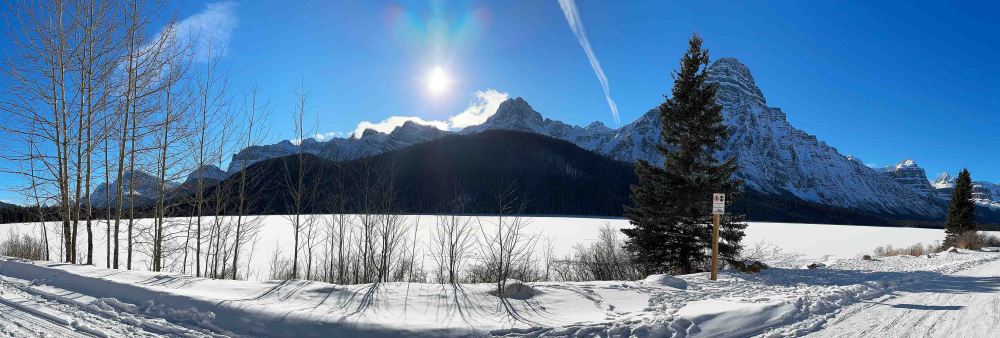
最後に、Banff に移動中の時の景色。 Finally, here is a view of Banff while we were on the way there.
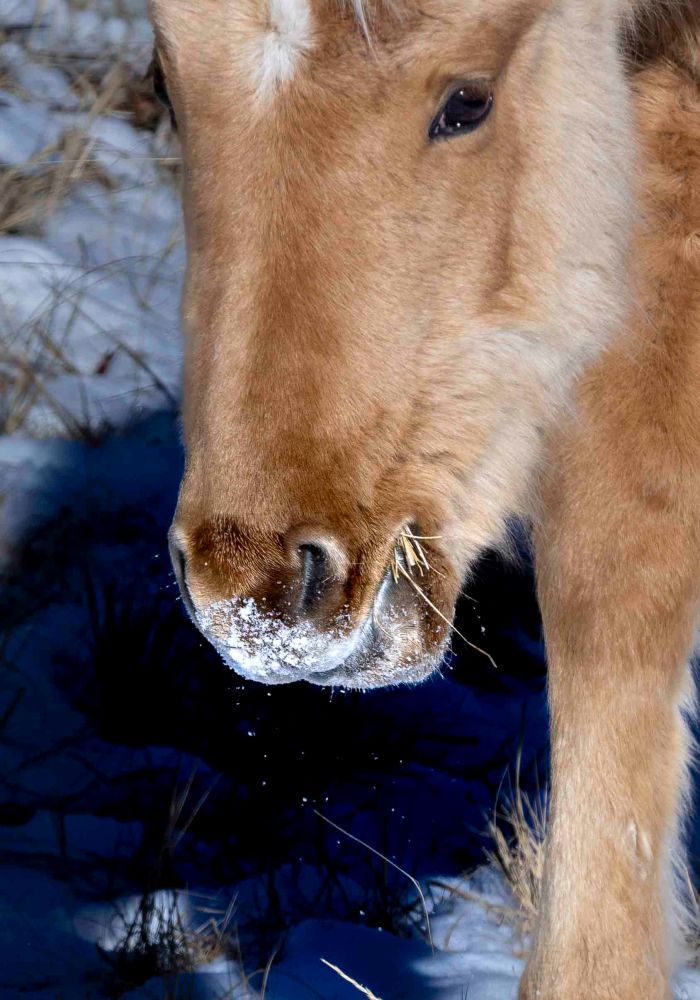
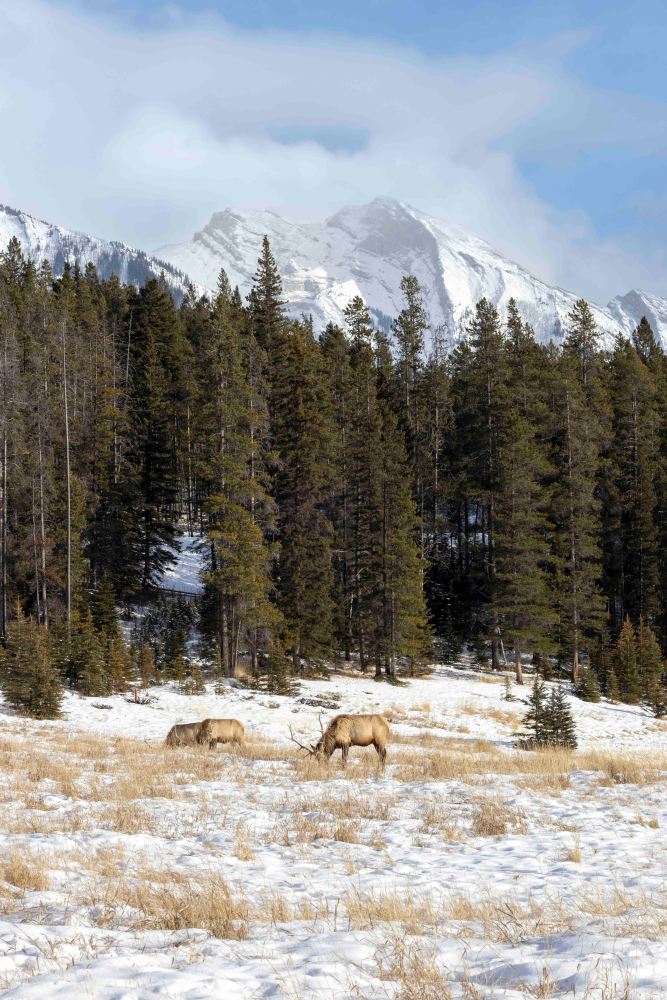
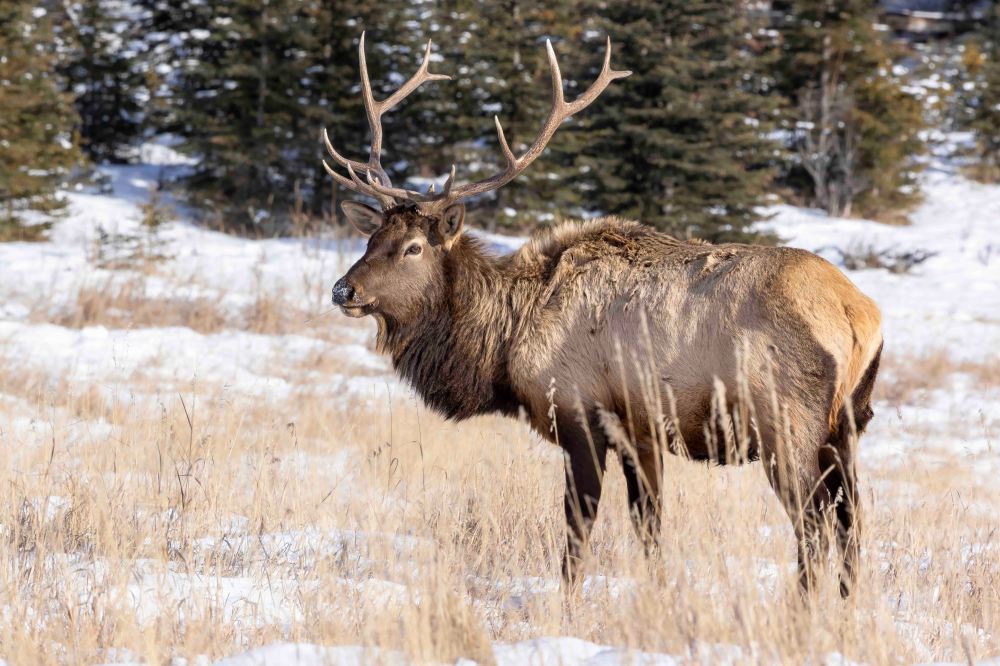
全然珍しい動物ではないエルクでしたが、鼻の上が雪で白くなっていたのを見てうれしくなりました。 Although the Elk is not a rare animal at all, I was happy to see that the tip of its nose was white with snow.
意気揚々とカナダでの写真のワークショップに出かけたのですが、ワークショップ1日目にして病に倒れてしまいました。 I went to a photography workshop in Canada with great enthusiasm, but on the first day of the workshop, I fell ill.
エブラハム湖上での写真撮影は、このワークショップの山場だったので、5回ほど訪れる予定でした。でも、無念にもインフルエンザにかかり、下見の時の写真が唯一撮れたしゃしんとなりました。写真となりました。 Photography on Abraham Lake was the highlight of the workshop, and we had planned to shoot there about five times. But unfortunately, I caught the flu, and the photo from the preview shoot became the only photo I took.
さて、この場所の何がすごいのか。 So, what is so great about this place?
湖底の草から発生するメタンガスが水上に達する前に凍りついた湖水の中に閉じ込められ、そのまま固まってしまったんですね。また、上の写真の斜めの白い線は強風によってさらわれている雪です。強風のため、雪は湖上に溜まることはなないので、氷の中のメタンガスのバブルが見えるということです。 The methane gas generated from the grass at the bottom of the lake was trapped in the frozen lake water before reaching the surface, and has solidified as it is. Also, the diagonal white lines in the photo above is snow being blown away by strong winds. Because of the strong winds, the snow does not accumulate on the lake, which means that the methane gas bubbles in the ice are visible.
気温は摂氏-35C(華氏-30)ただ、強風によって気温は更に低下して、エブラハム湖上の温度は摂氏-40C (華氏-40F)以下となっていました。 Temperatures were -35 Celsius (-30 Fahrenheit), but strong winds brought temperatures down even lower, with temperatures on Lake Abraham below -40 Celsius (-40 Fahrenheit).
バンちゃんのまつ毛まで凍りついている。 Even Banchan’s eyelashes are frozen.
まともに顔をまともに向けていた人は、皮膚がむけていたと言ってました。 Those who had their faces turned directly into the wind said their skin peeled off.
携帯の電池もあっという間に消耗され、このビデオを撮ったら電池切れとなってしまいました。 The battery in my cell phone was quickly drained, and when I took this video, the battery ran out.
翌日から宿のベッドの中、松尾芭蕉の有名な一句が何回も頭の中を流れていました。 From the next day, while in bed at the inn, a famous Haiku by Matsuo Basho (Japanese poet) played over and over in my head.
旅に病んで 夢は枯野を かけ廻る Fell ill in bed, En route of my journey, Whereas my dreams, Are running around, The wilderness
それをもじった私の俳句。 My haiku that is a tribute to it.
旅に病んで 夢は氷湖を かけ廻る Fell ill in bed, En route of my journey, Whereas my dreams, Are running around, The ice bubbles in the lake
冬が寒いのは当然のことですが、改めて寒いと思ってます。 It’s natural that winter is cold, but I feel it’s even colder now.
朝には17F (-8.3C)となり、鳥達も水が凍って飲めないので困っています。 By morning the temperature had dropped to 17F (-8.3C), and the birds were having trouble because the water had frozen and they couldn’t drink.
また、庭のカクタスには霜除け、寒さ避けとして布をかけてあげています。 We also cover the cactus in our garden with cloth to protect them from frost and the cold.
この地域でこれ以上寒くなることはもうないと願います。 Hopefully it never gets any colder in this area.
この冬、私たちは非常に寒い所に行く予定です。 -40F (-40C) 以下になるらしい。それに備えて、上は7重、下は4重、2重構造のブーツ、目出し帽、3重のミトン、フル装備を着てみました。あとは使い捨てカイロを上から下まで貼りまくる。これでバッチリなはずです。 This winter, we plan to visit a very cold place and have learned that It could be -40F (-40C) or below, apparently. I’ve put on a full set of gear: seven top layers and four bottom layers, double-layered boots, a balaclava, triple-layered mittens, and disposable heating pads stuck all over my body. That should be enough.
それに加えてカメラのバックパックを背負って歩く予定です。家の中で10歩歩いただけですがゼイゼイしてしまいました。🥶 ま、これも楽しいね! In addition to that I will be walking with a camera backpack on my back. I just walked 10 steps in the house and I was dizzy… 🥶 Well, this is fun too!
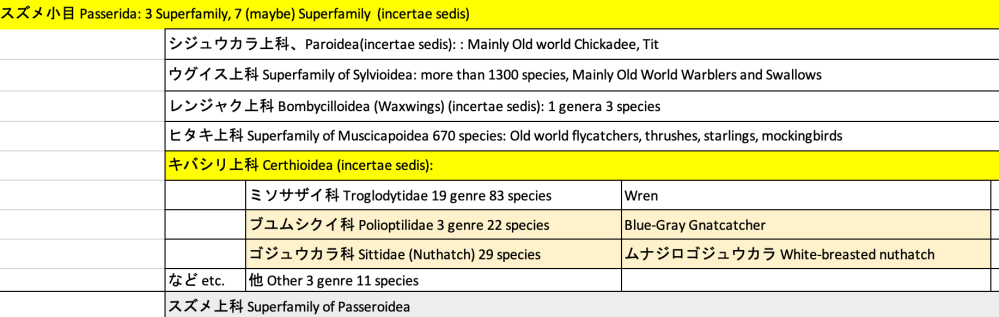
ブユムシクイとゴジュウカラは共に鳥類の中で最小の鳥のグループに入ります。 Both the Gnatcatcher and the Nuthatch are among the smallest bird groups.
体重も1オンス (30 g)と軽いので、逆さまになって気の幹を走るのが得意です。それが理由で、キバシリ(木の上を走る)という名前がつけられたんですね。 Weighing only 1 ounce (30 g), they are good at running upside down on tree trunks, which is why they were given the name “tree creeper” (tree runner)” in Japanese for the family name.
ムナジロコジュウガラ White-breasted nuthatch
この分類を始めるまで、これらの鳥の印象は上記の理由で似たような印象を持っていましたが、結構違うことがわかりました。 Before I started this classification, I had the impression that these birds were similar for the reasons mentioned above, but I found that they are quite different.
ブユムシクイの体重はムナジロゴジュウカラの3分の1しかないのに驚きです。アメリカツリスガラよりほんのわずか大きいぐらい。 It’s surprising that the weight of the Blue-Gray Gnatcatcher is only one-third that of the White-breasted Nuthatch, and only slightly larger than the Verdin.
ブユムシクイのオス Blue-Gray Gnatcatcher, male
そんな小さなブユムシクイですが、なんと、冬には南に飛んでいきます。長距離ではないけれどね。そして、暖かくなって来たらまた戻ってくるそうです。でも、風に飛ばされて北に行き過ぎてしまうことも多々あるそうです。軽いですからねー。逞しい! Although they are such small birds, they fly south in winter. Not long distances though. Then, when it gets warmer, they come back. However, they are often blown by the wind and go too far north. That’s because they are so light. A tough bird!
ブユムシクイのメス Blue-Gray Gnatcatcher, female
私は、結構この鳥がすきです。なぜなら、こんなに小さいのにオスの顔の眉毛が太いVの字でオヤジ顔に見えてしまうからです。 I quite like this bird because, even though it is so small, the male’s unibrow forms a thick V, making it look like an old man’s face.
ブユムシクイのオス Blue-Gray Gnatcatcher, male
ムナジロゴジュウカラについてはあまり知識がありません。ただ、習性に特徴があります。 I don’t know much about the White-breasted Nuthatch, but it has some peculiar habits.
英語名のNuthatch は: Nut(木の実) + Hatch (殻を破る)= 木の実の殻を破る鳥 The English name Nuthatch is: Nut + Hatch = A bird that breaks the shells of nuts.
ムナジロゴジュウカラ White-breasted nuthatch
余分に収穫できた木の実などを木の割れ目などに押し込んで貯蔵しておく習性があります。貯蔵された木の実は貯蔵中に自然に割れるというメカニズムを知っているんですね。 They have the habit of storing surplus nuts by pushing them into cracks in trees. They know the mechanism by which stored nuts naturally crack while in storage.
ムナジロゴジュウカラ White-breasted nuthatch
鳥の生態の観察はすればするほど面白くなります。 The more you observe bird life, the more interesting it becomes.
さて、次回から鳥類最大のグループ、スズメ上科、分類表最後のグループに入って行きます。うれしい! Well, from next time we will be moving on to the largest group of birds, the passeroidea superfamily, the last group in the classification chart. I’m excited!
12マイル (19.5 km)、徒歩での 自己最長記録ができました。 I set a new personal walking distance record of 12 miles (19.5 km).
家を出発して、近くの州立公園まで行って帰ってくるコースです。 The course started from home, went to the nearby state park and returned.
公園には南入り口から入り、北入り口近くの駐車場まで行きました。 I entered the park from the south entrance and walked to the parking lot near the north entrance.
ここは、10Kランのスタート地点でもありました。 This parking lot was also the starting point for the 10K run.
懐かしさと雄大な景色とで、単純に嬉しくて道で行き交う人たちとも話が弾みました。 The combination of nostalgia and the magnificent scenery made me simply happy, and I found myself happily talking to people I passed on the street.
こんな景色を見ながら、もうすっかり私のホームグラウンドになっているんだと自覚しました。 Looking at this view, I realized that this has now become my home ground.
美しい景色は疲れを忘れさせてくれますが、流石に公園を出た頃から疲れが出て来ました。休憩なしで歩きましたからね。 The beautiful scenery made me forget my tiredness, but as soon as I left the park, I started to feel tired because I had been walking without taking a break.
ロードランナーが私の前を走って励ましてくれたおかげで、なんとか家にたどり着く事ができました。 With the help of my friend, the Roadrunner, who ran ahead of me and encouraged me, I managed to make it home.
その後、トレーナーにこの偉業を誇らしげ伝えたら、護身用にペッパージェルを持って行きなさいと、1本いただきました。 Afterwards, I proudly told my trainer about my accomplishment, and she gave me a bottle of pepper gel to carry with me for self-defense.
山道じゃないから一人歩きでも大丈夫と思うのは軽率かもしれません。用心した方がいいですよね。さて、どうやって使うのかな? It may be reckless to think that it’s okay to walk alone because it’s not a mountain path. It’s better to be cautious. Now, how do I use it?
私たちがこの地、ユタ州南部に引っ越して来てから5年が経ちました。その後、ミソサザイはほとんど毎日見てきた鳥です。 It has been five years since we moved here to southern Utah. Since then, the Wren has been a bird we have seen almost every day.
イエミソサザイ House WrenScreenshot
引っ越して来たその年の7月のある日、裏庭がやけに騒々しいことに気がつきました。イエミソサザイが忙しそうでした。 One day in July of the year we moved in, we noticed that the backyard was very noisy. The House Wren seemed to be busy.
イエミソサザイがカマキリを捕まえた所。An House Wren caught a praying mantis.
その行方を追いかけてみると、なんと、野バラの木の下、生まれたばかりの3羽の雛たちがお母さんからエサをもらおうとしていました。 I followed their whereabouts, and to my surprise, I found three newborn chicks under a wild rosebush, trying to get food from their mother.
食事が終わったようです。Looks like the meal is over.
翌年にはシロハラミソサザイが裏庭のゲストハウスを訪れてくれました。 The following year, a Bewick’s wren visited our backyard guesthouse.
孵化したシロハラミソサザイの雛たちは、無事に巣立って行きました。 The hatchlings of the Bewick’s Wren have left the nest without incident safely.
イエミソサザイとシロハラミソサザイの違いは、お腹が白いかどうかです。ということは、下の写真は、シロハラミソサザイということになります。 The difference between the House Wren and the Bewick’s Wren is whether the belly is white or not. This means that the photo below is of a Bewick’s Wren.
近くの公園を散策するとイワミソサザイを見つける事ができます。 Strolling in the nearby park, we can find Rock Wrens.
イワミソサザイ Rock Wren
ジャシュアツリーがたくさん生息している所を訪れると、サボテンミソサザイを見つける事ができます。 If you visit a place where Joshua trees are abundant, you can find Cactus Wrens.
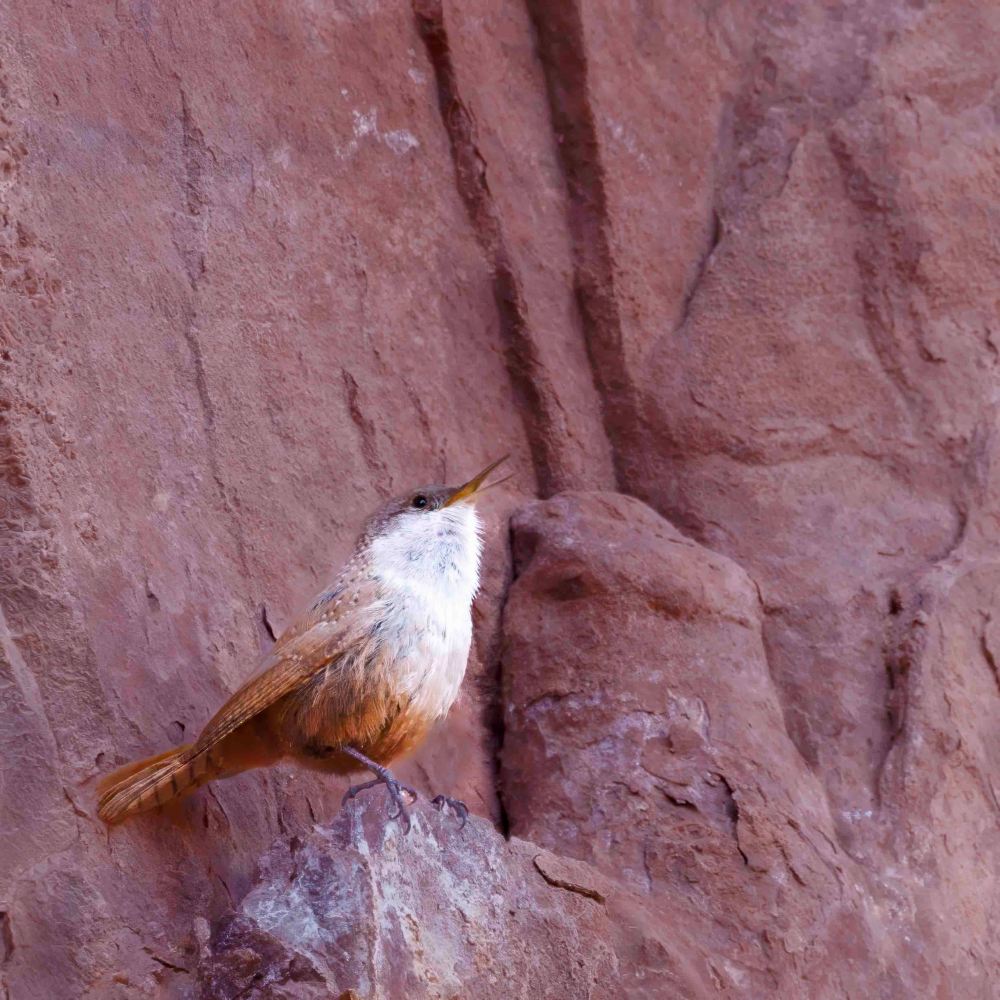
そして、ミソサザイの中でも最も小さいムナジロミソサザイ。大抵、姿は見えなくても声だけが渓谷に響いています。 And then there is the smallest of all the Wrens, the Canyon Wren. Most of the time, you can’t see them, but only hear their songs echoing through the canyon.
長い事、カメラに収める事ができませんでしたが、ついに成功しました。 For a long time, I was unable to capture it on camera, but I finally succeeded.
最後に、湖や沼地のこんな場所にいるのはヌマミソサザイです。 Lastly is the Marsh Wren that can be found in places such as lakes and marshes.
どのミソサザイもとっても小さい鳥なのに、鳴き声はとんでもなく大きく、自己顕示欲が強いです。 Although all Wrens are very small birds, their songs are outrageously loud and self-promoting.
「それならカメラに向かってポーズをとってくれてもいいんじゃないの?」と、文句を言いたくなるほど忙しく動き回って、カメラマン泣かせの鳥たちです。 “Why don’t you just pose for the camera then?” I wanted to complain, but the birds were so busy moving around that they made the photographer cry.
何はともあれ、ミソサザイ達、ありがとう!君たちと一緒に生活できる私たちはラッキーです。 At any rate, thank you all, Wrens! We are lucky to live with you guys.
ザイオン国立公園内のウェストリムトレイル (West Rim Trail) は全長16.1マイル (26km), 高度差は3624フィート (1105m)です。 The West Rim Trail in Zion National Park is 16.1 miles (26 km) long with an elevation gain of 3624 feet (1105 m).
Appleマップによると9時間39分で歩けるそうですが、実際は10-16時間かかると言われています。逆に、Lava Point からロッジまで北から南に歩くと下り坂なので9-10時間、1日で完歩可能な範囲内です。ただ、高度7,897フィート (2,407m)を考えると、苦しいですよね。健脚向きです。 Apple Maps says the hike will take 9 hours and 39 minutes, but in reality it will take 10-16 hours. Conversely, walking from north to south from Lava Point to the lodge is a downhill hike and should take 9-10 hours, well within the range of a one-day hike. However, considering the altitude of 7,897 feet (2,407 meters), it is a strenuous walk. It is suitable for able-bodied people.
アップルの地図によるトレイルの全行程 Full trail route with Apple maps
この日、私たちはザイオンロッジからグロットを経て、北に向かい、行けるところまで行って引き返してくることにしました。 On this day we decided to head north from Zion Lodge via the Grotto, going as far as we could go and turning back.
ジグザグの苦しい登りからの眺め View from the painful zigzag climb
上の写真の景色を過ぎて、渓谷内に入ると、ビッグホーンシープが向かいの岸壁からこちらを見ていました。以下、ビデオです。 As we passed the view in the photo above and entered the canyon, a bighorn sheep was watching us from the opposite cliff. Here is the video
ビッグホーンシープのビデオ Bighorn Sheep Video
このトレイルは有名なエンジェルスランディングへいく道でもあります。 This trail is also the road to the famous Angel’s Landing.
ナイフの刃のように尖った上を歩いていくとエンジェルスランディングに辿り着きます。 Walking on the sharp edge of the knife like trail, you will reach Angel’s Landing.
ここは事前に申し込んで、抽選によって許可証がもらえた人たちだけが Scout Lookout から南下して行ける場所です。非常に人気があるので、私たちは未だに行った事がありません。 Only those who apply in advance and receive a permit by lottery can go south from Scout Lookout. It is very popular and we have not been there yet.
下の写真に示しているBig Bendからは、カリフォルニアコンドルが観察できる場所で有名です。 From Big Bend, shown in the photo below, is a famous place where California condors can be observed.
そんな分岐点を過ぎて北に向かい、下の図に示した折り返し点まで行きました。右上の方には、ザイオンのバスの終点があります。そこからさらに歩いていくと、有名な The Narrow という渓谷に行く事ができます。ここも人気スポットです。 After Angel’s landing turnoff, we headed north to the turn back point shown in the map below. In the upper right corner is the end of the Zion bus line. From there, you can walk further to the famous Zion Narrow’s canyon. This is another popular spot.
下の写真では、ザイオン渓谷を中世代から削り出してきたバージンリバーがうねうねとカーブして流れているのが見えます。ここがまさにザイオン国立公園の奥の景色です。 In the photo below, you can see the Virgin River, which has been carved out of Zion Canyon from the Mesozoic Era, undulating and curving its way through the valley. This is truly the landscape of Zion National Park.
ナバホ砂岩層の上方部は大抵白いです。ところが、下に下がると赤茶色なっています。その理由は、砂岩層内の鉄分の酸化によって変色しているわけですが、雨が砂岩層の中に浸透することにより変色した鉄分は下に移動していった。だからナバホ砂岩層は下の方が赤茶色なのだと聞いています。 The upper part of the Navajo Sandstone Formation is usually white. However, the lower part is reddish brown. The reason for this is that the discoloration is caused by the oxidation of iron in the sandstone layer, and as rain permeates the sandstone layer, the discolored iron migrates downward. This is why the Navajo sandstone layer is reddish brown at the bottom.
ここから先、終点のラバポイントまではまだ10-12時間かかると言われているので、人の量もグッと少なくなり、トレイルもゴツゴツとした険しい道になりました。 From this point on, the number of people decreases dramatically and the trail becomes more rugged and steep, as it will still take 10-12 hours to reach the end of the trail at Lava Point.
でも、景色は更に素晴らしくなって行きました。 But the scenery became even more spectacular.
そこには、なんとも言えない心地よい神秘的な空気が漂っていました。 There was a pleasant, mysterious air that was indescribable.
今まで一度も感じたことのない、まるで「お帰りなさい」と言われているような優しい景色に包まれていました。 I had never had such a feeling, as if I was being welcomed home.
バンちゃんも私ももう少し先まで行ってこの不思議な気持ちを確かめてみたいと思っていましたが、帰りの道のりを考えて断念しました。氷った地面も所々で見えていたし、気温も下がって来ていました。 Both Banchan and I wanted to go a little farther to check out this wonder, but we decided against it for the return walk. Ice on the ground was visible in places and the temperature was dropping.
凍った地面を見て帰ることにした折り返し地点。 The turnaround point where we saw the frozen ground and decided to go home.
全体の行程に比べるとほんの3分の1までしか歩けませんでした。 We walked only a third of the entire route.
Walking time: 5:07, Round trip walking distance: 9.45 miles (15.2 km), Altitude gain: 2,297 ft (700 m)
でも、ザイオンロッジにたどり着いた時は満足感に満たされていました。 But when we reached Zion Lodge, we were filled with satisfaction.
次回はもっと早くスタートして、カメラを持って、もう少し先まで行きたいです。あの、神秘的な景色を捉えてみたいです。 Next time I would like to start much earlier, take my camera and go a little further. I want to capture that mystical scenery.
ブルーバードはヒタキ上科内のツグミ科に分類されています。Bluebirds are classified in Turdidae (Thrush) family within Superfamily of Musclacapoidea, the flycatcher family.
ヒタキ上科の大半は旧世界の鳥たちですが、その中には知名度の高いブルーバードの仲間たちが入っています。 The majority of the superfamily of Musclacapoidea are Old World birds, but they include some of the well-known bluebirds’ relations.
まず、マネシツグミ科には以下の鳥たち。 First, the Mimidae family includes the following birds.
マネシツグミ(モッキンバード)Mockingbirdクチバシがカーブしているカリフォルニアムジツムギモドキ California Thrasher with a curved beak
北米でみかけるムクドリ科の鳥はホシムクドリです。シェークスピア愛読家が北米に移植させたということです。 The Starling family bird found in North America is the European Starling. It is said that Shakespeare lovers have had them transplanted to North America.
そしてツグミ科。この科にブルーバードとロビンが所属しています。 Bluebirds and Robins belong to the Turdidae (thrush) family.
木の中に巣を作っている西部のブルーバード(メス)。 A western bluebird (female) nesting in a tree.好物のピラカンサを咥えているコマツグミ。 An American Robin and its favorite food, pyracantha, in its mouth.
ヒタキ上科の鳥たちは、大きくはないけれど、シジュウカラのように小さいわけではないので、目撃できたら比較的写真に収めやすいです。 Birds in the super family of Muscicapoidea are not large, but they are not as small as the titmice, so they are relatively easy to photograph if you are able to spot them.
日本語のみの追記です。ブルーバードの名前について。東部、西部、山岳部に住むブルーバードは少しづつ違いがあり、3種類に分かれており、それぞれに違う名前がついています。そして、日本語訳がそれぞれ、ルリツグミ、チャカタルリツグミ、ムジルリツグミと訳されています。とりわけ西部のブルーバードが肩の色が茶色のルリツグミだからチャカタルリツグミという名前になっています。それは理解できるんですが、ちょっと、冴えない。だから、ここでは勝手に英語をそのまま使って西武のブルーバードと呼んでいます。 (This is an addendum for Japanese only. Sorry English speakers, it doesn’t translate.)








 aomi3 now