Category Archives: plants

サンスベリアの植え替え Repotting Snake Plants


昨日は9月1日。新しい月を迎える前に、昨日サンスベリアの植え替えをしてあげました。 Yesterday was September 1st. Before welcoming the new month, I repotted my snake plant yesterday.

植え替え後 After repotting

このサンスベリアは10年以上生活を共にしてきました。そんなに長い月日が流れていることを思うと、感慨深いです。 This snake plant has been part of my life for over ten years. Thinking about how much time has passed since then fills me with emotion.

植え替え前 Before repotting

室内の空気を濾過して解毒してくれるサンスベリア、自然の室内清浄機なんですね。だから、感謝の気持ちを込めて新しい鉢に植え替えてあげました。 Snake plants filter and detoxify indoor air—it is nature’s indoor air purifier. So, with my gratitude, I repotted it into new containers.

植え替え後、4つの鉢のうちの一つは玄関の横におきました。 After repotting, I placed one of the four pots next to the entrance.

実は、1年以上前からサンスベリアの「早く植え替えてくれ〜!窮屈すぎるよ〜!」という悲鳴を聞いていました。でも、鉢が重すぎて動かすことすらできなかったんです。 Actually, for over a year now, I’ve been hearing my Snake plant’s cries of “Please repot me soon! I’m way too cramped!” But the pot was just too heavy to even move.

でも、2ヶ月前、今年の独立記念日パーティーに来てくれた筋肉マンさん達に助けてもらって、ようやく株分けをすることができました。 But two months ago, with the help of the muscle-bound guys who came to this year’s Independence Day party, I was finally able to divide the plants.

元気がなさそうな葉はどんどん捨てて、元気そうなものだけを選び4つの鉢に植え替えてあげました。でも、この植え替えは失敗しています。 I discarded all the wilted leaves and selected only the healthy ones to replant into four pots. But this replanting was actually a failure.

どうやら水のやり過ぎが原因のようでした。 It seems overwatering was the cause.

そこで、ネット検索の結果、今回はまず水栽培にして、根の成長の観察をすることにしました。1ヶ月が経ち、サンスベリアの根も生えてきたので、鉢植えに再挑戦しました。 So, after searching online, I decided to start with hydroponics this time to observe root growth. After a month, the Snake plant roots had grown, so I tried potting them again.

昨日は9月1日。自己満足ですが、清々しい月初めとなりました。きっと、サンスベリアも無事に根付いてくれると信じます。 I am quite pleased with myself, but yesterday, September 1st, was a refreshing start to the month. I am confident the snake plants will take root just fine.

この葉からはまだ根が出てきていなかったので、しばらく様子を見ます。 Since no roots have emerged from this leaf yet, I’ll wait and see for a while.

さあ、6月だ! Now, June!


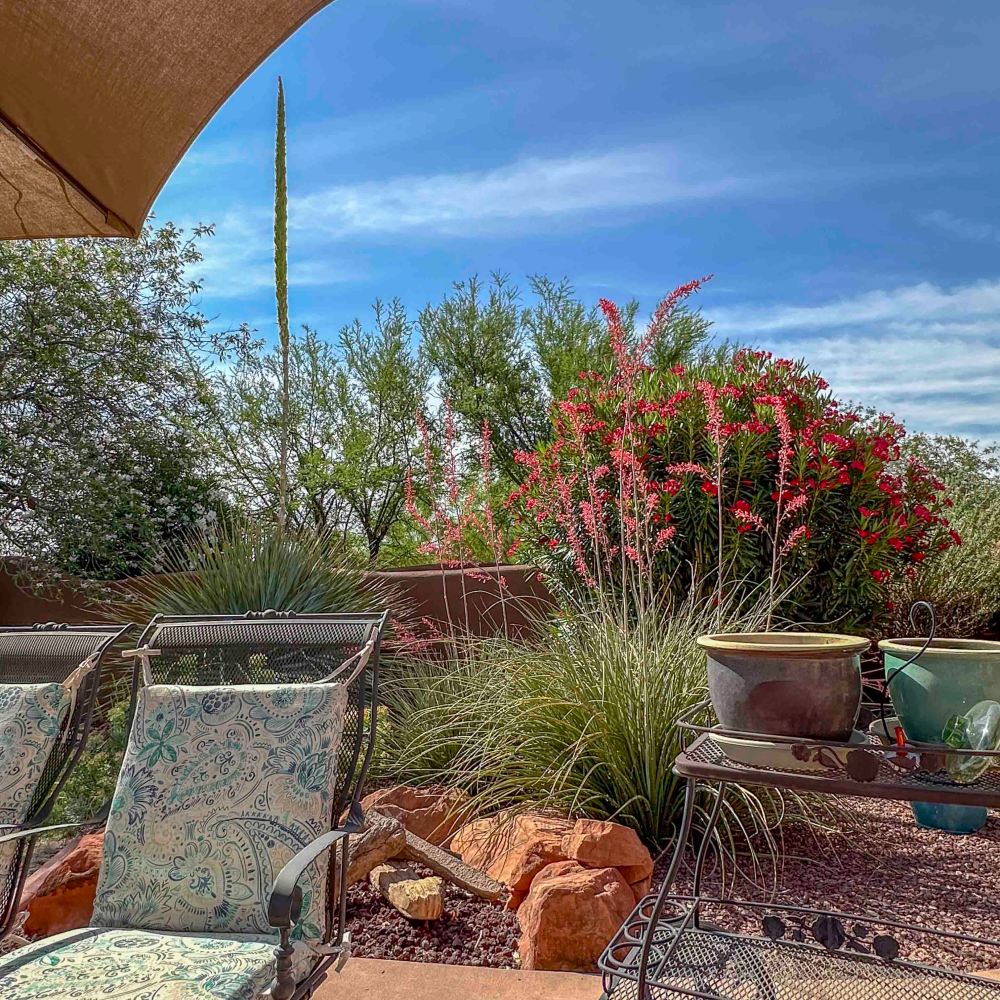
昨日裏庭でデザートスプーンを発見してから、静かに興奮しています。 I am quietly excited after discovering the Desert Spoon in my backyard yesterday.

裏庭で朝食なんて、長いことしていなかったのに、デザートスプーンが見たいがため、外に出てみました。 I hadn’t had breakfast in the backyard in a long time, but I went outside to see the Desert Spoon.

そうしたら、一瞬でカメラを持って出なかったことを後悔しました。さっそくハチドリがすぐそばで咲いているユッカの花の蜜を吸い始めたからです。こちら、携帯のビデオ。 Then, in an instant, I regretted not having my camera with me. A hummingbird immediately started sucking the nectar from a yucca flower blooming nearby. This is my cell phone video of it.

もう6月なので、これからは30°C (86 °F) を下回る日はあまりありません。 Since it is already June, there will not be many days below 30°C (86 °F) from now on.

裏庭で孵化した鳥達もほとんど飛び立って行きました。 Most of the birds that hatched in the backyard have flown away.

この茂みの中に残っているのは、ハトだけだと推察しています。 I am guessing that the only thing left in these bushes are pigeons.

小鳥達はこの夏の間に十分体力をつけておかなければいけません。次の冬が乗り越えられるかがその後の鳥の生死を決定します。 Small birds need to build up their strength during this summer. The ability to survive the following winter will determine whether the birds live or die in the following years.

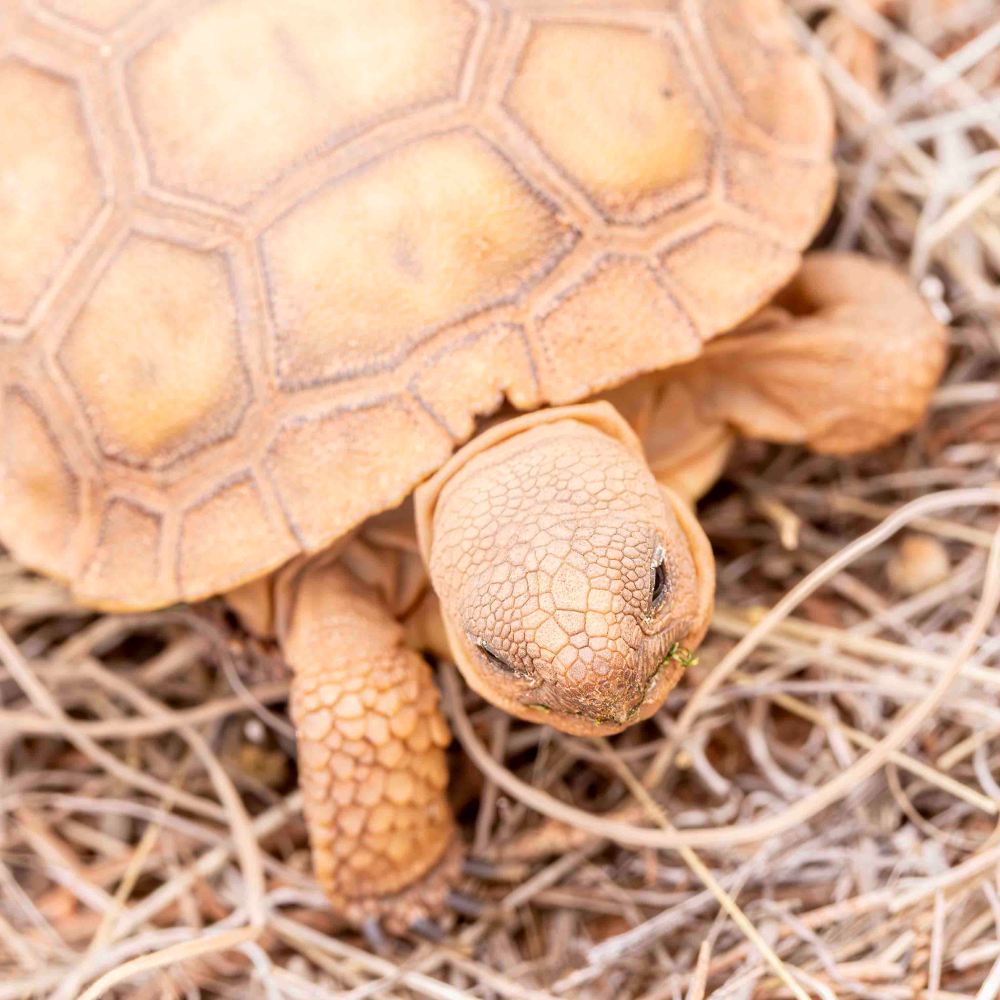
「僕たちだって同じだよ。」と、産まれたばかりのサバクゴファーガメ君が言いました。 ”We’re the same way,” said the newborn Desert tortoise.

そうですね。すべての生まれたての野生動物は一生懸命です。 That’s right. Every newborn wild animal is hard at work.

生きる活力を感じます。同時に、命の尊さを教えてくれます。 I feel the vitality of life. At the same time, it teaches us the preciousness of life.

春を卒業 Graduating From Spring


昨夜、夕食後、一人で散歩に出ました。 After dinner last night, I went for a walk alone.

気温は96 F (35 C) なのに気持ちがいい。 Temperature was 96 F (35 C) and yet it felt good.

しばらくGoProで遊んでいたら、季節の変化に気がつきませんでした。 I had been playing with my GoPro for a while and didn’t notice the change in seasons.

帰り道、ご近所のユッカが夕陽を受けてぼんぼりのようでした。 On the way home, the yucca in the neighborhood looked like a lantern in the evening sun.

それを見て、うちのユッカ達の花も咲いているに違いないと、急いで帰って来ました。昨夜は暗くなってしまったので、写真は撮れませんでしたが、今日、携帯じゃなく、カメラで撮ってあげました。 Seeing this, I rushed back home to see that our yuccas must be blooming too. It was dark last night, so I couldn’t take any pictures, but today I took them with my camera, not my phone.

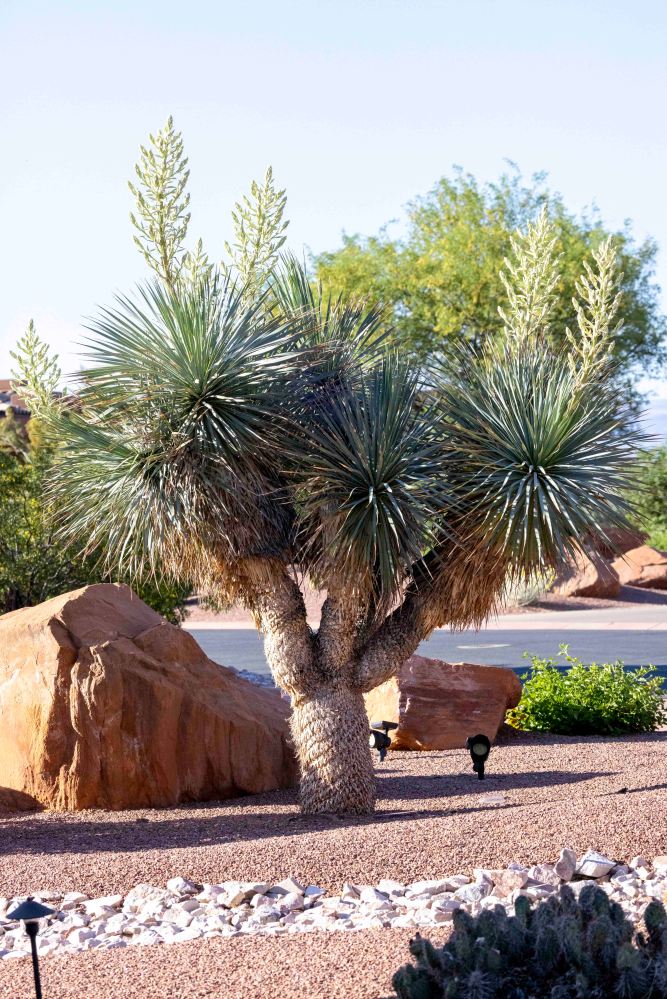
ユッカロストラータ Beaked Yucca

夕日とか、朝日を受けている姿の方が断然いいので、次回、覚えていたら撮ります。1年に1回花を咲かせますが、短命です。 I would definitely prefer to see it at sunset or with the sunrise, so I will take a picture next time if I remember. It flowers once a year, but is short-lived.

うちの前庭にはレッドユッカとイエローユッカも植えられています。 We also have red and yellow yuccas planted in our front yard.

みんな元気そう。花が咲いていたのに気づいてあげなくてごめんね。 They both look fine. Sorry I didn’t notice the flowers were blooming.

気まぐれに思いついて裏庭のユッカも念の為、チェックしてみることにしました。花が咲かないユッカがあるんです。 On a whim, I decided to check the yucca in the backyard, just to be sure. I have a yucca that never flowers.

すると、 And then,

ウソ〜!!! No Way!!!

この家に住み始めてから6年間、一度も見たことのなかった茎が堂々と、高く伸びていました。 The stems, which I had never seen in the six years I had lived in this house, grew tall and majestic.

さっそくネットサーチ。 I immediately searched the Internet about it.

ユッカだとばかり思っていたこの植物は、実は、Dasylirion wheeleri 通称、デザートスプーンと言われるまったく別の植物でした。 This plant, which I had assumed to be yucca, was actually a completely different plant known as Dasylirion wheeleri, commonly known as Desert Spoon.

茎は 5m (15feet) まで伸びるそうです。花がどのように開花するのか、まだわかりません。 The stem is said to grow up to 5m (15feet). I do not yet know how the flowers will bloom.

そこで、ズームしてみました。 So I zoomed in.

白いものが緑色の部分から出ています。もしかして、花なのでしょうか。 White stuff is coming out of the green part. Could they be flowers just starting?

白い、クリーム色っぽい花は雄株、紫ピンク色は雌株だそうです。 According to the websites I read, the plants with white, cream-colored flowers are male and the ones with purple-pink flowers are female.

どんな花が咲くのか。雄株か雌株か、今後の成長が楽しみです。 When the flowers fully develop, what color will they be? Male or female color? I am looking forward to their future growth.

イスカという鳥 Red Crossbill


この鳥について調べようと思いながら忘れていました。今回ついに調べてみると、この鳥特有のおもしろい特徴が見つかりました。もちろん、この鳥だけに限ったことではありませんが、鳥について調べることの楽しさを再発見しました。 I had been meaning to look into this bird, but had forgotten about it. When I finally looked into it this time, I found some interesting features unique to this bird. Of course, this is not limited to this bird alone, but I rediscovered the fun of studying birds.

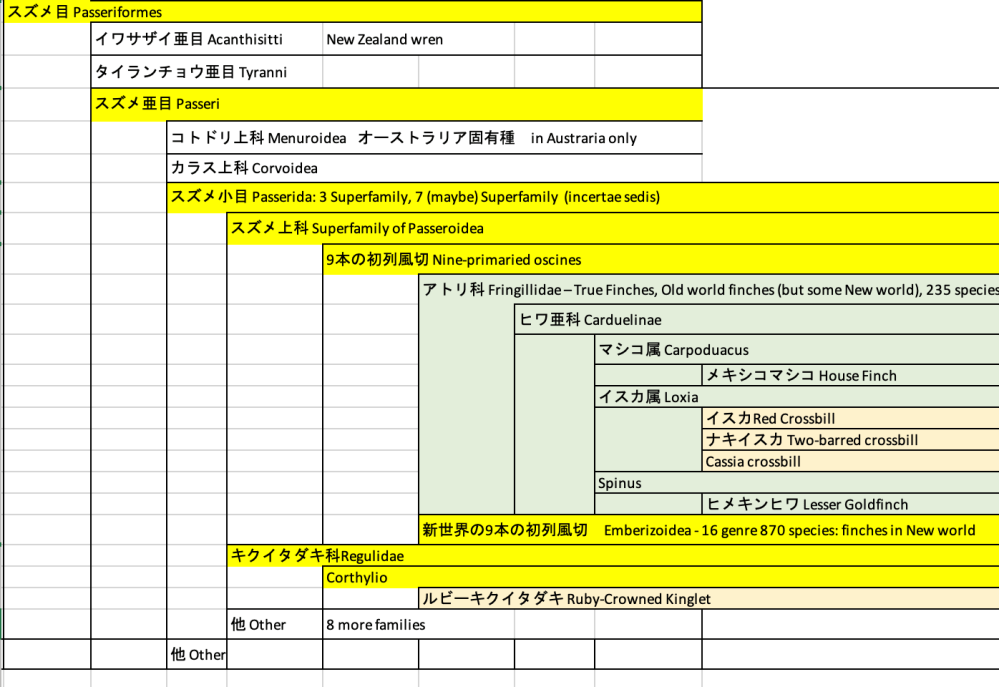
それを話す前に、分類表を訂正しました。下の表の緑色の部分、アトリ科の中にあった3種の鳥を他の科に移動し、新たにイスカ属を加えました。 Before I start talking about it, I have made some corrections to my classification table. In the green part of the table below, I moved three bird species that were in the family Fringillidae to other families and added a new genus, Loxia.

また、前回書いたルビーキクイタダキもキクイタダキ科を追加して収めました。 I also included the Ruby-crowned Kinglet I wrote about last time, by adding Regulidae family to the list.

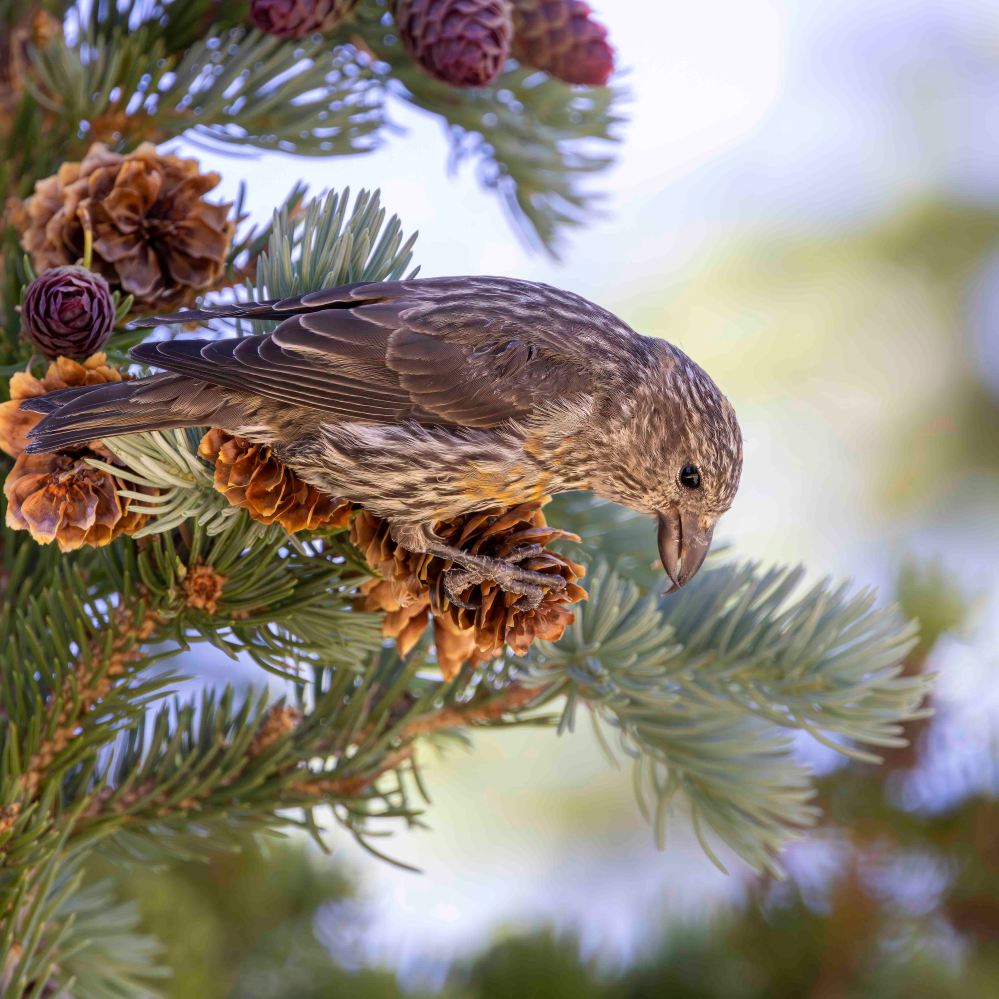
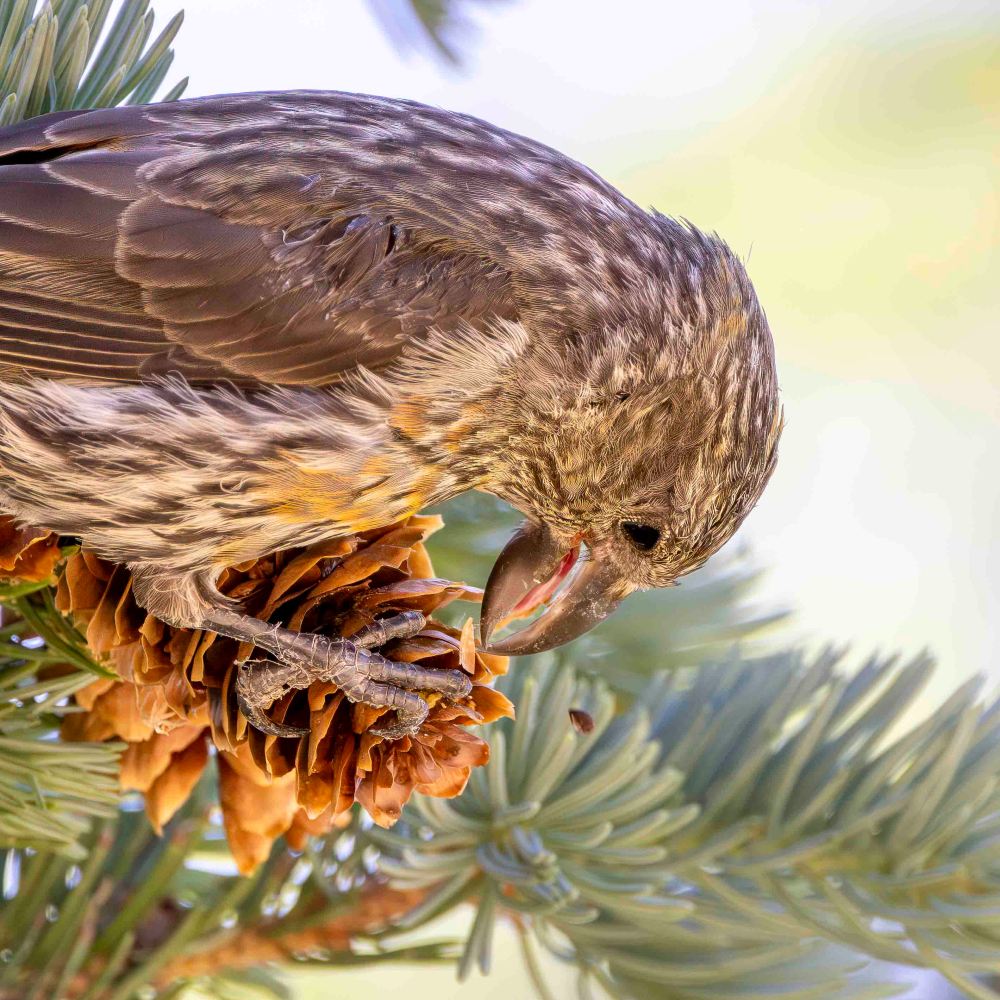
イスカという鳥は嘴が先端でクロスしているフィンチです。一見、奇形かと思えるようなこんな形状は、実は彼らが生きていく上で成し遂げた適応であると言われています。 The Red Crossbill is a finch with its bill crossed at the tip. This seemingly deformed shape is actually said to be an adaptation they have made in order to survive.

イスカの若鳥 Red Crossbill Juvenile @ Cedar Breaks National Monument

雪が溶けてようやく暖かくなってきた頃の6月、シーダーブレイクス国定公園では幼鳥の鳴き声がそこかしこから聞こえてきて賑やかでした。 In June, when the snow had melted and the weather was finally warming up, Cedar Breaks National Monument was buzzing with the sounds of young birds everywhere.

遅い春の到来に鳥たちだけでなく、私たちもただ歩いているだけで楽しくなりました。そんな時に、初めてイスカに出会いました。 The late arrival of spring made not only the birds, but also us, happy to just walk around. It was during this time that we first encountered a Red Crossbill. 

幸い、まだ経験値があまりない幼鳥は、私たちが歩いていても種子を食べることに夢中で即座に飛び去ることはしません。 Fortunately, the young birds, which do not yet have much experience, were too preoccupied with eating seeds that they did not instantly fly away when we walked by.

この嘴の形状が松笠の奥にある種をうまく取り出すことを容易にしているということです。  The shape of this beak allows the seeds to be successfully extracted from deep within the pine cone.

嘴がクロスしている鳥は全世界で6種、それらがイスカ属に分類されています。北米では3種です。その中でも注目したいのはカシアクロスビル (Cassia Crossbill) です。つい最近まで赤いイスカの中に分類されていましたが、独立しました。この鳥はアイダホ州のカシア郡という狭い地域にしか生息していません。 There are six species of birds with crossed bills worldwide, and they are classified in the genus Loxia. In North America, there are three species. The most notable of these is the Cassia Crossbill. Until recently, it was classified within the Red Crossbill, but became an independent species. The fact is that this bird is found only in a small area in Cassia county, Idaho.

なぜか? Why?

ここには高熱でないと開花しない松ぼっくりを持つ針葉樹林, Lodgepole pine, があるからです。他の鳥やリスなどが諦めても、カシアクロスビルだけは曲がった嘴を使って器用に種を取り出すことができるんですね。まさに独り占め状態なので、他の場所に食べ物を探しにいく必要がないというわけです。 The reason is that here they have a coniferous forest, Lodgepole pine, with pine cones that will only open with high heat. So only the Cassia Crossbill can dexterously extract the seeds using its curved bill, even if other birds and squirrels give up. They have the whole place to themselves, so they don’t have to go looking for food elsewhere.

カシアクロスビルについて、アイダホ州のアイダホバードのウェブサイトに詳しく載っています。いつか探しに行かなければ! You can read more about Cassia Crossbill on the Idaho Bird website. We must go there and look for it someday! https://idahobirds.net/birding-idaho/cassia-crossbill/

以下、イスカの幼鳥が松笠から種を取り出しているところのビデオです。Below is a video of a juvenile Red Crossbill removing seeds from a pine cone.

タンポポの悪夢 Dandelion Nightmare


夢の中、タンポポの英語名の語源がわからなくて苦しんでいました。 I was struggling in my dream to understand the origin of the English name of the dandelion.

日本語名は、花が咲き終わった後の綿球の姿が「タンポ」という綿を丸めて作る一種の画材に似ているところから来ているという説があります。ま、フワフワと優しい感じが名前とマッチしているので、すごく納得できます。 The Japanese name “tampopo” is said to come from the appearance of the blowballs after the flowers have finished blooming, which resemble a kind of drawing material made by rolling up cotton called “tampo”. Well, the fluffy and gentle feeling matches the name, so it makes a lot of sense to me.

ところが、英語名のダンディライオンはまったく納得がいきません。言葉の響きは「ダンディなライオン」を想像させ、花とマッチしません。 On the other hand, the English name Dandelion is not satisfactory at all. The sound of the word conjures up images of a “dandy lion,” which does not match the flower.

Useless Etymology のサイトより画像をコピーさせていただきました。 The image was copied from Useless Etymology’s website.

だから、夢の中で「なぜ?」と色々な人に聞き回っていました。何回説明してもらっても理解できず、その苛立ちに叫びそうになったところで目が覚めました。 So, in my dream, “Why?” I was asking around to various people. No matter how many times they explained it to me I could not understand, and I woke up just as I was about to scream in frustration.

早速その悪夢をバンちゃんに話したら、その場で名前の由来を検索してくれました。 I immediately told Ban-chan about the nightmare and he searched for the origin of the name on the spot.

Useless Etymology Dandelion webpage

よみながら笑ってしまいました。なぜなら、日本語の由来が花を基にしているのに対して、英語/フランス語の由来は「花」ではなく、「葉」を基にしているからです。 I laughed as I read it. Because while the Japanese origin is based on flowers, the English/French origin is based on “leaves”, not “flowers”.

「葉の形がライオンの牙の形に似ている。」 “The shape of the leaves resembles the shape of a lion’s fangs.”

Screenshot

目の付け所が違ったんですね。この意外さに嬉しくなってしまいました。悪夢に感謝しましょうかね。また、これで思い出した花がありました。 The way Japanese and Europe looked at it was different. I was pleasantly surprised by this unexpectedness. I guess I should thank my nightmares. Also, this reminded me of another flower.

Dwarf Bear Claw Poppy (日本語名なし。直訳:クマの爪をもつケシの花)

この花については以前私のブログに書いています。この花の名前も花を見ただけでは理解できません。この花の根元の方の葉先を見ると納得できます。ぜひ読んでみてください。 I have written about this flower before in my blog. The name of this flower cannot be understood just by looking at the flower. But if you look at the leaf tips at the base of this flower, it makes sense. Please read it.

ジュニパーの実 Juniper Berries


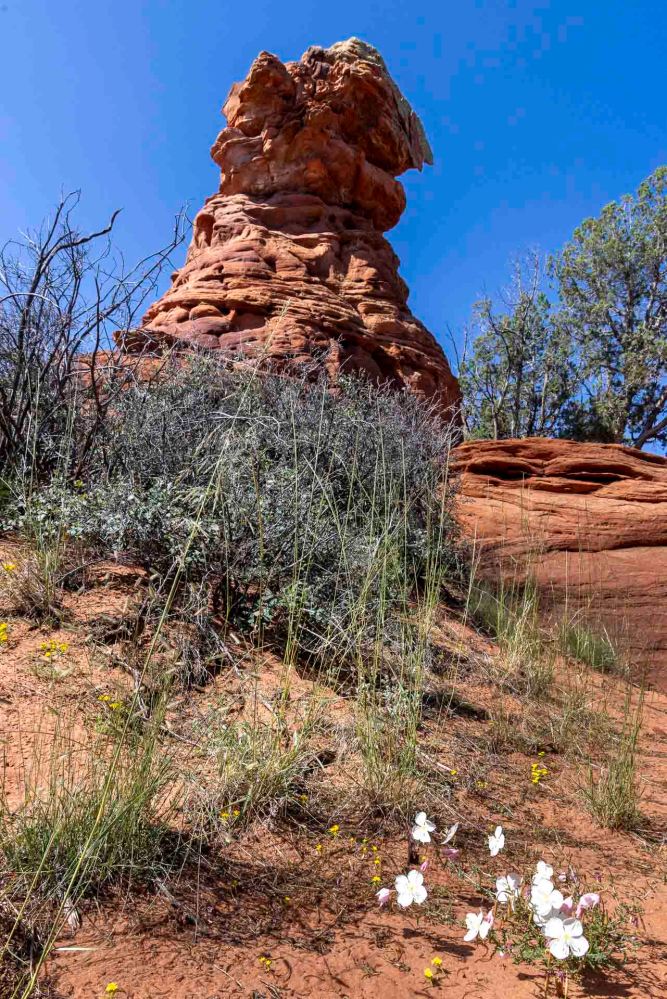
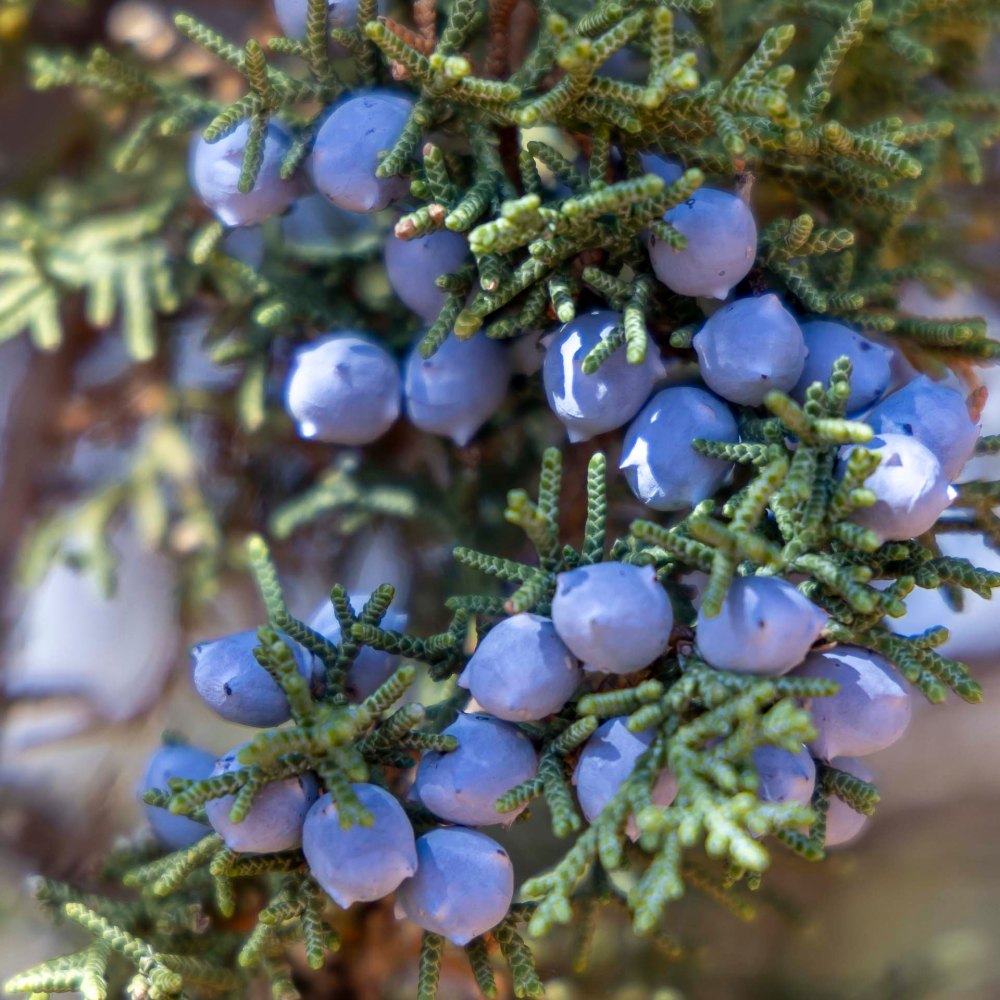
バーミリオンクリフ国定公園内で見かけました。 I saw them in the Vermilion Cliffs National Monument.

休憩のために立ち寄った名もない場所にジュニパーの木が立っていました。 A juniper tree stood in an unnamed spot where we stopped for a break.

わー、ジュニパーの実がいっぱい! Wow, lots of juniper berries!

鳥たちはここには来ないのかもしれません。 Maybe the birds don’t come here.

鳥たちが食べなかったら、こんなにたくさんの実が勿体無いと思ってしまうのは私だけでしょうか。 Am I the only one who thinks that so many berries would be a waste if the birds do not eat them?

腰を下ろしていた砂岩の上には、さまざまな地衣類が付着していました。長い年月をかけて岩をも侵食してしまうパワーを持っています。 The sandstone on which I was sitting was covered with a variety of lichens. They have the power to erode even the rocks over a long period of time.

地衣類のようにジュニパーの実もそのまま居続けたら、新しいジュニパーの木が生えてくるのかな。それとも、もっと他に隠されたパワーがあるのかな。 I wonder if juniper berries, like lichens, will grow new juniper trees if they stay in place. Or is there some other hidden power in them?

サンスベリアの春 Spring Has Come To Snake Plant


もう十年以上も一緒に生活している観葉植物のサンスベリアです。This is a houseplant, Sansevieria, Snakeplant, that has been living with us for over a decade now.

今まで見たこともなかったのに、この地に引っ越してきてから花が咲くようになりました。観葉植物にも花が咲くんだと、その時知りました。 I had never flowered before we moved here. But, now I have learned that even houseplants can bloom.

これからこの蕾が開いて、小さな白い花が咲きます。 From now on, these buds will open and small white flowers will bloom.

下の写真、水滴のように見えるものがついていますが、家の中なので、もちろん違います。触るとネバネバするので、花の樹液なんでしょうか。 In the photo below, there are what look like water droplets on it, but of course they are not, since it is inside the house. It is sticky to the touch, so I wonder if it is flower sap.

家の中にずーっといるだけなのに、サンスベリアにも春が来るんですね。 Spring is coming for the snakeplant, even though it is just inside the house all the time.

サンスベリアは植物の分類学上、キジカクシ科に属しています。実は、前庭に咲いているユッカも同じくキジカクシ科に属しているんです。こちらも花が咲く準備が整ってきました。 The Snakeplant belongs to the family of Asparagaceae in terms of plant taxonomy. In fact, the Yucca blooming in the front yard also belongs to the same family. My Yucca is getting ready to bloom as well.

ところで、キジカクシ科には野菜のアスパラガスも入っているそうです。そう言われると、似ているような気がします。 By the way, Asparagaceae family also includes the vegetable asparagus. That being said, they seem to be similar.