君の名が知りたくて、ここまで来てしまったよ。 I ended up coming this far because I wanted to know your name.
あなたは誰? Who are you?
名前を告げずにまた立ち去ってしまうんだね。 You’re leaving already without telling me your name.
それでも、この一瞬の出会い、大切にしておくね。 Even so, I’ll treasure this fleeting encounter.
南アメリカ最南端、ウシュアイアでの出会い。 The encounter here in Ushuaia, the southernmost tip of South America.
旅の荷解きもまだ終わっていません。でも、南極旅行中のさまざまな発見、驚き、感動が薄れていく前に、断片的ですが、これから少しずつ書き残していきます。 I haven’t even finished unpacking from my Antarctica trip yet. But before the various discoveries, surprises and emotions from my travels fade away, I’ll jot down some fragments while they’re still fresh in the coming blog posts.
バードフェスからもう3週間も経ってしまいました。その時発見した珍しい鳥たち(私にとってのですが)を、急いで紹介していきます。 It has already been three weeks since the Bird Fest. I will quickly introduce some of the rare birds (for me, that is) that I discovered at that time.
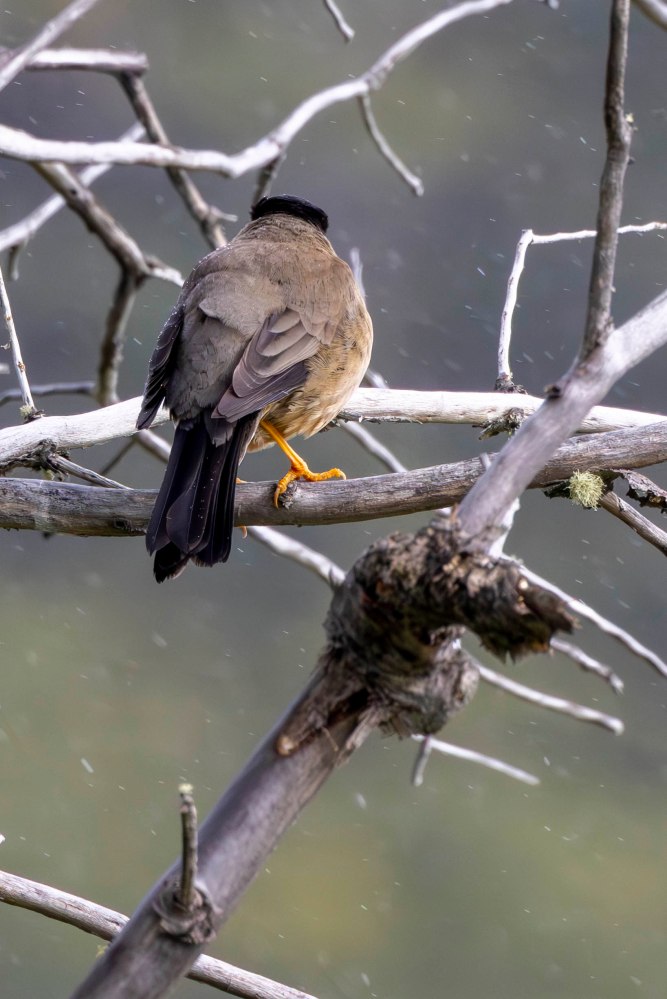
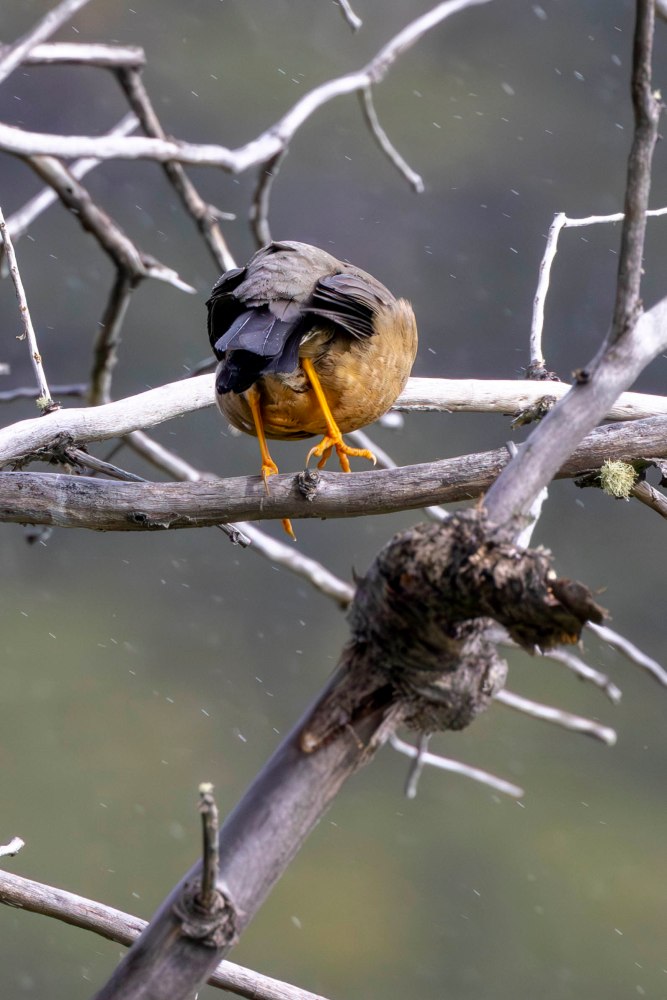
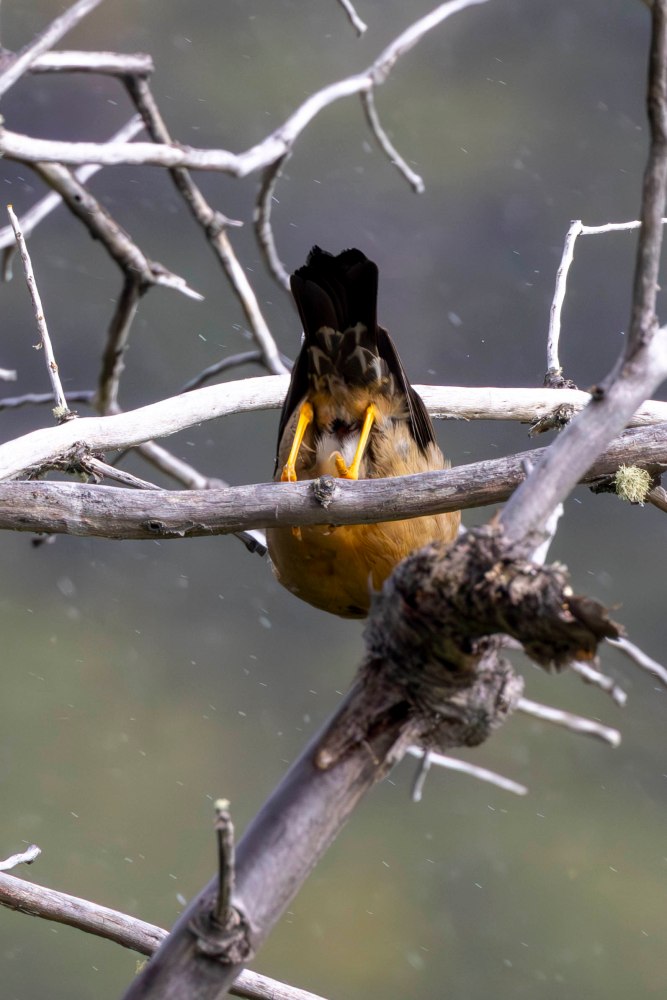
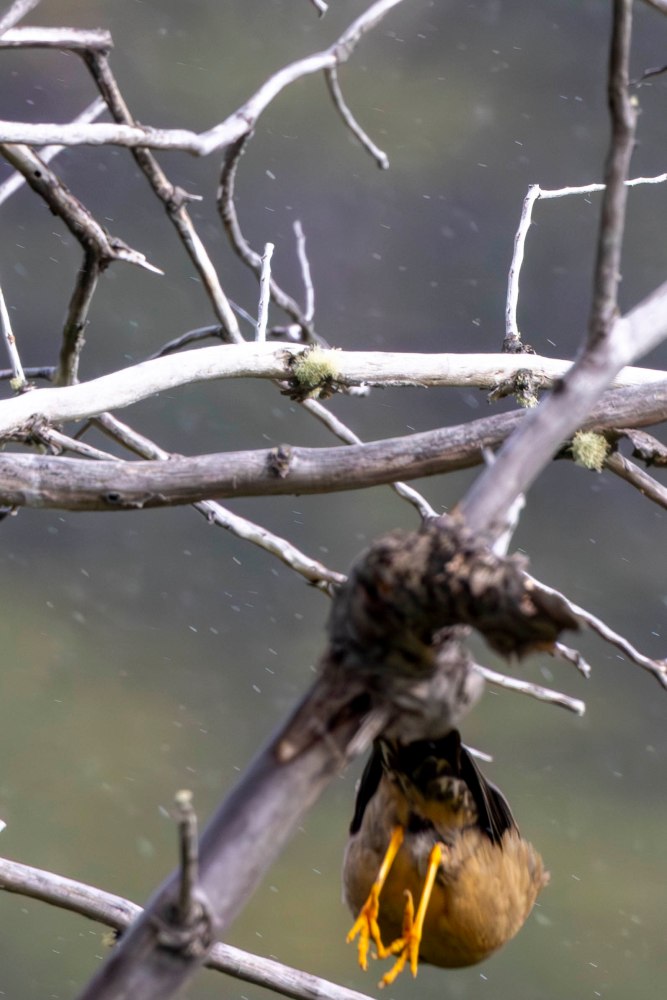
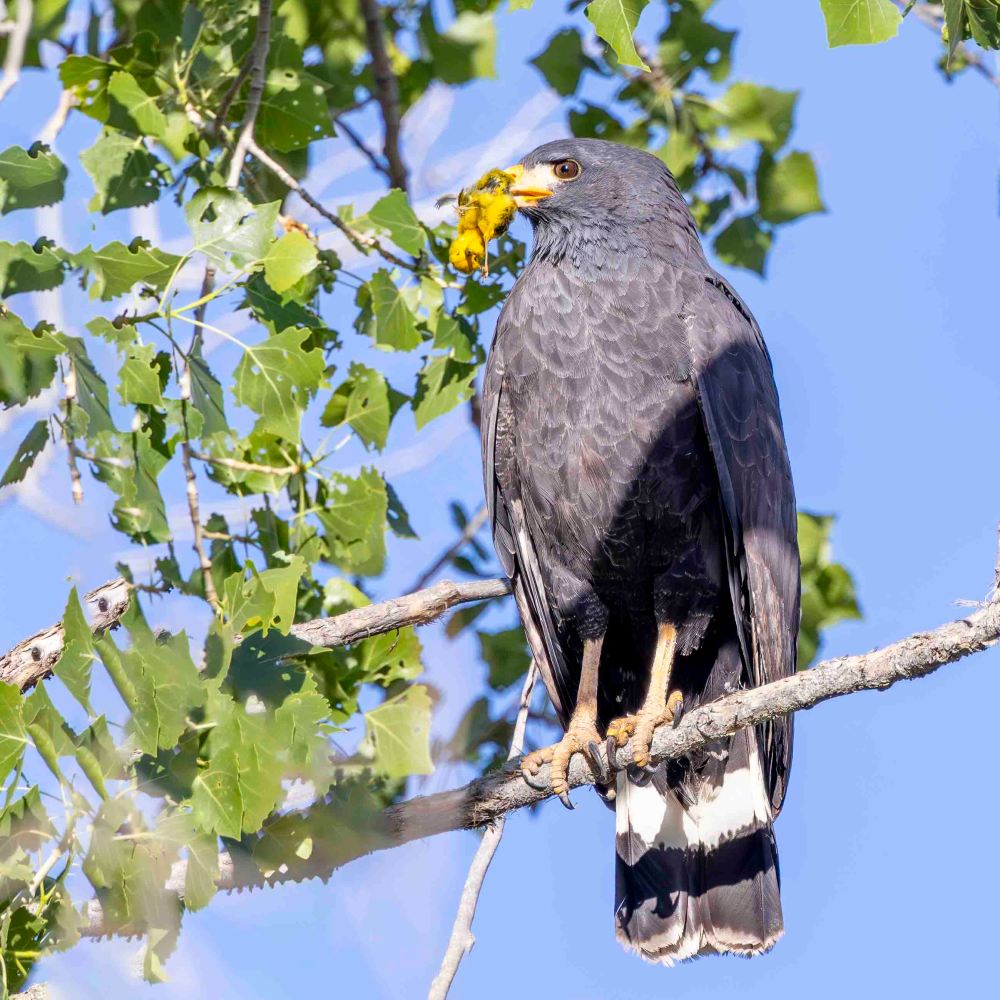
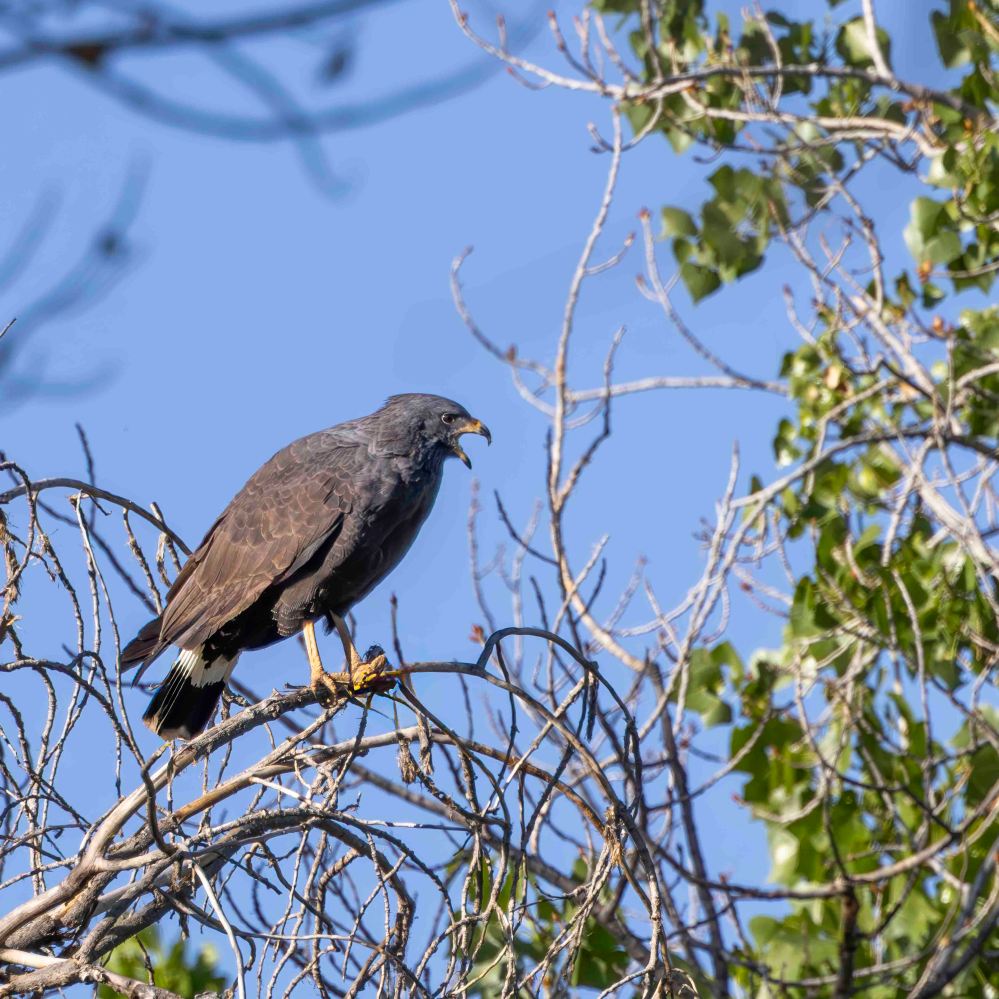
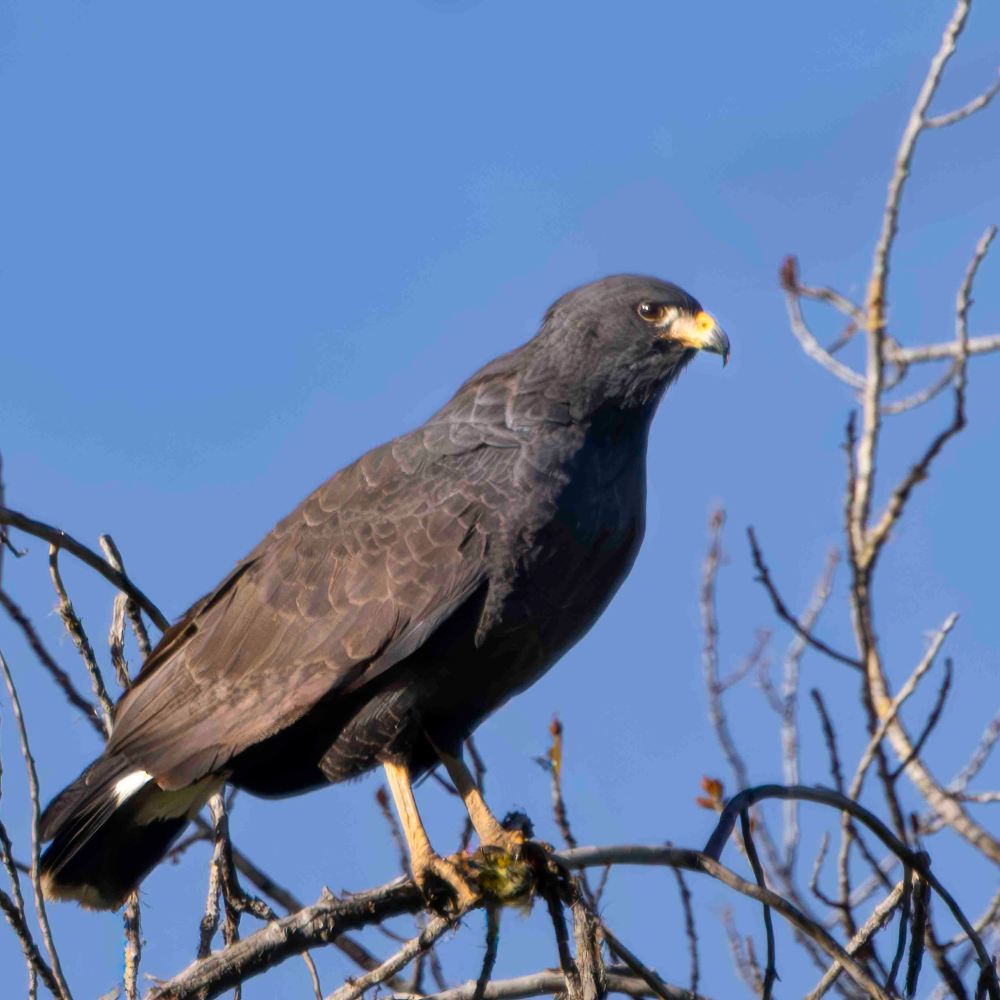
日本語名は「クロノスリ」と言われるようですが、ブラックホークとしても馴染み深そうですね。 The Japanese name is likely to be “Kronosuri,” but Japanese also refer to it with the English name Black Hawk.
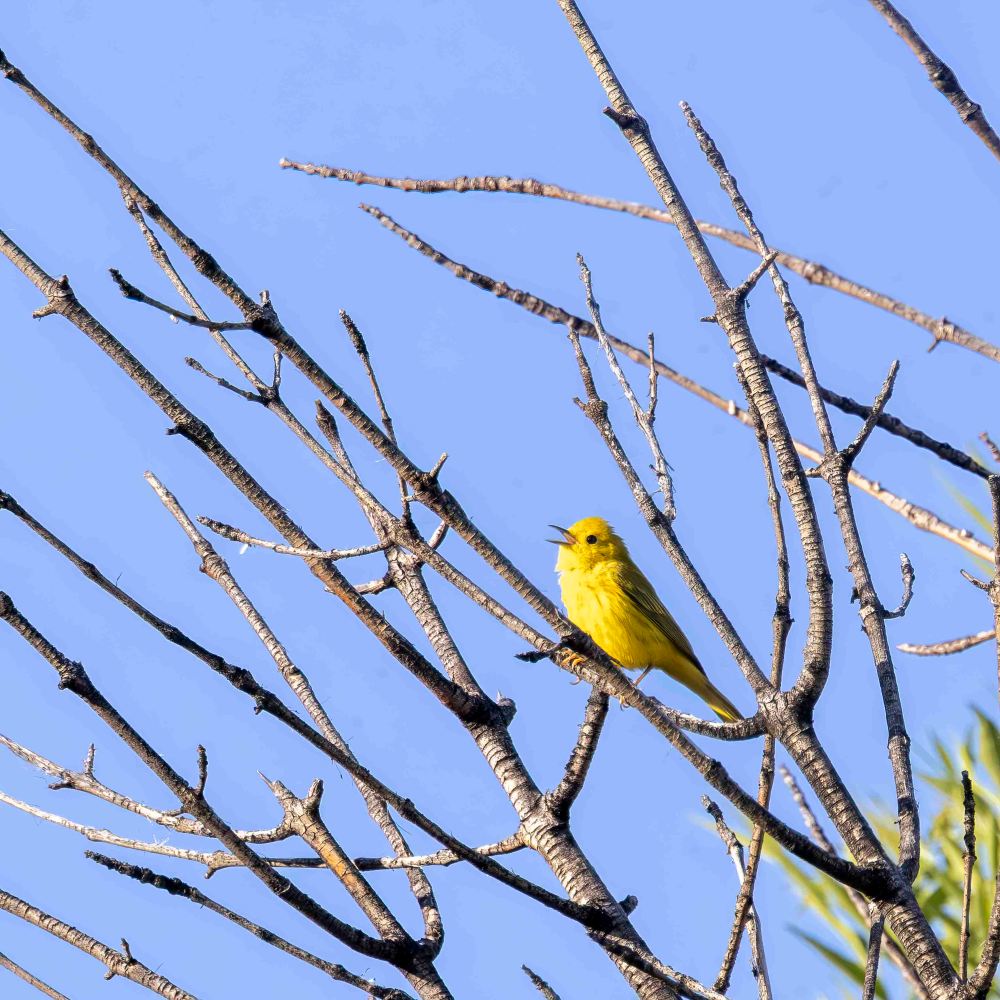
キイロアメリカムシクイを捕まえた直後でした。 It was right after he caught a Yellow Warbler.
残酷なようですが、これが野生の世界です。ブラックホークは小さな哺乳類の他に魚やトカゲなども食するようです。 It sounds cruel, but this is the wild world. Black Hawks seem to feed on fish and lizards as well as small mammals.
中南米の海岸線が基本の棲家ですが、産卵のために北上もするようです。私たちの住むユタ州南西部では珍しい鳥なので、発見後、みんな大喜びですた。 The coastlines of Central and South America are their main habitat, but some of them migrate north to lay eggs. They are rare in southwestern Utah, where we live, so everyone was overjoyed when we found them.
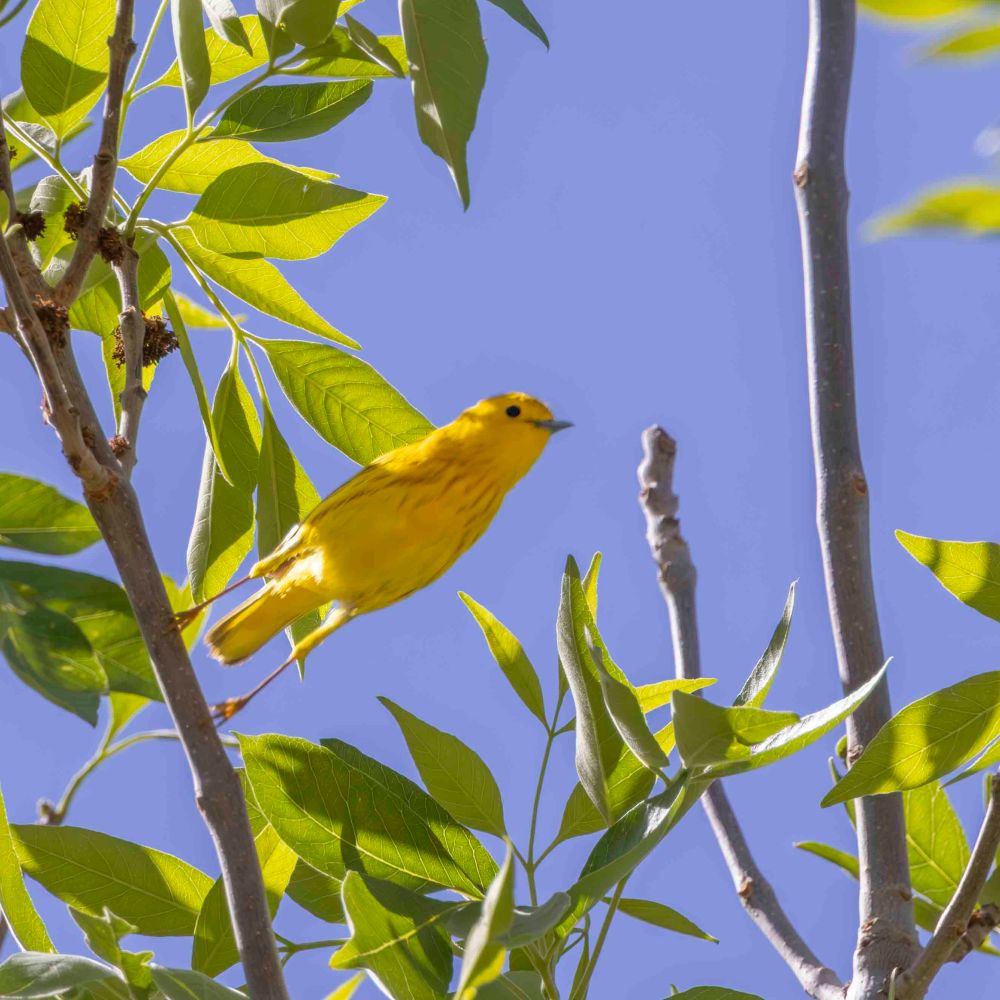
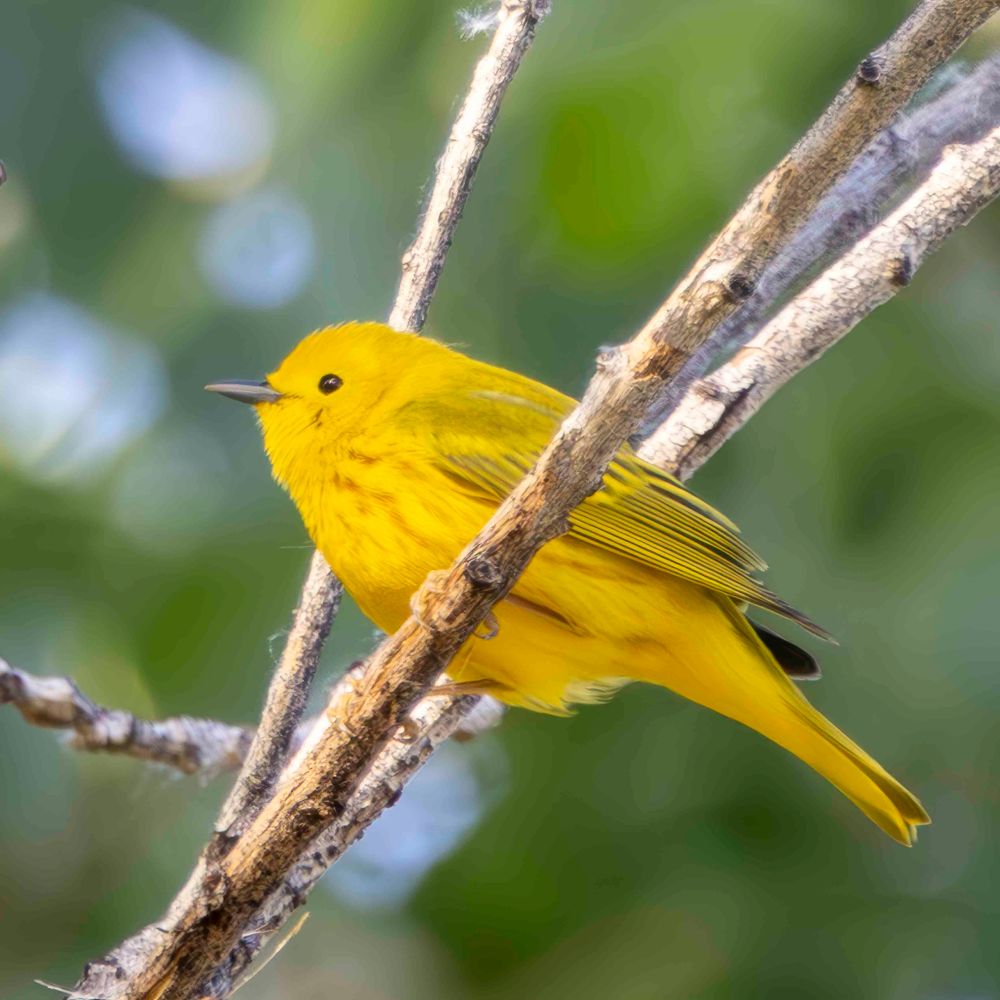
アメリカムシクイ科には120の種が属していますが、その半分は渡り鳥です。この科に属するキイロアメリカムシクイも渡り鳥なので、春になると出身地の中南米を出発し、北上して北米全土に散らばっていきます。そして9月ごろには再び南に帰っていくので移動が始まるらしいです。 About 120 species belong to the family Parulidae, New World Warblers, half of which are migratory birds. The Yellow Warbler, which belongs to this family, is also a migratory bird, so in spring it leaves its native Central and South America and travels northward, scattering all over North America. Then, around September, they start their migration as they return to the south again.
5インチ(12cm)しかない小さな鳥なのに、毎年遠路を移動するなんて、元気な鳥だなあ。 It’s a small bird, only 5 inches (12 cm) long, and yet it’s so energetic that it travels a long way every year.
昔から渡り鳥の観察をしている方々は多いと思いますが、最近はテクノロジーの発達で彼らの行動がさらに精度を持ってわかるようになりました。National Audubon Society の管理するBird Migration Explorer は、それぞれの鳥の行動パターンを視覚的に教えてくれます。 Many people have been watching migratory birds for a long time, but technology has recently made it possible to see their behavior with even greater precision. Bird Migration Explorer, managed by the National Audubon Society, provides a visual representation of each bird’s behavior patterns.
このページによると、目下、移動の真っ盛りなようです。 According to this page, it appears that they are in the midst of a migration.
さて、前回のブログでこの鳥とクロツキヒメハエトリには決定的な違いがあると書きました。 Now, in my last blog, I wrote that there is a crucial difference between this bird and the Black Phoebe.
両種とも虫を食べる鳥なのに違う亜目に分類されています。分類史を見ると過去同じ目に分類されていた時期もあったようですが、DNA研究によってはっきりとした違いがわかってきました。それと共に分類表も大幅な変更が所々で見られます。実際、私の分類表も去年始めた頃から多くの部分でアップデートしました。この分だと、今後も更なる変更が起こりそうです。 Both species are classified in different suborders, even though they are both insect-eating birds. Their taxonomic history shows that there was a time when they were classified in the same order, but DNA research has revealed clear differences. Along with this, the taxonomy tables have changed drastically in many places. In fact, I have updated many parts of my classification table since I started last year. At this rate, more changes are likely to occur in the future.
再び、話を戻して、両者の違いですが、科学的には鳴管と呼ばれる部分の発達の違いがまず挙げられます。でも、個人的には彼らの虫の捕食の仕方が目に見えて決定的に違うと言いたいです。 Again, going back to the subject, the difference between the two, scientifically speaking, is first of all the difference in the development of the part of the body called Syrinx (the sounding tube.) But personally, I would say that the way they prey on insects is visibly and definitely different.
クロツキヒメハエトリは空中の虫を嘴を大きく開けて空中で捕食します。ツバメやヨダカ、アマツバメも空中捕食組ですね。 The Black Phoebe preys on aerial insects with its beak wide open in mid-air. Swallows, Nighthawks, and Swifts are also airborne predators.
キイロアメリカムシクイは低木の茂みの中深く入り込み、葉の裏に潜んでいる昆虫(主に毛虫など)を捕食します。そこし違いますが、キツツキも空中ではなく、木の中に潜んでいる昆虫を探し出すところが宝探しのようなので宝探し捕食組と呼びます。(私の独断の呼び方です) The Yellow Warbler goes deep into shrubby bushes and preys on insects (mainly caterpillars) hiding behind leaves. Woodpeckers are quite different from Warblers, but I think (my own opinion) they are the same in that they search for insects hidden in the trees rather than in the air.
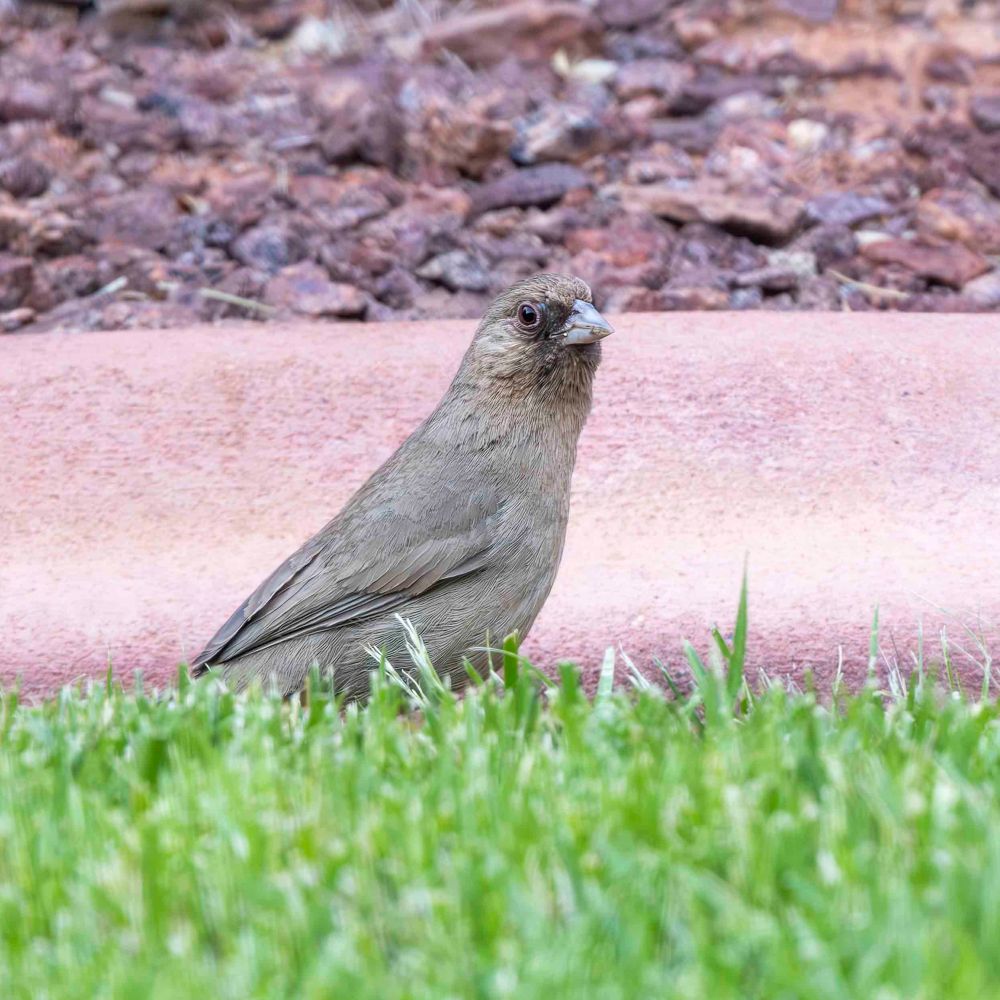
裏庭には多分このメグロトウヒチョウが巣を作っているのではないかと思われます。 In other bird news, there is probably a nest of this Abert’s Towhee in our backyard.
多分、このバラの茂みの奥の方。 Probably at the back of these Rose bushes.
しばらく雨が続いていましたが、今日はついに快晴となりました。 It had been raining for a while, but today it finally cleared up.
この季節は、私たちの周りの自然がソワソワ、ワクワクしていて毎日が落ち着きません。 This is the season when the nature around us is so energetic and full of life and every day is exciting.
今週末の土曜日はグローバル ビッグデー です。私も初めてなのでよくわかっていないのですが、裏庭の鳥の観察だけでもして参加してみようかと思っています。 This coming Saturday is the Global Big Day. I don’t know much about it since it’s my first time. But I’m thinking of participating just to observe the birds in my backyard.
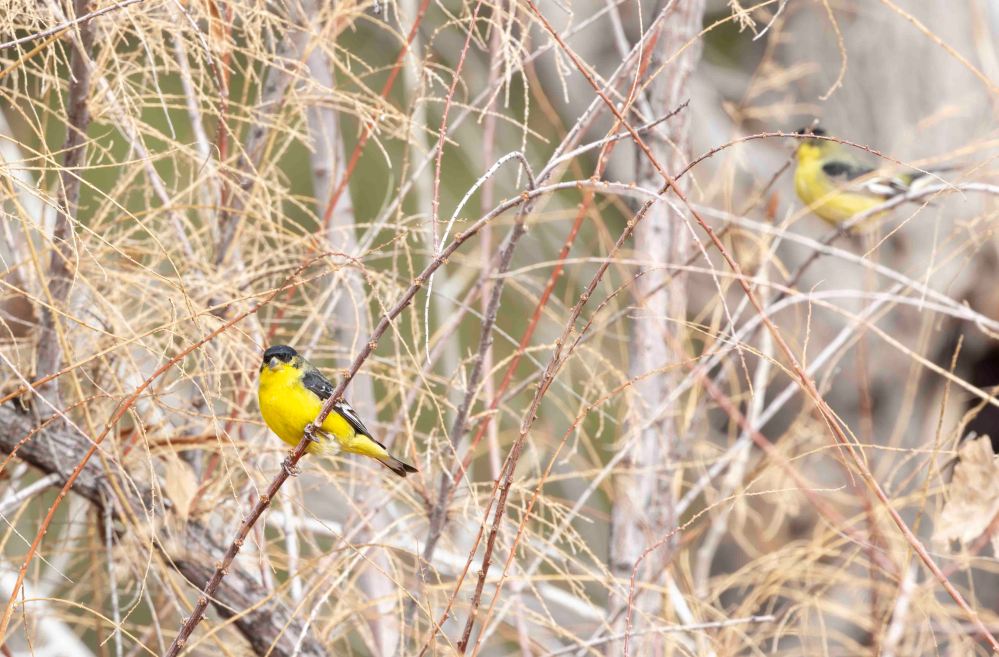
春の典型的な天気ですね。暖かくなったと思ったら寒くなり、強風でせっかくの早咲きの梨や梅の花も散ってしまいました。そんな中、小川沿いの藪の中に小さい鳥たちを発見しました。 It’s typical spring weather. Just when I thought it was warming up, it turned cold and the strong winds scattered the early pear and plum blossoms that had been in bloom. In the midst of all this, I found some small birds in the bushes along the creek.
「ここにいるから見て〜!」と、イエスズメのオスが声を振り絞って鳴いていました。はたしてメスのイエスズメは気づいてくれたでしょうか。 ”Look look, look at me, I’m here!” the male House Sparrow was calling out in a desperate cry. I wonder if the female House Sparrow noticed him.
ゴールドフィンチもいますね。 There were Gold finches as well.
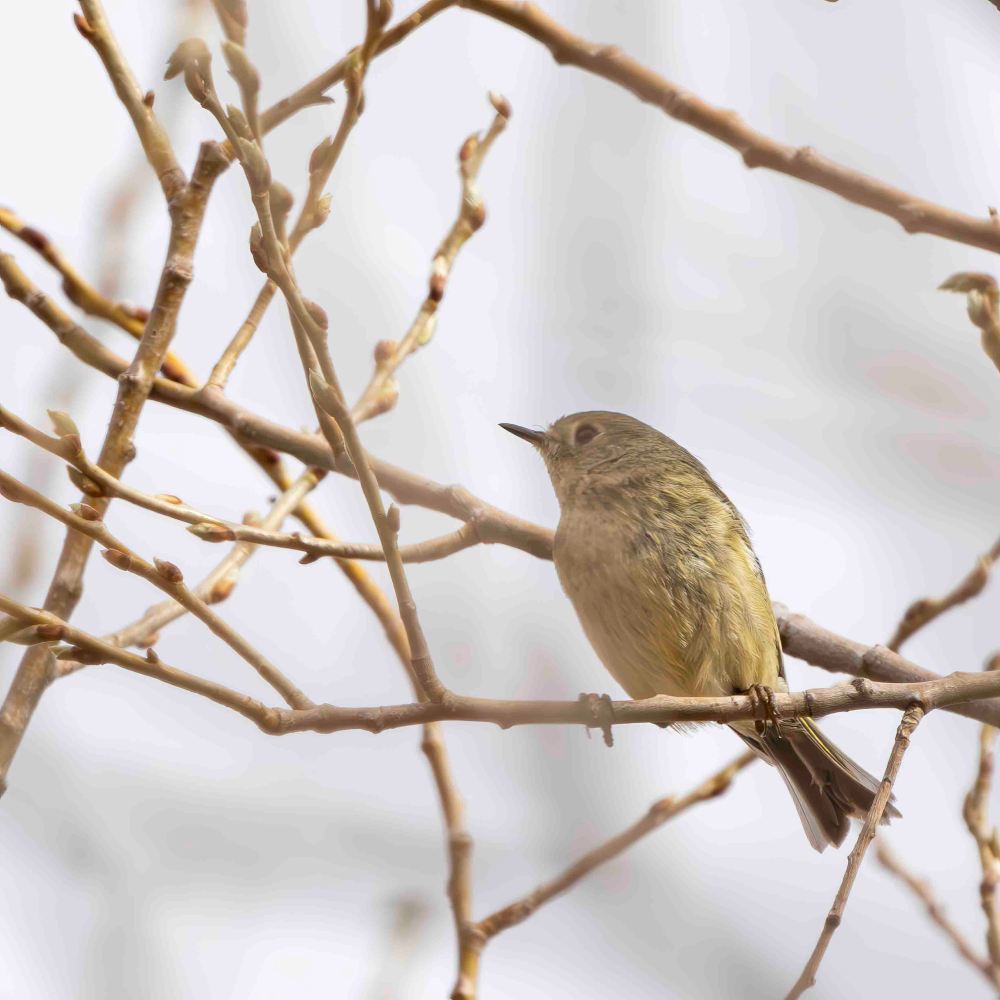
おやおや?見かけない鳥です。 Hmm? It’s a bird I hadn’t seen before.
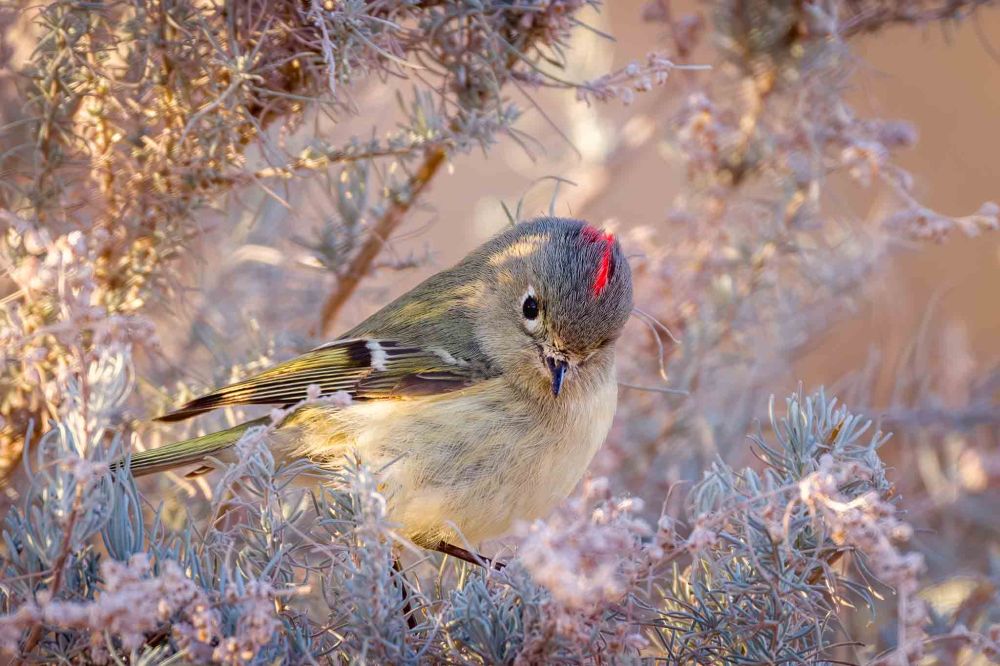
家に帰って調べたら、ルビーキクイタダキでした。頭の上の赤い冠は見えませんが、パタパタと羽を盛んに動かしていたので、まさにルビーキクイタダキの習性と合致しました。 As soon as I got home, I checked it out and found that it was a Ruby-Crowned Kinglet. The red crown on his head was not visible, but he was flapping his wings actively, which was exactly in line with the habits of the Ruby-crowned kinglet.
この発見に思わず興奮して過去の私の鳥の写真を見直してみたら、やはりありました。8年前、テキサス州のビッグベンド国立公園で一度出会っていました! Unexpectedly excited by this discovery, I reviewed my past bird photos and there it was: eight years ago, I had encountered it once in Big Bend National Park in Texas!
嬉しくなってバンちゃんに話したら、「家の隣の空き地でよく見かけたよ。」との返事でした。 I was so happy that I told Banchan about it and he replied, “I used to see them time to time in the vacant lot next to our house.”
「そんな〜!」もっと早く教えてよ〜! そして、彼のショットを見せてくれました。以下、彼の写真です。 Oh, no! You should have told me sooner~! Then he showed me his shots. Below is one of his photos.
ところで、この鳥は私の分類表にはまだ入っていません。なぜなら、かつては旧世界の鳥の中に分類されていたので、私の興味の対象外だったからです。でも今はスズメ小目の直下のキクイタダキ科の中に独立した属 Corthylio がつくられ、この鳥のみが収められています。 By the way, this bird is not yet in my classification list. Because it used to be classified among the Old World birds, and therefore was outside my interest. Now, however, a separate genus Corthylio has been created within the family Regulidae, directly under the Order Passeriformes, and only this bird is included.
分類表をアップデートします。実は、他にも間違えている部分を発見してしまい、厄介な変更なので、ずーっと先延ばしにしていました。今月中に完成させたいです。完成まで、本当にあと一歩なんですよねー。 I will update the classification table including this bird. Actually, I have been putting it off for a long time because I found some other mistakes as well and it is a tricky change. I hope to have it completed by the end of this month. I am really one step away from completion!
新世界の9本の初列風切科の中にホオジロ科が入っています。 The family of Emberizidae, is among Emberizoidea, Finches in the New World.
このホオジロ科は分類上、過去に何回も分類し直しされてきました。今後も再編される可能性があります。それだけいつも私たちの生活に寄り添って生きている重要なグループだということでしょう。 This family of Emberizidae has been reclassified many times in the past for taxonomic reasons. There is a possibility that it will be reorganized in the future. I guess it is such an important group that has always lived close to our lifestyles.
ホオジロ科は更に旧世界ホオジロ類と新世界ホオジロ類に別れています。ここでは、アメリカ在住の私が出会った新世界のホオジロ類だけを扱います。 This family is further divided into Old World Emeriza and New World Sparrows. Here, I will deal only with New World Sparrows that I have encountered while living in the United States.
表1 Table 1
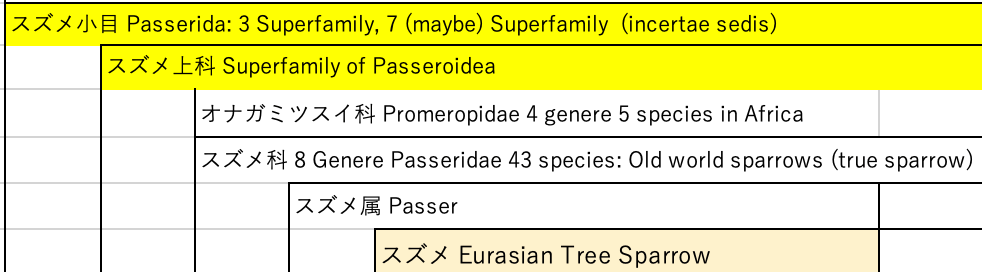
補足です。旧世界や日本でよく見かけるスズメはホオジロ属には入っていません。ホオジロと似ているのにね。9本の初列風切の外に区分されているので、初列の羽の数が違うのかもしれません。 Supplementation. The sparrows (Eurasian Tree Sparrow) commonly seen in the Old World and Japan are not in the genus Emberizidae. Even though they resemble Emberizidae birds, they are classified outside of the Nine-primaried oscines. I am not sure, but their primary feather count may not be 9.
表2 Table 2
話を戻します。表1の中、ピンクでハイライトされた10種のみを順にご紹介します。いずれも北米でよく見かける鳥です。 Back to the story. I will introduce only the 10 species highlighted in Table 1 in order.
最初の鳥はウタスズメです。名前の通り、春にはオスの歌声が低木地帯などに響きます。オスとメスの外見状の違いはないようです。 The first bird is the Song sparrow. As the name implies, the male’s song echoes through shrublands and other areas in the spring. There seems to be no apparent difference between the male and female.
ウタスズメ Song Sparrow
主食は虫です。北米全土の低木で見かけることができます。 Its primary food is insects. They can be found in shrubs throughout North America.
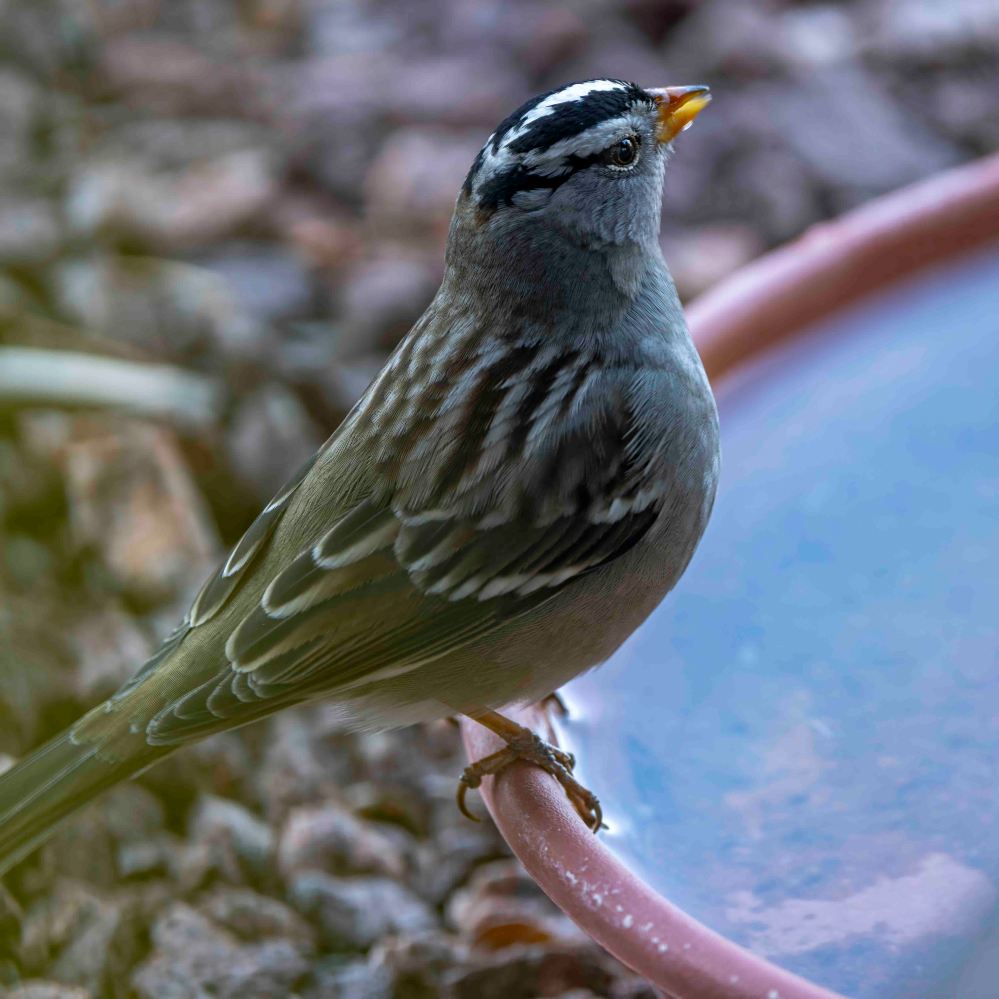
次の鳥はミヤマシシドです。裏庭の常連客です。来る時は必ず2-3匹以上で来ます。彼らは群れで行動する鳥なんですね。 The next bird is White-crowned Sparrow. It is a regular visitor to our backyard. Whenever they come, they always come in groups of two or three or more. They are birds that act in flocks.
ミヤマシトド White-crowned Sparrow
生息域は北アメリカ全土なので、大抵どこに行ってもみられる鳥です。あまりにもよく見かける鳥なので、写真がなく、慌てて撮りました。主食は虫です。 Its habitat is all over North America, so it is a bird that can be found almost anywhere you go.It is so common that I was in a hurry to take a picture of it because I didn’t have any. Its primary food is insects.
ユキヒメドリも北アメリカ全土で見られる鳥です。木が多い場所を好むようで、地面に落ちた種を食べているようです。 The Dark-eyed Junco is another bird found throughout North America. They seem to prefer areas with lots of trees, and eat seeds that have fallen to the ground.
ユキヒメドリ Dark-eyed Junco
半砂漠気候の今の家に引っ越してきてからは、あまり見ませんが、昔、カリフォルニアに住んでいた時は家の周りでもよく見かけていました。 I don’t see them much since we moved to our current residence in a semi-desert climate, but I used to see them around our house when we lived in California.
ユキヒメドリとは対照的に、アゴグロヒメドリは、この地に引っ越してきてから初めて出会った鳥です。実際、北米の南西部にのみ生息しているようです。 In contrast to the Dark-eyed Junco, the Black-chinned Sparrow is a bird I have encountered for the first time since moving to this area. In fact, they seem to be found only in the southwestern part of North America.
アゴグロヒメドリ Black-chinned Sparrow
この写真のアゴグロヒメドリはオスで、春の繁殖期だったのでアゴが黒くなってます。でも、それ以外の季節は、メスと同様にアゴも目の周りも黒くなっていません。だから、多分、繁殖期以外に見かけても私には識別できないと思います。小さい虫を食べます。 The Black-chined Sparrow in this photo is a male, and his chin is black because it was the spring breeding season. But in the other seasons, neither the jaw nor the area around the eyes are black, as is the case with the female. So I probably wouldn’t be able to identify them to you if I saw them in the non breeding seasons. They eat small insects.
次の鳥、チャガシラヒメドリの特徴は、なんといっても頭の茶色の帽子です。この鳥も、北米に生息していますが、最近は見かけません。やはり、カリフォルニア近辺に多く住んでいそうです。 The next bird, the Chipping Sparrow, is characterized by the brown cap on its head. This bird is also found in North America, but I have not seen them recently. It seems to live mostly in the vicinity of California.
チャガシラヒメドリ Chipping Sparrow
次は、ヒバリヒメドリです。草原地帯に住んでいて、地面に落ちた種や小さな虫が主食です。この鳥、顔のくっきりとした模様が、歌舞伎で見かける悪役の顔に似ていると思いませんか?すっかり好きになりました。 Next is the Lark Sparrow. It lives in grassland areas and its main food is seeds and small insects that have fallen to the ground. By the way, don’t you think the distinct pattern on this bird’s face resembles the face of a villain seen in Kabuki theater? I’ve grown quite fond of it.
ヒバリヒメドリ Lark Sparrowヒバリヒメドリ Lark Sparrow
こちらが、歌舞伎の舞台。雰囲気が似ていると思うのは私だけでしょうか。 Here is a Kabuki stage. Am I the only one who thinks the impression is similar?
さて、こちらはノドグロヒメドリです。アゴグロヒメドリの黒い色がアゴでストップしているのに対し、ノドグロヒメドリの黒は胸まで伸びています。 Now, here is the Black-throated Sparrow. The black color of the Black-chinned Sparrow stops at the chin, whereas the Black-throated Sparrow’s black extends all the way to the breast.
ノドグロヒメドリ Black-throated Sparrow
メスもオスも同じ外見です。広々とした低木のある場所で見つけることができます。北米南西部のみに住んでいます。 Females and males have the same appearance. They can be found in open, shrubby areas. They live only in southwestern North America.
ミドリトウヒチョウの特徴は、緑というより、明るい鶯色と言った方がいい尻尾を持っています。また、オレンジ色の帽子も見分けるのに役立っています。 The Green-tailed Towhee is characterized by its tail, which is more of a bright olive color than green. Their orange cap also helps distinguish them.
ミドリトウヒチョウ Green-tailed Towhee
生息地は北米の西部。低木に住み、種が主食です。 Habitat is western North America. It lives in shrubs, and seeds are their primary food.
ホシワキアカトウヒチョウは、他のスズメやミドリトウヒチョウより大きく、長さは、6.7-8.3 inches (17-21cm) です。 The Spotted Towhee is larger than other sparrows and the Green-tailed Towhee, measuring 6.7-8.3 inches (17-21 cm) in length.
ホシワキアカトウヒチョウ Spotted Towhee
赤い目が格好いいですよね。雑食で虫も種も食べます。北米西部のみに生息します。 They have cool red eyes. They are omnivores and eat both insects and seeds. It is found only in western North America.
最後に紹介するのはメグロトウヒチョウです。今日の鳥たちの中で一番大きい鳥です。長さが、8.3-9.1 inches (21-23cm) あります。この写真は寒い冬の日、羽毛をフカフカと膨らませているところです。 The last bird I would like to introduce is the Abert’s Towhee. This is the largest bird among the birds I introduced today. It is 8.3-9.1 inches (21-23 cm) long. This photo shows an Abert’s Towhee puffing up its feathers on a cold winter day.
メグロトウヒチョウ Abert’s Towhee
この鳥も裏庭の常連客です。夏も冬も1年を通して見かけます。でも、生息地域はとても限られていて、主にアリゾナ州、そしてその近隣州のわずかな地域のみです。 This bird is also a regular visitor to our backyard. We see them throughout the year, both summer and winter. But its habitat is very limited, mainly in Arizona and only a few areas in neighboring states.
以上、私の家の周りにいる新世界ホオジロ類の鳥たちでした。 That’s all. These are the New World Sparrows around my house.
スズメ上科には以下の10の科が分類されています。 The following 10 families are classified in the superfamily Passeroidea.
Screenshot
ただ、そのほとんどが旧世界の鳥なのでスキップしますが、ここでは例外の一例としてイエスズメを紹介します。 However, since most of them are Old World birds, I will skip them, but here is an example of an exception: the House sparrow.
イエスズメはもともと旧世界の鳥でしたが、移入され、今ではほぼ全ての大陸に定住しています。多分、よく見かける鳥だとは思うのですが、そのためか、私の鳥コレクションの中にはこのショットしかありませんでした。 The House Sparrow was originally an Old World bird, but it has been introduced and is now settled on almost every continent. It is one of the most common birds, but perhaps that is why this shot was the only one in my bird collection.
さて、本題です。9本の初列風切ファミリーは更にアトリ科と新世界の9本の初列風切ファミリーに分類されています。今日はその中のアトリ科について書きます。また、「9本の初列風切」羽については以前、書きましたので、ご興味があったらそちらをご覧ください。(羽の数) Now, to the main topic: the Nine-primaried oscines family is further divided into the Fringillidae family and the Emberizoidea family. Today, I will write about the Fringillidae family. I have written about the “Nine-primaried” feathers before, so if you are interested, please refer to that article. (Number Of Feathers)
Screenshot
アトリ科の鳥は総称してフィンチと呼ばれています。特徴は小さい鳥ですが、円錐形の頑丈な嘴を持っている事です。固い木の実も噛み砕くのに最適です。 Birds of the family Fringillidae are collectively known as finches. They are characterized by their small but sturdy conical bill. It is ideal for chewing even hard nuts.
アトリ科には228種もの鳥が分類されていますが、ほとんどが旧世界のとりなので、ここでは私の鳥コレクションから5種を紹介します。 There are 228 species of birds classified in the family Fringillidae but since most of them are Old World birds, here are five species from my bird collection.
トップバッターはメキシコマシコです。この鳥も飽きるほど家の周りで見られます。 The top hitter is the House Finch. This bird can also be seen around the house to the point of boredom.
上の写真は全てメキシコマシコのオスです。春先には赤い色が更に引き立ちます。それに比べると、メスは地味です。 All of the photos above are of male House Finches. The red color is even more striking in early spring. In comparison, the female is more subdued.
そして、働き者です。巣作りの忙しい時、オスにも頑張ってもらいましょう。 And the females are hard workers. Work harder you male finch!
こちらはヒメキンヒワです。一番小さい鳥のグループに入ります。 This is a Lesser Goldfinch. It is in the smallest group of birds.
下の写真もヒメキンヒワです。頭の黒さにばらつきがあるのでヒメキンヒワと断定する事ができませんでした。見かけがとても似ているオウゴンヒワも北米に生息しているからです。でも、オウゴンヒワは黒い頭がもっとくっきりしているそうです。 The photos below are also of Lesser Goldfinches. I was unable to determine that they are also Lesser Goldfinches because of the variation in the blackness of its head. This is because a very similar-looking Goldfinch is also found in North America. However, I heard that the black head of Goldfinch is much sharper.
次に登場するのはチャバライカルのご夫婦です。 Next up is a couple of Black-headed Grosbeak.
オスもメスも共に卵を温めます。また、多くの場合、メスの鳴き声はオスの簡易バージョンなのですが、時にはフルバージョンを鳴くといわれています。きっと卵を温める際の敵を欺く作戦ではないかと言われています。 Both males and females warm their eggs. In most cases, the female’s song is a simplified version of the male’s, but sometimes it is said that she makes a full version of the male’s song. It is said that this may be a strategy to deceive enemies when laying eggs.
次はキビタイシメのご夫婦です。一度しか見た事がありません。山岳地帯やカナダに生息しているようですが、冬はアメリカ南部にも飛んでくるようです。 Next is a couple of Evening Grosbeaks. I have only seen them once. They seem to live in the mountains of the U.S. and Canada, but in winter they seem to fly to the southern United States.
それにしても、キビタイシメという日本語名はどこから来たのでしょうか。語源がわかりません。 (relevant to only for Japanese language.) Still, where did the Japanese name “kibitaishime” come from? I do not know the etymology.
最後に紹介するのはルリイカルです。この鳥を初めて遠くに目撃した時は、自分の目を疑いました。こんなに美しい鳥がいていいの? Lastly, I would like to introduce you to the Blue Grosbeak. When I first spotted this bird at a distance, I couldn’t believe my eyes. How could such a beautiful bird exist?
日本語名の「ルリイカル」はこの鳥にピッタリです。ただの青い鳥ではないのです。瑠璃のような深い青い色の鳥なんです。 The Japanese name “Ruriikaru” which defines a specific shade of blue fits this bird perfectly. It is not just a blue bird. It is a bird with a deep blue color like lapis lazuli.
例えばキビタイシメに比べると2分の1の大きさで小さい鳥です。それでも越冬するために中南米まで飛んでいくそうです。今年も春になったら来てくれるでしょうか。 It is a small bird, one-half the size of, for example, the Evening Grosbeak. Even so, they fly to Central America to overwinter. I wonder if they will come again this spring.
私たちがこの地、ユタ州南部に引っ越して来てから5年が経ちました。その後、ミソサザイはほとんど毎日見てきた鳥です。 It has been five years since we moved here to southern Utah. Since then, the Wren has been a bird we have seen almost every day.
イエミソサザイ House WrenScreenshot
引っ越して来たその年の7月のある日、裏庭がやけに騒々しいことに気がつきました。イエミソサザイが忙しそうでした。 One day in July of the year we moved in, we noticed that the backyard was very noisy. The House Wren seemed to be busy.
イエミソサザイがカマキリを捕まえた所。An House Wren caught a praying mantis.
その行方を追いかけてみると、なんと、野バラの木の下、生まれたばかりの3羽の雛たちがお母さんからエサをもらおうとしていました。 I followed their whereabouts, and to my surprise, I found three newborn chicks under a wild rosebush, trying to get food from their mother.
食事が終わったようです。Looks like the meal is over.
翌年にはシロハラミソサザイが裏庭のゲストハウスを訪れてくれました。 The following year, a Bewick’s wren visited our backyard guesthouse.
孵化したシロハラミソサザイの雛たちは、無事に巣立って行きました。 The hatchlings of the Bewick’s Wren have left the nest without incident safely.
イエミソサザイとシロハラミソサザイの違いは、お腹が白いかどうかです。ということは、下の写真は、シロハラミソサザイということになります。 The difference between the House Wren and the Bewick’s Wren is whether the belly is white or not. This means that the photo below is of a Bewick’s Wren.
近くの公園を散策するとイワミソサザイを見つける事ができます。 Strolling in the nearby park, we can find Rock Wrens.
イワミソサザイ Rock Wren
ジャシュアツリーがたくさん生息している所を訪れると、サボテンミソサザイを見つける事ができます。 If you visit a place where Joshua trees are abundant, you can find Cactus Wrens.
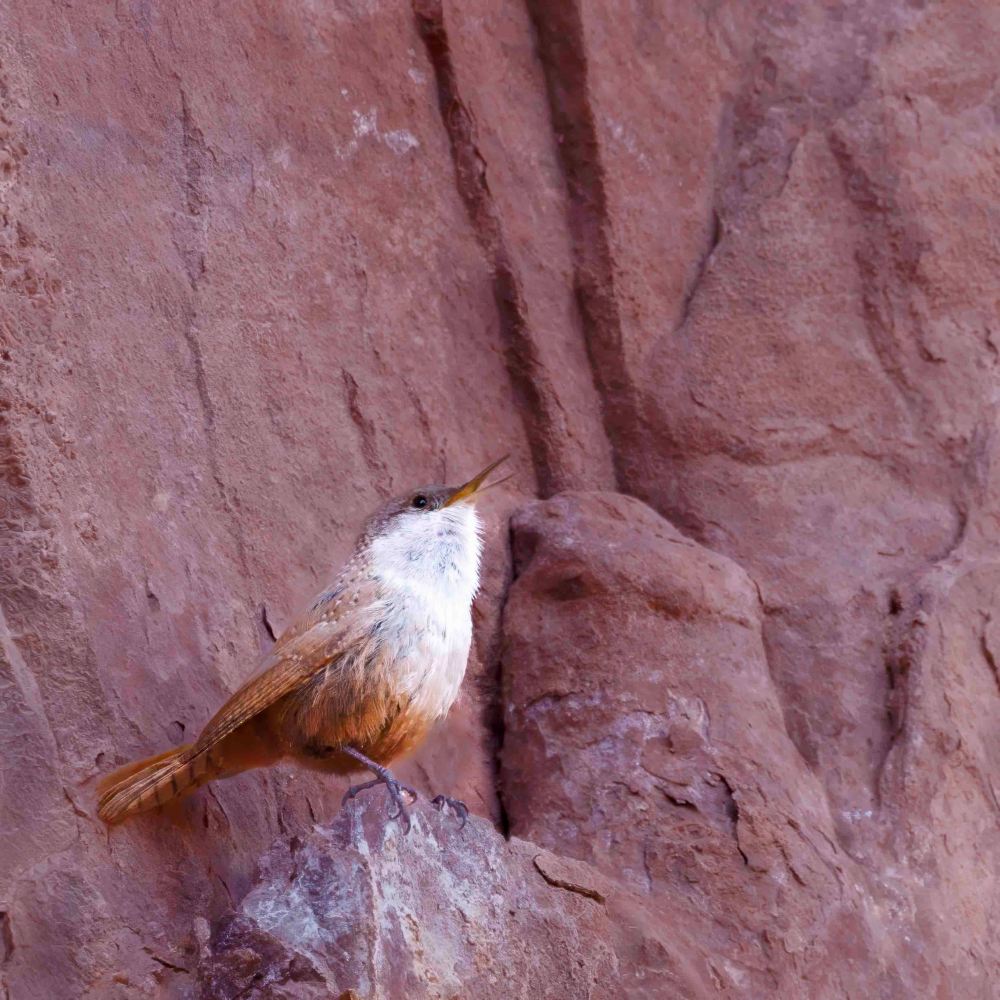
そして、ミソサザイの中でも最も小さいムナジロミソサザイ。大抵、姿は見えなくても声だけが渓谷に響いています。 And then there is the smallest of all the Wrens, the Canyon Wren. Most of the time, you can’t see them, but only hear their songs echoing through the canyon.
長い事、カメラに収める事ができませんでしたが、ついに成功しました。 For a long time, I was unable to capture it on camera, but I finally succeeded.
最後に、湖や沼地のこんな場所にいるのはヌマミソサザイです。 Lastly is the Marsh Wren that can be found in places such as lakes and marshes.
どのミソサザイもとっても小さい鳥なのに、鳴き声はとんでもなく大きく、自己顕示欲が強いです。 Although all Wrens are very small birds, their songs are outrageously loud and self-promoting.
「それならカメラに向かってポーズをとってくれてもいいんじゃないの?」と、文句を言いたくなるほど忙しく動き回って、カメラマン泣かせの鳥たちです。 “Why don’t you just pose for the camera then?” I wanted to complain, but the birds were so busy moving around that they made the photographer cry.
何はともあれ、ミソサザイ達、ありがとう!君たちと一緒に生活できる私たちはラッキーです。 At any rate, thank you all, Wrens! We are lucky to live with you guys.
スズメ小目の中には3つの上科があります。スズメ上科、ヒタキ上科、そしてウグイス上科です。そして、その他の7つの科は、多分、上科とされているものです。 There are three superfamilies within the Lesser Sparrow Family. They are the sparrow superfamily, the flycatcher superfamily, and the warbler superfamily. And the other seven families are probably (undefined) considered superfamilies.
Screenshot
実のところ、スズメ小目の分類はまだ進行形で、今後も変化する可能性があります。また、どのグループにも属していない鳥たちも存在します。帰る家がない鳥たちのようで、かわいそうな感じがします。(当然、彼らにとってはどうでもいいことなんですが。) As a matter of fact, the classification of the Lesser Sparrow Order is still a work in progress and is likely to change in the future. There are also birds that do not belong to any group. I feel sorry for them, as they seem to be birds that have no home to go back to. (Of course, it doesn’t matter to them.)
話をウグイス上科にもどします。 Let’s return to the Uguisuue family.
Screenshot
この科には1300種もの鳥が属していますが、そのほとんどは旧世界に住んでいます。だから私の手元にはほとんど写真がありません。でも、その中でも、ツバメ科の中の3羽の写真がありました。 There are 1300 species of birds belonging to this family, most of which live in the Old World. So I have very few pictures of them. But I did find pictures of three of them in the swallow family.
ミドリツバメの子供。Tree Swallow: maybe a juvenile 日本語名がみつかりません。Violet-green Swallowスナゴイツバメ Bank Swallow
ところで、話は少しずれますが、実は、この分類を始めるまで、アマツバメはツバメの仲間だと思っていました。その風貌から勘違いしていました。私の分類表の中でも新鳥類の一番初めに来ている鳥の仲間であることに、今、気がつきました。 By the way, this is a bit off topic, but I actually thought that the swift was a member of the swallow family until I started this classification. I was mistaken because of its appearance. But I just realized that it is one of a group of birds that comes at the very beginning of Neoaves in my taxonomy list.
アップデートしました。Updated.
今更ですが、ここに追記しておきます。アマツバメは超高速で飛ぶことができる鳥です。並行飛行では、ハヤブサより速いとされています。4本の足指が全て前を向いているユニークな鳥ですが、そのため、木の枝に捕まることはできません。 It’s a little late to add this, but I’ll add it here. The swift is a bird that can fly at very high speeds. In parallel flight, it is said to be faster than a falcon; it is a unique bird with all four toes pointing forward, which makes it incapable of perching on a tree branch.
岸壁の隙間の中から飛び出して来たばかりのハリオアマツバメ。 White-throated needletail swift just popped out from inside a crevice in the quay.
ツリスガラの名前は、彼らの巣作り方からきています。巣を吊り下げて、下から巣の中に入るような形にしてあるのが特徴です。 The name of Penduline Tit comes from their nesting method. They are unique in that their nests are suspended so that they can enter the nest from below.
ほとんどが旧大陸に住んでいますが、一種だけアメリカ大陸に住んでいます。そして、ラッキーなことに、その一種は、私たちが住んでいる地域に住んでいるんです。 Most of them live in the Old Continent, but only one species lives in the Americas. And lucky for us, that one species lives in the area where we live.
しかも、虫取り作業が好きな彼らは裏庭に頻繁にやって来て、丁寧に無料報酬で作業をしていってくれます。ありがたいことです。 Moreover, they like to work on insects, and they frequently come to our backyard and politely do the work for free. We are grateful for it.
彼らの名前は、アメリカツリスガラと言います。過去、私のブログにも頻繁に登場してくれました。 Their name is Verdin. They have appeared frequently on my blog in the past.
10cmぐらいのすばしっこい鳥で、好物の小さい虫や蜘蛛を捕まえるためなら、木の枝に逆さまにぶら下がることなど、へっちゃらです。 It is a swift and restless bird, about 10 cm long, and it is not afraid to hang upside down from a tree branch to catch small insects and spiders, which it likes to eat.
最近は、他の鳥に気を取られて撮ってあげていないので、来年春が近づいて来たらたくさん撮ってあげましょう。 I haven’t taken many pictures of them lately because I’ve been distracted by other birds, so next year when spring approaches, I’ll take more pictures of them.
シジュウカラ科には隣近所でよく見かける鳥たちが分類されています。名前は知らなくてもよく見かける鳥たちですよね。 Paroidae classifies birds that are often seen in our neighborhoods. Even if you don’t know their names, you see them all the time.
朝のご飯を咥えているクロイロコガラ Chestnut-backed Chickadee with breakfast in his mouth.ハイエボシガラ Oak Titmouse
そして、このシジュウカラ科が私の鳥分類表のどこに位置するかというと、こちらです。右下。 And here is where this family of Paridae is located on my bird taxonomy list. See at the bottom right.
Screenshot
ついに階層の奥深くまでやって来ました。字が小さくて見にくいかもしれませんね。また、分類名と使われ方もわかりにくかったので、ここで整理しておきます。 We have finally come deep into the hierarchy. It may be hard to see because the letters are so small. It was also difficult to understand the classification names and how they are used, so I’ll sort it out here.
マミジロコガラを「リンネ式階層分類体系」を元に書き換えると以下のようになります。 The following is a rewriting of Mountain Chickadee based on the “Linnaean taxonomy”.
ドメイン
真核生物
Domain
Eukaryota
界
動物界
Kingdom
Animalia
門
脊索(せきさく)動物
Phylum
Chordata
亜門
脊椎動物
Sub phylum
Vertebrata
綱
鳥類
Class
Aves
下綱
新顎類(しんがくるい)
infra class
Neognathae
クレード
新鳥類
Clade
Neoaves
クレード
陸の鳥類*
Clade
Telluraves
クレード
真ハヤブサ形目
Clade
Eufalconimorphae
目
スズメ目
Order
Passeriformes
亜目
スズメ亜目
Suborder
Passeri
小目
スズメ小目
Parvorder
Passerida
上科
シジュウカラ上科
Super family
Passeridea
科
シジュウカラ科
Family
Paridae
属
コガラ属
Genus
Poecile
種
マミジロコガラ
Species
Mountain chickadee
* 「陸の動物」の日本語訳はなかったので勝手に訳しました。
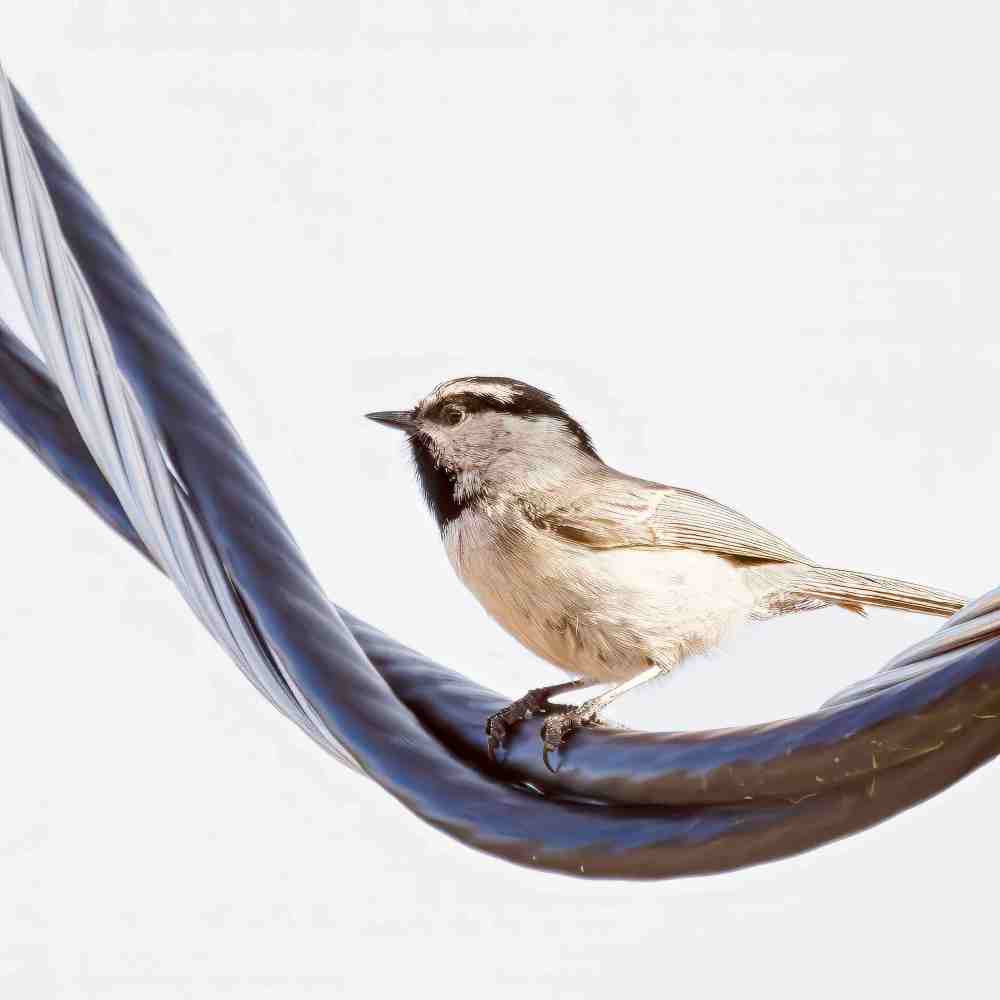
マミジロコガラ Mountain Chickadee
ここで注目したいのは、突然、「クレード」という言葉が出て来たことです。リンネの分類学では使われていません。これは分岐分類学が使う用語です。この新しい分岐分類学に関しては賛否両論あるようですが、それを話し始めると鳥の分類に戻れなくなるので書きません。ご興味のある方はこちらをご覧ください。https://cladistics.org/cladistics/ (英語なので、翻訳ツールなどを使ってご覧ください。) It is important to note here that the word “clade” has suddenly appeared. It is not used in Linnaean taxonomy. This is the term used by Cladistics taxonomy. There seems to be some controversy about this new Cladistics taxonomy, but I won’t write about it because if I start talking about it, I won’t be able to go back to bird taxonomy. If you are interested, please see here: https://cladistics.org/cladistics/
私の意見は、分類方法を’勉強することに興味があるわけではないので、分類学でも、分岐学でもどちらでもいいです。一羽の鳥を見たら名前と特徴がわかれば十分なんですね。ただ、世界中に1万種もの鳥がいるので、私の写真も少しは整理整頓させておきたいと思っているだけです。だから、まだ見たことのない鳥、興味のない鳥、今後も見ることができない鳥はさっさと諦めて表から外しています。 My opinion is that I am not interested in ‘studying’ classification methods, so either Linnaean or Cladistics is fine. If I see one bird, it is enough for me to know its name and characteristics. I just want to keep my photos a little more organized, since there are 10,000 species of birds in the world. So, I quickly give up and remove from the table those birds that I have not yet seen, have no interest in, or probably won’t see in the future.
私の分類表作りはこれからもしばらく続きますが、その過程の中ですでに多くのことを学びました。でも、それ以上に得たものは、大袈裟な表現になりますが、私の心に平安をもたらしてくれました。 My work on the classification table will continue for some time to come, and I have already learned a great deal in the process. But what I have gained even more, and this may be an exaggeration, is peace of mind.
例えば、こんな状況を想像してみてください。無数の鳥たちが頭の中をいつも規則なく飛び交っている状況です。それが、鳥たちの家を作ってあげたことで、少しずつ家に戻っていくわけです。最終的には家の外にいる鳥はいなくなる。時々鳥の名前を呼ぶと家から出て来てご挨拶してくれる。そんな平安さでしょうか。 For example, imagine this situation. This is a situation where countless birds are always flying around in your head randomly. That is why you have built homes for the birds, and they gradually return to their homes. Eventually there will be no birds outside the houses. Sometimes when you call a bird’s name, it will come out of the house and greet you. It is that kind of peacefulness. Isn’t it great?
「頭に冠をつけているエボシガラ君、出て来てください。」 ”Come out, Mr. Titmouse, who wears the crown on your head.”
全世界で46種、カラス、ワタリガラスについて書きます。 This post is about 46 species worldwide, crows and ravens.
以下、冬のブライスキャニオン国立公園、ミゾレ混じりの雨の中、じっと耐え忍んでいるワタリガラスを撮りました。私の写真コレクション中、たった一枚のワタリガラスの写真です。 Below is a photo of a raven patiently enduring the rain mixed with sleet in Bryce Canyon National Park in the winter. It is the only photo of a raven in my collection.
すでに多くの学者がカラスの驚異的な頭脳レベルを報告しているので、ここでは少しだけ書きます。チンパンジーと同じぐらい、人間の子供の7歳児ぐらいの知能を持っていると言われています。ちなみに、オウムも知能の高い鳥とされていますが、カラスにはかないません。 Many scholars have already reported the amazing brain level of crows, so I will write a few words here. They are said to be as intelligent as a chimpanzee and as intelligent as a 7-year-old human child. Incidentally, the parrot is also considered an intelligent bird, but it is not as intelligent as the crow.
Screenshot
とりわけカレドニアガラスを使った知能テストは有名です。彼らは細い筒の中にいる虫を捕まえるために、自分で細い道具を作ってしまい、捕獲に成功しました。(日本語のこのページに詳しく紹介されています。) In particular, the Caledonian crow is famous for its intelligence tests. They made their own thin tool to catch insects in a thin tube and succeeded in capturing them. (You can read more about it on this page in English.)
その他、人間の顔の認識もできるし、鏡に写っている自分も認識できます。また、目的達成のために我慢することもできるんですよ。大人になりきれない人間より賢い!!! In addition, they can recognize human faces as well as their own faces in a mirror. They can also persevere to achieve their goals. It seems that they are smarter than some humans who can’t grow up!
カリフォルニアコンドルとワタリガラス California Condor and Raven (photo contributed by Van Strohm Photography)
賢いが故に、少し怖いですよね。体もタカと同じぐらいの大きさなので、威圧感があります。その上に、タカとは違って雑食なので、食べ物のある所では辛抱強く居座ってゲットするまで賢く立ち振る舞う。 Because they are so smart, they are a little scary. Their bodies are about the same size as hawks, so they are intimidating. On top of that, unlike hawks, they are omnivores, so they will patiently stay where there is food and be persistent until they get it.
漁村のワタリガラス。捕獲してきた魚を子供のカラスに食べさせている。 A raven in a fishing village feeding captured fish to their young. (photo contributed by Van Strohm Photography)
こういう視点から、私の持つカラスのイメージは悪いです。 Because of their persistence, my feeling about them is not that good.
でも、この知能の高さがわかった今、今後はうまく共存する方法を模索できないのかなーとも思います。例えば、カカシを置く代わりに、逆に学習させて農作業に参加してもらうとか。 But now that we know how intelligent they are, I wonder if we can’t find a way to coexist with them well in the future. For example, instead of placing scarecrows, we could let them learn and participate in farming with farmers.
私の鳥の分類も、よく見かける鳥の領域に入ってきました。今日はカケスについて書きます。 Now my classification of birds has entered the realm of commonly seen birds. Today I write about Jays.
Screenshot
カケスはカラス科に属する鳥で、環境にうまく適応して全世界に広がっていきました。 Jays belongs to the crow family and has spread throughout the world by adapting well to its environment.
メキシコカケス @ ビッグベンド国立公園 Mexican Jay @ Big Bend National Park
雑食だからでしょうか。カラスのように逞しく賢いです。 Is it because they are omnivores? They are tough and smart like crows.
アオカケス@ミズーリ州 Blue Jay @ Missouri
旧世界のカケスと新世界のカケスでは見かけがずいぶん違う様です。私は新世界のカケスの中でも数種しか見たことがありませんが、ほとんどが青い色をしています。一方、旧世界のカケスはカラフルな色をしている種が多いので、機会があったらぜひ、見てみたいものです。 The Old World and New World jays look very different. I have only seen a few species of New World jays, and most of them are blue in color. On the other hand, many Old World jays are colorful. I would like to see them if I have the chance.
英語名の ”Jay” は鳴き声が「ジェージェー」という鳴き声なので、その鳴き声が由来とされています。 It is said that the English name “Jay” is derived from its call, since its cry is a “jay-jay” cry.
ウッドアウスカケス @ ユタ州 Woodhouse’s Scrub-Jay @ Utah
一方、日本語名の「カケス」は、漢字で表記すると「懸巣」と書きます。巣を作る際に木の枝と枝との間に無数の小枝枝を懸けて、お椀のような巣を作ります。この巣作りが元になって「カケス」と呼ばれる様になったということです。 On the other hand, the Japanese name “Kakesu” is written in Kanji characters 「懸巣」meaning as “suspend nest.” When they build their nests, they hang numerous twigs between tree branches to create a bowl-like nest. The name “Jay” is derived from this nest-building process.
ステラーカケス @ カリフォルニア州 Steller’s Jay @ California
ラテン語(学名)では Garrulus glandarius と表記されます。arrulus が「おしゃべり」、 glandarius は「ドングリ(の好きな)」を意味するそうです。この名前はカケスの食べ物から名付けられたんですね。 In Latin (scientific name) it is spelled Garrulus glandarius, where ”Garrulus ” means “talkative” and “glandarius” means “acorn (lover of).” So the Latin name is named after the Jay’s food.
メキシコカケス @ ビッグベンド国立公園 Mexican Jay @ Big Bend National Park
面白い。他の言語でのカケスの名前の由来を調べたらもっと面白い発見があるのでしょうかね? Interesting… Could we find more interesting discoveries if we look into the origin of the name of the jay in other languages?
















 aomi3 now