ヒメレンジャクは私の好きな鳥の一種です。The Cedar Waxwing is one of my favorite birds.
ヒメレンジャク Cedar Waxwing
黒い覆面をしてスムーズな羽根を持ち、冠へのラインが格好いい。ロビンと同じぐらいのサイズで15cmぐらいの大きさです。 They have black masks, smooth wings, and a cool line to the crown. It is about the same size as a robin, about 15 cm.
私の分類表の中に、ついに登場してくれました。 They finally appeared in my classification table.
ピロカンサに赤い実がなる頃、たくさん集まって来ます。 During the time when the pyracantha produces red berries, they gather in large numbers.
3月のある朝、まさに旅に出ようと荷物を車に乗せたところで前庭を見ると、ピラカンサの横に植えてある白樺の木の上にヒメレンジャクがとまっていました。 One morning in March, just as we were loading our luggage into the car for the trip, we looked out into the front yard and saw Cedar Waxwings perched on birch trees planted next to pyracantha trees.
しかも、大軍でした。 And it was a large force.
時間がなかったので、数枚撮っただけで、泣く泣く出発しました。きっとこんな機会がまたあるだろうと思おもいながら。でも、その後そんなチャンスは、まだ訪れて来てくれていません。 We had no time, so we took only a few pictures and departed in tears. I thought that there would be another opportunity like this. After that, however, such an opportunity has not come.
多分、これが2024年最後のポストになります。みなさん、良いお年をお迎えください! This will probably be my last post for 2024. I wish you all a happy new year!
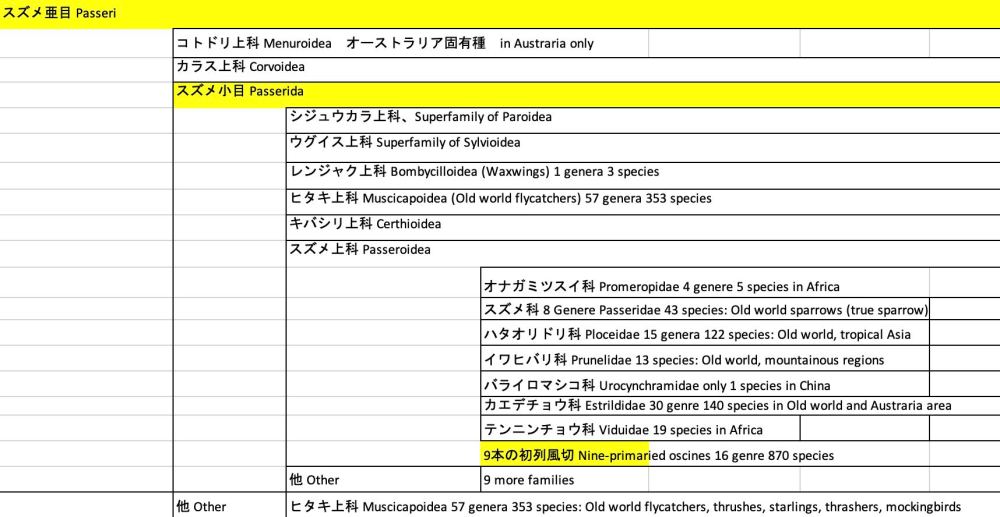
スズメ小目の中には3つの上科があります。スズメ上科、ヒタキ上科、そしてウグイス上科です。そして、その他の7つの科は、多分、上科とされているものです。 There are three superfamilies within the Lesser Sparrow Family. They are the sparrow superfamily, the flycatcher superfamily, and the warbler superfamily. And the other seven families are probably (undefined) considered superfamilies.
Screenshot
実のところ、スズメ小目の分類はまだ進行形で、今後も変化する可能性があります。また、どのグループにも属していない鳥たちも存在します。帰る家がない鳥たちのようで、かわいそうな感じがします。(当然、彼らにとってはどうでもいいことなんですが。) As a matter of fact, the classification of the Lesser Sparrow Order is still a work in progress and is likely to change in the future. There are also birds that do not belong to any group. I feel sorry for them, as they seem to be birds that have no home to go back to. (Of course, it doesn’t matter to them.)
話をウグイス上科にもどします。 Let’s return to the Uguisuue family.
Screenshot
この科には1300種もの鳥が属していますが、そのほとんどは旧世界に住んでいます。だから私の手元にはほとんど写真がありません。でも、その中でも、ツバメ科の中の3羽の写真がありました。 There are 1300 species of birds belonging to this family, most of which live in the Old World. So I have very few pictures of them. But I did find pictures of three of them in the swallow family.
ミドリツバメの子供。Tree Swallow: maybe a juvenile 日本語名がみつかりません。Violet-green Swallowスナゴイツバメ Bank Swallow
ところで、話は少しずれますが、実は、この分類を始めるまで、アマツバメはツバメの仲間だと思っていました。その風貌から勘違いしていました。私の分類表の中でも新鳥類の一番初めに来ている鳥の仲間であることに、今、気がつきました。 By the way, this is a bit off topic, but I actually thought that the swift was a member of the swallow family until I started this classification. I was mistaken because of its appearance. But I just realized that it is one of a group of birds that comes at the very beginning of Neoaves in my taxonomy list.
アップデートしました。Updated.
今更ですが、ここに追記しておきます。アマツバメは超高速で飛ぶことができる鳥です。並行飛行では、ハヤブサより速いとされています。4本の足指が全て前を向いているユニークな鳥ですが、そのため、木の枝に捕まることはできません。 It’s a little late to add this, but I’ll add it here. The swift is a bird that can fly at very high speeds. In parallel flight, it is said to be faster than a falcon; it is a unique bird with all four toes pointing forward, which makes it incapable of perching on a tree branch.
岸壁の隙間の中から飛び出して来たばかりのハリオアマツバメ。 White-throated needletail swift just popped out from inside a crevice in the quay.
フクロウの目は人間の目に比べると、感度が100倍、視力は10倍と言われています。視野は110度で、眼球が動かない代わりに、首が360度回ります。 Compared to the human eye, the owl’s eye is said to have 100 times greater sensitivity and 10 times greater visual acuity. Its field of view is 110 degrees, and instead of its eyeballs being mobile, its neck rotates 360 degrees to see in all directions.
こちら、ニシアメリカオオコノハズクです。大きさはわずか 20cm ぐらいです。まん丸の目が可愛い。 This is a Western Screech owl. It is only 8 inches in length. Its round eyes are cute, aren’t they?
横から見ても、丸いですね。 It is round even from the side.
もっと近寄って、まさに目を真横から見ると、驚きます。 It is amazing when you get closer and look right at the very eyes.
眼球が飛び出て丸いんですね。これは、超ワイドレンズの、魚眼レンズよりはるかに丸いんです。 Its eyeballs pop out and are so round. This is much rounder than a super-wide fish-eye lens.
Screenshot
フクロウたちに見える世界は、きっと私の想像を超えていることでしょう。更にすごいことは、そんなに強力な目を持っているにも関わらず、彼らは目を使わなくても(目を閉じていても)獲物を正確に捕まえることができるんです。聴力が発達しているからなんですね。 The world that owls can see is surely beyond my imagination. What is even more amazing is that despite having such powerful eyes, they can accurately catch their prey without using their eyes (even with their eyes closed). It’s because they have well-developed hearing.
厳しい自然の中で生きて来た彼らの卓越した能力に、感動します。 Their outstanding ability to live in the harsh natural environment is inspiring.
さて、忙しかったクリスマスも過ぎたので、これから再び鳥の分類作業にとりかかります。 Well, now that the busy Christmas season has passed, I am going to start the bird sorting process again.
今年のジンジャーブレッドハウスは、去年に比べると、格段に上達しました。 My gingerbread house this year is much improved compared to last year.
忙しい日々が続きますが、世界中の、いえ、宇宙中のすべての人々に安らかなひと時が過ごせますよう、お祈りいたします。 I wish all people around the world, and indeed throughout the universe, a moment of peace in these busy days.
ツリスガラの名前は、彼らの巣作り方からきています。巣を吊り下げて、下から巣の中に入るような形にしてあるのが特徴です。 The name of Penduline Tit comes from their nesting method. They are unique in that their nests are suspended so that they can enter the nest from below.
ほとんどが旧大陸に住んでいますが、一種だけアメリカ大陸に住んでいます。そして、ラッキーなことに、その一種は、私たちが住んでいる地域に住んでいるんです。 Most of them live in the Old Continent, but only one species lives in the Americas. And lucky for us, that one species lives in the area where we live.
しかも、虫取り作業が好きな彼らは裏庭に頻繁にやって来て、丁寧に無料報酬で作業をしていってくれます。ありがたいことです。 Moreover, they like to work on insects, and they frequently come to our backyard and politely do the work for free. We are grateful for it.
彼らの名前は、アメリカツリスガラと言います。過去、私のブログにも頻繁に登場してくれました。 Their name is Verdin. They have appeared frequently on my blog in the past.
10cmぐらいのすばしっこい鳥で、好物の小さい虫や蜘蛛を捕まえるためなら、木の枝に逆さまにぶら下がることなど、へっちゃらです。 It is a swift and restless bird, about 10 cm long, and it is not afraid to hang upside down from a tree branch to catch small insects and spiders, which it likes to eat.
最近は、他の鳥に気を取られて撮ってあげていないので、来年春が近づいて来たらたくさん撮ってあげましょう。 I haven’t taken many pictures of them lately because I’ve been distracted by other birds, so next year when spring approaches, I’ll take more pictures of them.
夢の中、タンポポの英語名の語源がわからなくて苦しんでいました。 I was struggling in my dream to understand the origin of the English name of the dandelion.
日本語名は、花が咲き終わった後の綿球の姿が「タンポ」という綿を丸めて作る一種の画材に似ているところから来ているという説があります。ま、フワフワと優しい感じが名前とマッチしているので、すごく納得できます。 The Japanese name “tampopo” is said to come from the appearance of the blowballs after the flowers have finished blooming, which resemble a kind of drawing material made by rolling up cotton called “tampo”. Well, the fluffy and gentle feeling matches the name, so it makes a lot of sense to me.
ところが、英語名のダンディライオンはまったく納得がいきません。言葉の響きは「ダンディなライオン」を想像させ、花とマッチしません。 On the other hand, the English name Dandelion is not satisfactory at all. The sound of the word conjures up images of a “dandy lion,” which does not match the flower.
だから、夢の中で「なぜ?」と色々な人に聞き回っていました。何回説明してもらっても理解できず、その苛立ちに叫びそうになったところで目が覚めました。 So, in my dream, “Why?” I was asking around to various people. No matter how many times they explained it to me I could not understand, and I woke up just as I was about to scream in frustration.
早速その悪夢をバンちゃんに話したら、その場で名前の由来を検索してくれました。 I immediately told Ban-chan about the nightmare and he searched for the origin of the name on the spot.
よみながら笑ってしまいました。なぜなら、日本語の由来が花を基にしているのに対して、英語/フランス語の由来は「花」ではなく、「葉」を基にしているからです。 I laughed as I read it. Because while the Japanese origin is based on flowers, the English/French origin is based on “leaves”, not “flowers”.
「葉の形がライオンの牙の形に似ている。」 “The shape of the leaves resembles the shape of a lion’s fangs.”
Screenshot
目の付け所が違ったんですね。この意外さに嬉しくなってしまいました。悪夢に感謝しましょうかね。また、これで思い出した花がありました。 The way Japanese and Europe looked at it was different. I was pleasantly surprised by this unexpectedness. I guess I should thank my nightmares. Also, this reminded me of another flower.
Dwarf Bear Claw Poppy (日本語名なし。直訳:クマの爪をもつケシの花)
この花については以前私のブログに書いています。この花の名前も花を見ただけでは理解できません。この花の根元の方の葉先を見ると納得できます。ぜひ読んでみてください。 I have written about this flower before in my blog. The name of this flower cannot be understood just by looking at the flower. But if you look at the leaf tips at the base of this flower, it makes sense. Please read it.
シジュウカラ科には隣近所でよく見かける鳥たちが分類されています。名前は知らなくてもよく見かける鳥たちですよね。 Paroidae classifies birds that are often seen in our neighborhoods. Even if you don’t know their names, you see them all the time.
朝のご飯を咥えているクロイロコガラ Chestnut-backed Chickadee with breakfast in his mouth.ハイエボシガラ Oak Titmouse
そして、このシジュウカラ科が私の鳥分類表のどこに位置するかというと、こちらです。右下。 And here is where this family of Paridae is located on my bird taxonomy list. See at the bottom right.
Screenshot
ついに階層の奥深くまでやって来ました。字が小さくて見にくいかもしれませんね。また、分類名と使われ方もわかりにくかったので、ここで整理しておきます。 We have finally come deep into the hierarchy. It may be hard to see because the letters are so small. It was also difficult to understand the classification names and how they are used, so I’ll sort it out here.
マミジロコガラを「リンネ式階層分類体系」を元に書き換えると以下のようになります。 The following is a rewriting of Mountain Chickadee based on the “Linnaean taxonomy”.
ドメイン
真核生物
Domain
Eukaryota
界
動物界
Kingdom
Animalia
門
脊索(せきさく)動物
Phylum
Chordata
亜門
脊椎動物
Sub phylum
Vertebrata
綱
鳥類
Class
Aves
下綱
新顎類(しんがくるい)
infra class
Neognathae
クレード
新鳥類
Clade
Neoaves
クレード
陸の鳥類*
Clade
Telluraves
クレード
真ハヤブサ形目
Clade
Eufalconimorphae
目
スズメ目
Order
Passeriformes
亜目
スズメ亜目
Suborder
Passeri
小目
スズメ小目
Parvorder
Passerida
上科
シジュウカラ上科
Super family
Passeridea
科
シジュウカラ科
Family
Paridae
属
コガラ属
Genus
Poecile
種
マミジロコガラ
Species
Mountain chickadee
* 「陸の動物」の日本語訳はなかったので勝手に訳しました。
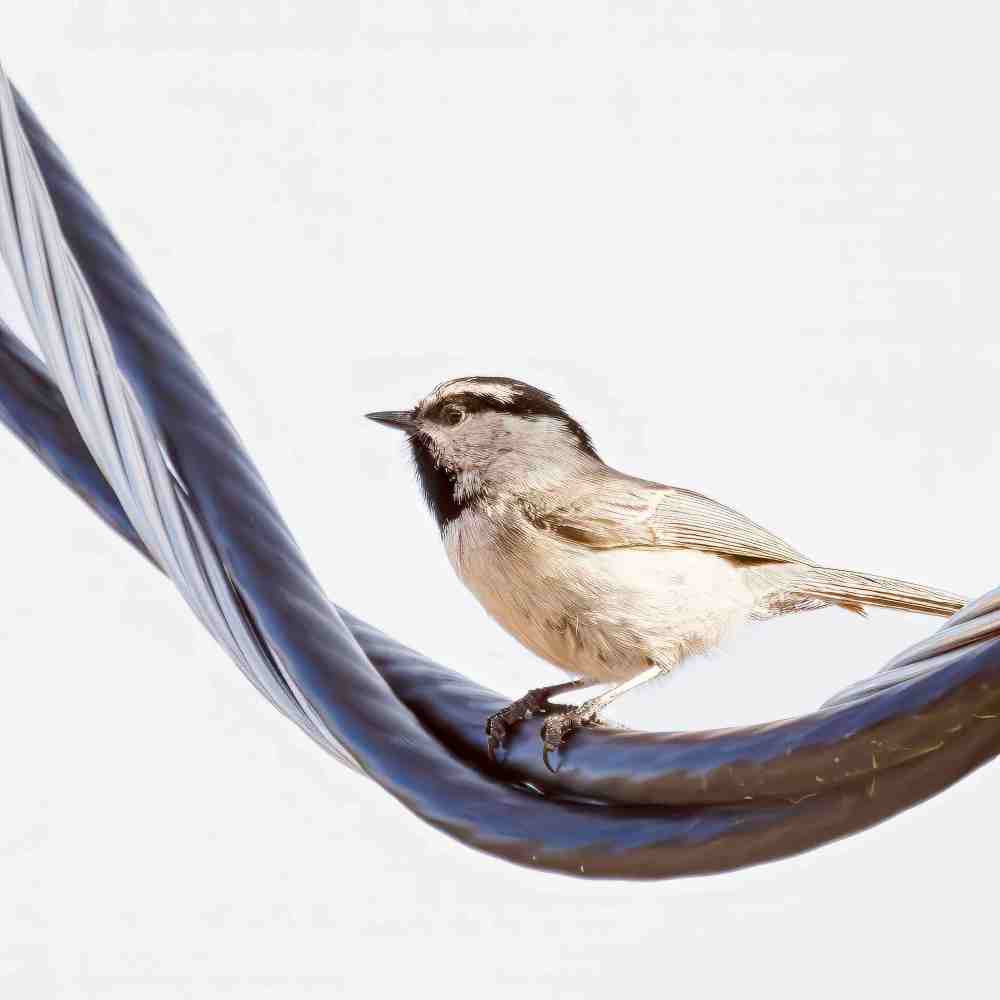
マミジロコガラ Mountain Chickadee
ここで注目したいのは、突然、「クレード」という言葉が出て来たことです。リンネの分類学では使われていません。これは分岐分類学が使う用語です。この新しい分岐分類学に関しては賛否両論あるようですが、それを話し始めると鳥の分類に戻れなくなるので書きません。ご興味のある方はこちらをご覧ください。https://cladistics.org/cladistics/ (英語なので、翻訳ツールなどを使ってご覧ください。) It is important to note here that the word “clade” has suddenly appeared. It is not used in Linnaean taxonomy. This is the term used by Cladistics taxonomy. There seems to be some controversy about this new Cladistics taxonomy, but I won’t write about it because if I start talking about it, I won’t be able to go back to bird taxonomy. If you are interested, please see here: https://cladistics.org/cladistics/
私の意見は、分類方法を’勉強することに興味があるわけではないので、分類学でも、分岐学でもどちらでもいいです。一羽の鳥を見たら名前と特徴がわかれば十分なんですね。ただ、世界中に1万種もの鳥がいるので、私の写真も少しは整理整頓させておきたいと思っているだけです。だから、まだ見たことのない鳥、興味のない鳥、今後も見ることができない鳥はさっさと諦めて表から外しています。 My opinion is that I am not interested in ‘studying’ classification methods, so either Linnaean or Cladistics is fine. If I see one bird, it is enough for me to know its name and characteristics. I just want to keep my photos a little more organized, since there are 10,000 species of birds in the world. So, I quickly give up and remove from the table those birds that I have not yet seen, have no interest in, or probably won’t see in the future.
私の分類表作りはこれからもしばらく続きますが、その過程の中ですでに多くのことを学びました。でも、それ以上に得たものは、大袈裟な表現になりますが、私の心に平安をもたらしてくれました。 My work on the classification table will continue for some time to come, and I have already learned a great deal in the process. But what I have gained even more, and this may be an exaggeration, is peace of mind.
例えば、こんな状況を想像してみてください。無数の鳥たちが頭の中をいつも規則なく飛び交っている状況です。それが、鳥たちの家を作ってあげたことで、少しずつ家に戻っていくわけです。最終的には家の外にいる鳥はいなくなる。時々鳥の名前を呼ぶと家から出て来てご挨拶してくれる。そんな平安さでしょうか。 For example, imagine this situation. This is a situation where countless birds are always flying around in your head randomly. That is why you have built homes for the birds, and they gradually return to their homes. Eventually there will be no birds outside the houses. Sometimes when you call a bird’s name, it will come out of the house and greet you. It is that kind of peacefulness. Isn’t it great?
「頭に冠をつけているエボシガラ君、出て来てください。」 ”Come out, Mr. Titmouse, who wears the crown on your head.”
鳥の羽の数が何本あるか気にしたことがありますか? Have you ever wondered how many feathers a bird has?
まさか私が鳥の羽の数についてブログに書く日が来るとは想像もできませんでした。でも、スズメ小目の分類を調べていたら、分類上、鳥の羽の数が重要であることがわかってきました。そこで、今日は羽の本数について書きます。 I never imagined that the day would come when I would be blogging about the number of feathers on a bird. But while researching the classification of the small order of sparrows, I came to realize that the number of feathers on a bird is important for classification purposes. So today I will write about the number of feathers.
鳥が飛翔するためには、風切羽(かざきりばね)を使います。そして、風切羽は初列風切(しょれつかざきり)と次列風切(じれつかざきり)に分かれています。実物の例をハヤブサ君に登場していただいて紹介しましょう。ハヤブサ君、羽を広げてみてください。 Birds use flight feathers in order to fly. They are divided into the primaries and the secondaries. Let me show you an actual example with Mr. Prairie falcon feathers. Please spread your wings, Mr. Prairie falcon.
結構わかりやすいですね。初列風切は10本あるのがわかります。次列風切は12-13本と言われています。 It is quite easy to see. The primaries appear to have 10. The secondaries are said to have 12-13.
上の図を見ると、更にわかりやすい。そして、大切なことは、羽の数は鳥の種類によって違うということです。 The diagram above makes it even clearer. And the important thing to remember is that the number of feathers depends on the type of bird.
以下、様々なWebサイトを元に表にまとめました。正確さに関しては保証できません。ここで注目したいのは、初列風切の数が9本のグループについてです。 The following table is based on various websites. I cannot vouch for its accuracy. We would like to focus on the group with 9 primaries.
鳥の種 Species
羽の本数 Feather count
初列風切 Primaries
ダチョウ Ostriches
16
フラミンゴ Flamingos
12
ワシ Eagle
10
スズメ上科内の1部の鳥 Small group in Passeroidea
9
ペンギン Penguins
0
次列風切 Secondaries
アホウドリ Albatrosses
40
ワシ Eagle
11
スズメ目、ハチドリ Passeriformes, Hummingbirds
6
なぜなら、このグループは9本の羽を持っているということで、Nine-primaried oscines (9本の初列風切をもつソングバード)という名前で分類されているからです。羽の数が分類名になっているんです。Because this group is classified under the name “Nine-primaried oscines (songbirds with nine primaries)”. The number of wings is the name of the taxonomy.
Screenshot
私の鳥の分類も佳境にさしかかりました。ただ、分類の歴史を調べれば調べるほど複雑怪奇で私の頭の中は大混乱をおこしています。なぜなら、先学者たちが試行錯誤の末に分類したものがDNA鑑定で違うグループに移ったりしつつ、まだ未解決の分野がたくさん残っているからです。 I have reached the climax of my bird classification. However, the more I look into the history of classification, the more complicated and bizarre it is, and my mind is in turmoil. This is because there are still many unresolved areas, such as the classification of birds that were made through trial and error by predecessors, and then moved to different groups based on DNA analysis.
特にスズメ小目の世界の分類は明確な違いが示されていなものが多いです。そんな中で、9本の羽しかないという理由でグループ分けしているのは、私にも理解できる明快な根拠に基づいているのでありがたいです。 There are many classifications in the world, especially in Passerida Order, that do not show clear differences. In such a situation, I am grateful that the groupings are based on the fact that they have only nine wings, which is a clear rationale that I can understand.
キイロアメリカムシクイ Yellow Warbler
ということで、次回からスズメ小目の鳥について書きます。 So, I will write about Passerida birds in the next issue.
10本と11本の風切羽がよくわかります。白頭鷲の子供 Can you count 10 primaries and 11 secondaries? Juvenile Bald Eagle






 aomi3 now