Monthly Archives: June 2020

コロラド川のコンドル – Condor at Colorado River


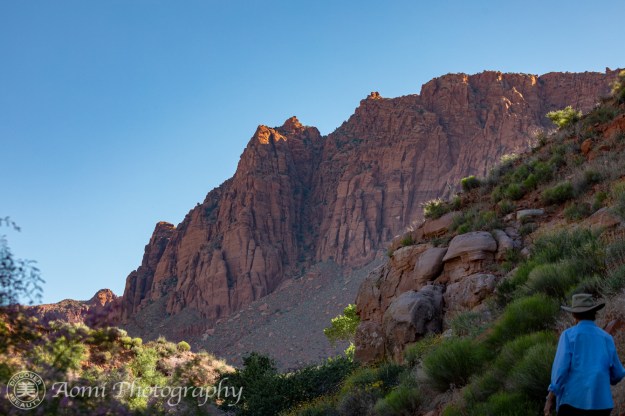
バーミリオンクリフ国定公園 には一般公開されていない場所があります。抽選で選ばれた20人限定が行けるCoyote Buttes の The Wave という場所です。私たちは勿論すでに申し込んでありますが、早くても10月以降でないと行けません。待ちきれない私たちは、下見の意味でバーミリオンクリフぐるりと回る 89 号線を走ってみることにしました。 – A certain location in the Vermillion Cliffs National Monument is open to public by permit only.  It’s called the Wave at Coyote Buttes, and only 20 people by lottery can go per day.  We have already applied for October’s lottery, the earliest we can apply for.  So we went to the Vermillion Cliffs as a preview by driving through HWY89 which runs around the monument.
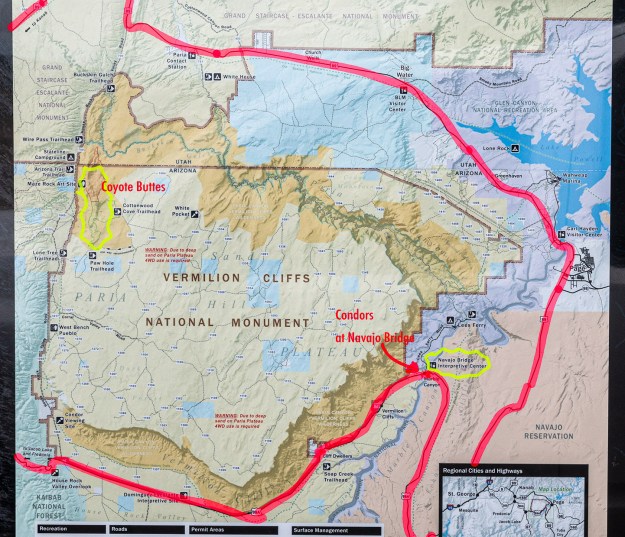
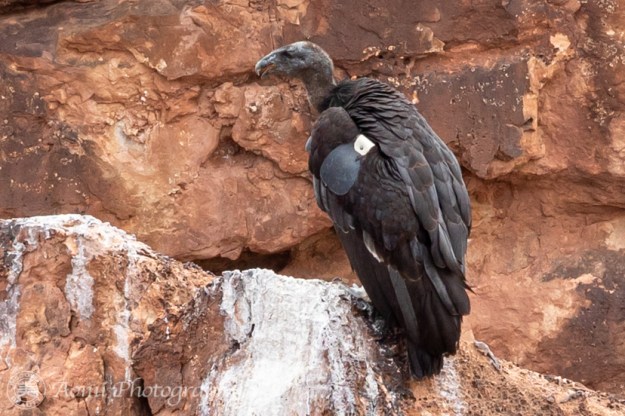
すぐそばにはグランドキャニオン国立公園が南に続いています。つまり、コロラド川が流れているわけです。そして、コロラド川に架かるナバホ橋、ほんの少し休憩するために立ち寄っただけの橋でしたが、そこでとんでもない”おまけ”をいただいてしまいす。私とバンちゃんへの誕生日プレゼントみたい。 – There is Grand Canyon National Park south of the monument.  It means that the Colorado river is running there as well.  We stopped to rest a bit at the Navajo Bridge crossing the river.  Although the intention was a short visit, we ended up staying there a while because we received an unexpected present from nature for our birthdays, mine in May and Banchan’s in June.

カリフォルニア コンドルの子供。- A juvenile California Condor

そういえば、去年の5月にもザイオン国立公園で”1K”が生まれています。すでにデータベースにも記載されていますが、性別はまだわかっていないようですね。 – Come to think of it, a condor, “1K”, was born in Zion National Park in May last year as well.  It’s already listed in the condor database, but the sex is still unknown.

全てのコンドルにはタグとアンテナが翼に取り付けられています。この子にもすでにタグとアンテナが付いていますが、名前がまだないようです。まだうまく飛べないようなところを見ると、去年遅く産まれたのでしょうか。近くの崖から橋の下の鉄骨まで飛んできましたが、強風に飛ばされそうです。- Name tags and a radio antenna should have been attached to all condors.  This condor does have tags and an antenna on the wings already, but it seems that it doesn’t have a name yet.  I observed that this one couldn’t fly well, though it was able to fly from the nearby cliff to the supporting structure under the bridge.  And, omg, be careful!  It could  have been blown away by a gust of wind.

他の3羽はすでに遠くの方まで飛んで行ってしまいましたが、この子はじっと我慢しているようです。- There were three other condors that soared away.  But this one patiently stayed there.
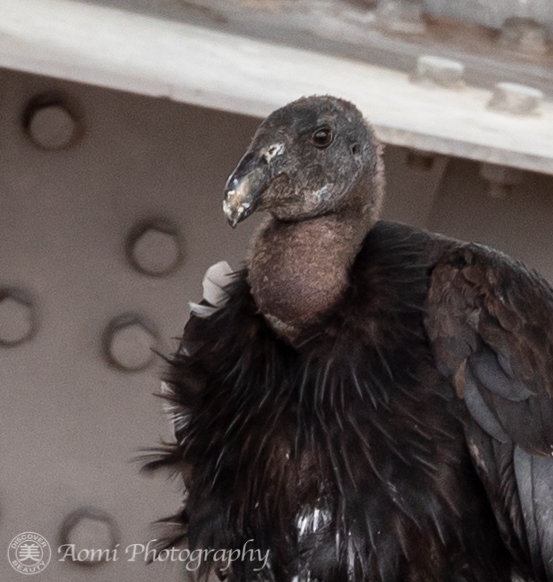
次の写真はアイダホ出身の”XX”という名前のオスの子供。まだ2歳です。- The next picture is of “XX”, a two year old male condor.

平均 5-6 ヶ月ぐらいで巣立ちをし、一年ぐらいは親から食べ物をもらったり、飛び方や食料確保の訓練を受けるようです。ということは、ようやく自立できるようになったかなという時期なのかもしれません。  The average fledgling timing is about 5-6 months after hatching. Then the fledgling stays with the parents for a year so that they can get food from parents, learn how to fly, and learn how to get food.  Based on that, this condor could be independent by now.

ポートランド出身の”55”という名前のメスの成長したコンドル。- This is “55”, a fully grown female condor which was raised in Portland.

同じくポートランド出身の”H9″という名前のメスの成長したコンドル。- This is “H9”, a fully grown female condor raised in Portland, as well.

おや?雄じゃないの? – Wait a minute, shouldn’t there be a male condor?

コンドル夫婦は生涯共にすると記憶していたので、コンドルデータベースの間違いかな?と思っい調査をして見ました。結果、赤ちゃんコンドルを育てるのは大変なことなので、よくメス2羽とオス1羽、またはその逆もありですが、3羽交代で育児をすることがよくあるそうです。 – I remembered that condor pairs stay together for their entire lives, so I researched it in case it’s a mistake in the database.  Apparently raising a condor baby is a very hard job.  So often a third condor, could be two males and one female, or the other way around, join the parenting and work together.
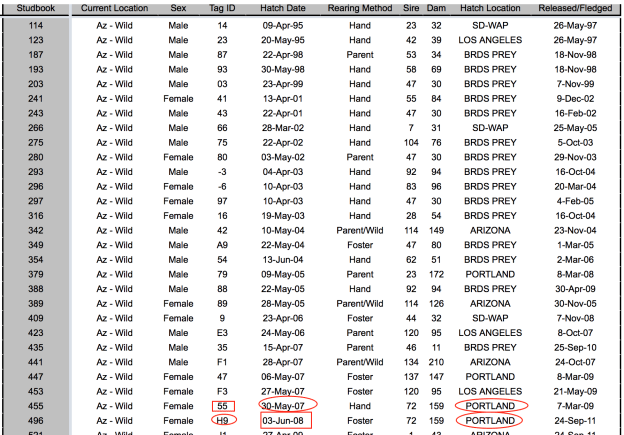
昨日はお父さんを見かけなかっただけなんでしょうか。 – Does this mean that we simply didn’t see daddy, a male condor, yesterday?

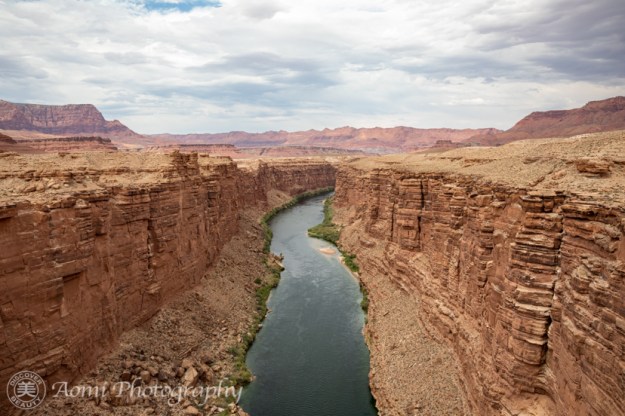
コロラド川に削られて、カイバブ層、トロウィープ層、ココニノ砂岩層など 2.6 億年ぐらい前の地層が露出しています。コンドルが飛ぶには高い崖が必要なので、コロラド川沿いは絶好の場所なんですね。- Colorado river carved through the Colorado plateau exposing 260 million year old strata, Kaibab, Toroweap, and Coconino sandstone formations.  The deeply cut canyon like the Colorado river is a perfect place for condors to be as they need a high cliff to fly out from.
コンクリーション – Concretions


この石、ずっと不思議に思ってました。- I’ve been wondering about this rock.

断面 – cross section

大きさは約 2 x 3 x 2 cm。卵のように中にピンク色の部分があり、しかも、綺麗な楕円形。- The size is about 2 x 3 x 2 cm.  It is like an egg containing an oblong shaped pinkish section.

表面 – surface

三畳紀(約2億年前)のチンル層、でもサンタクララ川に近い場所から持ち帰りました。 – I picked it up near the Santa Clara River in the Chinle formation, Triassic period (about 200 Million years ago).

かたや、こちら。左側の石にはニキビのようなボツボツが見えますよね。この石はペンシルベニア紀からペルム紀(約3億年前)の地層が混じり合う山道(Mojave Desert Joshua Tree rd) からのものです。On the other hand, the sample rock on the left side of the picture below, has spots on the surface.  It came from Mojave Desert Joshua Tree Rd where several formations are mixed, from Pennsylvanian to Triassic period (about 300 million years ago).

クローズアップすると、やはりボコボコと突起しているのがわかります。直径 2 mm ぐらいです。Here is a close-up image.  You can see that they protruding.  The size is about 2 mm.

この岩も同じ道で見かけました。- I found this rock on the same road as well.

近づいてみると、丸くはないけどボコボコ突起してます。念のため、動物の糞ではありません。- You can see that they are protrusions from the rock, not animal droppings.

最後にこちら、ジュラ紀(約1.7億年)のスノーキャニオン州立公園内のナバホ砂岩層。 – Lastly, this is a wall of the Navajo Sandstone Formation, Jurassic period (about 170 million years ago) at Snow Canyon State Park.

どうやらこれはコンクリーションらしいんです。- It seems that they are concretions based on my research.

生成のされ方は、まだ研究途中のようですが、鉄分が主成分らしいです。風化されたことによって表面に出ていますが、岩の中にできるんですね。面白い。- We still don’t know exactly how they were formed yet, but they are mainly iron.  They form inside the rock but erosion of the surrounding rock exposes them on the surface of the rock.  Isn’t it interesting?

ベニタイランチョウ - Vermilion Flycatcher


諦めかけていたその時、すーっと飛んで来たベニタイランチョウ。この鳥をずーっと撮りたいと思っていました。前回、2回とも見つけられませんでしたが、ようやく3度目の正直でいた! – I almost gave up, but suddenly out flew this Vermilion Flycatcher. I have been longing to take pictures of this bird for a long time.  I to do so twice in the past but couldn’t find it.  Today, I finally found it, a male and a female.

ただ、カメラの調整の手違いで、シャッターが思うように押せず、この一枚だけ。一枚だけでもいいんですが、有刺鉄線の上に止ってる姿はどうもいただけません。 自然の中という雰囲気しませんよね。- Unfortunately, my camera wasn’t reacting fast enough. Earlier I had changed some menu options to reduce noise, but that slowed my camera down too much, so the result from today was this shot only.  That’s all right as long as I have a one good shot, but it’s sitting on barbed wire.  I want a shot with a much more natural looking background.   

こちらは、メスのベニタイランチョウです。 – This is a female Vermilion Flycatcher.

木から木へと飛び移る彼らを追いかけて30分。結局枝の上の彼らは暗すぎてボケまくりでした。来週、また挑戦します。それまで、そこにいてね! – I chased them for about half an hour from one tree to the other but I couldn’t capture them well because it was too dark in the tree. Well, that means that I have to go there again next week. So, please be there till then!

フクロウの森 – Owl Forest


隣人の友人が住んでいる地区の私有地の奥にフクロウがいるということで、行ってきました。野生動物のことですから、絶対にいるとは約束できないと言われても、期待に胸膨らませます。 – Our neighbor invited us to see owls deep in the woods on private property a few days ago.  She said that she couldn’t promise for sure that owls were still there as they were wild animals, but I was already so excited even before we got there.

1時間ほど歩いた後、友人が ”シーっ!” と、サインを送ってきました。- After an hour hike, she signaled us to be quiet, signing “Shhh!”

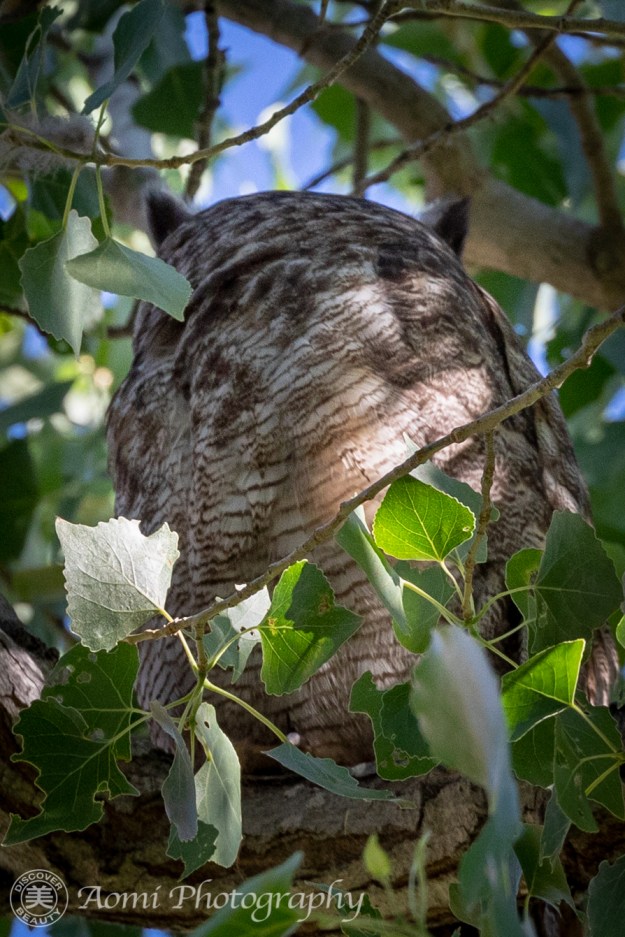
コットンウッドの森の中、友人の指の先の方を見上げると、”?” ”トトロ?” – In a forest of cottonwood trees, I looked up in the direction her finger was pointing.  “What is that?  Totoro?” (Totoro is a character in an animation movie “My Neighborhood Totoro“)

トトロが迷惑そうに、ちょっと振り向きました。- Totoro looked back down to us with an annoyed face.

やっぱりフクロウだ! – It was indeed an owl!

わっ!もう1羽発見。 – Wow, another one.  

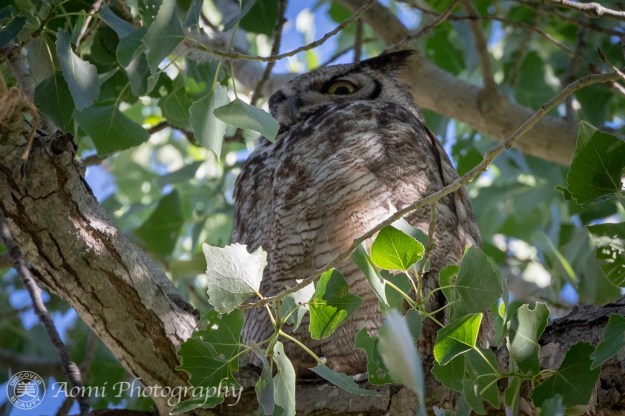
私たちをしばらく観察していましたが、無害だと判断して、また眠りに入りました。 – It observed us for a while, but went back to sleep again as it found us harmless.

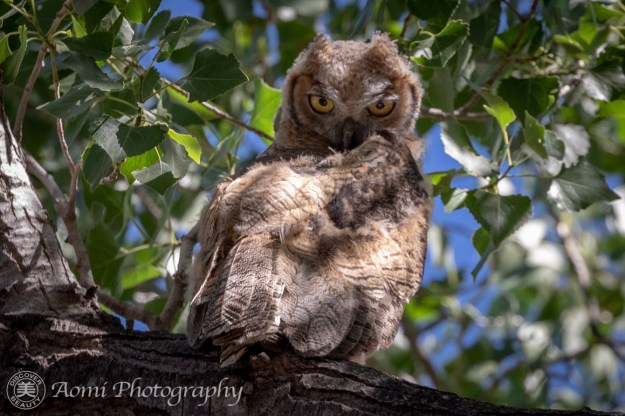
ここで5羽のアメリカワシミミズクを目撃しました。2羽のカップルと、3羽の子供達。- We witnessed five Great Horned Owls, two adults and three of their kids.

子供、その1。この子はまだ眠そう。 – The first child looked so sleepy.

2番目の子供はちょっと成長が早かったのか、警戒心がありそうですね。- The second child is a little older than the other one, and looked more alert and suspicious.

3番目は、好奇心旺盛の大きな目。- The third one expressed more curiosity toward us with large eyes.

最後に、正面から撮れた大人のアメリカワシミミズクの写真です。- Lastly, this is a lucky shot from the front view of an adult Great Horned Owl.