鳥の分類は難しい。このテーブル上のコースターのように混乱を極めてます。 Classifying birds is difficult. They are as confusing as the coasters on this table.
なぜなら、多くの不確定要素があって、鳥学者の間でも決着ができていない区分が多いからです。だから「適当に」区分しておくしかないようです。 This is because there are many uncertainties and many classifications that have not been settled even among ornithologists. Therefore, it seems that we have no choice but to classify them “as appropriate.”
一応、私なりに必要なものだけを抜き出して表にしてみましたが、まだまだ先が長いです。 In the meantime, I have extracted only what is necessary in my own way and made a chart, but I still have a long way to go.
例えば「スズメ」ですが、鳥類の上から数えると、11階層まで下がらないと出てきません。 For example, for “sparrow,” you have to count down to the 11th level to find it.
丁寧に上層から見ていくと、1ヶ月以上かかりそうな気配がしてきました。だから、ざっくりと適当にまとめます。そうじゃないと季節は移ろって、見逃してしまっているものがたくさんありすぎます。 If I carefully look at it from the top layer, it is likely to take more than a month. So I’m going to put it all together in a rough manner. Otherwise, the seasons change and there are too many things I’ve missed.
例えば、こちらのオオアオサギ。お母さんが卵を産んだばかりかと思っていたら、なんと大間違い。 Take, for example, this Great Blue Heron. I thought the mother had just laid her eggs, but I was wrong!
もう、卵が孵化したどころではなく、幼鳥はこんなに成長してし舞いました。 The eggs have not only hatched, but the young birds have grown to such a large size.
こちらは、羽をパタパタさせて飛び立ちたがっているところです。私も鳥の区分は切り上げて、先に進まなければ! Here they are flapping their wings and wanting to fly away. I must end my bird classification real soon and move on!
鳥類は、まず最初に古顎類(こがくるい)と新顎類(しんがくるい)と分けられています。なぜかというと、新顎類は、恐竜が絶滅した後に古顎類から分岐していったからだと言われています。 Birds are first divided into two groups: Palaeognathae and Neognathae. The reason for this is that the Neognathae diverged from the Palaeognathae after the extinction of the dinosaurs.
「なるほどー!」と、納得しました。 “I see!” I was convinced.
なぜなら、この類にはダチョウのような大きくて飛べない鳥しか含まれていないからです。 This is because this category only includes large, flightless birds such as ostriches.
ということは、ダチョウなど、もっぱら走ることしかできない鳥たちは、6500万年以前から存在しているんですね。 So birds that can only run, such as ostriches, have existed for more than 65 million years.
ということは、現在私たちが見かけるすべての他の鳥たちは、6500万年前には存在していなかったということになります。 This means that all the other birds we see today did not exist 65 million years ago.
この事実には少し心が動かされます。今度ダチョウを見る機会があったら、もう少し時間をかけて観察して、「お疲れ様!」って声をかけたいです。 I am a little moved by this fact. Next time I have a chance to see an ostrich, I would like to take a little more time to observe it and say, “Good job!”
鳥の分類方法の勉強をし始めてから2週間が過ぎました。 It has been two weeks since I began studying how to classify birds.
ようやく分類の輪郭が見えてきました。 Finally, the outlines of the classification are beginning to emerge.
この勉強の目的は私の鳥の写真を体系的に並べ替えることです。そして、それを元にしてカタログを一新し、やがては本をくるところまで持っていくのが最終の目的です。 The purpose of this study is to systematically rearrange my bird photographs. And the ultimate goal is to renew the catalog based on this, and eventually bring it to the point where I can come up with a book.
先学の皆様が苦労して分類してきた足跡を読みながら、実はまだ謎が多く残されている事がわかりました。だから一羽の鳥の分類が行ったり来たりとしているようです。 As I followed the footsteps of all the previous scholars who have taken great pains to classify them, I realized that there are actually still many mysteries left to be solved. So it seems that the classification of a single bird comes and goes from one family to the other.
私の分類は、そのような学術的な証拠に基づくものではなく、私の便宜上の分類で、しかも、撮れた写真のみに限られるという、完全に私的な分類です。 My classification is not based on any such academic evidence, but is entirely personal, being based on my own convenience, and limited to only the photographs that were taken by myself.
だから、最初は30ぐらいの写真を「可愛い鳥」とか「歌っている鳥」とか、「水鳥」などに分けてスタートしました。でも、今では100種以上の写真が溜まり、分類をし直す必要が出てきました。 So I started out with about 30 photos, divided into “cute birds,” “singing birds,” “water birds,” and so on. But now I have accumulated more than 100 photos of more than 100 species, and it has become necessary to re-categorize them.
また、もう少し専門家にもお見せできるようにしておいた方がいいとも思い始めました。できうる事ならデータベース化して、学術的データだけでなく、色やサイズ名からでもソートできるようにできたらいいなとも思ってます。でも、あまりにも気の遠くなりそうな作業なので、今は、アイディアとしてだけとっておきます。 I also began to think that it would be better to make it available to a few more experts. If possible, I would like to create a database so that it can be sorted not only by scientific data, but also by color or size or name. But it’s a daunting task, so for now, I’ll just keep it as an idea.
そして、今日、これから集中して調査するのは「スズメ亜目」の鳥たちだという事がわかりました。「ソングバード」として有名なこの亜目は、世界中で最も多くの鳥を収容し、馴染みのある鳥の多くがこのグループに属しています。 And I realized today that it is the birds of Passeri, suborder of Passeriformes that I should be concentrating on. This suborder, better known as “songbirds,” houses the largest number of birds in the world, and many familiar birds belong to this group.
私の住んでいる地域で見かける鳥たちが中心ですが、それでも27もの科(ファミリー)を抽出しました。(多分、世界中のススメ亜目には160から200ぐらいの科があるはずです。)それを 5-10 ぐらいのグループに無理やり分けて、私の用途に対応するように分類し直すことを目標にします。 The birds are mostly those found in my area, but I still extracted 27 families. (There are probably about 160-200 families around the world.) My goal is to force them into groups of about 5-10 and reclassify them to correspond to my use.
まだ大変ですが、やりたい事が明確になってくると気持ちがいいです。 It’s still hard work, but it feels good to have a clear idea of what I want to do.
メキシコフィンチのカップル。A couple of House Finches.
窓の外では、野生動物たちの春の嵐は、まだ、続いているようです。 Outside my window, the spring storms of wildlife still seem to be going on.
メキシコフィンチの空中結婚式です。 The wedding of House Finches in the air.
今年のバードフェスティバルの鳥はアカムネルリノジコでした。去年のバードフェスティバルの際に、遠くに初めて見つけて気になっていた鳥でした。それ以来、見かけることはなく1年が過ぎました。 The bird of the year for this year’s Bird Fest bird was Lazuli Bunting. I first spotted this bird in the distance at last year’s Bird Fest and was curious about it. Since then, a year has passed without seeing it.
なぜなら、この鳥は渡り鳥だからです。 This is because they are migratory birds.
そして、今年のバードフェスティバルでまた会えることを期待しましたが、あいにく雨と強風の3日間で終了し、再会はなりませんでした。グスン・・・ And we hoped to see them again at this year’s Bird Fest, but unfortunately, it ended after three days of rain and strong winds and we did not meet again. Sigh …
そこで、バンちゃんと私はフェスティバル終了後、アカムネルリノジコが飛び去っていく前に、「絶対、発見するぞ!」という強い意志のもと、いそうな場所を歩き回りました。 So, after the festival, Ban-chan and I walked around the area where we thought it might be, with a strong determination to find it before it flew away.
そして、見つけた! And we found it!
満足できる質ではありません。でも、一応良いことにします。 The quality is not satisfactory. But I’ll call it good enough for now.
気になったのは、去年かろうじて撮れた写真に比べると、色が冴えないことです。もしかしたら、まだ繁殖期ではないのかもしれません。 What I noticed was that the colors were not as bright as the photos I took last year. Perhaps it is not the breeding season yet.
もっと鮮やかな青い頭になって、もっとオレンジ色の胸になっているはずなんです。以下、去年撮った写真です。 It should have a brighter blue head and a more orange chest. Below picture is the image I took last year.
ま、来年に期待しましょうかね。 Well, let’s hope for next year.
補足データ (Supplemental Data):
Size: 13-15 cm (5 inches) long
Food: seeds and insects
Nesting: lay 3-4 eggs, 11-14 incubation days, 9-11 nesting days
Cardinal family: Consists of cardinals, grosbeaks, buntings, etc. ショウジョウコウカンチョウ科で、ホオジロ、フウキンチョウ、ノジコなどを含む。
そして、まだまだソワソワしてしまう季節は続きます。春ですから。 And the restless season is still going on because it’s spring!
窓の外では興味深いとんでもない事が毎日起きているんです。後ほど、書いていく予定です。 Interesting and outrageous things are happening outside my window every day. I will write about it later.
とりあえず、大きな山場のバードフェスティバルが先週末に終了し、少しホッとしてます。 At any rate, I am a little relieved that the big event, the bird festival, ended last weekend.
でも、引き続き鳥探しは続くし、今週末はアイアンマンのレースがあり、ボランティアとして参加します。https://www.ironman.com/im703-st-george But the bird hunt continues, and this weekend there is an Ironman race, which I will be volunteering for.
いろいろな活動を通してたくさんの人達との出会いがありましたが、残念ながら、書く時間がなくなってしまいました。とりあえず、今日は5月1日なので、節目として、書いておきます。 Through various activities, I have met many people, but I have run out of time to write about them unfortunately. Anyway, today is May 1, so I am writing this as a milestone.
多分、来週あたりから落ち着くかな。 Maybe it will settle down in the next week or so.
40-44℃の猛暑です。 It’s been so hot! The high temperatures have been between 105-110°F .
それでも早朝の1-2時間は25℃ぐらいになるので、トレッドミルを卒業し、外を走る方がいいかと思っています。 For one to two hours in the early morning, however, it is still 78°F. So I could graduate from using the treadmill and go outside for my 10k training in the early morning.
動物たちも早朝の涼しい時に活動しています。こちらはハチドリの写真です。いいショットとは言えませんが、ウワッと驚いたので紹介します。 Wild animals are also active in the early morning. These are pictures of a hummingbird in the early morning. They aren’t good quality shots but I was so shocked to see them after I processed them.
ハチドリと虫。 A hummingbird and a bug.
ハチドリが口を大きく開けてます。 The hummingbird opened its mouth big.
ハチドリの口がさらに大きく開きました。花のネクターを吸い取る動作じゃない。 The mouth is now opened much wider. It is not the behavior for them when they suck nectar out from flowers.
パクリ! Got it!
えっ?よくわからない?じゃ、アップで。 What? You don’t see it, dear reader? Here is the close up.
虫の羽が嘴の先に見えてます。ハチドリは虫も食べる! The wings of the bug are sticking out from the tip of the beak. Hummingbirds eat bugs as well!
とんがり帽子をかぶっているのが特徴の小さな鳥で、ピニョンやジュニパーなど、低木に住みます。日本には住んでいないので、日本語名がありません。一応ジュニパーティットマウスとしておきます。The Juniper Titmouse is a tiny bird with a crested head living in pinyon or juniper trees。
オークティットマウスにとてもよく似ています。でも、ジュニパーティットマウスは灰色で すが、オークティットマウスは若干茶色がかっています。また、住む場所も違い、ジュニパーティットマウスは700mから2,500mぐらいの高地に住みますが、オークティットマウスはカリフォルニアのオークの木に住みます。They look very much like the Oak Titmouse but its color is more pale gray compared to the Oak Titmouse which are more brownish. They also live in different places. The Juniper Titmouse lives in the region of 2,250-8,000 feet elevation in juniper woodlands. On the other hand, the Oak Titmouse lives in Oak trees in California.
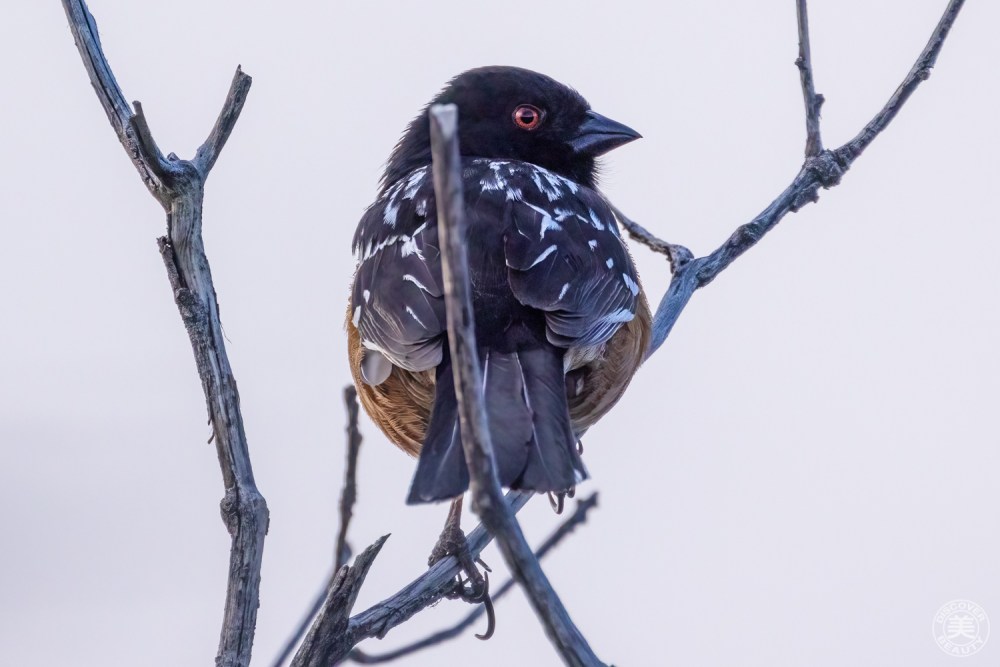
日本語名はホシワキアカトウチョウです。北アメリカに住むスズメの仲間です。 珍しい鳥ではなく、北カリフォルニアに住んでいた時は裏庭でよく見かけました。The Spotted Towhee belongs to the sparrow group and it lives in North America. It’s not a rare bird. I have spotted it even in our backyard when we lived in Northern California.
赤い目が印象的ですよね。The red eyes, aren’t they impressive?
名前が全てをあらわしてくれます。ホシは星のように白い斑点。ワキアカは脇が赤いから。セイントジョージの町付近には住んでいませんが、標高2,000メートルまで来ると見かける事ができるんですね。 We don’t see them around St. George, but they are in the surrounding higher elevations at about 6,000 feet and above.
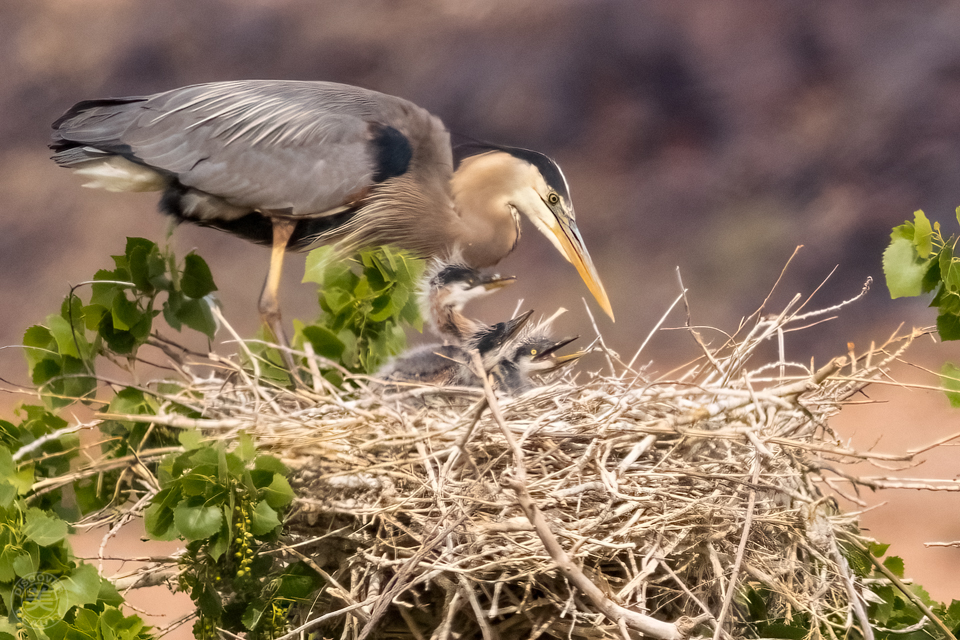
オオアオサギの卵が孵化しました。 The eggs of Great blue heron hatched.
今日はとりあえず数枚の写真をあげておきます。ビデオの編集もできたらアップします。 These are only a few of nearly 1000 pictures. I want to share a video also when I finish editing it later.
野生動物の世界です。アカオノスリが近くの木の上でじっと見つめています。 This is the world of wildlife. A red-tailed hawk was watching them from a nearby tree.
子供たちが巣立てるようになるまで 2-3ヶ月間、お父さん、お母さん、お疲れ様です。それまでこうして天敵から守っているんですね。 It takes 2-3 months for the chicks to fledge. Until then, parents need to protect their chicks like this from predators.
久しぶりにスノーキャニオンを見渡せる場所に行きました。往復8.5kmのハイキングです。It is 5.3 miles round trip to Snow Canyon Overlook.
長い石がゴロゴロしている山道を登ってきて、突然、目の前に広がるこの景色はいつみても息をのみます。After a long rocky uphill, the view that suddenly spreads out in front of you makes everyone speechless.
今日は800mmの超ロングレンズを持ってきました。鳥の巣を撮りたかったからです。でも、一生懸命岩肌を舐めるように見回しても一つも見つかりませんでした。We brought 800mm long lenses today because we wanted to capture any bird’s nest. I carefully went through all walls in the canyon, but found nothing.
諦めて後ろの岩を見上げると、I gave up and looked up at the rock behind me, and noticed the top of the rock was white.
てっぺんが白い。これは鳥のフンです。鳥の種類は分かりませんが、ここが一番高い場所ですから鳥が好んで止まる見張り場所になっているようです。 It must be bird’s poop! It’s the highest place around here. I don’t know what kind of bird it could be, but surely it liked to use that spot as a look-out place.
しばらく待っていましたが、誰も飛んで来てくれませんでした。We waited there for a while, but no birds flew over, so we gave up.
ここから見えるパインバレー山脈。北側にはまだ雪が積もっていて、冬の名残を感じさせてくれます。 We could see the Pine Valley Mountains from there. The snow on the north side of the hill made me feel cold.
でも、この高度の高い場所にも確実に春はやってきています。But, I know Spring is coming even here at such a high altitude. See?
ここにも、And here,
ここにも。 And here!
わー、もう少しでブーケになりそう。 This one is spreading a bunch of flower stems. It’s almost there to be a beautiful bouquet.
サンタクララ川の川向こう、オオアオサギの巣のコロニーを発見しました。 Beyond Santa Clara river, we found a colony of Great Blue Herons.
強風と、曇り日とでコンディションは良くありませんでしたが、オオアオサギの観察をしながら楽しいひとときを過ごしました。 We enjoyed observing them so much although it was a windy and cloudy day.
再び溜まった大量の写真、まだ全部リビューしていません。ですので、今日はその中から、美しいアイススケートのポーズ、ビールマンスピン を思い起こさせてくれるショットをご紹介します。以下、10秒ビデオにしました。 I have accumulated many pictures again. So I want to introduce you shots reminded me of an ice skating pose, “Biellman Spin” today. I made a 10 seconds video.





 aomi3 now