小さな命が燃え尽きそうだった。 A tiny flame of life was about to go out.
ただひたすら助けたかった。 I just wanted to do something to help.
体力尽きて飛べなくなっていたハチドリを手のひらに乗せ、ネクターを嘴の先に注いだ。 I placed the hummingbird, which had exhausted its strength and could no longer fly, on my palm and poured nectar into its beak.
グッタリした小さな体の体温を微かに感じていただけだった。 I could only faintly feel the body temperature of her small, exhausted body.
「大丈夫だよ。がんばれ、がんばれ。」と、ささやき続けた。 “It’s okay. Keep going, keep going,” I whispered repeatedly.
そして、何かが動き始めたのを感じた。 And then I felt something start to move.
ハチドリがネクターを吸い始めた。歩くことができないか弱い足が動いた。 The hummingbird began to suck nectar. Its weak legs, unable to walk, moved.
「もう少しだよ。がんばれ、がんばれ!」と、声援を送り続けた。 “Just a little more. Keep going, keep going!” I continued to cheer her on.
わずかな時が流れ、ハチドリはスクっと立ち上がり、羽をパタパタさせて整えた。 A moment passed, and the hummingbird stood up straight and flapped its wings to tidy them up.
か弱いけれど力強くなっていた足を手のひらに感じた。 I felt her weak, but growing stronger legs in the palm of my hand.
そのまま、ハチドリと私だけの無言の触れ合いの時が流れた。 Just like that, a moment of silent interaction between the hummingbird and me passed.
名残惜しい。 I was sad to let it go.
そんなひと時にも終わりが来た。ハチドリの体力は十分回復ができたのだ。暑い夏の空に飛び立っていった。 But even this moment had to come to an end. The hummingbird’s physical strength had fully recovered. It flew away into the hot summer sky.
私の目から涙が溢れていた。 Tears were streaming from my eyes.
小さな命、でもひたすら生きようとする姿。 A small life, but one that strives to live on.
今日、君に出会えてよかった。大きな感動をありがとう。 I’m glad I met you today. Thank you for the great moving experience.
私たちがこの地、ユタ州南部に引っ越して来てから5年が経ちました。その後、ミソサザイはほとんど毎日見てきた鳥です。 It has been five years since we moved here to southern Utah. Since then, the Wren has been a bird we have seen almost every day.
イエミソサザイ House WrenScreenshot
引っ越して来たその年の7月のある日、裏庭がやけに騒々しいことに気がつきました。イエミソサザイが忙しそうでした。 One day in July of the year we moved in, we noticed that the backyard was very noisy. The House Wren seemed to be busy.
イエミソサザイがカマキリを捕まえた所。An House Wren caught a praying mantis.
その行方を追いかけてみると、なんと、野バラの木の下、生まれたばかりの3羽の雛たちがお母さんからエサをもらおうとしていました。 I followed their whereabouts, and to my surprise, I found three newborn chicks under a wild rosebush, trying to get food from their mother.
食事が終わったようです。Looks like the meal is over.
翌年にはシロハラミソサザイが裏庭のゲストハウスを訪れてくれました。 The following year, a Bewick’s wren visited our backyard guesthouse.
孵化したシロハラミソサザイの雛たちは、無事に巣立って行きました。 The hatchlings of the Bewick’s Wren have left the nest without incident safely.
イエミソサザイとシロハラミソサザイの違いは、お腹が白いかどうかです。ということは、下の写真は、シロハラミソサザイということになります。 The difference between the House Wren and the Bewick’s Wren is whether the belly is white or not. This means that the photo below is of a Bewick’s Wren.
近くの公園を散策するとイワミソサザイを見つける事ができます。 Strolling in the nearby park, we can find Rock Wrens.
イワミソサザイ Rock Wren
ジャシュアツリーがたくさん生息している所を訪れると、サボテンミソサザイを見つける事ができます。 If you visit a place where Joshua trees are abundant, you can find Cactus Wrens.
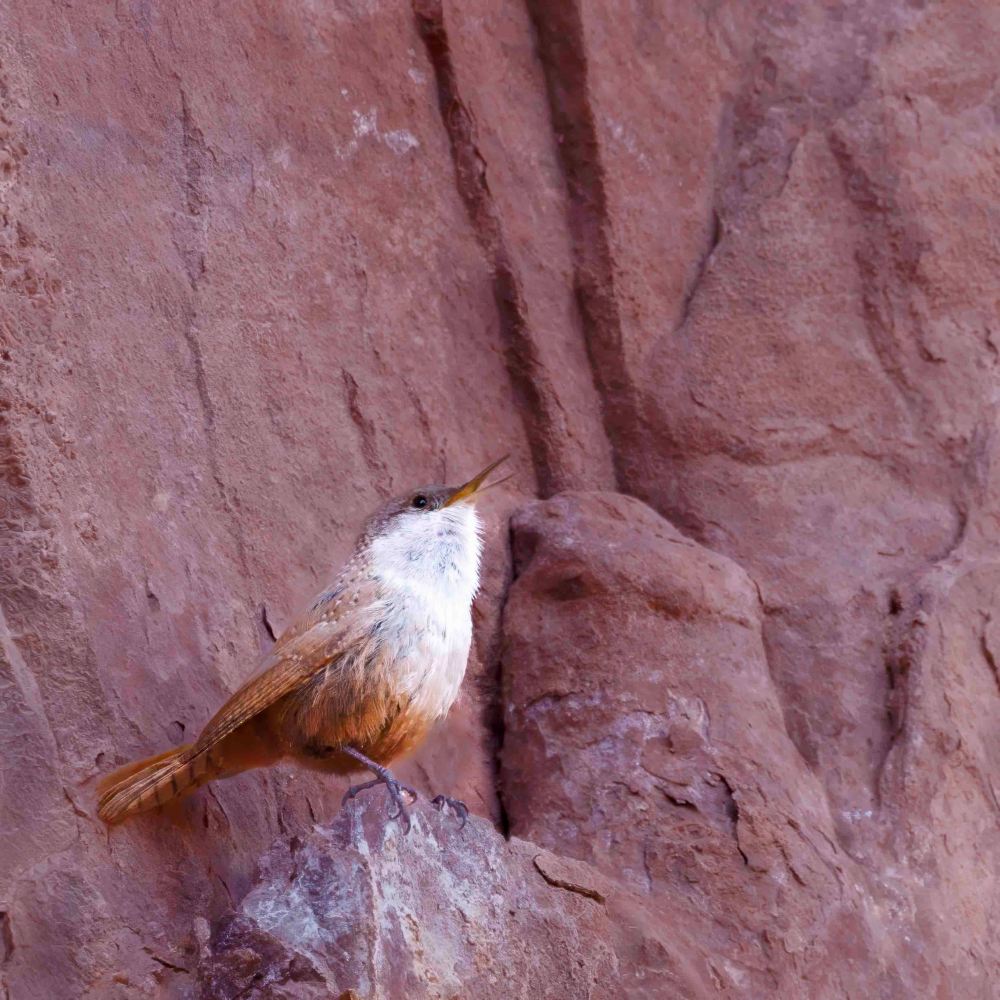
そして、ミソサザイの中でも最も小さいムナジロミソサザイ。大抵、姿は見えなくても声だけが渓谷に響いています。 And then there is the smallest of all the Wrens, the Canyon Wren. Most of the time, you can’t see them, but only hear their songs echoing through the canyon.
長い事、カメラに収める事ができませんでしたが、ついに成功しました。 For a long time, I was unable to capture it on camera, but I finally succeeded.
最後に、湖や沼地のこんな場所にいるのはヌマミソサザイです。 Lastly is the Marsh Wren that can be found in places such as lakes and marshes.
どのミソサザイもとっても小さい鳥なのに、鳴き声はとんでもなく大きく、自己顕示欲が強いです。 Although all Wrens are very small birds, their songs are outrageously loud and self-promoting.
「それならカメラに向かってポーズをとってくれてもいいんじゃないの?」と、文句を言いたくなるほど忙しく動き回って、カメラマン泣かせの鳥たちです。 “Why don’t you just pose for the camera then?” I wanted to complain, but the birds were so busy moving around that they made the photographer cry.
何はともあれ、ミソサザイ達、ありがとう!君たちと一緒に生活できる私たちはラッキーです。 At any rate, thank you all, Wrens! We are lucky to live with you guys.
スズメ小目の中には3つの上科があります。スズメ上科、ヒタキ上科、そしてウグイス上科です。そして、その他の7つの科は、多分、上科とされているものです。 There are three superfamilies within the Lesser Sparrow Family. They are the sparrow superfamily, the flycatcher superfamily, and the warbler superfamily. And the other seven families are probably (undefined) considered superfamilies.
Screenshot
実のところ、スズメ小目の分類はまだ進行形で、今後も変化する可能性があります。また、どのグループにも属していない鳥たちも存在します。帰る家がない鳥たちのようで、かわいそうな感じがします。(当然、彼らにとってはどうでもいいことなんですが。) As a matter of fact, the classification of the Lesser Sparrow Order is still a work in progress and is likely to change in the future. There are also birds that do not belong to any group. I feel sorry for them, as they seem to be birds that have no home to go back to. (Of course, it doesn’t matter to them.)
話をウグイス上科にもどします。 Let’s return to the Uguisuue family.
Screenshot
この科には1300種もの鳥が属していますが、そのほとんどは旧世界に住んでいます。だから私の手元にはほとんど写真がありません。でも、その中でも、ツバメ科の中の3羽の写真がありました。 There are 1300 species of birds belonging to this family, most of which live in the Old World. So I have very few pictures of them. But I did find pictures of three of them in the swallow family.
ミドリツバメの子供。Tree Swallow: maybe a juvenile 日本語名がみつかりません。Violet-green Swallowスナゴイツバメ Bank Swallow
ところで、話は少しずれますが、実は、この分類を始めるまで、アマツバメはツバメの仲間だと思っていました。その風貌から勘違いしていました。私の分類表の中でも新鳥類の一番初めに来ている鳥の仲間であることに、今、気がつきました。 By the way, this is a bit off topic, but I actually thought that the swift was a member of the swallow family until I started this classification. I was mistaken because of its appearance. But I just realized that it is one of a group of birds that comes at the very beginning of Neoaves in my taxonomy list.
アップデートしました。Updated.
今更ですが、ここに追記しておきます。アマツバメは超高速で飛ぶことができる鳥です。並行飛行では、ハヤブサより速いとされています。4本の足指が全て前を向いているユニークな鳥ですが、そのため、木の枝に捕まることはできません。 It’s a little late to add this, but I’ll add it here. The swift is a bird that can fly at very high speeds. In parallel flight, it is said to be faster than a falcon; it is a unique bird with all four toes pointing forward, which makes it incapable of perching on a tree branch.
岸壁の隙間の中から飛び出して来たばかりのハリオアマツバメ。 White-throated needletail swift just popped out from inside a crevice in the quay.
シジュウカラ科には隣近所でよく見かける鳥たちが分類されています。名前は知らなくてもよく見かける鳥たちですよね。 Paroidae classifies birds that are often seen in our neighborhoods. Even if you don’t know their names, you see them all the time.
朝のご飯を咥えているクロイロコガラ Chestnut-backed Chickadee with breakfast in his mouth.ハイエボシガラ Oak Titmouse
そして、このシジュウカラ科が私の鳥分類表のどこに位置するかというと、こちらです。右下。 And here is where this family of Paridae is located on my bird taxonomy list. See at the bottom right.
Screenshot
ついに階層の奥深くまでやって来ました。字が小さくて見にくいかもしれませんね。また、分類名と使われ方もわかりにくかったので、ここで整理しておきます。 We have finally come deep into the hierarchy. It may be hard to see because the letters are so small. It was also difficult to understand the classification names and how they are used, so I’ll sort it out here.
マミジロコガラを「リンネ式階層分類体系」を元に書き換えると以下のようになります。 The following is a rewriting of Mountain Chickadee based on the “Linnaean taxonomy”.
ドメイン
真核生物
Domain
Eukaryota
界
動物界
Kingdom
Animalia
門
脊索(せきさく)動物
Phylum
Chordata
亜門
脊椎動物
Sub phylum
Vertebrata
綱
鳥類
Class
Aves
下綱
新顎類(しんがくるい)
infra class
Neognathae
クレード
新鳥類
Clade
Neoaves
クレード
陸の鳥類*
Clade
Telluraves
クレード
真ハヤブサ形目
Clade
Eufalconimorphae
目
スズメ目
Order
Passeriformes
亜目
スズメ亜目
Suborder
Passeri
小目
スズメ小目
Parvorder
Passerida
上科
シジュウカラ上科
Super family
Passeridea
科
シジュウカラ科
Family
Paridae
属
コガラ属
Genus
Poecile
種
マミジロコガラ
Species
Mountain chickadee
* 「陸の動物」の日本語訳はなかったので勝手に訳しました。
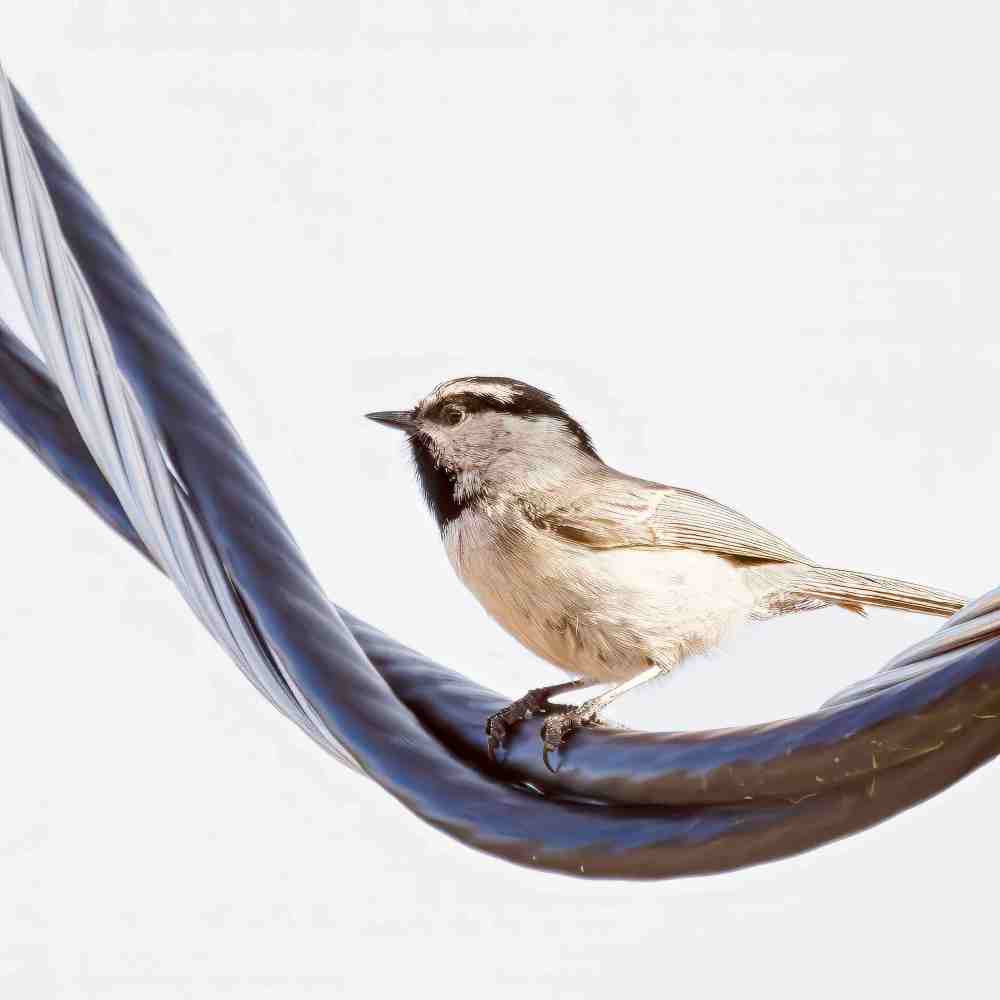
マミジロコガラ Mountain Chickadee
ここで注目したいのは、突然、「クレード」という言葉が出て来たことです。リンネの分類学では使われていません。これは分岐分類学が使う用語です。この新しい分岐分類学に関しては賛否両論あるようですが、それを話し始めると鳥の分類に戻れなくなるので書きません。ご興味のある方はこちらをご覧ください。https://cladistics.org/cladistics/ (英語なので、翻訳ツールなどを使ってご覧ください。) It is important to note here that the word “clade” has suddenly appeared. It is not used in Linnaean taxonomy. This is the term used by Cladistics taxonomy. There seems to be some controversy about this new Cladistics taxonomy, but I won’t write about it because if I start talking about it, I won’t be able to go back to bird taxonomy. If you are interested, please see here: https://cladistics.org/cladistics/
私の意見は、分類方法を’勉強することに興味があるわけではないので、分類学でも、分岐学でもどちらでもいいです。一羽の鳥を見たら名前と特徴がわかれば十分なんですね。ただ、世界中に1万種もの鳥がいるので、私の写真も少しは整理整頓させておきたいと思っているだけです。だから、まだ見たことのない鳥、興味のない鳥、今後も見ることができない鳥はさっさと諦めて表から外しています。 My opinion is that I am not interested in ‘studying’ classification methods, so either Linnaean or Cladistics is fine. If I see one bird, it is enough for me to know its name and characteristics. I just want to keep my photos a little more organized, since there are 10,000 species of birds in the world. So, I quickly give up and remove from the table those birds that I have not yet seen, have no interest in, or probably won’t see in the future.
私の分類表作りはこれからもしばらく続きますが、その過程の中ですでに多くのことを学びました。でも、それ以上に得たものは、大袈裟な表現になりますが、私の心に平安をもたらしてくれました。 My work on the classification table will continue for some time to come, and I have already learned a great deal in the process. But what I have gained even more, and this may be an exaggeration, is peace of mind.
例えば、こんな状況を想像してみてください。無数の鳥たちが頭の中をいつも規則なく飛び交っている状況です。それが、鳥たちの家を作ってあげたことで、少しずつ家に戻っていくわけです。最終的には家の外にいる鳥はいなくなる。時々鳥の名前を呼ぶと家から出て来てご挨拶してくれる。そんな平安さでしょうか。 For example, imagine this situation. This is a situation where countless birds are always flying around in your head randomly. That is why you have built homes for the birds, and they gradually return to their homes. Eventually there will be no birds outside the houses. Sometimes when you call a bird’s name, it will come out of the house and greet you. It is that kind of peacefulness. Isn’t it great?
「頭に冠をつけているエボシガラ君、出て来てください。」 ”Come out, Mr. Titmouse, who wears the crown on your head.”
私の鳥の分類も、よく見かける鳥の領域に入ってきました。今日はカケスについて書きます。 Now my classification of birds has entered the realm of commonly seen birds. Today I write about Jays.
Screenshot
カケスはカラス科に属する鳥で、環境にうまく適応して全世界に広がっていきました。 Jays belongs to the crow family and has spread throughout the world by adapting well to its environment.
メキシコカケス @ ビッグベンド国立公園 Mexican Jay @ Big Bend National Park
雑食だからでしょうか。カラスのように逞しく賢いです。 Is it because they are omnivores? They are tough and smart like crows.
アオカケス@ミズーリ州 Blue Jay @ Missouri
旧世界のカケスと新世界のカケスでは見かけがずいぶん違う様です。私は新世界のカケスの中でも数種しか見たことがありませんが、ほとんどが青い色をしています。一方、旧世界のカケスはカラフルな色をしている種が多いので、機会があったらぜひ、見てみたいものです。 The Old World and New World jays look very different. I have only seen a few species of New World jays, and most of them are blue in color. On the other hand, many Old World jays are colorful. I would like to see them if I have the chance.
英語名の ”Jay” は鳴き声が「ジェージェー」という鳴き声なので、その鳴き声が由来とされています。 It is said that the English name “Jay” is derived from its call, since its cry is a “jay-jay” cry.
ウッドアウスカケス @ ユタ州 Woodhouse’s Scrub-Jay @ Utah
一方、日本語名の「カケス」は、漢字で表記すると「懸巣」と書きます。巣を作る際に木の枝と枝との間に無数の小枝枝を懸けて、お椀のような巣を作ります。この巣作りが元になって「カケス」と呼ばれる様になったということです。 On the other hand, the Japanese name “Kakesu” is written in Kanji characters 「懸巣」meaning as “suspend nest.” When they build their nests, they hang numerous twigs between tree branches to create a bowl-like nest. The name “Jay” is derived from this nest-building process.
ステラーカケス @ カリフォルニア州 Steller’s Jay @ California
ラテン語(学名)では Garrulus glandarius と表記されます。arrulus が「おしゃべり」、 glandarius は「ドングリ(の好きな)」を意味するそうです。この名前はカケスの食べ物から名付けられたんですね。 In Latin (scientific name) it is spelled Garrulus glandarius, where ”Garrulus ” means “talkative” and “glandarius” means “acorn (lover of).” So the Latin name is named after the Jay’s food.
メキシコカケス @ ビッグベンド国立公園 Mexican Jay @ Big Bend National Park
面白い。他の言語でのカケスの名前の由来を調べたらもっと面白い発見があるのでしょうかね? Interesting… Could we find more interesting discoveries if we look into the origin of the name of the jay in other languages?
今日はスズメ目の中に分類されている、タイランチョウ科について書きます。 Today I will write about the family Tyrannidae, which is classified within the order Passeriformes.
タイランチョウ科の調査を進めていく過程で、現在の地球上の鳥の分布はどうして起こったのだろうという疑問が湧いてきました。 During the course of my research on the Tyrannidae, the question arose as to how the current distribution of the birds on the Earth occurred.
例えば、一見世界中で見られるミソサザイと同じ様な風貌のイワサザイ亜科の鳥はニュージーランドにしか生息していません。また、タイランチョウ科の鳥は南北大陸にしか生息していません。これは全世界に広がって住んでいるスズメ科とは対照的です。 For example, birds of the subfamily Acanthisitti (New Zealand wren), which at first glance appear to be similar in appearance to the wrens found throughout the world, are found only in New Zealand. The family Tyrannidae, for example, is found only in North and South America. This is in contrast to the sparrow family, which lives throughout the world.
一般にタイランチョウ科は空中で飛んでいる虫を捕まえるのでフライキャッチャーと言われますが、スズメ科の鳥は雑食が多く、地上の昆虫、果実、種などを食べます。この違いは狩猟民族と農耕民族の違いに似てます。 Generally speaking, the Tyrannidae are known as flycatchers because they catch flying insects in mid-air, whereas the Passeri birds are more omnivorous, eating insects, fruits, and seeds on the ground. This difference is similar to that between hunters and farmers.
以上の様な違いがどこから来たのかを探っていたら、思いもかけず鳥の進化まで遡ることになってしまいました。プレートテクトニクスと気候変動とも深く関わっているので、関連史料を読み進めるだけで、目下、私の固くなった脳みそはパンク状態です。(笑) In trying to find out where these differences came from, I unexpectedly ended up tracing them back to the evolution of birds. Since it is deeply related to plate tectonics and climate change, my brain now feels like mush just from reading through the related geological/paleontological documents. (LOL).
この疑問に対する答えを探し出すには時間がかかるので、今は簡単にタイランチョウ科をご紹介します。 Finding an answer to this question will take time, so for now I will briefly introduce the Tyrannidae family.
ベニタイランチョウ Vermilion Flycatcher
表をご覧になるとわかると思いますが、タイランチョウ亜目は、旧世界(ヨーロッパ、アジア圏)と新世界(アメリカ北と南大陸)の亜鳴禽類(あめいきんるい)に分かれています。旧世界鳴禽類は15種のみで、主に東南アジアに生息しています。その他の1000種のタイランチョウは南北アメリカ大陸にのみ生息しています。 Looking at the table, you will see that the suborder Tyranni is divided into Old World suboscines (European and Asian) and New World suboscines (American North and South Continental). The Old World suboscines consist of only 15 species, which are found primarily in Southeast Asia. The other 1,000 species of Tyranni are found only in the Americas.
ハイノドヒタキモドキ Ash-throated Flycatcher
私たちが住んでいるユタ州南部でもタイランチョウを見つけることができますが、ほんの数種類に限られています。そのほかの多くは中南米の熱帯雨林に生息しています。なぜなら、熱帯雨林は彼らの大好きな虫が沢山飛び回っているからです。 In southern Utah, where we live, you can also find Tyrannidae birds, but they are limited to only a few species. Most of the others are found in the rain-forests of Central and South America. This is because the rain-forests are full of flying insects, which they love.
ニシタイランチョウの子供 Western Kingbird fledglings
それにしてもですねぇ、食べ物が空中を飛び回っているという便利さを想像したことがありますか? By the way, have you ever imagined the convenience of having food flying around in the air?
お腹すいたなー。あ、あそこにステーキが飛んでる。こっちは豚の角煮で向こうはラーメンかな。とりあえずこっちを食べよう。えいっ、パクリ。美味! Geez, I’m starving. Oh, there’s a steak flying over there. This one is pork and that one is ramen noodle. Let’s eat this one for now. Yes, Yummy!
今日は黄色いハイライトの鳥たちについてです。 Today I will write about the birds with yellow highlights.
カワセミはブッポウソウという目の中に分類されている動物食の鳥です。全体的に鮮やかな色の鳥たちです。水辺に生息し、水面に急降下して魚類を捕食します。その他、虫や爬虫類も食べます。 The Kingfisher is a zoophagous (flesh eating) bird classified in the order Coraciformes. Overall, these birds are brightly colored. They live near water and prey on fish by swooping down to the surface of the water. They also feed on insects and reptiles.
数回カワセミを見かけましたが、写真に収められたのは、この2枚だけです。アメリカヤマセミです。 I saw Kingfishers several times, but these are the only two I was able to photograph. They are Belted Kingfishers.
この地に引っ越して来たばかりの頃、鳥の会の人たちと公園を歩いていた時に見つけました。鳥の会の人たちは高性能の双眼鏡を持っているので、遠いところの鳥も発見し教えてくれます。この時も興奮して早速撮りましたが、豆粒のようなイメージだったので忘れていました。 When we first moved here, I found this bird when I was walking in a park with a group of birders. The bird club members have high-performance binoculars, so they can spot and tell us about birds at a distance. I was so excited at this time that I immediately took a picture of it, but I had forgotten about it because the image was as small as a pea.
カワセミは気合を入れて撮ろうとしないと撮れません。今度は川辺でまさに魚を捕獲したばかりの時とかをキッチリと撮りたいです。 I can’t take pictures of Kingfishers unless I put a lot of effort into it. Next time, I would like to take a picture of a Kingfisher when it has just caught a fish by the riverside.
次にご紹介するのはキツツキです。 The next bird is the Woodpecker.
今回、キツツキ科を調べていたら、無数の種が含まれている事を知り驚きました。私の鳥分類表もさらに巨大化してきたので、ここでは私が撮影できたキツツキのみをリストします。 In researching the Woodpecker family this time, I was surprised to learn that it includes a myriad of species. Here I will list only the Woodpeckers I was able to photograph because my bird taxonomy list has grown even larger.
ちなみに、ゲラとかブッポウソウという分類名も鳥の観察歴が短い私には聞いたことがなく、不思議な名前でした。でも、日本語名としては普通に使われているんだと学習しました。 Incidentally, I had never heard of the taxonomical names “gera” and “buppoosoo” in Japanese language, which were also strange to me, having only a short history of bird observation. But I learned that they are commonly used as Japanese names.
以下、参考として、これらの名前の由来を説明します。 The following is an explanation of the origin of these names for reference.
「ゲラ」は「ケラ」から来ていて、「ケラ」とは木の中に住む虫のことです。江戸時代前から使われていたようです。まさにキツツキのことです。 “Gera” comes from “Kera”, and “Kera” is an insect that lives in trees. It has been used since before the Edo period. It is exactly what a Woodpecker is.
また、「ブッポウソウ」の名前の由来 は勘違いが原因だと言えます。以下、由来の要約です。 The origin of the name “Buppoosoo” can be attributed to a misunderstanding. Here is a summary of the origin
ブッポウソウは日本にやって来る渡り鳥で、5-6月ごろ、たった3週間ほどしか滞在しません。 また、コノハズクは5-6月ごろしか鳴かないフクロウです。The boubou is a migratory bird that comes to Japan and stays for only about three weeks around May and June. The Oriental Scops Owl is also an Owl that only hoots around May and June.
昔の人たちは、この2種の鳥たちを混同し、まだ見た事のない鳥が、まるで「ぶっ・ぽう・そう」と鳴いているようだと思いました。そこでこの幻の鳥をブッポウソウ(仏法僧)と名付けました。 People in the past confused these two species of birds and thought that the bird, which they had not yet seen, sounded as if it were calling “Buh-poh-soh”. Therefore, they named this phantom bird “Buppoosoo” (Buddha’s Prayer).
その後、ラジオが普及してきた1935年頃、この鳥の鳴き声をラジオで放送したところ、反響があり、鳴き声の主はコノハズクであったことが判明しました。でも、すでに定着していた2種の鳥の名前を変えるのは大変なので、そのままの名前が残っているということです。 Later, around 1935, when radio became popular, the bird’s call was broadcast on the radio, and the response from listeners was so strong that it was discovered that the bird call was that of an Oriental Scops Owl. But it would be difficult to change the names of two birds that were already well-established, so the names have remained as they are.
フクロウは大きく2種類に分かれます。メンフクロウ科とフクロウ科です。 Owls are divided into two main families. The family Tytonidae (Barn-owls) and the family Strigidae (True owls).
メンフクロウ科の中にはメンフクロウしかいません。は名前が示すように、お面をつけているような顔が特徴です。 The Barn owl is the only member of the barn owl family. It is characterized by a masked face.
メンフクロウは世界中に分布していますが、私は一度も目撃したことがありません。英語の名前の通り、納屋とか廃屋などでも見られるそうです。この辺にもそんな場所がありそうなので鳥の会の人たちに聞いてみます。 Barn owls are distributed all over the world, but I have never seen one. As the name suggests, they can be found in barns and abandoned buildings. I will ask the birders about such places around here.
フクロウ科には無数のフクロウが属しています。列挙しきれないので、私のリストには目撃したもののみを入れました。 Countless owls belong to the owl family. Since it is impossible to enumerate them all, I have included only those that I have seen in my list.
フクロウ科の1種目はアナホリフクロウは いくつかの点でユニークなフクロウです。 One member of the owl family is the Burrowing owl which is unique in several ways.
日中でも動き回る。 They move around even during the day.
飛べるけど、地上を走り回っている時間の方が長い。だから足が長いのね。 They can fly, but they spend more time running around on the ground. That’s why they have long legs.
地面に穴を掘って住む。 They live in burrows in the ground.
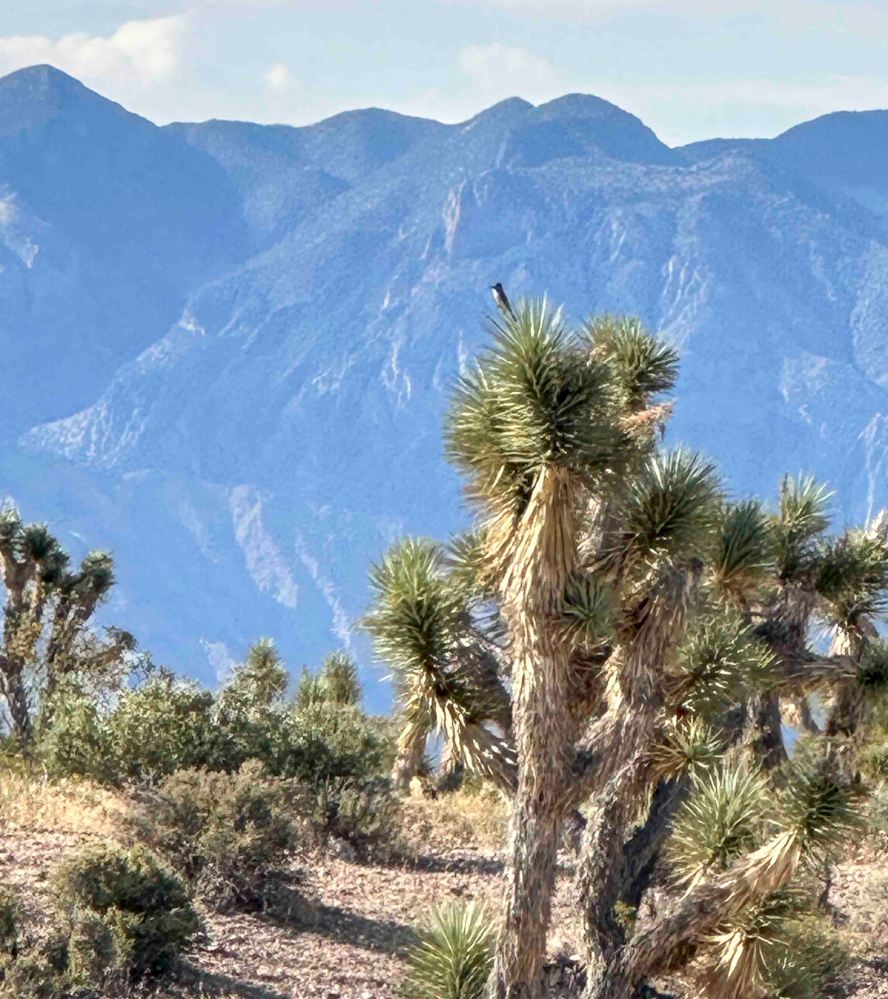
眉毛が白くておじいさんみたいな顔してますね。ジャシュアツリーの上に停まっていました。 In the picture above, he looks like an old man with white eyebrows. It was perched on top of a Joshua tree.
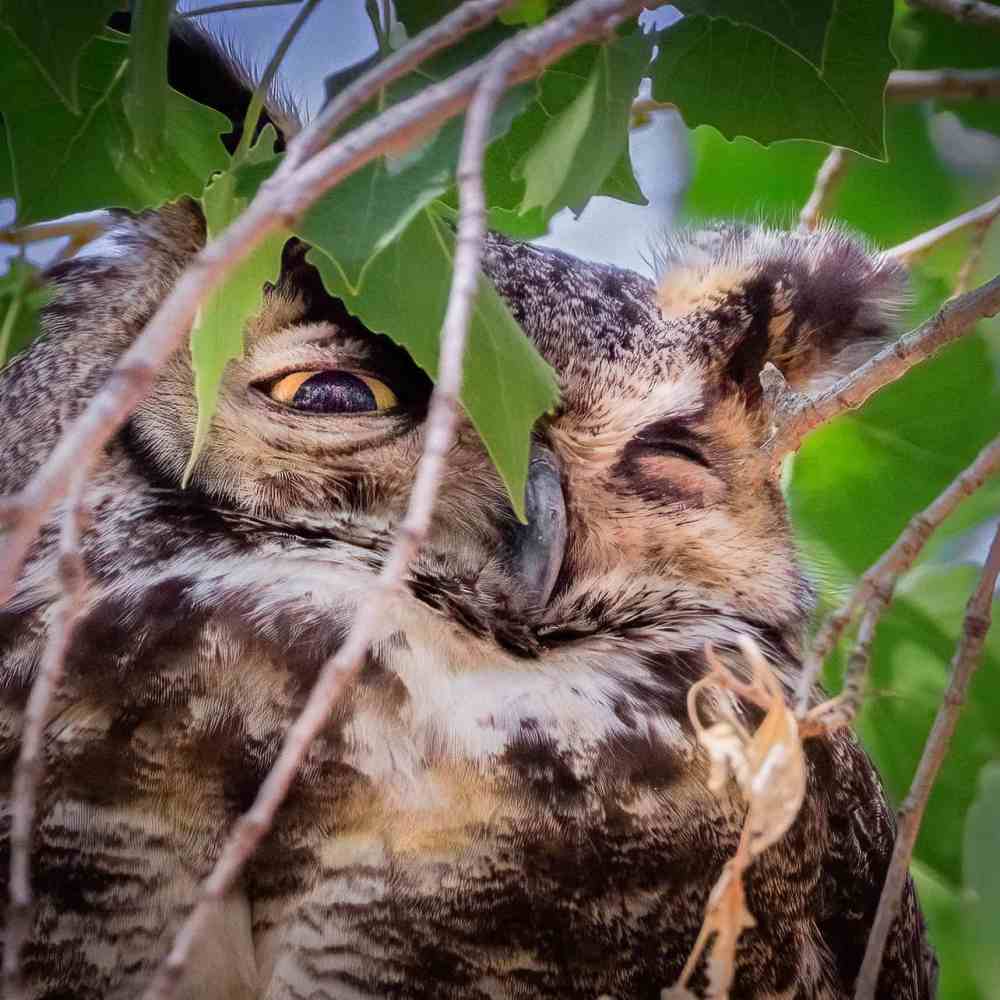
アメリカワシミミズクは私にとっては一番馴染み深いフクロウです。 The Great Horned Owl is the owl most familiar to me.
ここは「フクロウの森」です。勝手に名付けました。そこに入ってみると、確かにフクロウが生息するにはもってこいの場所でした。 This is “Owl Forest”. I took the liberty of naming it. When I entered there, I found that it was indeed a perfect place for owls to inhabit.
音を立てずに辺りを見渡すと、コットンツリーの上の方、トトロのような物体を発見しました。高鳴る気持ちを抑えて静かにシャッターを切りました。 I looked around without making a sound and spotted a Totoro-like object at the top of the Cotton Tree. I suppressed my rising emotions and quietly clicked the shutter.
鬱蒼として暗い中、しばらくすると崖の上の方の棚に巣があり、それを覆い隠すようにコットンツリーの枝が伸びていることがわかりました。更に私たちの目が暗さに慣れてくると、2羽、3羽、4羽と合計5羽見つけることができました。 It was dense and dark, but after a while we found a nest on a ledge at the top of the cliff, with Cottonwood tree branches growing up to cover it. As our eyes further adjusted to the darkness, we found a total of one, two, three, four, five birds.
ここはワシミミズクの家族が住んでいるところだったんですね。そして、ヒナが3羽巣離れをしたばかりだったのかもしれません。 So this was where a family of Great horned owls lived. Maybe three chicks had just left the nest then.
私たちの家にも時々訪れてくれます。 They visit our house from time to time.
昼も夜もウサギが飛び回っている環境です。彼らにとってはよりどりみどり、スーパーマーケットの状態です。下の写真はうさぎをゲットした直後、それを引きずりながら石の影に隠れようとしているところです。 This is an environment where rabbits are hopping around day and night. It is a supermarket situation for them. In the photo below, just after getting a rabbit, he is trying to hide behind a stone, dragging it behind it.
お食事中、失礼しました。 Excuse me for interrupting your meal time.
最後に紹介するのはニシアメリカオオコノハズクです。 Lastly, I would like to introduce the Western Screech Owl.
夜中、大きな木が立ち並ぶ川沿いの森の中、鳥の会の人たちと時折聞こえる鳴き声を頼りに歩き回りました。 In the middle of the night, in the forest along the river lined with large trees, I walked around with the bird club members, relying on the occasional hoo, hoo.
シャッターチャンスは3回ありましたが、夜中の撮影は非常に難しいので、これが最後に撮れたベストショットです。ネズミを捕獲したばかりだったので、ラッキーでした。 I had three opportunities, but this was the last best shot I could get taking pictures in the middle of the night. I was lucky because it had just captured a rat.
名前が示すように、日中は木の葉のようにカモフラージュしてジッとしているそうです。 As the Japanese name suggests, they are said to camouflage and stay still during the day like leaves on a tree.
キジカモ類の分類はまだ決定的な区分がなされていません。だから、私もさっさと諦めて一緒に扱うことにします。 The classification of Galloanserae (Fowl) has not yet been definitively demarcated. So I decided to give up trying to understand it, and treat them all together.
この類はカモも含んでいますが、とりあえず、私の区分には入れないでおきます。なぜかというと、ただ単に興味がないからです。 This category includes ducks, but I will not include them in my classification for now. The reason why is that I am simply not interested in them.
キジ科の中のまだ見たことの無い鳥で、一番撮影したい鳥はキジオライチョウです。繁殖期の早朝、オスは胸を大きく広げて勇ましい姿になると言われています。 The bird in the pheasant family that I have yet to see and would most like to photograph is the Greater Sage-Grouse. It is said that early in the morning during the breeding season, males spread their chests wide and look brave.
また、ナンベイウズラ科のカンムリウズラは、見逃せません。裏庭に彼らの巣があります。彼らは野生ですが、巣があることを思うと、家族のような存在です。彼らは目下裏庭で17個の卵を温めています。今年は左の母屋の壁際の低木の中が選ばれました。そこで、去年と同じようにカメラを設置しました。 Gambel’s Quail, a member of Odontophoridae, quail family, is not to be missed. We currently have a nest in our backyard. The parents are wild, but the nest is like a family to us. The parents are currently incubating 17 eggs in the backyard. This year, the shrubbery near the wall of the main house on the left was chosen. So we set up a camera there, just as we did last year, when there was another nest.
孵化して巣立ちするまでビデオに収めるつもりです。 We plan to video them until they hatch and leave the nest.
毎日忍耐強く卵をコロコロと回転させながら座り続けています。以下、現在の様子です。 The mother quail is patiently sitting and rotating her eggs every day. Below is the current situation.
鳥の分類方法の勉強をし始めてから2週間が過ぎました。 It has been two weeks since I began studying how to classify birds.
ようやく分類の輪郭が見えてきました。 Finally, the outlines of the classification are beginning to emerge.
この勉強の目的は私の鳥の写真を体系的に並べ替えることです。そして、それを元にしてカタログを一新し、やがては本をくるところまで持っていくのが最終の目的です。 The purpose of this study is to systematically rearrange my bird photographs. And the ultimate goal is to renew the catalog based on this, and eventually bring it to the point where I can come up with a book.
先学の皆様が苦労して分類してきた足跡を読みながら、実はまだ謎が多く残されている事がわかりました。だから一羽の鳥の分類が行ったり来たりとしているようです。 As I followed the footsteps of all the previous scholars who have taken great pains to classify them, I realized that there are actually still many mysteries left to be solved. So it seems that the classification of a single bird comes and goes from one family to the other.
私の分類は、そのような学術的な証拠に基づくものではなく、私の便宜上の分類で、しかも、撮れた写真のみに限られるという、完全に私的な分類です。 My classification is not based on any such academic evidence, but is entirely personal, being based on my own convenience, and limited to only the photographs that were taken by myself.
だから、最初は30ぐらいの写真を「可愛い鳥」とか「歌っている鳥」とか、「水鳥」などに分けてスタートしました。でも、今では100種以上の写真が溜まり、分類をし直す必要が出てきました。 So I started out with about 30 photos, divided into “cute birds,” “singing birds,” “water birds,” and so on. But now I have accumulated more than 100 photos of more than 100 species, and it has become necessary to re-categorize them.
また、もう少し専門家にもお見せできるようにしておいた方がいいとも思い始めました。できうる事ならデータベース化して、学術的データだけでなく、色やサイズ名からでもソートできるようにできたらいいなとも思ってます。でも、あまりにも気の遠くなりそうな作業なので、今は、アイディアとしてだけとっておきます。 I also began to think that it would be better to make it available to a few more experts. If possible, I would like to create a database so that it can be sorted not only by scientific data, but also by color or size or name. But it’s a daunting task, so for now, I’ll just keep it as an idea.
そして、今日、これから集中して調査するのは「スズメ亜目」の鳥たちだという事がわかりました。「ソングバード」として有名なこの亜目は、世界中で最も多くの鳥を収容し、馴染みのある鳥の多くがこのグループに属しています。 And I realized today that it is the birds of Passeri, suborder of Passeriformes that I should be concentrating on. This suborder, better known as “songbirds,” houses the largest number of birds in the world, and many familiar birds belong to this group.
私の住んでいる地域で見かける鳥たちが中心ですが、それでも27もの科(ファミリー)を抽出しました。(多分、世界中のススメ亜目には160から200ぐらいの科があるはずです。)それを 5-10 ぐらいのグループに無理やり分けて、私の用途に対応するように分類し直すことを目標にします。 The birds are mostly those found in my area, but I still extracted 27 families. (There are probably about 160-200 families around the world.) My goal is to force them into groups of about 5-10 and reclassify them to correspond to my use.
まだ大変ですが、やりたい事が明確になってくると気持ちがいいです。 It’s still hard work, but it feels good to have a clear idea of what I want to do.
メキシコフィンチのカップル。A couple of House Finches.
窓の外では、野生動物たちの春の嵐は、まだ、続いているようです。 Outside my window, the spring storms of wildlife still seem to be going on.
メキシコフィンチの空中結婚式です。 The wedding of House Finches in the air.
今年のバードフェスティバルの鳥はアカムネルリノジコでした。去年のバードフェスティバルの際に、遠くに初めて見つけて気になっていた鳥でした。それ以来、見かけることはなく1年が過ぎました。 The bird of the year for this year’s Bird Fest bird was Lazuli Bunting. I first spotted this bird in the distance at last year’s Bird Fest and was curious about it. Since then, a year has passed without seeing it.
なぜなら、この鳥は渡り鳥だからです。 This is because they are migratory birds.
そして、今年のバードフェスティバルでまた会えることを期待しましたが、あいにく雨と強風の3日間で終了し、再会はなりませんでした。グスン・・・ And we hoped to see them again at this year’s Bird Fest, but unfortunately, it ended after three days of rain and strong winds and we did not meet again. Sigh …
そこで、バンちゃんと私はフェスティバル終了後、アカムネルリノジコが飛び去っていく前に、「絶対、発見するぞ!」という強い意志のもと、いそうな場所を歩き回りました。 So, after the festival, Ban-chan and I walked around the area where we thought it might be, with a strong determination to find it before it flew away.
そして、見つけた! And we found it!
満足できる質ではありません。でも、一応良いことにします。 The quality is not satisfactory. But I’ll call it good enough for now.
気になったのは、去年かろうじて撮れた写真に比べると、色が冴えないことです。もしかしたら、まだ繁殖期ではないのかもしれません。 What I noticed was that the colors were not as bright as the photos I took last year. Perhaps it is not the breeding season yet.
もっと鮮やかな青い頭になって、もっとオレンジ色の胸になっているはずなんです。以下、去年撮った写真です。 It should have a brighter blue head and a more orange chest. Below picture is the image I took last year.
ま、来年に期待しましょうかね。 Well, let’s hope for next year.
補足データ (Supplemental Data):
Size: 13-15 cm (5 inches) long
Food: seeds and insects
Nesting: lay 3-4 eggs, 11-14 incubation days, 9-11 nesting days
Cardinal family: Consists of cardinals, grosbeaks, buntings, etc. ショウジョウコウカンチョウ科で、ホオジロ、フウキンチョウ、ノジコなどを含む。
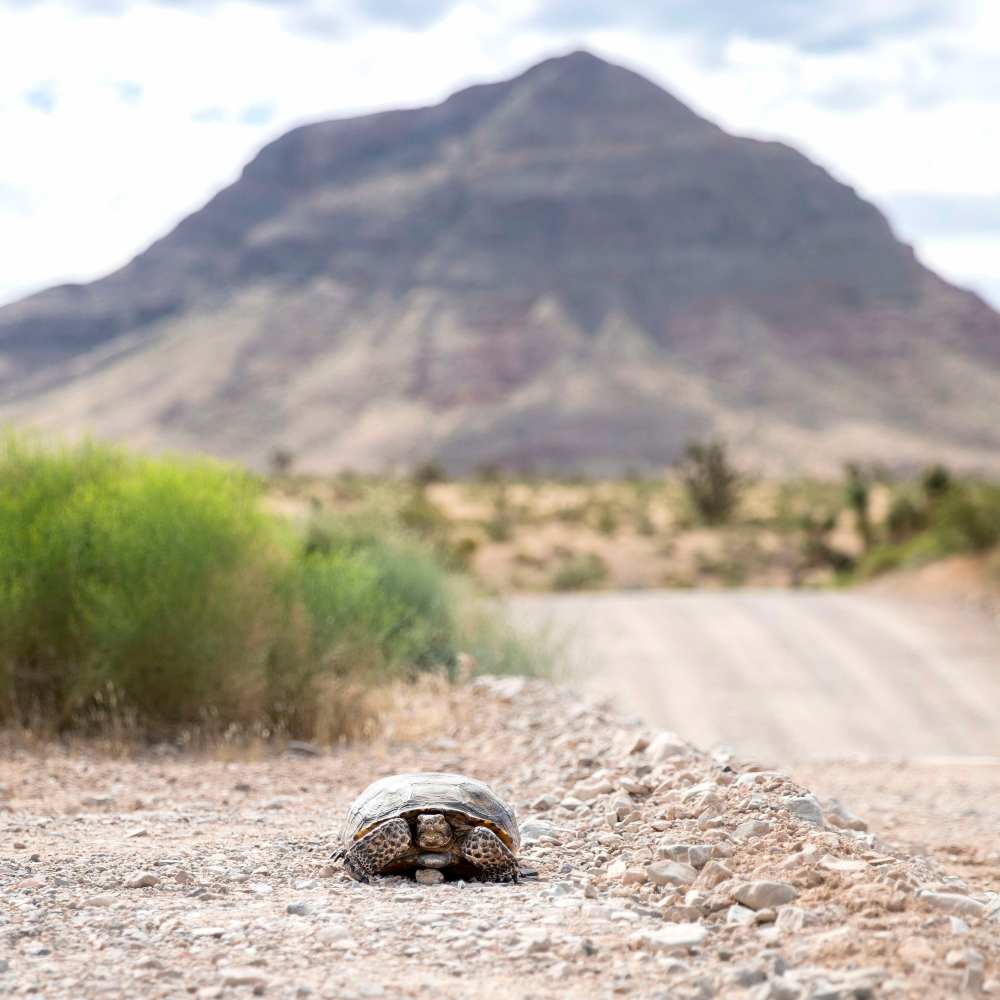
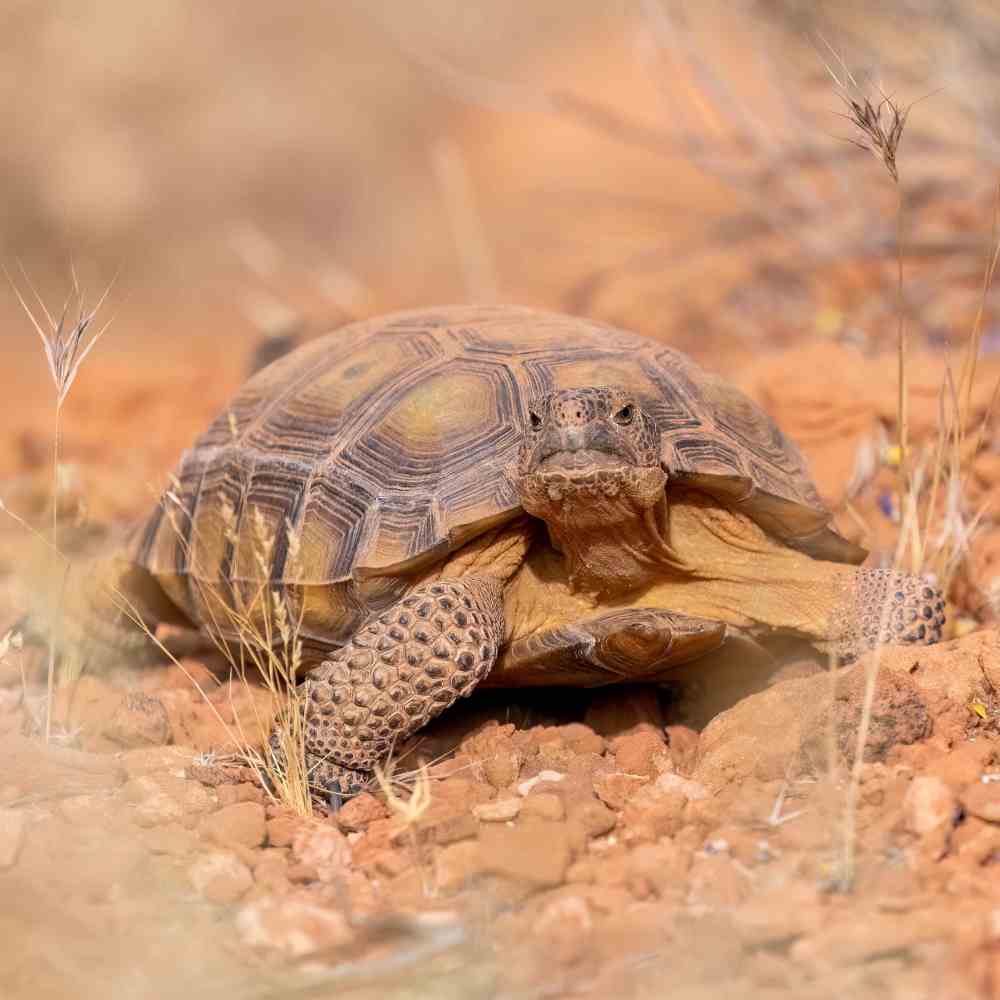
去年の春から秋にかけてリクガメの生存調査のボランティアをしました。 We volunteered last spring to fall as a research volunteer for the survival study of the tortoises.
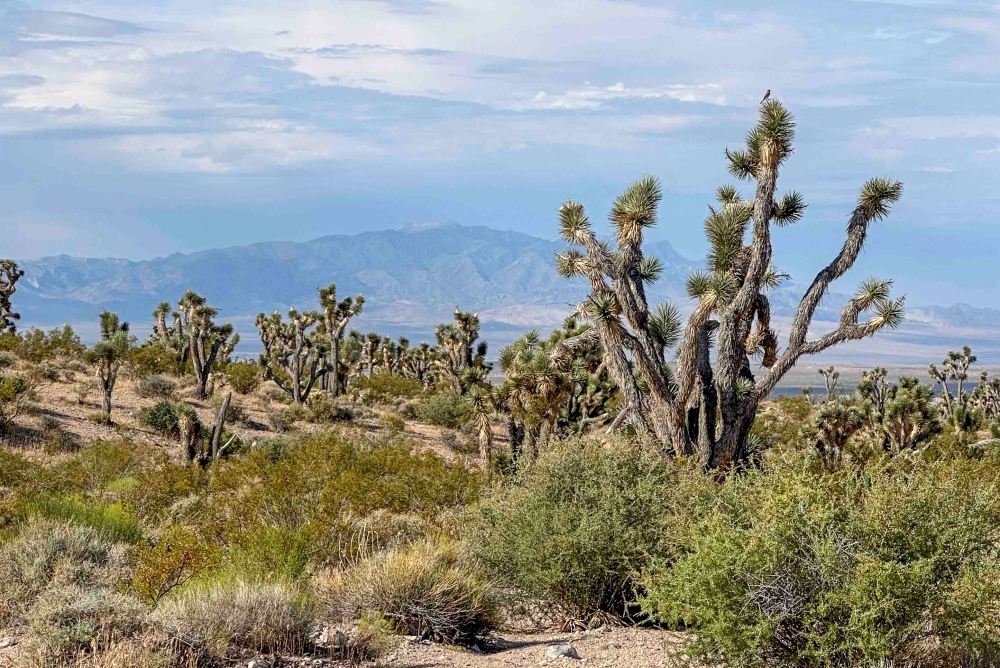
なぜかというと、最近、観光のため荒れ果てた荒野まで開拓していこうという動きが活発化しています。具体的には、私たちの家の近くのBLM (The Bureau of Land Management 国土管理局) の管轄下の土地に観光用の道路を通すことを検討中であると聞いたからです。リクガメが危ない。 The reason for this is that recently there has been a growing movement for tourism to open up even the most desolate wilderness areas. Specifically, we have heard that the BLM (The Bureau of Land Management) is considering to designate an off-road trail to a major recreational tourist road through the land under their jurisdiction near our house. The tortoises are in danger.
そこで https://conserveswu.org (ユタ州の南西部を保護する会 ) の下、私達はリクガメの大切な居住地であることを証明するために調査し始めました。 So under https://conserveswu.org (Conserve Southwest Utah), we began researching to prove that this is an important habitat for the recluse tortoises.
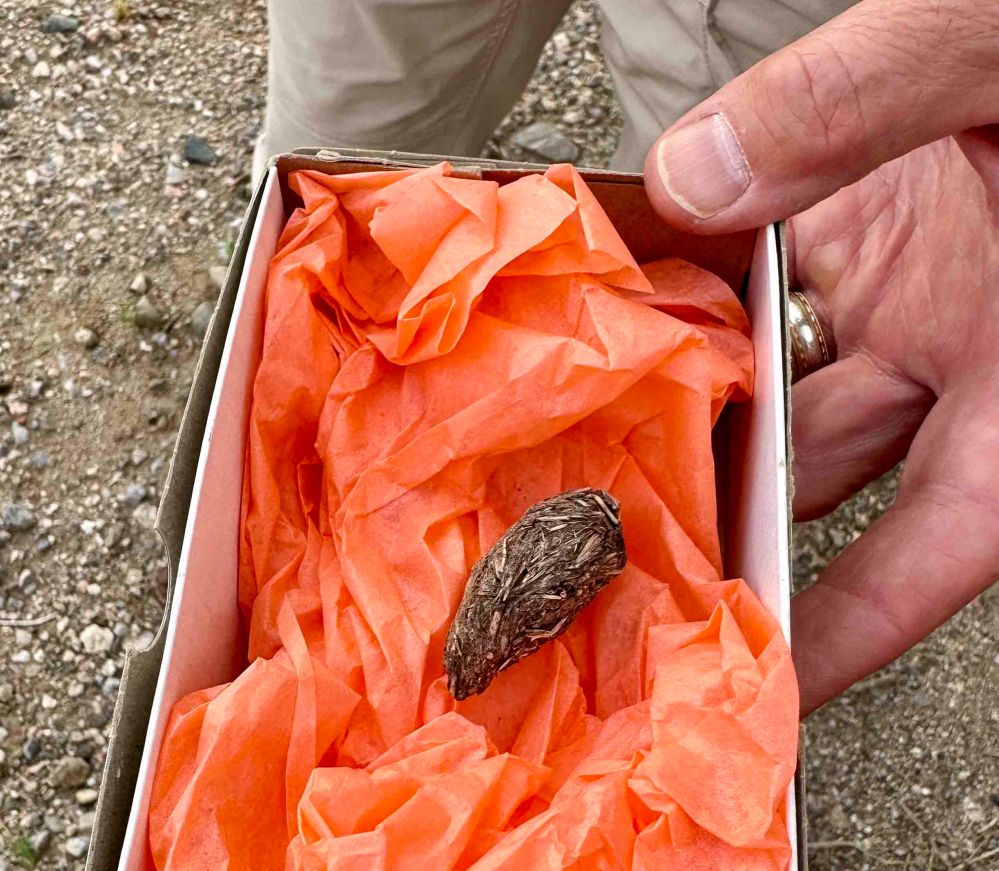
リクガメの糞 Tortoise dropping
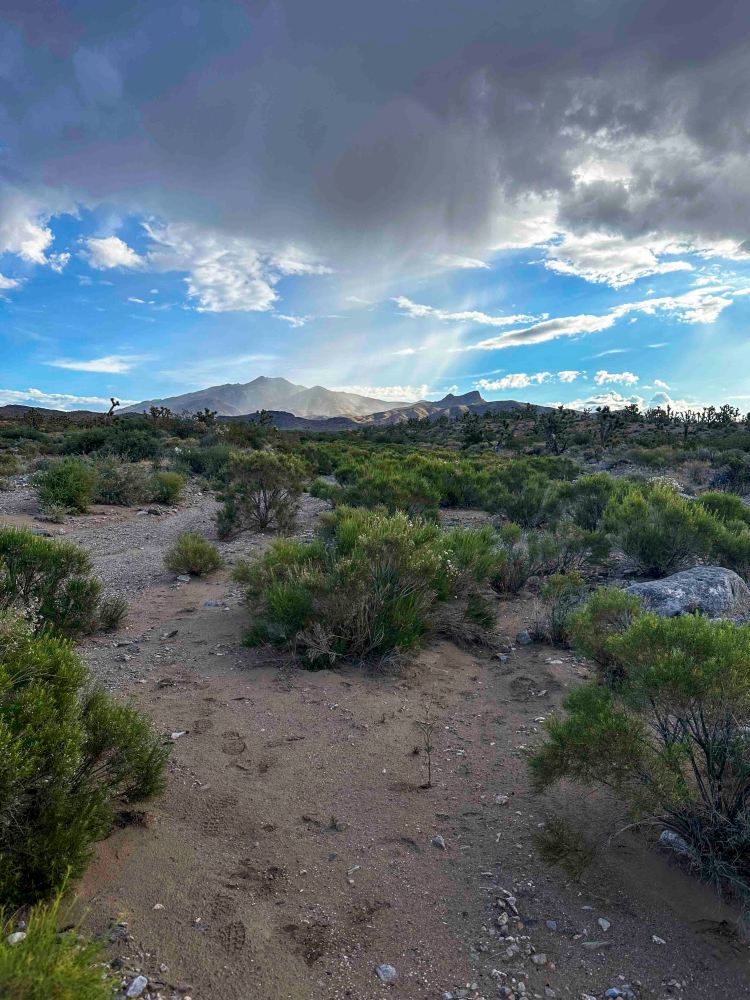
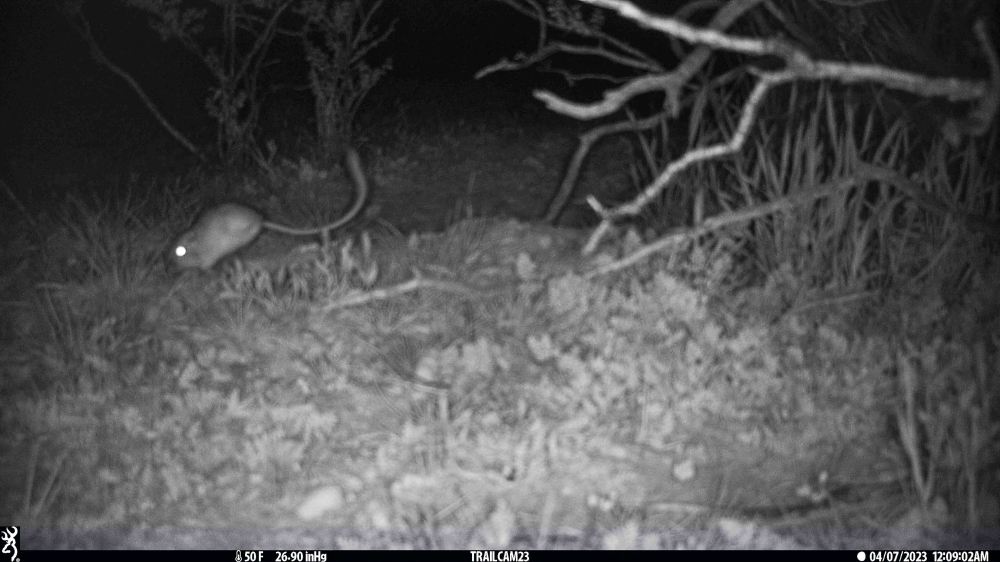
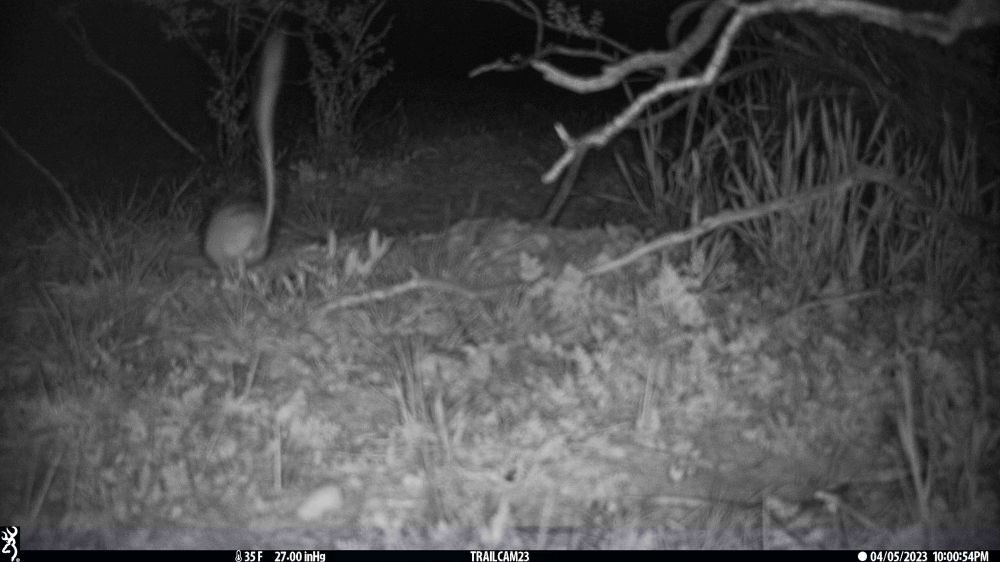
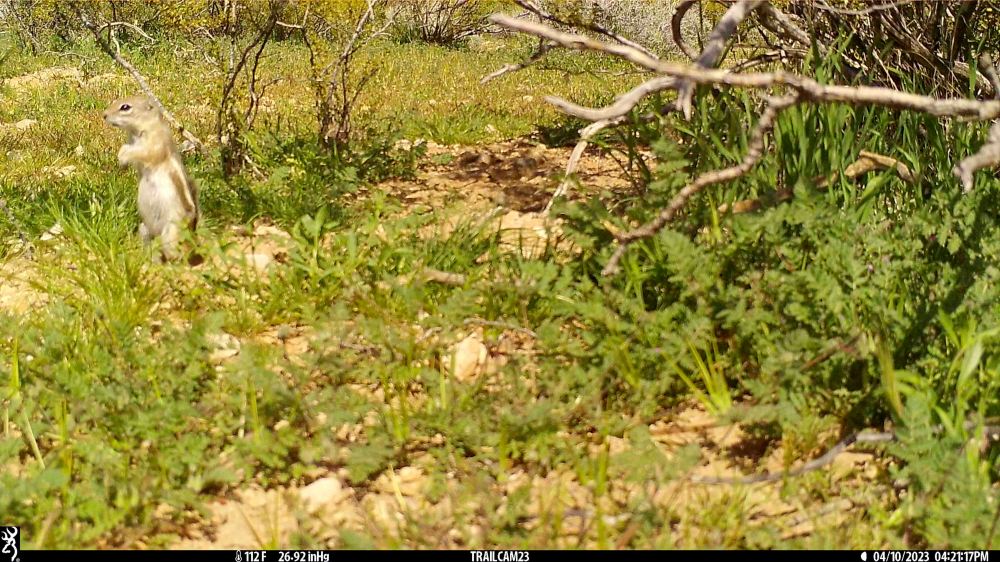
まず、リクガメの巣だろうと思われる場所探し、そこにモーションセンサーで動作するカメラを設置しました。全部で10機ぐらい。そして、1ヶ月に一回メモリーカードを取り替え、その後、その結果の写真をリビューして報告しました。 First, we looked for a place that would be the burrow of a tortoise, and installed a camera that works with a motion sensor there. About 10 units in all. Then, we replaced the memory card once a month, and after that, we reviewed and reported the resulting pictures.
広大な土地に出かけて行って、カメラを設置したり、メモリーカードの交換などはたいしたことではありませんでした。 It was no big deal to go out into the vast expanse of land to set up cameras and change memory cards.
でも、写真のリビューと報告プロセスは、半端じゃなく忍耐力が必要な物でした。今回、初めてこのような調査、観察活動に参加して、大変な仕事だなぁとつくづく思いました。 But the photo-review and reporting process was something that required enormous patience. This was my first time participating in such a survey and observation activity, and I really felt that it is a tough job.
20,000 – 30,000 枚の写真に何が写っているのかを精査して、スプレッドシートに書き込んでいくわけです。それがリクガメが写っていのなら意欲も出ますが、私がリビューしたカードには、60%は風によって動いた草、30%がカンガルーラット、残りの10%がジリスと鳥が写っていただけで、リクガメは0%という悲惨な結果でした。 So you scrutinize 20,000 – 30,000 photos to see what is in them and write it all down on a spreadsheet. If it was a tortoise, I would be motivated, but on the cards I reviewed, 60% had wind-driven grass, 30% had kangaroo and wood rats, the remaining 10% only had ground squirrels and birds, and a dismal 0% had tortoises.
眠くなりそうなほどの膨大で単調な作業は、苦しかったです。 The enormous and monotonous work was agonizing to the point of drowsiness.
4年前、この土地に移り住んだ頃、道端を歩いていたのを目撃しています。当然たくさん生息しているはずですが、減少しているのかもしれません。 When we moved here 4 years ago, we saw them walking along a dirt. Naturally there should be many inhabiting the area, but they may be declining.
私達は1匹も見ることができませんでしたが、他のボランティアたちはたくさん目撃したようです。その結果、予算が降りて、今年もプロジェクトが続くことになりました。Although we didn’t see any tortoises, other volunteers saw plenty. Therefore, the project will continue to be funded for this year.








 aomi3 now