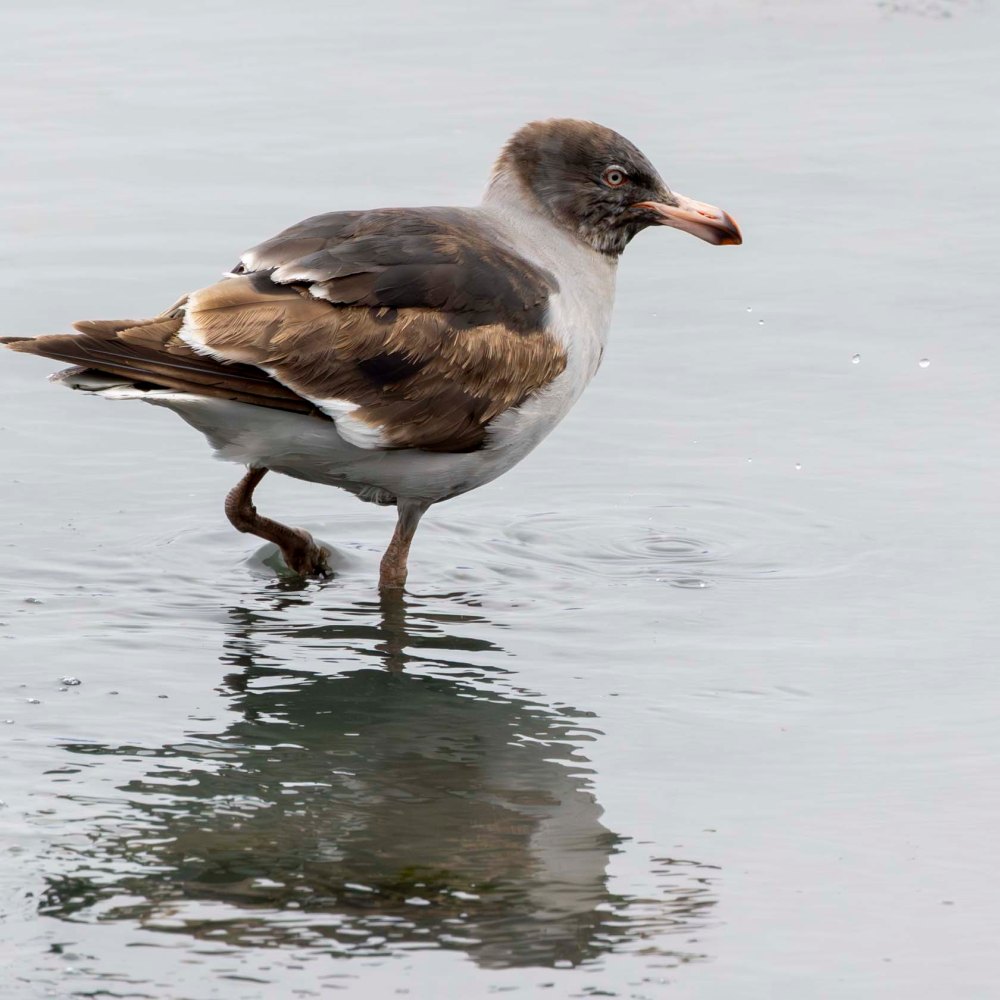
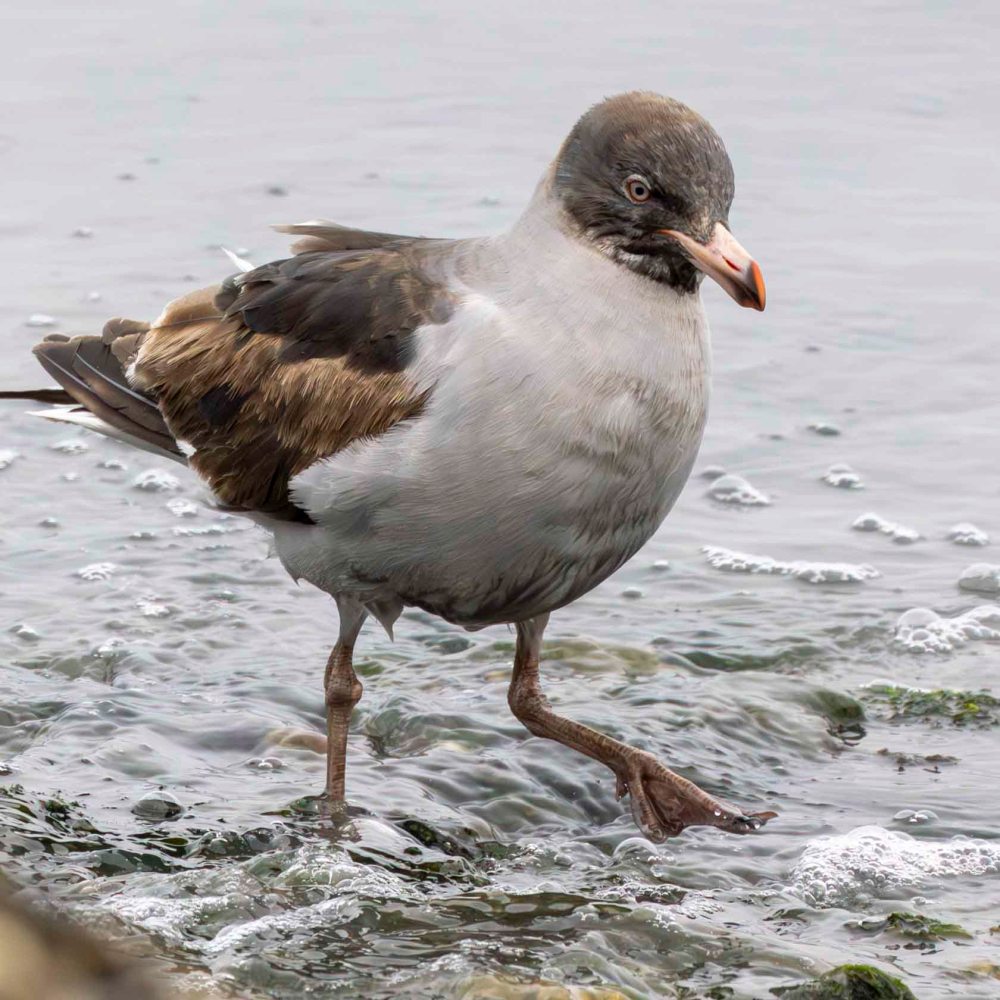
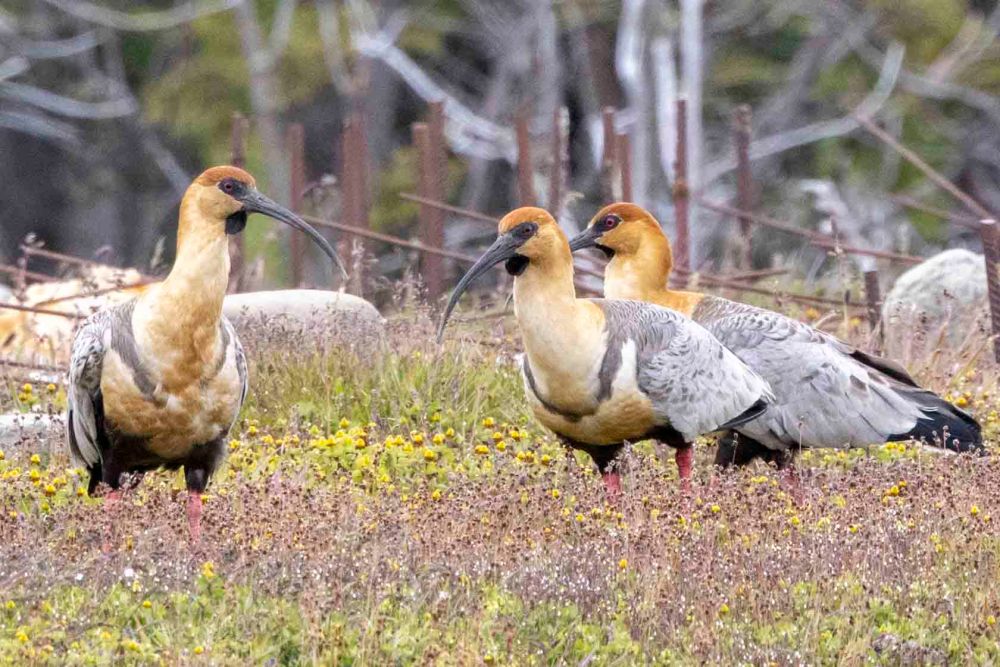
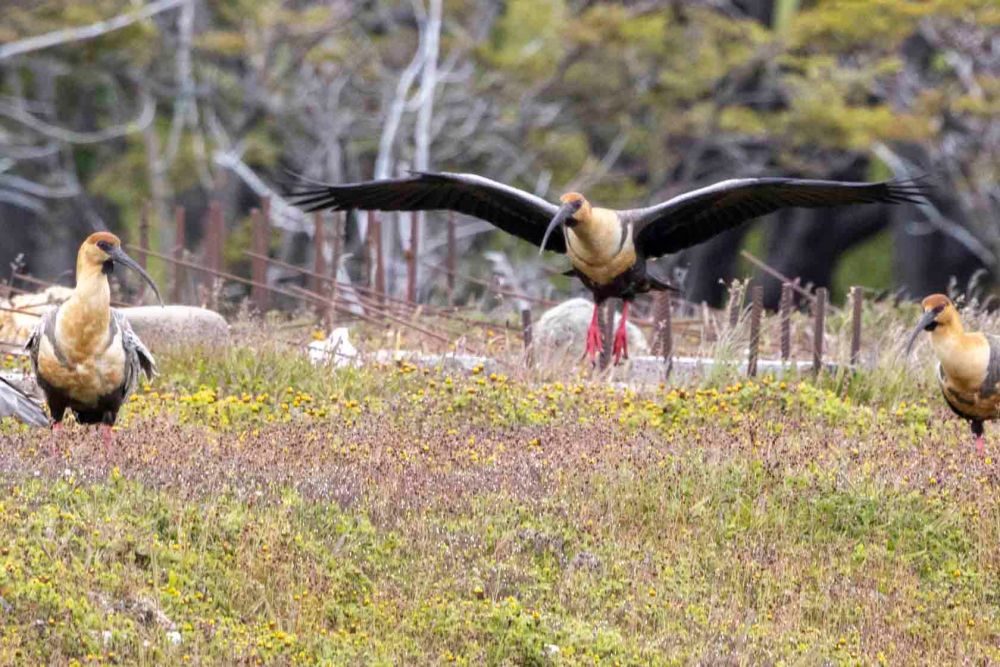
Tag Archives: Juvenile

鳥の分類表、完了 Bird Taxonomy Table, Complete


今日で鳥の分類表のブログは最後となります。 Today will be the last blog on bird taxonomy tables.

 やったー! Yay!

無理やり最後の3つの科を詰め込みましたが、何はともあれ、これで最後です。 I forced myself to cram in the last three families into this blog, but at any rate, this is the last one.

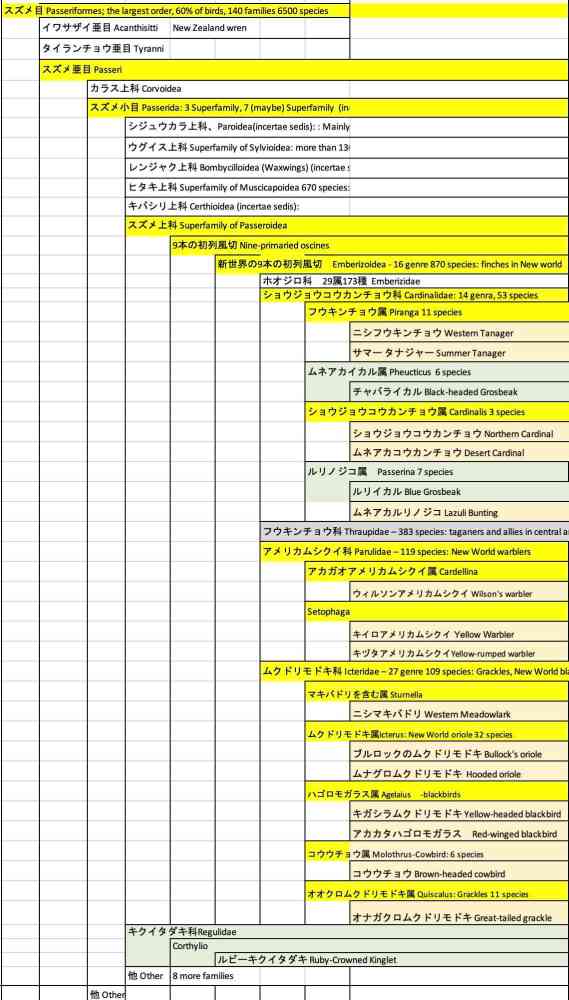
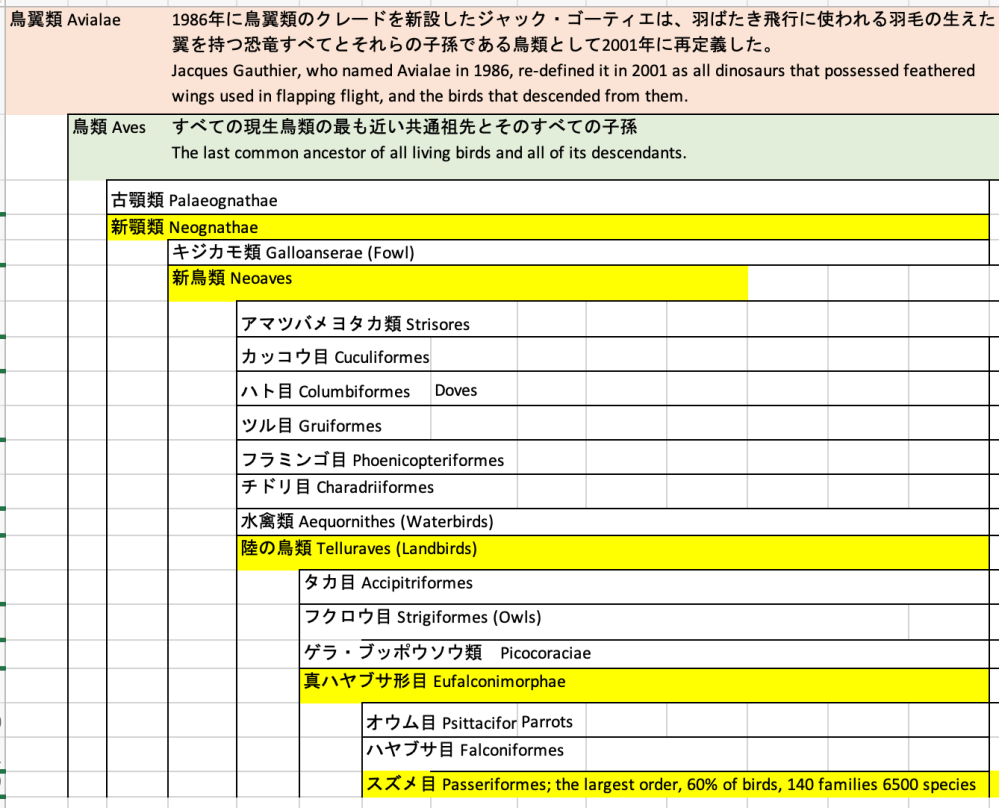
下の表、緑色が間違いの修正後の鳥たちです。それぞれ正しい属におさまりました。 In the table below, the birds in green are those after the error was corrected. Each has been placed in the correct genus now.

Screenshot

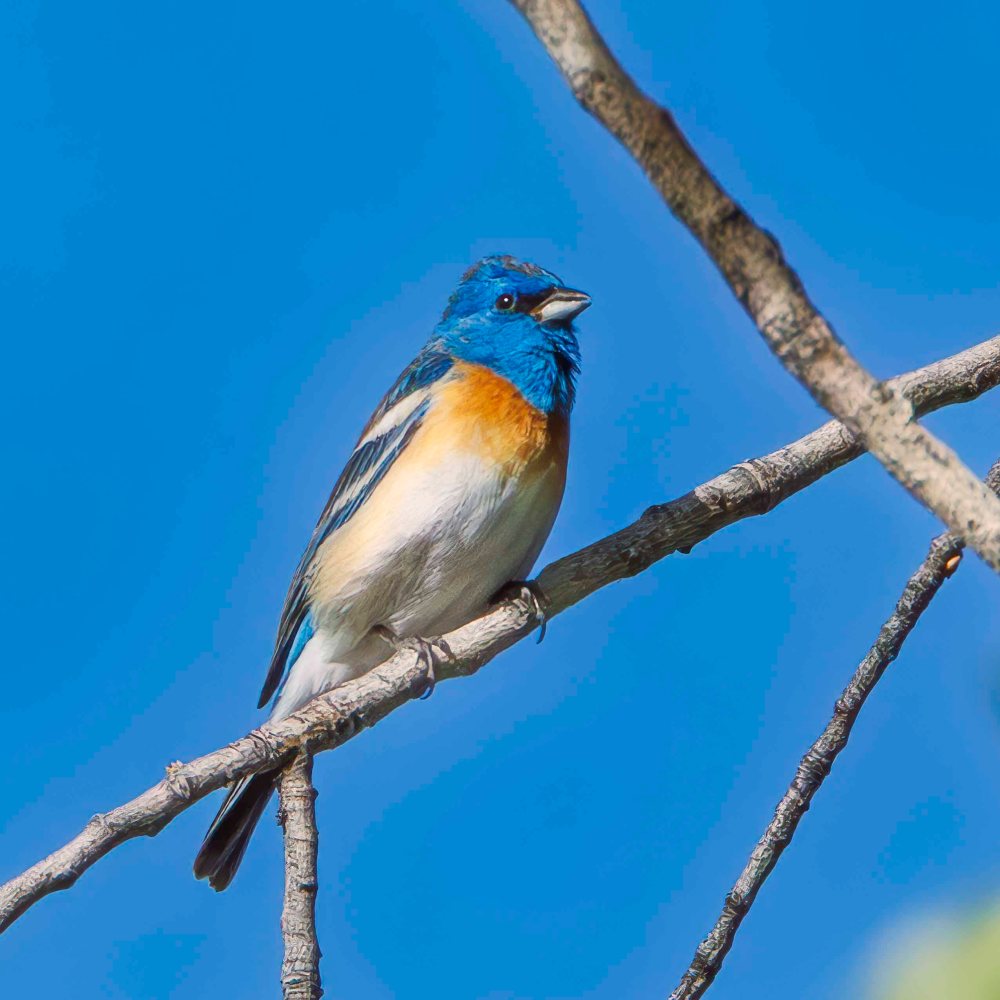
それでは、まず、ショウジョウコウカンチョウ科の鳥たちから。 Well then, let’s start with the birds of the Cardinalidae family.

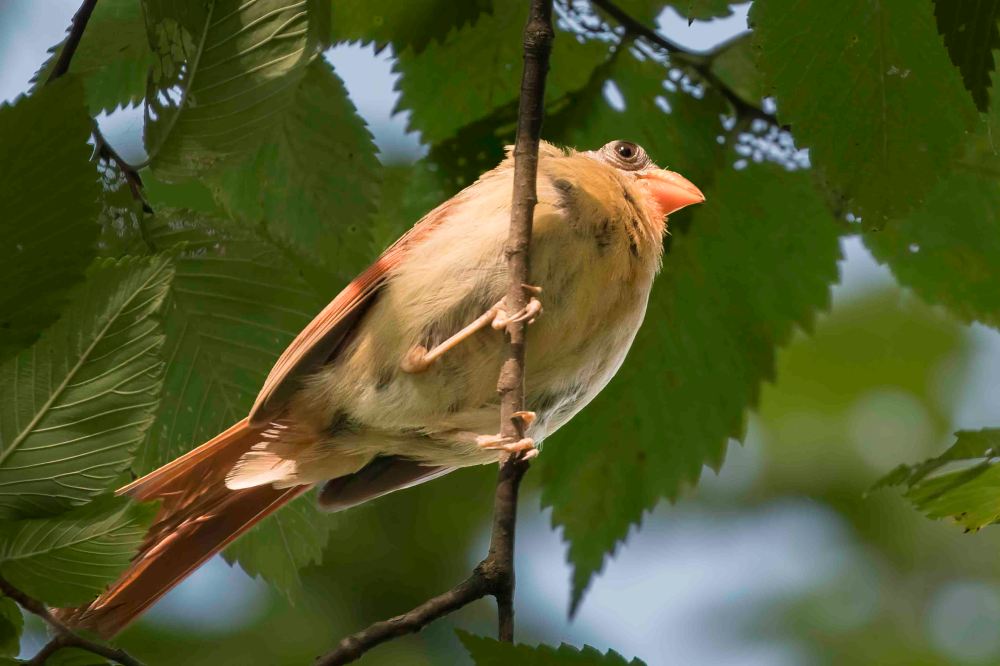
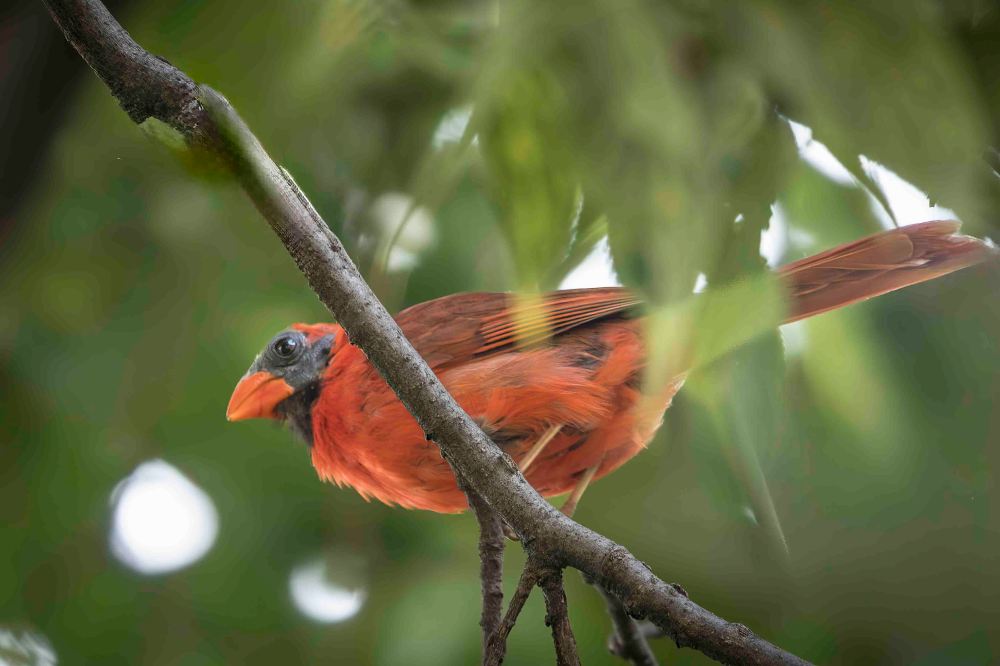
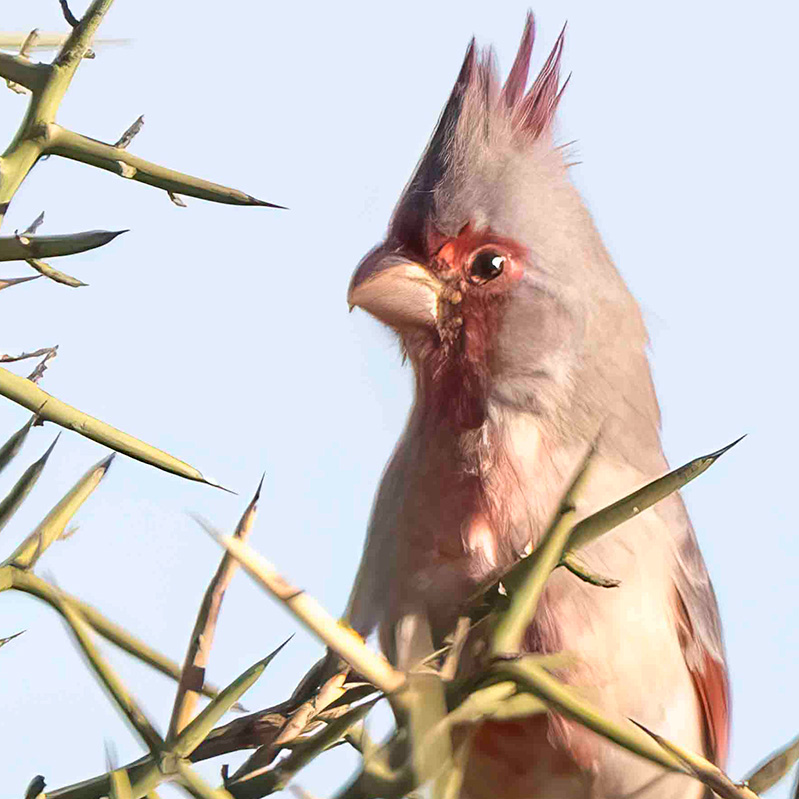
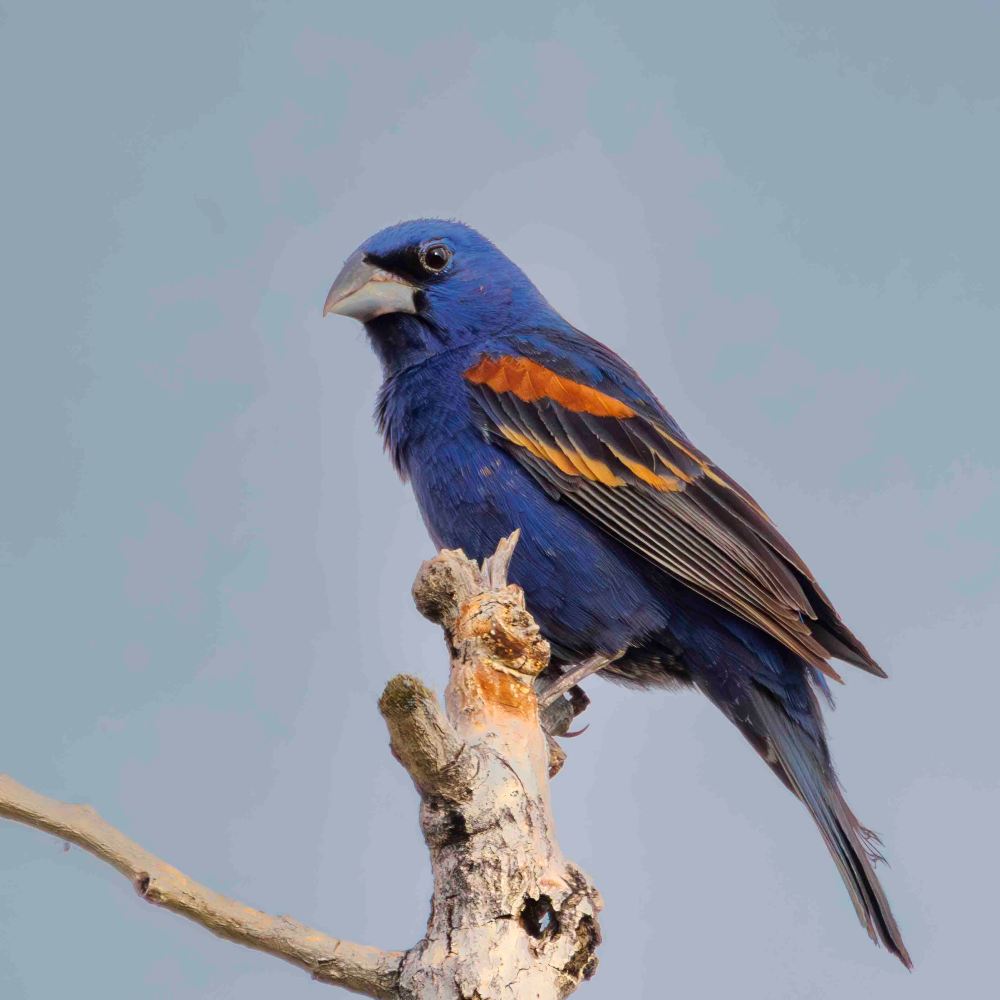
この科の鳥たちの特徴は、とにかく見た目が鮮やかなことです。ルリイカルを初めてみた時の驚きは忘れられません。そしてオスのみが美しい色に包まれているのに対し、メスは色をおさえてます。一見不公平に思えるこの違いは、人間以外の動物界では子孫繁栄を考えれば納得できます。メスは卵を守る為に目立ってはいけないけど、オスはメスを惹きつける為に目立たなければいけない。 The birds of this family are characterized by their simply brilliant appearance. I will never forget how surprised I was when I first saw a Blue Grosbeak. And while only the males are covered in beautiful colors, the females are subdued. This seemingly unfair difference makes sense when you consider procreation in the non-human animal kingdom. Females must not stand out to protect their eggs, but males must stand out to attract females.

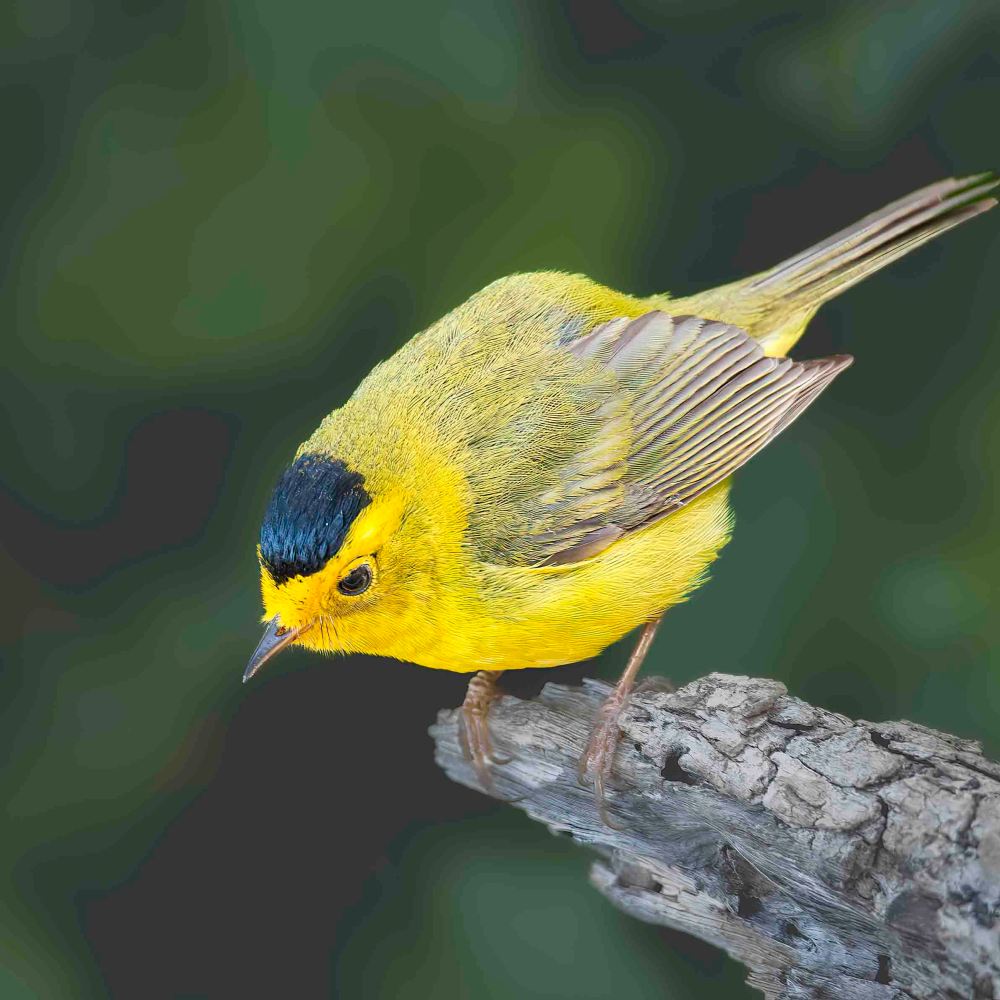
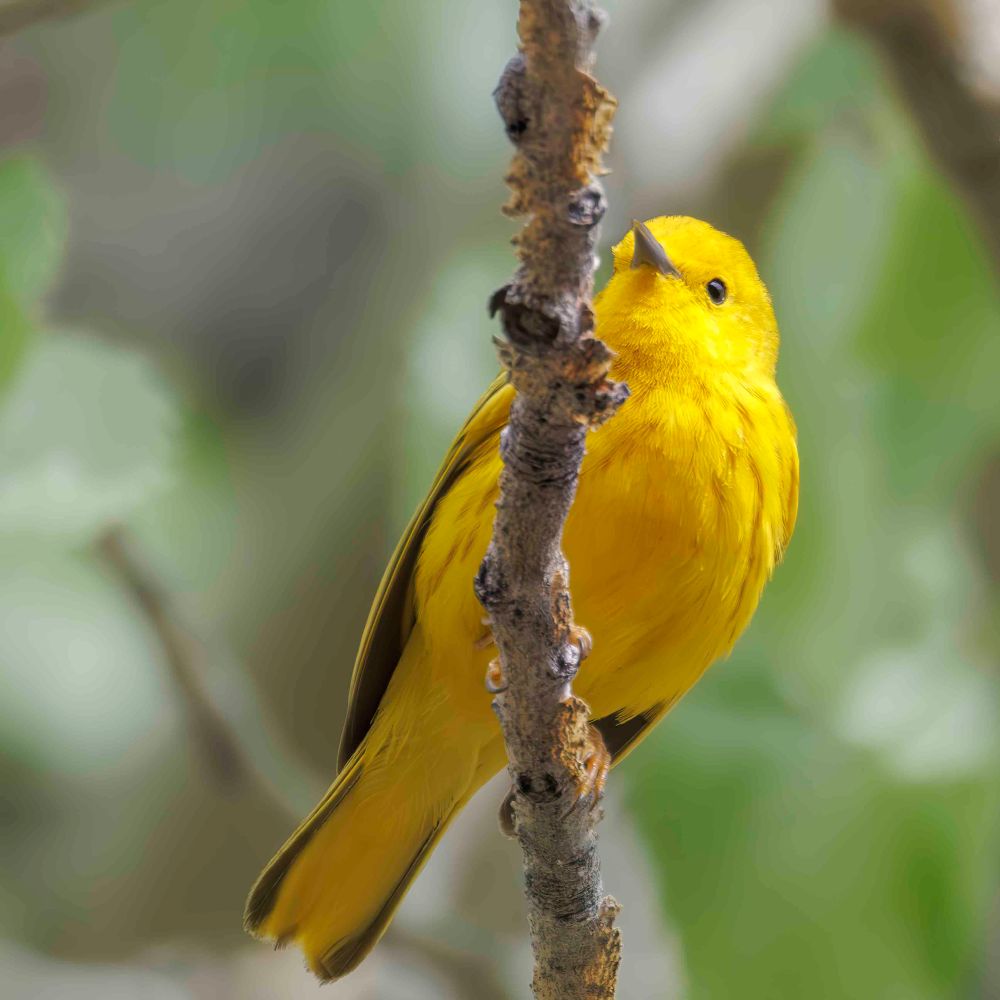
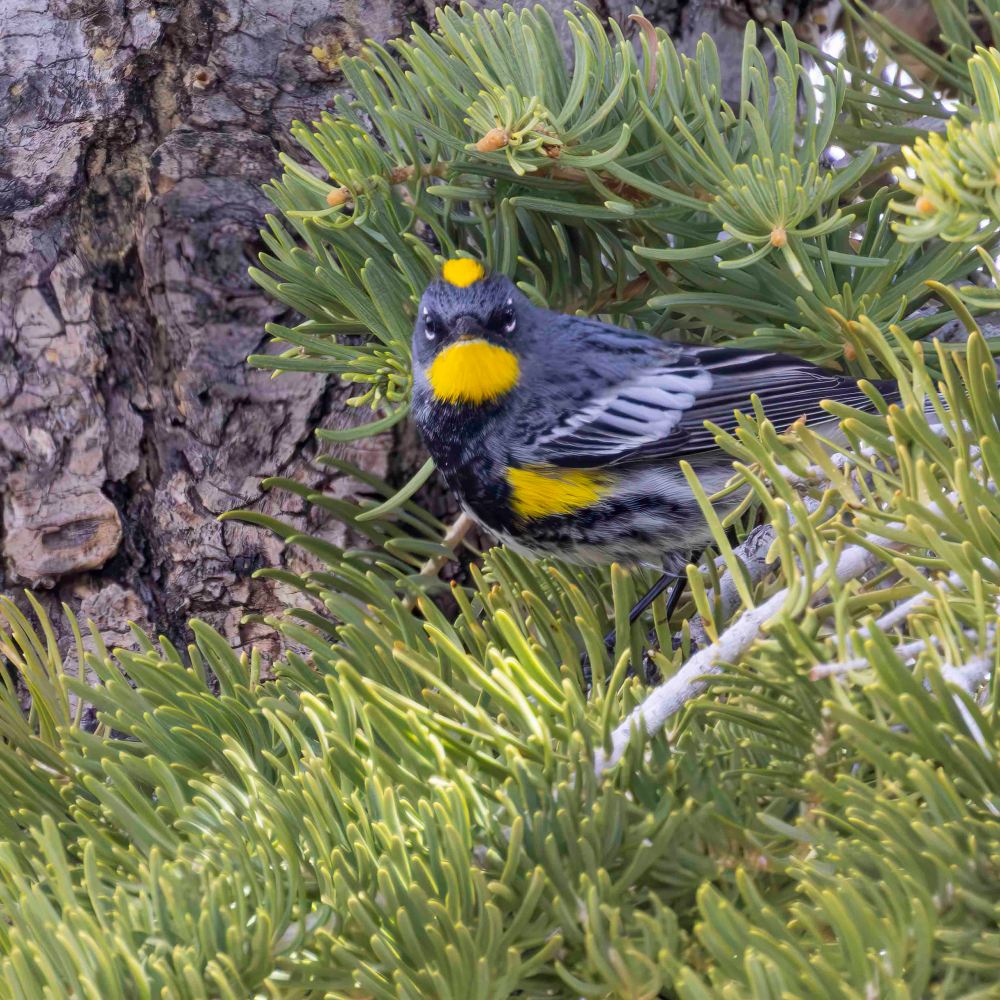
次はアメリカムシクイ科です。 Next up is the family of American warblers, Parulidae.

この科の鳥たちは、みんな小さくて可愛らしい。だからもっと撮りたいんですが、私には難度の高い鳥たちです。常に動き回っている彼らの習性に加えて、視力が悪い私には見つけることすら大変ですなんですね。 All birds in this family are small and cute. So I want to take more pictures of them, but they are very difficult birds for me. Their habit of always being on the move, plus my poor eyesight, makes it very difficult for me to even find them.

もう一点付け加えることがあるとすれば、アメリカムシクイ科は旧世界のムシクイ、ダルマエナガ科から1830年に分岐しました。ダルマエナガ科とアメリカムシクイ科との大きな違いの一つは、初列風切の羽の数です。旧世界の虫食いたちは10枚、方やアメリカ大陸の虫食いたちは9枚ということです。 If I may add one more point, the family American Warbler diverged from the Old World Warbler, Sylviidae, in 1830. One of the major differences between the insectivores in Old World and in America is the number of the primary feathers. The Old World warblers have 10 feathers, while the American warblers have 9 feathers.

そして、最後にムクドリモドキ科です。 And lastly, the Icteridae family, New World Blackbird.

この科には、近隣でよく見かける鳥が多いのですが、ムクドリモドキ属以外の写真はありません。 Many of the birds in this family are common in the neighborhood, but there are no photos of any of them except for the some in the genus Icterus.

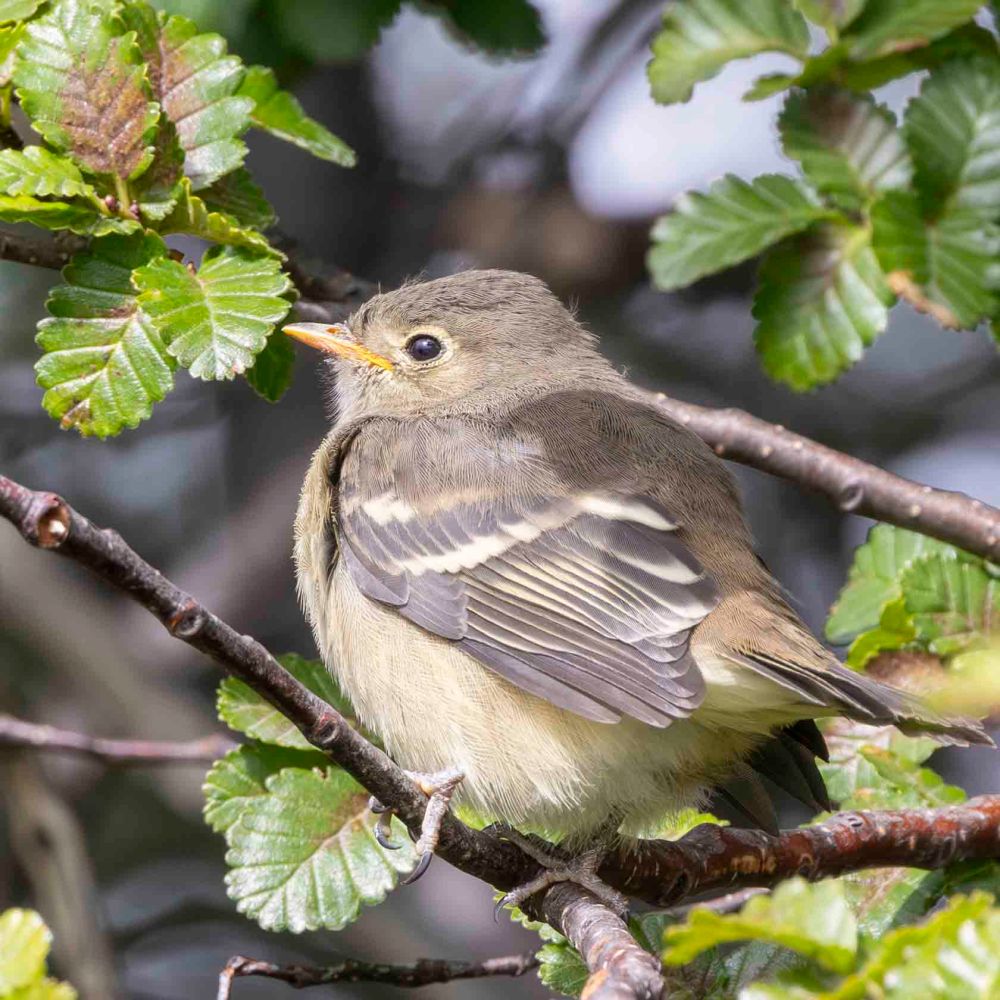
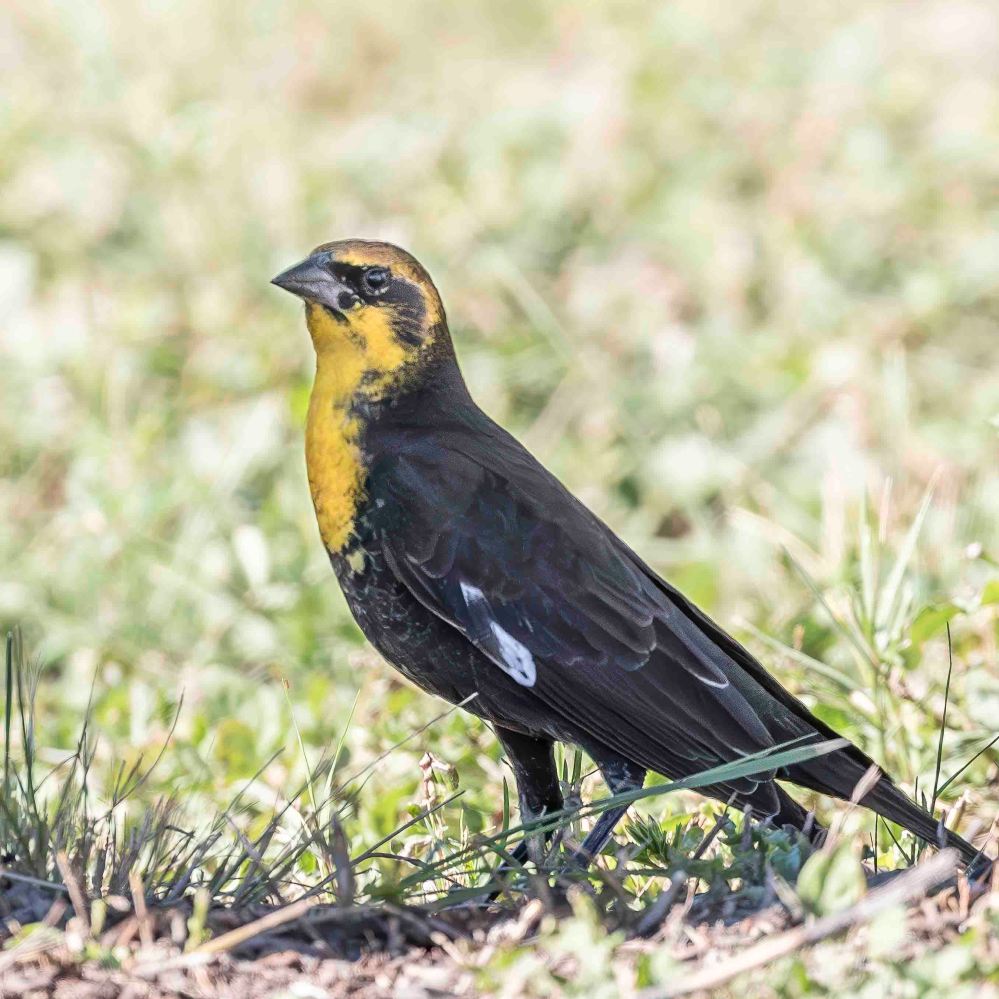
キガシラムクドリモドキの幼鳥 Yellow-headed blackbird Juvenile

とりわけ、オナガクロムクドリモドキはこの地に引っ越してきてから初めてみた鳥だったので携帯で撮ったことはありましたが、消してしまいました。なぜなら、彼らはとても攻撃的な鳥だからです。他の鳥の巣を襲い卵を盗んだり、幼鳥をさらっていきます。だから撮る気にならないんですね In particular, the Great-tailed grackle was the first bird I had seen since moving here, and I had taken pictures of them with my cell phone, but I had erased them because they are very aggressive birds. They attack other birds’ nests, steal their eggs, and snatch their young. So I don’t feel like taking pictures of them.

以上、最後の3つの科をサッと紹介しました。これで私の鳥の分類表の完成です。 These were my quick introductions to the last three families. This completes my bird taxonomy table.

そうそう、もう一つ大切な項目を鳥類の上に付け加えました。それは「鳥翼類」です。 Oh yes, I added one more important item above Aves. It is called “Avialae.”

鳥翼類の定義が最高にカッコウいい! The definition of Avialae is the coolest!

羽ばたき飛行に使われる羽毛の生えた翼を持つ恐竜すべてと、それらの子孫である鳥類。

All dinosaurs that possessed feathered wings used in flapping flight, and the birds that descended from them.

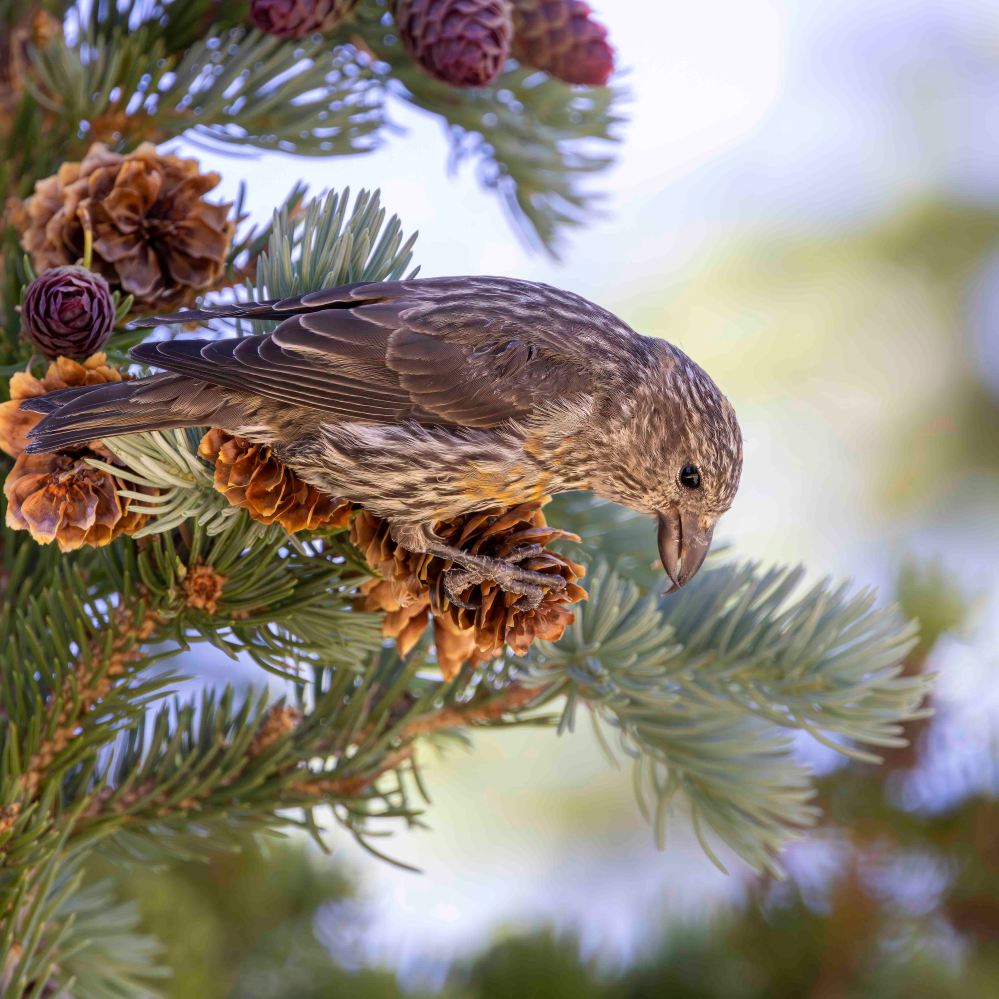
イスカという鳥 Red Crossbill


この鳥について調べようと思いながら忘れていました。今回ついに調べてみると、この鳥特有のおもしろい特徴が見つかりました。もちろん、この鳥だけに限ったことではありませんが、鳥について調べることの楽しさを再発見しました。 I had been meaning to look into this bird, but had forgotten about it. When I finally looked into it this time, I found some interesting features unique to this bird. Of course, this is not limited to this bird alone, but I rediscovered the fun of studying birds.

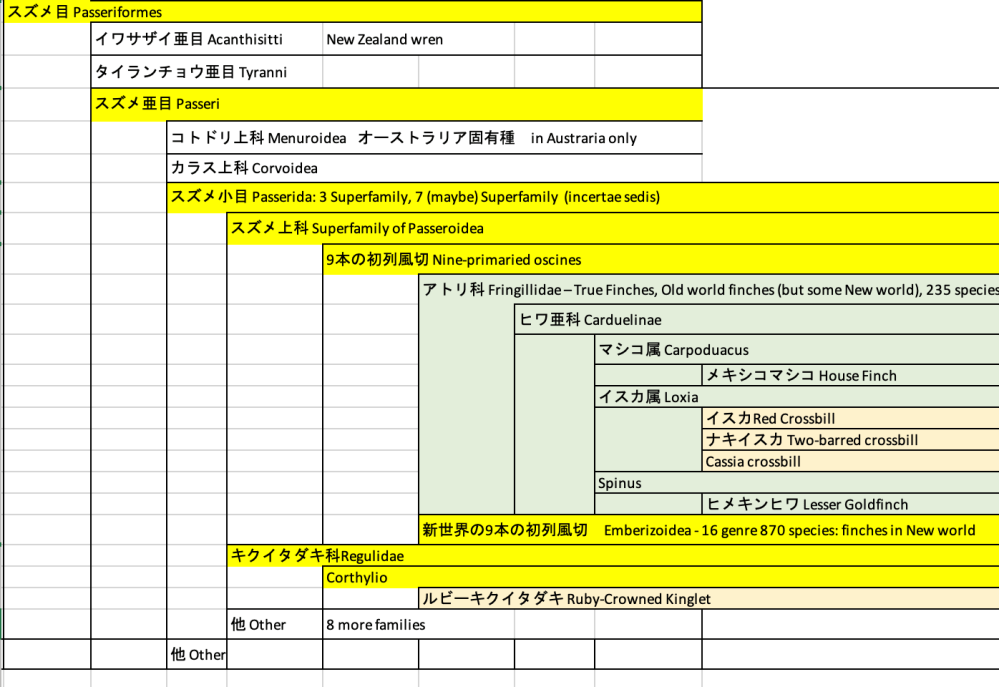
それを話す前に、分類表を訂正しました。下の表の緑色の部分、アトリ科の中にあった3種の鳥を他の科に移動し、新たにイスカ属を加えました。 Before I start talking about it, I have made some corrections to my classification table. In the green part of the table below, I moved three bird species that were in the family Fringillidae to other families and added a new genus, Loxia.

また、前回書いたルビーキクイタダキもキクイタダキ科を追加して収めました。 I also included the Ruby-crowned Kinglet I wrote about last time, by adding Regulidae family to the list.

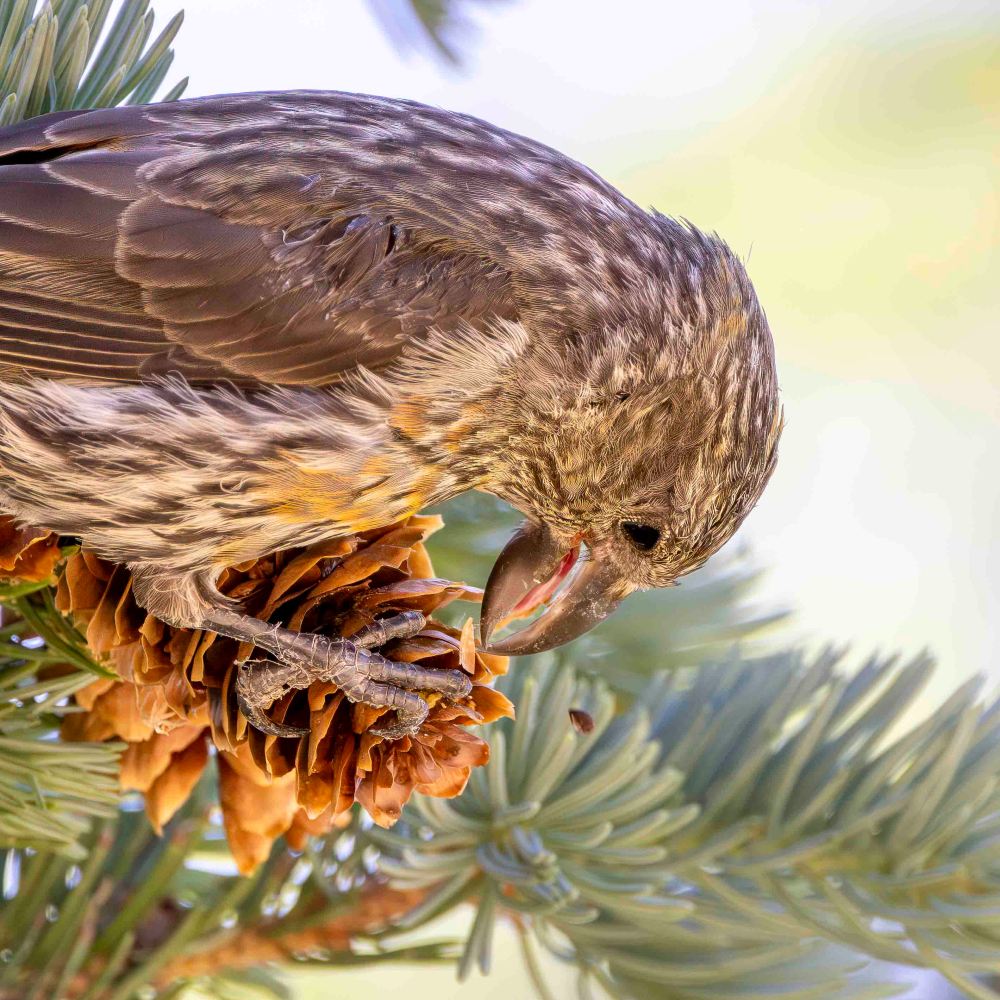
イスカという鳥は嘴が先端でクロスしているフィンチです。一見、奇形かと思えるようなこんな形状は、実は彼らが生きていく上で成し遂げた適応であると言われています。 The Red Crossbill is a finch with its bill crossed at the tip. This seemingly deformed shape is actually said to be an adaptation they have made in order to survive.

イスカの若鳥 Red Crossbill Juvenile @ Cedar Breaks National Monument

雪が溶けてようやく暖かくなってきた頃の6月、シーダーブレイクス国定公園では幼鳥の鳴き声がそこかしこから聞こえてきて賑やかでした。 In June, when the snow had melted and the weather was finally warming up, Cedar Breaks National Monument was buzzing with the sounds of young birds everywhere.

遅い春の到来に鳥たちだけでなく、私たちもただ歩いているだけで楽しくなりました。そんな時に、初めてイスカに出会いました。 The late arrival of spring made not only the birds, but also us, happy to just walk around. It was during this time that we first encountered a Red Crossbill. 

幸い、まだ経験値があまりない幼鳥は、私たちが歩いていても種子を食べることに夢中で即座に飛び去ることはしません。 Fortunately, the young birds, which do not yet have much experience, were too preoccupied with eating seeds that they did not instantly fly away when we walked by.

この嘴の形状が松笠の奥にある種をうまく取り出すことを容易にしているということです。  The shape of this beak allows the seeds to be successfully extracted from deep within the pine cone.

嘴がクロスしている鳥は全世界で6種、それらがイスカ属に分類されています。北米では3種です。その中でも注目したいのはカシアクロスビル (Cassia Crossbill) です。つい最近まで赤いイスカの中に分類されていましたが、独立しました。この鳥はアイダホ州のカシア郡という狭い地域にしか生息していません。 There are six species of birds with crossed bills worldwide, and they are classified in the genus Loxia. In North America, there are three species. The most notable of these is the Cassia Crossbill. Until recently, it was classified within the Red Crossbill, but became an independent species. The fact is that this bird is found only in a small area in Cassia county, Idaho.

なぜか? Why?

ここには高熱でないと開花しない松ぼっくりを持つ針葉樹林, Lodgepole pine, があるからです。他の鳥やリスなどが諦めても、カシアクロスビルだけは曲がった嘴を使って器用に種を取り出すことができるんですね。まさに独り占め状態なので、他の場所に食べ物を探しにいく必要がないというわけです。 The reason is that here they have a coniferous forest, Lodgepole pine, with pine cones that will only open with high heat. So only the Cassia Crossbill can dexterously extract the seeds using its curved bill, even if other birds and squirrels give up. They have the whole place to themselves, so they don’t have to go looking for food elsewhere.

カシアクロスビルについて、アイダホ州のアイダホバードのウェブサイトに詳しく載っています。いつか探しに行かなければ! You can read more about Cassia Crossbill on the Idaho Bird website. We must go there and look for it someday! https://idahobirds.net/birding-idaho/cassia-crossbill/

以下、イスカの幼鳥が松笠から種を取り出しているところのビデオです。Below is a video of a juvenile Red Crossbill removing seeds from a pine cone.

ロビンの子供とミスタートッド Juvenile Robin And Mr. Toad


昨日の独立記念日をみなさんはどう過ごされましたか? How did you spend Independence Day yesterday?

暑いので、私はグータラと家の中で過ごしました。 It was so hot outside and I just stayed inside the house goofing around.

すると、ロビンの子供が裏庭に舞い降りて、何か言いたそうです。 Then a juvenile Robin swooped down in the backyard and said something to me.

あ、そうか。独立記念日のお知らせをしてくれていたんですね。 Oh, I see. You’ve been informing us about Independence Day.

大抵、1月ごろ、春を告げてくれるロビンですが、昨日は特別サービスをしてくれたようです。 Most of the time, around January, Robins herald spring, but the day before yesterday it provided a special service for me.

夜、花火が遠くから聞こえてきた頃、ミスタートッドがやって来ました。 At night, when fireworks could be heard in the distance, Mr. Toad hopped over.

あ、そうか。花火のお知らせをしに来てくれたんですね。 Oh, I see. You came to let us know about the fireworks.

暑い中、お疲れ様でした。 Thank you for your hard work in the hot weather.

そして、私はボーッとして、何もしない状態に戻りました。窓越しに見える花火を時折見ては、ゲームをしたり、テレビを見たりと、のんびりした独立記念日でした。 Then I went back to zoning out and doing nothing. It was a lazy Independence Day, playing games and watching TV, with occasional glimpses of fireworks through the window.

今朝の訪問者 A Visitor This Morning


寒くなりました。まだグズグズとベッドの中にいたら、バンちゃんの席立てる様な声が聞こえてきました。 It is getting to be cold these days. I was still dawdling in bed when I heard Banchan’s voice.

「早く、早く、裏庭にハイタカが来てるよ!」 “Come quick! A hawk is in the backyard!”

飛び起きてリビングルームに行くと、いた! I jumped out from bed, and went to the living room. And I found it.

飛んでいってしまう前にと、レンズ交換もしないまま100mm レンズが付いているカメラを持って、そーっと窓際まで近づきました。 I didn’t want to miss the chance, so without changing the lens, I simply grabbed my camera which happened to have the 100mm prime lens attached, then I quietly hid myself behind a chair.

クーパーハイタカです。 It was a Cooper’s hawk.

多分、まだ幼鳥です。 It was still a juvenile.

窓ガラスを通してでも気づかれてしまい、さっさと飛び立って行ってしまいました。あと5秒居て欲しいと思う気持ちがあった反面、安心したのも事実です。まだ子供でも鋭い警戒心と洞察力を持っていたからです。 As soon as it noticed us even through the window glass, it flew away. Although I wanted it to hang around for only 5 more seconds, I felt relieved because it had keen perceptivity and vigilance even though it’s still a child.

「これから来る厳しい冬を頑張って乗り切るんだよ。来年、逞しい大人になった時、また会おう! 」”You’ve got to pull through this harsh winter. Then meet us again in the next year when you become a strong adult!”

ハイタカの飛び立つ姿に、元気をもらいました。 The hawk’s strong take-off gave me energy.

クーパーハイタカ Cooper’s Hawk


私たちの目の前に舞い降りたクーパーハイタカです。鳥の会の人たちによると、まだ成長しきってない幼鳥だそうです。 This is a Cooper’s Hawk. It is still a juvenile according to the Red Cliffs Audubon club people. It landed right in front of us.

まだ頭から首の辺りがまだ白いからだと言っていました。まだ目が赤くなっていないかも。 They said that it’s still white around the head and neck, and the eyes aren’t red enough. So it is a juvenile.

こちらは別の週に見たお母さんのクーパーハイタカです。 This is a fully grown mother Cooper’s Hawk. We saw it on a different day in a different place.

こうして比べてみると、わかります。 I can see the difference now by comparing them like this.

さて、この日はなんと、ヒナも目撃できました。もしかしたらヒナというにはもうちょっと成長しているような、でも、空を自由に飛び回れる幼鳥でもなさそうです。だから、ヒナとしておきます。 And now, we saw a chick near its mom on that same day as the adult hawk. Some people say it has already grown more than a chick. But I am not sure if it can fly out to the sky freely like a juvenile bird. So I say it’s a chick.

ちょっと観察してみましょう。まず、まだシッポが短い。白い産毛がまだフワフワ残ってる。また、背中の羽も生えてきただけで落ち着いてません。 Let’s observe it closely. First of all, the tail is so short. The second point is that it still has white baby feathers around the face and other body parts. And lastly, the feathers on the back are grown but they aren’t stabilized yet.

いや、それにしても可愛いですね。 At any rate, it is so cute!

おやおや?もう片足立ちできるんですね。もう飛べるのかなぁ? Oh, my! It can stand on the branch by one leg already. Well, can it fly now then?

白頭鷲の家族 その2 Bald Eagle Family 2


「お父さん、昨夜はお疲れ様でした。」”You worked hard last night by the lake.”

「いやいや、いつもの事だから平気だよ。子供が2羽もいるからね。」”Oh, no, that’s nothing. I have two kids. So, I have to get fish for them all the time.”

「こちらの2羽ですね。逞しそう。」”I see these are your children. They look quite healthy and tough.”

「まだ心配で目がはなせませんよ。」”I still can’t leave them alone.”

「下の子はまだ飛ぶのが下手で、お兄ちゃんにいつも揶揄われてますよ。」”Especially the younger one needs more attention. He is not so good at flying. So his brother always teases him.”

「何してるの?」と、お兄ちゃん。”What are you doing?” said the older brother.

「これ、ラクーンの残り。どうしよう?」と、弟。”Um, what should I do with the leftovers of this Raccoon?” said the younger brother.

「もう食べ終わったんなら、こうやって飛ぶ練習した方がいいよ。」”If you are done with it, you should practice flying more like this.”

「飛べるんだけど、木の上に止まるのがちょっと怖いよー」”I know. I can fly, but I am a bit afraid of landing on a tree.”

「私たちは見守るだけで、あまり口出ししない様にしてます。」と、お父さん。”We, as parents, simply observe them, and try not to interfere with their communications,” said father.

「なるほど。ところでお父さん、太陽を背に受けて飛んでる姿、格好よかったですよ!」”I see. By the way, you looked so cool flying with the light shining on your back.”  

白頭鷲とイヌワシ Bald Eagle And Golden Eagle


どうやって見分けますか? How do you identify which is which?

白頭鷲の大人は誰でもわかりますよね。I assume you can tell easily that this bird is a Bald Eagle.

こちらは犬鷲の大人。違いははっきりしてますね。This is a Golden Eagle. They look very different.

ただ、巣立ってから完全に成長するまでの5年間、この鳥たちは姿を変えていきます。クチバシと羽の色が変わっていくので、遠い上空を飛んでいる鳥を見ても、はっきりと見分けられない時の方が多いかもしれません。The problem is that they transform their appearance until fully grown for about five years after they fledge. So, many people can’t identify what they are for sure when they are flying up high in the sky.

白頭鷲の幼鳥。This is a juvenile Bald Eagle.

イヌワシの幼鳥の写真は残念ながらありません。その代わり、こちらのリンクをご覧ください。両者を比較しています。 Unfortunately, I didn’t find even one juvenile Golden Eagle on this trip. So, I found this site instead, a very useful website comparing both juvenile birds.

白頭鷲の幼鳥は成長するにつれて徐々に頭が白くなります。また、嘴も黒から黄色に変わっていきます。The head of juvenile Bald Eagles changes from dark brown to white gradually. The beak also changes from dark to yellow.

方や、イヌワシの変化は羽を広げた時の白い部分が少しずつなくなっていくことと、嘴の根本部分の鮮やかな黄色が徐々に焦茶色になる。つまり、脚をのぞいて全体が焦茶色になっていくことだと理解しています。On the other hand, the juvenile Golden Eagle has some white patches on their wings that will go away. The base of the beak is yellow but will become dark brown later. In fact, their entire body will become dark except for their feet.

こんな風に比較しても識別はまだまだ難しい。写真を撮ってズームアップしてみないとわからない。例えばこんな写真、どっちだかわかりますか?ヒントは、尻尾の羽の色と、胸のまだら色、それに嘴です。Although I summarized the comparison, it is still very difficult to identify them until you capture them and zoom in close. For example, refer to the picture below. Which bird is this? The hint is tail and chest, and beak.

答えは、白頭鷲の幼鳥です。羽を大きく広げてもらえるとわかりやすいですね。The answer is a juvenile Bald Eagle. It’s so much easier to identify it when it spreads its wings.

逞しい小鳥 Strong Little Bird


カナダの国境に近いキントラ湖。ブリティッシュコロンビア州立公園の山々が見えています。山火事で煙が空を覆っていなければ、きっと見事な景色が広がっていた事でしょう。一生懸命 Lightroom で編集をした結果の夕暮れの風景です。 Kintla lake is located very close to the border with Canada. So we could see the mountains in the provincial park of British Columbia from there. If there weren’t the smoke from wildfires, we could have seen a gorgeous sunset view. I edited the picture below heavily in Lightroom to remove the hazy smoke.

湖の水は限りなく澄んでいて美しい。 The water in the lake looked so pure and transparent.

その湖畔に茶色い小さな鳥がいました。ただのフィンチかな?でも、フィンチより少し大きい。There, we found a little brown bird by the shore. I wondered if it was a simple finch. But it’s a little too large for a finch.

100%確かではないですが、調査をし尽くした挙句の結論は、コウウチョウの子供です。 It’s not 100% certain, but we concluded, after doing an intensive search, that it’s a juvenile Brown-headed cowbird.

コウウチョウは自分の卵を他の鳥の巣に生みつけ、孵化した後も、他の鳥に世話させる事で有名です。また、巣立ちも早く、8-13日とされています。Cowbirds are known for laying their eggs in other birds’ nests. The babies are fed by the other birds, and grow and fledge fast in 8 – 13 days.

子供の世話をしない非情な母鳥だとか非難する人もいますが、「種間托卵」と言い、体温変動が激しい鳥にはありがちだそうです。これはコウウチョウが種の保存をするために見出した方法なんですね。だから、人間の作り出した価値基準に当てはめて考えても意味がありません。そういう種類の鳥なんです。 Some people say that the cowbird mom is cold-hearted, but it’s the way they are. This type is called a “brood parasite“. No one knows yet why they behave that way, but one of the theories is that some birds who don’t have a stable body temperature are not suitable for incubating eggs. Therefore, they rely on other birds to take care of their eggs. Whatever the reason though, it’s their way of protecting the species. So, we better not judge them based on people’s value system that we created. All we can do is accept the way they are.

それにしてもです。お母さんの顔を知らず成長し、巣立ちも早くして、一人で生きていく孤児。ちょっと不憫だな。これも意味のない人間の感情からの視点なんですけどね。But still, I feel sorry for the little orphan bird who was born and raised without seeing its mom’s face not even once, and will continuously live alone. I know, I know… this is also nonsense because it’s based on human emotion.

キントラ湖畔、逞しく暮らすコウウチョウの子供を想い、湖がますます美しく見えてきました。 The view of Kintla lake from the shore where the strong little bird lives looks even more beautiful now maybe because my sentiment was added to it.

風が変わった – The Wind Has Changed


風が変わった。The wind has changed.

夕食の準備をしていたら、裏庭の芝の上に大きな鳥が降り立った。これは、夢?
While I was preparing dinner, a large bird flew down onto the backyard lawn. Is this a dream?

アカオノスリ?でも、尾が違う。クーパーハイタカ?でも、顔が違う。
A Redtailed Hawk? but the tail is different. A Cooper’s Hawk? But the face is different.

レンズを取り替える間も無く、とりあえずワイドレンズで撮った。I didn’t have time to change the lens, so I took shot’s with a wide angle lens through the window.

ェブ検索の結果、未成年のクーパーハイタカだとわかりました。After a web search, I found that it was a juvenile Cooper’s Hawk.