Tag Archives: birding

アトリ科 – 頑丈な嘴 Fringillidae – Strong Beaks


スズメ上科には以下の10の科が分類されています。 The following 10 families are classified in the superfamily Passeroidea.

Screenshot

ただ、そのほとんどが旧世界の鳥なのでスキップしますが、ここでは例外の一例としてイエスズメを紹介します。 However, since most of them are Old World birds, I will skip them, but here is an example of an exception: the House sparrow.

イエスズメはもともと旧世界の鳥でしたが、移入され、今ではほぼ全ての大陸に定住しています。多分、よく見かける鳥だとは思うのですが、そのためか、私の鳥コレクションの中にはこのショットしかありませんでした。 The House Sparrow was originally an Old World bird, but it has been introduced and is now settled on almost every continent. It is one of the most common birds, but perhaps that is why this shot was the only one in my bird collection.

さて、本題です。9本の初列風切ファミリーは更にアトリ科と新世界の9本の初列風切ファミリーに分類されています。今日はその中のアトリ科について書きます。また、「9本の初列風切」羽については以前、書きましたので、ご興味があったらそちらをご覧ください。(羽の数) Now, to the main topic: the Nine-primaried oscines family is further divided into the Fringillidae family and the Emberizoidea family. Today, I will write about the Fringillidae family. I have written about the “Nine-primaried” feathers before, so if you are interested, please refer to that article. (Number Of Feathers)

Screenshot

アトリ科の鳥は総称してフィンチと呼ばれています。特徴は小さい鳥ですが、円錐形の頑丈な嘴を持っている事です。固い木の実も噛み砕くのに最適です。 Birds of the family Fringillidae are collectively known as finches. They are characterized by their small but sturdy conical bill. It is ideal for chewing even hard nuts.

アトリ科には228種もの鳥が分類されていますが、ほとんどが旧世界のとりなので、ここでは私の鳥コレクションから5種を紹介します。 There are 228 species of birds classified in the family Fringillidae but since most of them are Old World birds, here are five species from my bird collection.

トップバッターはメキシコマシコです。この鳥も飽きるほど家の周りで見られます。 The top hitter is the House Finch. This bird can also be seen around the house to the point of boredom.

上の写真は全てメキシコマシコのオスです。春先には赤い色が更に引き立ちます。それに比べると、メスは地味です。 All of the photos above are of male House Finches. The red color is even more striking in early spring. In comparison, the female is more subdued.

そして、働き者です。巣作りの忙しい時、オスにも頑張ってもらいましょう。 And the females are hard workers. Work harder you male finch!

こちらはヒメキンヒワです。一番小さい鳥のグループに入ります。 This is a Lesser Goldfinch. It is in the smallest group of birds.

下の写真もヒメキンヒワです。頭の黒さにばらつきがあるのでヒメキンヒワと断定する事ができませんでした。見かけがとても似ているオウゴンヒワも北米に生息しているからです。でも、オウゴンヒワは黒い頭がもっとくっきりしているそうです。 The photos below are also of Lesser Goldfinches. I was unable to determine that they are also Lesser Goldfinches because of the variation in the blackness of its head. This is because a very similar-looking Goldfinch is also found in North America. However, I heard that the black head of Goldfinch is much sharper.
次に登場するのはチャバライカルのご夫婦です。 Next up is a couple of Black-headed Grosbeak.

オスもメスも共に卵を温めます。また、多くの場合、メスの鳴き声はオスの簡易バージョンなのですが、時にはフルバージョンを鳴くといわれています。きっと卵を温める際の敵を欺く作戦ではないかと言われています。 Both males and females warm their eggs. In most cases, the female’s song is a simplified version of the male’s, but sometimes it is said that she makes a full version of the male’s song. It is said that this may be a strategy to deceive enemies when laying eggs.

次はキビタイシメのご夫婦です。一度しか見た事がありません。山岳地帯やカナダに生息しているようですが、冬はアメリカ南部にも飛んでくるようです。 Next is a couple of Evening Grosbeaks. I have only seen them once. They seem to live in the mountains of the U.S. and Canada, but in winter they seem to fly to the southern United States.

それにしても、キビタイシメという日本語名はどこから来たのでしょうか。語源がわかりません。 (relevant to only for Japanese language.) Still, where did the Japanese name “kibitaishime” come from? I do not know the etymology.

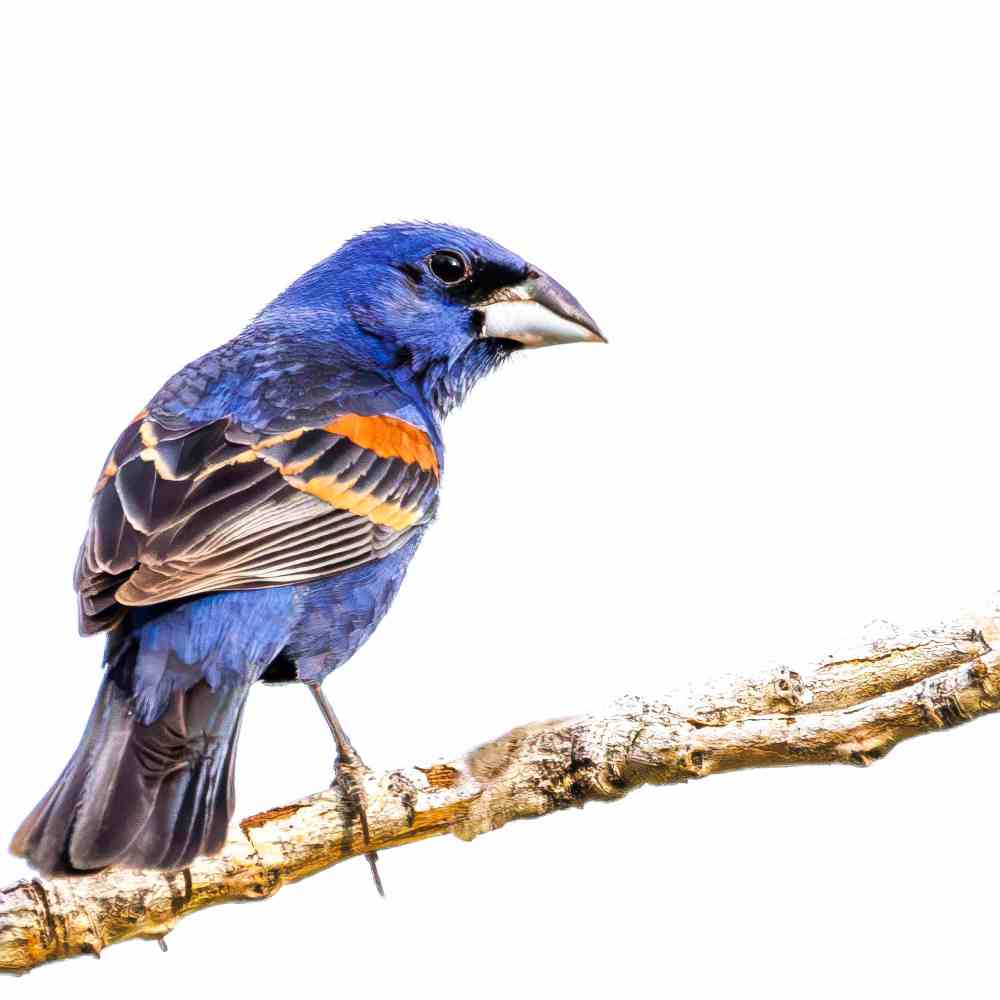
最後に紹介するのはルリイカルです。この鳥を初めて遠くに目撃した時は、自分の目を疑いました。こんなに美しい鳥がいていいの? Lastly, I would like to introduce you to the Blue Grosbeak. When I first spotted this bird at a distance, I couldn’t believe my eyes. How could such a beautiful bird exist?

日本語名の「ルリイカル」はこの鳥にピッタリです。ただの青い鳥ではないのです。瑠璃のような深い青い色の鳥なんです。 The Japanese name “Ruriikaru” which defines a specific shade of blue fits this bird perfectly. It is not just a blue bird. It is a bird with a deep blue color like lapis lazuli.

例えばキビタイシメに比べると2分の1の大きさで小さい鳥です。それでも越冬するために中南米まで飛んでいくそうです。今年も春になったら来てくれるでしょうか。 It is a small bird, one-half the size of, for example, the Evening Grosbeak. Even so, they fly to Central America to overwinter. I wonder if they will come again this spring.

タイランチョウ科 Tyrannidae -Flycatcher


今日はスズメ目の中に分類されている、タイランチョウ科について書きます。 Today I will write about the family Tyrannidae, which is classified within the order Passeriformes.

タイランチョウ科の調査を進めていく過程で、現在の地球上の鳥の分布はどうして起こったのだろうという疑問が湧いてきました。 During the course of my research on the Tyrannidae, the question arose as to how the current distribution of the birds on the Earth occurred.

例えば、一見世界中で見られるミソサザイと同じ様な風貌のイワサザイ亜科の鳥はニュージーランドにしか生息していません。また、タイランチョウ科の鳥は南北大陸にしか生息していません。これは全世界に広がって住んでいるスズメ科とは対照的です。 For example, birds of the subfamily Acanthisitti (New Zealand wren), which at first glance appear to be similar in appearance to the wrens found throughout the world, are found only in New Zealand. The family Tyrannidae, for example, is found only in North and South America. This is in contrast to the sparrow family, which lives throughout the world.

一般にタイランチョウ科は空中で飛んでいる虫を捕まえるのでフライキャッチャーと言われますが、スズメ科の鳥は雑食が多く、地上の昆虫、果実、種などを食べます。この違いは狩猟民族と農耕民族の違いに似てます。 Generally speaking, the Tyrannidae are known as flycatchers because they catch flying insects in mid-air, whereas the Passeri birds are more omnivorous, eating insects, fruits, and seeds on the ground. This difference is similar to that between hunters and farmers.

以上の様な違いがどこから来たのかを探っていたら、思いもかけず鳥の進化まで遡ることになってしまいました。プレートテクトニクスと気候変動とも深く関わっているので、関連史料を読み進めるだけで、目下、私の固くなった脳みそはパンク状態です。(笑) In trying to find out where these differences came from, I unexpectedly ended up tracing them back to the evolution of birds. Since it is deeply related to plate tectonics and climate change, my brain now feels like mush just from reading through the related geological/paleontological documents. (LOL).

この疑問に対する答えを探し出すには時間がかかるので、今は簡単にタイランチョウ科をご紹介します。 Finding an answer to this question will take time, so for now I will briefly introduce the Tyrannidae family.

ベニタイランチョウ Vermilion Flycatcher

表をご覧になるとわかると思いますが、タイランチョウ亜目は、旧世界(ヨーロッパ、アジア圏)と新世界(アメリカ北と南大陸)の亜鳴禽類(あめいきんるい)に分かれています。旧世界鳴禽類は15種のみで、主に東南アジアに生息しています。その他の1000種のタイランチョウは南北アメリカ大陸にのみ生息しています。 Looking at the table, you will see that the suborder Tyranni is divided into Old World suboscines (European and Asian) and New World suboscines (American North and South Continental). The Old World suboscines consist of only 15 species, which are found primarily in Southeast Asia. The other 1,000 species of Tyranni are found only in the Americas.

ハイノドヒタキモドキ Ash-throated Flycatcher

私たちが住んでいるユタ州南部でもタイランチョウを見つけることができますが、ほんの数種類に限られています。そのほかの多くは中南米の熱帯雨林に生息しています。なぜなら、熱帯雨林は彼らの大好きな虫が沢山飛び回っているからです。 In southern Utah, where we live, you can also find Tyrannidae birds, but they are limited to only a few species. Most of the others are found in the rain-forests of Central and South America. This is because the rain-forests are full of flying insects, which they love.

ニシタイランチョウの子供 Western Kingbird fledglings

それにしてもですねぇ、食べ物が空中を飛び回っているという便利さを想像したことがありますか? By the way, have you ever imagined the convenience of having food flying around in the air?

お腹すいたなー。あ、あそこにステーキが飛んでる。こっちは豚の角煮で向こうはラーメンかな。とりあえずこっちを食べよう。えいっ、パクリ。美味! Geez, I’m starving. Oh, there’s a steak flying over there. This one is pork and that one is ramen noodle. Let’s eat this one for now. Yes, Yummy!

チャイロツキヒメハエトリ Say’s Phoebe

カワセミとキツツキ Kingfisher And Woodpecker


鳥の分類続きます。 Bird classification continues.

今日は黄色いハイライトの鳥たちについてです。 Today I will write about the birds with yellow highlights.

カワセミはブッポウソウという目の中に分類されている動物食の鳥です。全体的に鮮やかな色の鳥たちです。水辺に生息し、水面に急降下して魚類を捕食します。その他、虫や爬虫類も食べます。 The Kingfisher is a zoophagous (flesh eating) bird classified in the order Coraciformes. Overall, these birds are brightly colored. They live near water and prey on fish by swooping down to the surface of the water. They also feed on insects and reptiles.

数回カワセミを見かけましたが、写真に収められたのは、この2枚だけです。アメリカヤマセミです。 I saw Kingfishers several times, but these are the only two I was able to photograph. They are Belted Kingfishers.

この地に引っ越して来たばかりの頃、鳥の会の人たちと公園を歩いていた時に見つけました。鳥の会の人たちは高性能の双眼鏡を持っているので、遠いところの鳥も発見し教えてくれます。この時も興奮して早速撮りましたが、豆粒のようなイメージだったので忘れていました。 When we first moved here, I found this bird when I was walking in a park with a group of birders. The bird club members have high-performance binoculars, so they can spot and tell us about birds at a distance. I was so excited at this time that I immediately took a picture of it, but I had forgotten about it because the image was as small as a pea.

カワセミは気合を入れて撮ろうとしないと撮れません。今度は川辺でまさに魚を捕獲したばかりの時とかをキッチリと撮りたいです。 I can’t take pictures of Kingfishers unless I put a lot of effort into it. Next time, I would like to take a picture of a Kingfisher when it has just caught a fish by the riverside.

次にご紹介するのはキツツキです。 The next bird is the Woodpecker.

今回、キツツキ科を調べていたら、無数の種が含まれている事を知り驚きました。私の鳥分類表もさらに巨大化してきたので、ここでは私が撮影できたキツツキのみをリストします。 In researching the Woodpecker family this time, I was surprised to learn that it includes a myriad of species. Here I will list only the Woodpeckers I was able to photograph because my bird taxonomy list has grown even larger.

ちなみに、ゲラとかブッポウソウという分類名も鳥の観察歴が短い私には聞いたことがなく、不思議な名前でした。でも、日本語名としては普通に使われているんだと学習しました。 Incidentally, I had never heard of the taxonomical names “gera” and “buppoosoo” in Japanese language, which were also strange to me, having only a short history of bird observation. But I learned that they are commonly used as Japanese names.

以下、参考として、これらの名前の由来を説明します。 The following is an explanation of the origin of these names for reference.

「ゲラ」は「ケラ」から来ていて、「ケラ」とは木の中に住む虫のことです。江戸時代前から使われていたようです。まさにキツツキのことです。 “Gera” comes from “Kera”, and “Kera” is an insect that lives in trees. It has been used since before the Edo period. It is exactly what a Woodpecker is.

また、「ブッポウソウ」の名前の由来 は勘違いが原因だと言えます。以下、由来の要約です。 The origin of the name “Buppoosoo” can be attributed to a misunderstanding. Here is a summary of the origin

ブッポウソウは日本にやって来る渡り鳥で、5-6月ごろ、たった3週間ほどしか滞在しません。 また、コノハズクは5-6月ごろしか鳴かないフクロウです。The boubou is a migratory bird that comes to Japan and stays for only about three weeks around May and June. The Oriental Scops Owl is also an Owl that only hoots around May and June.

昔の人たちは、この2種の鳥たちを混同し、まだ見た事のない鳥が、まるで「ぶっ・ぽう・そう」と鳴いているようだと思いました。そこでこの幻の鳥をブッポウソウ(仏法僧)と名付けました。 People in the past confused these two species of birds and thought that the bird, which they had not yet seen, sounded as if it were calling “Buh-poh-soh”. Therefore, they named this phantom bird “Buppoosoo” (Buddha’s Prayer).

その後、ラジオが普及してきた1935年頃、この鳥の鳴き声をラジオで放送したところ、反響があり、鳴き声の主はコノハズクであったことが判明しました。でも、すでに定着していた2種の鳥の名前を変えるのは大変なので、そのままの名前が残っているということです。  Later, around 1935, when radio became popular, the bird’s call was broadcast on the radio, and the response from listeners was so strong that it was discovered that the bird call was that of an Oriental Scops Owl. But it would be difficult to change the names of two birds that were already well-established, so the names have remained as they are.

鳥の分類表 Bird Classification Table


前回のブログで水禽類を紹介しました。これからいよいよ待ちに待った陸の鳥の分類に入ります。 In my last blog I introduced water fowl. I will now finally begin the long awaited classification of land birds.

その前に、復習も兼ねて全体像を見てみましょう。以下の表が今現在の分類です。小さすぎて、読めないですかね。Excelシートを使っているので折りたたんで小さくしたんですが。全体像は分かっていただけると思います。 Before I begin, let’s do a review and overview. The following table is my current classification. Is it too small to read? I tried to make it smaller by using Excel’s collapse feature. In any case, I hope you get the overall picture.

ここで一番注目していただきたいところは、表の一番下の列のルリノジコ属です。ここまで掘り下げるのが目標です。 The most noteworthy part here is the genus Passerina in the bottom row of the table. The goal is to dig down till this layer.

この属には、つい最近追いかけていたムネアカルリノジコが入っているんです。 This genus includes the Lazuli Bunting, which I have been chasing just recently.

ムネアカルリノジコ Lazuli Bunting

しかも、見てみたいゴシキノジコも入っている! And it also includes Painted Bunting that I would like to see!

ゴシキノジコ:コーネルラボのサイトのスクリーンショット。 Screenshot from Cornell Lab website.

ということで、これからも陸の鳥類の中、深い階層を潜り抜けていかなければなりません。 旅は長いです。 So I must continue to dive through the deep hierarchy among land birds. The journey is long.

警告!うっそー! Warning! Oh, no!!!

突然、私のコンピュータの画面上に警告のポップアップが表示されました。HDの残りの許容量が30GBを切っていたんですね。マズイです。これでは写真やビデオの編集ができません。大至急データを外付けHDに移動して整理する必要があります。 Suddenly, a warning pop-up appeared on my computer screen: the remaining allowance on my HD was less than 30 GB. No way! This means I cannot edit my photos and videos. I need to move and organize my data to an external HD ASAP.

ルリノジコ Blue Bunting

やれやれ・・・ Oh dear…

面倒臭い作業を楽しくする方法はないものでしょうか。しばらくお休みとなります。 Is there any way to make a tedious task enjoyable? I will be absent for a while.

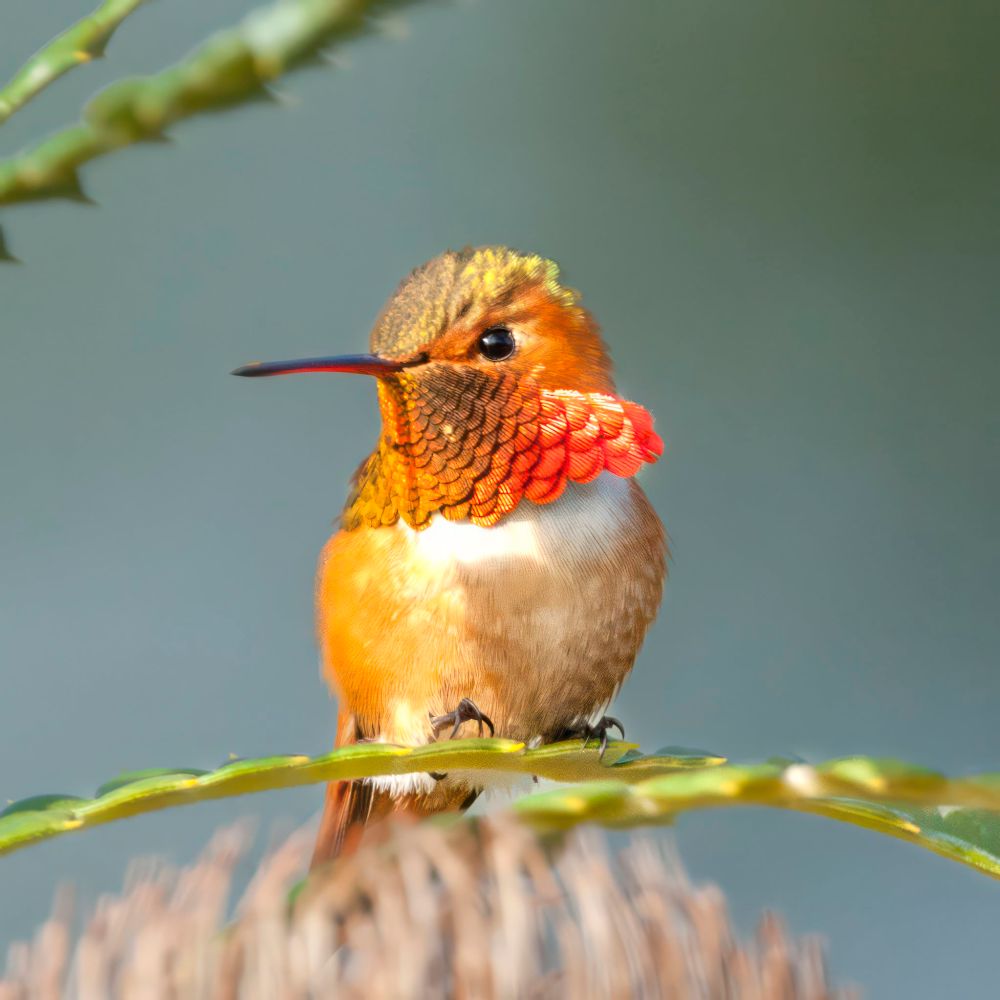
ハチドリ Hummingbirds


私の鳥の分類調査もついに新鳥類の世界に入ってきました。家禽や狩猟の対象になるキジカモ類を除いた新しい鳥達という区分らしいです。世界の鳥の種の95%がこの新鳥類に属しています。 My bird taxonomic research has finally entered the world of Neoaves, new bird species. It excludes Galloanserae, domestic and hunted fowl. Ninety-five percent of the world’s bird species belong to this new group.

この類の直下、最初に紹介するのがアマツバメ目、ヨタカ目です。 Directly below this clade, the first to be introduced, is Apodiformes.

この「目」には名前の通り、ヨタカが入っています。また、この「目」にはなんとハチドリも入っています。この区分にはとても以外で驚きました。見かけも行動も全然似てないからです。 This group includes Night Hawks. This group also includes Hummingbirds. I was very surprised at this classification, because they do not look or act alike at all.

  • ヨタカ: 夜行性で、大きさはウズラぐらい。虫を食べます。 Night Hawks: Nocturnal, about the size of a quail. They eat insects.
  • ハチドリ: 日中、長い嘴で花の蜜を吸います。大きさは最も小さい鳥のグループに入ります。 Hummingbirds: They feed on flower nectar with their long bills during the day. It is one of the smallest birds.

どうやら鳥学者は体の内部の構造やDNAなどに基づいて分類しているようです。 Apparently ornithologists classify them based on their internal body structure, DNA, etc.

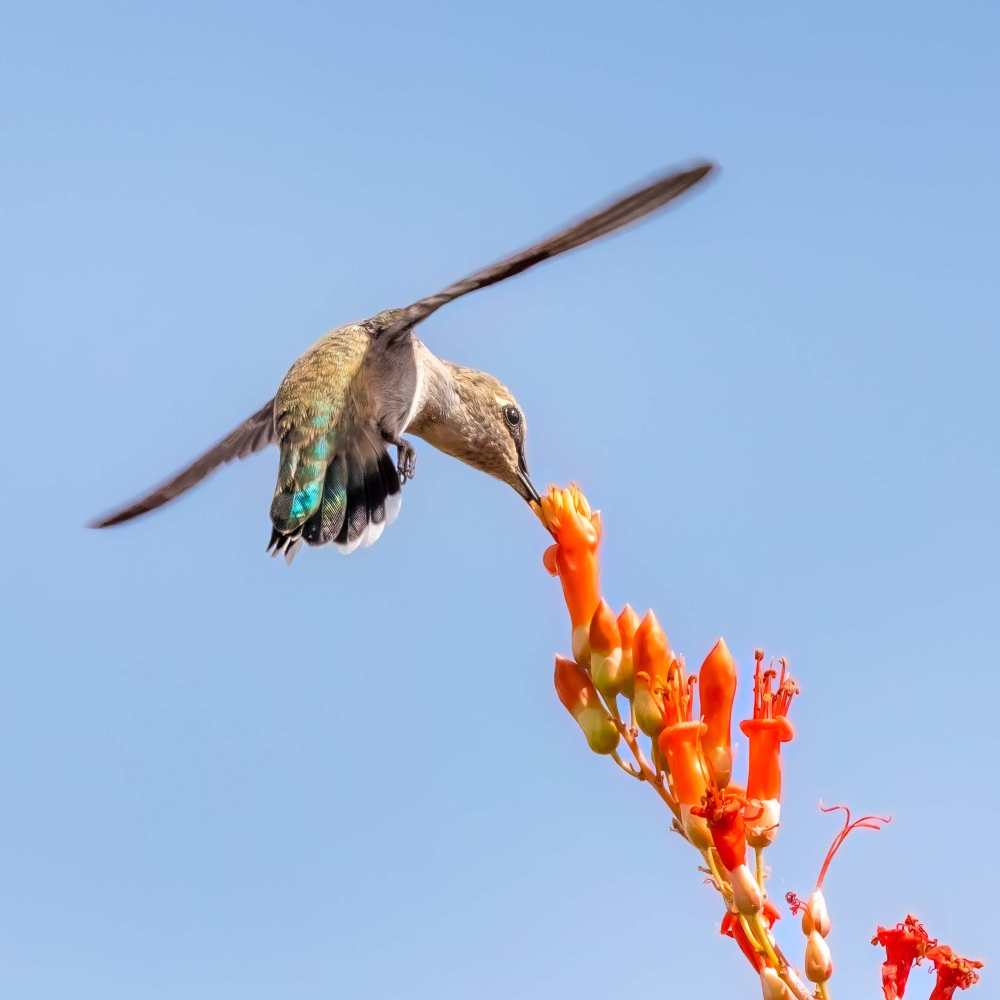
ハチドリはヘリコプターより早く羽を回転させホバリング(空中静止)をすることができます。ホバリングしながら花の蜜を吸い、吸った蜜はそのまま代謝に使われるそうです。また、視覚能力や空間認識能力がとても高く、視野内の微かな動きさえも読み撮れます。だから機敏な動きをする事ができるんですね。 Hummingbirds can rotate their wings and hover faster than a helicopter. While hovering, they suck nectar from flowers, which is then used for metabolism immediately. They also have very high visual and spatial recognition abilities, and can read and capture even the slightest movement within their field of vision. This is why they can be so agile.

私の住んでいる地域では3種類ぐらい見かける事ができます。おかげ様で写真もたくさん撮れますが、いい写真かどうかは別物です。これかも質の向上を目指します。 I can see about 3 different kinds of Hummingbirds in my area. Thanks to that, I can take a lot of pictures, but whether they are good pictures or not is another story. I will continue to improve the quality of my photos.

ところで、世界で一番小さいハチドリはキューバに住んでいるマメハチドリです。全長4 – 6cmぐらいしか無いそうです。タランチュラホーク(クモを食べるハチ)より小さい!一度見てみたいですね。 By the way, the smallest hummingbirds in the world are Bee hummingbirds living in Cuba. They are only about 2.5 inches in length. They are smaller than a Tarantula hawk (a spider-eating wasp)! I would like to see one if I have a chance.

アンナハチドリとタランチュラホークというハチ。マメハチドリはこのハチより小さい。 Anna’s hummingbird and a wasp called Tarantula Hawk. Bee hummingbirds are smaller than these wasps.

スズメ亜目 Songbirds


鳥の分類方法の勉強をし始めてから2週間が過ぎました。 It has been two weeks since I began studying how to classify birds.

ようやく分類の輪郭が見えてきました。 Finally, the outlines of the classification are beginning to emerge.

この勉強の目的は私の鳥の写真を体系的に並べ替えることです。そして、それを元にしてカタログを一新し、やがては本をくるところまで持っていくのが最終の目的です。 The purpose of this study is to systematically rearrange my bird photographs. And the ultimate goal is to renew the catalog based on this, and eventually bring it to the point where I can come up with a book.

先学の皆様が苦労して分類してきた足跡を読みながら、実はまだ謎が多く残されている事がわかりました。だから一羽の鳥の分類が行ったり来たりとしているようです。 As I followed the footsteps of all the previous scholars who have taken great pains to classify them, I realized that there are actually still many mysteries left to be solved. So it seems that the classification of a single bird comes and goes from one family to the other.

私の分類は、そのような学術的な証拠に基づくものではなく、私の便宜上の分類で、しかも、撮れた写真のみに限られるという、完全に私的な分類です。 My classification is not based on any such academic evidence, but is entirely personal, being based on my own convenience, and limited to only the photographs that were taken by myself.

だから、最初は30ぐらいの写真を「可愛い鳥」とか「歌っている鳥」とか、「水鳥」などに分けてスタートしました。でも、今では100種以上の写真が溜まり、分類をし直す必要が出てきました。 So I started out with about 30 photos, divided into “cute birds,” “singing birds,” “water birds,” and so on. But now I have accumulated more than 100 photos of more than 100 species, and it has become necessary to re-categorize them.

また、もう少し専門家にもお見せできるようにしておいた方がいいとも思い始めました。できうる事ならデータベース化して、学術的データだけでなく、色やサイズ名からでもソートできるようにできたらいいなとも思ってます。でも、あまりにも気の遠くなりそうな作業なので、今は、アイディアとしてだけとっておきます。 I also began to think that it would be better to make it available to a few more experts. If possible, I would like to create a database so that it can be sorted not only by scientific data, but also by color or size or name. But it’s a daunting task, so for now, I’ll just keep it as an idea.

そして、今日、これから集中して調査するのは「スズメ亜目」の鳥たちだという事がわかりました。「ソングバード」として有名なこの亜目は、世界中で最も多くの鳥を収容し、馴染みのある鳥の多くがこのグループに属しています。 And I realized today that it is the birds of Passeri, suborder of Passeriformes that I should be concentrating on. This suborder, better known as “songbirds,” houses the largest number of birds in the world, and many familiar birds belong to this group.

私の住んでいる地域で見かける鳥たちが中心ですが、それでも27もの科(ファミリー)を抽出しました。(多分、世界中のススメ亜目には160から200ぐらいの科があるはずです。)それを 5-10 ぐらいのグループに無理やり分けて、私の用途に対応するように分類し直すことを目標にします。 The birds are mostly those found in my area, but I still extracted 27 families. (There are probably about 160-200 families around the world.) My goal is to force them into groups of about 5-10 and reclassify them to correspond to my use.

まだ大変ですが、やりたい事が明確になってくると気持ちがいいです。 It’s still hard work, but it feels good to have a clear idea of what I want to do.

メキシコフィンチのカップル。A couple of House Finches.

窓の外では、野生動物たちの春の嵐は、まだ、続いているようです。 Outside my window, the spring storms of wildlife still seem to be going on.

メキシコフィンチの空中結婚式です。 The wedding of House Finches in the air.

ムネアカルリノジコ Lazuli Bunting


今年のバードフェスティバルの鳥はアカムネルリノジコでした。去年のバードフェスティバルの際に、遠くに初めて見つけて気になっていた鳥でした。それ以来、見かけることはなく1年が過ぎました。 The bird of the year for this year’s Bird Fest bird was Lazuli Bunting. I first spotted this bird in the distance at last year’s Bird Fest and was curious about it. Since then, a year has passed without seeing it.

なぜなら、この鳥は渡り鳥だからです。 This is because they are migratory birds.

そして、今年のバードフェスティバルでまた会えることを期待しましたが、あいにく雨と強風の3日間で終了し、再会はなりませんでした。グスン・・・ And we hoped to see them again at this year’s Bird Fest, but unfortunately, it ended after three days of rain and strong winds and we did not meet again. Sigh …

そこで、バンちゃんと私はフェスティバル終了後、アカムネルリノジコが飛び去っていく前に、「絶対、発見するぞ!」という強い意志のもと、いそうな場所を歩き回りました。 So, after the festival, Ban-chan and I walked around the area where we thought it might be, with a strong determination to find it before it flew away.

そして、見つけた! And we found it!

満足できる質ではありません。でも、一応良いことにします。 The quality is not satisfactory. But I’ll call it good enough for now.

気になったのは、去年かろうじて撮れた写真に比べると、色が冴えないことです。もしかしたら、まだ繁殖期ではないのかもしれません。 What I noticed was that the colors were not as bright as the photos I took last year. Perhaps it is not the breeding season yet.

もっと鮮やかな青い頭になって、もっとオレンジ色の胸になっているはずなんです。以下、去年撮った写真です。 It should have a brighter blue head and a more orange chest. Below picture is the image I took last year.

ま、来年に期待しましょうかね。 Well, let’s hope for next year.

補足データ (Supplemental Data):

  • Size: 13-15 cm (5 inches) long
  • Food: seeds and insects
  • Nesting: lay 3-4 eggs, 11-14 incubation days, 9-11 nesting days
  • Cardinal family: Consists of cardinals, grosbeaks, buntings, etc.  ショウジョウコウカンチョウ科で、ホオジロ、フウキンチョウ、ノジコなどを含む。