先々週、バンちゃんのお抱え運転手の私は、待ち時間にトレーナーの家の近所を歩き回っていました。鳥が気になったからです。 The week before last, as Banchan’s chauffeur, I was walking around his trainer’s neighborhood while waiting. I was curious about the birds.
不審者だと思われたのかもしれません。私が立ち止まっていた前の家から住人がでてきました。 They may have thought I was suspicious. A person came out of the house in front of which I was standing.
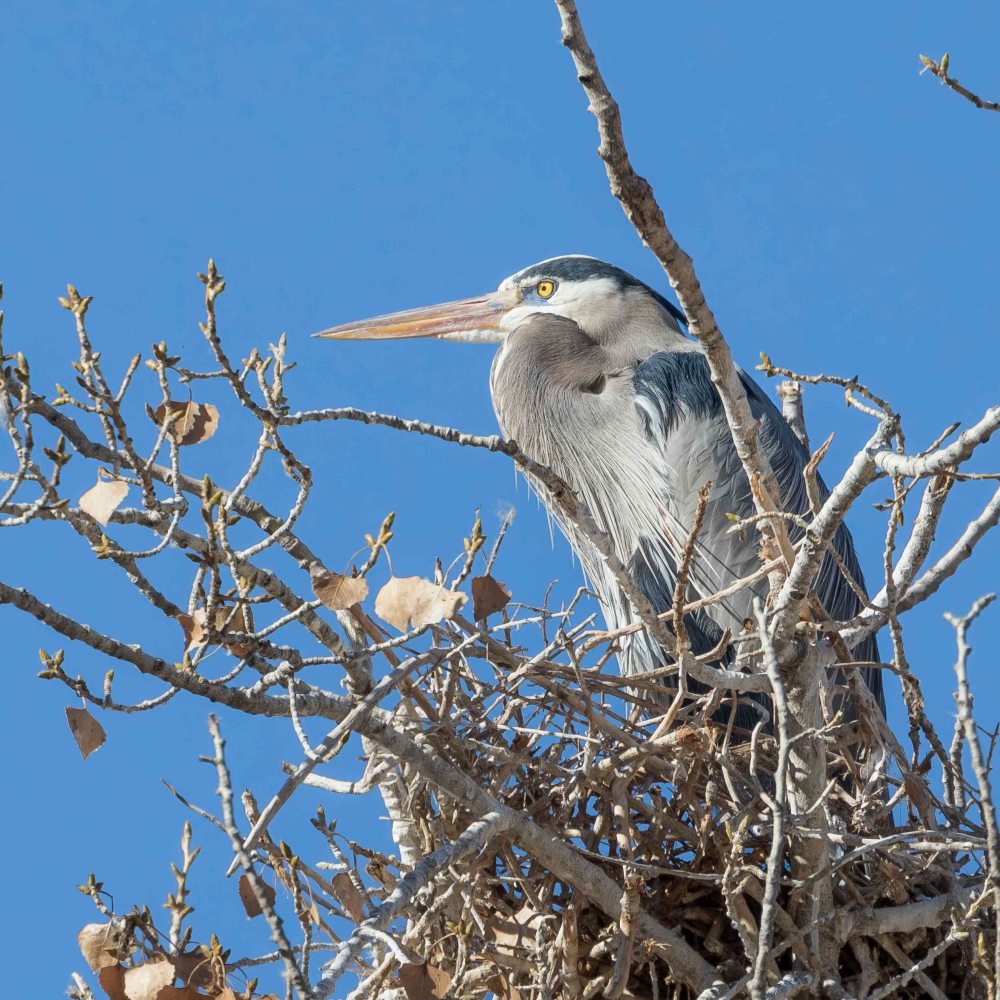
そこでアオサギに興味がある旨を話したら、それじゃあということで、庭の奥の方まで案内してくれました。 I told him that I was interested in the heron, and he offered to take me to the back of the garden.
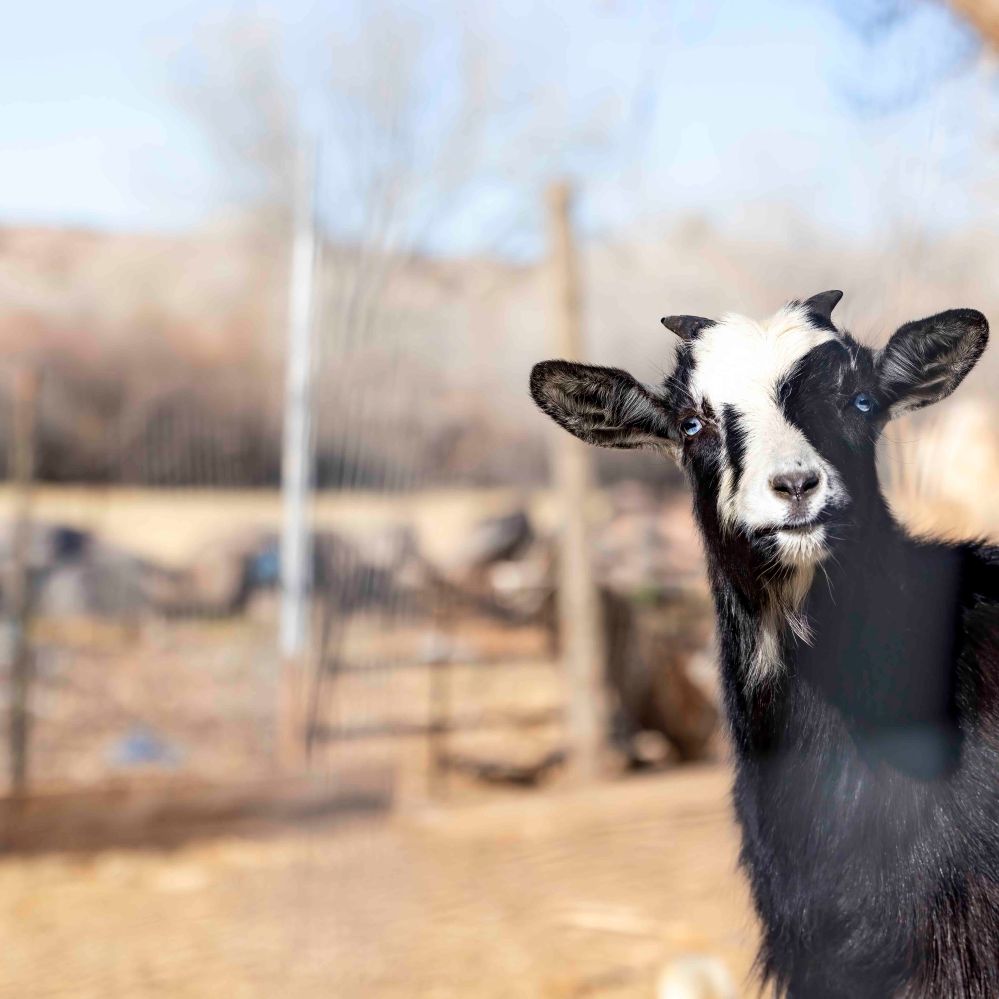
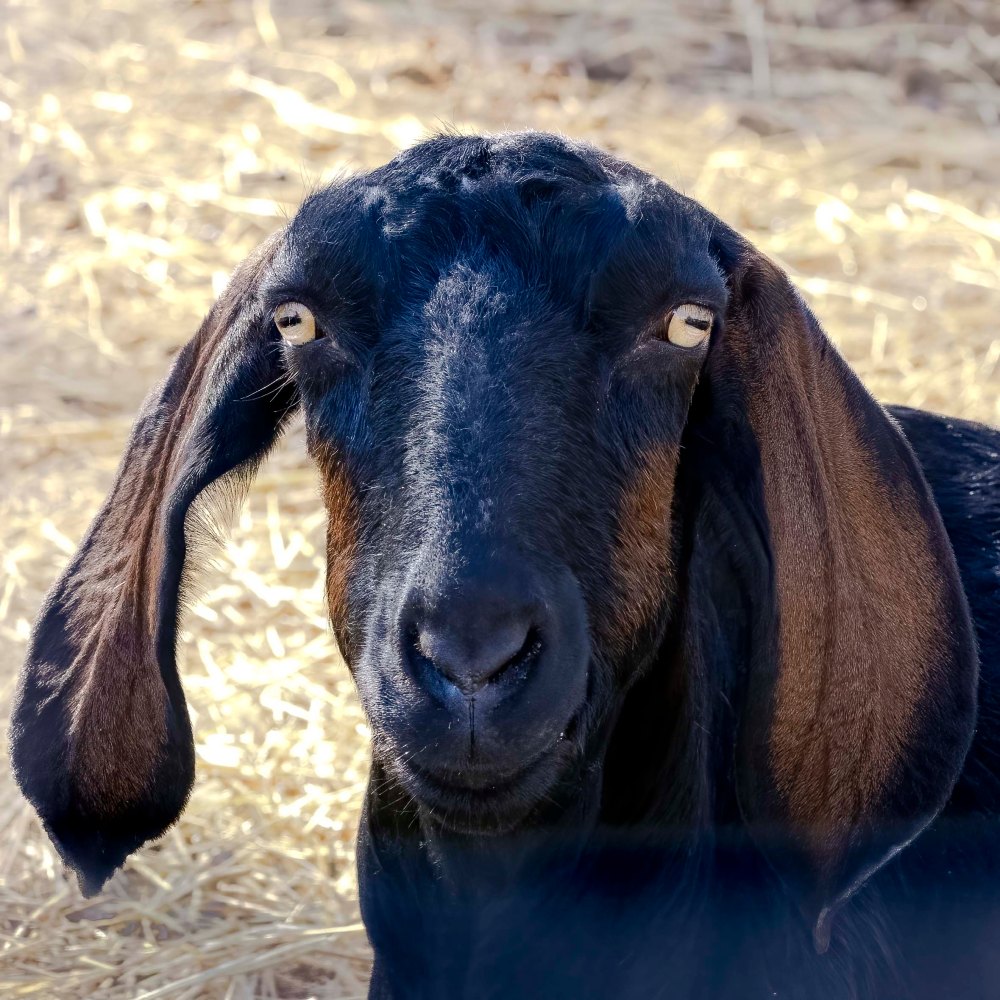
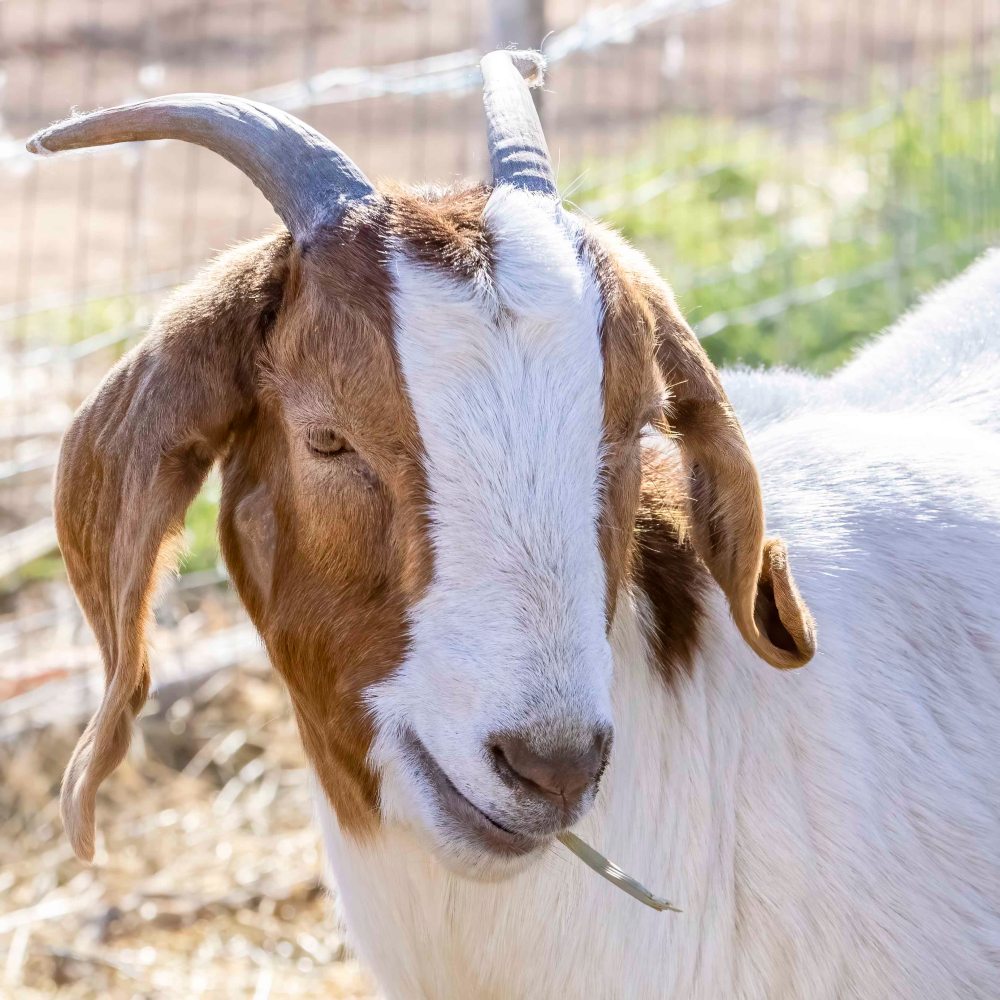
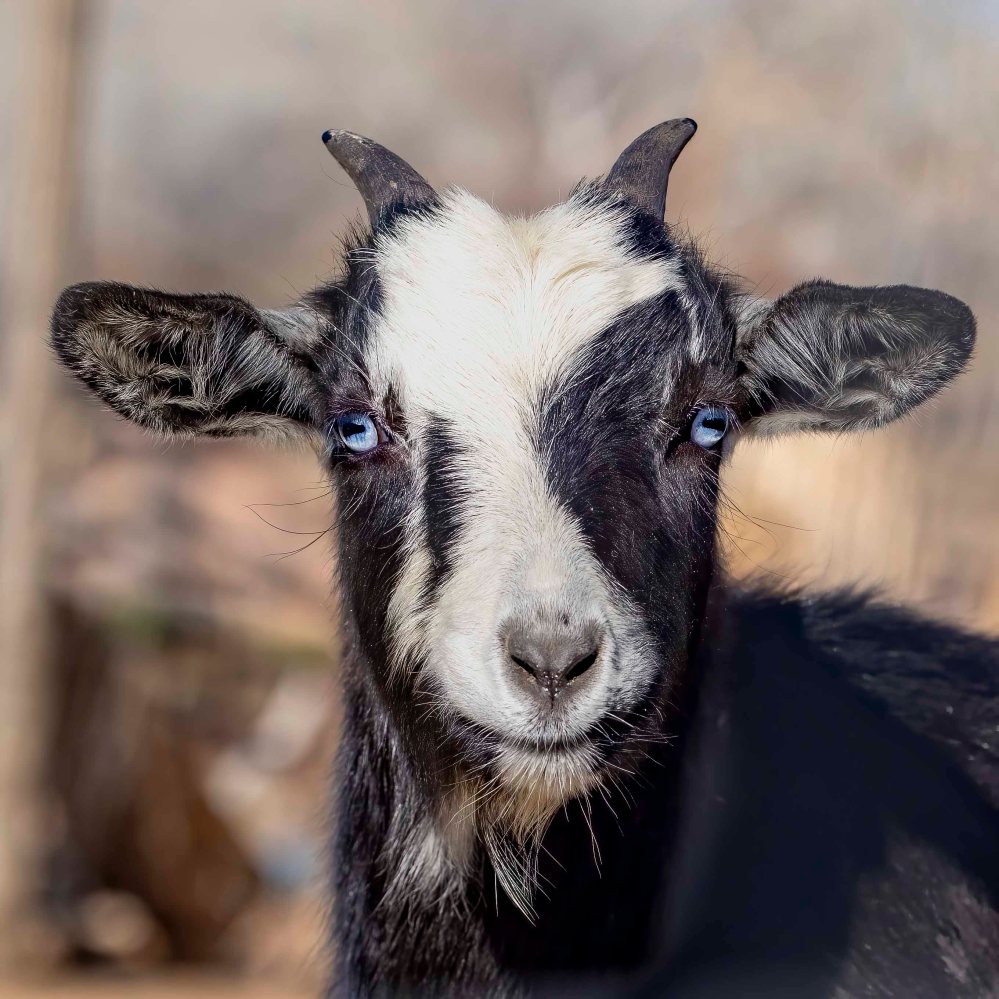
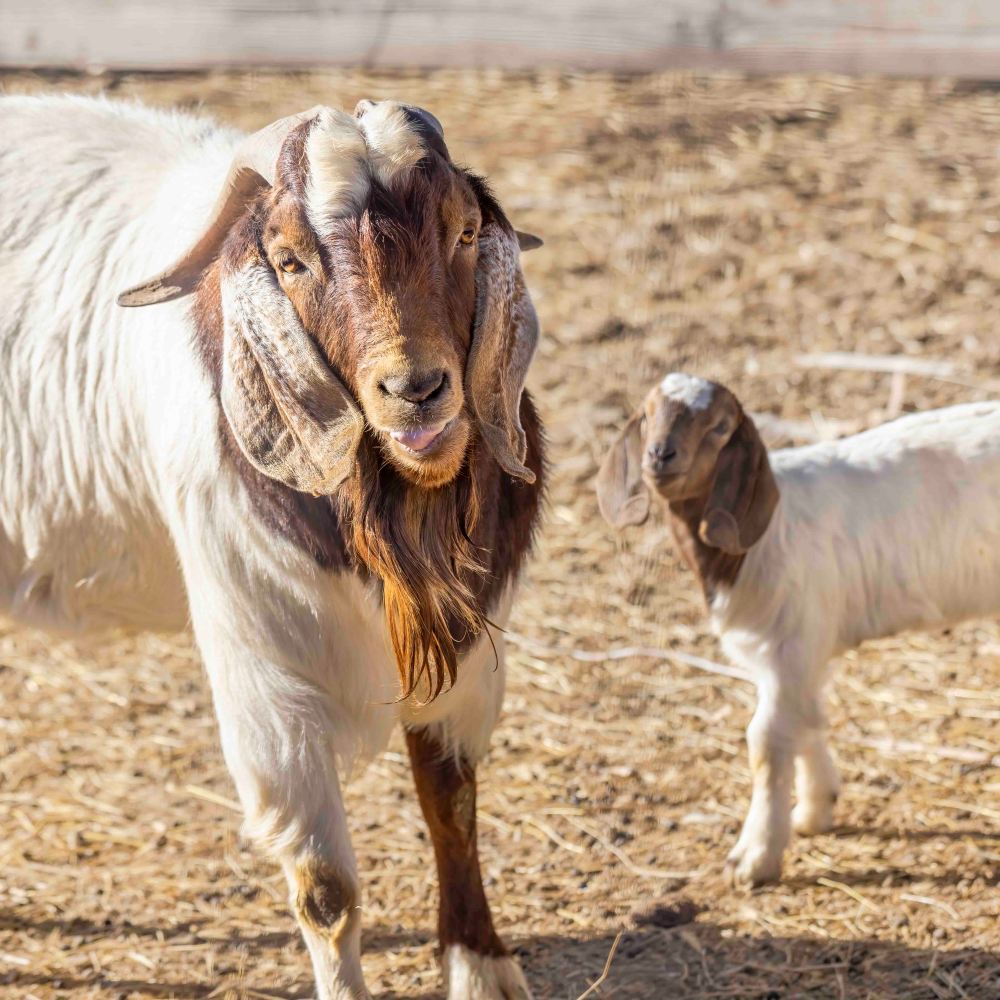
そこからは、勿論、オオサギが近くで見えたので、大喜びした。でも、それ以上に私を興奮させたのは、農家の動物たちでした。 From there, of course, I was delighted to see the great blue heron up close. But what excited me even more were his farm animals.
その日は、カメラを持っていなかったので、翌日お邪魔して撮らせていただきました。 I did not have my camera with me that day, so I visited the next day and took these pictures.
この日は、なんと産みたての卵まで頂いてしまいました。新鮮卵、最高です。 I even got freshly laid eggs that day. Fresh eggs are the best.
どの鶏の卵だったんでしょうね。 I wonder which hen’s eggs they were.
こんな思いもかけない出会いがあるなら、お抱え運転手業もたまにはいいかもね。 With unexpected encounters like this, a chauffeur-driver business might be a good idea once in a while.
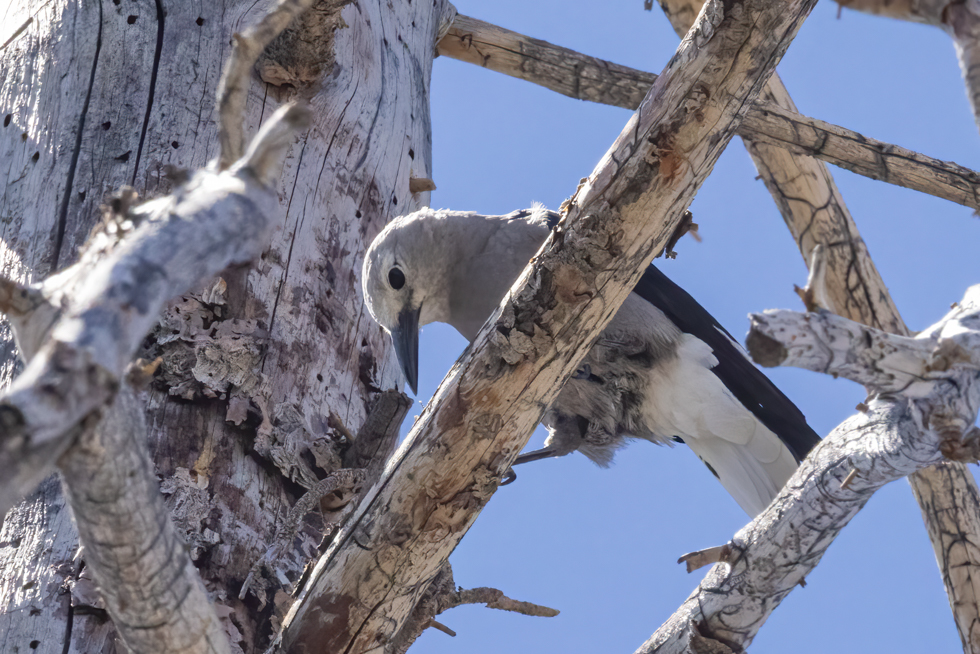
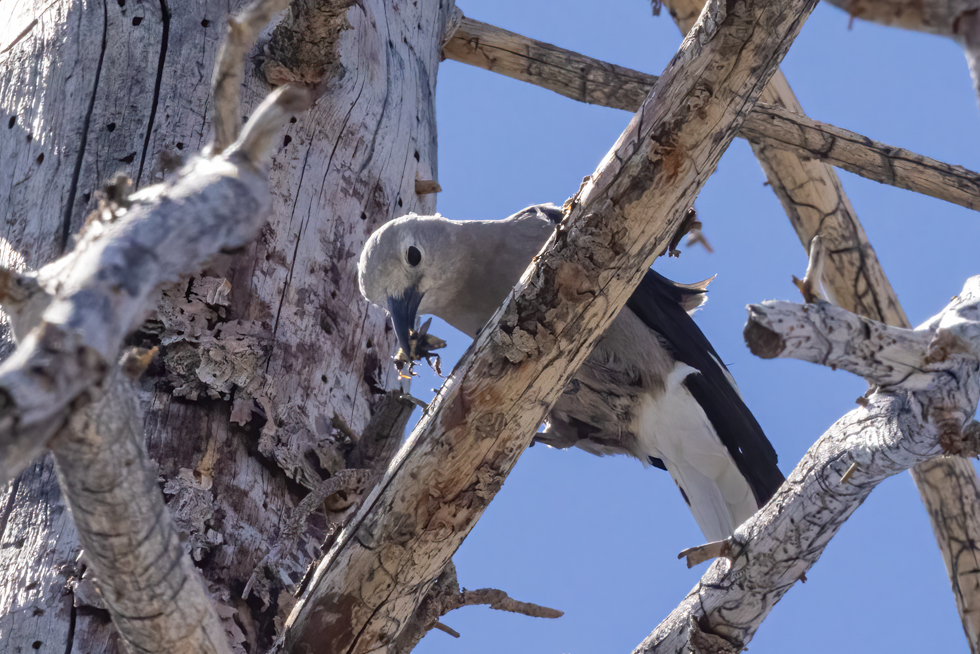
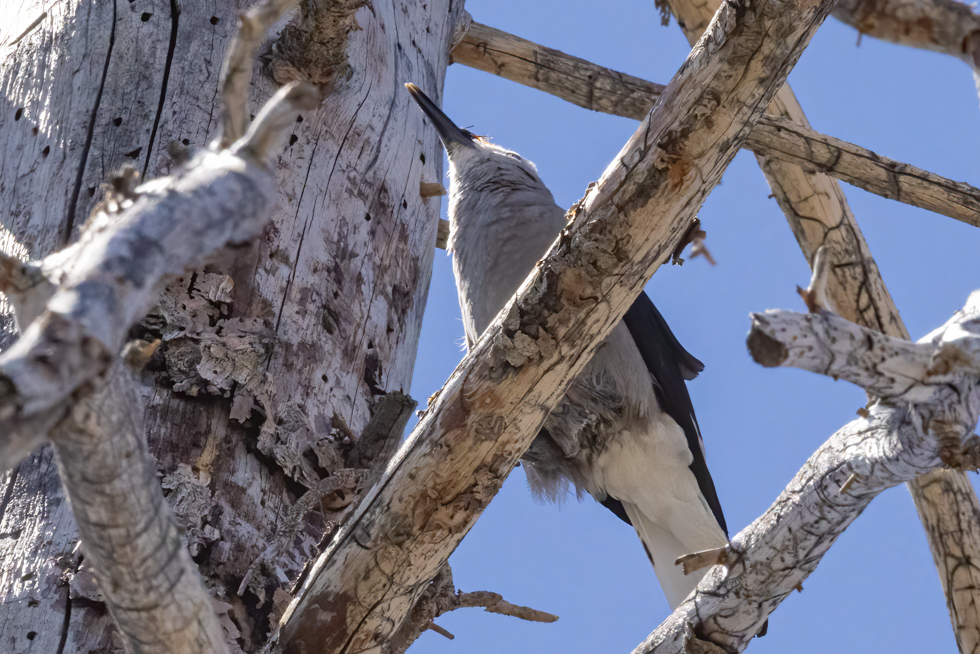
今日のゲストはハイイロホシガラスさんです。 Today’s guest is Mr. Clark’s Nutcracker.
「星の斑点が無いのにホシガラスという名前がついていますが、どう思われますか?」 “What do you think about the Japanese name? The literal translation is “Gray star crow.” But you have no stars on your body,” I asked the bird.
「他のホシガラスが親戚なんで、まあ、仕方がないです。ただ、英語名は「クラークス ナットクラッカー」と、全く違う名前になっていて、嬉しいです。」 The bird answered back: “The other Spotted Nutcrackers, which have many spots like stars, are relatives of mine, so, well, I am okay with it. However, I am happy to see that the English name is “Clark’s Nutcracker,” which has nothing to do with stars.”
「なるほど。好物は主にナッツ類だからそんな名前がついたんでしょうか。”I see. I guess you got the English name because your favorite food is mainly nuts.”
「はい、採集したナッツはたくさん口の中にためて、貯蔵庫まで運んだりします。冬に備えなければいけませんから。」 “Yes, we store a lot of the nuts we collect in our mouths and carry them to the storage facilities. We have to prepare for the winter.”
「おや?こちらでは何をしているんですか?」 “Oh? What are you doing here?”
「あ、それは、ミツバチですか?」 “Oh, is that a bee?”
「なるほど、たくさん飛んでますからね。」 ” I see, there’s a lot of them flying.”
「え?!」 “Huh?”
「パクッ!」 (crunching sound)
「了解しました。虫も食されるんですね。」 ”I understood. You eat insects as well.”
6月28日の朝、Ring カメラが捉えたビデオにはヒナの声が入っていました。その後、Ring カメラはモーションに反応するので、一日中映像を撮り続けていました。 On the morning of June 28, the video captured by the Ring camera contained the chicks’ voices. After that, the Ring camera responded to motion and continued to capture video throughout the day.
それに気がついて、私たちも慌てて外に出て、遠くから鉢にカメラを向けました。 Noticing this, we rushed outside and pointed our cameras at the pots from a distance.
この日のうちに大半の卵が孵化したと思われます。まだヒナ達は誰も鉢の外に出ませんでした。そのまま夜を迎え、お父さんと一緒に眠りにつきました。 I believe that most of the eggs had hatched by the end of the day. None of the chicks were out of the planter yet. They went straight into the night and fell asleep with their father.
さあ、翌日、朝7時半、ついに鉢から出る時が来ました。お父さんの涙ぐましい努力がヒシヒシと伝わってきます。お父さんは卵には「はやくでてきなさい!」と呼びかけ、孵化したヒナ達には鉢の外に出るように呼びかけます。お父さんは何回も何回も鉢に入っては呼びかけ、外に出てはジャンプの仕方を見せているようでした。 Now, the next day, at 7:30 in the morning, it was finally time to get out of the planter. The father’s painstaking efforts were clearly evident. The father called out to chicks in the eggs, “Come on out now!”, and to the hatched chicks, ‘Come out of the planter.” The father repeatedly called to the chicks to come out of the planter, and then showed them how to jump from the planter.
勇気のあるヒナから一羽づつ、ジャンプと言うよりポトリポトリと鉢から落ちてきました。 One by one, from the bravest chicks, they fell out from the planter rather than jumping out.
外に出てたヒナ達は、まだ眠いので、落ちた場所で眠りこけてしまう子達が大半でした。でも、そんな事をしていては他の動物に食べられてしまう可能性大なので、お父さんは必死になって物陰に隠れるように叫びます。 Most of the chicks that were outside were still sleepy and would fall asleep where they fell down from the planter. But there was a big chance that they would be eaten by other animals if they stayed there, so their dad was frantically yelling for them to hide in the shadows.
本当なら夫婦でするこの大作業を彼一人でしなければいけなかったんです。見ている私たちもハラハラドキドキでした。 He had to do this huge task alone, which would normally have been done by a pair of Quail. We, who were watching, were also on the edge of our seats.
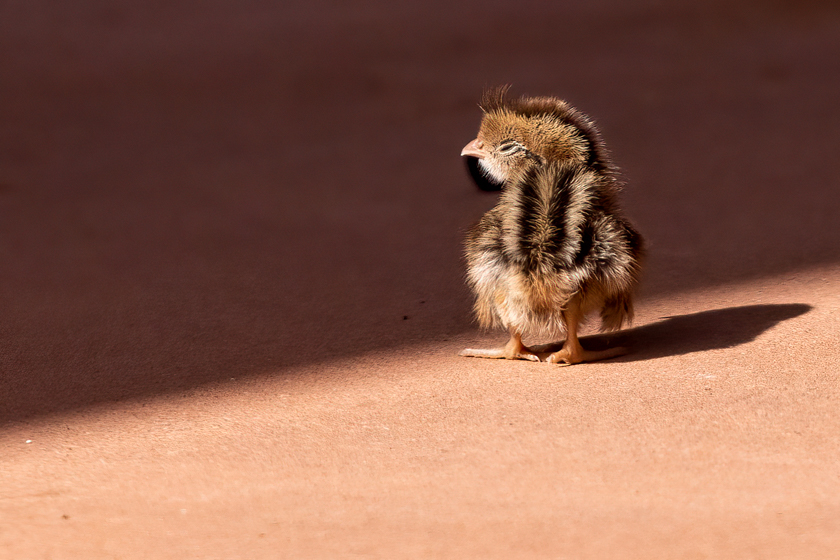
29日の朝9時半過ぎ、お父さんの最後の呼びかけで無事孵化した13羽たちは、あっという間に隣の空き地の方に走り去っていきました。前日から23時間強の間のウズラ家族の巣立ちドラマが終了しました。残念ながら2個は孵化できなかったようですが、それも含めて自然の一部です。 At a little after 9:30 on the morning of the 29th, at the father’s last call, the 13 successfully hatched and fledged chicks quickly ran off toward the vacant lot next door. The drama of the quail family’s leaving the nest, which began a little over 23 hours earlier, had come to an end. Unfortunately, two of the eggs did not hatch, but that was also a part of nature.
このドラマをまとめたビデオを編集している最中です。次回をお楽しみに! I am in the process of editing a video summarizing this drama. Stay tuned for the next blog!
ウズラのお父さんは6月の半ばごろから28日まで、昼も夜も卵を温め続けました。 The quail father kept the eggs warm day and night from about mid-June until the 28th.
少しだけ、ウズラのお父さんが卵を温めている姿ごご紹介します。 This video is a brief look at the quail father incubating eggs.
ちなみに、お母さんは、なんらかの理由でいませんでした。大抵の場合、お母さんが卵を温めますが、いない場合は、このお父さんのようにお母さんの代わりをするようです。 By the way, the mother was not there for some reason. In most cases, the mother incubates the eggs, but if she is not there, the male quail seems to take the place of the mother, like this father.
季節はどんどん移り変わって、変化に追いつきません。 The seasons keep changing and I can’t keep up with all the changes.
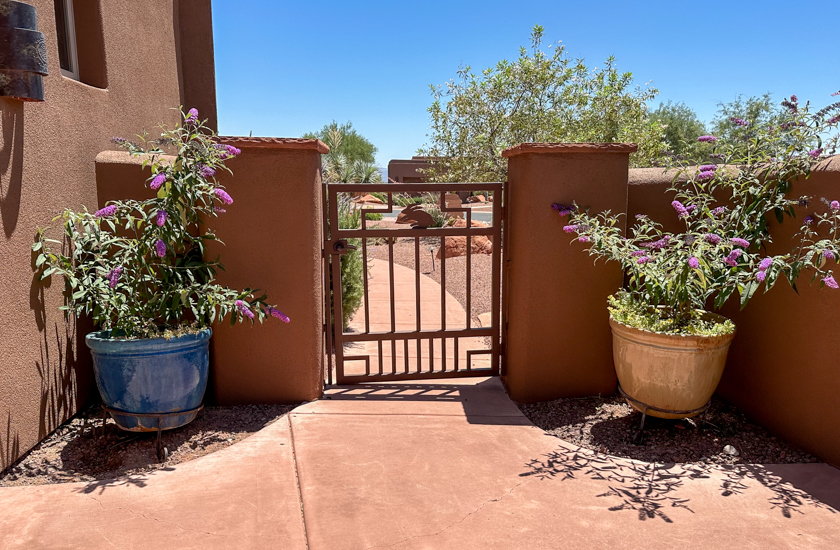
これは4月3日に書いたブログの門脇のバタフライブッシュの写真です。 This is a photo of butterfly bushes by the gate from my April 3 blog.
それがこんなに大きくなりました。 They have grown this big.
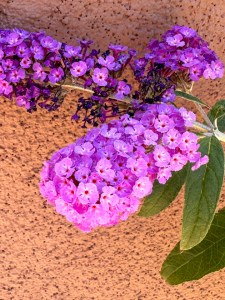
花はこんな感じ。 The flowers look like this.
気温もどんどん上がっていき、38度を超える日が続き始めました。中庭に置いていたLEDキャンドルが、こんなに溶けて、中のLEDが露出してしまいました。 The temperature kept rising over the last few months and began to exceed 100 degrees. The LED candles I had placed in the courtyard melted so much that the LEDs inside were exposed.
こんなに些細な事でも、初めて見る物は面白いものです。 It is interesting to see such a thing as a first time, even if it is such a trivial one.
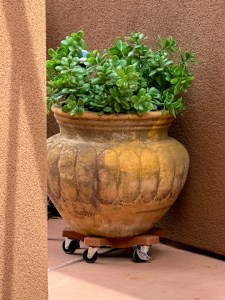
ただ、今日書きたかった事は、この鉢です。 But what I wanted to write about today is this planter.
花や低木を植えて試しても成長してくれなかったので、ニセの木を植えてみました。なかなか良い感じです。 I tried planting flowers and shrubs in there but they didn’t grow, so I planted a fake shrub. It looks pretty good.
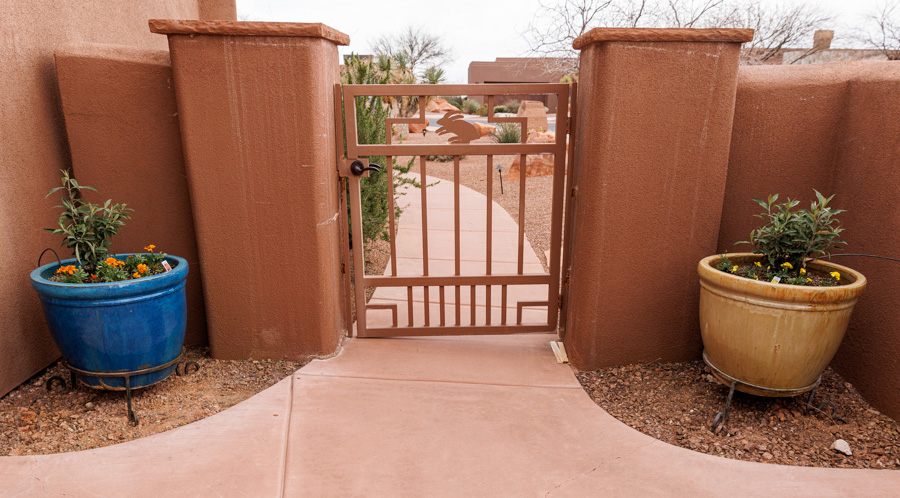
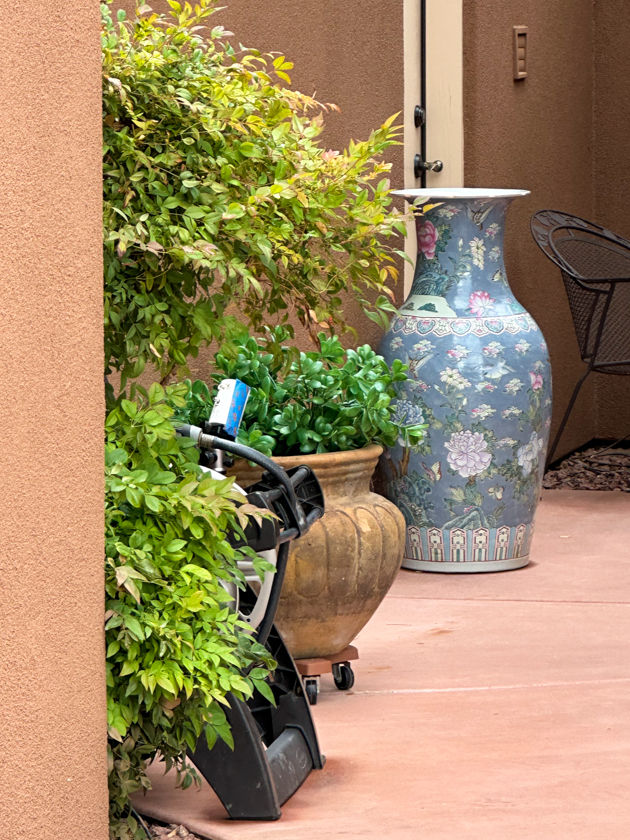
反対側からのイメージ。母屋とガレージの間の通路に置いてある鉢です。 Below is an image from the other side. The pot is placed in the breezeway between the main house and the garage.
ただ、ここ1ヶ月ほど、私たちはこの場所を使わないようにしていました。 However, for the past month or so we have been trying to avoid using this area.
そして、Ringカメラを設置して観察する事にしました。 We then decided to set up a Ring camera to observe the inside of the pot.
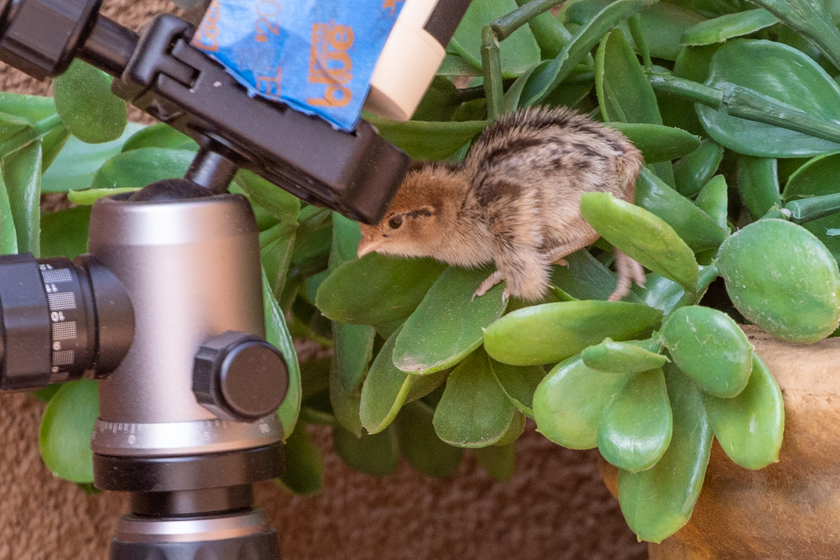
なぜなら、なんと、鉢の中にズアカカンムリウズラの卵を発見したからです。数えたら15個でした。 Why? Because, to our surprise, we found Gambel’s quail eggs in the pot. We counted them and there were 15 of them.
翌日、私たちは小旅行に出かけましたが、カメラを設置したので、その後の様子も観察することができました。 The next day we went on a short trip, but thanks to the camera, we could observe what happened afterwards.
人間の赤ちゃんが産まれる時と同じような感覚です。この一連の出来事は、気になったので1000ショットぐらいあります。ビデオも含めるとかなりの数に上ります。次回はその中から厳選してその後の様子を書きます。 It was just like when a human baby is born. I have about 1,000 shots of this sequence of events because I was curious. If I include videos, the number goes up to quite a few. In my next post, I will select a few of them and write about what happened afterwards.
「飛べない鳥は意外にたくさんいます。例えばペンギン、オーストリッジ、ニワトリなど。様々な環境と理由で進化して飛べなくなったというのが定説のようです。 There are a surprisingly large number of flightless birds. For example, penguins, ostriches, and chickens. The theory seems to be that they evolved and became flightless due to their various environments and the specific niche they occupy in the web of life.
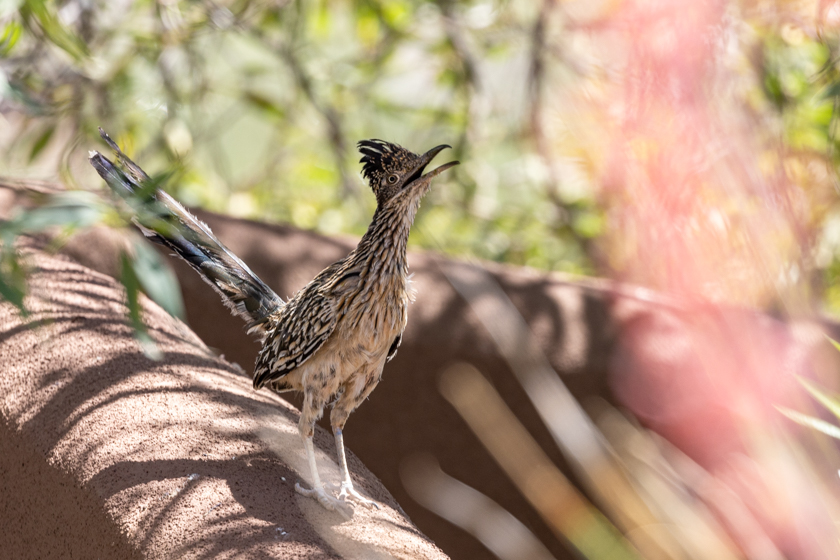
飛べるけど「飛ばない鳥」もいます。私たちの家にはこの「飛ばない鳥」が結構頻繁に訪れてくれます。ロジャーと名付けたロードランナーです。 There are birds that can fly but do not fly. This “flightless bird” visits our house quite often. He is a roadrunner and we named him Roger.
彼らは飛べないわけではないのですが、飛ぶ必要がないから飛ばないらしいです。遠い将来は、彼らも進化して「飛べない鳥」になるのかもしれません。 He is not flightless, but he doesn’t fly so often because he doesn’t need to. In the distant future, he may evolve and become a “flightless bird”.
飛ばなくてもいい理由は、走る速さが半端ではなく、最高時速43kmで走った記録が残されていて、地球上で最も早く走れる鳥とされています。 The reason he does not need to fly is that he can run so fast; he has been recorded to run at speeds of up to 27 mph, making it the fastest bird on earth.
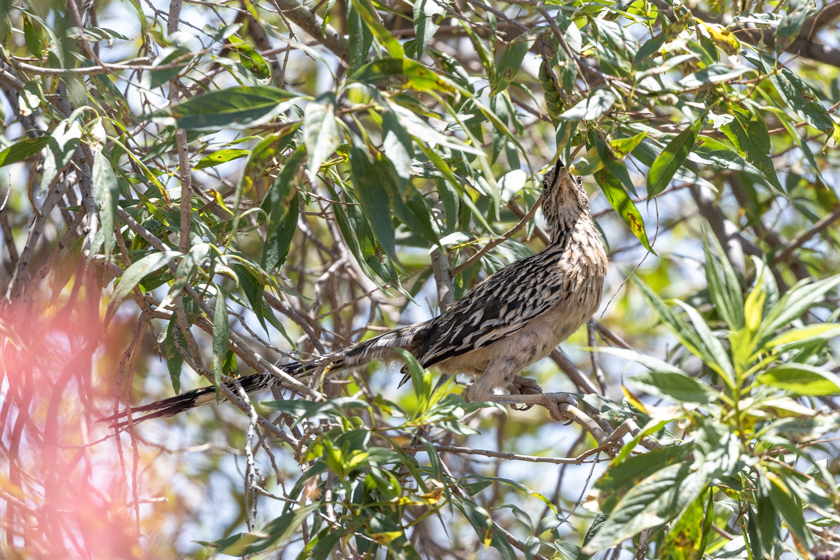
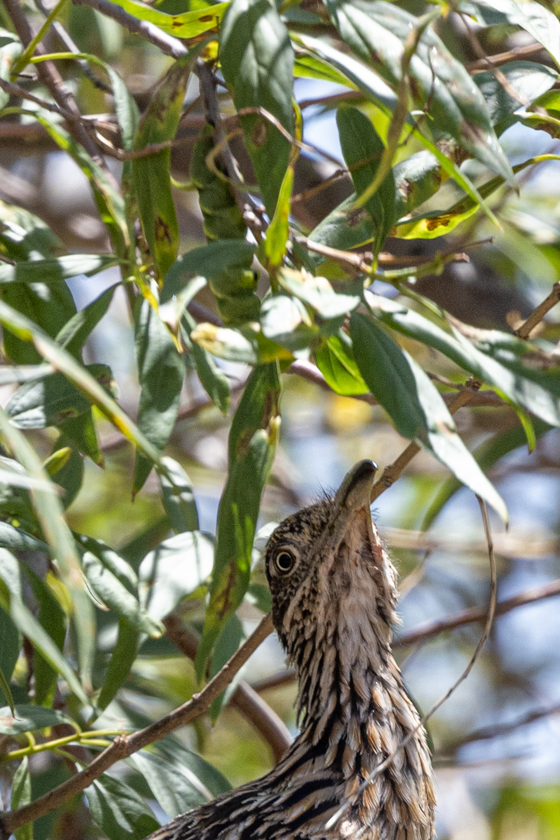
ロジャーは雑食ですが、トカゲ、カエル、虫を捕食している所をよく見かけます。今日の写真は全てスズメガの芋虫を捕まえようとしているところです。 Roger is an omnivore, but is often seen preying on lizards, frogs, and insects. All of today’s photos show him trying to catch a sphinx caterpillar.
芋虫見えますか?ロジャーの真上にいます。葉っぱと同じような形なので、普通は気がつきませんよね。 Do you see the caterpillar? It is right above Roger. It looks just like a leaf, so you wouldn’t normally notice it.
ちょっと残酷な映像ですが、捕獲した後、芋虫が動かなくなるまでロジャーがバンバン石の上に打ちつけているところです。こういう行動を目撃すると、裏庭でも野生の動物界が少し見えた気になります。 The video is a bit cruel, but it shows Roger banging the caterpillar on a rock until it stops moving after capture. Witnessing this kind of behavior makes me feel like I’ve seen a little bit of the animal kingdom in our backyard.
結構神経質な鳥のようです。遠くに車を停めても、車から出るとすぐに飛び去っていってしまいます。 It seems to be quite a nervous bird. They fly away as soon as we come out from the car even if it’s a distance away.
無事に卵が孵化できるよう、しばらく観察しに行かないことにしました。 We decided not to go observe for a while so that the eggs could hatch safely.
黄色い嘴と足、白い帯の入った尾が特徴です。飛び立つところをビデオに収めたのでご覧ください。 It has a yellow bill and legs, and a tail with a white band. Please take a look at the short video of the flight of this bird.
巣作りをしている黒いワシ (Common Black Hawk 日本語名はわかりません。)を目撃しました。 We found a nesting Common Black Hawk.
中南米に行くと見られるそうですが、アメリカ合衆国内ではほとんど見られないレアな鳥です。 It is a rare bird that is rarely seen in the United States, although it is said to be seen in Central and South America.
川沿いのコットンウッドの林の中に巣が作られていました。 The nest was built in a cottonwood grove along a river.
明日、もう一度見に行く予定です。もっといい写真が撮れることを期待します。詳しい記述はこちらを参照してください。 Common Black Hawk We plan to go back tomorrow to see it again. Hopefully I will be able to get better pictures. For a detailed description, please click here. Common Black Hawk
忙しくて、あまり家にいませんでした。だからいつの間にかこんなに花が咲いていました。 We were so busy and weren’t home much for the last few weeks. So before I knew it, there were so many flowers in the backyard.
それだけではありません。 That’s not all.
いつの間にかズアカカンムリウズラのヒナたちも生まれていました。 Before we knew it, the Gambel Quail’s offspring had been born.
一昨年、少し鈍いウズラの赤ちゃんがロードランナーに食べられているところを目撃してしまったので、庭の奥の方にこんな箱を用意しました。何かあったら逃げ込めるように小さな穴を開けました。 The year before last, we saw a little slow baby quail being eaten by a roadrunner. So Banchan set up this box at the back of the yard. We made a small hole in it so that they could escape if something happened to them.
浅いボウルに水も用意しました。 We also prepared water in a shallow bowl.
厳しい自然界です。みんな生きるのに必死です。だからこそ、1日でも長く「生きる」をエンジョイして欲しい。また来てくれて、ありがとう! It is a harsh natural world. Everyone is struggling to survive. That is why I want you to enjoy “living” for as long as possible. Thank you again for coming!
バードフェスティバルの二日目は、ライトル牧場に行きました。風がとても強い日で、花粉症の私は最初の30分ぐらいでギブアップです。 On the second day of the Bird Festival, we went to Lytle Ranch. It was a very windy day and I needed to give up after the first 30 minutes or so unfortunately due to my hay fever problem.
コットンウッドの綿のような花粉はもちろんのこと、息をするのも目を開けているのも苦しい日となってしまいました。It was a difficult day to breathe and keep my eyes open, not to mention the cottonwood pollen. It is as beautiful as snow in this way.
雪のように綺麗。でも、断然避けたい。 It was as beautiful as snow in this way, but I definitely want to avoid it.
この牧場の地理的な位置も歴史もとてもユニークで面白いです。 The ranch’s geographic location and history are both very unique and interesting.
英語ですが、詳しくはこちらのリンクをご覧ください。 See these links for more information.
さて、鳥に話題を戻します。この日は途中で諦めてしまったので1000枚ぐらいしか撮っていません。 Now, back to the birds. I only took about 1,000 pictures that day because I gave up halfway through the birdwalk.
遠すぎて質が悪いですが、こちらはレンジャクモドキです。ぜひ、もう一度ここに来て撮り直したい鳥です。 It’s too far away and the quality is poor, but this is a Phainopepla. I would definitely like to come back here again to take more pictures of this bird.
そして、こちらも質が悪いですが、初めて見る鳥、ムネアカルリノジコです。なんと美しい! And here is another poor quality photo of a bird that I have never seen before, a Lazuli Bunting. How beautiful!
この鳥は渡り鳥です。いつまでここにいてくれるのでしょうか。ぜひぜひ、いい写真を撮らなければ! This bird is a migratory bird. I wonder how long they will stay here. By all means, I must take much better pictures of this bird!
レッドクリフス オーデュボンのバードフェスティバルの初日、パインバレー山脈でたくさんの鳥たちに出会い、3,000枚もの写真を撮りました。ここでは、15枚の写真をご紹介します。 On the first day of the Red Cliffs Audubon Bird Festival, we saw many birds in the Pine Valley Mountains and took 3,000 photos. Here, I want to share with you 15 photos.
バンドテイルバトとハシボソキツツキ Band-tailed Pigeon and Northern Flickerキビタイシメのオス Evening Grosbeak, maleキビタイシメのメス Evening Grosbeak, femaleマミジロコガラ Mountain Chickadeeチャガタルリツグミ (ブルーバード)のオス Western Bluebird, maleチャガタルリツグミ(ブルーバード)のメス Western Bluebird, femaleムシクイの一種 Grace’s Warblerキイロアメリカムシクイ Yellow Warbler
そして、この日のハイライト、とりわけドキドキしながらシャッターを押し続けたのは、以下の2種の鳥たちがいたからです。 And the highlight of the day was the presence of the following two species of birds. They made my heart pound and made me press the shutter like crazy.
ミドリトウヒチョウです。この鳥は過去にも見かけましたが、いいショットがなかなか撮れませんでした。 This is a Green-tailed Towhee. I have seen this bird in the past, but have not been able to get good shots of it.
でも、この日は結構近くまで来てくれたので興奮して撮りまくりました。 But on this day, it came quite close to me..
オレンジ色の頭とオリーブ色の羽とシッポが特徴です。 It has an orange head and olive-colored wings and tail.
すばしっこく茂みの中に隠れてしまうので、焦点を合わせるのに苦労しました。でも、今回の撮影でかなり満足です。 I had a hard time focusing on it because it was quick to hide in the bushes. But with these shots, I can check off this bird from my photo list.
そして、もう一羽。 And one more bird.
ブルーバード(ツグミ)のメスが木に作られた巣穴から顔を出しているところです。キツツキが作った穴に間借りしているんでしょうか。 A female bluebird is peeking out of a hole in a tree. Is she borrowing from a hole made by a woodpecker?
最近は、以下の写真のように人間が作った巣箱を使っているようで、このような自然環境でのツグミの巣は初めてです。 Recently, they have been using nest boxes made by humans, as shown in the following photos, and this is the first time we have seen a bluebird nest in such a natural environment.
もう卵を産んでるのか、これからなのか、気になるところです。三脚持参で、少なくとももう一回、ここに来て観察する価値ありです。これから先、1ヶ月ぐらいの楽しみが増えました。 I am wondering if they have already laid eggs or if they are just getting started. It is worth bringing a tripod and coming here at least one more time to observe. I have more to look forward to in the next month or so.













 aomi3 now