Monthly Archives: July 2023

夜空の写真 Night Photography


夜空の写真を専門に撮る写真家さんとは違うので、私たちは基本のカメラ設定で、ブライアンヘッドでの2回目の夜空の写真を試してみました。 Not being photographers who specialize in night sky photography, we used our basic camera settings to attempt our second night sky photo at Brian Head.

ISO 8000, f/10, 1/20 sec.

基本のカメラ設定は4つあります。 There are four basic camera settings for night sky photography.

一つ目は、シャッタースピードをマニュアル操作できる「バルブ(BULB)モード」にすること。そうすることで、暗い夜空を4秒から10秒ぐらいまで自分で時間を数えて調整できます。 The first is to set the shutter speed to BULB mode, which can be manually controlled. By doing so, you can count and adjust the time from 4 to 10 seconds in the dark night sky.

二つ目、F値は状況に合わせて、どれだけの深海度が欲しいのかで調整します。星だけだったら、絞りを目一杯開けておくといいと思います。 Second, the F value should be adjusted according to the situation and how much depth of field you want. If it’s just stars, you should leave the aperture as wide open as you can.

三つ目、ISO設定は大切です。当然ISOの数値が低いほど写真の質が良くなります。でも、夜空はとても暗いので、許せる限り数値を上げないと、シャッタースピードが1分以上必要になるかもしれません。三脚にカメラを設置して、シャッターリリースのケーブルをつけていれば手ブレはありません。だからシャッタースピードが1分でも10分でも良さそうです。でも、カメラが設置してある地球は動いています。だから10秒もカメラの目を開放していると、すべての星が点でなく、線になって撮れてしまいます。そこで、スピードはせいぜい10秒以内に収めたいわけです。 Third, the ISO setting is important. Naturally, the lower the ISO number, the better the quality of the photo. But the night sky is so dark that you may need more than a minute of shutter speed if you don’t raise the ISO number as high as you can allow. If the camera is on a tripod and the shutter release cable is attached, there will be no camera shake. So a shutter speed of 1 minute or even 10 minutes looks good. But the earth on which the camera is mounted is moving. So if you keep the camera’s eye open for 10 seconds, all the stars will be captured as lines, not dots. So you want to keep the speed within 10 seconds at most.

これでカメラの設定が90%できました。 Now the camera is 90% set up.

四つめ、暗くなったら、最後の設定をします。オートフォーカスをマニュアルに切り替えて、輝き始めた星、または月にカメラを向けてピントを合わせます。「はるか彼方の星なんだから無限大にしておけばいいジャン?」と、昔は思っていました。でも、違います。ほとんどのレンズの無限大設定は正確ではなく、「無限大」より遠くはフォーカスできないらしいです。だから自分でじっくりと焦点を合わせなければいけません。 Fourth, when it gets dark, make the final setting. Switch the autofocus to manual, point the camera at the star or the moon as it begins to shine and focus. I used to think, “Since it’s a star so far away, why not just set it to infinity?” But that’s wrong. That’s because most lenses infinity marker is not accurate and can be focused beyond infinity. So focus carefully.

ISO 4000, f/22, 0.4 sec.

さて、これで完了です。空がどんどん暗くなるのを待つのみです。 Well, that’s it. We just have to wait for the sky to get darker and darker.

私にとって、夏の夜空はわかりやすいです。天の川が南から北に流れているからです。南端にはさそり座がいます。バンちゃんの上に見えます。(右下の赤くぼやけているのが彼です。)わかりやすくペンで線を引きました。 For me, the summer night sky is easy to understand. This is because the Milky Way flows from south to north. At the southern end is the constellation Scorpius. You can see it above Banchan (the red smudge at the bottom of the photo). I drew a line with a pen for clarity.

ISO 51200, f/7.1, 7.6 sec.

空気が綺麗で邪魔な光がない場所では、星がたくさんありすぎて星座の判別が逆に難しくなります。また、それをカメラで捉えると、ますますわかりにくくなります。 In a place where the air is clean and free of obtrusive light, the sky is full of many stars scattered everywhere, making it conversely difficult to discern the constellations. The camera makes this even worse.

例えば、こちら、北に近い東の空に見える天の川です。ここには私の好きなはくちょう座が天の川の上を気持ちよく飛んでいますが、見えますか?判別できる人は、結構星座に詳しい人です。 For example, here is the Milky Way visible in the eastern sky near the north. Here, my favorite constellation Cygnus is flying comfortably above the Milky Way, can you see it? If you can identify it, you are quite familiar with constellations.

ISO 51200, f/7.1, 6.8 sec.

ここには夏の大三角形と呼ばれる一等星があるので、それが見つかれば、はくちょう座がどこかわかります。以下、同じ写真に線を引きました。 There is a first-magnitude star here called the Summer Triangle, so if you can find it, you know where Cygnus is. Below is a line drawn on the same photo.

三角形の左下がはくちょう座の尻尾です。翼を大きくひろげ、首を長くして南方に飛んでいく美しい鳥の姿が見えますか? The lower left of the triangle is the tail of Cygnus. Can you see the beautiful bird flying south with its wings spread wide and a graceful, long neck?

追記:このサイトの記事の最初のイラストはこの夏の大三角形の星座を綺麗に描いています。 https://starwalk.space/en/news/summer-triangle-asterism

PS: The first illustration in the article on this site nicely depicts the constellations of this summer’s great triangle. https://starwalk.space/en/news/summer-triangle-asterism

ねじられた森 Twisted Forest


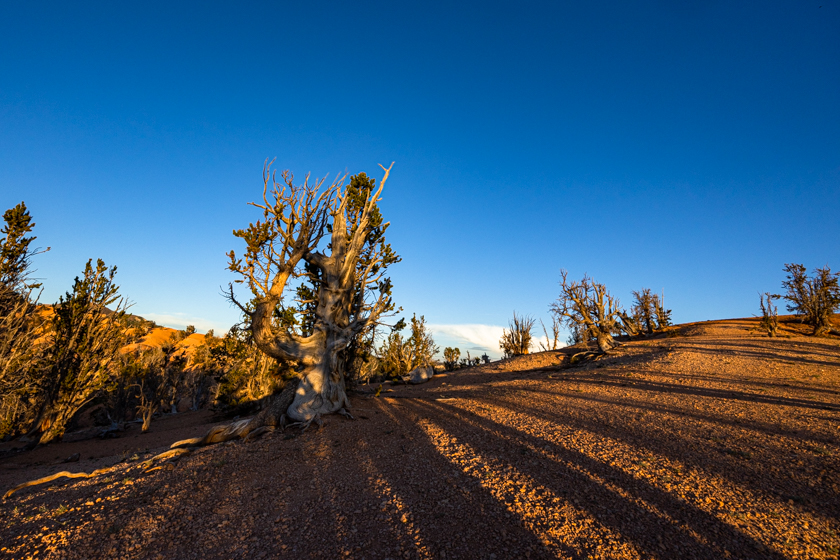
森が捻じられているわけではなく、そこに生息する木が捻られているので「ねじられたもり(ツイステッド フォーレスト)」と名付けられました。 It was named “Twisted Forest” not because the forest is twisted, but because the trees that inhabit it are twisted.

ここはブライアンヘッドからそれほど遠くない場所ですが、行くには不便な場所です。オフロードの道をうねうねと走り、駐車場から1時間ほど歩くと荒れた丘になり、そこに捻られた木が、ブリスタルコーン パインが生息しています。 It was not far from Brian Head, but it was an inconvenient place to get to. A meandering off-road drive and an hour’s walk from the parking lot leads to a badlands hill where twisted trees live, home of the bristlecone pine trees.
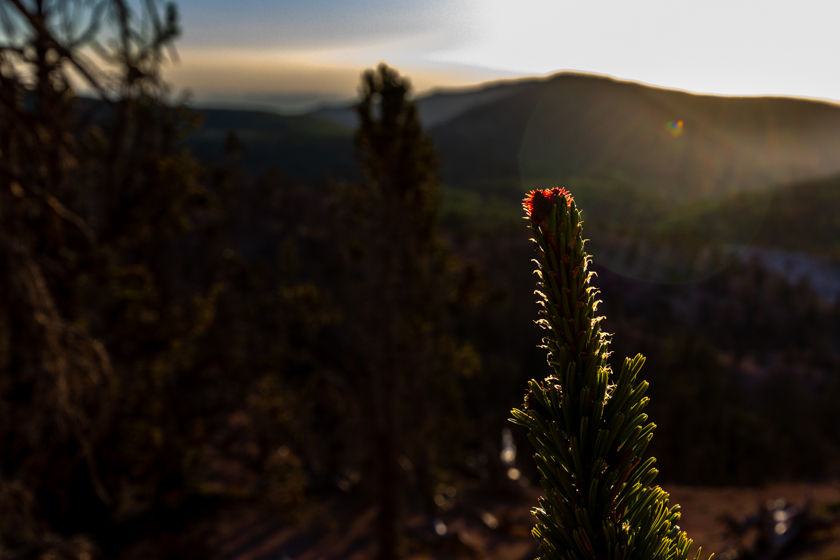
以下、雌と雄の写真です。 Below are photos of a female cone and a male cone.

ブリスタルコーン パインで有名な場所はなんといってもカリフォルニア州のホワイトマウンテンです。標高4300mの山ですが、その中腹、3,000m付近にこの木のグローブがあり、そこには世界最古の木がまだ生息しています。5,000年近く生きているそうです。私たちもそこを訪れました。その時にはまだ1年ぐらいしか経っていない紫色をしたコーンを見ました。2年ぐらい経つと茶色になるそうです。 The most famous place for bristlecone pines is, of all places, the White Mountains in California. The highest peak is over 14,000 feet-high, but in the middle of the mountain, around 11,000 feet above sea level, there is a grove of these trees, where the oldest tree in the world still lives, around 5,000 years old. When we visited there, we saw purple cones that were only about a year old at the time; they say they turn brown after about two years.

ここ、ツイステッドフォーレストには以前にも訪れていますが、日暮れから夜にかけての訪問は初めでです。 We have been to Twisted Forest before, but this is my first time visiting from dusk to night.

南と北の方向を確認し、私はこの木の近くに三脚を設置しました。そして、日が沈むのを待ちました。 Having identified the direction of south and north, I set up my tripod near this tree. Then I waited for the sun to set.

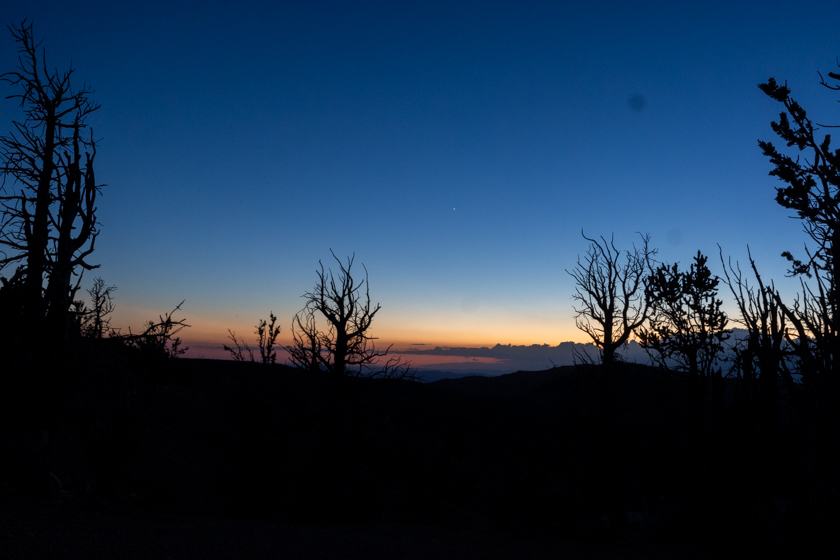
下の写真の中央に星が見えます。小さすぎてわからないかもしれませんが、西の方角の一番星が出てきました。カメラの焦点を合わせるには格好の星でした。 You can see the star in the center of the picture below. It may be too small to make out, but it was the first star to appear in the west. It was a good star to focus the camera on.

まだまだ明るすぎてよく見えませんが、とりあえず北の空に見える北斗七星を撮りました。 It was still too bright to see clearly, but I took a picture of the Big Dipper in the northern sky anyway.

南の空には、微かに天の川が見えてきました。バンちゃんが邪魔でしたが、赤いヘッドライトを当てて、写真の一部にしてみました。 The Milky Way was faintly visible in the southern sky. Banchan was in the way, but I shined my red headlights on him and made him a part of the picture.

南の空、天の川の右横にはさそり座が見えます。これも私の5本の指に入る確認できる星座の一つです。 In the southern sky, to the right of the Milky Way, you can see the constellation Scorpius. This is another one of my five recognizable constellations.

この夜は、もう少し暗くなるのを待っていたかったんですが、何しろ真っ暗な帰り道なので程々にして帰りました。 This evening, we wanted to wait for it to get a little darker, but it was pitch-dark on the way home, after all, so we left.

ハミングバードモス Hummingbird Moth


名前が示す通り、蛾の仲間ですが、蛾のような振る舞いをしないのがハミングバードモスじゃないかなと思ってます。 As the name suggests, it is a moth, but I think the Hummingbird Moth is unique because it does not behave like a moth.

普通、蛾は夜行性ですが、ハミングバードモスは日中に飛んでます。 Moths are usually nocturnal, but hummingbird moths fly during the day.

蝶々のように長い舌を使って花の蜜を吸います。 They use their long, butterfly-like tongues to suck nectar from flowers.

そして、名前のようにハミングバード(ハチドリ)ぐらいの大きさで、飛び方もハミングバードに似ています。ハミングバードのように、花の前でホバリングをするからです。 And, as its name suggests, it is about the size of a hummingbird and flies similarly to a hummingbird, especially how it hovers in front of flowers to drink the nectar.

シーダーブレイクス国定公園にて、ペンステモンの花から蜜を美味しそうに吸っているハミングバードモスでした。 This was a hummingbird moth (aka white-lined sphinx moth) at Cedar Breaks National Monument, sucking delicious nectar from a penstemon flower.

池の中の主 Ruler In The Pond


シーダーブレイクス国定公園のアルパイン レイク トレイルは3-4kmの短いトレイルです。 The Alpine Lake Trail at Cedar Breaks National Monument is a short 2 mile long trail.

花が咲き乱れて美しい季節でした。それと同時に数億の虫が空中を飛び交かう、というか、虫だらけの中を、目も鼻も口もあまり開けないように我慢して歩いていきました。 It was a beautiful season with flowers in full bloom. At the same time, hundreds of millions of insects were flying through the air, or rather, I walked through the air full of insects, trying patiently not to open my eyes, nose, or mouth too much.

鳥たちは嬉しそう。食べ物が彼らの周りを飛んでいるからです。 The birds seem happy. Because food is flying around them.

虫地獄を我慢した甲斐がありました。視界がパッと開け、静かなアルパイン レイクがありました。 It was worth putting up with the bug hell. The view opened up and there was the Alpine lake.

倒れた木もそのままで、トレイルもあるようでないような、手入れが全くされていない自然そのままの池でした。その中に動いているものを発見しました。 The pond was pristine and unkempt, with fallen trees intact and no trails. We found something moving in the middle of the pond.

これは、なんと、サンショウウオです。初めて見ました。 This is, by golly, a salamander. I saw it for the first time.

前足には4本の指、後ろ脚にも4本の指がありました。種類によっては後ろ脚に5本の指があるものもあるそうです。 They had four fingers on their front legs and four fingers on their hind legs. Some species have five fingers on their hind legs.

小さいものから、大きいものは多分直径25cmぐらいあるものもいました。 Some were small and some were large, perhaps 12 inches in length including the tail.

このサンショウウオについての記述は公園のガイドやあらゆるウェブサイトを調べても載っていません。 There is no mention of this salamander in any of the park guides or any websites I have checked.

まだ公園のビジターセンターが工事中なのでウェブサイトもアップデートできていないんでしょうか。こんな貴重な生き物についての記述がないのは残念です。でも、記述がないから観光客に知られず、ひっそりと生きていけるのかもしれません。 I guess the park visitor center is still under construction so the website has not yet been updated. It is a pity that there is no description of such a precious creature. On the other hand, perhaps the lack of description allows them to live quietly and unnoticed by tourists.

水中の生物を水上から撮るのは、難しいですね。以下のビデオの質は良くないですが、雰囲気がわかると思います。 It is difficult to photograph or video underwater life from above the water. The quality of the following video is not great, but it gives you an idea of this amazing creature.

猛暑から避難 Retreat From Heat


私たちの住む町、セイントジョージでは45℃以上の猛暑が続き、町中がサウナ室になっていました。それも悪くはないのですが、しばらくブライアンヘッドに避難していました。ここは標高3,300m、冬はスキーが楽しめる保養地です。In our town, Saint George, the heat was so intense, over 110F, that the whole town was a sauna room. That wasn’t too bad, but we retreated to Brian Head for a while.

家からほんの1時間半の場所なのに気温はグッと低く、夜は10℃以下になります。家では窓を開けることはなく、冷暖房調整システムに任せているので、このロッジに冷房調整がないのに驚きました。部屋には暖房調整と素敵な暖炉まであるのに冷房調整がないのは、その必要がないからなんですね。窓が開けられていて、それで十分快適でした。 Even though we were only an hour and a half from home, the temperature was below 50F at night. I was surprised that there was no room air conditioning in this lodge, as I never open the windows at home and just let the heating/cooling control system do the work for us. The room does have heating as well as a nice fireplace, but there was no air conditioning because there is almost never a need for it. The windows were open and that was comfortable enough.

ここからシーダーブレイクス国定公園までは、車でほんの10分程度の距離です。ブライス国立公園と同じクラロン地層なので、綺麗な土柱が立ち並ぶ渓谷を見下ろすことができます。下の写真は、夕日が沈んだ後の景色です。 From here, Cedar Breaks National Monument is only a 10-minute drive away. It is in the same Claron formation as Bryce Canyon National Park, so you can look down into a canyon lined with beautiful hoodoos. The photo below shows the view after sunset.

私たちはここで面白い発見をしました。そのことについては明日書きます。 We made an interesting discovery here. I will write about it tomorrow.

ナキウサギ Pika


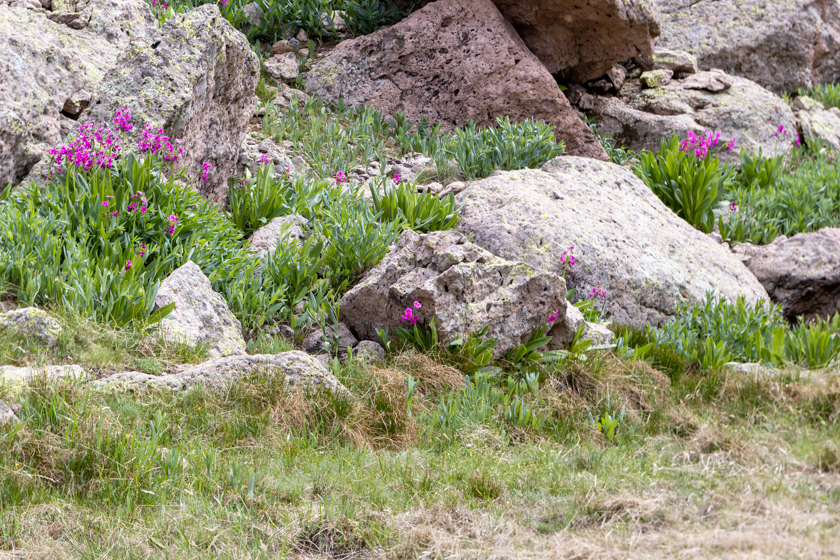
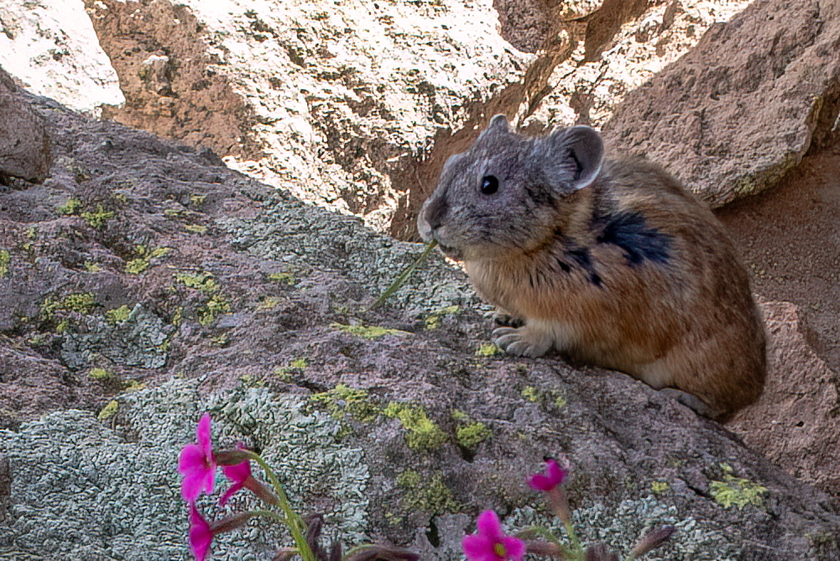
ナキウサギは高原に住むウサギ科の動物です。ウサギ科なのに、耳が長くなく、丸い形をしています。標高3,350メートル以上、夏なのにまだ雪が残っている丘の岩場に住んでいました。 The Pika is a member of the rabbit family that lives in the highlands. Even though it is a member of the rabbit family, it does not have long ears, but they are round in shape. At an altitude of over 11,000 feet, they live on the rocky slopes of the hills where snow still remains even into summer.

この日の目的はナキウサギを撮ることでした。だからズームレンズが必須でしたが、歩く距離を考えて泣きながら断念し、軽い100mmマクロレンズだけを持っていきました。 The purpose of the day was to photograph the Pika. So a zoom lens was a must, but considering the distance I had to walk, I gave up in tears and brought only a lightweight 100mm macro lens.

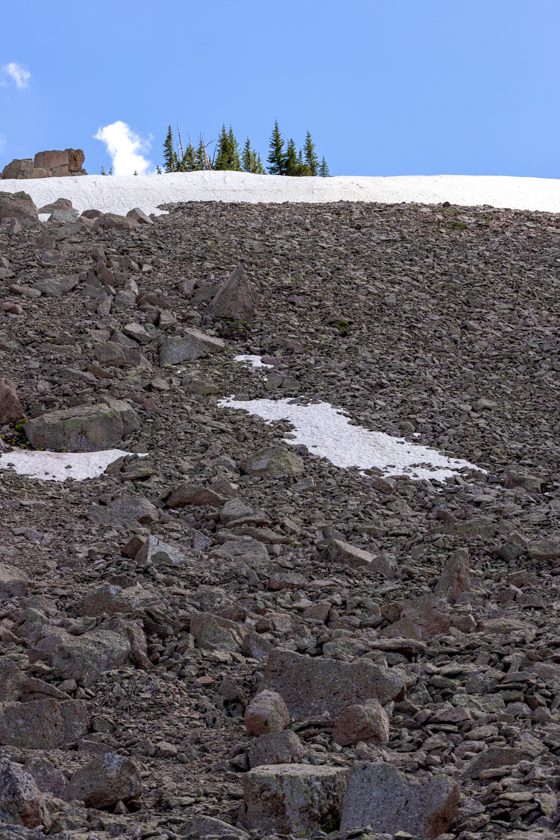
ここがナキウサギの住む場所です。 This was where the Pika lives.

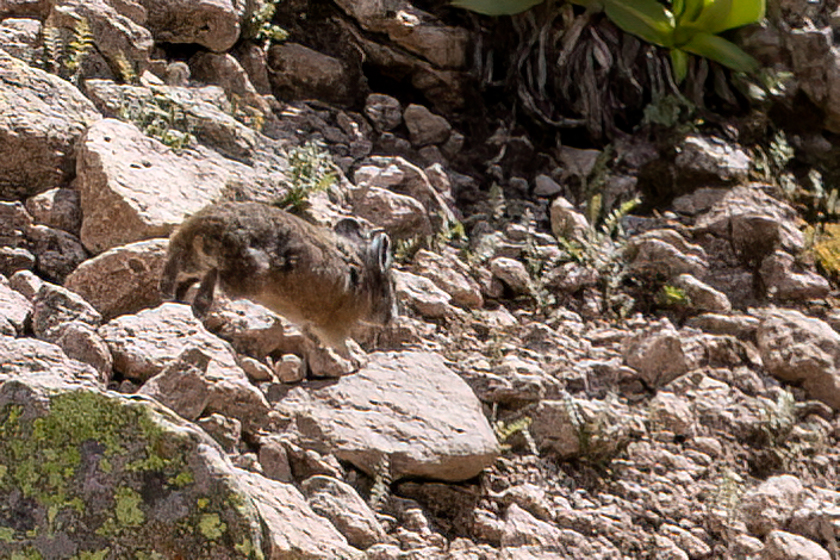
広い岩場を見渡していても、岩と同色をした20cm足らずのナキウサギを見つけるのは至難の業でした。バンちゃんが、「あそこに居るよ」と囁いてくれましたが、どこに居るのか分からずシャッターを押し続けました。下の写真には、ナキウサギが写っています。どこだかわかったら拍手を送ります。 Looking around the large rocky area, it was extremely difficult to find a Pika since they are less than 8 inches long and the same color as the rocks. Ban-chan whispered to me, “There he is,” but I couldn’t see him. So I kept pressing the shutter button, not knowing where he was. In the photo below, you can see a pika. I will applaud if you can find out where it is.

コンピュータ上で切り取りをして近寄ってみました。 I made a crop on the computer to get a closer look.

見つかった? Did you find it?

もっと切り取りをしました。 More cropping was done.

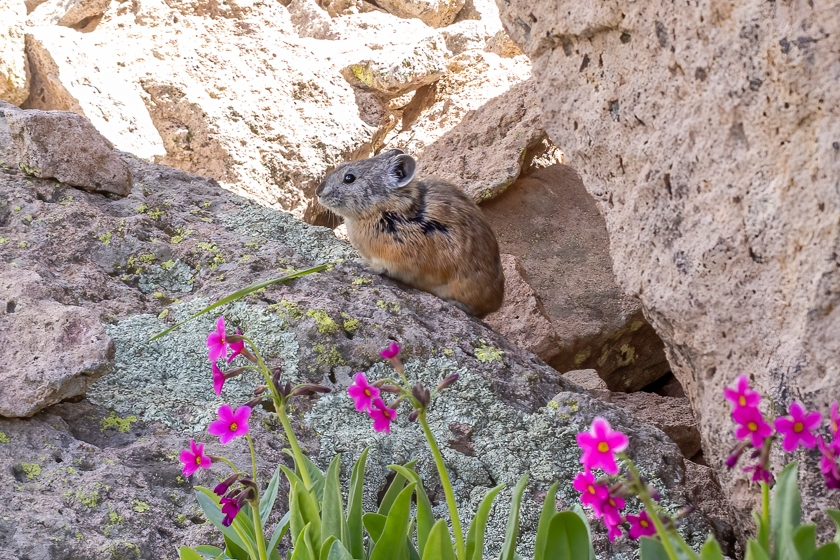
初めまして!私の人生で初めて見るナキウサギでした。 Nice to meet you! It was the first Pika in my life.

この画像を見て、800mmレンズを持ってこなかったことを後悔しました。 Seeing this image made me regret not bringing my 800mm lens.

またいつか、会えるでしょうか。 Will we meet again someday?

ま、このショットは結構いいので、これでいいことにします。草のお食事を前にして、満足そうなナキウサギです。 Well, this shot is pretty good, so I’ll leave it at that. This is a Pika looking satisfied with its meal of grass in front of it.

もう少しで食べ終わりそう。 It was almost done eating.

ところで、ナキウサギはどちらかと言うと、ハムスターに似ているのになぜウサギ科に属するのでしょうか。 By the way, why does the Pika belong to the rabbit family when it looks more like a hamster?

もしかしたら、その食性がウサギのようであるからかもしれません。植物を食べ、まず、緑色の柔らかい糞を出します。その後、その柔らかい糞を栄養を取るため再び食べ、丸い糞を出すそうです。ウサギも同じ事をするそうです。 Perhaps it is because its diet is rabbit-like. It eats plants and produces soft green feces. But then they eat the soft droppings again for nourishment and produce round droppings. Rabbits do the same thing.

緊張の23時間 23 Hours Of Intensity


6月28日の朝、Ring カメラが捉えたビデオにはヒナの声が入っていました。その後、Ring カメラはモーションに反応するので、一日中映像を撮り続けていました。 On the morning of June 28, the video captured by the Ring camera contained the chicks’ voices. After that, the Ring camera responded to motion and continued to capture video throughout the day.

それに気がついて、私たちも慌てて外に出て、遠くから鉢にカメラを向けました。 Noticing this, we rushed outside and pointed our cameras at the pots from a distance.

この日のうちに大半の卵が孵化したと思われます。まだヒナ達は誰も鉢の外に出ませんでした。そのまま夜を迎え、お父さんと一緒に眠りにつきました。 I believe that most of the eggs had hatched by the end of the day. None of the chicks were out of the planter yet. They went straight into the night and fell asleep with their father.

さあ、翌日、朝7時半、ついに鉢から出る時が来ました。お父さんの涙ぐましい努力がヒシヒシと伝わってきます。お父さんは卵には「はやくでてきなさい!」と呼びかけ、孵化したヒナ達には鉢の外に出るように呼びかけます。お父さんは何回も何回も鉢に入っては呼びかけ、外に出てはジャンプの仕方を見せているようでした。 Now, the next day, at 7:30 in the morning, it was finally time to get out of the planter. The father’s painstaking efforts were clearly evident. The father called out to chicks in the eggs, “Come on out now!”, and to the hatched chicks, ‘Come out of the planter.” The father repeatedly called to the chicks to come out of the planter, and then showed them how to jump from the planter.

勇気のあるヒナから一羽づつ、ジャンプと言うよりポトリポトリと鉢から落ちてきました。 One by one, from the bravest chicks, they fell out from the planter rather than jumping out.

外に出てたヒナ達は、まだ眠いので、落ちた場所で眠りこけてしまう子達が大半でした。でも、そんな事をしていては他の動物に食べられてしまう可能性大なので、お父さんは必死になって物陰に隠れるように叫びます。 Most of the chicks that were outside were still sleepy and would fall asleep where they fell down from the planter. But there was a big chance that they would be eaten by other animals if they stayed there, so their dad was frantically yelling for them to hide in the shadows.

本当なら夫婦でするこの大作業を彼一人でしなければいけなかったんです。見ている私たちもハラハラドキドキでした。 He had to do this huge task alone, which would normally have been done by a pair of Quail. We, who were watching, were also on the edge of our seats.

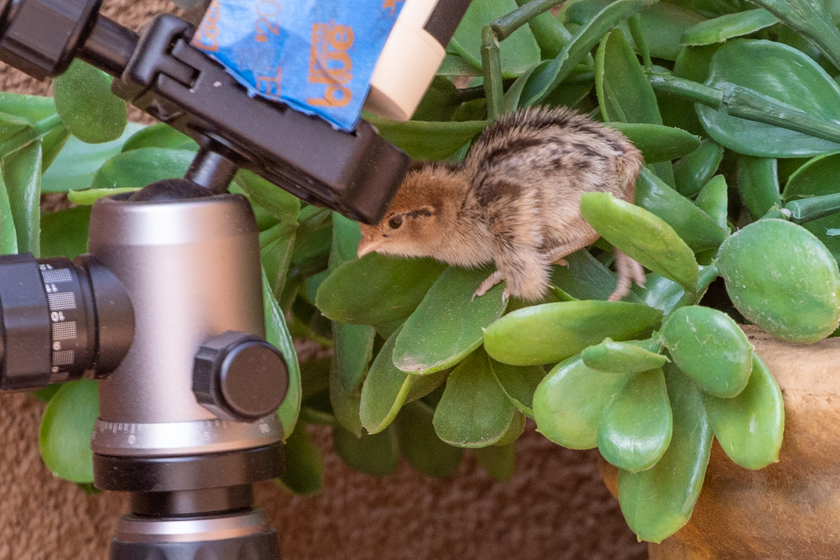
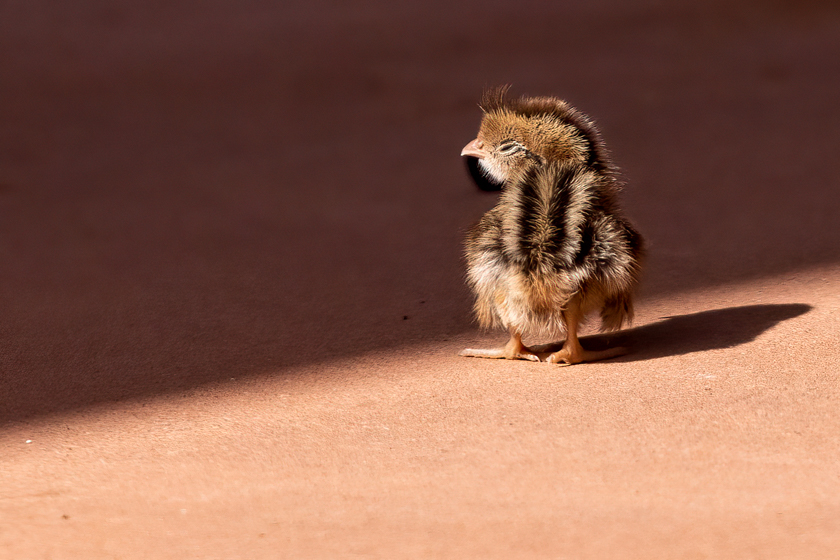
29日の朝9時半過ぎ、お父さんの最後の呼びかけで無事孵化した13羽たちは、あっという間に隣の空き地の方に走り去っていきました。前日から23時間強の間のウズラ家族の巣立ちドラマが終了しました。残念ながら2個は孵化できなかったようですが、それも含めて自然の一部です。 At a little after 9:30 on the morning of the 29th, at the father’s last call, the 13 successfully hatched and fledged chicks quickly ran off toward the vacant lot next door. The drama of the quail family’s leaving the nest, which began a little over 23 hours earlier, had come to an end. Unfortunately, two of the eggs did not hatch, but that was also a part of nature.

このドラマをまとめたビデオを編集している最中です。次回をお楽しみに! I am in the process of editing a video summarizing this drama. Stay tuned for the next blog!

ウズラのお父さん Quail Dad


ウズラのお父さんは6月の半ばごろから28日まで、昼も夜も卵を温め続けました。 The quail father kept the eggs warm day and night from about mid-June until the 28th.

少しだけ、ウズラのお父さんが卵を温めている姿ごご紹介します。 This video is a brief look at the quail father incubating eggs.

ちなみに、お母さんは、なんらかの理由でいませんでした。大抵の場合、お母さんが卵を温めますが、いない場合は、このお父さんのようにお母さんの代わりをするようです。 By the way, the mother was not there for some reason. In most cases, the mother incubates the eggs, but if she is not there, the male quail seems to take the place of the mother, like this father.

この鉢 The Planter


季節はどんどん移り変わって、変化に追いつきません。 The seasons keep changing and I can’t keep up with all the changes.

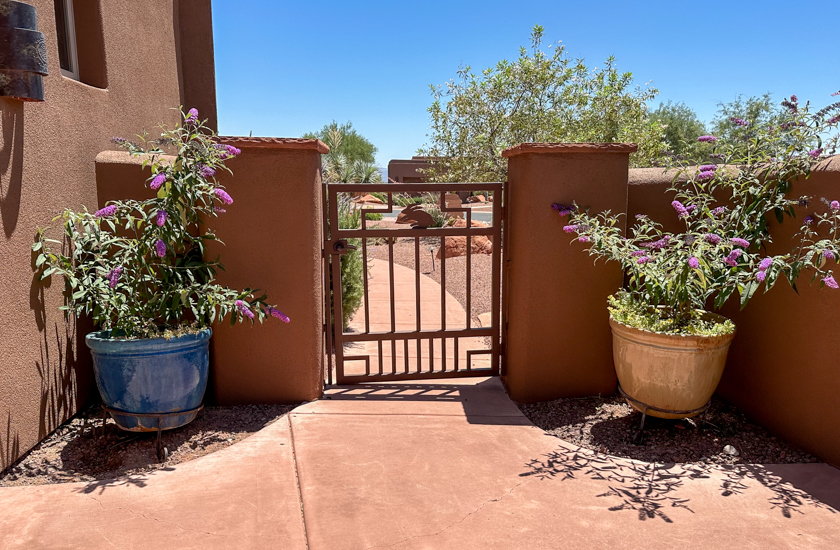
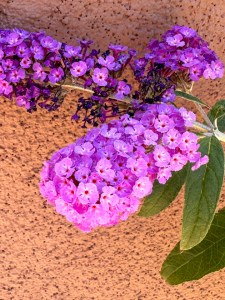
これは4月3日に書いたブログの門脇のバタフライブッシュの写真です。 This is a photo of butterfly bushes by the gate from my April 3 blog.

それがこんなに大きくなりました。 They have grown this big.

花はこんな感じ。 The flowers look like this.

気温もどんどん上がっていき、38度を超える日が続き始めました。中庭に置いていたLEDキャンドルが、こんなに溶けて、中のLEDが露出してしまいました。 The temperature kept rising over the last few months and began to exceed 100 degrees. The LED candles I had placed in the courtyard melted so much that the LEDs inside were exposed.

こんなに些細な事でも、初めて見る物は面白いものです。 It is interesting to see such a thing as a first time, even if it is such a trivial one.

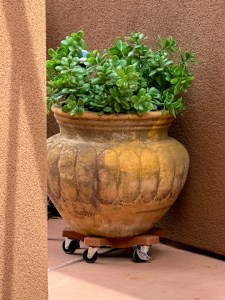
ただ、今日書きたかった事は、この鉢です。 But what I wanted to write about today is this planter.

花や低木を植えて試しても成長してくれなかったので、ニセの木を植えてみました。なかなか良い感じです。 I tried planting flowers and shrubs in there but they didn’t grow, so I planted a fake shrub. It looks pretty good.

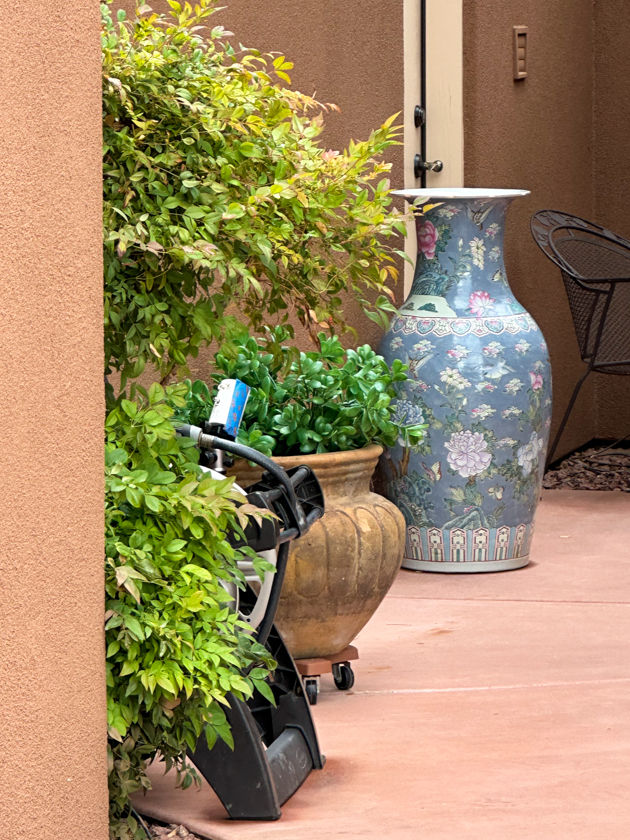
反対側からのイメージ。母屋とガレージの間の通路に置いてある鉢です。 Below is an image from the other side. The pot is placed in the breezeway between the main house and the garage.

ただ、ここ1ヶ月ほど、私たちはこの場所を使わないようにしていました。 However, for the past month or so we have been trying to avoid using this area.

そして、Ringカメラを設置して観察する事にしました。 We then decided to set up a Ring camera to observe the inside of the pot.

なぜなら、なんと、鉢の中にズアカカンムリウズラの卵を発見したからです。数えたら15個でした。 Why? Because, to our surprise, we found Gambel’s quail eggs in the pot. We counted them and there were 15 of them.

翌日、私たちは小旅行に出かけましたが、カメラを設置したので、その後の様子も観察することができました。 The next day we went on a short trip, but thanks to the camera, we could observe what happened afterwards.

人間の赤ちゃんが産まれる時と同じような感覚です。この一連の出来事は、気になったので1000ショットぐらいあります。ビデオも含めるとかなりの数に上ります。次回はその中から厳選してその後の様子を書きます。 It was just like when a human baby is born. I have about 1,000 shots of this sequence of events because I was curious. If I include videos, the number goes up to quite a few. In my next post, I will select a few of them and write about what happened afterwards.

飛ばない鳥 Birds That Don’t Fly


「飛べない鳥は意外にたくさんいます。例えばペンギン、オーストリッジ、ニワトリなど。様々な環境と理由で進化して飛べなくなったというのが定説のようです。 There are a surprisingly large number of flightless birds. For example, penguins, ostriches, and chickens. The theory seems to be that they evolved and became flightless due to their various environments and the specific niche they occupy in the web of life.

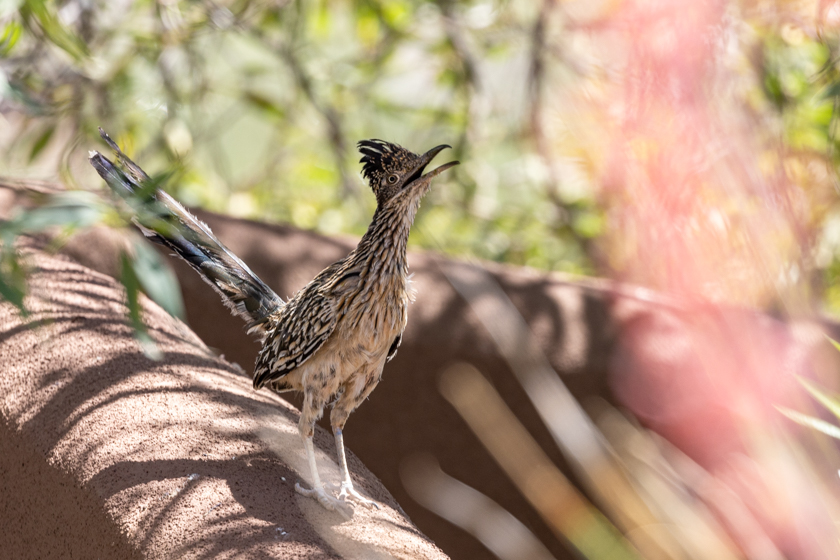
飛べるけど「飛ばない鳥」もいます。私たちの家にはこの「飛ばない鳥」が結構頻繁に訪れてくれます。ロジャーと名付けたロードランナーです。 There are birds that can fly but do not fly. This “flightless bird” visits our house quite often. He is a roadrunner and we named him Roger.

彼らは飛べないわけではないのですが、飛ぶ必要がないから飛ばないらしいです。遠い将来は、彼らも進化して「飛べない鳥」になるのかもしれません。 He is not flightless, but he doesn’t fly so often because he doesn’t need to. In the distant future, he may evolve and become a “flightless bird”.

飛ばなくてもいい理由は、走る速さが半端ではなく、最高時速43kmで走った記録が残されていて、地球上で最も早く走れる鳥とされています。 The reason he does not need to fly is that he can run so fast; he has been recorded to run at speeds of up to 27 mph, making it the fastest bird on earth.

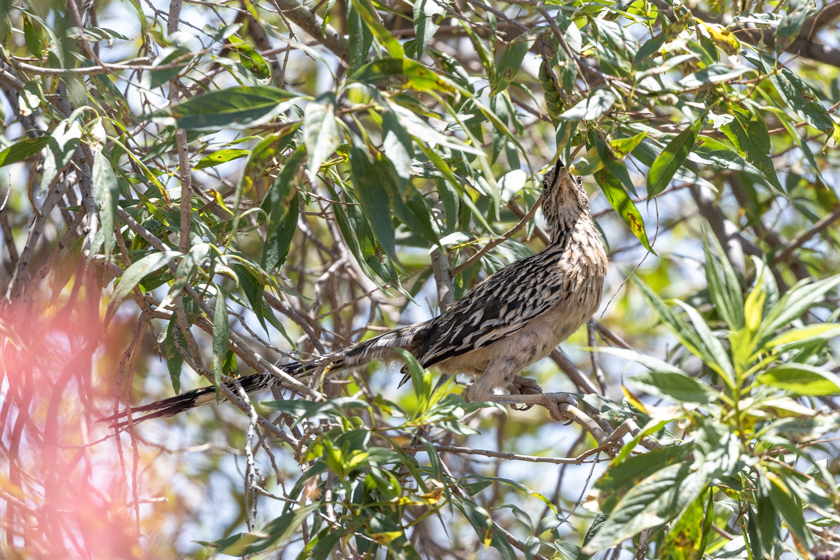
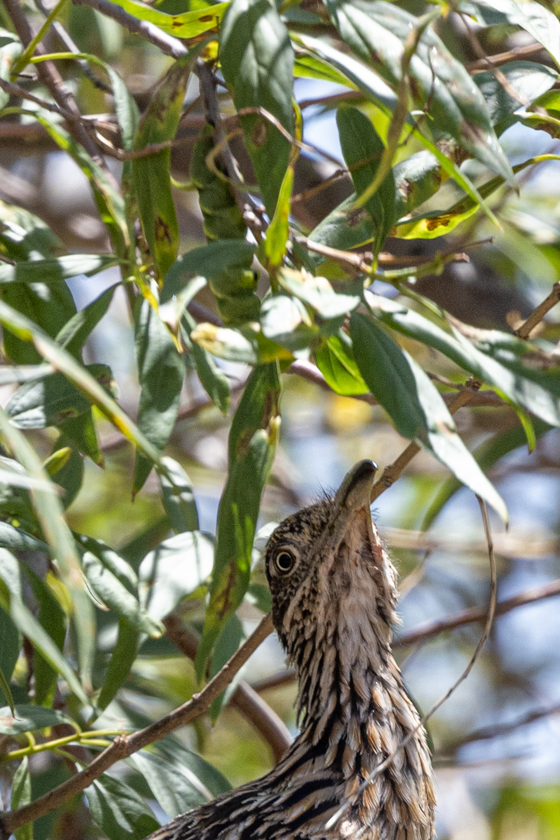
ロジャーは雑食ですが、トカゲ、カエル、虫を捕食している所をよく見かけます。今日の写真は全てスズメガの芋虫を捕まえようとしているところです。 Roger is an omnivore, but is often seen preying on lizards, frogs, and insects. All of today’s photos show him trying to catch a sphinx caterpillar.

芋虫見えますか?ロジャーの真上にいます。葉っぱと同じような形なので、普通は気がつきませんよね。 Do you see the caterpillar? It is right above Roger. It looks just like a leaf, so you wouldn’t normally notice it.

ちょっと残酷な映像ですが、捕獲した後、芋虫が動かなくなるまでロジャーがバンバン石の上に打ちつけているところです。こういう行動を目撃すると、裏庭でも野生の動物界が少し見えた気になります。 The video is a bit cruel, but it shows Roger banging the caterpillar on a rock until it stops moving after capture. Witnessing this kind of behavior makes me feel like I’ve seen a little bit of the animal kingdom in our backyard.