Tag Archives: Blue Grosbeak

鳥の分類表、完了 Bird Taxonomy Table, Complete


今日で鳥の分類表のブログは最後となります。 Today will be the last blog on bird taxonomy tables.

 やったー! Yay!

無理やり最後の3つの科を詰め込みましたが、何はともあれ、これで最後です。 I forced myself to cram in the last three families into this blog, but at any rate, this is the last one.

下の表、緑色が間違いの修正後の鳥たちです。それぞれ正しい属におさまりました。 In the table below, the birds in green are those after the error was corrected. Each has been placed in the correct genus now.
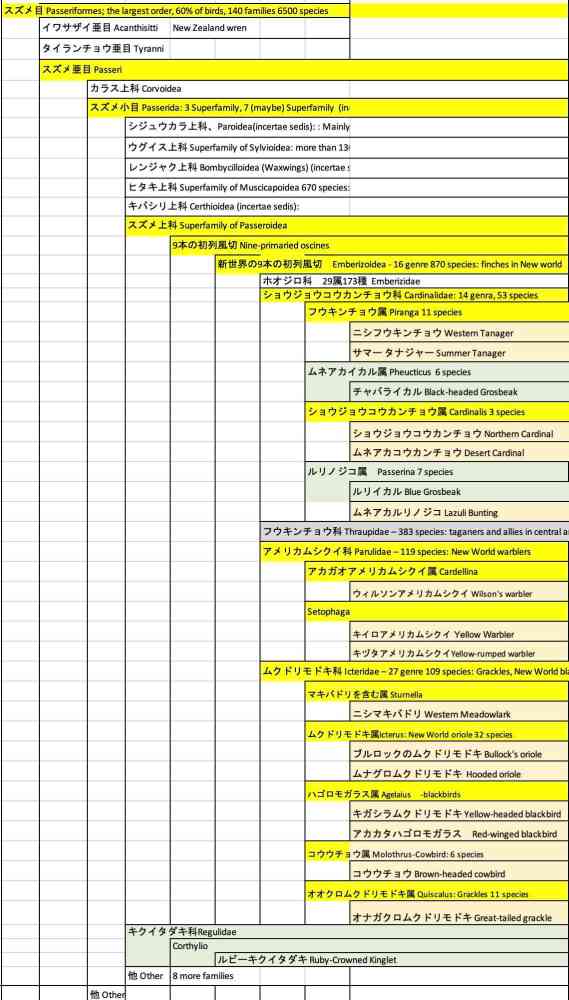
Screenshot

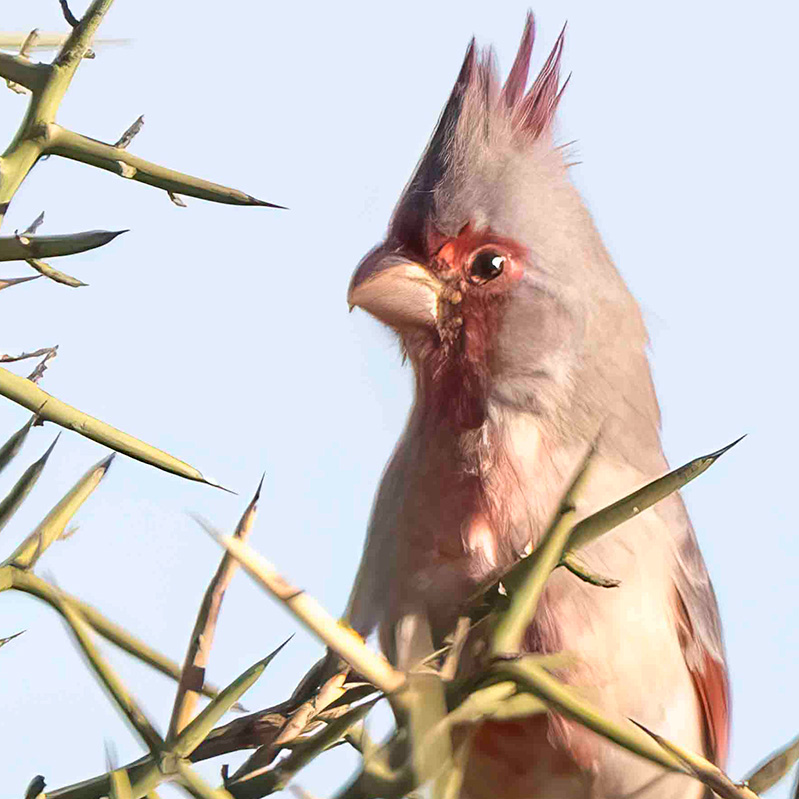
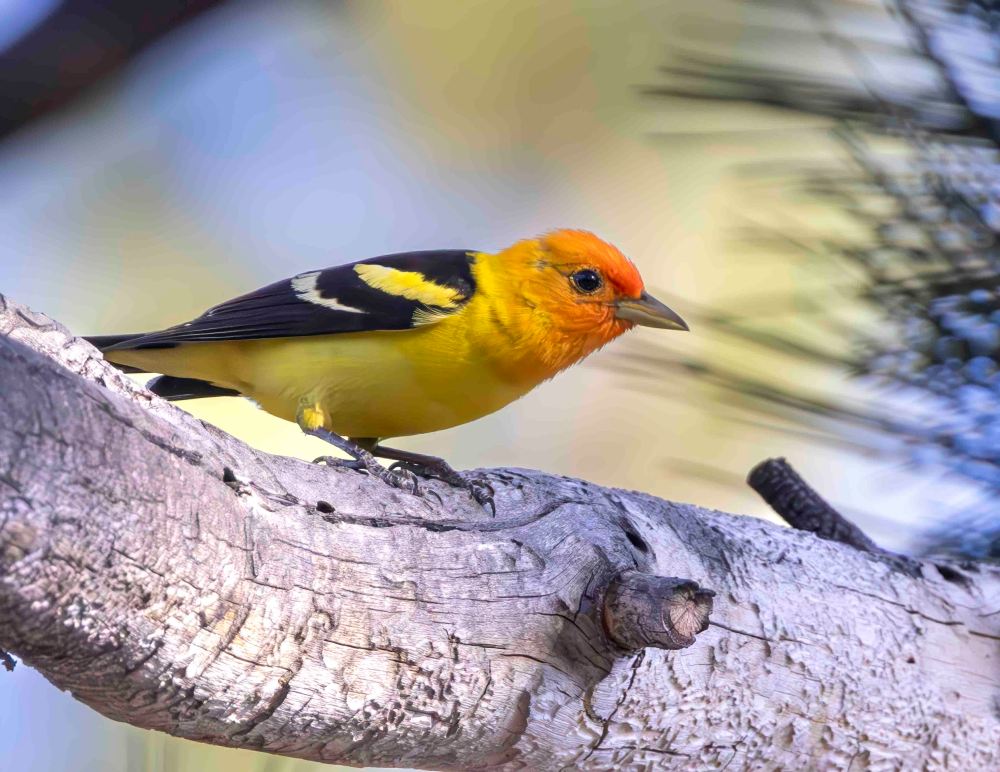
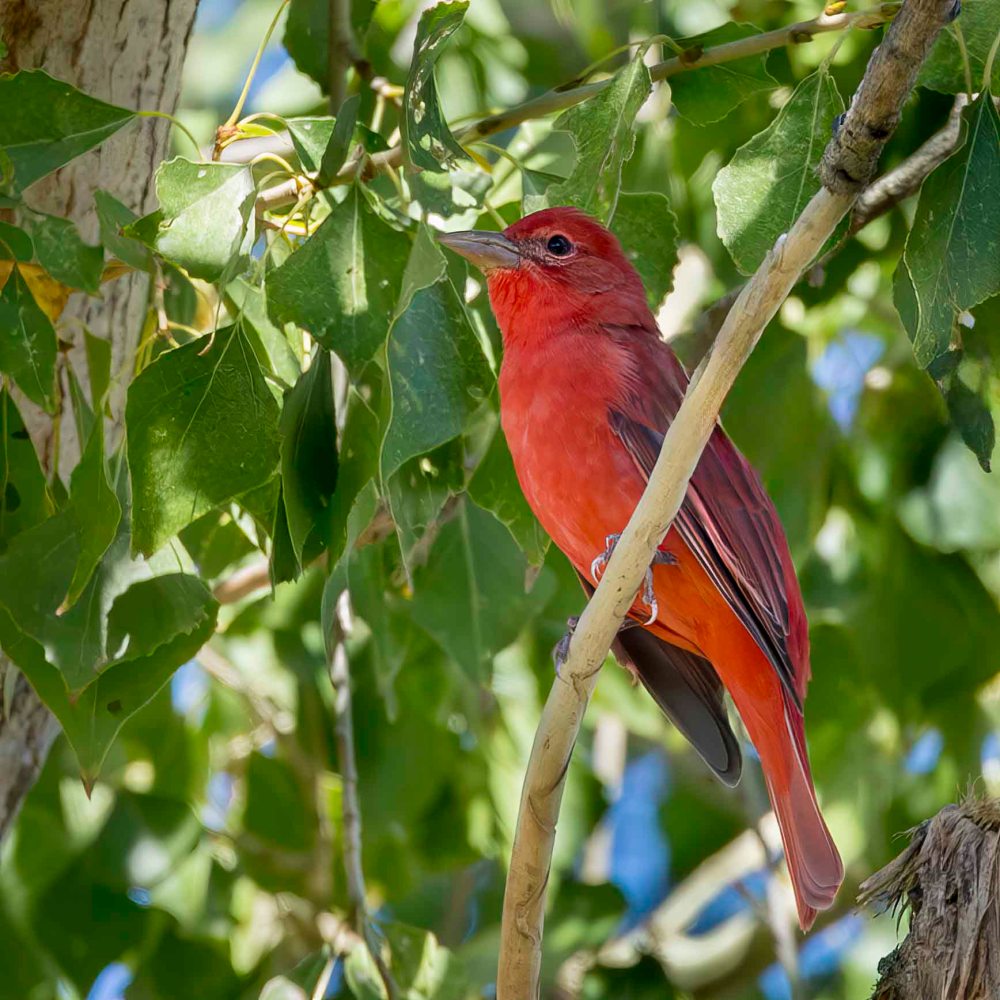
それでは、まず、ショウジョウコウカンチョウ科の鳥たちから。 Well then, let’s start with the birds of the Cardinalidae family.

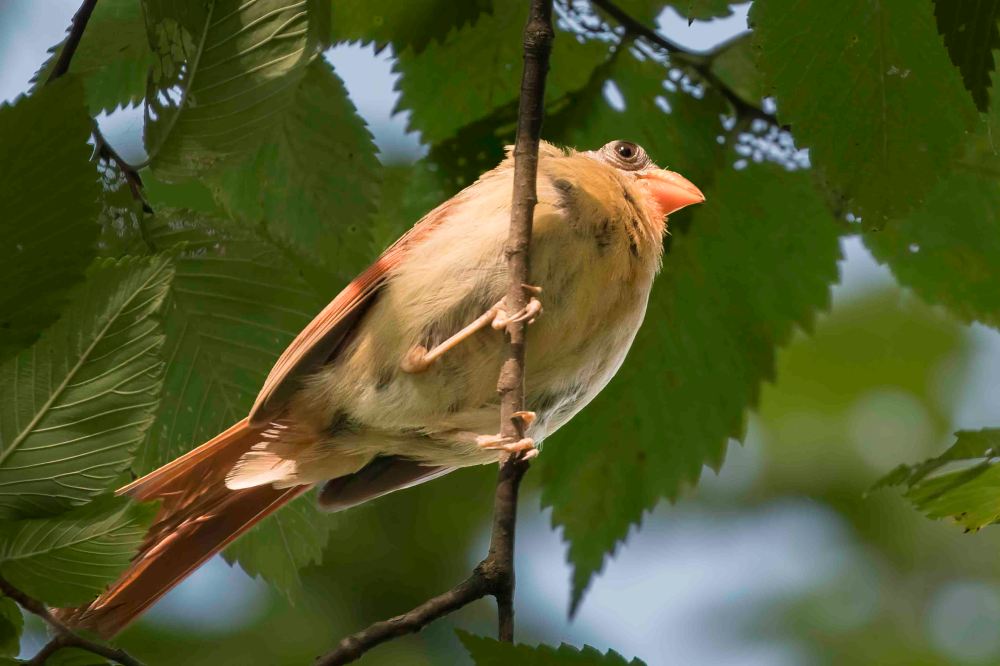
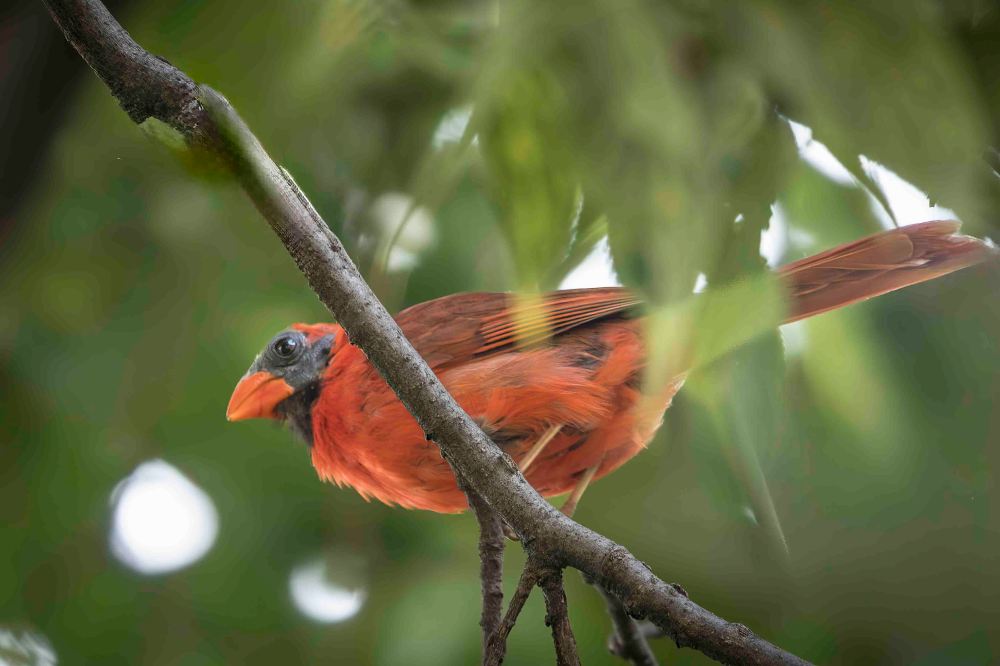
この科の鳥たちの特徴は、とにかく見た目が鮮やかなことです。ルリイカルを初めてみた時の驚きは忘れられません。そしてオスのみが美しい色に包まれているのに対し、メスは色をおさえてます。一見不公平に思えるこの違いは、人間以外の動物界では子孫繁栄を考えれば納得できます。メスは卵を守る為に目立ってはいけないけど、オスはメスを惹きつける為に目立たなければいけない。 The birds of this family are characterized by their simply brilliant appearance. I will never forget how surprised I was when I first saw a Blue Grosbeak. And while only the males are covered in beautiful colors, the females are subdued. This seemingly unfair difference makes sense when you consider procreation in the non-human animal kingdom. Females must not stand out to protect their eggs, but males must stand out to attract females.
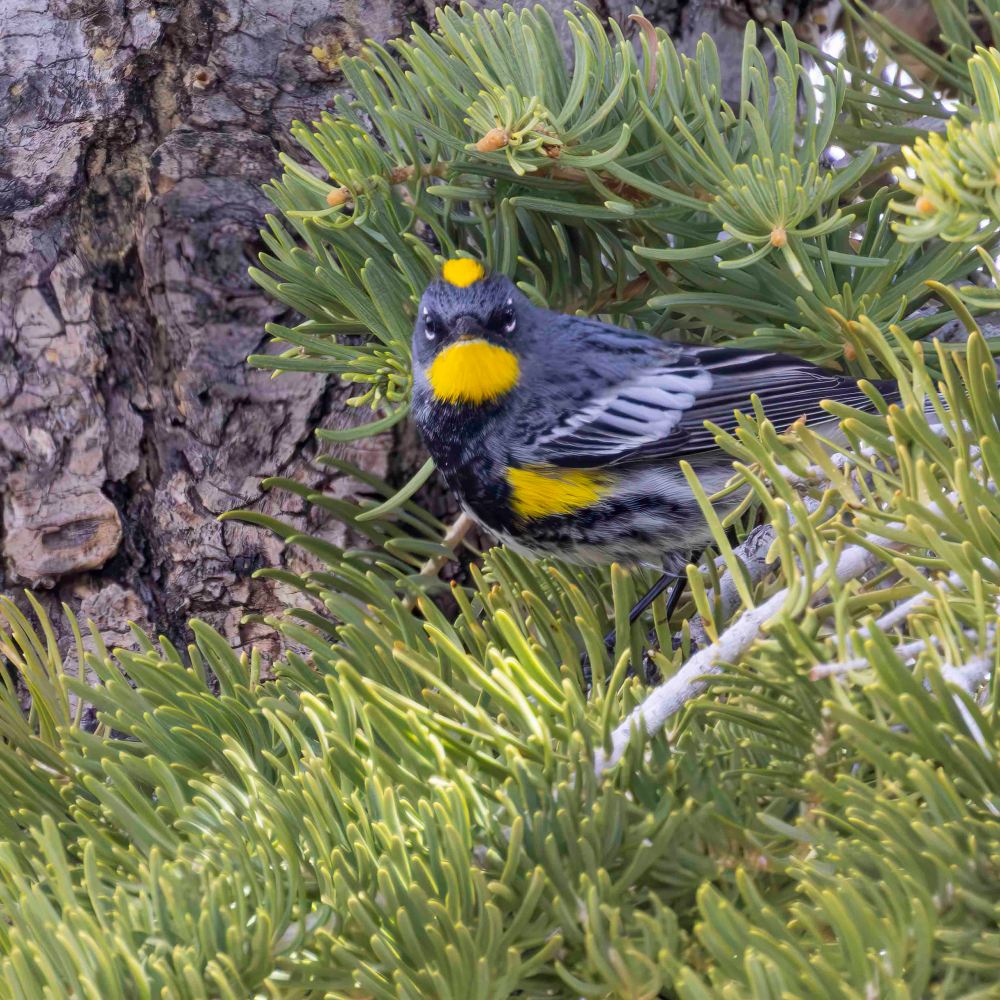
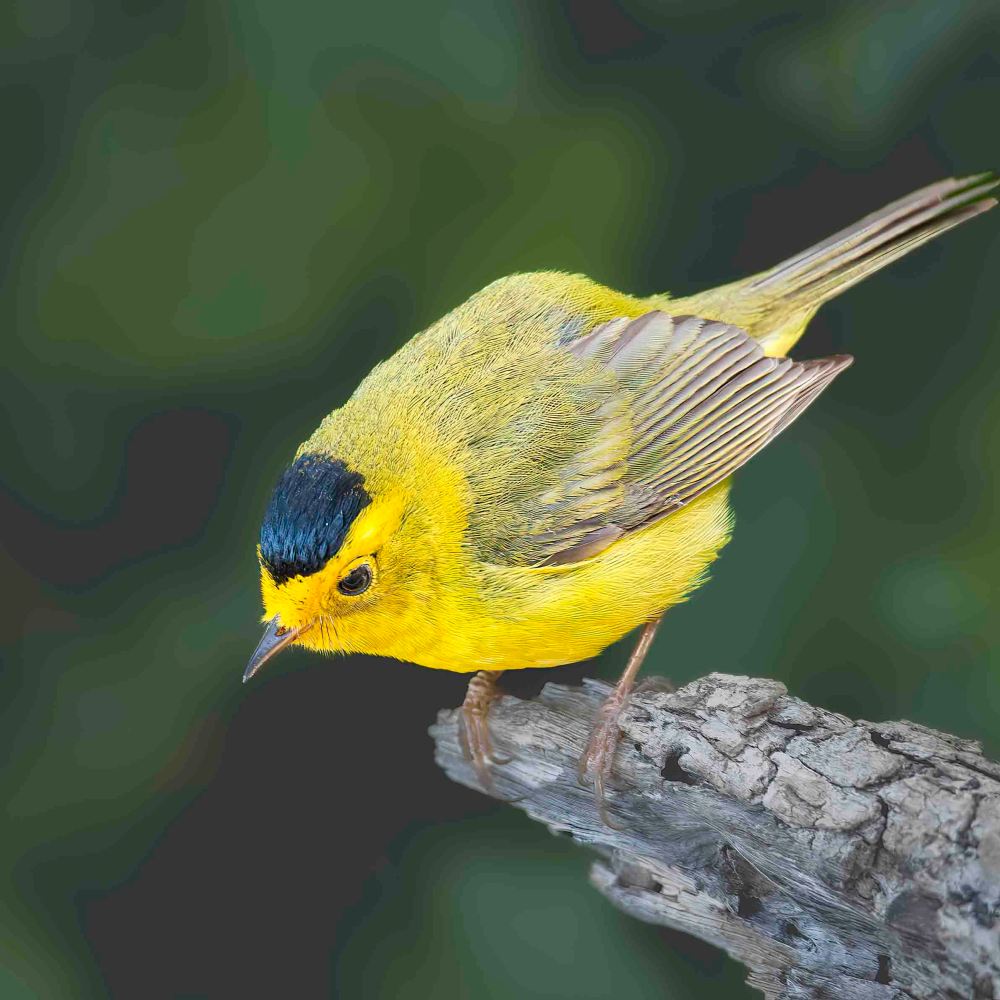
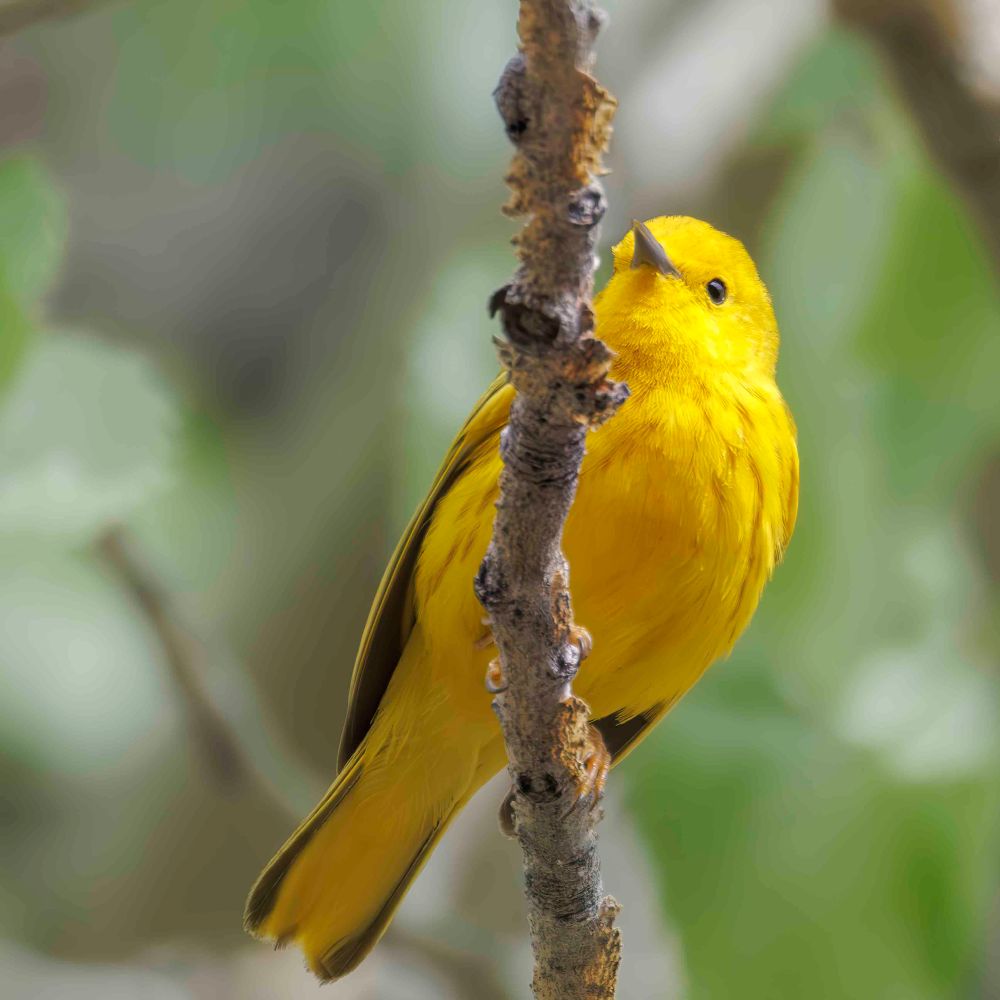
次はアメリカムシクイ科です。 Next up is the family of American warblers, Parulidae.

この科の鳥たちは、みんな小さくて可愛らしい。だからもっと撮りたいんですが、私には難度の高い鳥たちです。常に動き回っている彼らの習性に加えて、視力が悪い私には見つけることすら大変ですなんですね。 All birds in this family are small and cute. So I want to take more pictures of them, but they are very difficult birds for me. Their habit of always being on the move, plus my poor eyesight, makes it very difficult for me to even find them.

もう一点付け加えることがあるとすれば、アメリカムシクイ科は旧世界のムシクイ、ダルマエナガ科から1830年に分岐しました。ダルマエナガ科とアメリカムシクイ科との大きな違いの一つは、初列風切の羽の数です。旧世界の虫食いたちは10枚、方やアメリカ大陸の虫食いたちは9枚ということです。 If I may add one more point, the family American Warbler diverged from the Old World Warbler, Sylviidae, in 1830. One of the major differences between the insectivores in Old World and in America is the number of the primary feathers. The Old World warblers have 10 feathers, while the American warblers have 9 feathers.
そして、最後にムクドリモドキ科です。 And lastly, the Icteridae family, New World Blackbird.

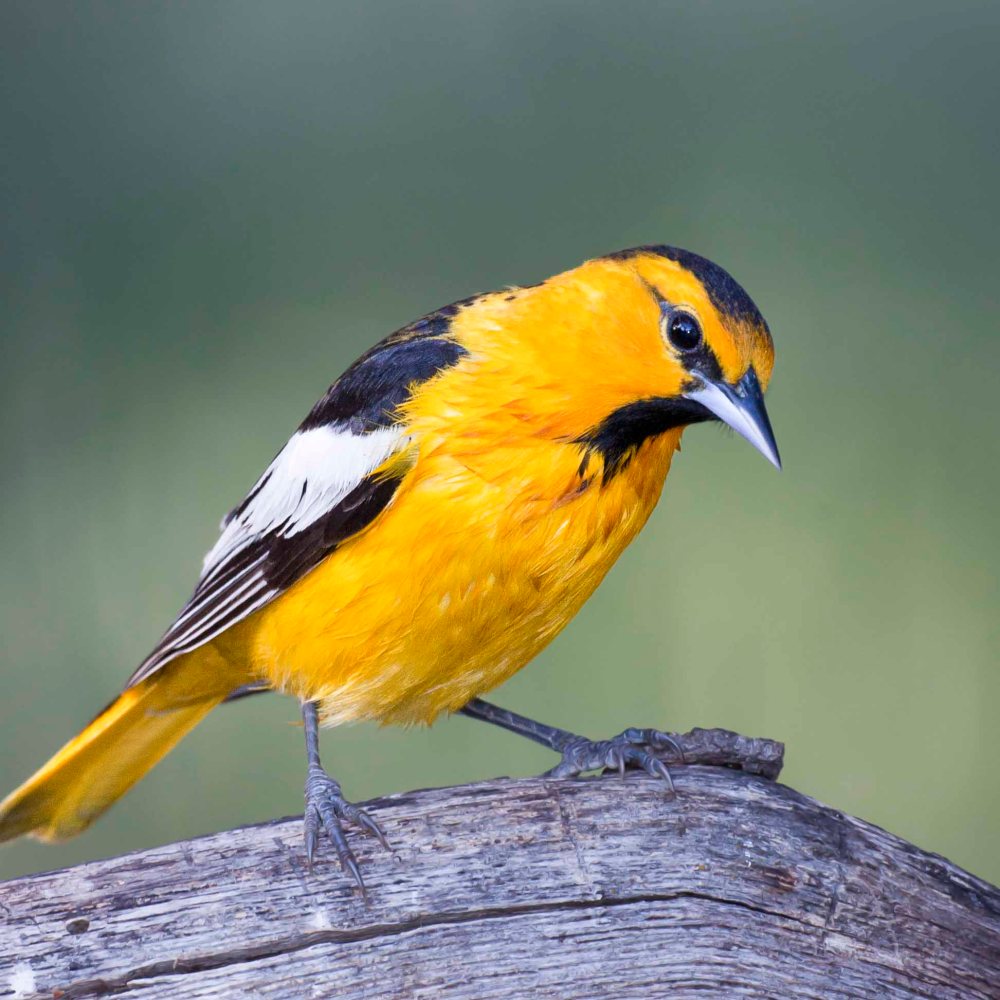
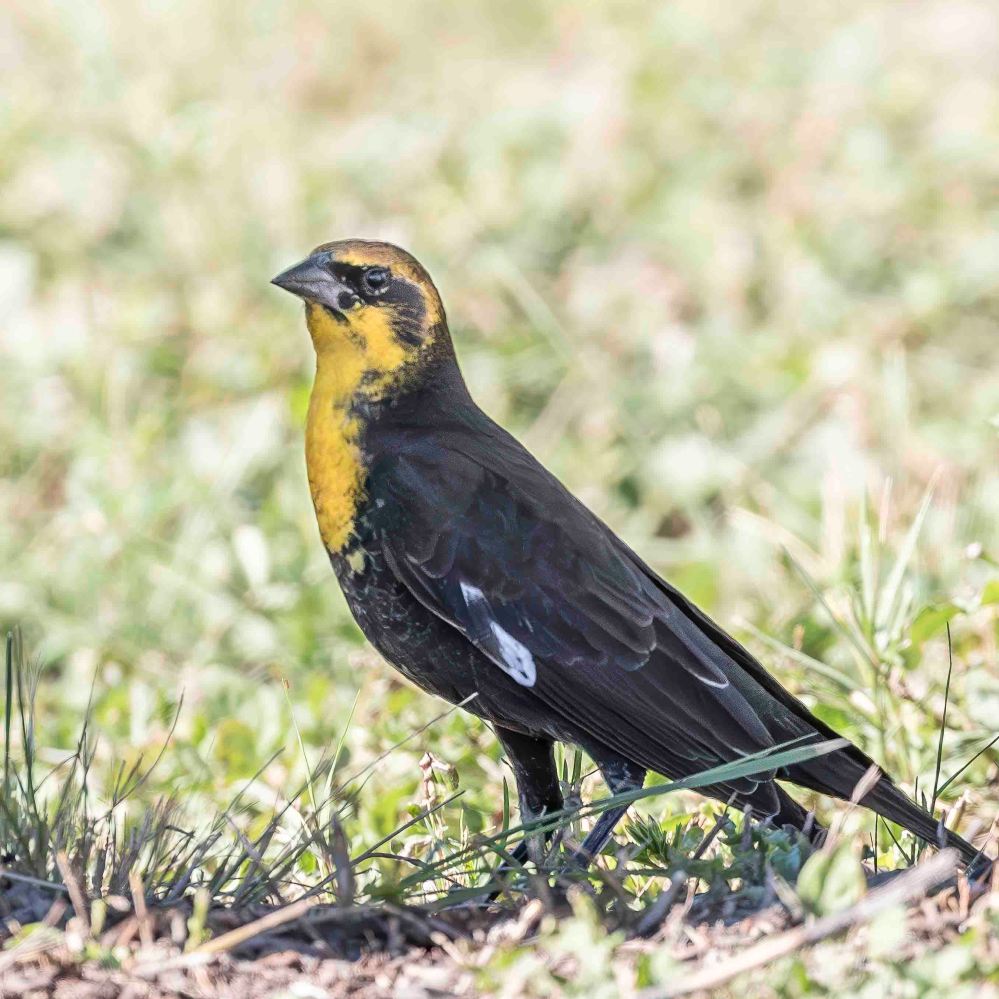
この科には、近隣でよく見かける鳥が多いのですが、ムクドリモドキ属以外の写真はありません。 Many of the birds in this family are common in the neighborhood, but there are no photos of any of them except for the some in the genus Icterus.
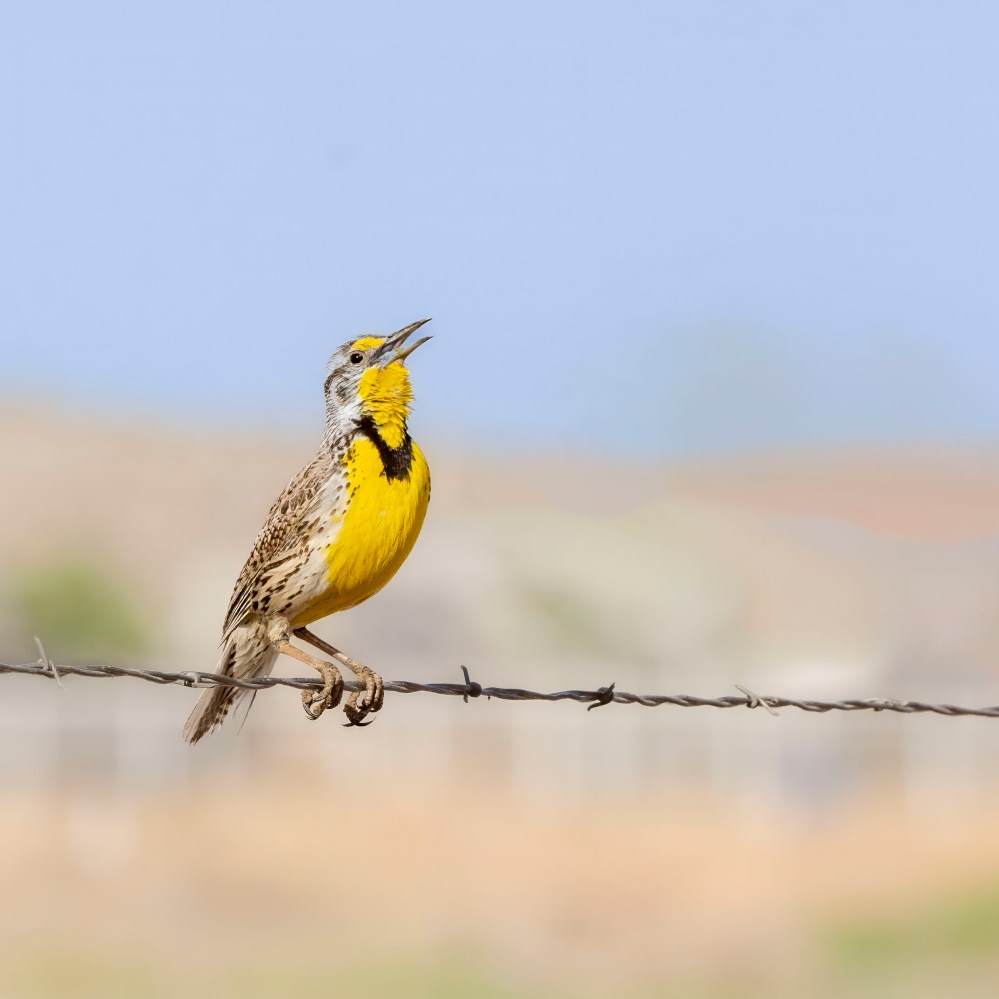
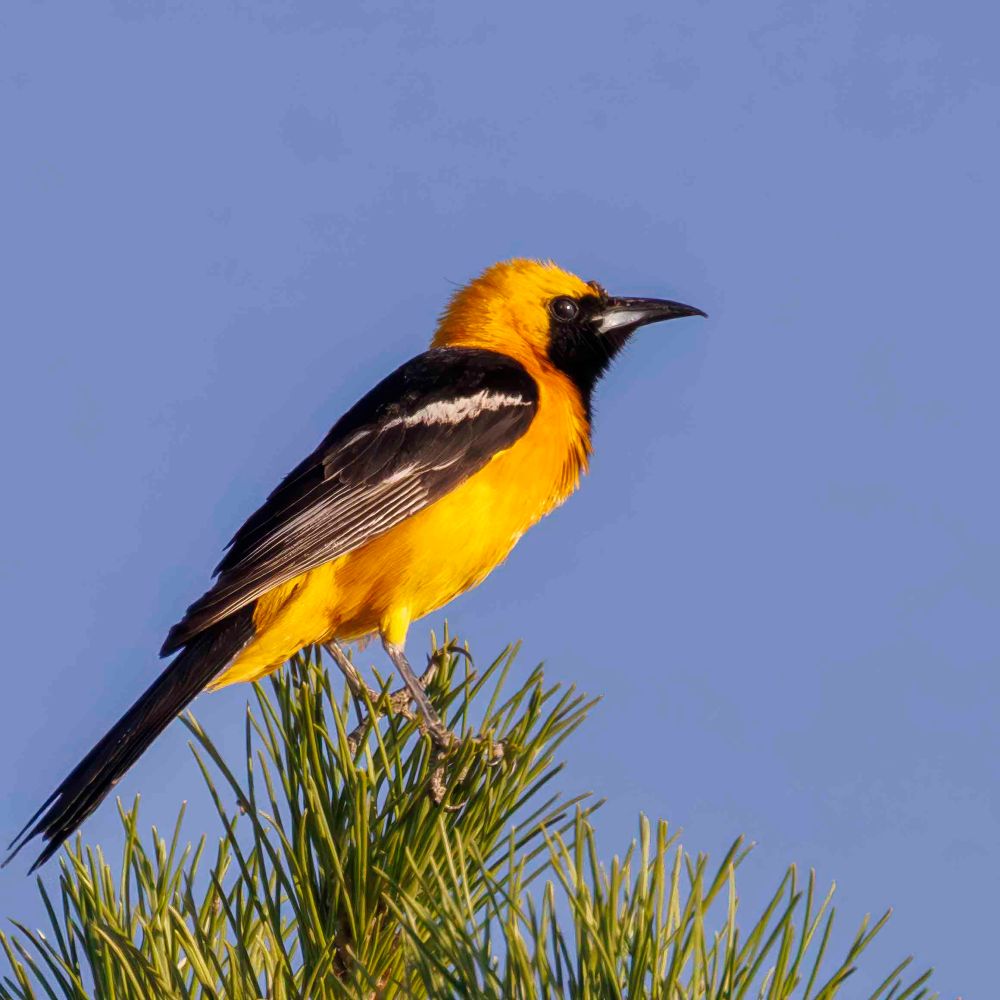
キガシラムクドリモドキの幼鳥 Yellow-headed blackbird Juvenile

とりわけ、オナガクロムクドリモドキはこの地に引っ越してきてから初めてみた鳥だったので携帯で撮ったことはありましたが、消してしまいました。なぜなら、彼らはとても攻撃的な鳥だからです。他の鳥の巣を襲い卵を盗んだり、幼鳥をさらっていきます。だから撮る気にならないんですね In particular, the Great-tailed grackle was the first bird I had seen since moving here, and I had taken pictures of them with my cell phone, but I had erased them because they are very aggressive birds. They attack other birds’ nests, steal their eggs, and snatch their young. So I don’t feel like taking pictures of them.

以上、最後の3つの科をサッと紹介しました。これで私の鳥の分類表の完成です。 These were my quick introductions to the last three families. This completes my bird taxonomy table.

そうそう、もう一つ大切な項目を鳥類の上に付け加えました。それは「鳥翼類」です。 Oh yes, I added one more important item above Aves. It is called “Avialae.”
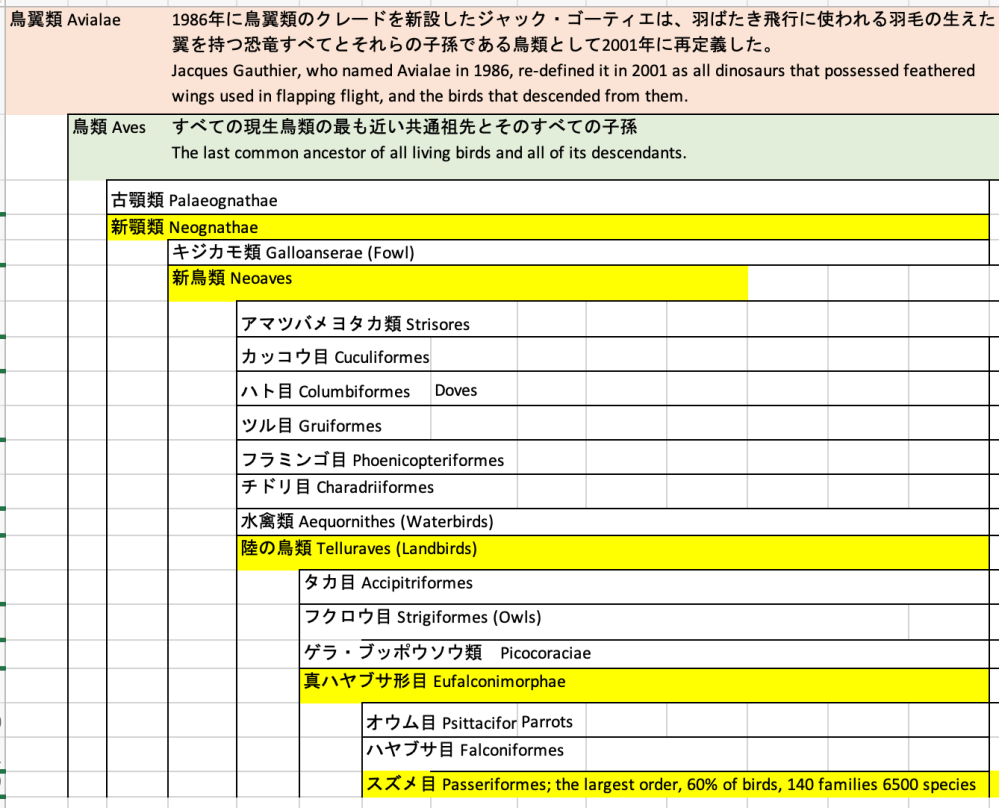
鳥翼類の定義が最高にカッコウいい! The definition of Avialae is the coolest!

羽ばたき飛行に使われる羽毛の生えた翼を持つ恐竜すべてと、それらの子孫である鳥類。

All dinosaurs that possessed feathered wings used in flapping flight, and the birds that descended from them.

アトリ科 – 頑丈な嘴 Fringillidae – Strong Beaks


スズメ上科には以下の10の科が分類されています。 The following 10 families are classified in the superfamily Passeroidea.

Screenshot

ただ、そのほとんどが旧世界の鳥なのでスキップしますが、ここでは例外の一例としてイエスズメを紹介します。 However, since most of them are Old World birds, I will skip them, but here is an example of an exception: the House sparrow.

イエスズメはもともと旧世界の鳥でしたが、移入され、今ではほぼ全ての大陸に定住しています。多分、よく見かける鳥だとは思うのですが、そのためか、私の鳥コレクションの中にはこのショットしかありませんでした。 The House Sparrow was originally an Old World bird, but it has been introduced and is now settled on almost every continent. It is one of the most common birds, but perhaps that is why this shot was the only one in my bird collection.

さて、本題です。9本の初列風切ファミリーは更にアトリ科と新世界の9本の初列風切ファミリーに分類されています。今日はその中のアトリ科について書きます。また、「9本の初列風切」羽については以前、書きましたので、ご興味があったらそちらをご覧ください。(羽の数) Now, to the main topic: the Nine-primaried oscines family is further divided into the Fringillidae family and the Emberizoidea family. Today, I will write about the Fringillidae family. I have written about the “Nine-primaried” feathers before, so if you are interested, please refer to that article. (Number Of Feathers)

Screenshot

アトリ科の鳥は総称してフィンチと呼ばれています。特徴は小さい鳥ですが、円錐形の頑丈な嘴を持っている事です。固い木の実も噛み砕くのに最適です。 Birds of the family Fringillidae are collectively known as finches. They are characterized by their small but sturdy conical bill. It is ideal for chewing even hard nuts.

アトリ科には228種もの鳥が分類されていますが、ほとんどが旧世界のとりなので、ここでは私の鳥コレクションから5種を紹介します。 There are 228 species of birds classified in the family Fringillidae but since most of them are Old World birds, here are five species from my bird collection.

トップバッターはメキシコマシコです。この鳥も飽きるほど家の周りで見られます。 The top hitter is the House Finch. This bird can also be seen around the house to the point of boredom.

上の写真は全てメキシコマシコのオスです。春先には赤い色が更に引き立ちます。それに比べると、メスは地味です。 All of the photos above are of male House Finches. The red color is even more striking in early spring. In comparison, the female is more subdued.

そして、働き者です。巣作りの忙しい時、オスにも頑張ってもらいましょう。 And the females are hard workers. Work harder you male finch!

こちらはヒメキンヒワです。一番小さい鳥のグループに入ります。 This is a Lesser Goldfinch. It is in the smallest group of birds.

下の写真もヒメキンヒワです。頭の黒さにばらつきがあるのでヒメキンヒワと断定する事ができませんでした。見かけがとても似ているオウゴンヒワも北米に生息しているからです。でも、オウゴンヒワは黒い頭がもっとくっきりしているそうです。 The photos below are also of Lesser Goldfinches. I was unable to determine that they are also Lesser Goldfinches because of the variation in the blackness of its head. This is because a very similar-looking Goldfinch is also found in North America. However, I heard that the black head of Goldfinch is much sharper.

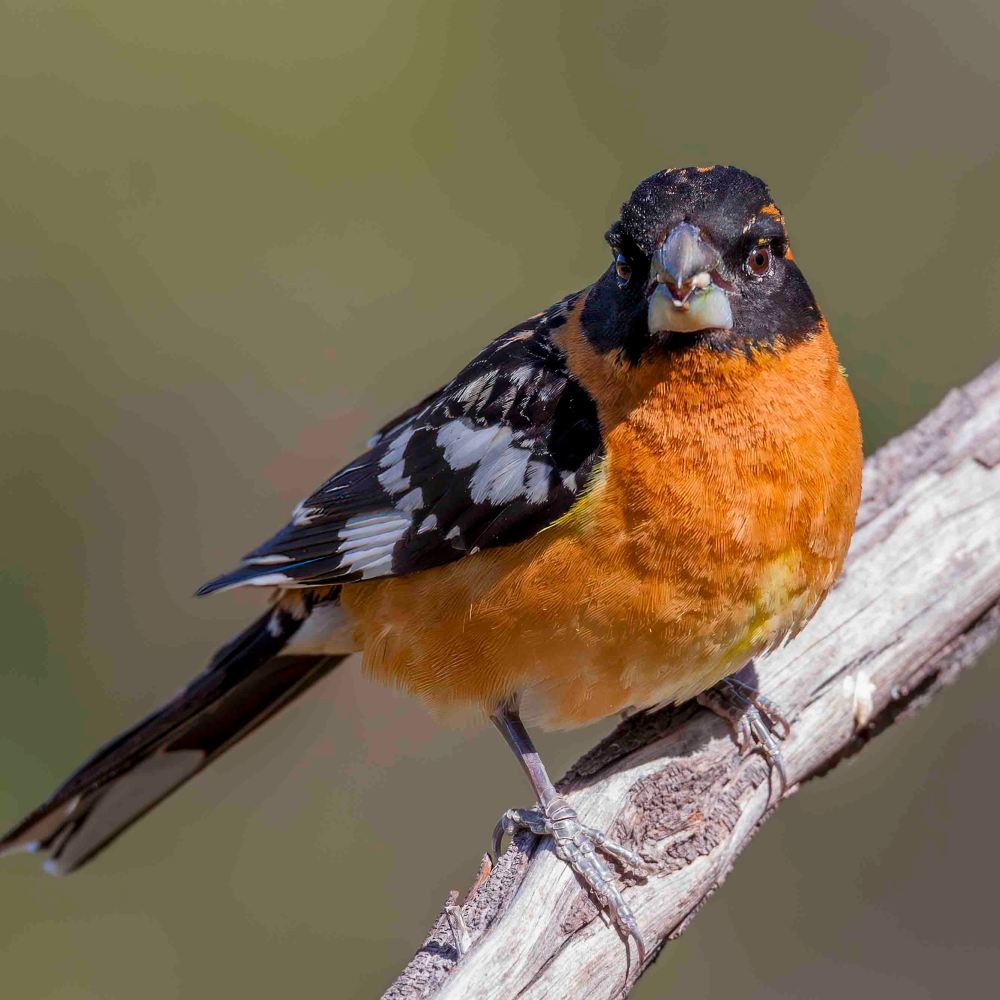
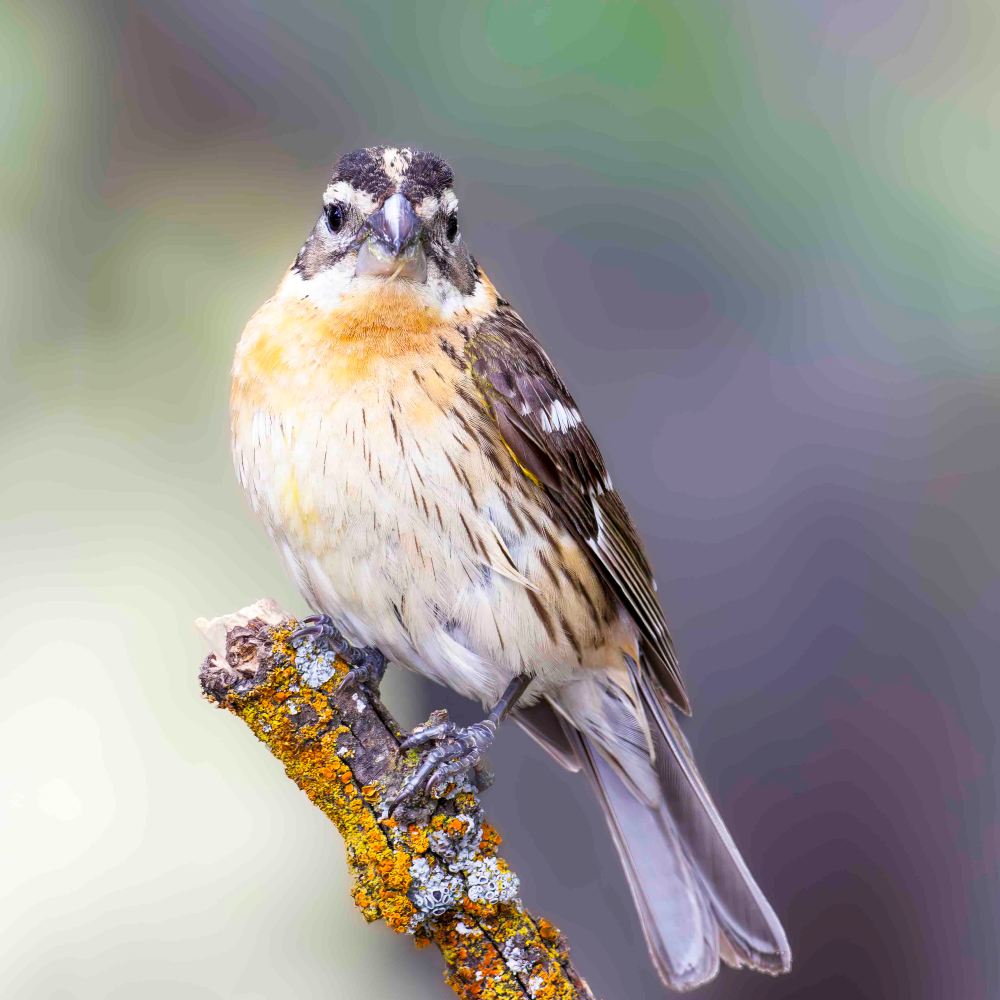
次に登場するのはチャバライカルのご夫婦です。 Next up is a couple of Black-headed Grosbeak.

オスもメスも共に卵を温めます。また、多くの場合、メスの鳴き声はオスの簡易バージョンなのですが、時にはフルバージョンを鳴くといわれています。きっと卵を温める際の敵を欺く作戦ではないかと言われています。 Both males and females warm their eggs. In most cases, the female’s song is a simplified version of the male’s, but sometimes it is said that she makes a full version of the male’s song. It is said that this may be a strategy to deceive enemies when laying eggs.

次はキビタイシメのご夫婦です。一度しか見た事がありません。山岳地帯やカナダに生息しているようですが、冬はアメリカ南部にも飛んでくるようです。 Next is a couple of Evening Grosbeaks. I have only seen them once. They seem to live in the mountains of the U.S. and Canada, but in winter they seem to fly to the southern United States.

それにしても、キビタイシメという日本語名はどこから来たのでしょうか。語源がわかりません。 (relevant to only for Japanese language.) Still, where did the Japanese name “kibitaishime” come from? I do not know the etymology.

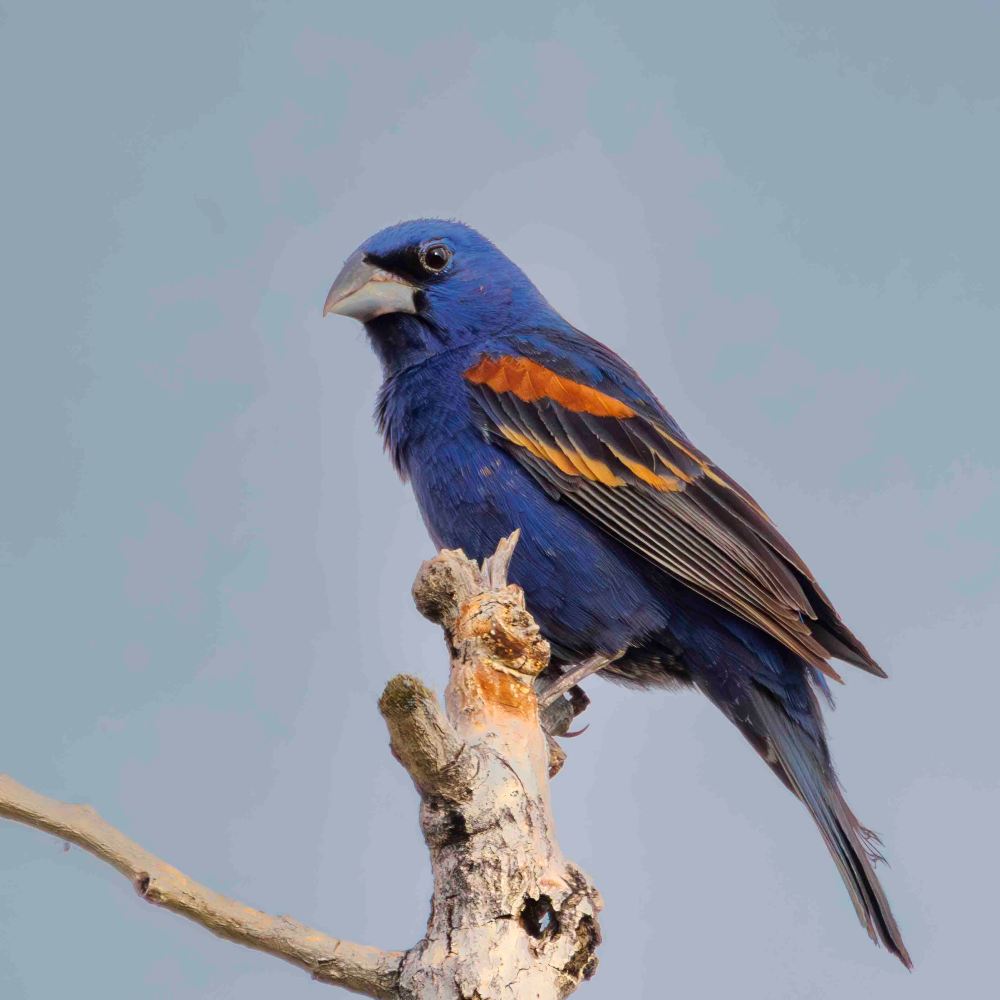
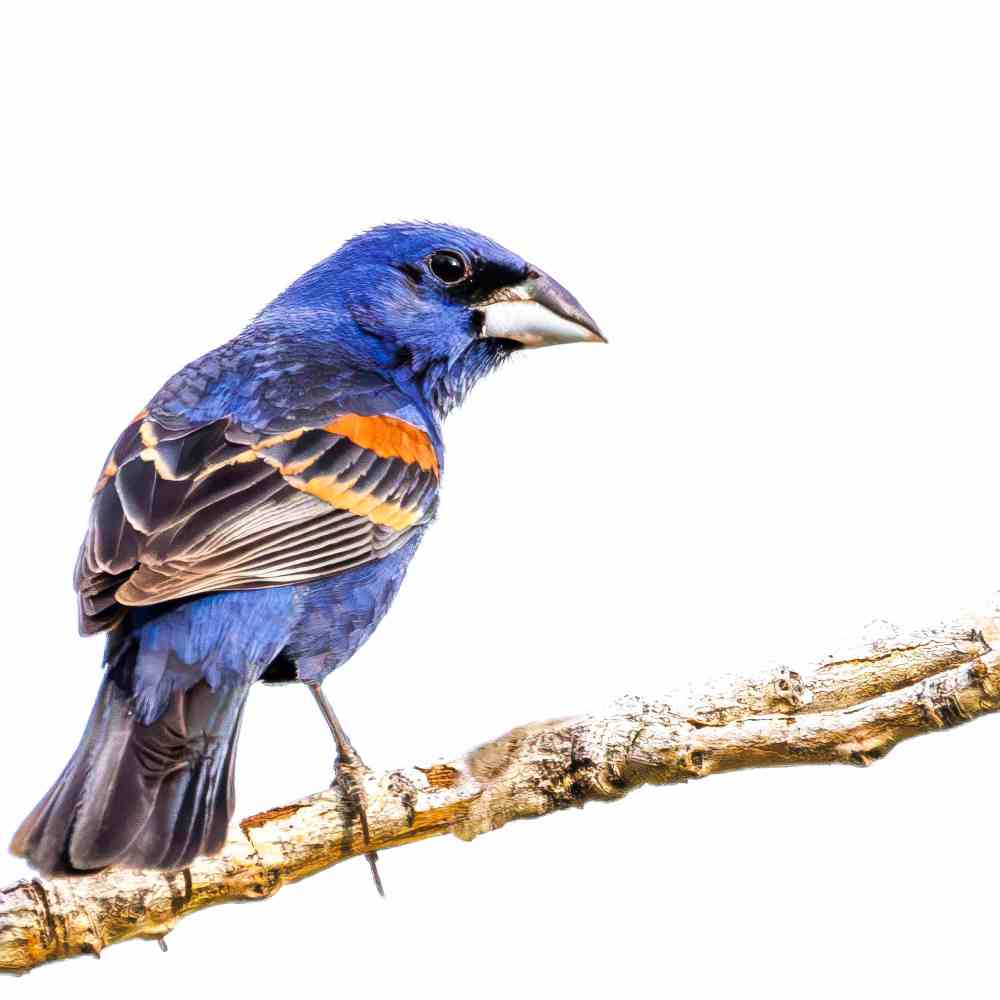
最後に紹介するのはルリイカルです。この鳥を初めて遠くに目撃した時は、自分の目を疑いました。こんなに美しい鳥がいていいの? Lastly, I would like to introduce you to the Blue Grosbeak. When I first spotted this bird at a distance, I couldn’t believe my eyes. How could such a beautiful bird exist?

日本語名の「ルリイカル」はこの鳥にピッタリです。ただの青い鳥ではないのです。瑠璃のような深い青い色の鳥なんです。 The Japanese name “Ruriikaru” which defines a specific shade of blue fits this bird perfectly. It is not just a blue bird. It is a bird with a deep blue color like lapis lazuli.

例えばキビタイシメに比べると2分の1の大きさで小さい鳥です。それでも越冬するために中南米まで飛んでいくそうです。今年も春になったら来てくれるでしょうか。 It is a small bird, one-half the size of, for example, the Evening Grosbeak. Even so, they fly to Central America to overwinter. I wonder if they will come again this spring.

鳥の分類表 Bird Classification Table


前回のブログで水禽類を紹介しました。これからいよいよ待ちに待った陸の鳥の分類に入ります。 In my last blog I introduced water fowl. I will now finally begin the long awaited classification of land birds.

その前に、復習も兼ねて全体像を見てみましょう。以下の表が今現在の分類です。小さすぎて、読めないですかね。Excelシートを使っているので折りたたんで小さくしたんですが。全体像は分かっていただけると思います。 Before I begin, let’s do a review and overview. The following table is my current classification. Is it too small to read? I tried to make it smaller by using Excel’s collapse feature. In any case, I hope you get the overall picture.

ここで一番注目していただきたいところは、表の一番下の列のルリノジコ属です。ここまで掘り下げるのが目標です。 The most noteworthy part here is the genus Passerina in the bottom row of the table. The goal is to dig down till this layer.

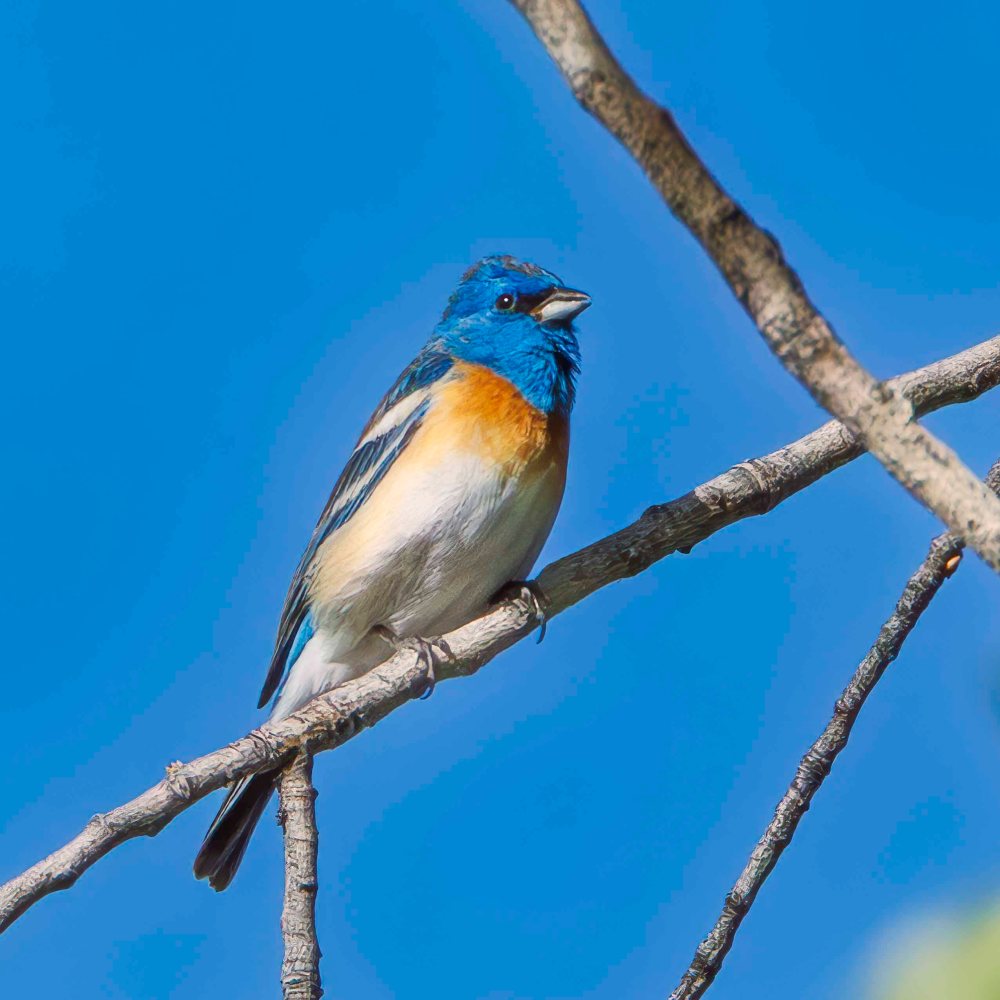
この属には、つい最近追いかけていたムネアカルリノジコが入っているんです。 This genus includes the Lazuli Bunting, which I have been chasing just recently.

ムネアカルリノジコ Lazuli Bunting

しかも、見てみたいゴシキノジコも入っている! And it also includes Painted Bunting that I would like to see!

ゴシキノジコ:コーネルラボのサイトのスクリーンショット。 Screenshot from Cornell Lab website.

ということで、これからも陸の鳥類の中、深い階層を潜り抜けていかなければなりません。 旅は長いです。 So I must continue to dive through the deep hierarchy among land birds. The journey is long.

警告!うっそー! Warning! Oh, no!!!

突然、私のコンピュータの画面上に警告のポップアップが表示されました。HDの残りの許容量が30GBを切っていたんですね。マズイです。これでは写真やビデオの編集ができません。大至急データを外付けHDに移動して整理する必要があります。 Suddenly, a warning pop-up appeared on my computer screen: the remaining allowance on my HD was less than 30 GB. No way! This means I cannot edit my photos and videos. I need to move and organize my data to an external HD ASAP.

ルリノジコ Blue Bunting

やれやれ・・・ Oh dear…

面倒臭い作業を楽しくする方法はないものでしょうか。しばらくお休みとなります。 Is there any way to make a tedious task enjoyable? I will be absent for a while.

ルリイカル Blue Grosbeak


先週の早朝、バージンリバー沿いの茂みの中で見つけました。ルリイカルです。見つけにくいとされているだけに、とてもラッキーでした。 We found this bird in shrubs by the Virgin river in the early morning last Wednesday. It’s a Blue Grosbeak. I feel very lucky because it is one of the uncommon birds that is hard to find.

オスです。メスは可愛いのですが、茶色で、こんなに鮮やかな青色とはかけ離れています。繁殖期には、特に青くなるということなので、今がそんな時なのでしょう。This is a male. The female blue grosbeak is not blue at all. It is brown, but cute. The male’s blue color becomes especially blue during the breeding season. So, it must be the time.

昨日紹介したニシフウキンチョウとルリイカルは同じショウジョウコウカンチョウに属します。つまり、親戚同士です。そして、どちらの鳥も息を呑む美しさですね。 The Western Tanager that I talked about yesterday and the Blue Grosbeak are relatives. Both of them are in the cardinal family.