Tag Archives: Abert’s Towhee

ただ今移動中 Migration in full swing


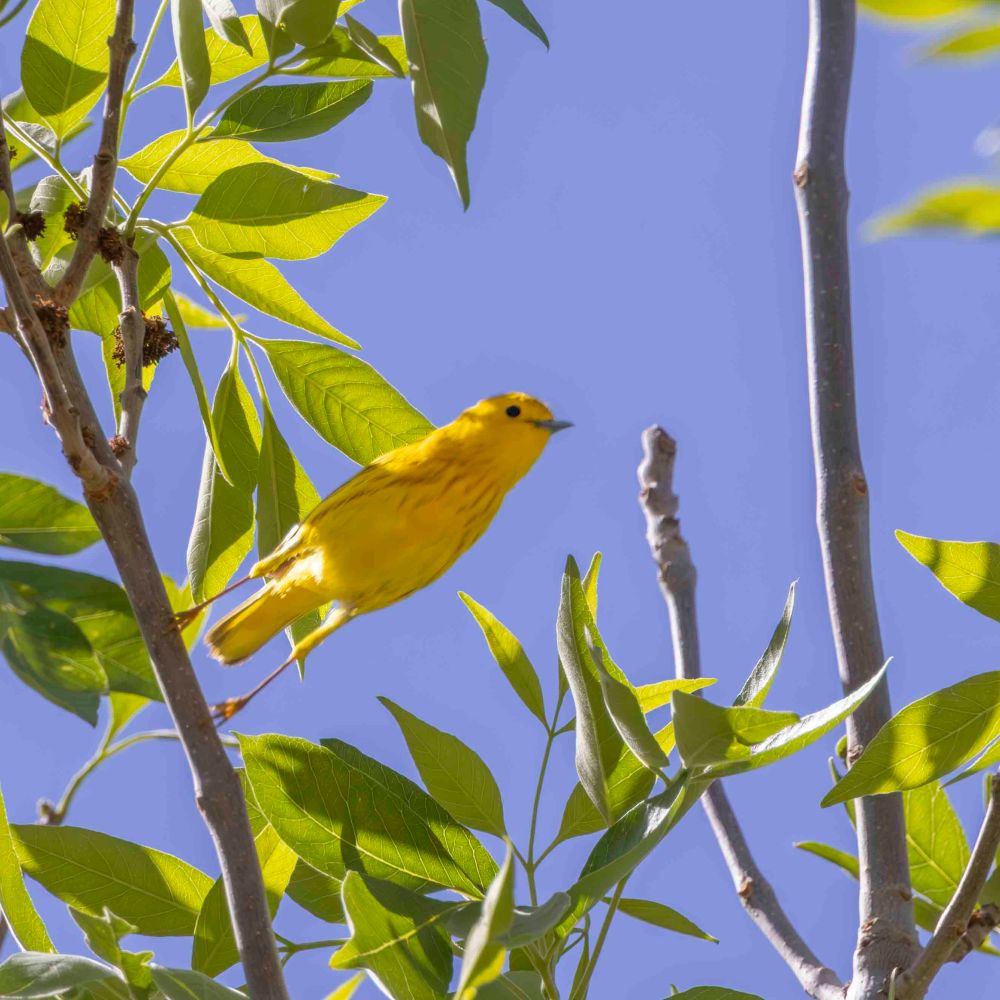
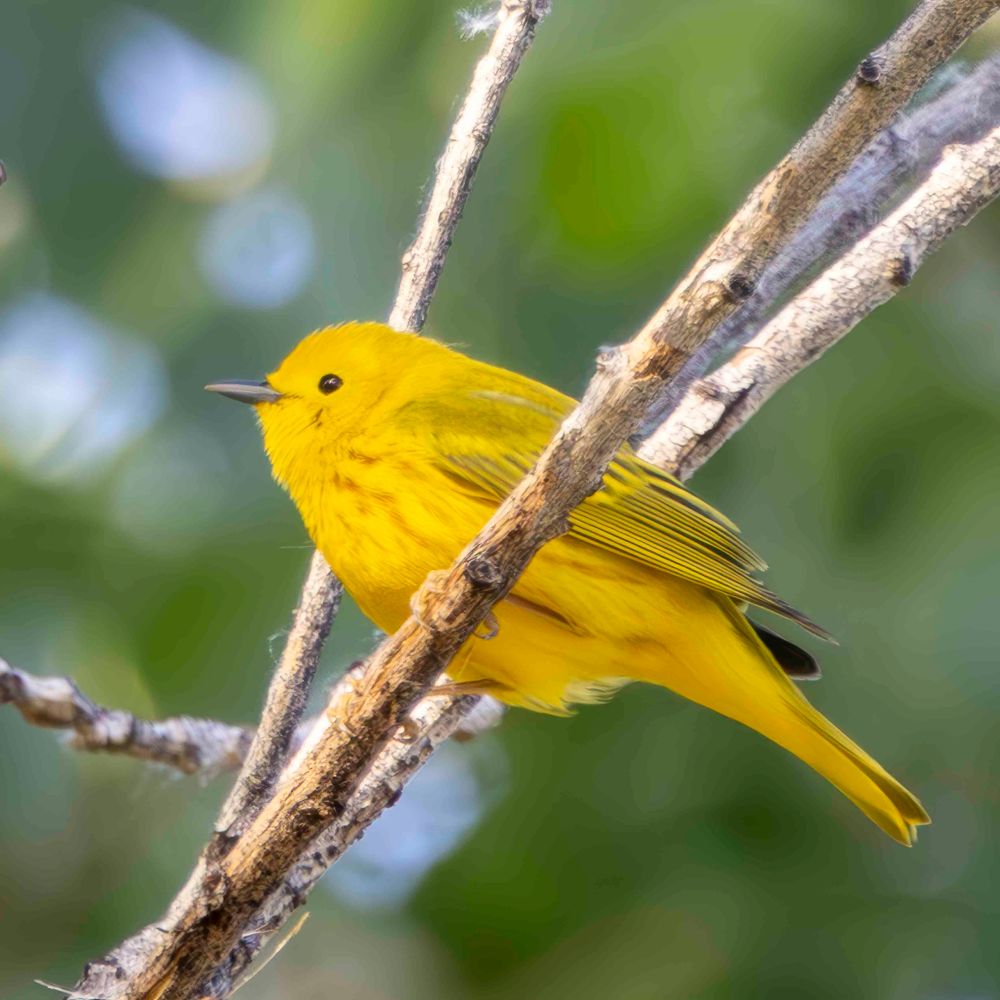
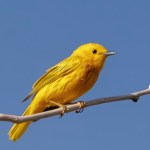
キイロアメリカムシクイです。 This is a Yellow Warbler.
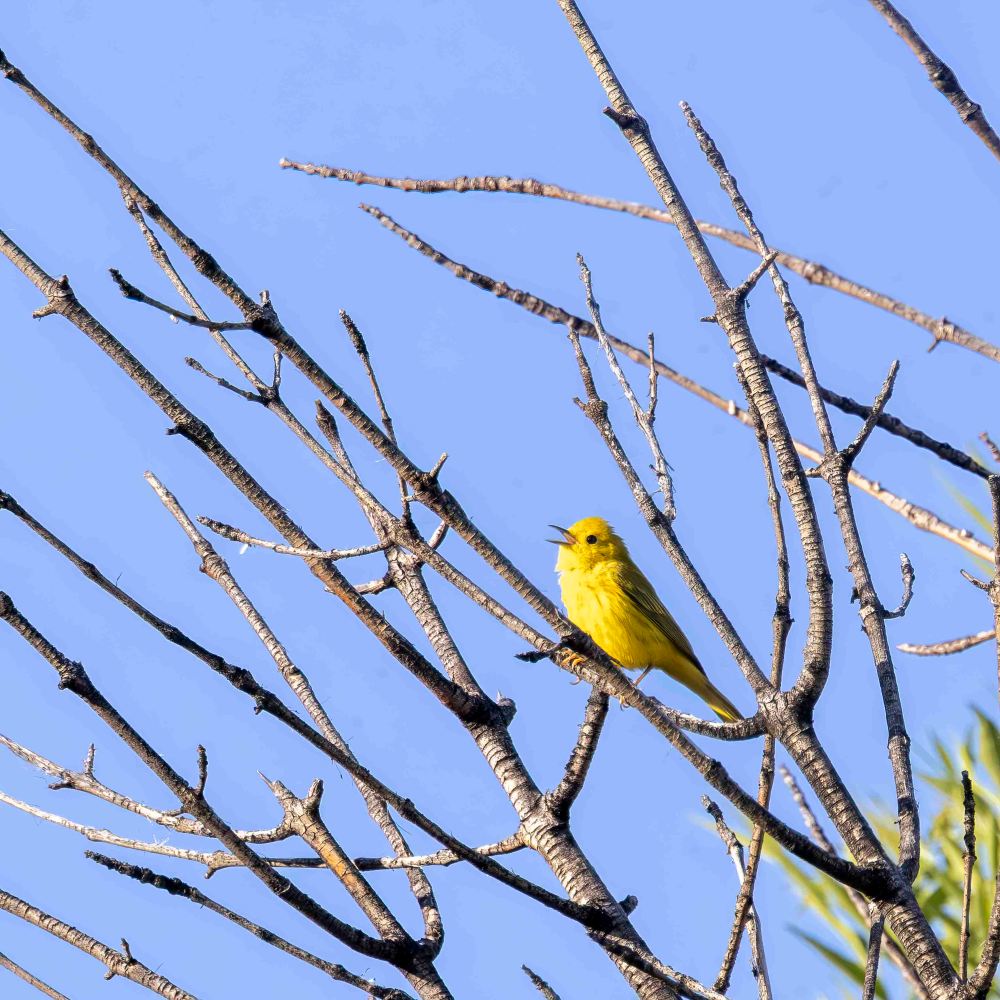
アメリカムシクイ科には120の種が属していますが、その半分は渡り鳥です。この科に属するキイロアメリカムシクイも渡り鳥なので、春になると出身地の中南米を出発し、北上して北米全土に散らばっていきます。そして9月ごろには再び南に帰っていくので移動が始まるらしいです。 About 120 species belong to the family Parulidae, New World Warblers, half of which are migratory birds. The Yellow Warbler, which belongs to this family, is also a migratory bird, so in spring it leaves its native Central and South America and travels northward, scattering all over North America. Then, around September, they start their migration as they return to the south again.

5インチ(12cm)しかない小さな鳥なのに、毎年遠路を移動するなんて、元気な鳥だなあ。 It’s a small bird, only 5 inches (12 cm) long, and yet it’s so energetic that it travels a long way every year.
昔から渡り鳥の観察をしている方々は多いと思いますが、最近はテクノロジーの発達で彼らの行動がさらに精度を持ってわかるようになりました。National Audubon Society の管理するBird Migration Explorer は、それぞれの鳥の行動パターンを視覚的に教えてくれます。 Many people have been watching migratory birds for a long time, but technology has recently made it possible to see their behavior with even greater precision. Bird Migration Explorer, managed by the National Audubon Society, provides a visual representation of each bird’s behavior patterns.

こちらがキイロアメリカムシクイの移動マップです。 Here is the migration map of the Yellow warbler.

このページによると、目下、移動の真っ盛りなようです。 According to this page, it appears that they are in the midst of a migration.
さて、前回のブログでこの鳥とクロツキヒメハエトリには決定的な違いがあると書きました。 Now, in my last blog, I wrote that there is a crucial difference between this bird and the Black Phoebe.
両種とも虫を食べる鳥なのに違う亜目に分類されています。分類史を見ると過去同じ目に分類されていた時期もあったようですが、DNA研究によってはっきりとした違いがわかってきました。それと共に分類表も大幅な変更が所々で見られます。実際、私の分類表も去年始めた頃から多くの部分でアップデートしました。この分だと、今後も更なる変更が起こりそうです。 Both species are classified in different suborders, even though they are both insect-eating birds. Their taxonomic history shows that there was a time when they were classified in the same order, but DNA research has revealed clear differences. Along with this, the taxonomy tables have changed drastically in many places. In fact, I have updated many parts of my classification table since I started last year. At this rate, more changes are likely to occur in the future.

再び、話を戻して、両者の違いですが、科学的には鳴管と呼ばれる部分の発達の違いがまず挙げられます。でも、個人的には彼らの虫の捕食の仕方が目に見えて決定的に違うと言いたいです。 Again, going back to the subject, the difference between the two, scientifically speaking, is first of all the difference in the development of the part of the body called Syrinx (the sounding tube.) But personally, I would say that the way they prey on insects is visibly and definitely different.

  • クロツキヒメハエトリは空中の虫を嘴を大きく開けて空中で捕食します。ツバメやヨダカ、アマツバメも空中捕食組ですね。 The Black Phoebe preys on aerial insects with its beak wide open in mid-air. Swallows, Nighthawks, and Swifts are also airborne predators.
  • キイロアメリカムシクイは低木の茂みの中深く入り込み、葉の裏に潜んでいる昆虫(主に毛虫など)を捕食します。そこし違いますが、キツツキも空中ではなく、木の中に潜んでいる昆虫を探し出すところが宝探しのようなので宝探し捕食組と呼びます。(私の独断の呼び方です) The Yellow Warbler goes deep into shrubby bushes and preys on insects (mainly caterpillars) hiding behind leaves. Woodpeckers are quite different from Warblers, but I think (my own opinion) they are the same in that they search for insects hidden in the trees rather than in the air.

裏庭には多分このメグロトウヒチョウが巣を作っているのではないかと思われます。 In other bird news, there is probably a nest of this Abert’s Towhee in our backyard.
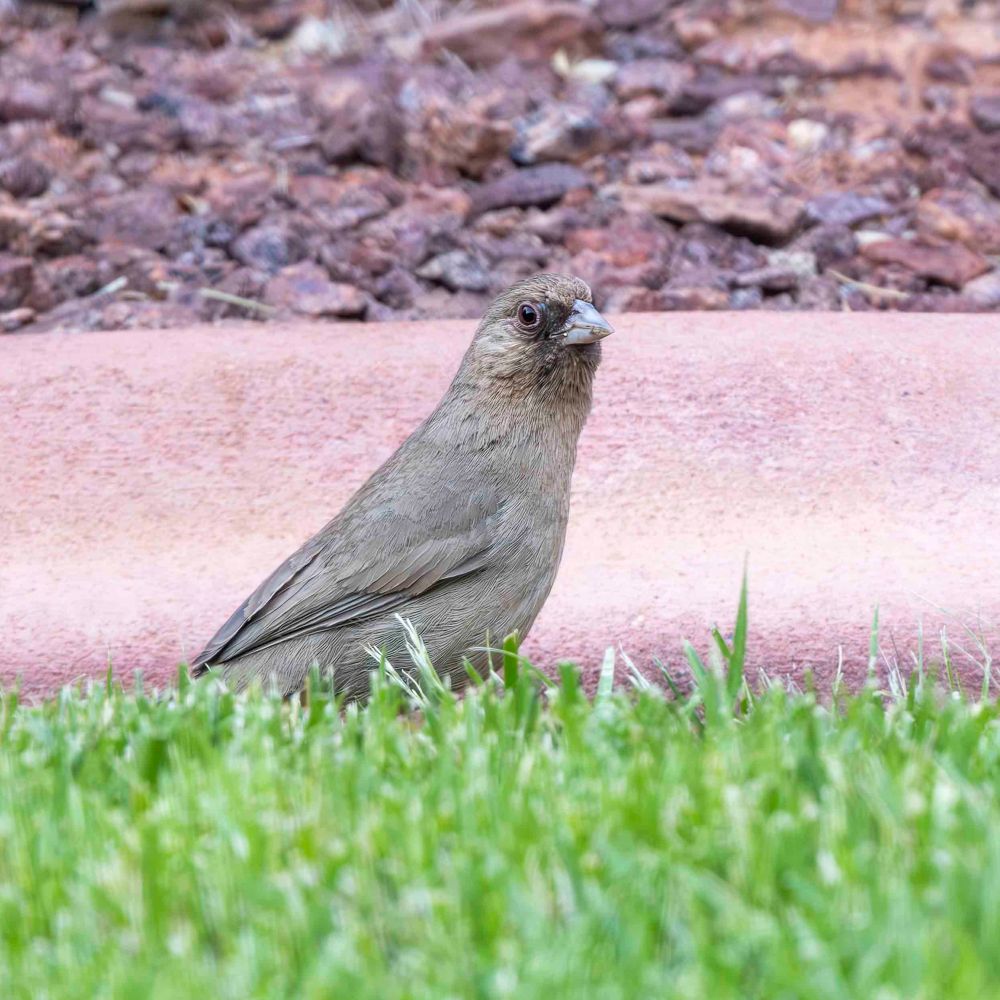
多分、このバラの茂みの奥の方。 Probably at the back of these Rose bushes.

しばらく雨が続いていましたが、今日はついに快晴となりました。 It had been raining for a while, but today it finally cleared up.

この季節は、私たちの周りの自然がソワソワ、ワクワクしていて毎日が落ち着きません。 This is the season when the nature around us is so energetic and full of life and every day is exciting.

今週末の土曜日はグローバル ビッグデー です。私も初めてなのでよくわかっていないのですが、裏庭の鳥の観察だけでもして参加してみようかと思っています。 This coming Saturday is the Global Big Day. I don’t know much about it since it’s my first time. But I’m thinking of participating just to observe the birds in my backyard.

新世界のホオジロ New World Sparrows


新世界の9本の初列風切科の中にホオジロ科が入っています。 The family of Emberizidae, is among Emberizoidea, Finches in the New World.

このホオジロ科は分類上、過去に何回も分類し直しされてきました。今後も再編される可能性があります。それだけいつも私たちの生活に寄り添って生きている重要なグループだということでしょう。 This family of Emberizidae has been reclassified many times in the past for taxonomic reasons. There is a possibility that it will be reorganized in the future. I guess it is such an important group that has always lived close to our lifestyles.

ホオジロ科は更に旧世界ホオジロ類と新世界ホオジロ類に別れています。ここでは、アメリカ在住の私が出会った新世界のホオジロ類だけを扱います。 This family is further divided into Old World Emeriza and New World Sparrows. Here, I will deal only with New World Sparrows that I have encountered while living in the United States.

表1 Table 1

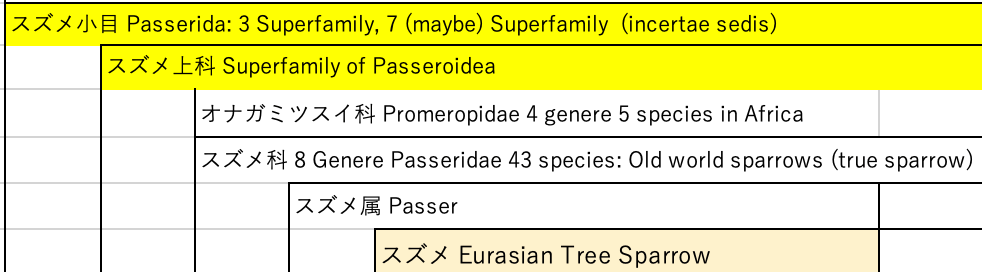
補足です。旧世界や日本でよく見かけるスズメはホオジロ属には入っていません。ホオジロと似ているのにね。9本の初列風切の外に区分されているので、初列の羽の数が違うのかもしれません。 Supplementation. The sparrows (Eurasian Tree Sparrow) commonly seen in the Old World and Japan are not in the genus Emberizidae. Even though they resemble Emberizidae birds, they are classified outside of the Nine-primaried oscines. I am not sure, but their primary feather count may not be 9.

表2 Table 2

話を戻します。表1の中、ピンクでハイライトされた10種のみを順にご紹介します。いずれも北米でよく見かける鳥です。 Back to the story. I will introduce only the 10 species highlighted in Table 1 in order.

最初の鳥はウタスズメです。名前の通り、春にはオスの歌声が低木地帯などに響きます。オスとメスの外見状の違いはないようです。 The first bird is the Song sparrow. As the name implies, the male’s song echoes through shrublands and other areas in the spring. There seems to be no apparent difference between the male and female.

ウタスズメ Song Sparrow

主食は虫です。北米全土の低木で見かけることができます。 Its primary food is insects. They can be found in shrubs throughout North America.

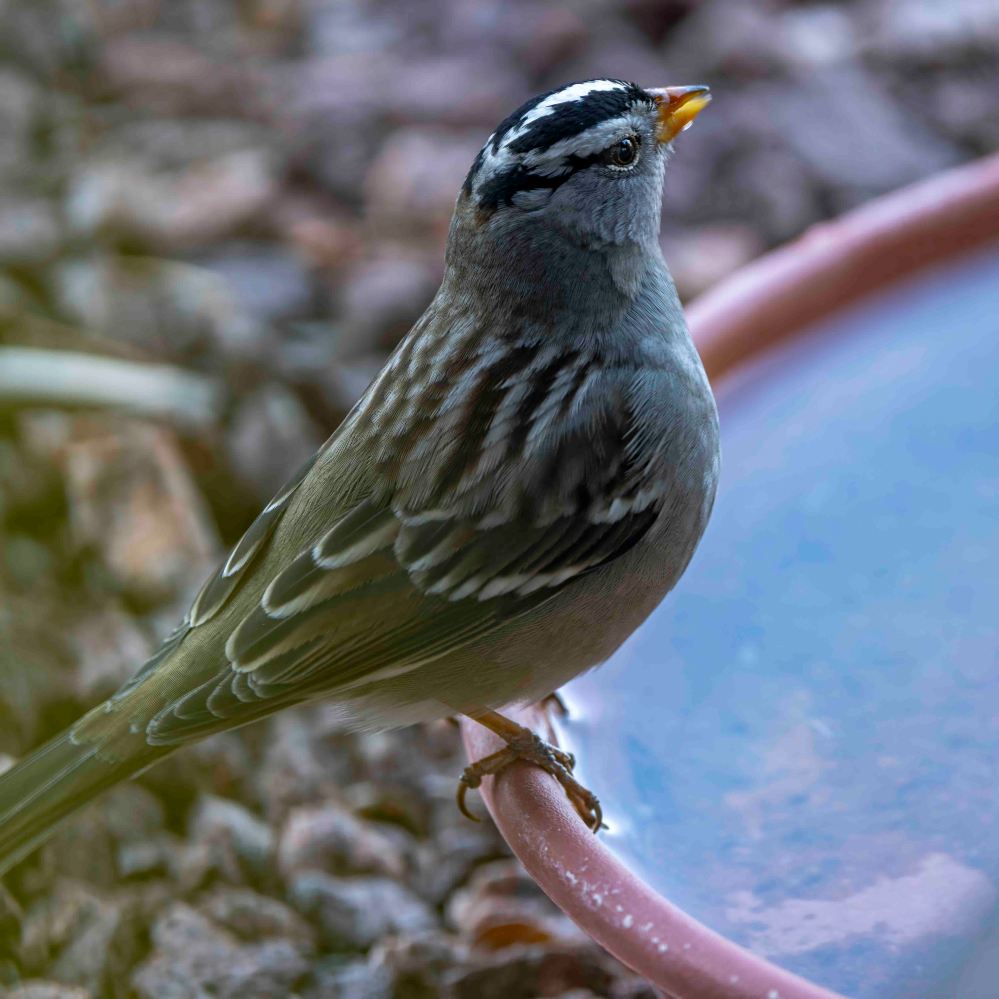
次の鳥はミヤマシシドです。裏庭の常連客です。来る時は必ず2-3匹以上で来ます。彼らは群れで行動する鳥なんですね。 The next bird is White-crowned Sparrow. It is a regular visitor to our backyard. Whenever they come, they always come in groups of two or three or more. They are birds that act in flocks.

ミヤマシトド White-crowned Sparrow

生息域は北アメリカ全土なので、大抵どこに行ってもみられる鳥です。あまりにもよく見かける鳥なので、写真がなく、慌てて撮りました。主食は虫です。 Its habitat is all over North America, so it is a bird that can be found almost anywhere you go.It is so common that I was in a hurry to take a picture of it because I didn’t have any. Its primary food is insects.

ユキヒメドリも北アメリカ全土で見られる鳥です。木が多い場所を好むようで、地面に落ちた種を食べているようです。 The Dark-eyed Junco is another bird found throughout North America. They seem to prefer areas with lots of trees, and eat seeds that have fallen to the ground.

ユキヒメドリ Dark-eyed Junco

半砂漠気候の今の家に引っ越してきてからは、あまり見ませんが、昔、カリフォルニアに住んでいた時は家の周りでもよく見かけていました。 I don’t see them much since we moved to our current residence in a semi-desert climate, but I used to see them around our house when we lived in California.

ユキヒメドリとは対照的に、アゴグロヒメドリは、この地に引っ越してきてから初めて出会った鳥です。実際、北米の南西部にのみ生息しているようです。 In contrast to the Dark-eyed Junco, the Black-chinned Sparrow is a bird I have encountered for the first time since moving to this area. In fact, they seem to be found only in the southwestern part of North America.

アゴグロヒメドリ Black-chinned Sparrow

この写真のアゴグロヒメドリはオスで、春の繁殖期だったのでアゴが黒くなってます。でも、それ以外の季節は、メスと同様にアゴも目の周りも黒くなっていません。だから、多分、繁殖期以外に見かけても私には識別できないと思います。小さい虫を食べます。 The Black-chined Sparrow in this photo is a male, and his chin is black because it was the spring breeding season. But in the other seasons, neither the jaw nor the area around the eyes are black, as is the case with the female. So I probably wouldn’t be able to identify them to you if I saw them in the non breeding seasons. They eat small insects.

次の鳥、チャガシラヒメドリの特徴は、なんといっても頭の茶色の帽子です。この鳥も、北米に生息していますが、最近は見かけません。やはり、カリフォルニア近辺に多く住んでいそうです。 The next bird, the Chipping Sparrow, is characterized by the brown cap on its head. This bird is also found in North America, but I have not seen them recently. It seems to live mostly in the vicinity of California.

チャガシラヒメドリ Chipping Sparrow

次は、ヒバリヒメドリです。草原地帯に住んでいて、地面に落ちた種や小さな虫が主食です。この鳥、顔のくっきりとした模様が、歌舞伎で見かける悪役の顔に似ていると思いませんか?すっかり好きになりました。 Next is the Lark Sparrow. It lives in grassland areas and its main food is seeds and small insects that have fallen to the ground. By the way, don’t you think the distinct pattern on this bird’s face resembles the face of a villain seen in Kabuki theater? I’ve grown quite fond of it.

こちらが、歌舞伎の舞台。雰囲気が似ていると思うのは私だけでしょうか。 Here is a Kabuki stage. Am I the only one who thinks the impression is similar?

さて、こちらはノドグロヒメドリです。アゴグロヒメドリの黒い色がアゴでストップしているのに対し、ノドグロヒメドリの黒は胸まで伸びています。 Now, here is the Black-throated Sparrow. The black color of the Black-chinned Sparrow stops at the chin, whereas the Black-throated Sparrow’s black extends all the way to the breast.

ノドグロヒメドリ Black-throated Sparrow

メスもオスも同じ外見です。広々とした低木のある場所で見つけることができます。北米南西部のみに住んでいます。 Females and males have the same appearance. They can be found in open, shrubby areas. They live only in southwestern North America.

ミドリトウヒチョウの特徴は、緑というより、明るい鶯色と言った方がいい尻尾を持っています。また、オレンジ色の帽子も見分けるのに役立っています。 The Green-tailed Towhee is characterized by its tail, which is more of a bright olive color than green. Their orange cap also helps distinguish them.

ミドリトウヒチョウ Green-tailed Towhee

生息地は北米の西部。低木に住み、種が主食です。 Habitat is western North America. It lives in shrubs, and seeds are their primary food.

ホシワキアカトウヒチョウは、他のスズメやミドリトウヒチョウより大きく、長さは、6.7-8.3 inches (17-21cm) です。 The Spotted Towhee is larger than other sparrows and the Green-tailed Towhee, measuring 6.7-8.3 inches (17-21 cm) in length.

ホシワキアカトウヒチョウ Spotted Towhee

赤い目が格好いいですよね。雑食で虫も種も食べます。北米西部のみに生息します。 They have cool red eyes. They are omnivores and eat both insects and seeds. It is found only in western North America.

最後に紹介するのはメグロトウヒチョウです。今日の鳥たちの中で一番大きい鳥です。長さが、8.3-9.1 inches (21-23cm) あります。この写真は寒い冬の日、羽毛をフカフカと膨らませているところです。 The last bird I would like to introduce is the Abert’s Towhee. This is the largest bird among the birds I introduced today. It is 8.3-9.1 inches (21-23 cm) long. This photo shows an Abert’s Towhee puffing up its feathers on a cold winter day.

メグロトウヒチョウ Abert’s Towhee

この鳥も裏庭の常連客です。夏も冬も1年を通して見かけます。でも、生息地域はとても限られていて、主にアリゾナ州、そしてその近隣州のわずかな地域のみです。 This bird is also a regular visitor to our backyard. We see them throughout the year, both summer and winter. But its habitat is very limited, mainly in Arizona and only a few areas in neighboring states.

以上、私の家の周りにいる新世界ホオジロ類の鳥たちでした。 That’s all. These are the New World Sparrows around my house.

トウヒ Towhee


最近メグロトウヒ君は主のような振る舞いをしています。Abert’s Towhee acts like he owns the backyard these days.

水鉢を独り占めにしたり、ハウスフィンチを追い出したり。挙げ句の果てにカメラまで倒してしまいます。そのおかげで尻尾の長いウィップテイルやウズラの子供の映像も撮れましたけどね。 水はみんなのものなのよ!He stays there forever at the water bowl, chases away the house finch, and on top of that, he knocks down the camera, as well. Because of that, we could get a video of a Western Whiptail lizard, and a cute quail chick, but he should behave himself. Share! OK?

共存する Coexist


おはよう! Good morning!

朝8時なのに既に36度を超えています。 Wow, it’s 8 am, already 98F today.

ズアカカンムリウズラのお父さんは、子供達がまだ起きる前から警護していました。Gambel’s quail dad was already up and guarding on the backyard fence even before his family wakes up.

ウズラに餌をあげ始めてから気づいたことがあります。同じ餌を食べに来る他の住人がいることです。 I found something since I have started feeding quails. There are more residents in the backyard coming to eat the same food and drink other than quails.

トウヒ(多分、メグロトウヒチョウ) Abert’s Towhee

サバクハリトカゲ Desert Spiny lizard

ウェスターンウィップテイル (ムチのように長い尾を持っているトカゲ) Westernwhiptail lizard 

トカゲは昆虫類が主食だと思ってたので意外でした。買ってきたウズラフードの中に、トカゲが好きそうなものが入っているんでしょうか。 Lizards eat insects. So, I was surprised that they also eat quail food. I am not sure the ingredients of the quail food from the pet-shop, but there must be something lizards also like to eat included in it.

メチャクチャ暑いので、ウズラもトカゲもぐったり。だから日影もシェアしています。今日も45度になるそうです。水の補給をしっかりして、生き延びてね。 It’s so hot that chicks, as well as lizards, don’t want to move. So they share the shade for resting. It will be 110F again today. Drink plenty of water and live through today!

毛皮コート – The coat


「暖かそうなコートですね。お出かけですか、トウヒさん?」 – “What a great looking coat! It must be very warm. Are you going out somewhere, Ms. Abert’s Towhee?”

「ご主人もいらしたんですね。」 – “Oh, her husband. You are here, too?”

「もう暖かくなって来たから、冬のコートはいらないって言ったんだけど、彼女のお気に入りだから仕方がない。」- “Yes. I told her that it’s already warm so she doesn’t need to wear the winter coat.  What can I do, that’s her favorite coat.”