Tag Archives: 天の川

夜空の写真 Night Photography


夜空の写真を専門に撮る写真家さんとは違うので、私たちは基本のカメラ設定で、ブライアンヘッドでの2回目の夜空の写真を試してみました。 Not being photographers who specialize in night sky photography, we used our basic camera settings to attempt our second night sky photo at Brian Head.

ISO 8000, f/10, 1/20 sec.

基本のカメラ設定は4つあります。 There are four basic camera settings for night sky photography.

一つ目は、シャッタースピードをマニュアル操作できる「バルブ(BULB)モード」にすること。そうすることで、暗い夜空を4秒から10秒ぐらいまで自分で時間を数えて調整できます。 The first is to set the shutter speed to BULB mode, which can be manually controlled. By doing so, you can count and adjust the time from 4 to 10 seconds in the dark night sky.

二つ目、F値は状況に合わせて、どれだけの深海度が欲しいのかで調整します。星だけだったら、絞りを目一杯開けておくといいと思います。 Second, the F value should be adjusted according to the situation and how much depth of field you want. If it’s just stars, you should leave the aperture as wide open as you can.

三つ目、ISO設定は大切です。当然ISOの数値が低いほど写真の質が良くなります。でも、夜空はとても暗いので、許せる限り数値を上げないと、シャッタースピードが1分以上必要になるかもしれません。三脚にカメラを設置して、シャッターリリースのケーブルをつけていれば手ブレはありません。だからシャッタースピードが1分でも10分でも良さそうです。でも、カメラが設置してある地球は動いています。だから10秒もカメラの目を開放していると、すべての星が点でなく、線になって撮れてしまいます。そこで、スピードはせいぜい10秒以内に収めたいわけです。 Third, the ISO setting is important. Naturally, the lower the ISO number, the better the quality of the photo. But the night sky is so dark that you may need more than a minute of shutter speed if you don’t raise the ISO number as high as you can allow. If the camera is on a tripod and the shutter release cable is attached, there will be no camera shake. So a shutter speed of 1 minute or even 10 minutes looks good. But the earth on which the camera is mounted is moving. So if you keep the camera’s eye open for 10 seconds, all the stars will be captured as lines, not dots. So you want to keep the speed within 10 seconds at most.

これでカメラの設定が90%できました。 Now the camera is 90% set up.

四つめ、暗くなったら、最後の設定をします。オートフォーカスをマニュアルに切り替えて、輝き始めた星、または月にカメラを向けてピントを合わせます。「はるか彼方の星なんだから無限大にしておけばいいジャン?」と、昔は思っていました。でも、違います。ほとんどのレンズの無限大設定は正確ではなく、「無限大」より遠くはフォーカスできないらしいです。だから自分でじっくりと焦点を合わせなければいけません。 Fourth, when it gets dark, make the final setting. Switch the autofocus to manual, point the camera at the star or the moon as it begins to shine and focus. I used to think, “Since it’s a star so far away, why not just set it to infinity?” But that’s wrong. That’s because most lenses infinity marker is not accurate and can be focused beyond infinity. So focus carefully.

ISO 4000, f/22, 0.4 sec.

さて、これで完了です。空がどんどん暗くなるのを待つのみです。 Well, that’s it. We just have to wait for the sky to get darker and darker.

私にとって、夏の夜空はわかりやすいです。天の川が南から北に流れているからです。南端にはさそり座がいます。バンちゃんの上に見えます。(右下の赤くぼやけているのが彼です。)わかりやすくペンで線を引きました。 For me, the summer night sky is easy to understand. This is because the Milky Way flows from south to north. At the southern end is the constellation Scorpius. You can see it above Banchan (the red smudge at the bottom of the photo). I drew a line with a pen for clarity.

ISO 51200, f/7.1, 7.6 sec.

空気が綺麗で邪魔な光がない場所では、星がたくさんありすぎて星座の判別が逆に難しくなります。また、それをカメラで捉えると、ますますわかりにくくなります。 In a place where the air is clean and free of obtrusive light, the sky is full of many stars scattered everywhere, making it conversely difficult to discern the constellations. The camera makes this even worse.

例えば、こちら、北に近い東の空に見える天の川です。ここには私の好きなはくちょう座が天の川の上を気持ちよく飛んでいますが、見えますか?判別できる人は、結構星座に詳しい人です。 For example, here is the Milky Way visible in the eastern sky near the north. Here, my favorite constellation Cygnus is flying comfortably above the Milky Way, can you see it? If you can identify it, you are quite familiar with constellations.

ISO 51200, f/7.1, 6.8 sec.

ここには夏の大三角形と呼ばれる一等星があるので、それが見つかれば、はくちょう座がどこかわかります。以下、同じ写真に線を引きました。 There is a first-magnitude star here called the Summer Triangle, so if you can find it, you know where Cygnus is. Below is a line drawn on the same photo.

三角形の左下がはくちょう座の尻尾です。翼を大きくひろげ、首を長くして南方に飛んでいく美しい鳥の姿が見えますか? The lower left of the triangle is the tail of Cygnus. Can you see the beautiful bird flying south with its wings spread wide and a graceful, long neck?

追記:このサイトの記事の最初のイラストはこの夏の大三角形の星座を綺麗に描いています。 https://starwalk.space/en/news/summer-triangle-asterism

PS: The first illustration in the article on this site nicely depicts the constellations of this summer’s great triangle. https://starwalk.space/en/news/summer-triangle-asterism

3,000m の星 – Stars at 10,000Feet


彗星、もういい加減見飽きたかなと思いながら、昨夜、シーダーブレイクス国定公園に行きました。ビジターセンターには10人から20人ほどの人がすでに三脚を並べて待っていました。夜9時半過ぎでもまだ明るい。- I asked myself, “didn’t I have enough with the comment already?” Still we went to Cedar Breaks National Monument last night. When we got there, 10 – 20 people were there already at the visitor center view point with tripods and cameras. It was still so bright even after 9:30pm.

10時過ぎ、誰かが「見えた!」と叫びました。それがかけ声となり、みんな一斉にカメラのファインダーを覗き始めました。- A little past 10:00pm, someone shouted “I can see it now!” And everyone started looking through the camera viewfinder.

スッキリとしたコメット。まだ日暮れどきの明かりがあるのに、肉眼でもキッチリ見えるのは、海抜 3,000m 以上だからですね。C/2020 F3 (NEOWISE)彗星が次に地球接近してくれるのは 7,000 年後だと言われています。- It was a crisp and clear Neowise comet. Because of the location, higher than 10,000 feet above sea level, we could see it with our naked eyes even before dark. C/2020 F3 (NEOWISE) comet will come close to earth again in 7,000 years.

10時15分ごろ、回りを見渡すとまだ早いけど、天の川が幽かに見えます。そして、カメラマン達もまだまだ頑張っている様子。下の写真、左下に見えるのはブライアンヘッドピークです。峰に光が点滅しているところを見るとまだまだこぞってコメットを見に登っているようです。ここよりさらに450mも高い場所です。- Around 10:15pm, I could see faintly the northern end of the Milky Way. Many photographers were still there for even better shots. In the image below, you can see a little hill at the lower left with lights on it in two lines. It’s called Brian Head Peak, 450 feet higher than the visitor center. The lights outline the road going to the top. I can imagine that many more people were there than at the visitor center because it is higher.

コメットを撮るというより、この場所に行けたことに感謝したら、優しい気持ちになりました。- I was a little relaxed last night. Instead of taking the comet pictures, I was simply grateful for being there. I know, for sure, I cannot repeat seeing this particular comet in my lifetime and neither can all the people living on earth right now. Then I felt the kinship with all the people and living creatures of earth.

駐車場にて、最後のショットです。車が行き来する中、面白い効果が出ていた中での一枚です。中央少し下の大きく光る星は木星、そしてそのすぐ左横にあるのが土星。南側から流れ出る天の川が一番綺麗に撮れます。標高 3,000m の星は、爽やかに光っていました。- The image below is the last shot from the visiter center parking lot. I got interesting effects every time a car came by with headlights and taillights on. The shining star at the center is Jupiter, and Saturn is just to the left. I think that the southern end of the milky way shows the definition much better than the other end. The stars at 10,000 feet were shining clearer and crisper than ever.

明日から一週間ほどお休みします。- I’ll have a break for a week beginning tomorrow.

彗星、昨夜は裏庭から – Backyard Comet Last Night


バンちゃんが「コメットが見えてるよ。」と叫んだので、裏庭に走りました。視力が良くない私の目ではうっすらですが、見えました。「なんだ、遠くまで出かけなくても見えるんじゃん。」と、私。 – “We can see the comet from here now!” said Banchan, so I ran to the backyard. My eyesight is not so good, but I could vaguely see it with my naked eyes. “Wow, we didn’t need to go out so far away after all.” I said.

ISO3200, 400mm, f/5.6, 2.5seconds 10:12pm July 14, 2020 at St George UT

その後、レンズをワイドに切り替えて天の川にチャレンジしました。カシオペア座がレッドクリフの上に見えます。かすかに斜めに広がる天の川。ご近所さんの外套がたくさんありすぎて、やっぱりダメですね。レッドックリフの右横には私たちのMVロックが小さく見えます。そしてその横の赤くなっている空は、なんと30km ほど北で起こっている火事です。月曜日から燃え続けていて、まだ鎮火されていません。- I changed the lens to wide angle and attempted to take the milkyway shots. I see Cassiopeia above the red cliff. The milkyway runs diagonaly from there but not so clearly. The illumination lights from neighbor’s houses made it too bright here for astrophotography. Going back to the picture below, our MV rock is visible right next to the red cliff. And next to MV rock on the right is red sky. It’s surprisingly from a fire about 20 miles north of here which started on Monday.

ISO4000, 19mm, f/4.0, 20seconds, 10:44pm July 14, 2020 at St George, UT

場所を移動して中庭から空を見上げると、ここでも星がわ〜っと降って来ています。北斗七星オコティーヨの上に広がっているのが見えるでしょうか。- I relocated myself to the courtyard. Looking up at the sky, I thought so many stars are falling on me like rain, and I saw the Big Dipper right above an ocotillo plant.

ISO4000, 19mm, f/4.0, 8seconds, 10:55pm July 14, 2020, at St George UT

昨日は夜になっても38度もある暑い日でした。オコティーヨに空から水をあげたらきっと喜びます。ついでに北斗七星さん、北の方の火事にもキラキラ光る星の水をかけて鎮火させてください。- The temperature was above 100F even after sunset last night. The ocotillo will love to have a shower from the Big Dipper. And please, Mr. Big Dipper, pour shining star water on top of the fire as well to extinguish it.

C/2020 F3 (NEOWISE) 見えた! – I Could See It!


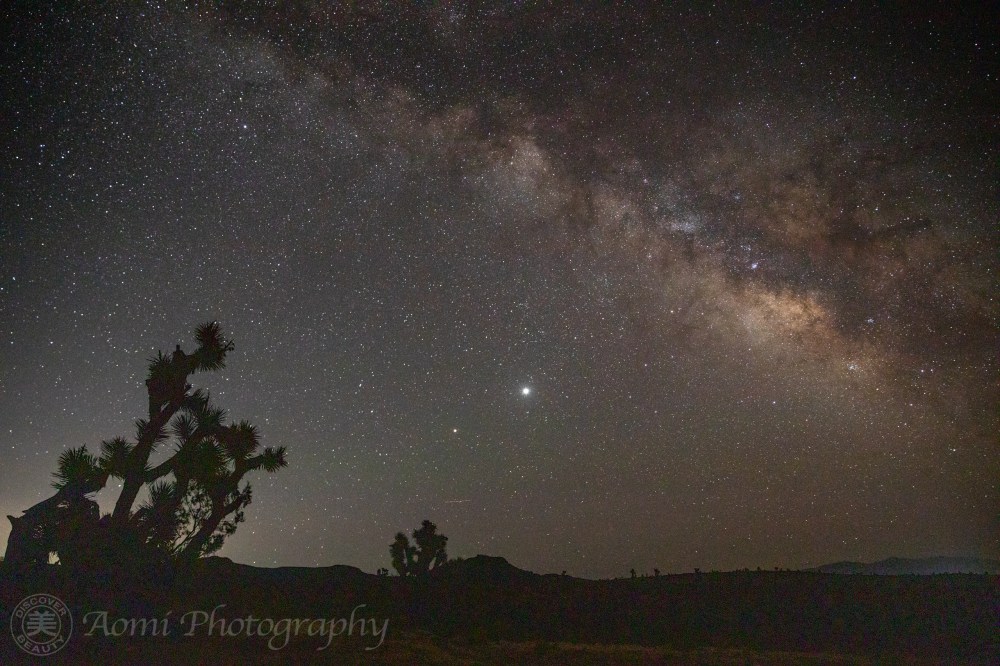
カメラ設定練習と場所の選定のため、昨夜、NEOWISE コメットを見に行って来ました。レンズの焦点を星に設定するのって、無限大だとばかり思ってたら、違ったのね。バンちゃんに設定方法を教えてもらった結果、こちらがコメットの写真。- We went out to see the NEOWISE comet last night to find a good location for viewing and to practice setting up the camera for astrophotography. I thought the infinity focus setting should work for, but I was wrong. Banchan showed me how to set the focus in a few steps, and this is the result of my first comet shot!

ISO 800, 100mm, f/2.8, 2.0 seconds

10時半頃から天の川が見えて来ました。- Around 10:30pm, the milky way became visible nicely.

ISO 6400, 24mm, f/2.8, 13.0 seconds

もっと撮っていたかったんですが、コヨーテのような野生動物の遠吠えが1-2匹どころか、たくさん聞こえて来たので、怖くなって逃げ帰って来ました。最後に見たコメットは、山に沈む寸前でした。ジョシュアツリーのシルエットが、なぜかピカソドンキホーテの絵を連想させてくれた。- I wish I could stay there longer, but I heard some wild animals like Coyotes howling. It wasn’t one or two of them, but many. So I got quite scared, and ran back to our car. This is the last shot of the comet. It was almost touching the hill. The Joshua Tree silhouette reminded me of Picasso’s Don Quixote pictures somehow.

ISO6400, 24mm, f/2.8, 13.0 seconds

夜空のダンス – Night-sky Dance


数日前、近くで開かれた国際ダークスカイ協会(IDA)のミーティングに参加して来ました。夜の空は暗いに越したことはない。でも、東京で育った私にはここ、St George, UT の夜空は十分暗いと思っていました。ところが、年ごとに人口が増えるにつれて急激に暗さを失って来たとのことです。詳しいことは、後ほど書きます。- We attended The International Dark-Sky Association (IDA) meeting a few days ago.  Of course, in my opinion, it’s best to have a dark sky to.  I thought we have pretty dark skies in St George, UT based on my Tokyo night sky experiences.  However, we are drastically losing the darkness as more people have moved into the area.  I will write about the IDA some other time.

今朝、月がもう少しで新月になる夜、11月24日の朝3時半ごろ夜空を観察して見ました。 – I woke up around 3:30 am this morning, November 24, 2019 and began to observe the night sky. It was good viewing since the Moon is almost new and the sky is dark enough.

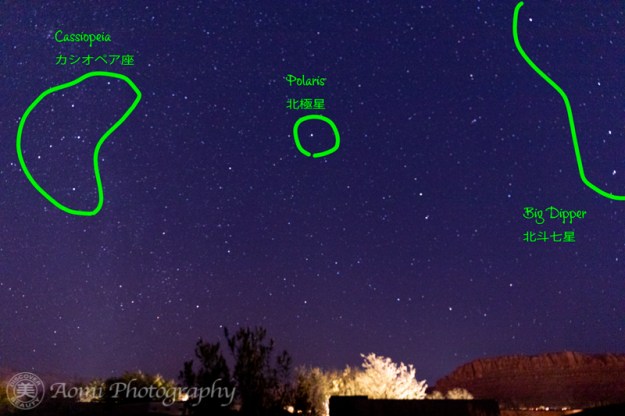
ベッドルームから見える北の空。北極星を中央にして、カシオペア座と北斗七星(切れてしまって全部は入っていませんが)です。遠くにMV Rock に続く丘が見えます。- This is a view to the North from our bedroom.  I can see Cassiopeia, Big Dipper, and Polaris every day.  The hill which leads us to MV Rock is also visible on the right.

でも、お隣さんの光・・・ But our neighbor’s lights..!

改築しているせいか、家中、家の外も全部点けっ放し状態です。朝3時、誰も住んでいないし、仕事をしているわけでもないのにこの光は困ります。この光がなかったら、天の川がカシオペア座の後ろを通って見えていたかもしれない。- The entire house lights are left on all the time.  We observe that they are under construction.  But still, it’s three o’clock in the morning, no one lives there, and no one works there.  If there weren’t those lights, I could see The Milky Way running behind Cassiopeia.

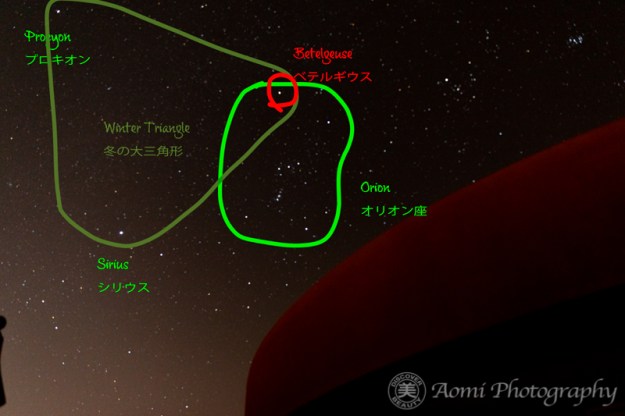
こちらは南南西のオリオン座。  – This is Orion on the SSW sky.

こちらもひどいですね。この方向には球技場があり、使用後、消灯されず夜中スタジアムライトが点いていることがよくあります。オリオン座の一等星ベテルギウス、プロキオン、そしてシリウスで作られる冬の大三角形はその向こうに天の川が流れているはずです。 – This doesn’t look good either.  There is a baseball stadium in this direction.  The extremely bright lights are quite often left on all night long even after the game.  The Winter Triangle, formed by a supergiant star, Betelgeuse, Sirius, and  Procyon is also visible.  And The Milky Way should be running through there, but it is not visible.

夏になったら綺麗に見えるはずの天の川です。それまでになんとかなるでしょうか。 – It’s known that The Milky Way is more visible during Summer.  I hope we can do something about both situations by then.

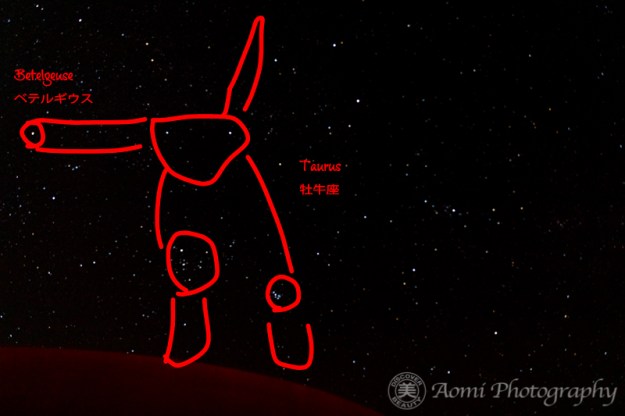
ところで、オリオン座のベテルギウスはとても人気があり、西の空の牡牛座の角にも使われています。拙い絵ですみません。牛というよりウサギみたい。 – By the way, one of the stars in the constellation of Orion, Betelgeuse, is quite popular.  It’s used for Taurus’s horn as well.  Sorry for the bad picture, but see below.

そして、次の写真が私の好きな北西の夜空です。カシオペア座とペルセウス座、そしてアンドロメダ座が見えます。ギリシャ神話を読んだことがある方はこの三者の関係をご存知かもしれない。詳しいことは明日、書きます。プレビューとして、夜空のショットを添付します。 – To me, the north-west sky is the most interesting.  It’s because I can see Cassiopeia, Perseus, and Andromeda.  If you have read Greek Mythology, you already know the relationship between them.  I will write about it in tomorrow’s blog post.  For today, I want to show this image as a preview.

最後に、もう一度北の空。北極星のある小熊座を中心にカシオペア座、北斗七星(大熊座)、見えますか?一年中北極星を中心にダンスしてくれているんです。 – Lastly, I want to show the north sky image again without notes.  Can you identify Cassiopeia and Big Dipper(Ursa Major)?  And also Polaris as a part of Ursa Minor in between them?  They are there all year round, dancing around Polaris.