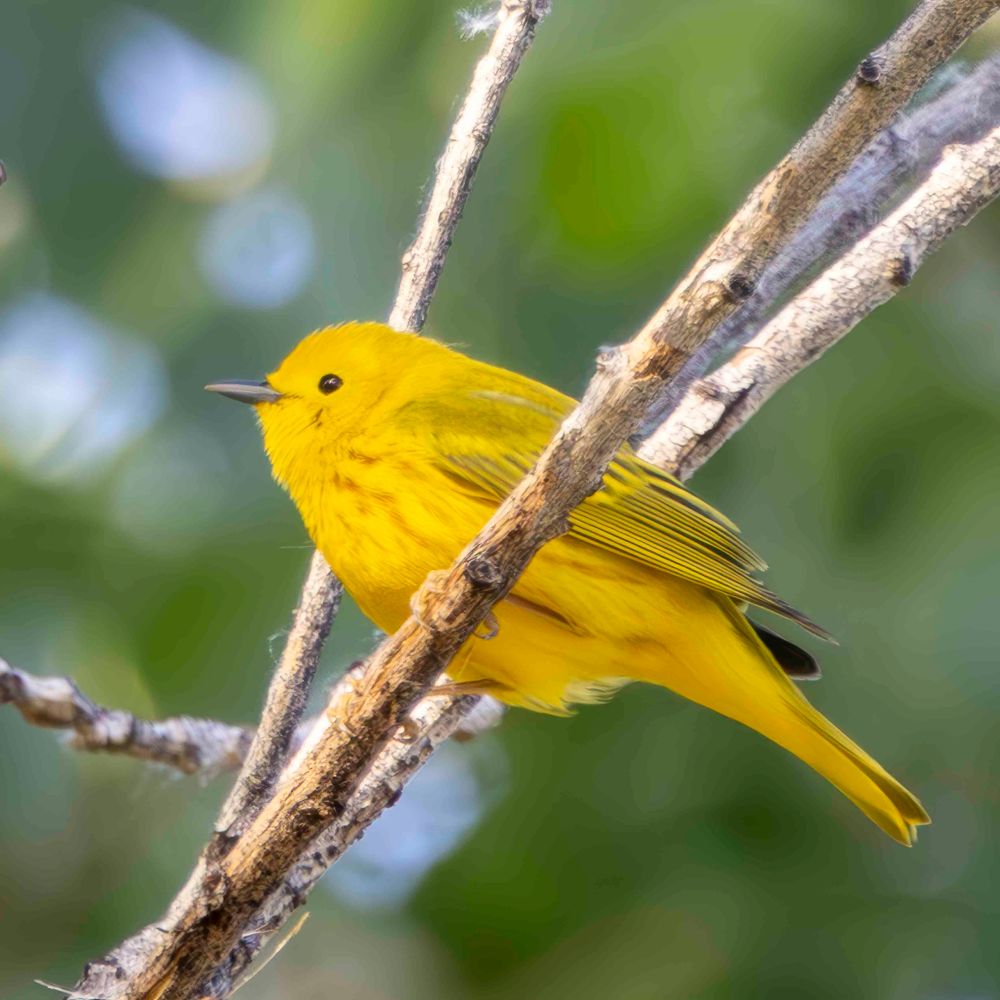
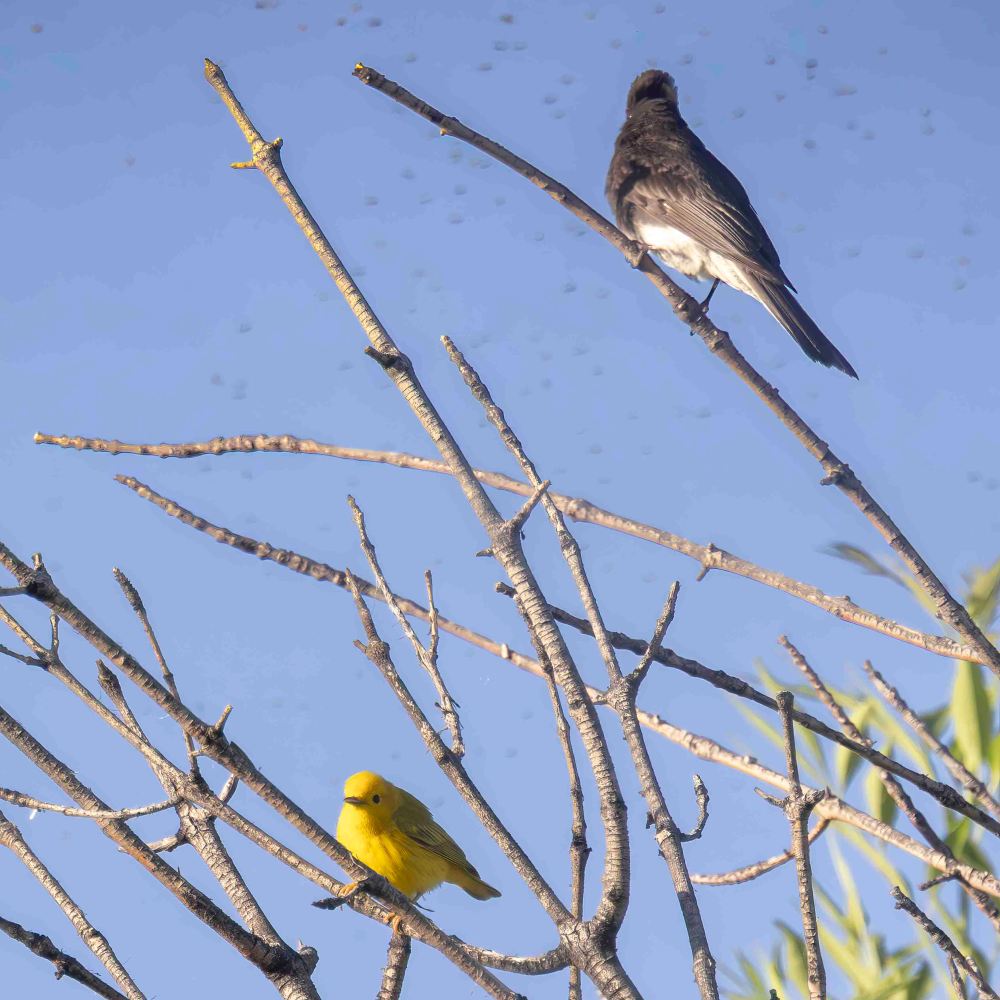
キイロアメリカムシクイです。 This is a Yellow Warbler.
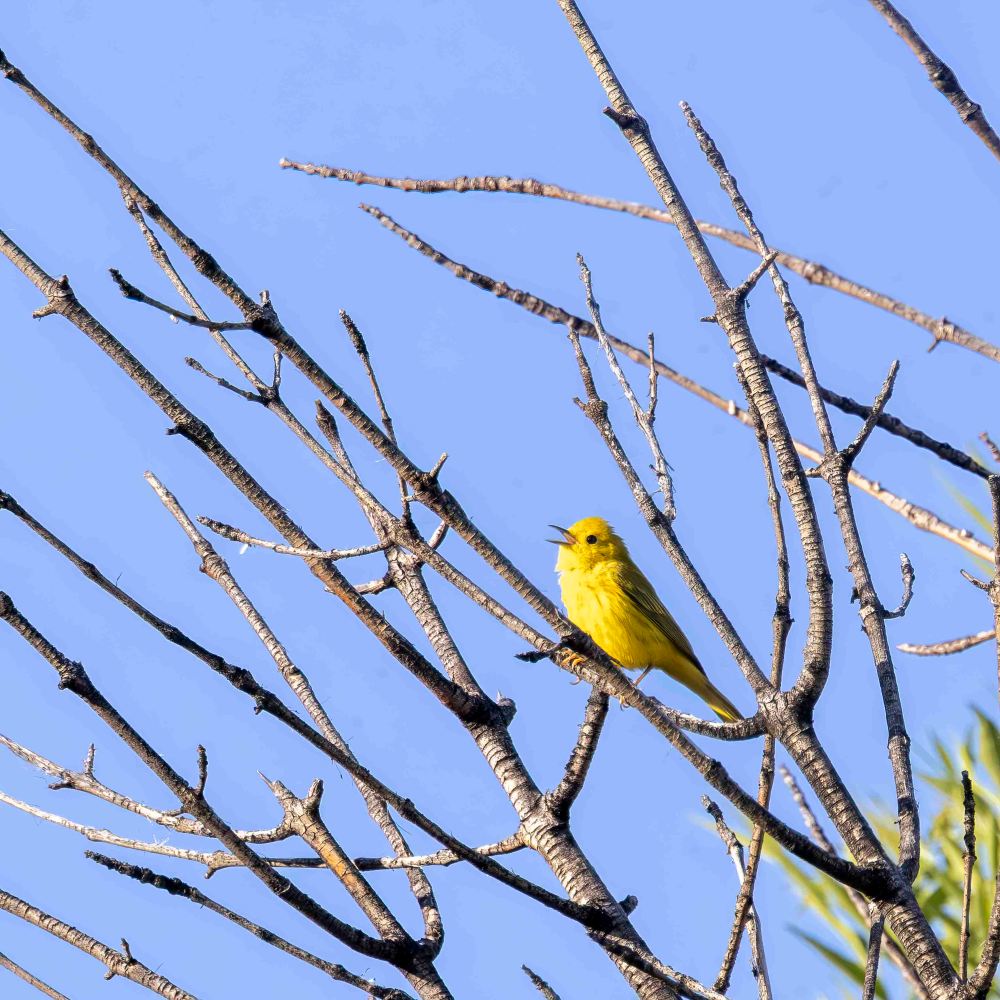
アメリカムシクイ科には120の種が属していますが、その半分は渡り鳥です。この科に属するキイロアメリカムシクイも渡り鳥なので、春になると出身地の中南米を出発し、北上して北米全土に散らばっていきます。そして9月ごろには再び南に帰っていくので移動が始まるらしいです。 About 120 species belong to the family Parulidae, New World Warblers, half of which are migratory birds. The Yellow Warbler, which belongs to this family, is also a migratory bird, so in spring it leaves its native Central and South America and travels northward, scattering all over North America. Then, around September, they start their migration as they return to the south again.
5インチ(12cm)しかない小さな鳥なのに、毎年遠路を移動するなんて、元気な鳥だなあ。 It’s a small bird, only 5 inches (12 cm) long, and yet it’s so energetic that it travels a long way every year.
昔から渡り鳥の観察をしている方々は多いと思いますが、最近はテクノロジーの発達で彼らの行動がさらに精度を持ってわかるようになりました。National Audubon Society の管理するBird Migration Explorer は、それぞれの鳥の行動パターンを視覚的に教えてくれます。 Many people have been watching migratory birds for a long time, but technology has recently made it possible to see their behavior with even greater precision. Bird Migration Explorer, managed by the National Audubon Society, provides a visual representation of each bird’s behavior patterns.
こちらがキイロアメリカムシクイの移動マップです。 Here is the migration map of the Yellow warbler.
このページによると、目下、移動の真っ盛りなようです。 According to this page, it appears that they are in the midst of a migration.
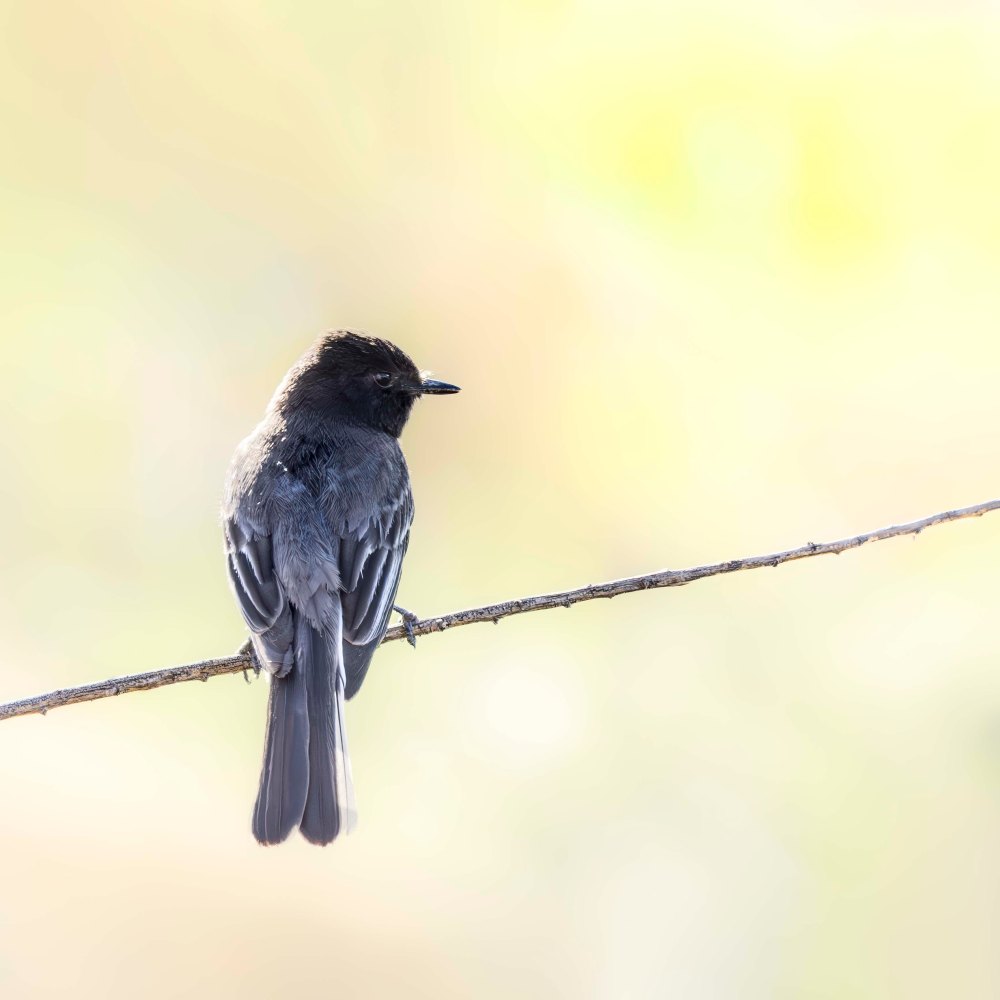
さて、前回のブログでこの鳥とクロツキヒメハエトリには決定的な違いがあると書きました。 Now, in my last blog, I wrote that there is a crucial difference between this bird and the Black Phoebe.
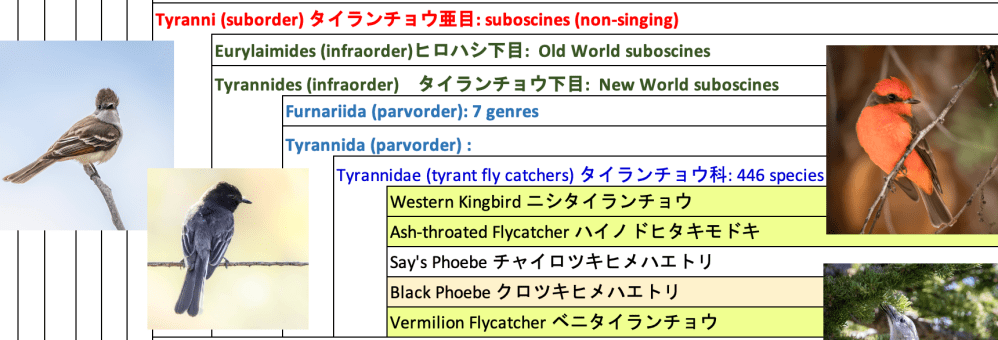
両種とも虫を食べる鳥なのに違う亜目に分類されています。分類史を見ると過去同じ目に分類されていた時期もあったようですが、DNA研究によってはっきりとした違いがわかってきました。それと共に分類表も大幅な変更が所々で見られます。実際、私の分類表も去年始めた頃から多くの部分でアップデートしました。この分だと、今後も更なる変更が起こりそうです。 Both species are classified in different suborders, even though they are both insect-eating birds. Their taxonomic history shows that there was a time when they were classified in the same order, but DNA research has revealed clear differences. Along with this, the taxonomy tables have changed drastically in many places. In fact, I have updated many parts of my classification table since I started last year. At this rate, more changes are likely to occur in the future.
再び、話を戻して、両者の違いですが、科学的には鳴管と呼ばれる部分の発達の違いがまず挙げられます。でも、個人的には彼らの虫の捕食の仕方が目に見えて決定的に違うと言いたいです。 Again, going back to the subject, the difference between the two, scientifically speaking, is first of all the difference in the development of the part of the body called Syrinx (the sounding tube.) But personally, I would say that the way they prey on insects is visibly and definitely different.
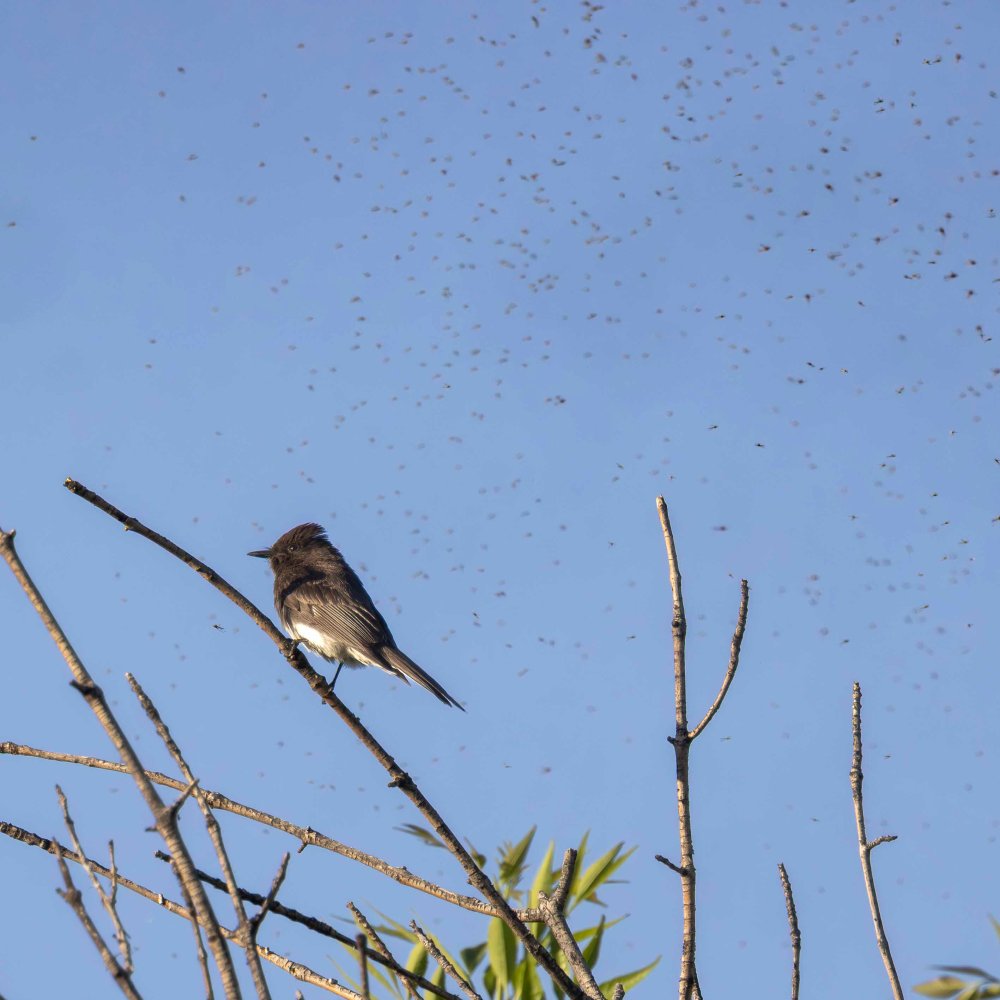
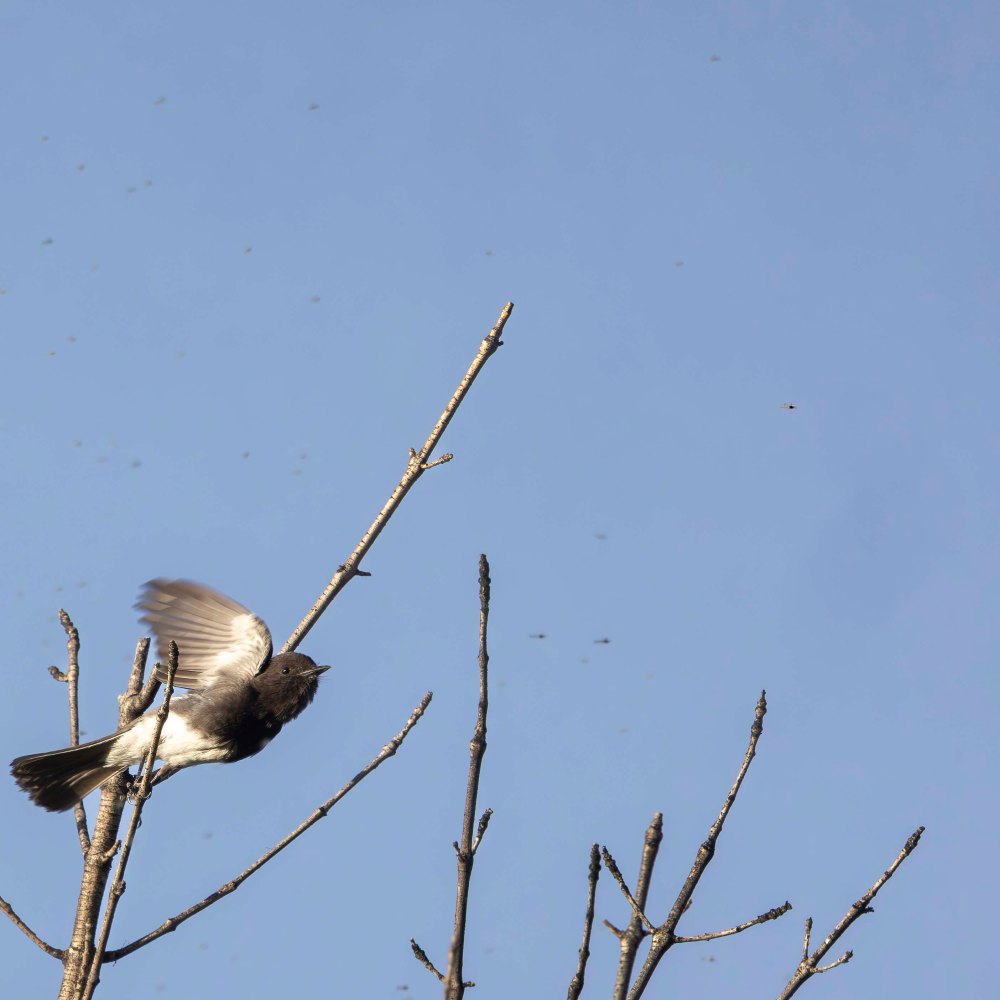
- クロツキヒメハエトリは空中の虫を嘴を大きく開けて空中で捕食します。ツバメやヨダカ、アマツバメも空中捕食組ですね。 The Black Phoebe preys on aerial insects with its beak wide open in mid-air. Swallows, Nighthawks, and Swifts are also airborne predators.
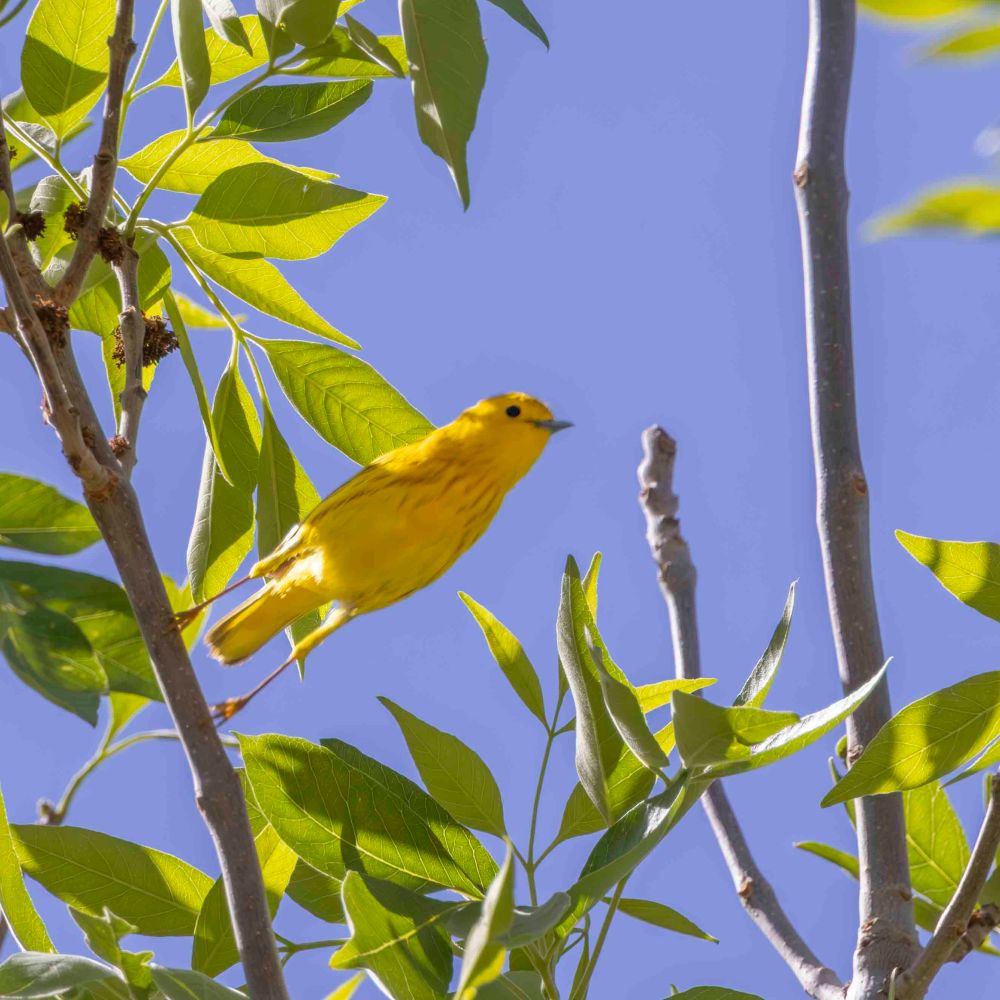
- キイロアメリカムシクイは低木の茂みの中深く入り込み、葉の裏に潜んでいる昆虫(主に毛虫など)を捕食します。そこし違いますが、キツツキも空中ではなく、木の中に潜んでいる昆虫を探し出すところが宝探しのようなので宝探し捕食組と呼びます。(私の独断の呼び方です) The Yellow Warbler goes deep into shrubby bushes and preys on insects (mainly caterpillars) hiding behind leaves. Woodpeckers are quite different from Warblers, but I think (my own opinion) they are the same in that they search for insects hidden in the trees rather than in the air.
裏庭には多分このメグロトウヒチョウが巣を作っているのではないかと思われます。 In other bird news, there is probably a nest of this Abert’s Towhee in our backyard.
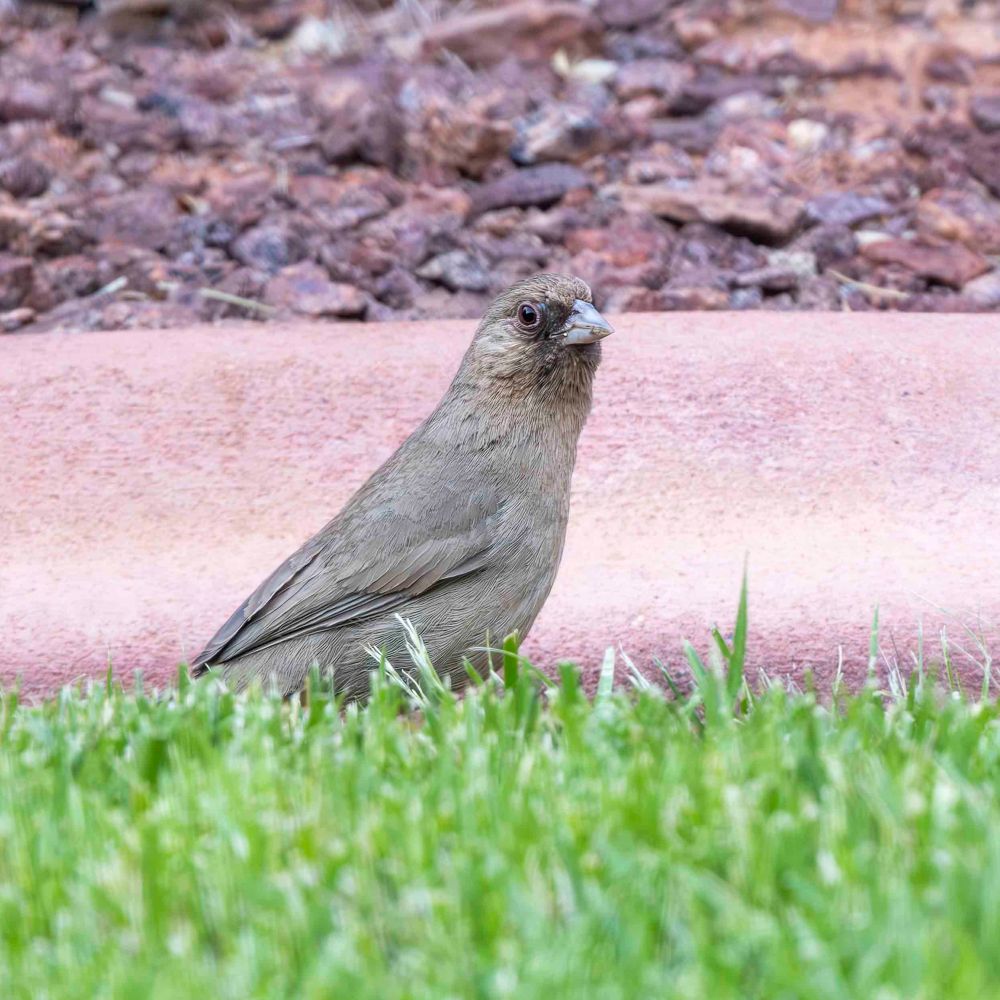
多分、このバラの茂みの奥の方。 Probably at the back of these Rose bushes.

しばらく雨が続いていましたが、今日はついに快晴となりました。 It had been raining for a while, but today it finally cleared up.
この季節は、私たちの周りの自然がソワソワ、ワクワクしていて毎日が落ち着きません。 This is the season when the nature around us is so energetic and full of life and every day is exciting.
今週末の土曜日はグローバル ビッグデー です。私も初めてなのでよくわかっていないのですが、裏庭の鳥の観察だけでもして参加してみようかと思っています。 This coming Saturday is the Global Big Day. I don’t know much about it since it’s my first time. But I’m thinking of participating just to observe the birds in my backyard.




 aomi3 now