Tag Archives: Falkland Islands

シャグロック Shag Rocks


サウスジョージア島からフォークランド諸島に向かう途中に6島の小島があり、シャグロックと呼ばれています。En route from South Georgia to the Falkland Islands, there are six small islands known as Shag Rocks.
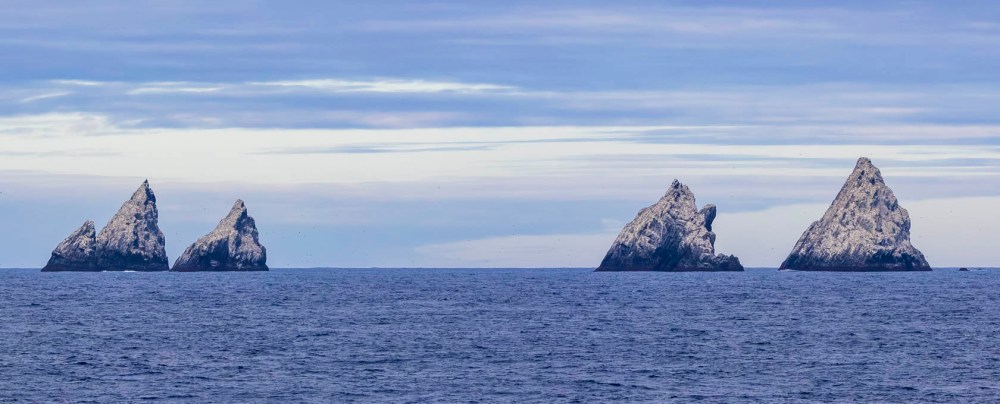
シャグは英語で鵜のことです。これらの小島にはシャグが住んでいることからシャグロックと呼ばれるようになりました。 Shag is aka cormorant. These small islands came to be called Shag Rocks because shags inhabit them.
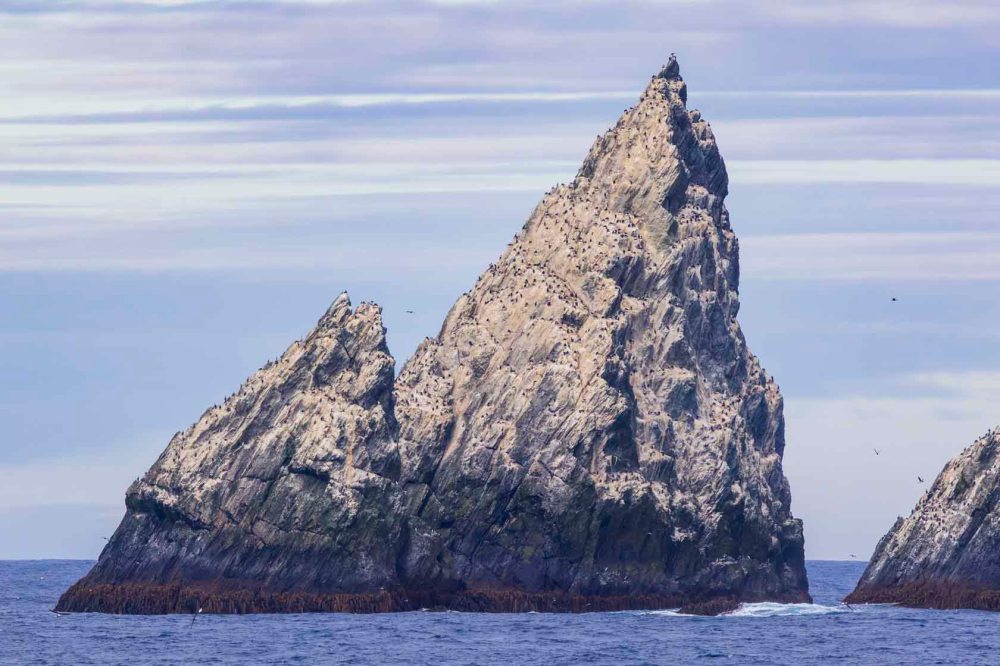
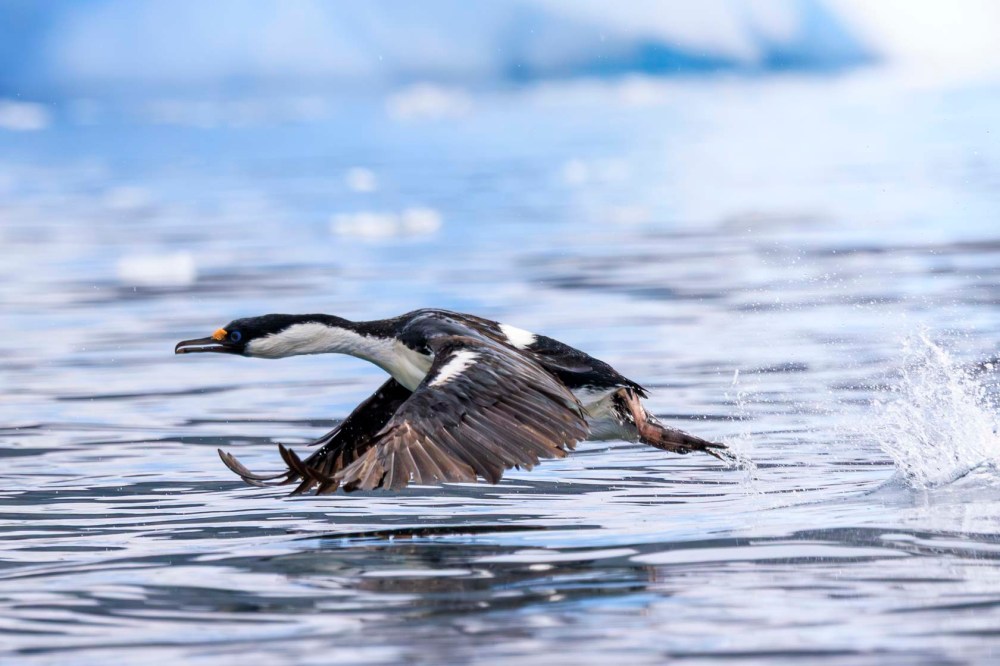
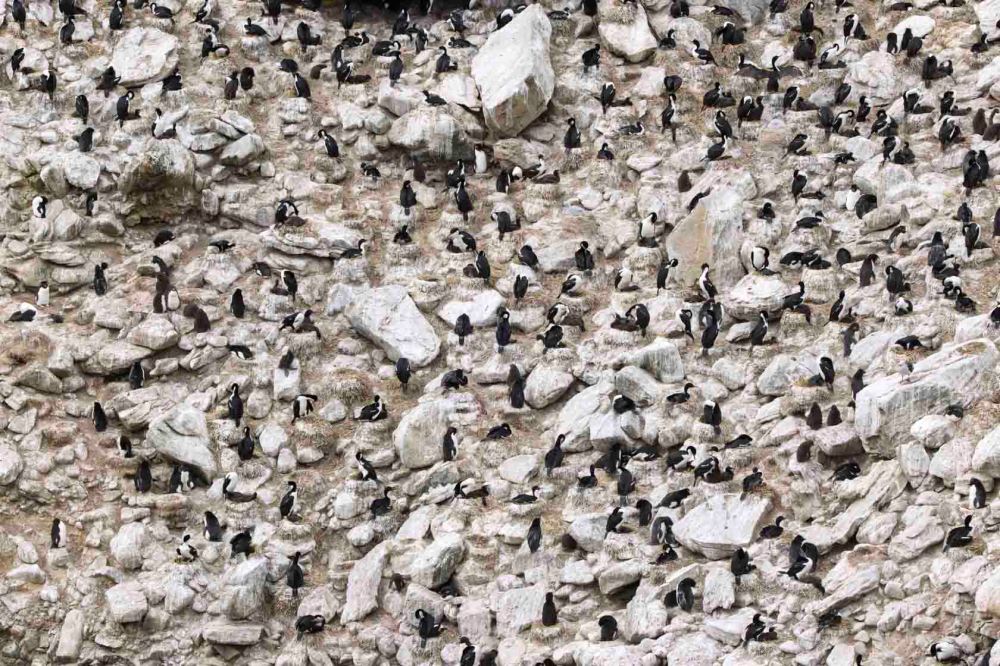
ナンキョクムナジロヒメウが岩の表面を埋め尽くしていました。 この種は南極からフォークランド諸島ぐらいまでの緯度に住んでいます。(注: 日本語ではこの鳥の名前は一つですが、英語では Antarctic Shag, Antarctic Commorant, Imperial Shag, Imperial Commorant, Blue-eyed Shag など、多くの名で呼ばれていますが、すべて同じ鳥です。始めは混乱しました。) Antarctic Shags covered the rock surface. This species inhabits latitudes from Antarctica to the Falkland Islands. (Note: While this bird has a single name in Japanese, it is known by many names in English – Antarctic Shag, Antarctic Cormorant, Imperial Shag, Imperial Cormorant, Blue-eyed Shag – all referring to the same bird. I was initially confused.)
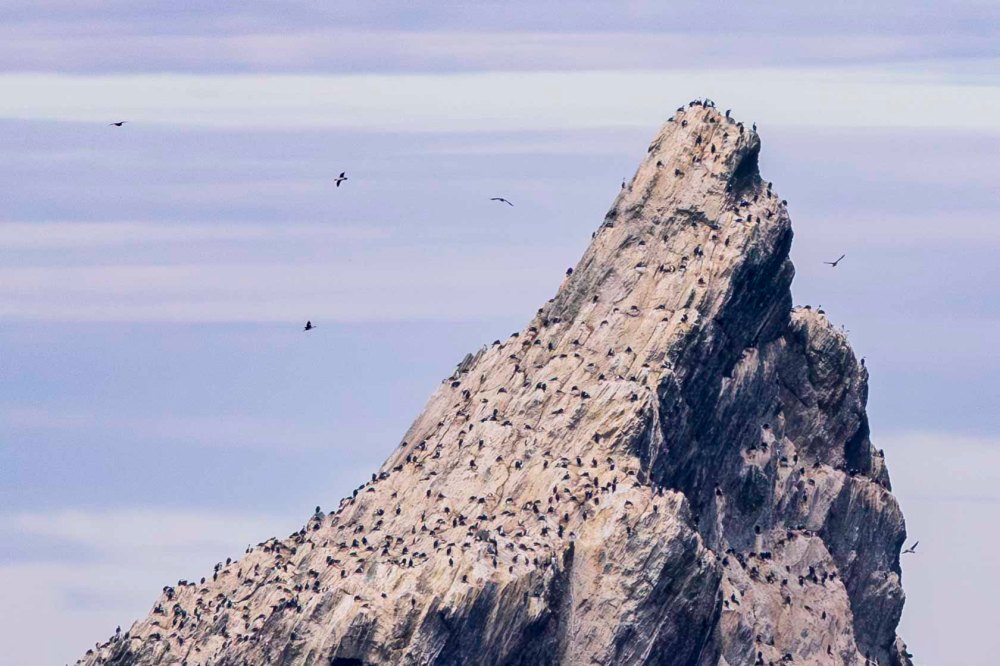
南極初日に雪の中、この鳥とペンギンと間違えて以来、行く先々で数千枚もの写真を撮って来ました。それにしてもこの量は圧巻です。 Ever since mistaking this bird for a penguin on my first day in Antarctica amidst the snow, I’ve taken thousands of Shag pictures wherever I’ve gone. Even so, this sheer volume is truly impressive.
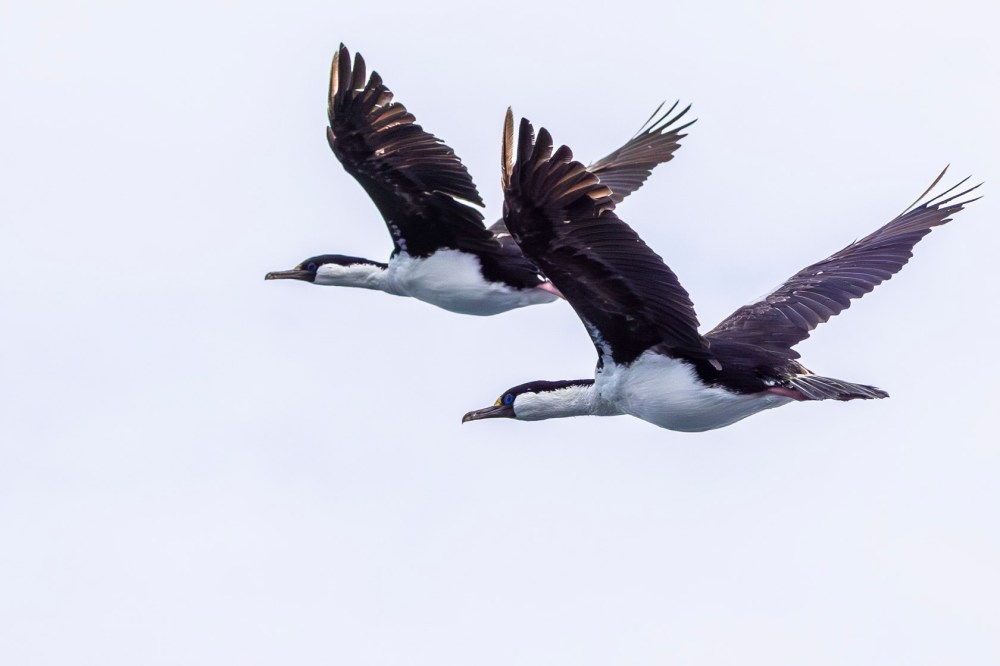
船の甲板に出ると、大量のヒメウが上空を飛んでいました。その量の多さに圧倒されました。 Upon stepping out onto the ship’s deck, I was overwhelmed by the sheer number of shags overhead.
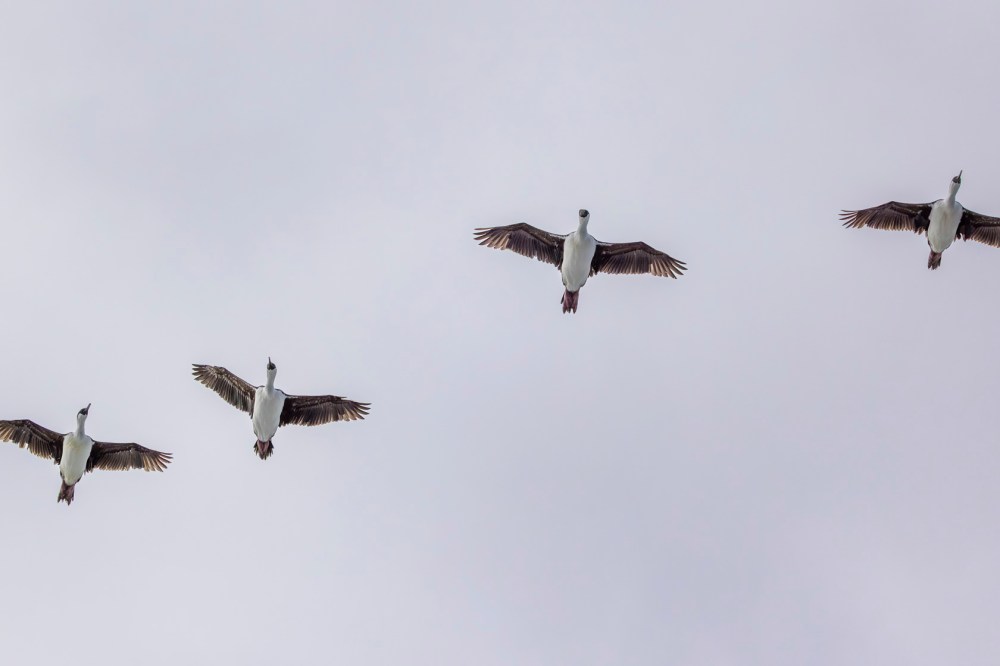
その中の数羽は船の上に舞い降りて来そうでした。 Some of them seemed poised to alight upon the ship.
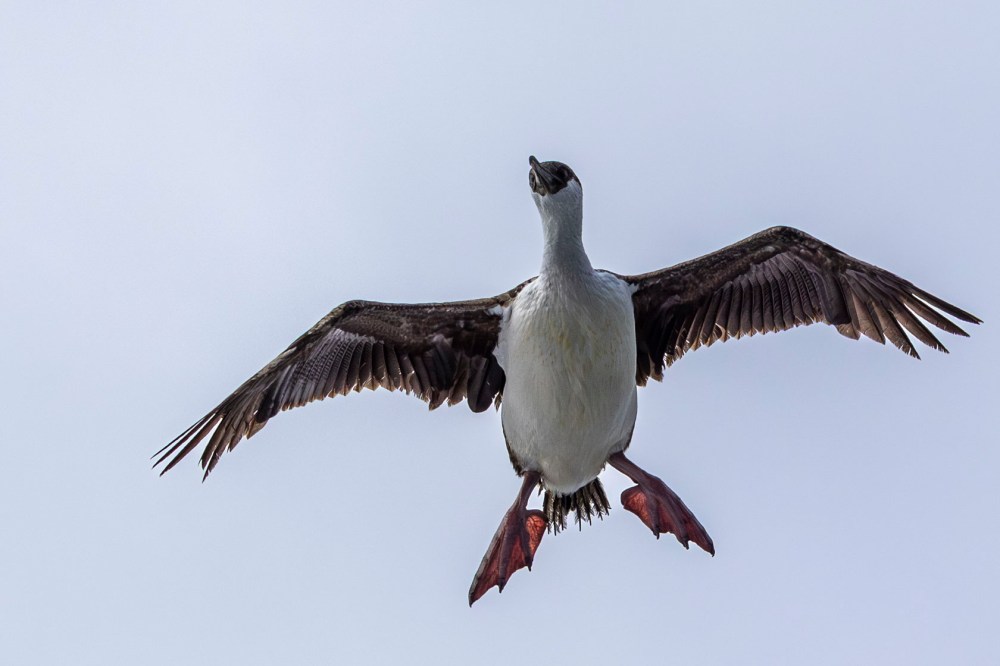
そのおかげで真下から飛ぶ姿を観察することができました。 Thanks to that, I was able to observe it flying from directly below.
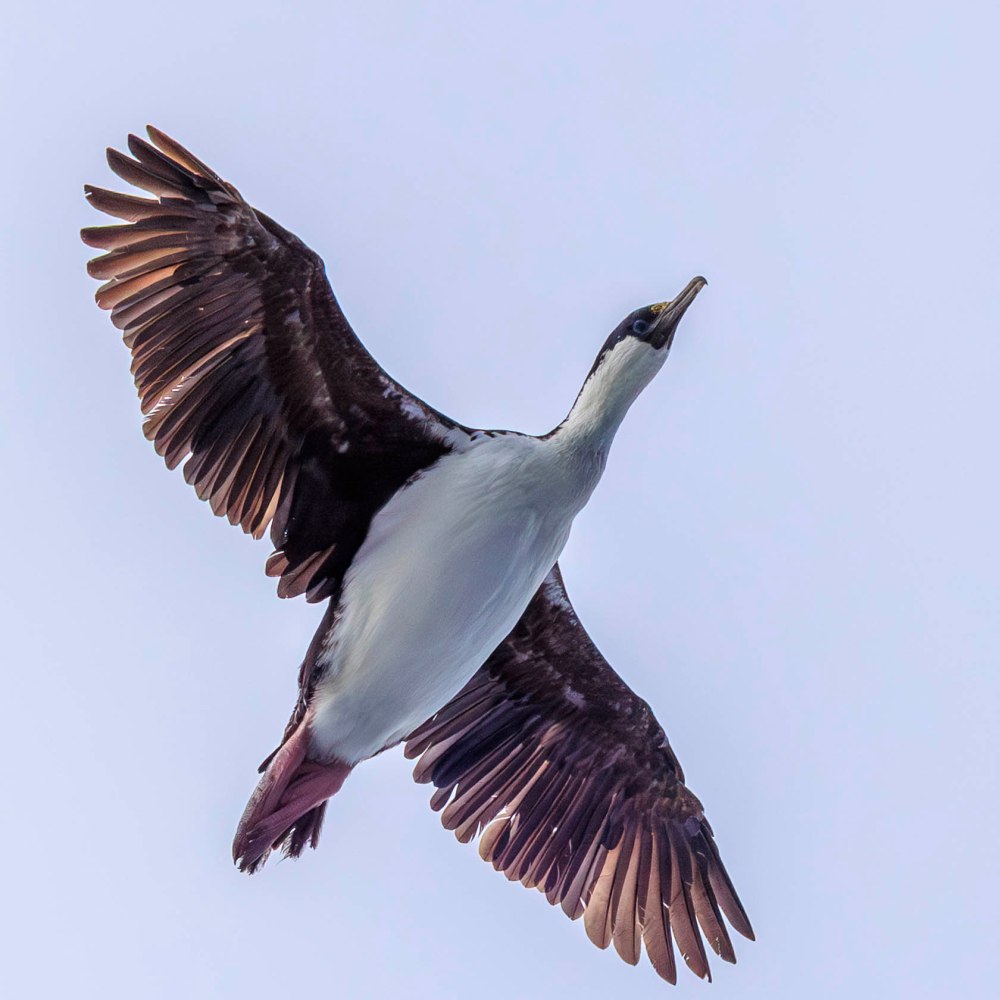
こちらはヒメウが海面に急降下する直前の姿です。そのあとは追いきれませんでした。 These shots below are the moment just before the Shag dives steeply towards the sea surface. After that, I couldn’t keep up.
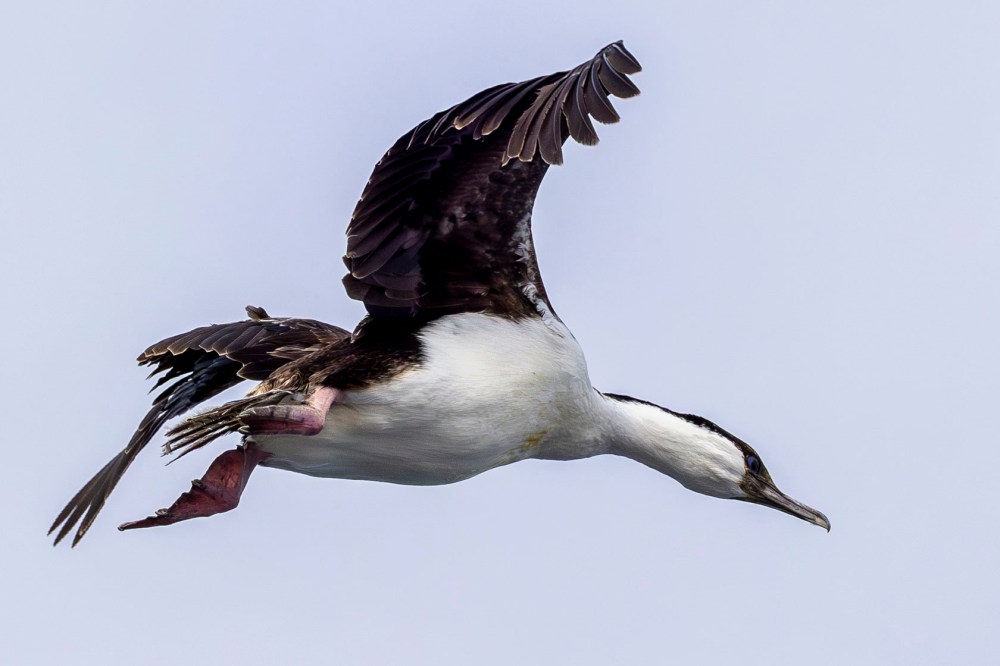
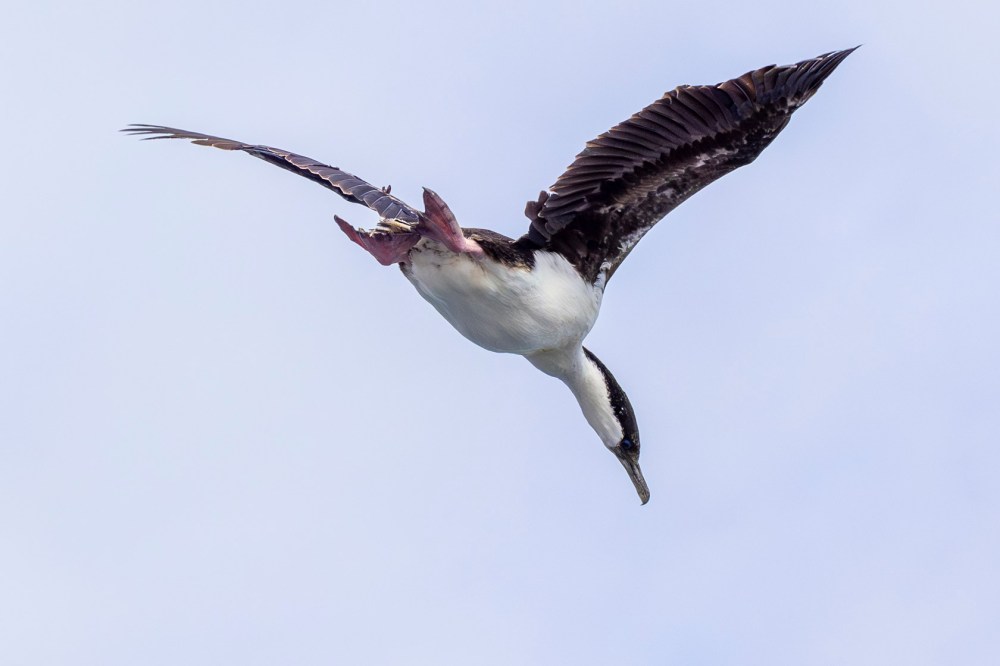
こうして海中深くまで潜り魚を捕まえます。 This is how they dive deep into the sea to catch fish.
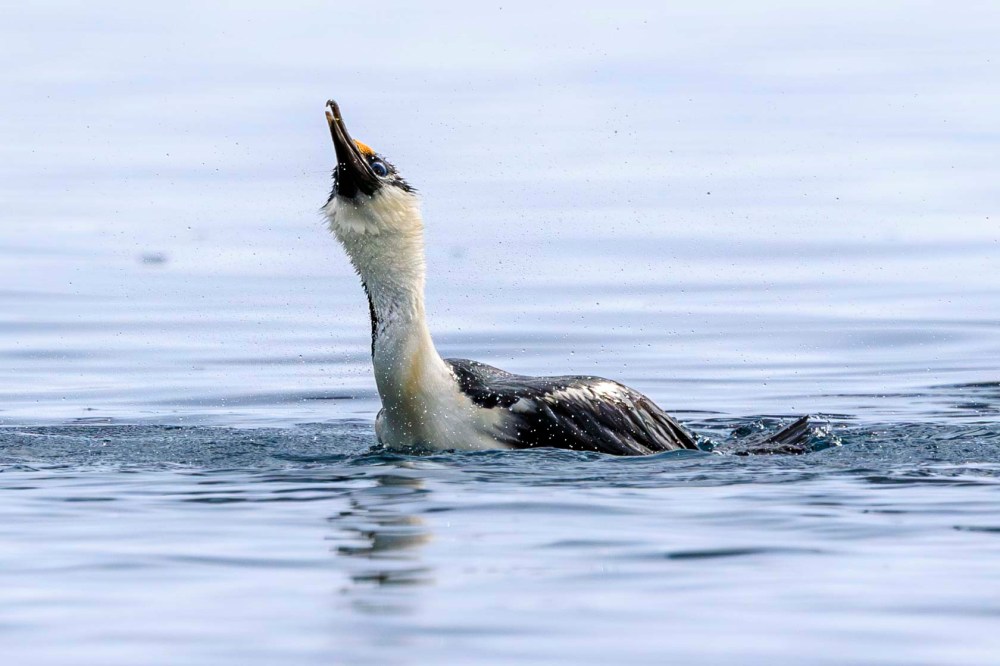
南極のナンキョクムナジロヒナウ Antarctic Shag at Antarctica

野生動物の行動を観察するのは本当に楽しいですね。 Observing wildlife behavior is truly delightful.
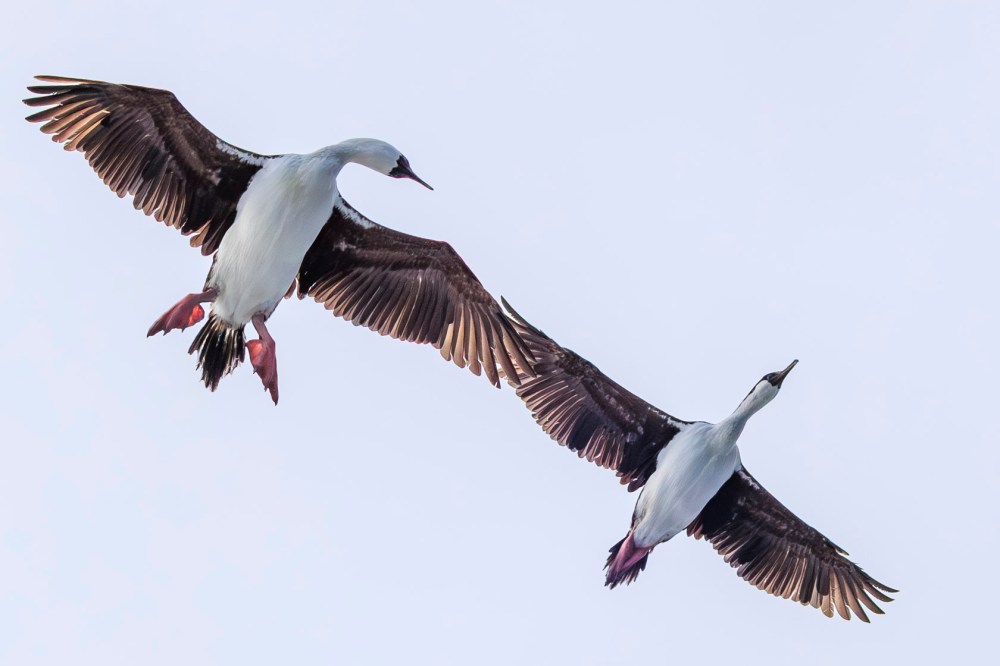
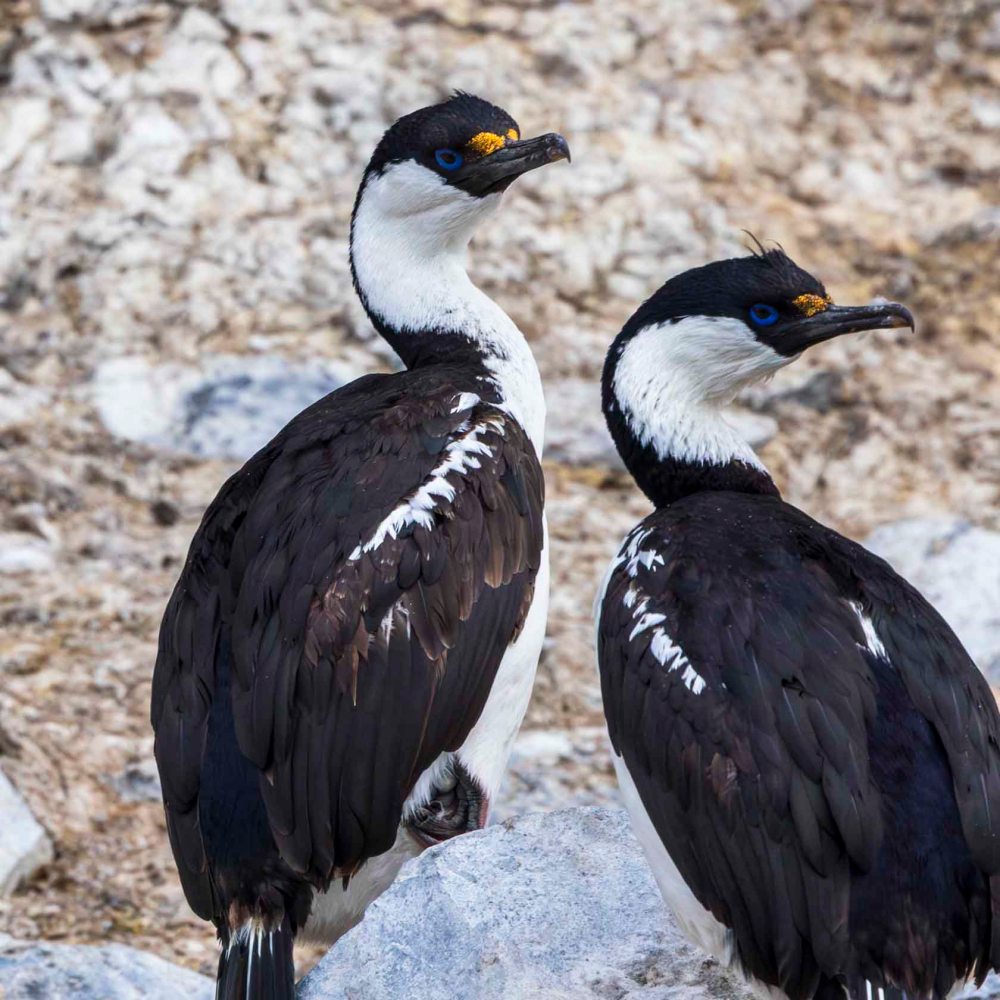
ところで、近くから観察できたおかげで気がついたことがありました。ナンキョクムナジロヒメウの目は青いのだと思っていました。遠くから見るとそう見えるんですね。 On another note, observing them up close revealed something I hadn’t realised before. I’d always thought the eyes of the Antarctic shag were blue. It turns out that’s just how they appear from a distance.
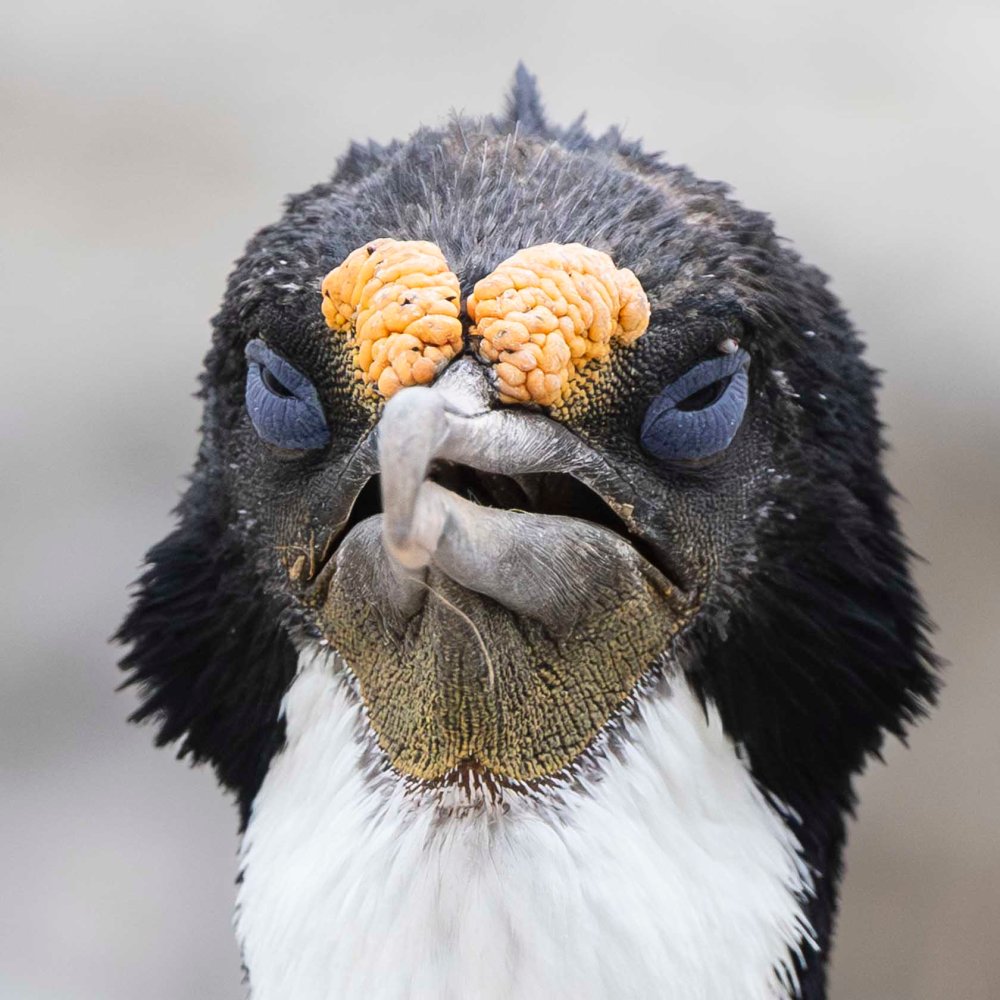
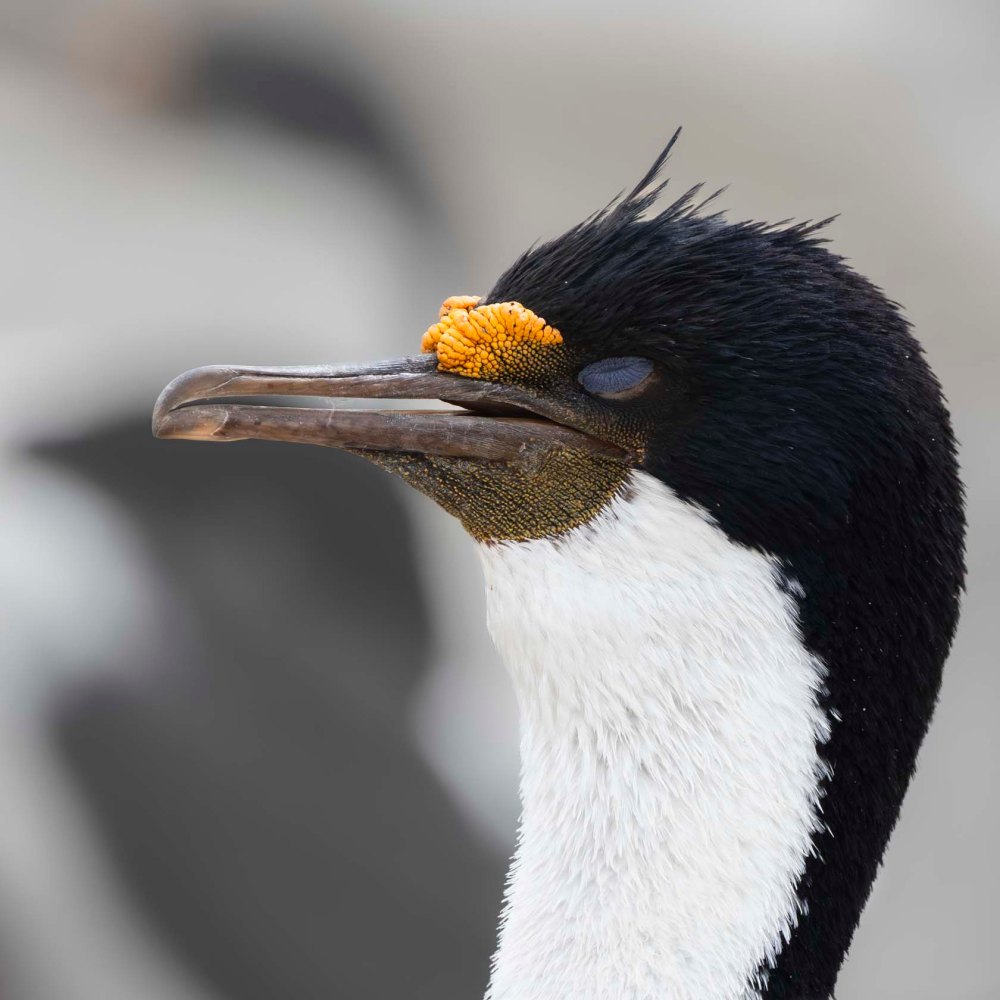
こちらの写真は、お昼寝最中のナンキョクムナジロヒメウですが、目を閉じていても青い。ということは、青い部分は目の周りにある皮膚なんですね。 These photographs show Antarctic shags in the midst of their afternoon nap, yet even with their eyes closed, it appears blue. This indicates that the blue colouration is actually the skin surrounding the eyes.
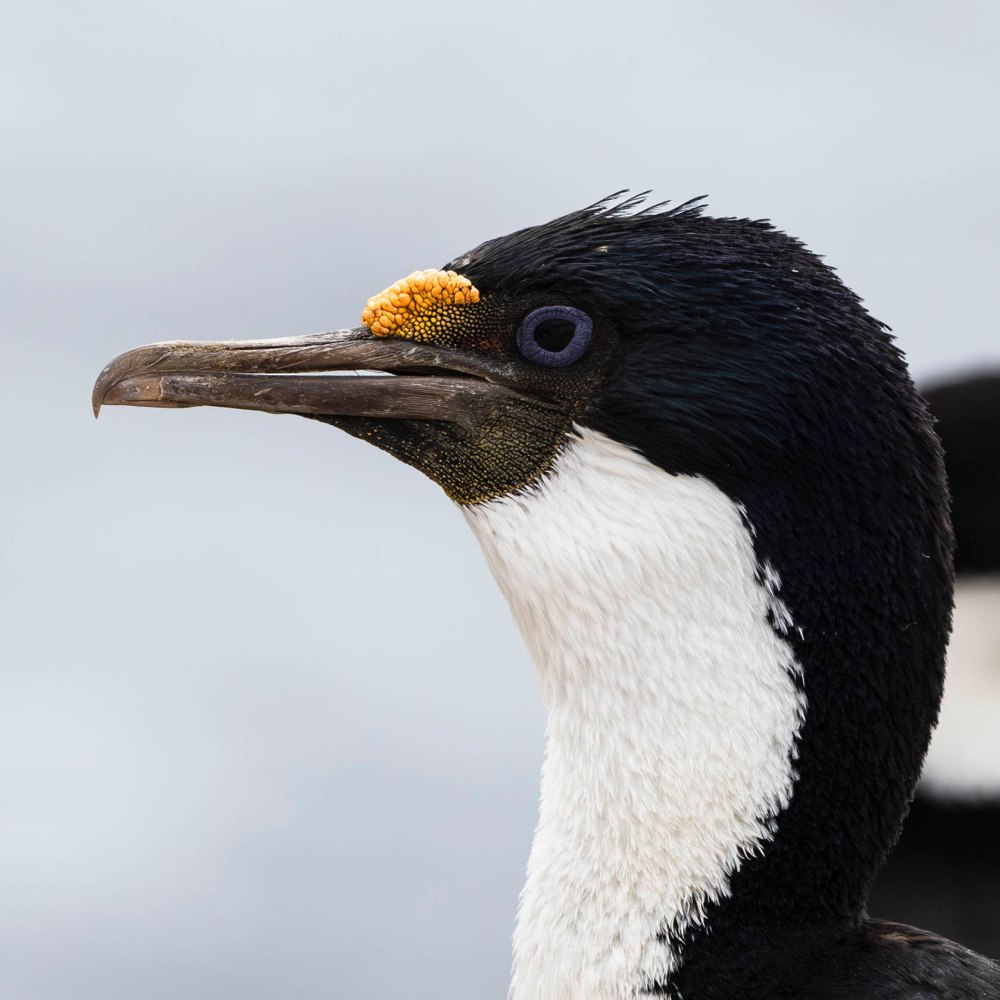
この角度が一番いいですね。This angle is the best.

場所は変わってフォークランド諸島、例のシェアハウスの光景です。 The scene shifts to the Falkland Islands, back to that shared house.
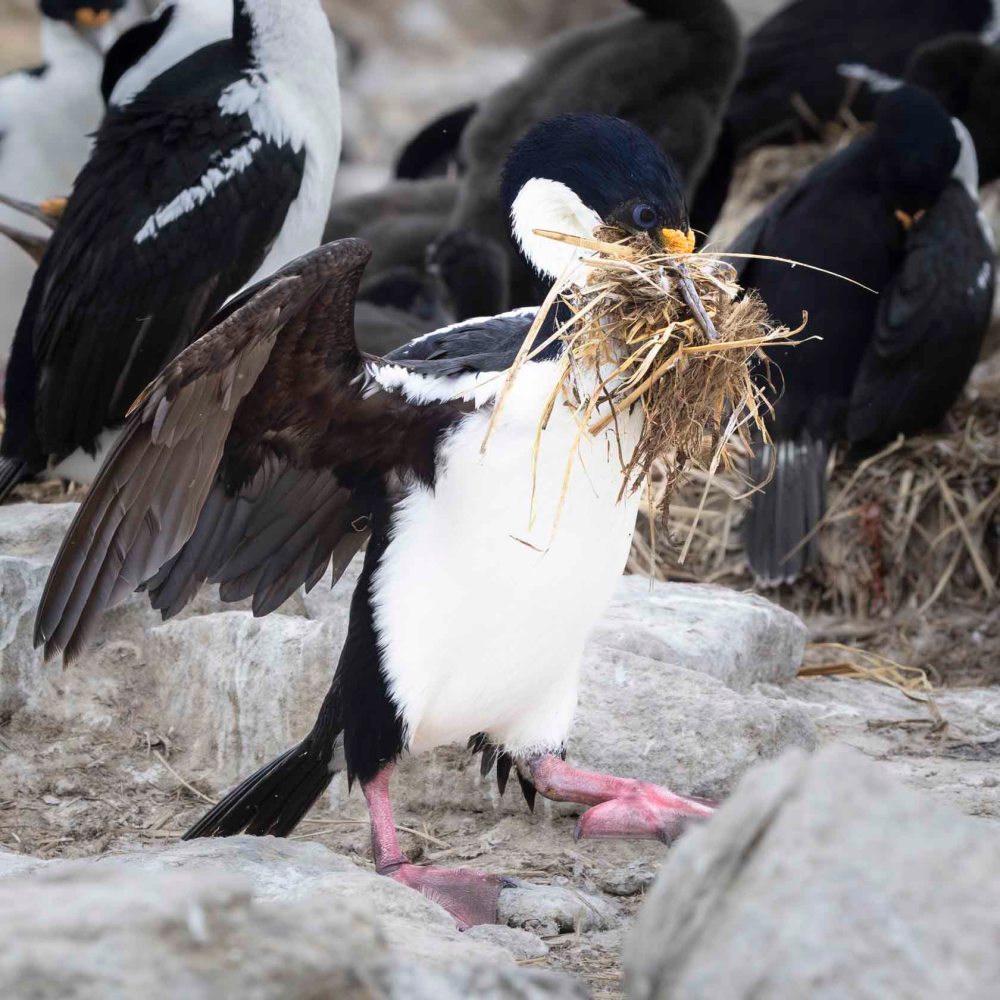
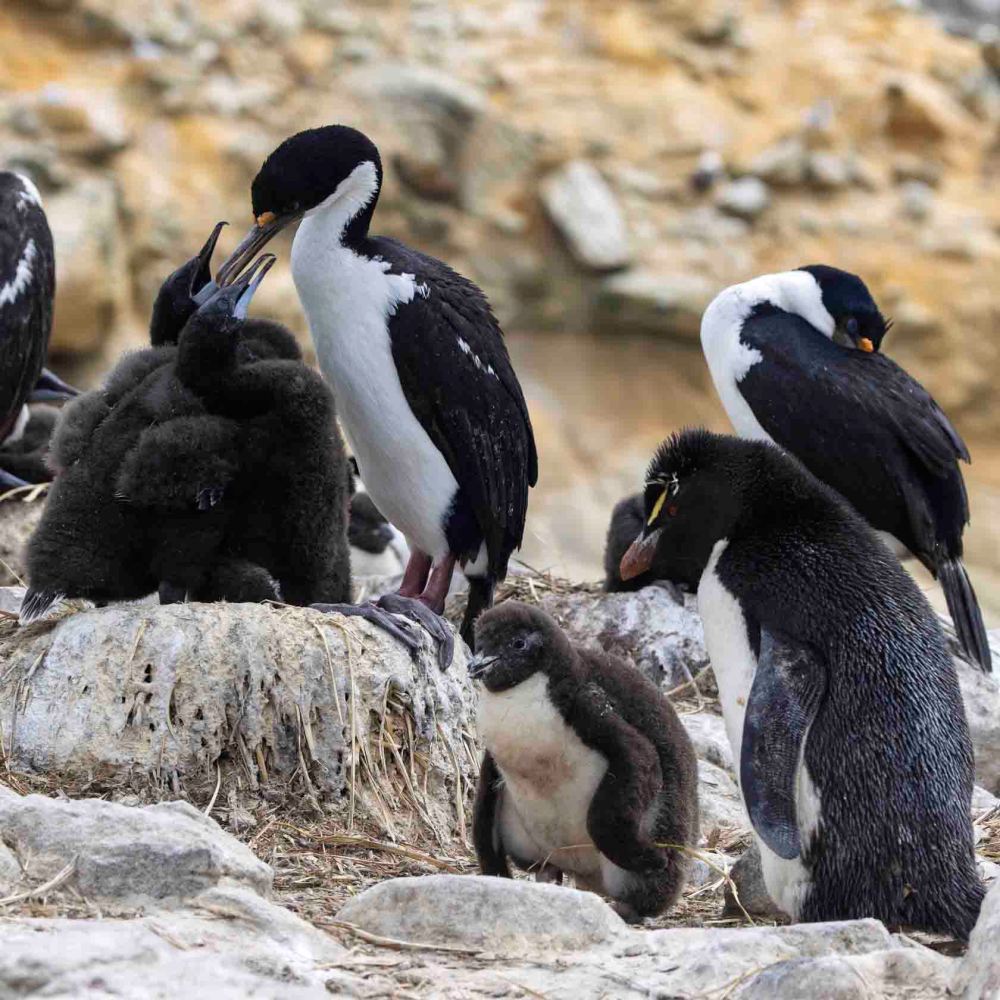
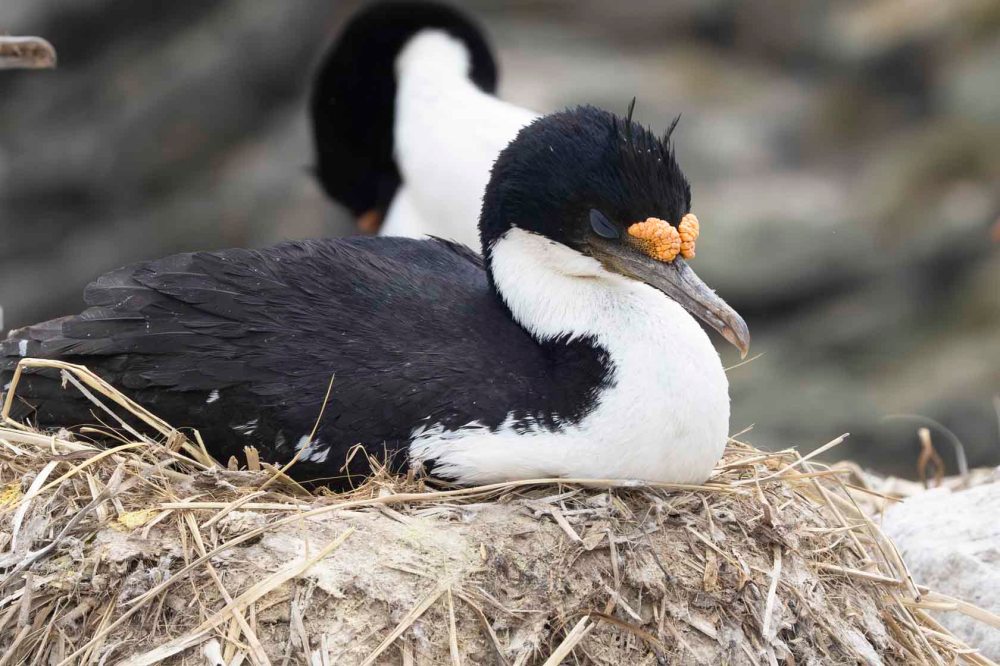
まだ巣作りをしている最中のヒメウや、まだ卵を温めているおかあさんがいました。 There were Antarctic shags still busy building their nests, and mothers still brooding over their eggs.
こちらはすでに孵化したヒナの世話をするヒメウたちです。 These are the Shags tending to their already hatched chicks.
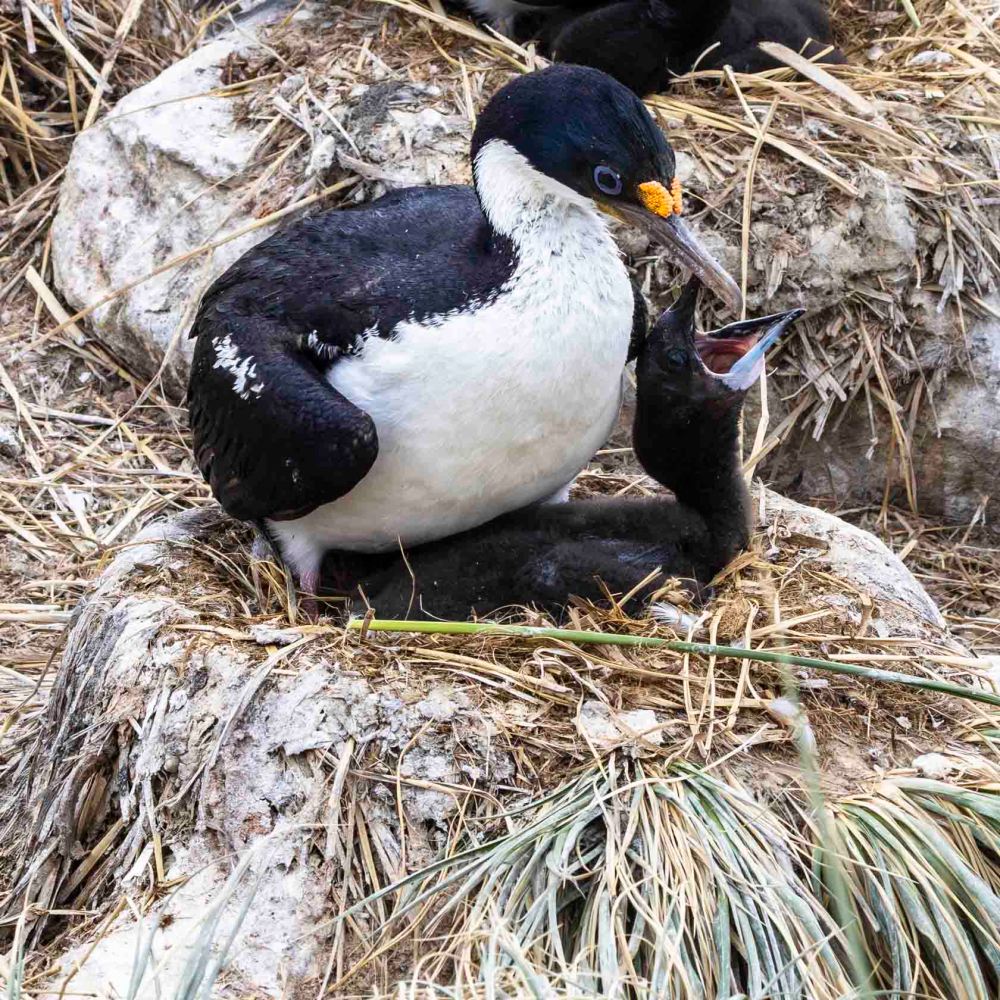
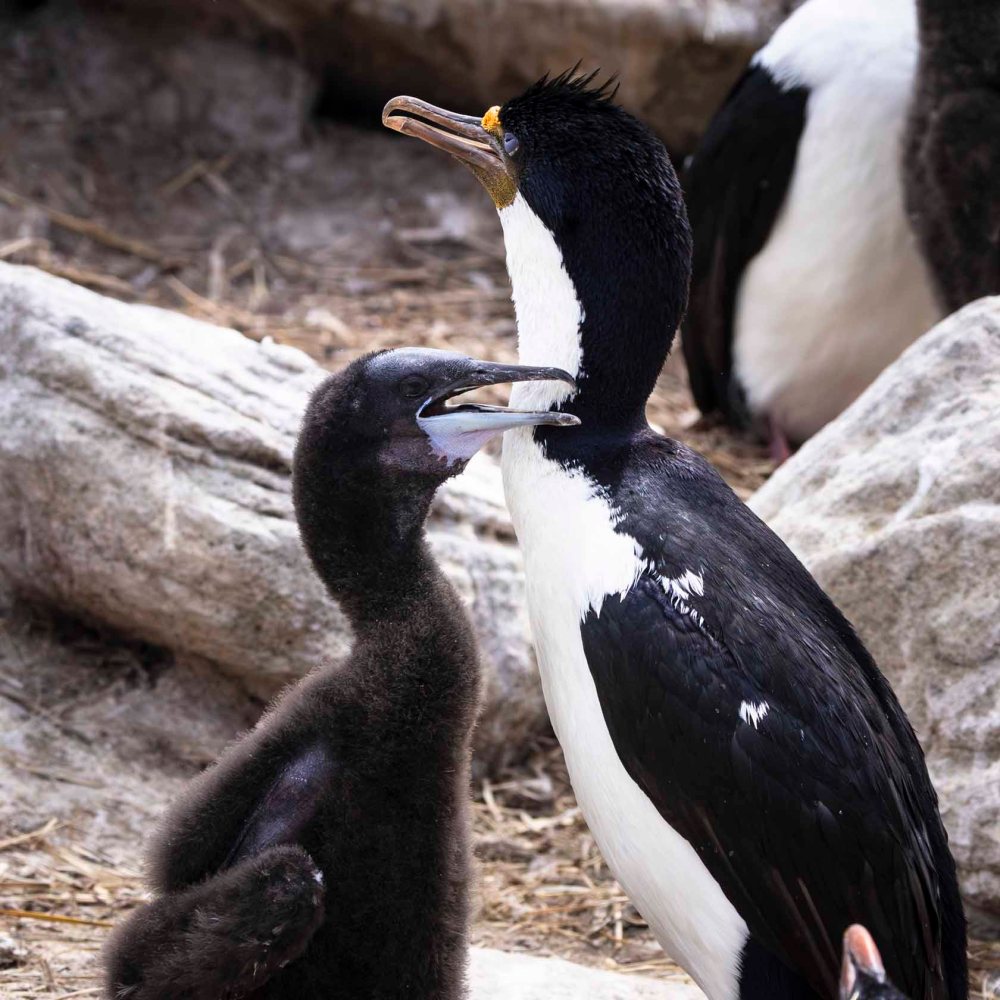
ナンキョクムナジロヒメウのヒナは羽毛が全く生えていない状態で生まれてきます。上の写真を見ると、フワフワの羽毛が生え揃っているようですが、頭にはまだ生えていないことがわかります。生まれてから3週間ぐらいで生えそろうそうです。その間、寒さで死んでしまわないようにお母さんヒメウがずーっと座り続けて温め、お父さんヒメウはせっせと餌を運んでくるということらしいです。 The chicks of the Antarctic shag are born completely featherless. Looking at the photo above, it appears they have grown a full set of fluffy feathers, but you can see their heads are still bare. It is said that they take about three weeks after hatching for their feathers to fully grow in. During this time, the mother shag apparently sits constantly to keep them warm so they don’t freeze to death, while the father shag diligently brings them food.

早く空高く飛びたいと願うのは雛鳥だけじゃなく、親鳥も同じ。でも、羽毛が生え揃ったらすぐ巣立ちするということです。ふーん、なんだか短すぎる気がしますが、同時に野生動物の逞しさを感じます。 Chicks aren’t the only ones eager to soar high in the sky; their parents feel the same. Yet, once their feathers are fully grown, they leave the nest immediately. Hmm, I can’t help but feel it’s all rather too brief, yet at the same time, I sense the resilience of wild creatures.
ハンサムなアホウドリ Handsome Albatross


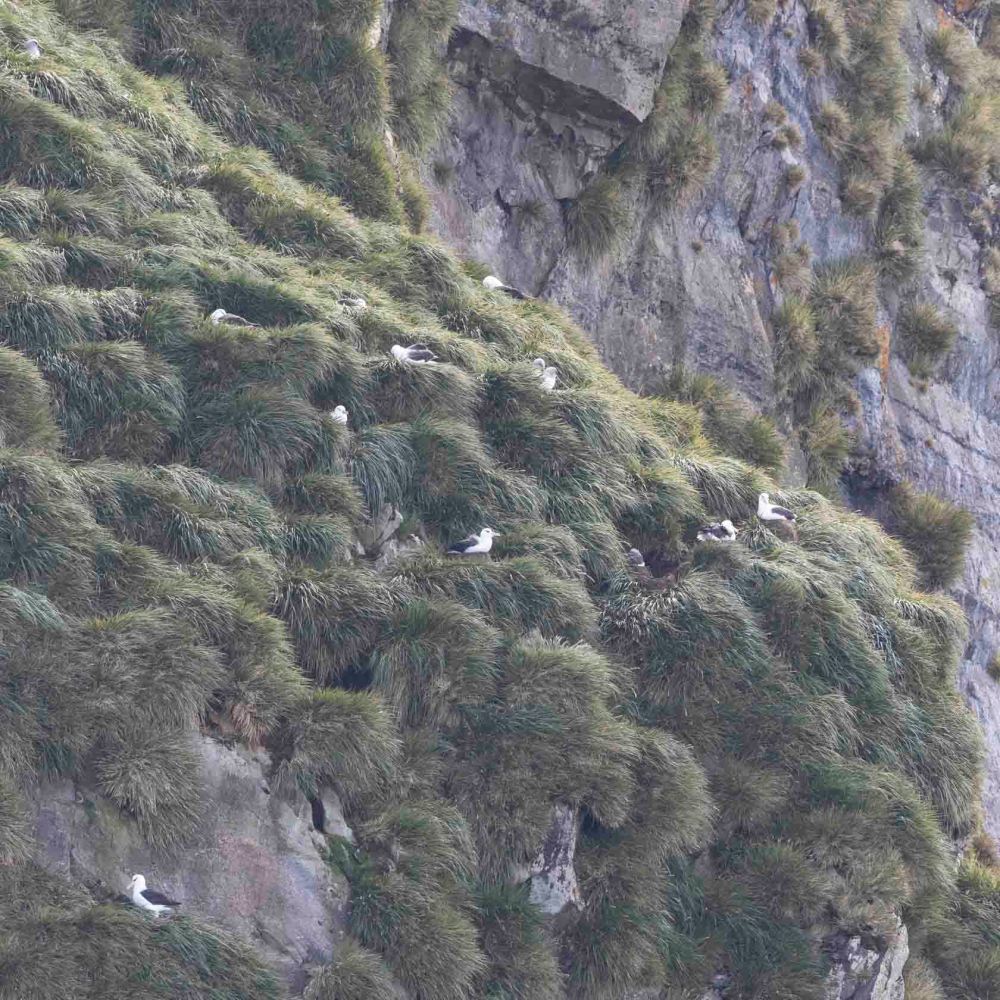
この日、私たちはサウスジョージア島の北、エルセフルベイをゴムボートでクルーズしました。 One day, we cruised in a zodiac around Elsehul Bay, north of South Georgia Island.

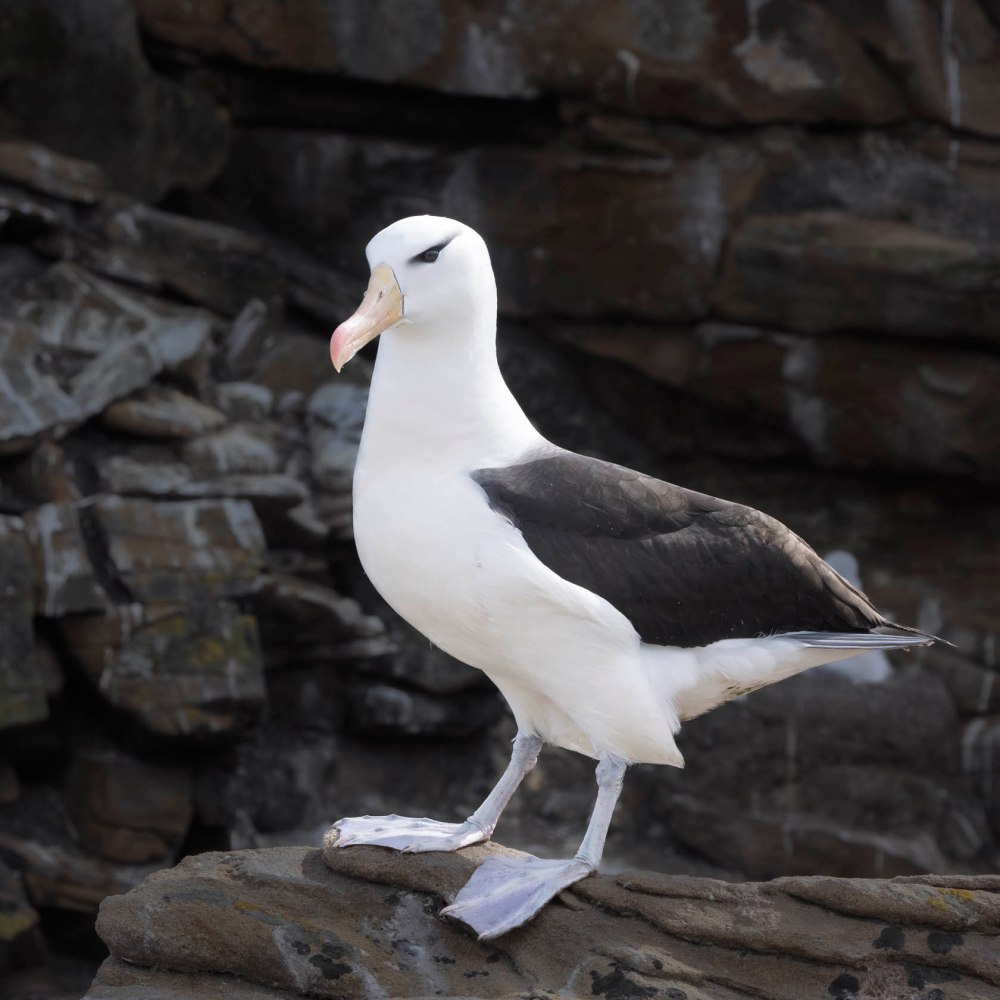
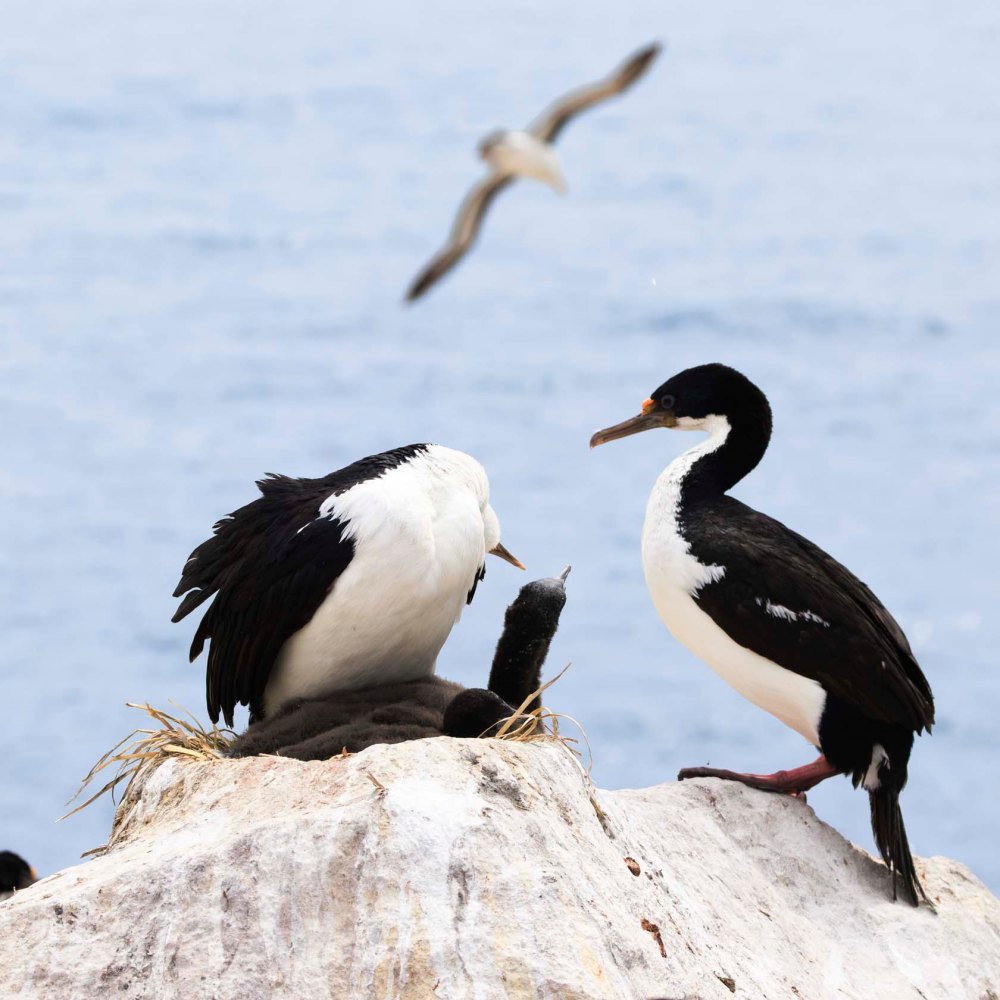
アホウドリのコロニーを崖の上に見上げ、なぜ彼らが崖っぷちを選ぶのか理解しました。 Looking up at the Albatross colony perched on the cliff, I understood why they choose the very edge.

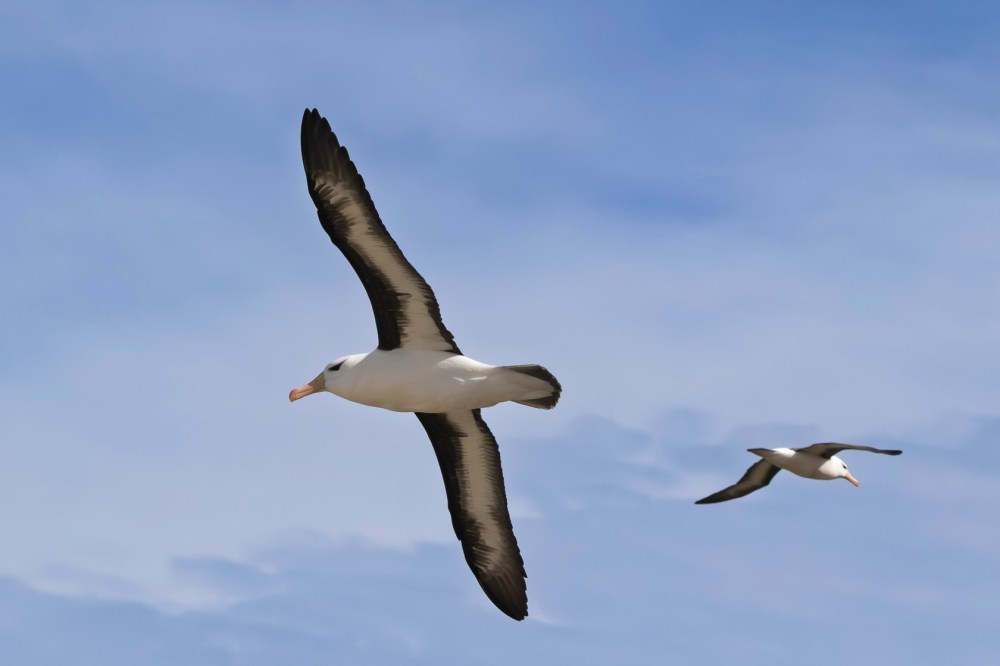
彼らは他の大きな鳥と同じようにダイナミックソアリングを繰り返して空を飛びます。そのため、高い崖っぷちが便利なのです。 They fly through the air by repeatedly performing dynamic soaring, just like other large birds. For this reason, high cliff edges are convenient.

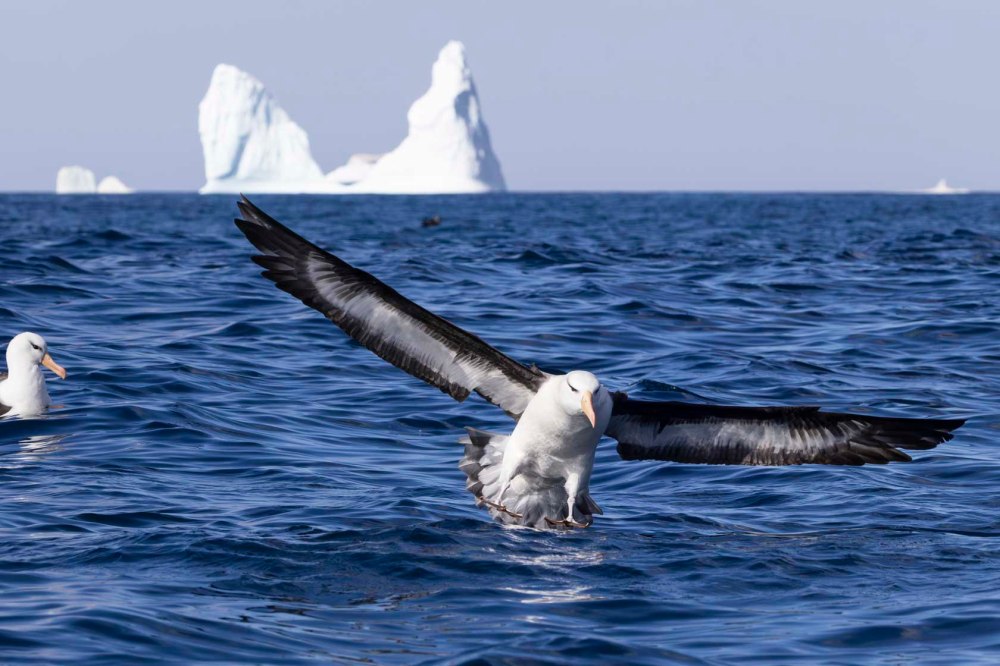
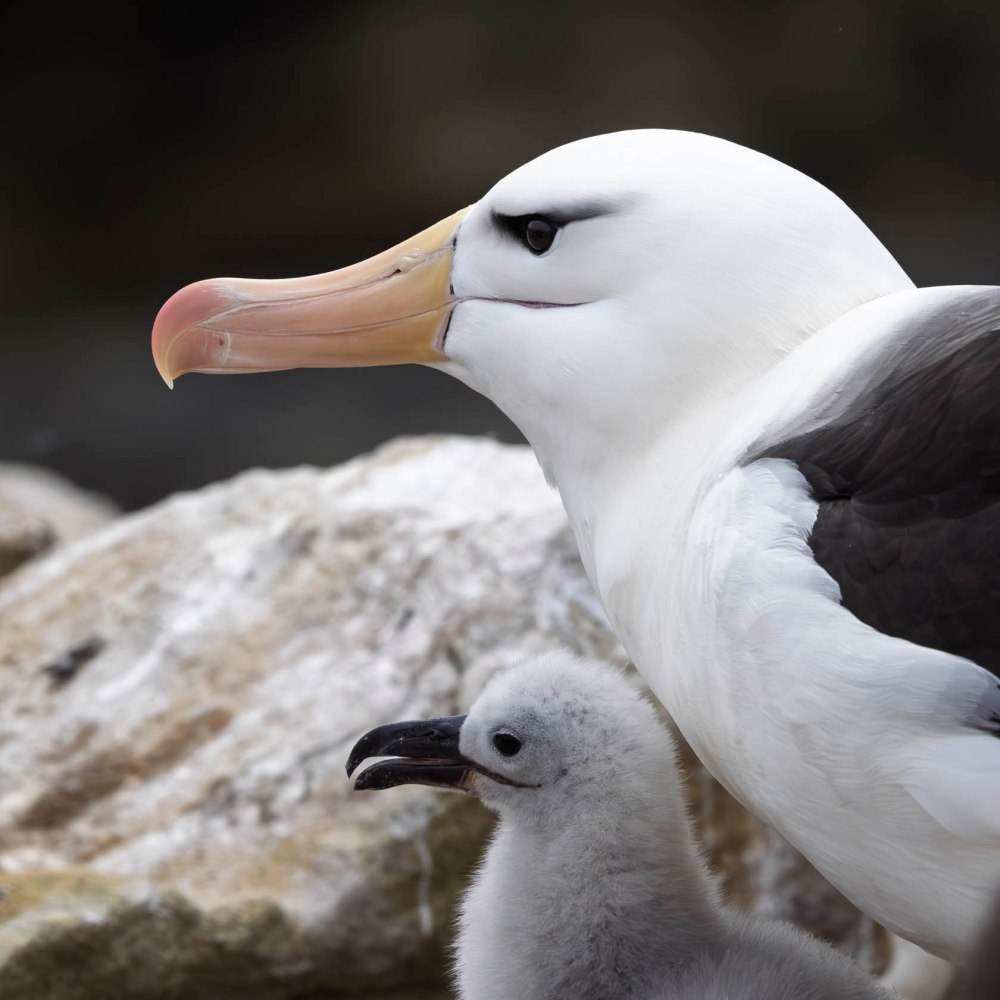
マユグロアホウドリ Black-browed Albatross

その代わり、水面から飛び立つ時は大変な労力を必要とします。飛び立てないと思わせるぐらい長いこと水上を走って勢いをつけて飛び立ちます。 In return, taking off from the water’s surface requires tremendous effort. They run across the water for so long to build up momentum that it makes you think they cannot take flight.

マユグロアホウドリ Black-browed Albatross

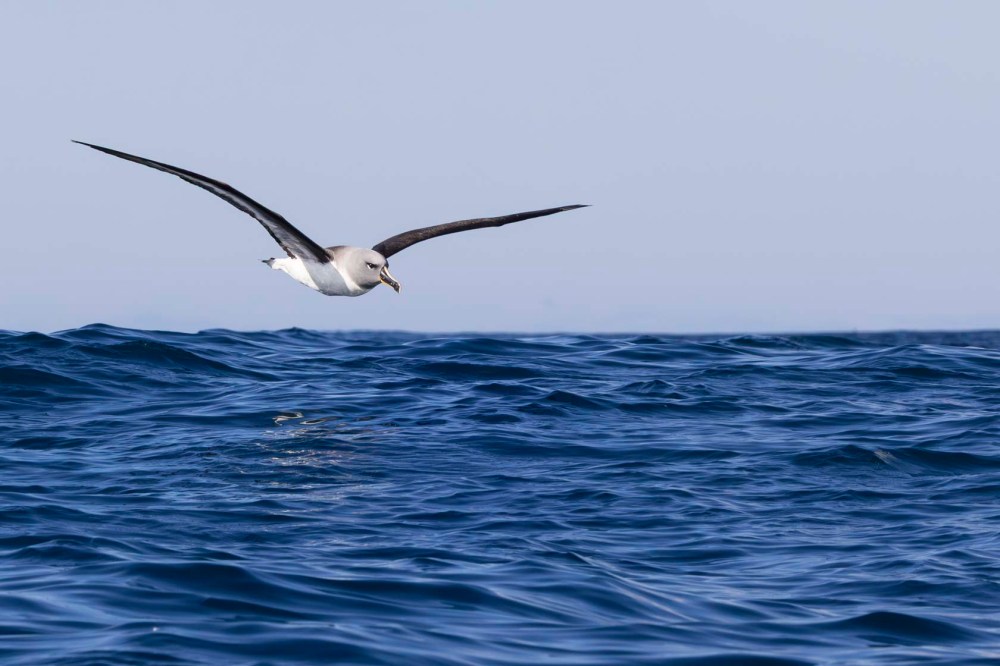
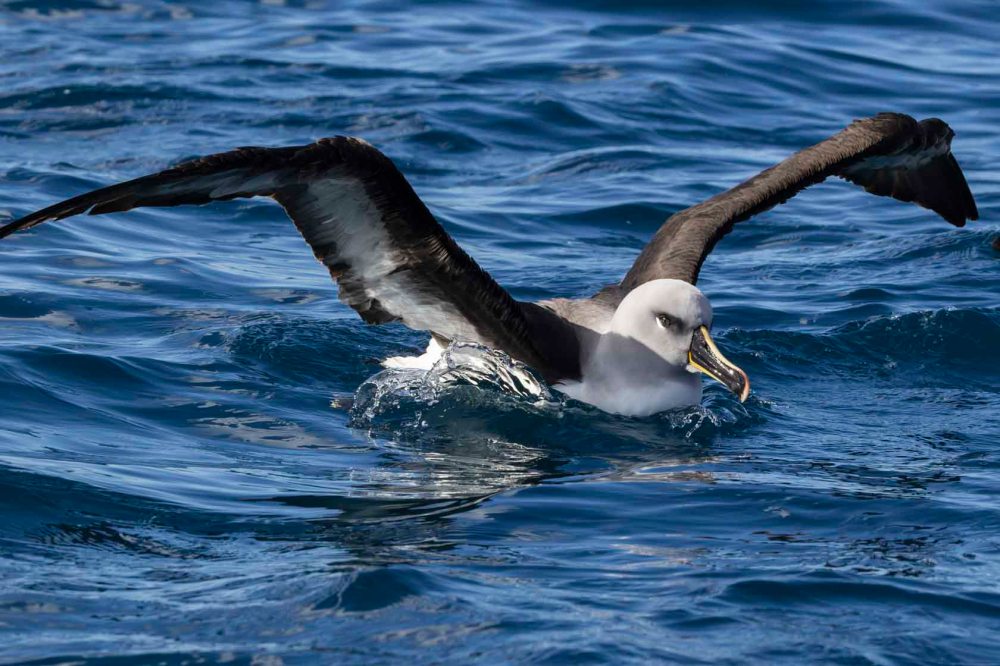
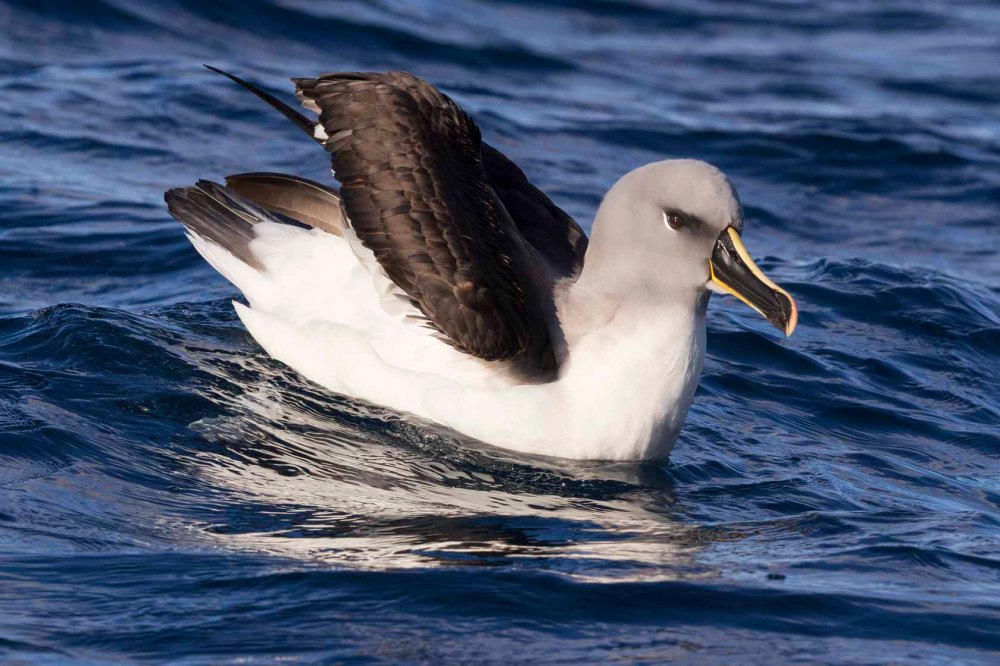
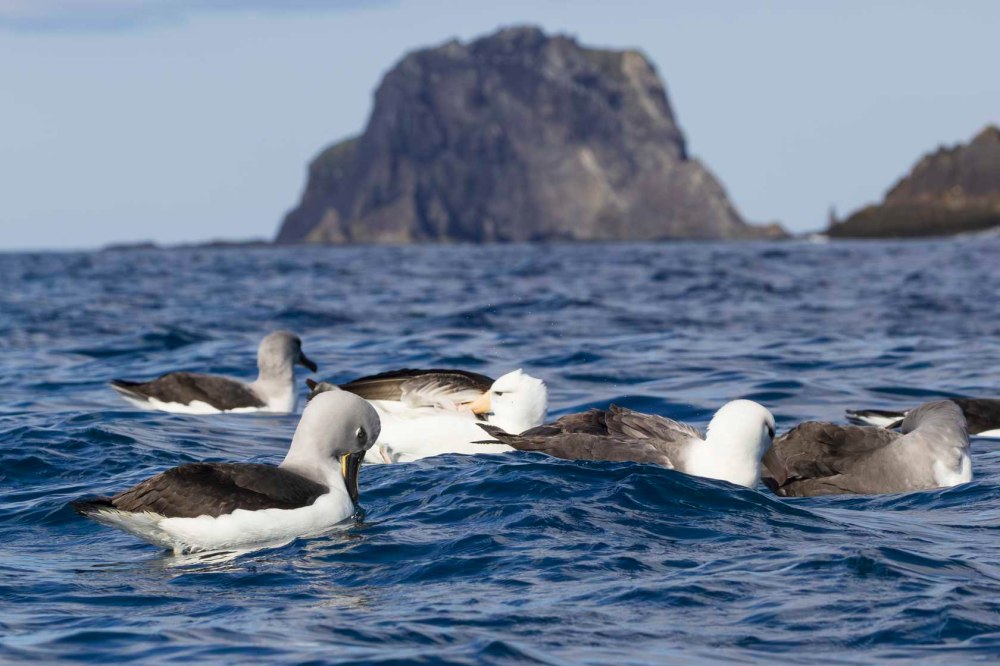
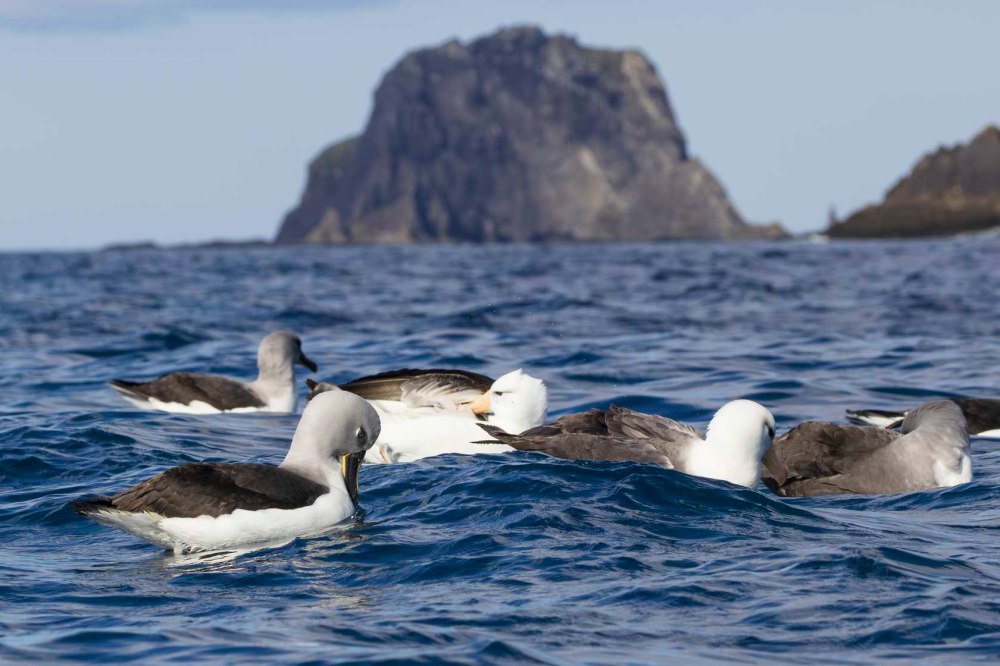
こちらはハイガシラアホウドリです。 This is the Gray-headed albatross.

マユグロアホウドリと同じように、彼らも目から鼻にかけて非常に美形です。 Like the Black-browed albatross, they too are exceptionally handsome from the eyes to the nose.

両種とも仲良く午後の気持ちの良い日を過ごしているようでした。 Both seemed to be getting along well and enjoying the pleasant afternoon.

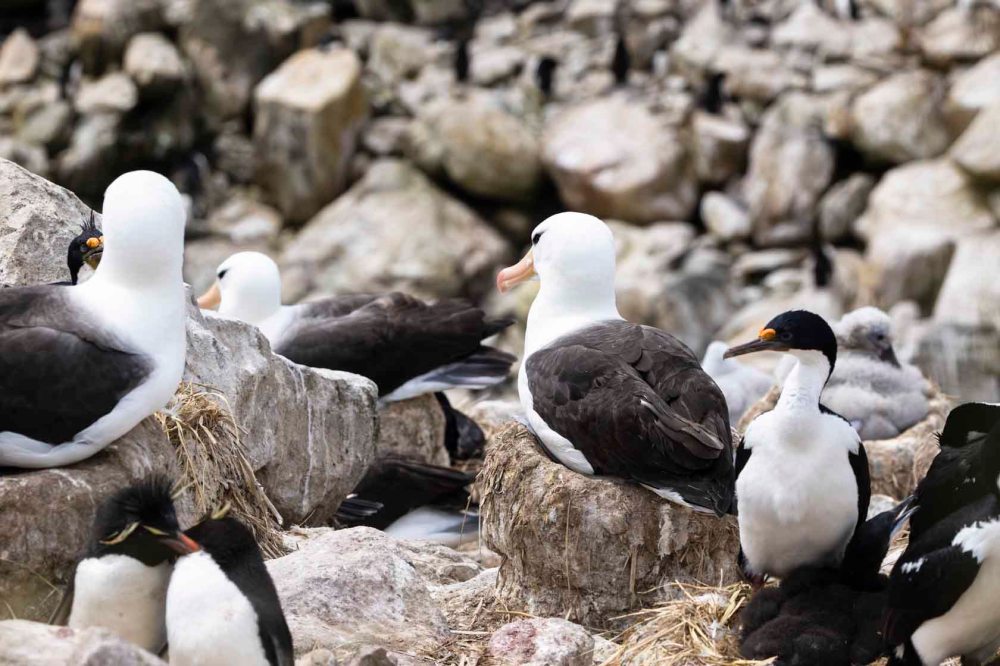
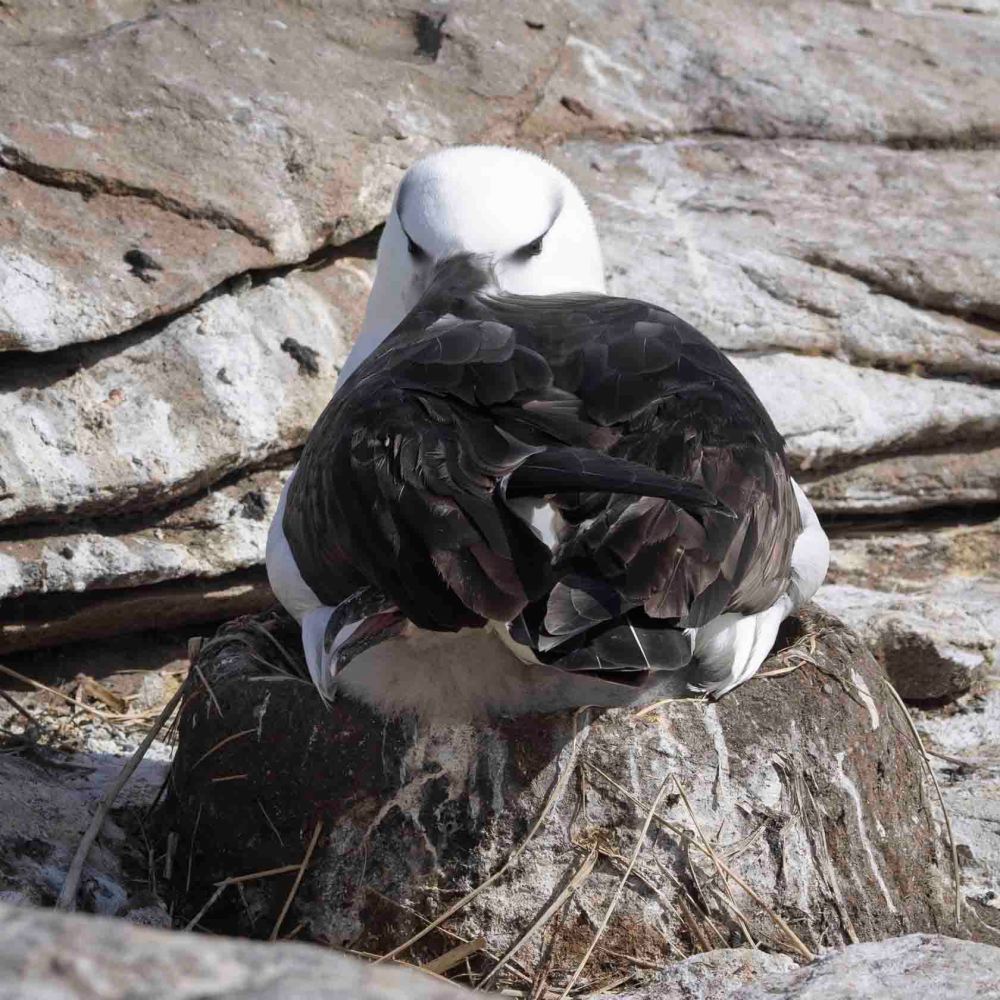
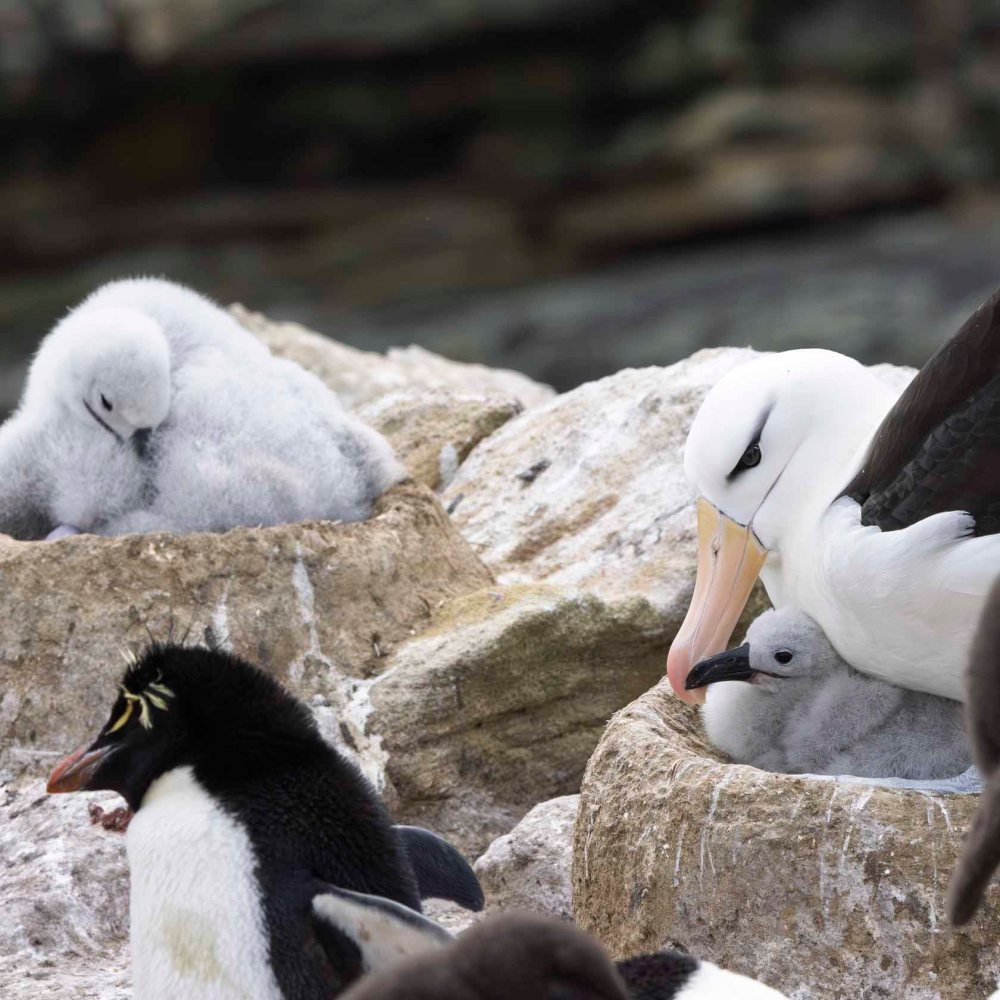
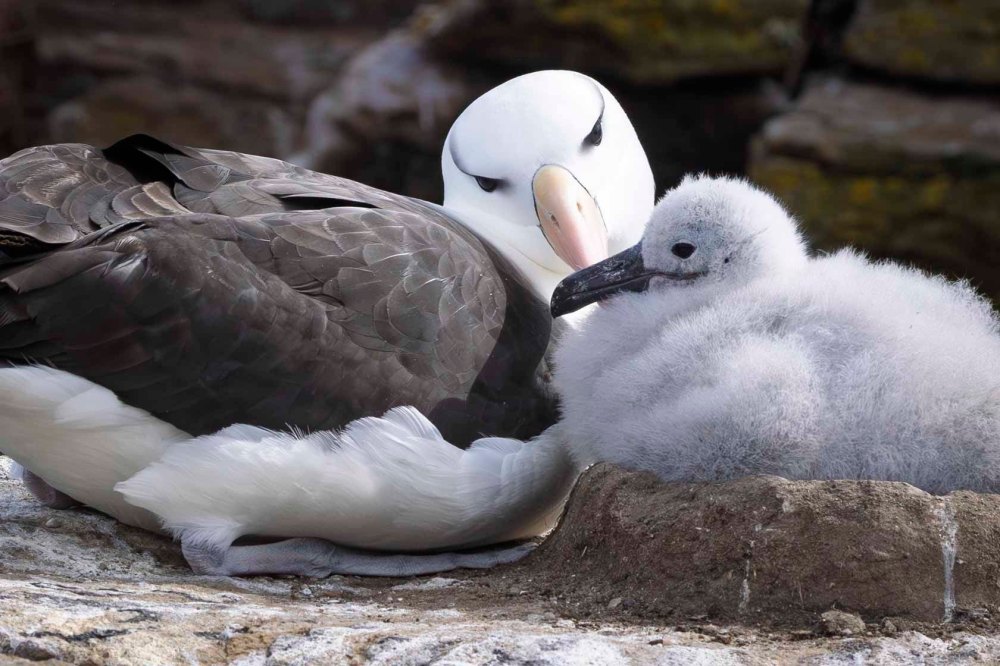
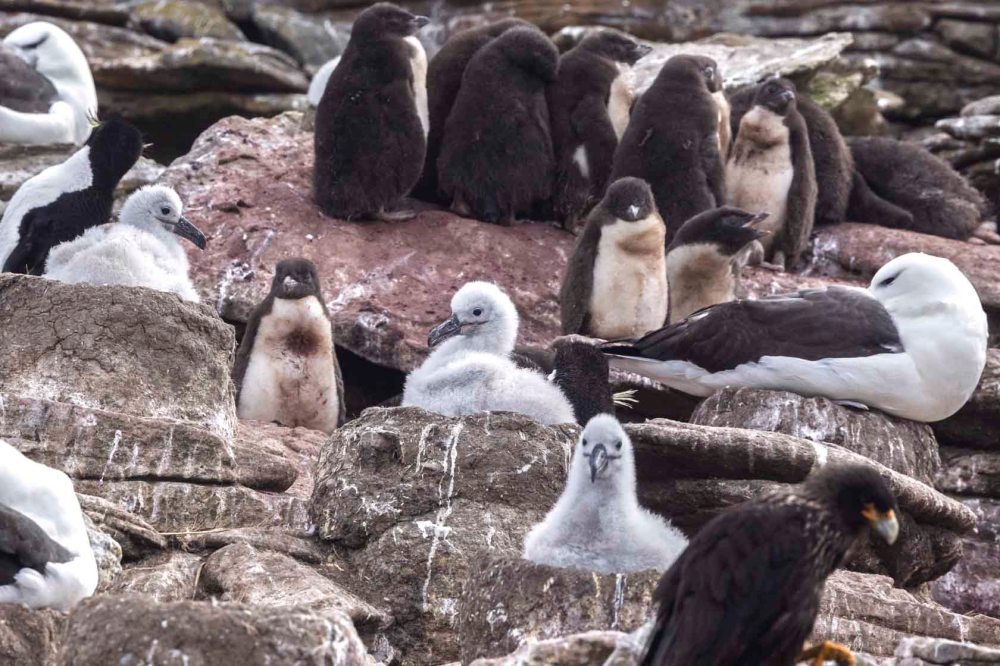
さて、変わってこちらはフォークランド諸島のニューアイランドです。ニシロックホッパーペンギンの時もご紹介した例のシェアハウスです。相変わらず混み合っています。マユグロアホウドリ、ニシロックホッパーペンギン、そしてナンキョクムナジロヒメウがそれぞれ子育てに忙しい。 Now, moving on to New Island in the Falkland Islands. This is the same shared house I mentioned when introducing the Western Rockhopper penguin. It remains as crowded as ever. The Black-browed Albatross, Western Rockhopper, and Antarctic shag are all busy raising their young.

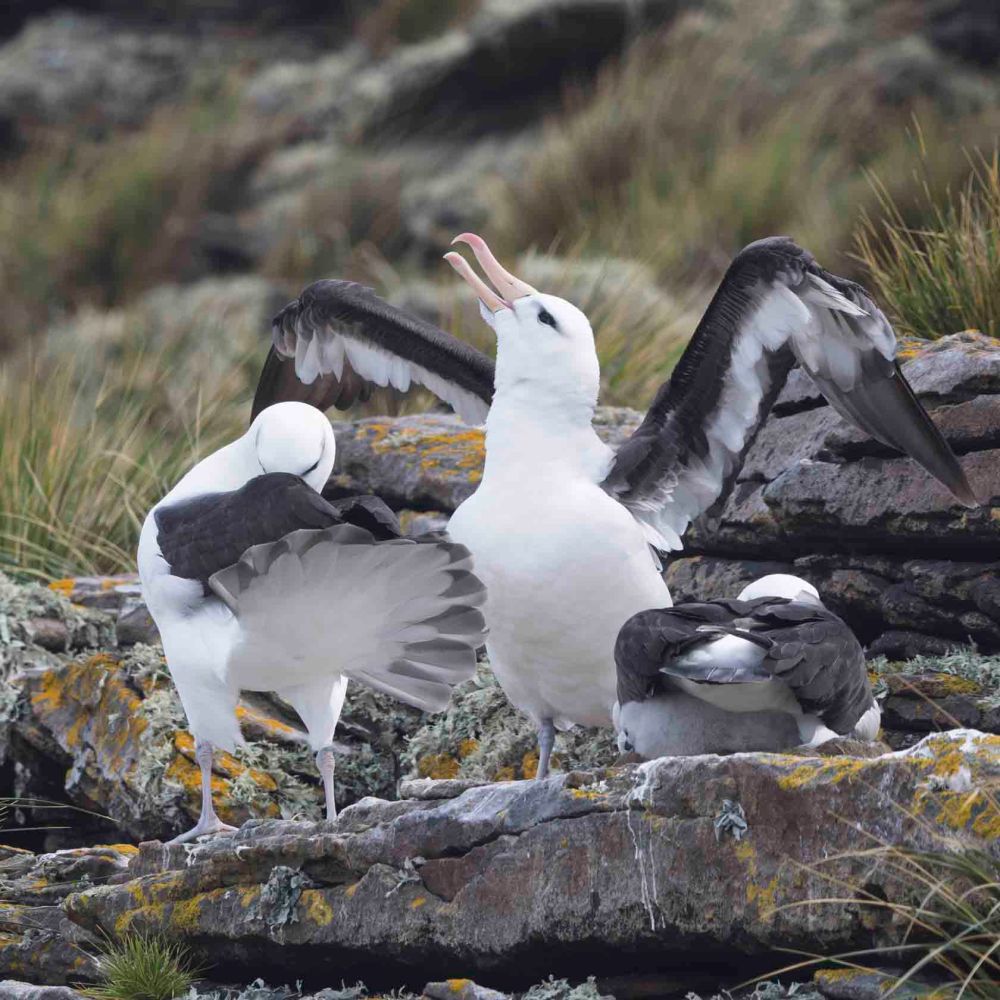
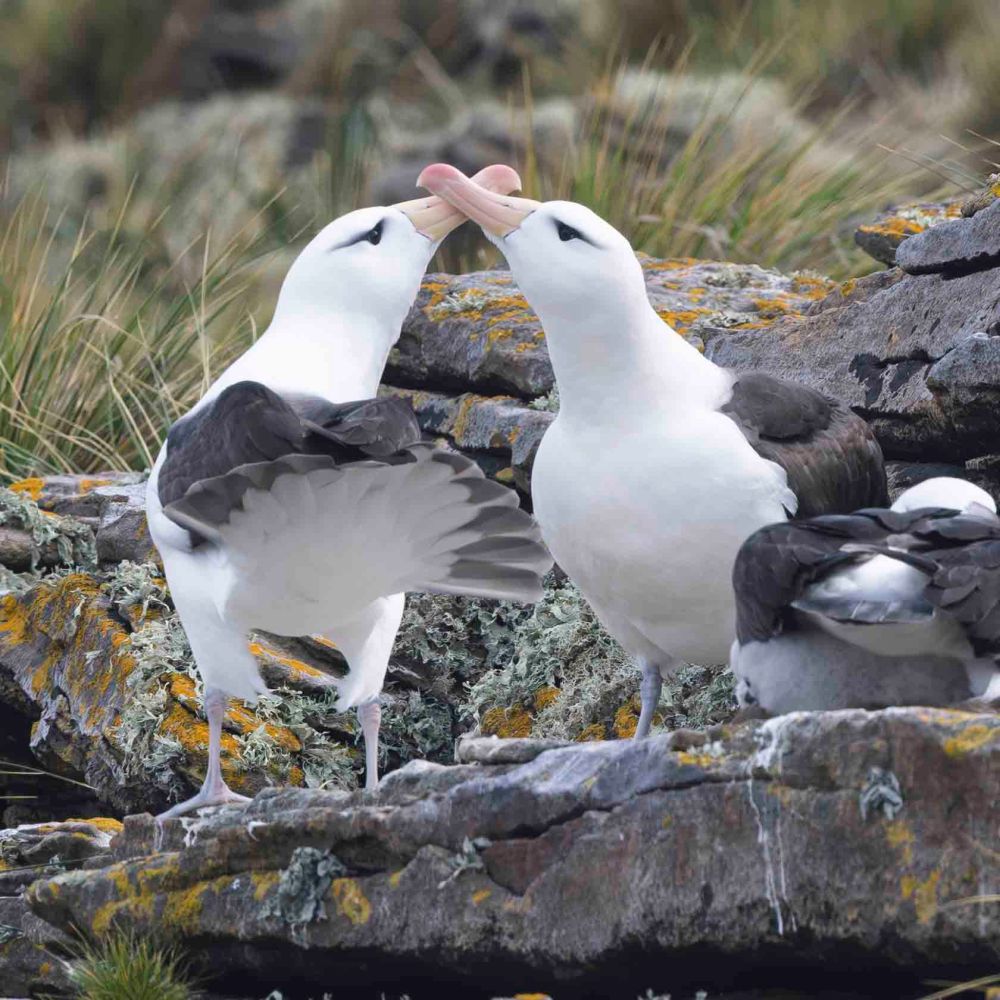
みんな命のバトンを渡していくために、疑うことなく今を精一杯生きているように見えました。こちらはマユグロアホウドリの求愛ダンス。 For the sake of passing on the baton of life, everyone seemed to be living in the present moment to the fullest, without a shred of doubt. Here is the courtship dance of the Black-browed albatross.

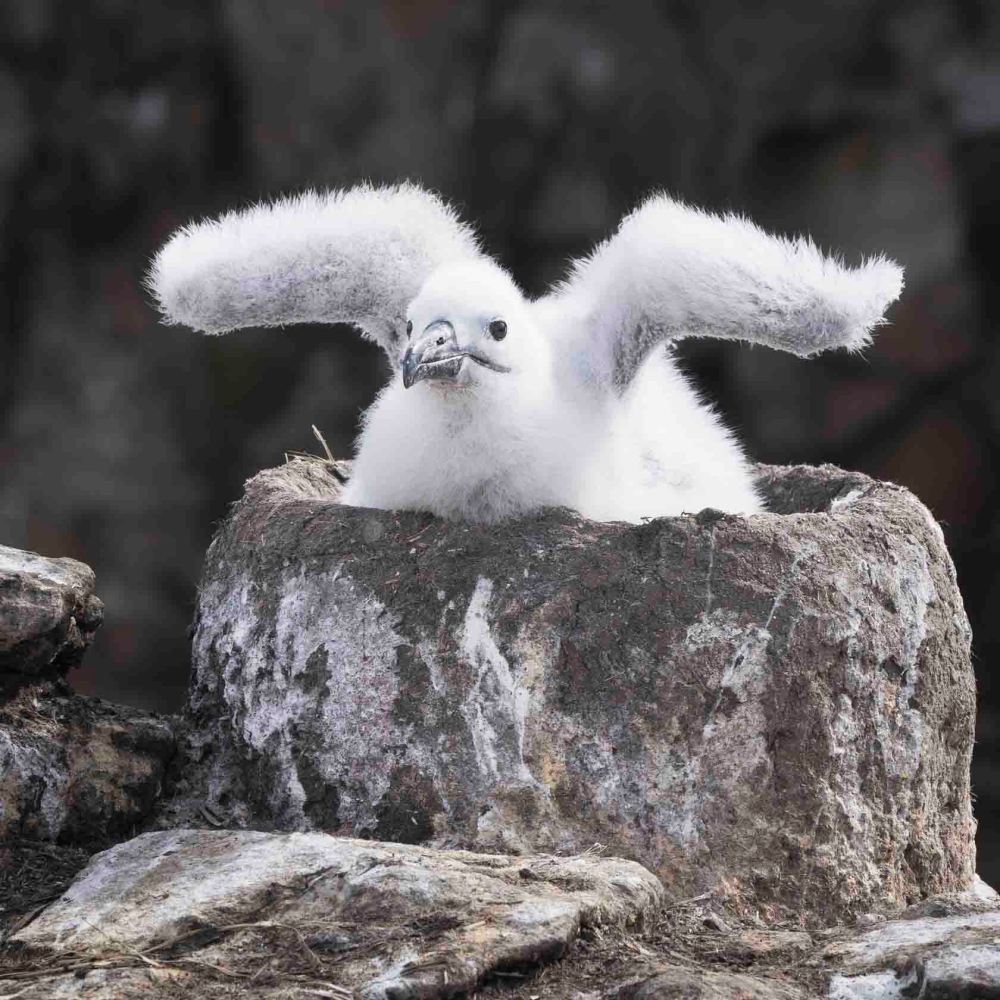
マユグロアホウドリの巣は丸い桶のようです。しっかりとできているので、崖っぷちでも卵やヒナが転げ落ちる心配はなさそうです。 The nests of the Black-browed albatross resemble round tubs. They are so well constructed that there seems little risk of eggs or chicks tumbling over the cliff edge.

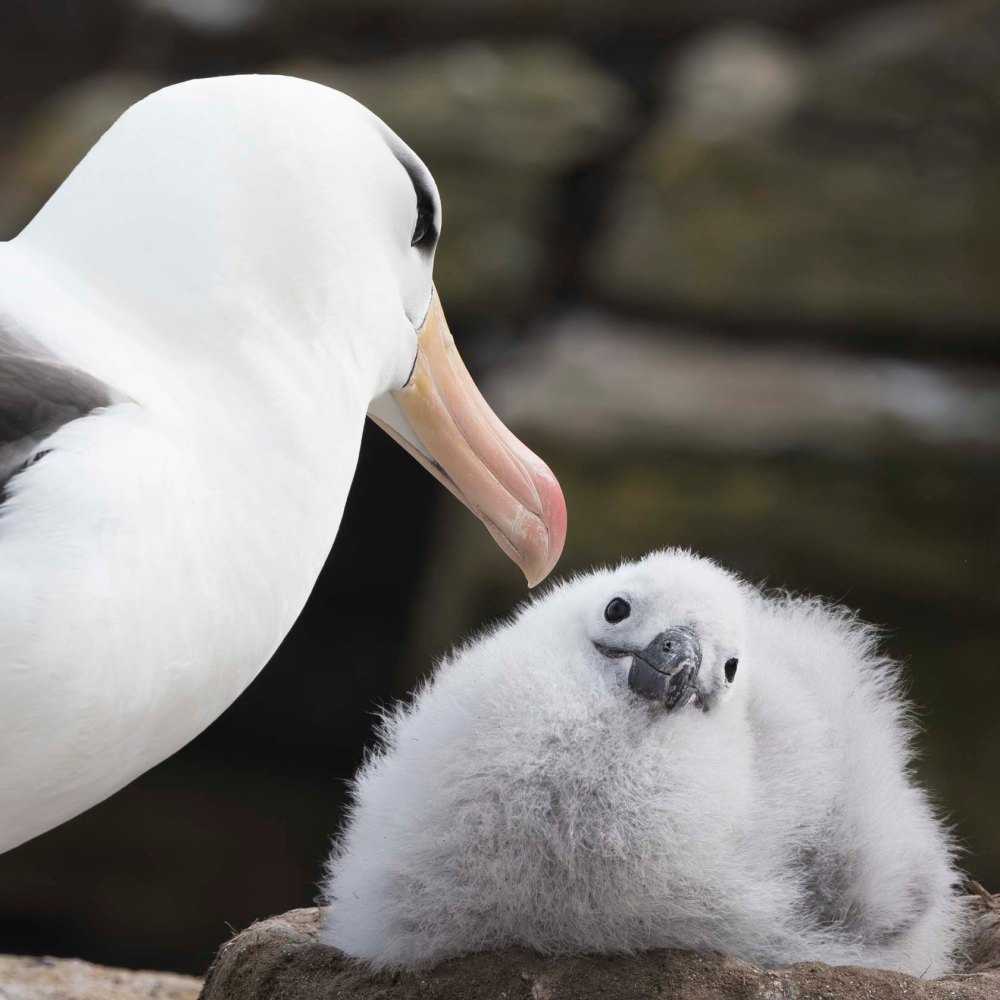
卵が孵化するまでに2.5ヶ月、巣立ちまで3ヶ月以上かかると言われています。 It is said that it takes 2.5 months for the eggs to hatch and over 3 months for the young to fledge.

ここ南半球では、巣立ちの頃はすでに冬を迎えているのでしょうか。 Here in the southern hemisphere, is it already winter by the time the young birds leave the nest?

その頃は、こんな風に成長しているんですね。頑張れよ、ヒナ達! By then, you’ll have grown like this, won’t you? Keep at it, chicks!

断崖絶壁のシェアハウス Share House at Precipice-edge


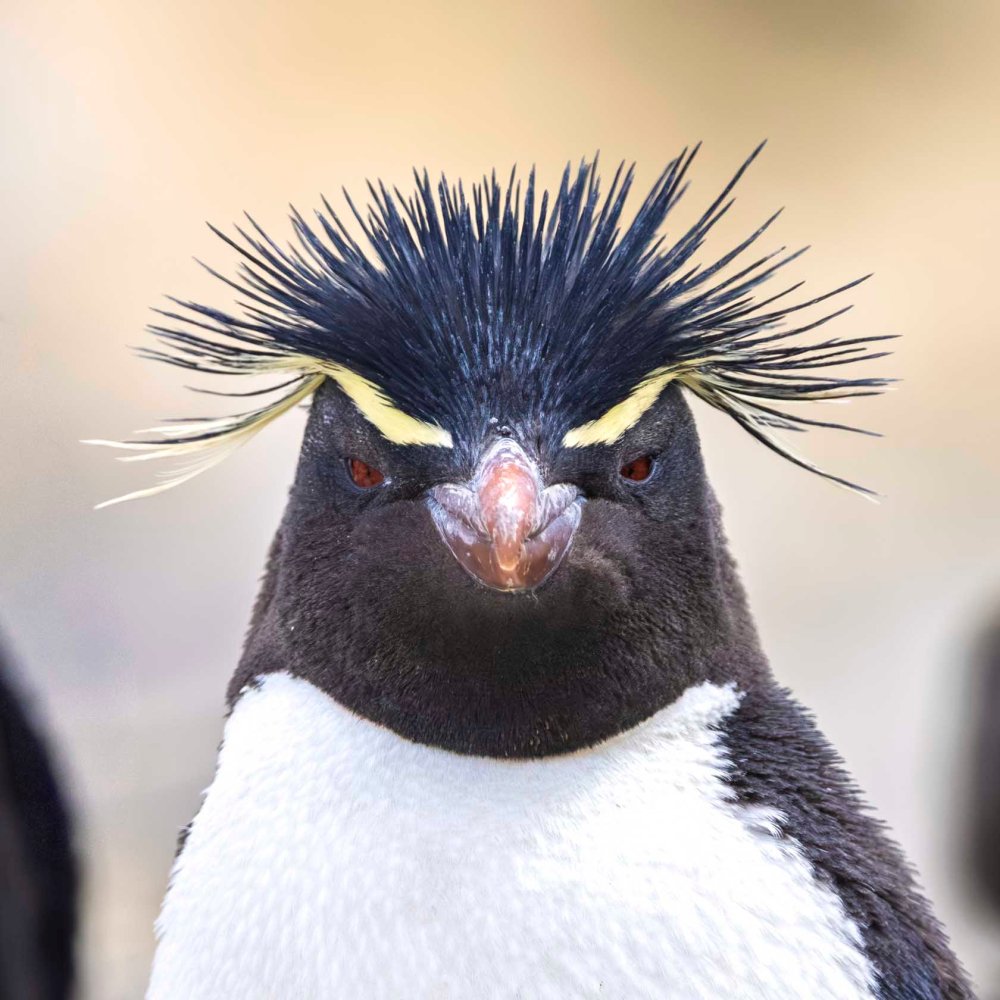
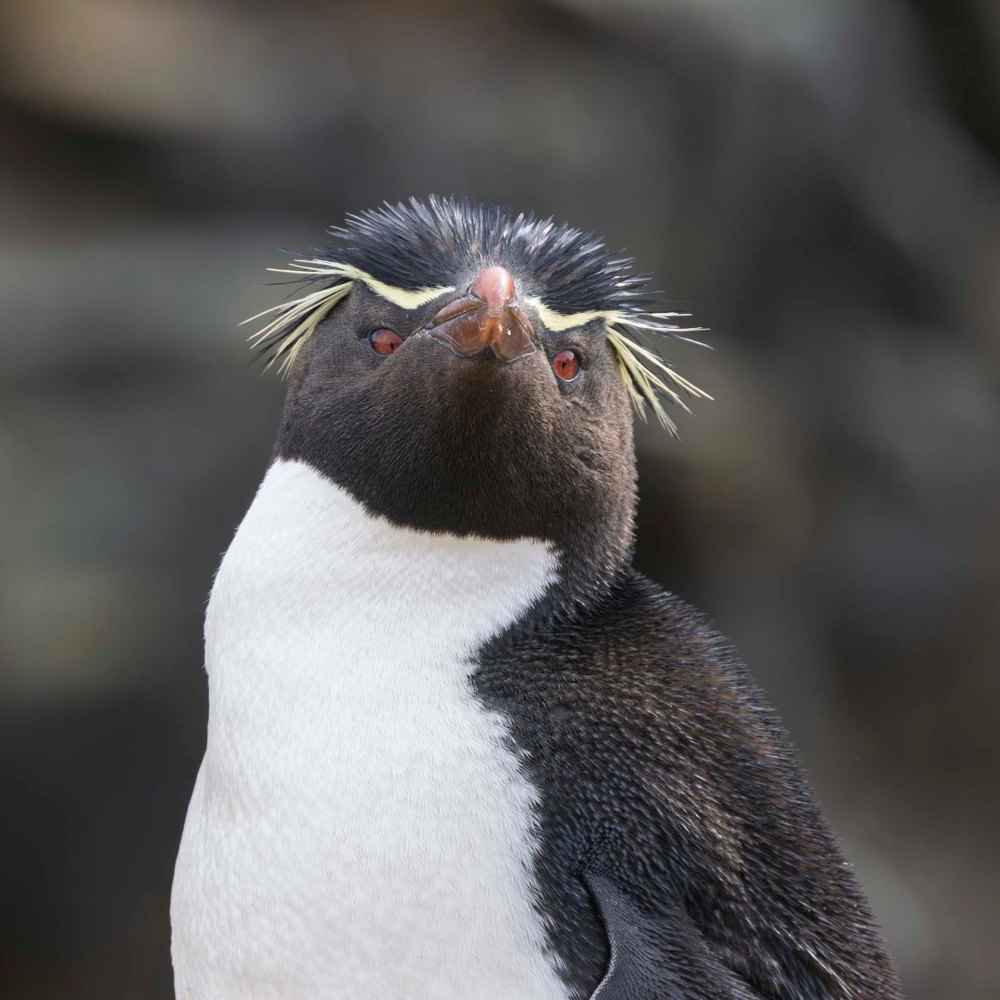
前回のブログでマカロニペンギンについてきました。今回は同じイワトビペンギン属の仲間のニシイワトビペンギンについて書きます。 In my previous blog post, I covered the Macaroni penguin. This time, I shall write about the Western Rockhopper penguin, a fellow member of the same genus, Eudyptes.

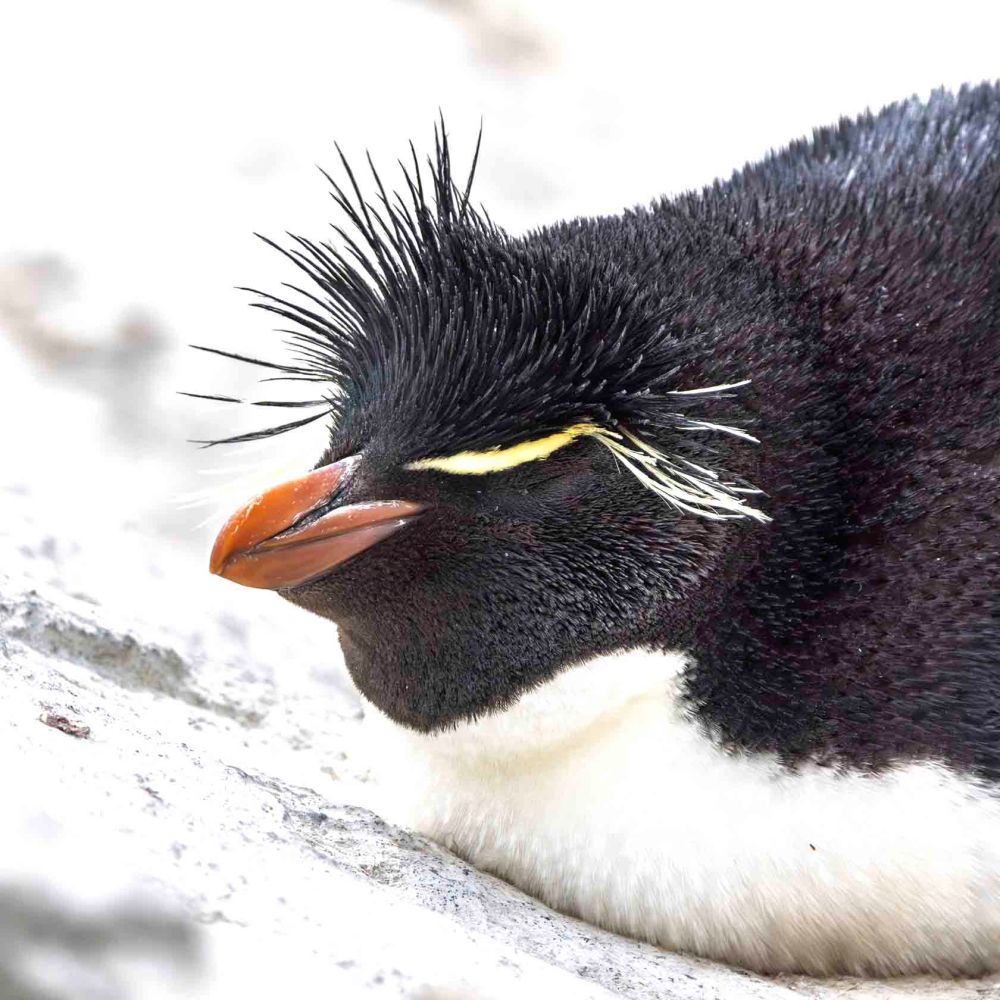
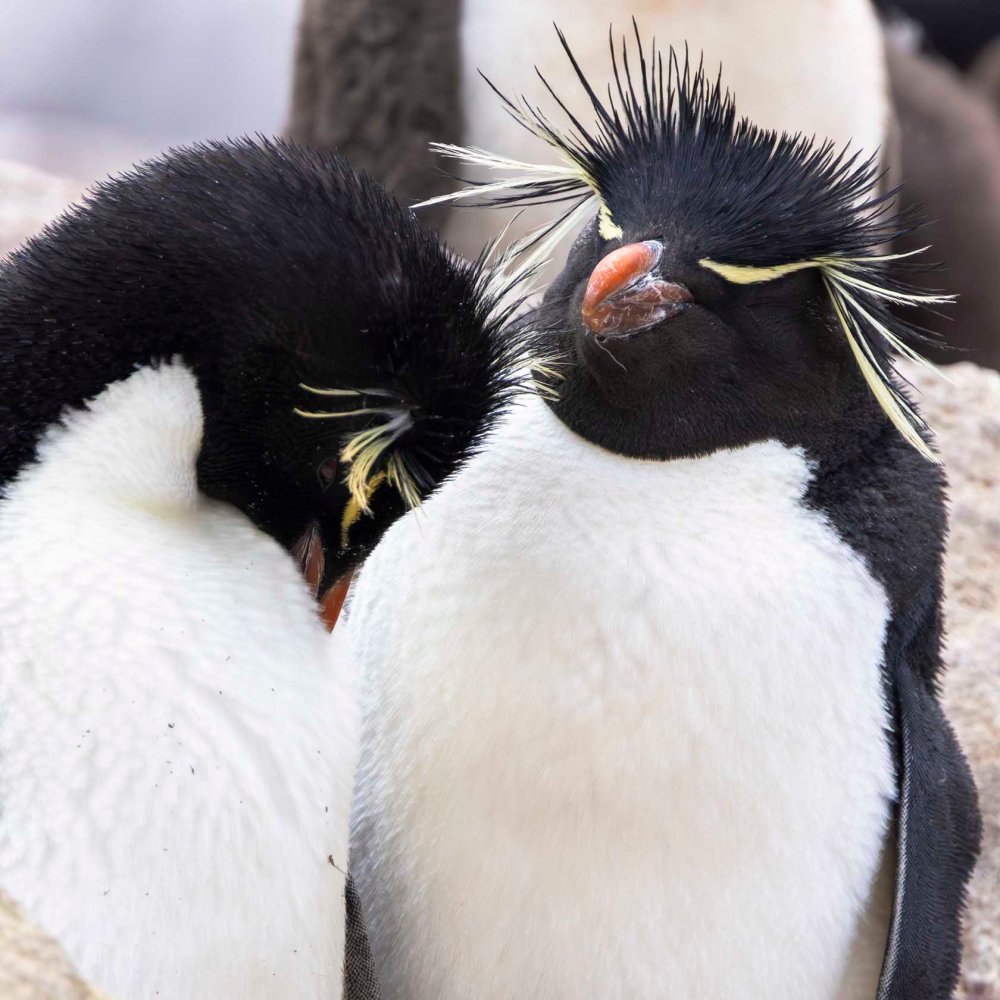
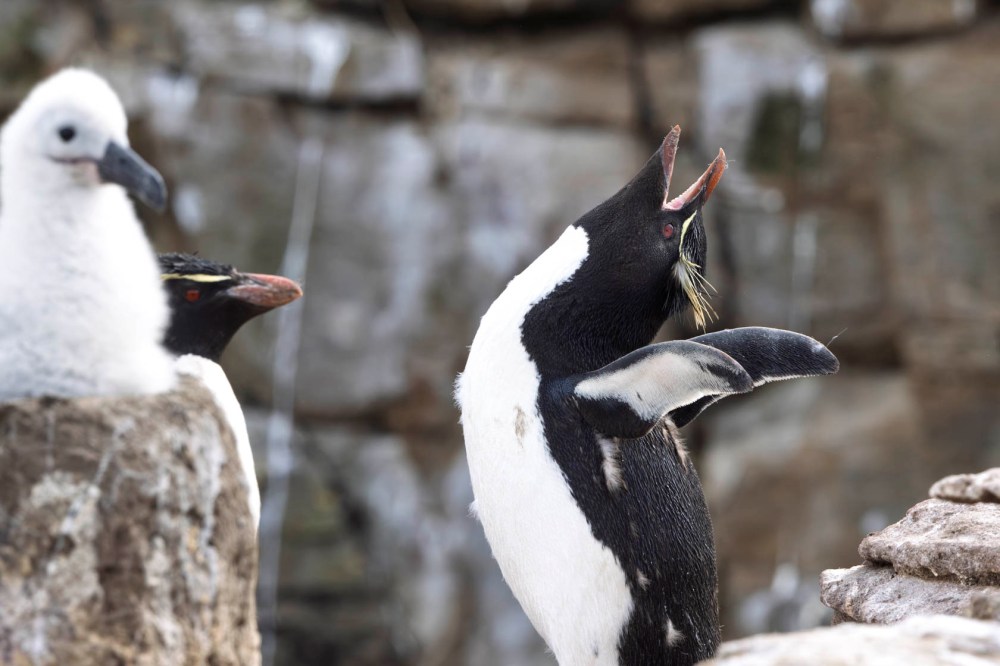
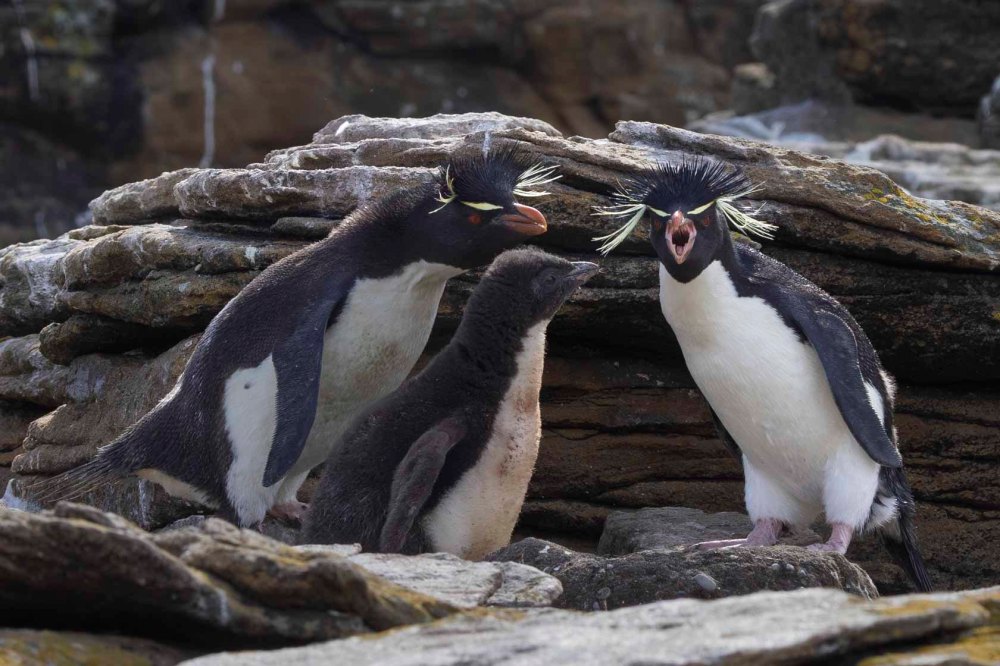
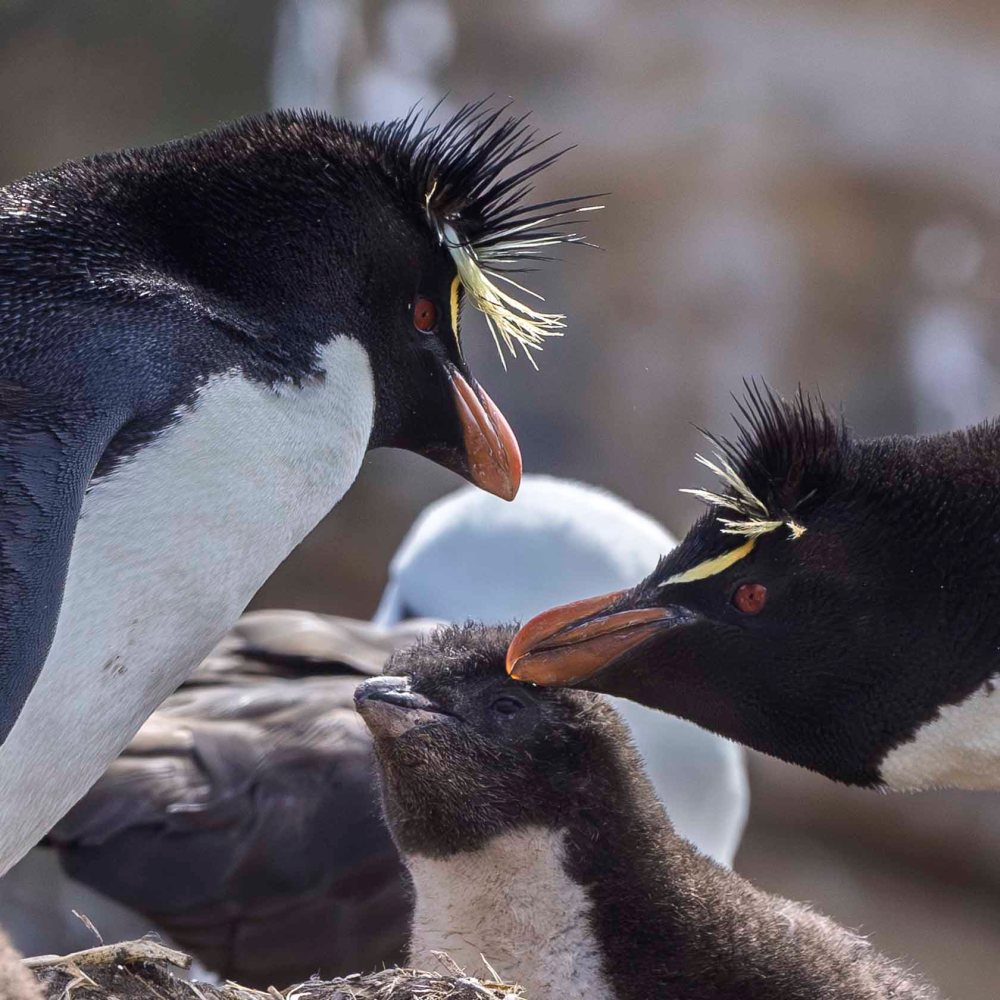
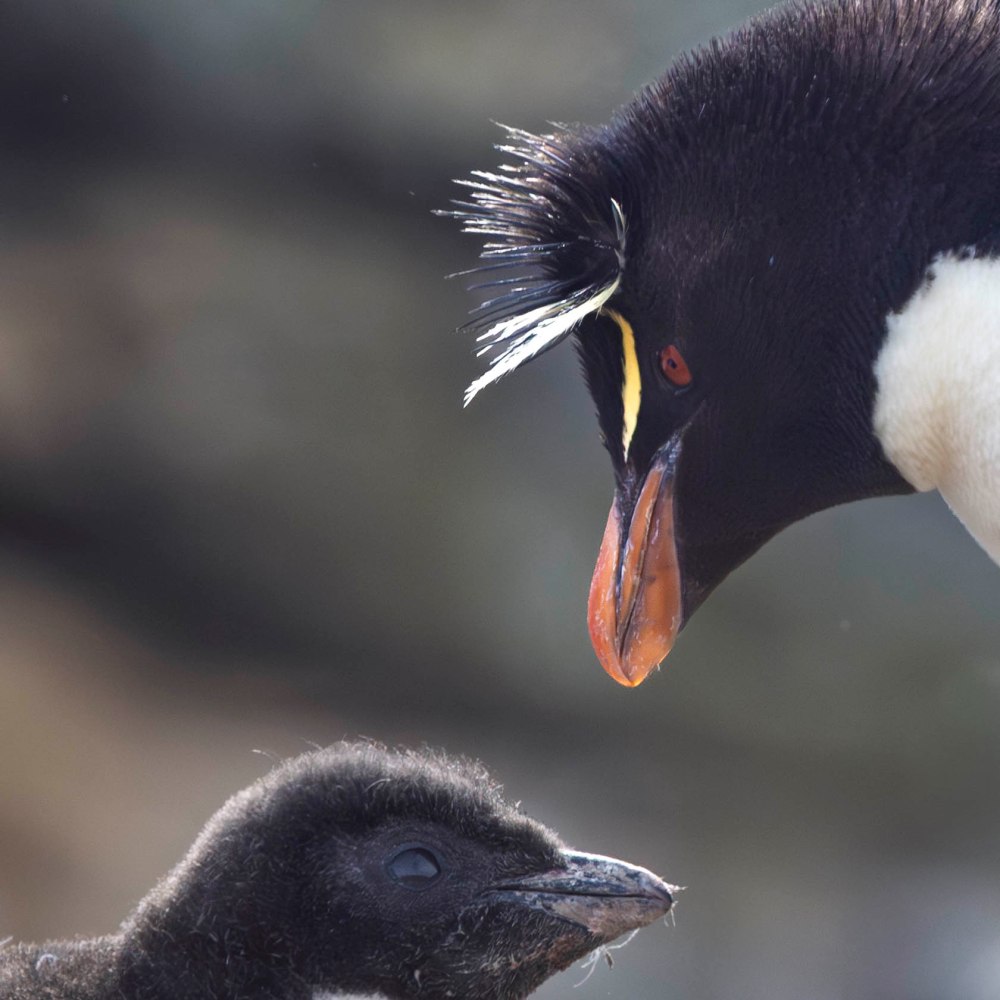
マカロニの黄色い羽飾りは豪華ですが、イワトビの飾りは黄色い鉢巻を巻いて尖った髪の毛を上に持ち上げてるように見えます。 The macaroni’s yellow feather crest is splendid, but the rockhopper’s adornment resembles a yellow headband wrapped around its head, lifting its spiky hair upwards.

また、遠くから見ると黄色い眉毛が目のようで、ちょっとヤクザ風です。 Moreover, from a distance, the yellow eyebrows resemble eyes, giving him a slightly yakuza-like appearance.

さて、本題です。ニシロックホッパーペンギンの住むフォークランド諸島内のニューアイランド島の海岸線は、立地条件が良いこともあり大人気です。 Now, to the main point. The coastline of New Island, part of the Falkland Islands where Western Rockhopper Penguins reside, is immensely popular, partly due to its favorable location.

人間の世界も動物の世界も、良い場所での家探しは難航するんですね。 Whether in the human world or the animal world, finding a home in a good location is a difficult task, isn’t it.

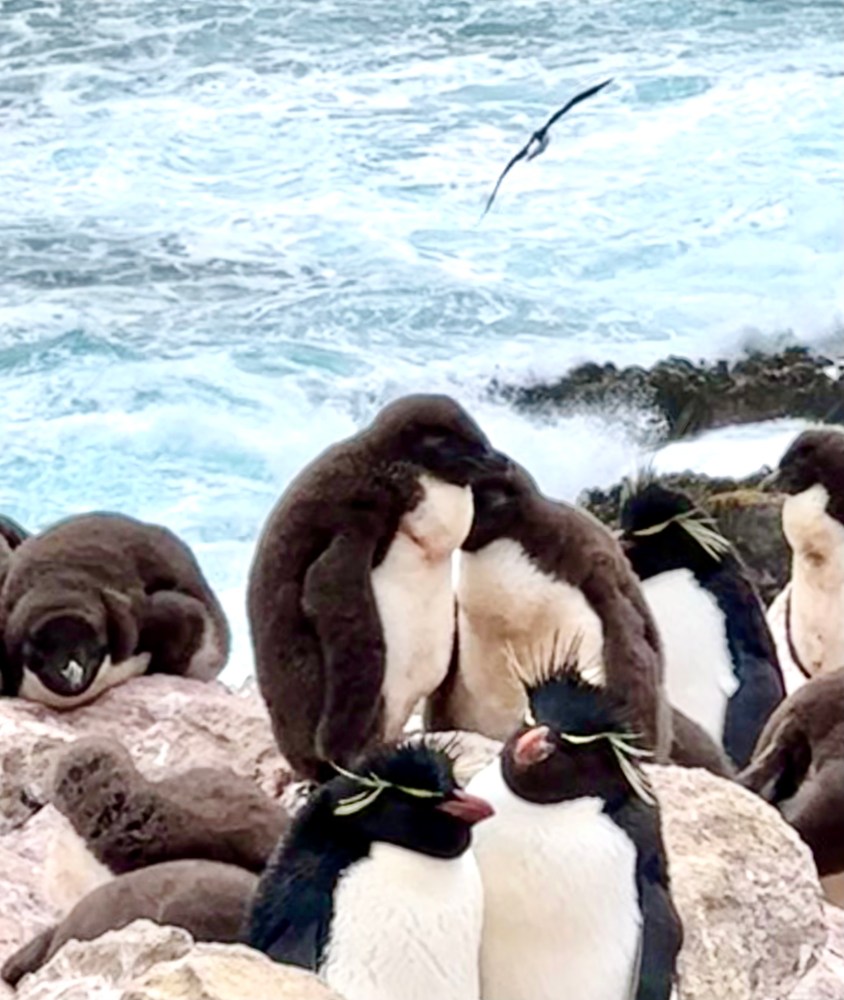
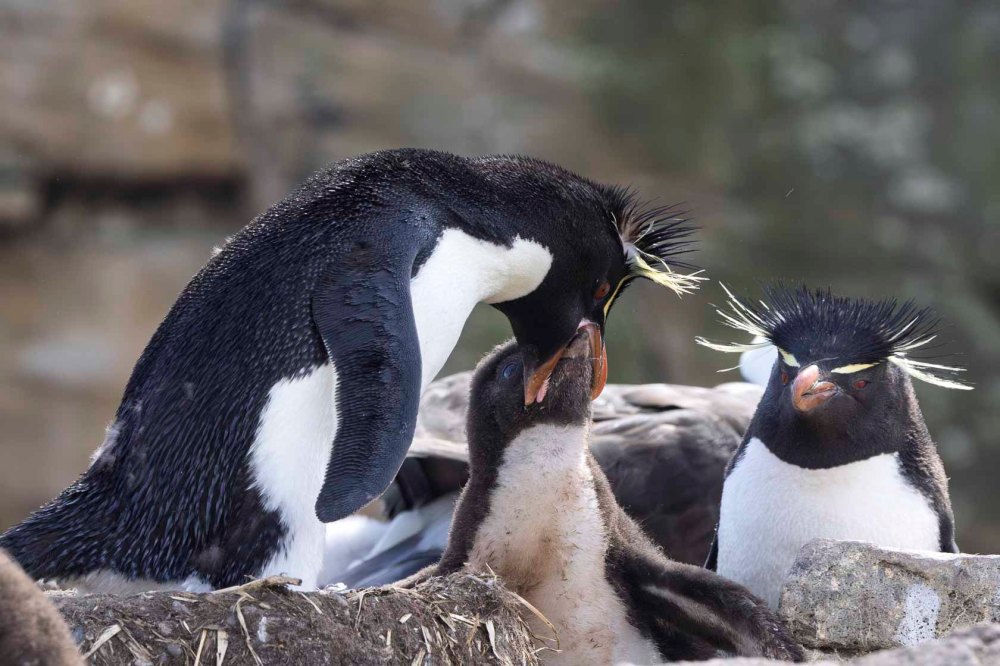
下の写真を観察すると、アホウドリとペンギンが写っています。ここの住人です。(右手前はペンギンやアホウドリのヒナを食するフォークランドカラカラで、断じて住人ではありません。) Observing the photograph below, you can see albatrosses and penguins. They are residents here in this shared community. (The bird in the foreground on the right is a Striated caracara, which preys on penguin and albatross chicks; it is definitely not a resident.)

もう一種の住人はズグロムナジロヒメウです。 Another resident is the Antarctic shag.

これらの3種の鳥がこの場所をシェアハウスとして使っているんですね。非常に混雑していましたが、それでもうまく共存できているんですね。 These three species of birds share this place as a share house, you see. It was extremely crowded, yet they still manage to coexist quite well.

でも、時々不満が爆発して「この状況、もう我慢できないよう」と、叫んでいる(かもしれません。) But sometimes the birds’ discontent boils over, and they cry out, ‘We can’t stand this situation any longer!’ (or so it may be.)

彼らは子育てにとても熱心なので、尚更です。 They are particularly keen on child-rearing, so all the more reason.

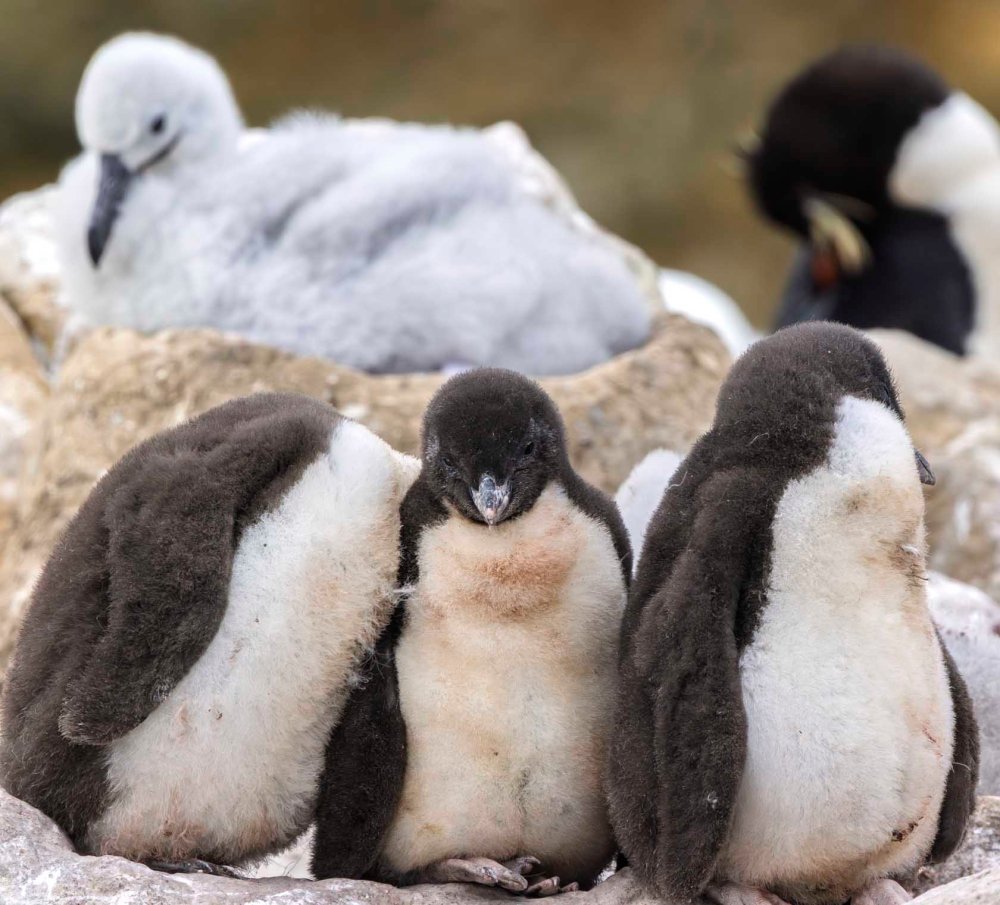
それでも、子供達は楽しそうにスクスクと育っていました。 Despite this, the children were happily growing up.

下のビデオをご覧ください。子供ペンギンの元気な様子がわかります。ビデオスピードを50%落としても、まだまだ元気です。 Please watch the video below. You can see how lively the baby penguins are. Even when the video speed is slowed to 50%, they are still full of energy.

こちらは、彼らの住宅地を上から見た所です。『ウォーリーを探せ』『ペンギンを探せ』ゲームです。何びき見つけられますか? This is a bird’s-eye view of their residential area. It’s a “Where’s Waldo?” “Where’s Penguins?” game. How many Rockhopper penguins can you spot?