ドレイク海峡を抜けると南緯60度を超え、そこは南極地域と呼ばれます。軍事的利用の禁止や領有権の主張の凍結などが定められている場所です。 Passing through the Drake Passage takes you beyond 60 degrees south latitude, an area known as the Antarctic Ocean. This is a place where military use is prohibited and territorial claims are frozen.
また、南緯60度の線上には陸地が全くないということでも有名です。つまり、海底に住む生物はのぞいて、海も陸地すべて、地球上で、この場所においては誰も住んでないということになるんですね。空の上を飛んだり、海の中を泳いだりする生物はいますが、定住しないという意味です。他にもこういう場所があるかもしれませんが、少なくともこの場所しか知らない私にとっては、訳もわからず嬉しくなってしまう雑学となりました。 It’s also famous for having absolutely no land at 60 degrees south latitude. That means, except for sea creatures living on the ocean floor, neither the sea nor the land at this location on Earth is inhabited by anyone. There are creatures that fly through the air or swim in the sea, but this refers to those that do not settle permanently. There might be other places like this, but for me—who only knows this one spot—it became a piece of trivia that inexplicably made me happy.
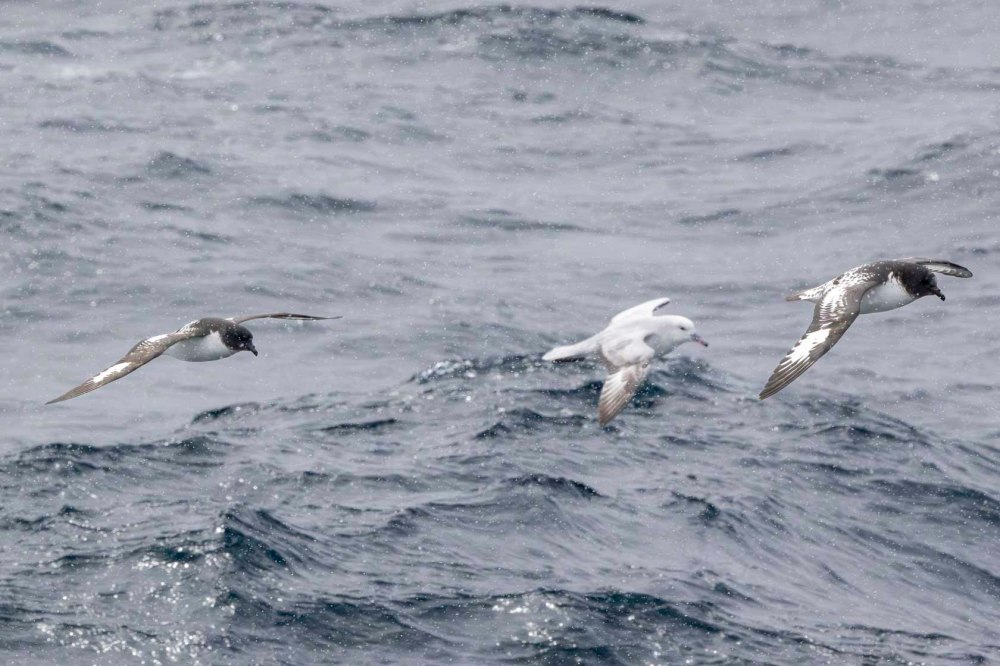
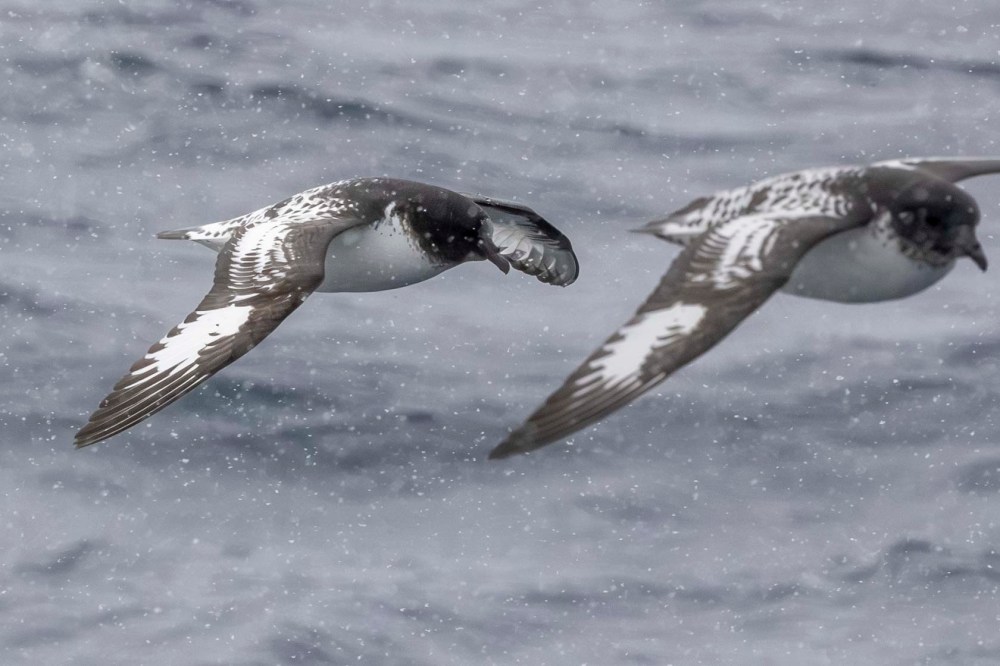
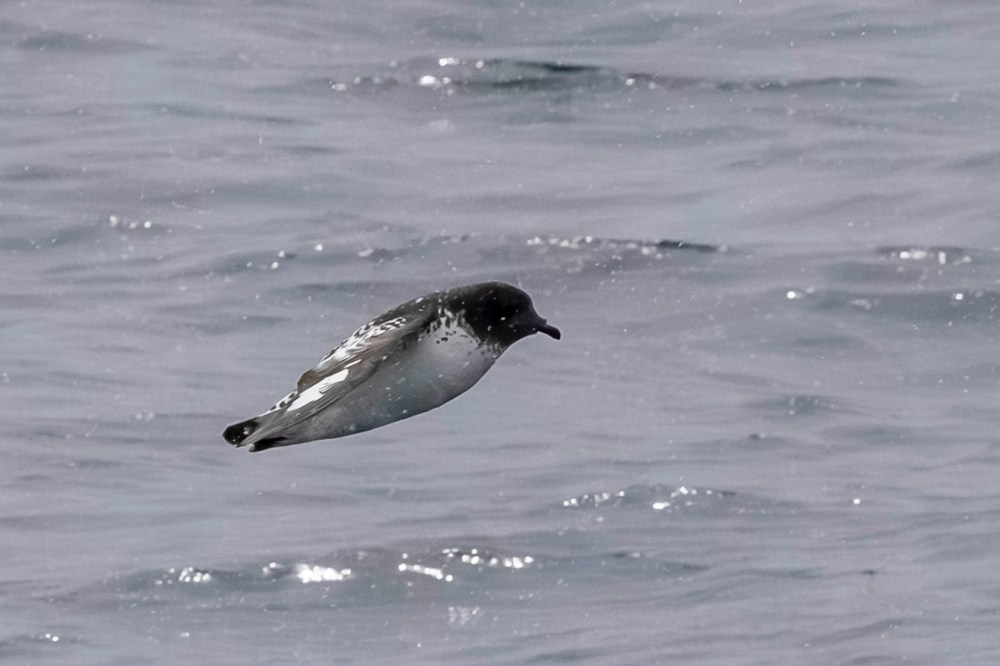
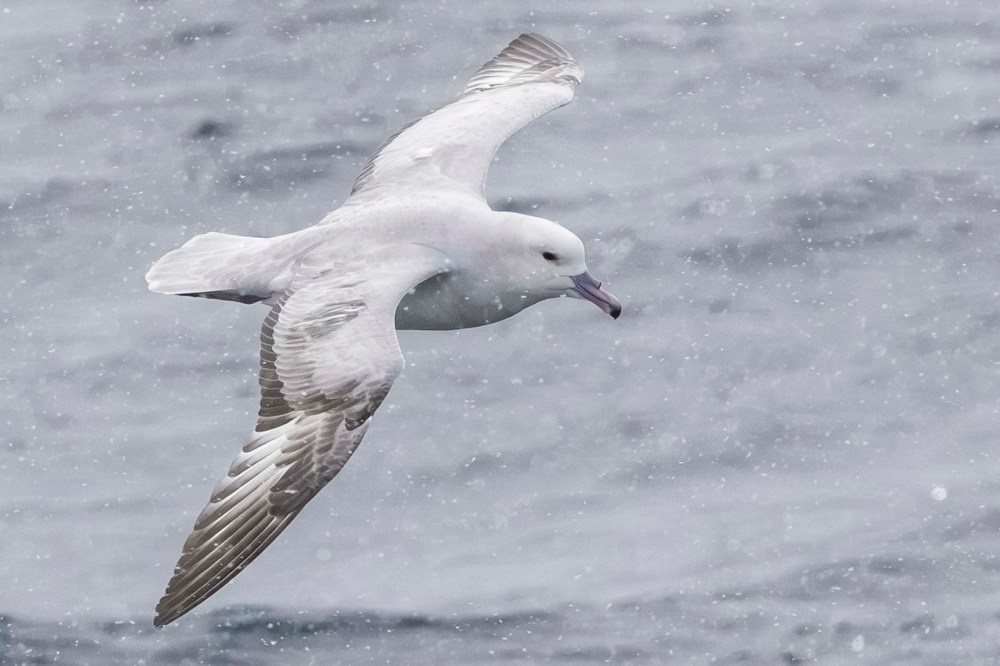
そこではマダラフルカモメとギンフルマカモメが家族のようになって飛んでいました。彼らはほぼ同じ物を食べるので、必然、一緒に飛ぶことになるようです。 There, the Cape Petrel and the Southern Fulmar flew together like family. Since they eat almost the same kinds of food, it seems inevitable that they end up flying together.
ここでも空飛ぶ鳥を撮る練習をしていました。時々、ペンギンみたいに飛ぶ鳥もいて笑ってしまいました。 Here too, I practiced photographing birds in flight. Sometimes I’d see birds flying like penguins, which made me laugh.
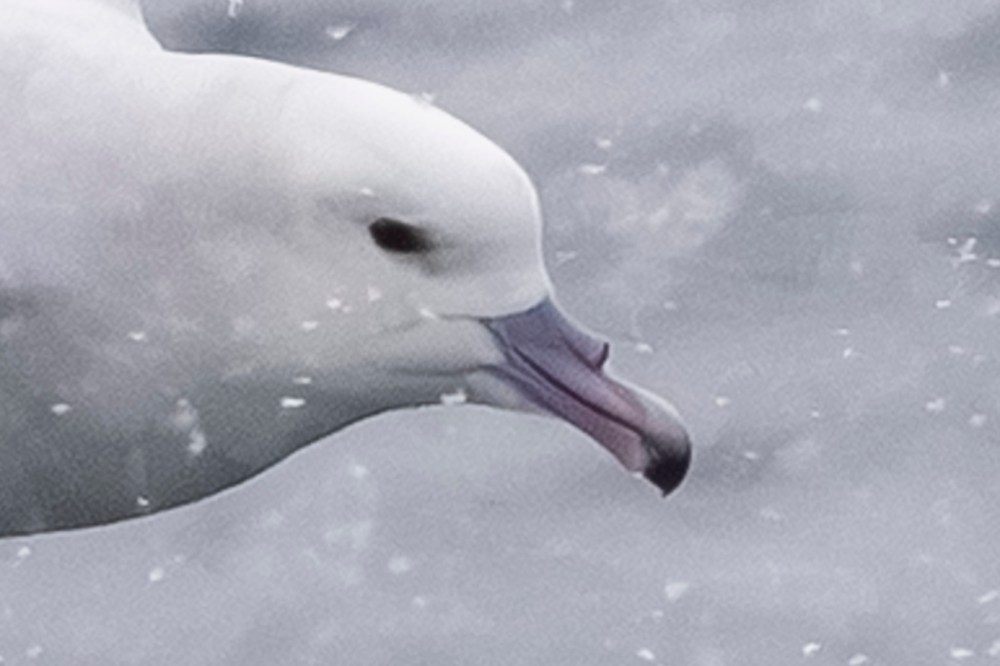
さて、少しこれらの鳥の説明をさせてもらいます。これらの鳥はフルマカモメ属に分類されています。大きな特徴は、嘴の上に鼻が付いていることです。 Now, let me explain a little about these birds. They are classified in the genus Fulmarus. A major characteristic is the presence of a Naricorns above the beak.
この鼻は大きく二つの役割をしますが、その一つに、凝縮された塩水を出すことがあげられます。海の生物を食べたり、海水を飲んだりするので、体内には大量の塩分が溜まります。そこで塩分を排出するメガニズムが作動して、時々この鼻から凝縮された塩分が流れ出てくるということです。 This nose serves two main purposes, one of which is to expel concentrated saltwater. Since they consume marine organisms and drink seawater, large amounts of salt accumulate inside their bodies. Consequently, a salt-excretion mechanism activates, causing concentrated saltwater to flow out of this nose periodically.
だから、時々、タラーっと鼻水が流れているように見えることがありますが、笑わないでくださいと、鳥学者さんが説明してくれました。 So, sometimes it might look like snot is dripping down, but please don’t laugh, the ornithologist explained.
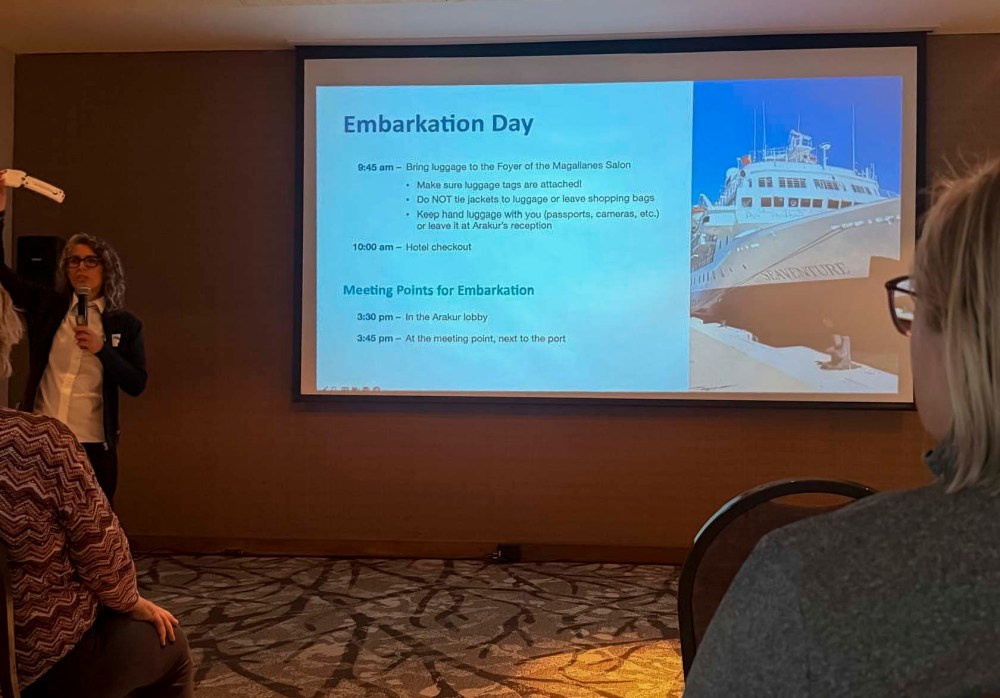
南極、サウスジョージア、フォークランド諸島の旅への出航の前日、ホテルでブリーフィングがありました。 The day before departure for our journey to Antarctica, South Georgia, and the Falkland Islands, a briefing was held at the hotel.
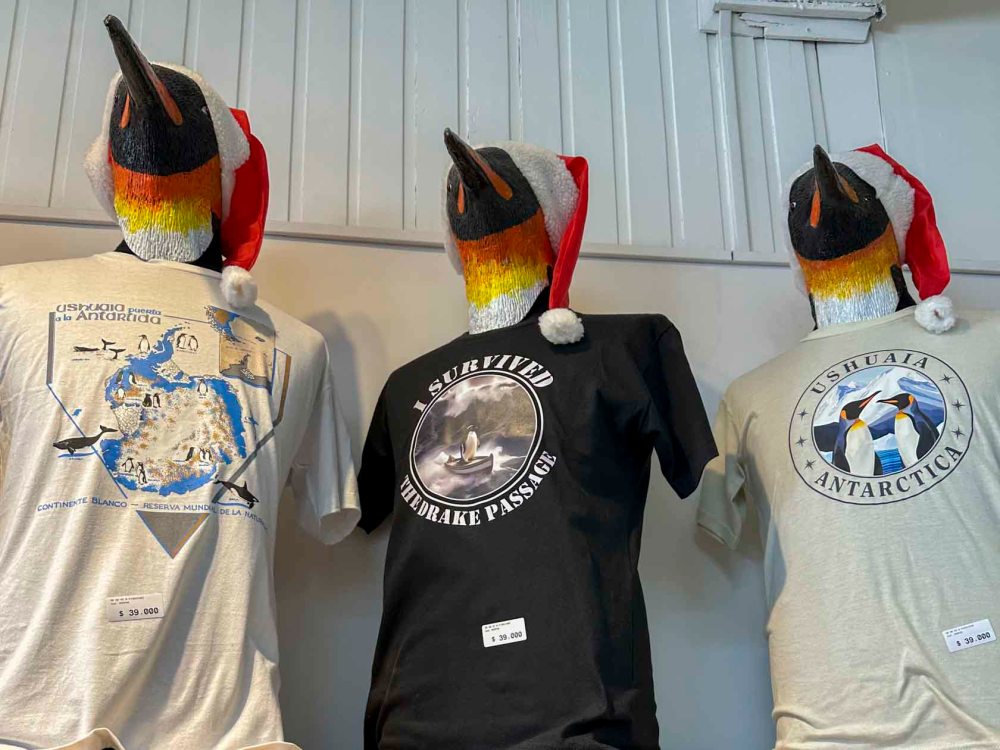
その後、私たちは最後の買い物のためにウシュアイアのダウンタウンに出かけました。この町ではマネキンもペンギンなんです。クリスマス直後だったので、まだ、赤いサンタの帽子をかぶってます。 After that, we headed to downtown Ushuaia for our final shopping. Even the mannequins in this town are penguins. Since it was just after Christmas, they were still wearing red Santa hats.
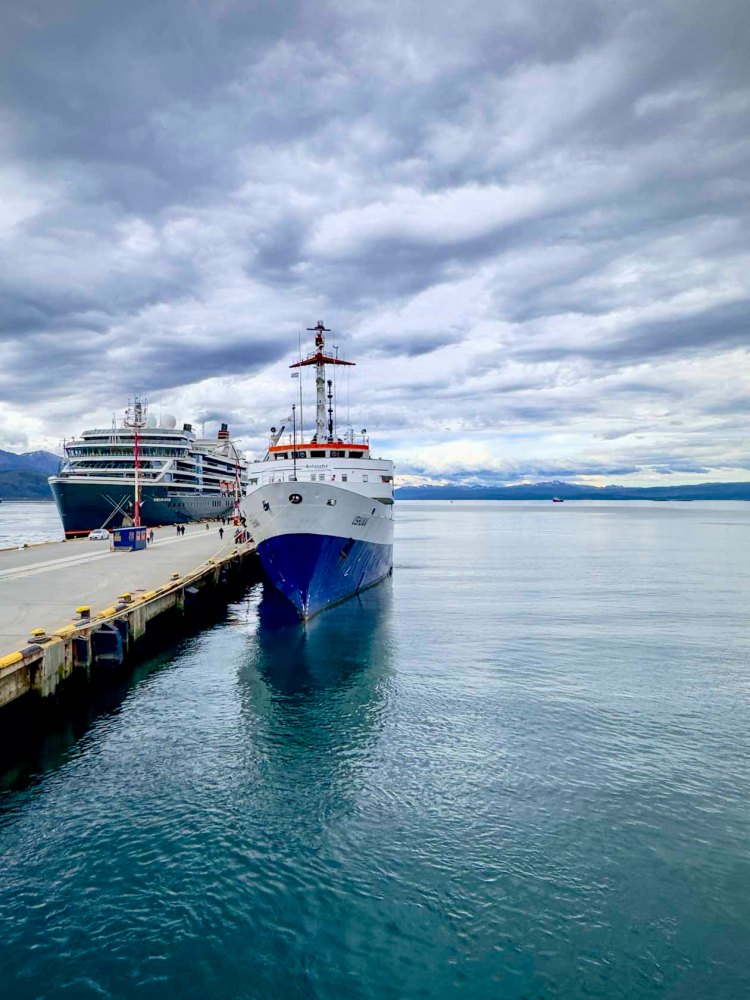
ホテルに帰る前、桟橋を覗いてみましたが、私たちの船はまだ入港していないようでした。 Before returning to the hotel, I peeked at the pier, but our ship didn’t seem to have docked yet.
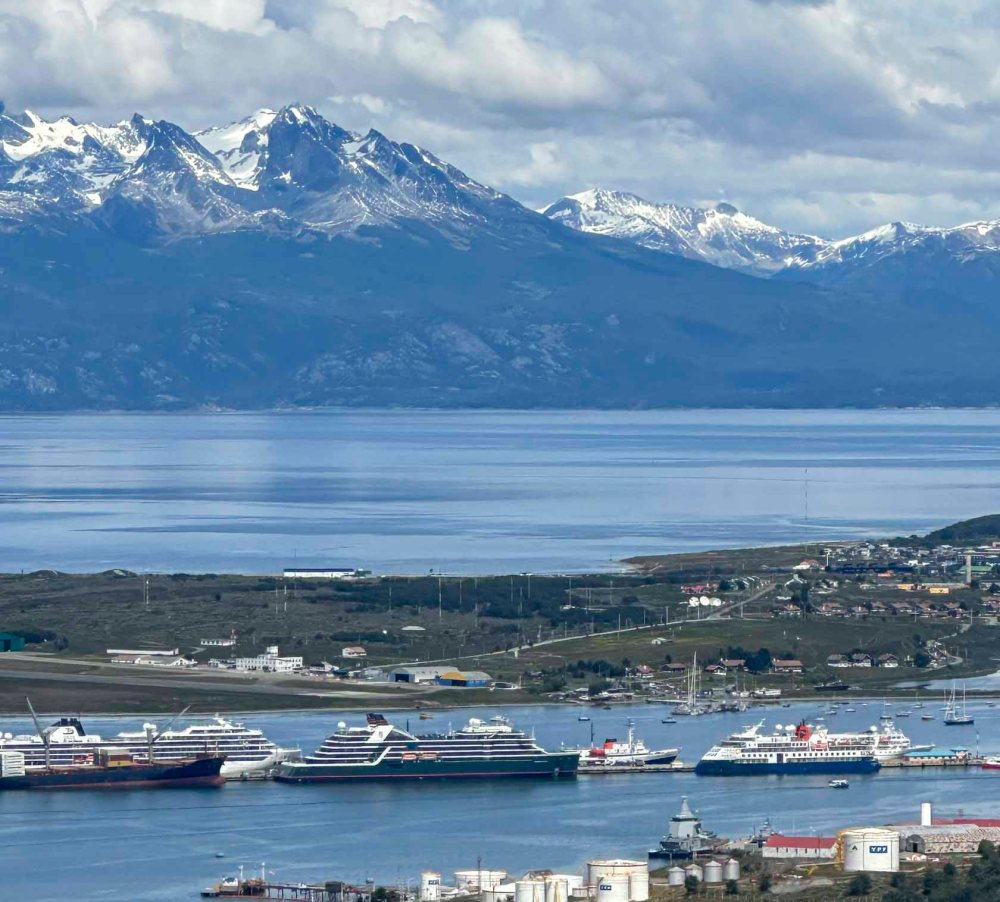
でも翌朝、ホテルの部屋から桟橋を見たら、今まで以上に多くの船が見えました。 But the next morning, when I looked out from our hotel room, I could see even more ships than before.
さて、乗船です。 Now, boarding time.
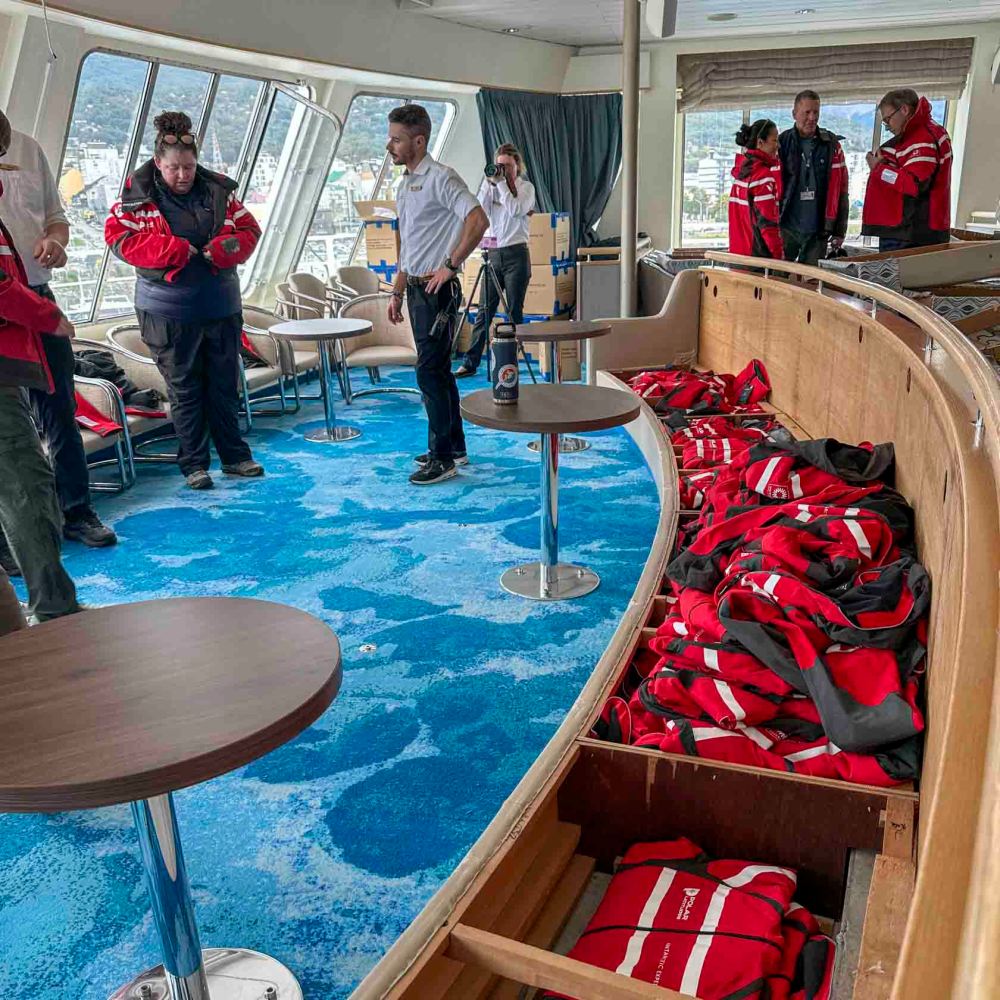
乗船すると、私たちのスーツケース、その他の必需品は無事、部屋まで運ばれていました。その後、エクスペディション ジャケットと呼ばれる南極旅行用のジャケットの試着をしました。 Upon boarding, our suitcases and other essentials had been safely delivered to our cabin. After that, we tried on the expedition jackets designed for Antarctic travel.
このジャケットは優れもので、腕にIDカードを入れる場所があり、船のチェックイン、チェックアウト、それに私たちの部屋をアンロックする機能もついていました。 This jacket was excellent, featuring a pocket for an ID card on the sleeve, and it also had functions for ship check-in and check-out, as well as unlocking our room.
この他に、緊急避難訓練をしたりして時間はどんどん過ぎていき、いつの間にか船は桟橋を離れていました。 In addition to this, time flew by as we conducted emergency evacuation drills, and before we knew it, the ship had left the pier.
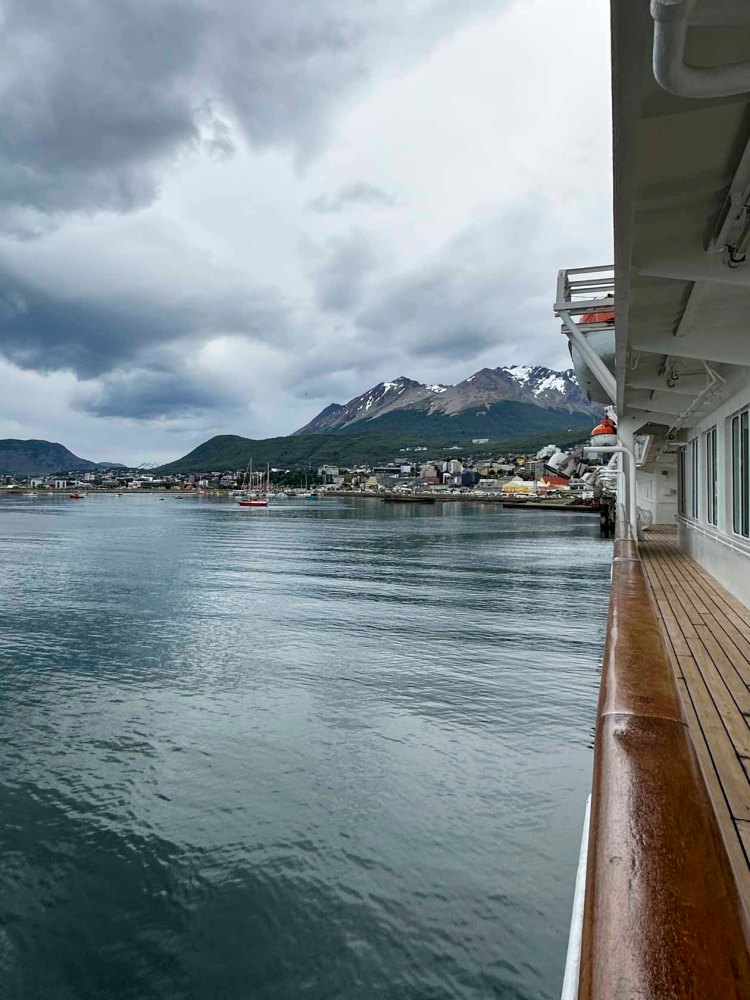
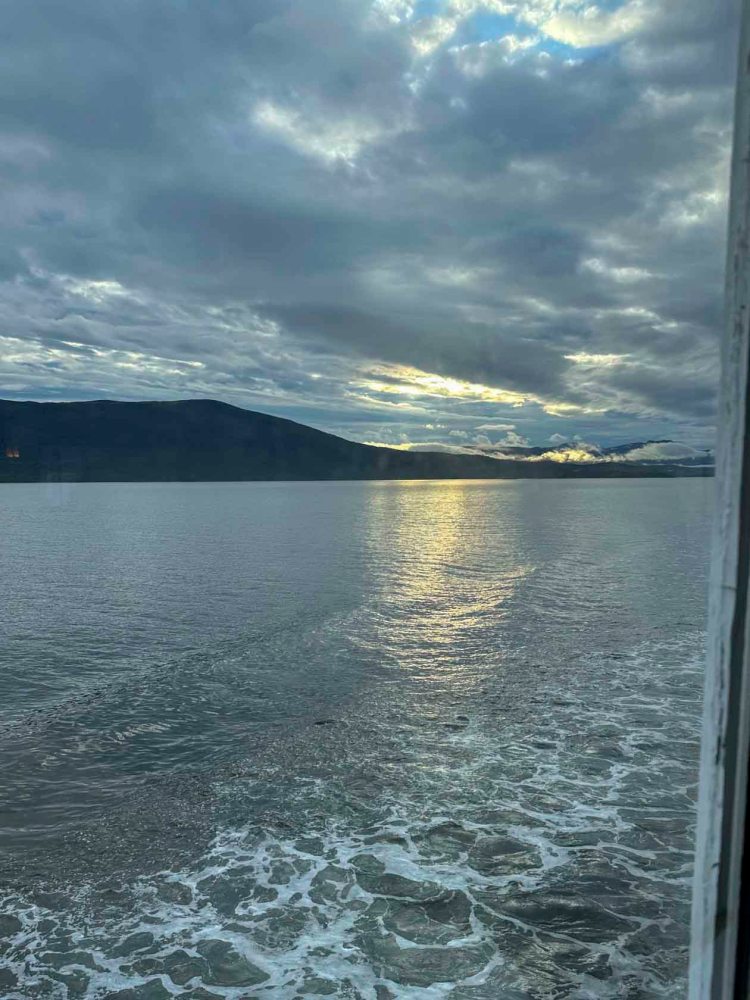
ウシュアイアの街を後ろに、これから20日間の船の旅に出る実感が徐々に湧いてきました。鳥インフルエンザの影響で、1年間延期しなければならなかった末の旅でした。 Leaving Ushuaia behind, the reality of embarking on a 20-day voyage gradually sank in. This journey had been postponed for a year due to the impact of avian influenza.
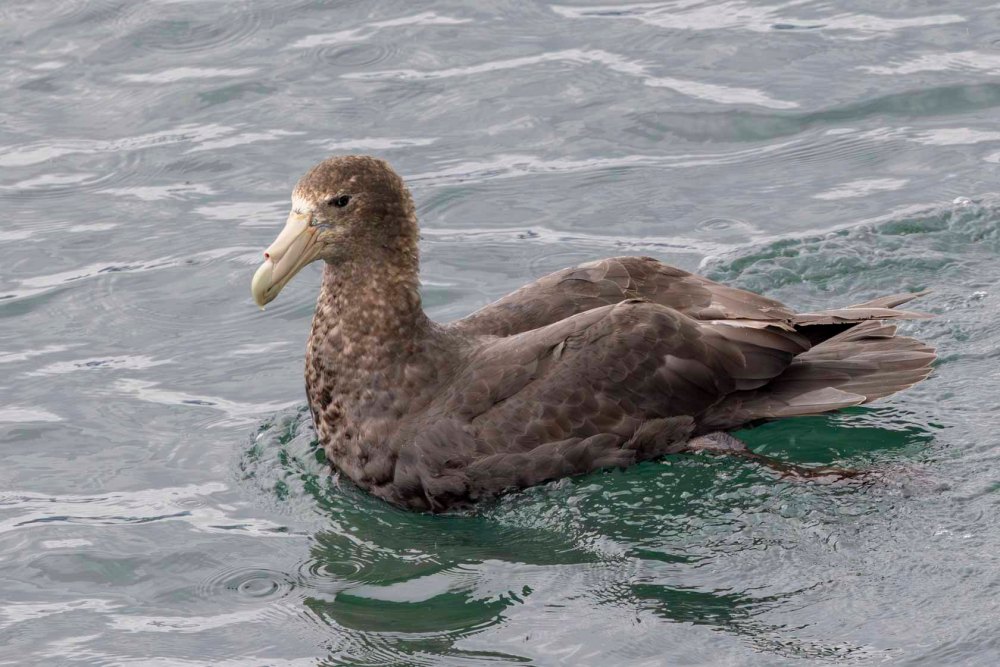
オオフルマカモメ Southern Giant Petrel
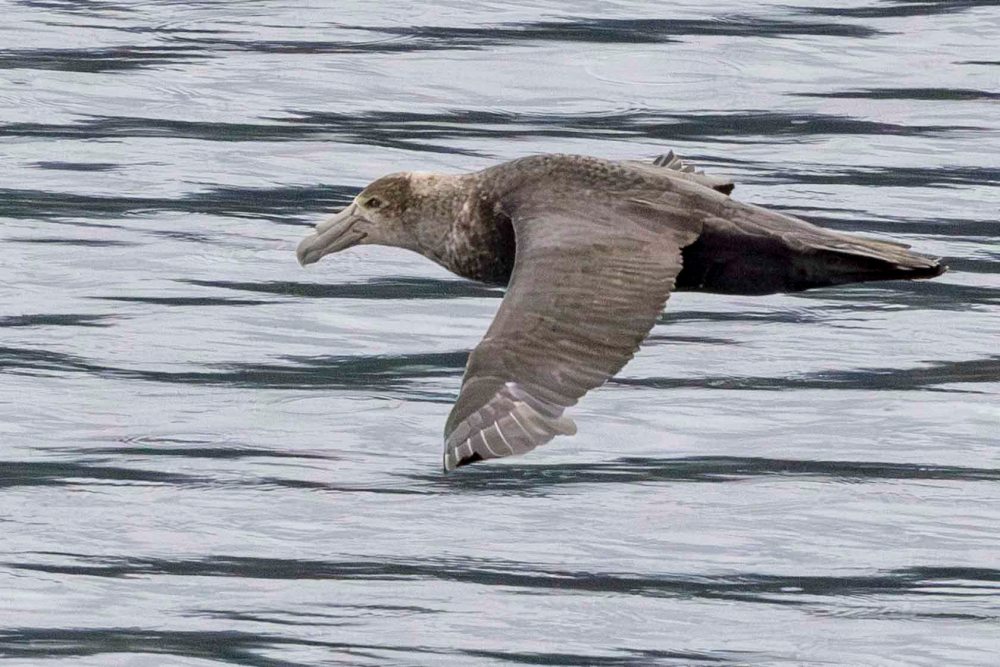
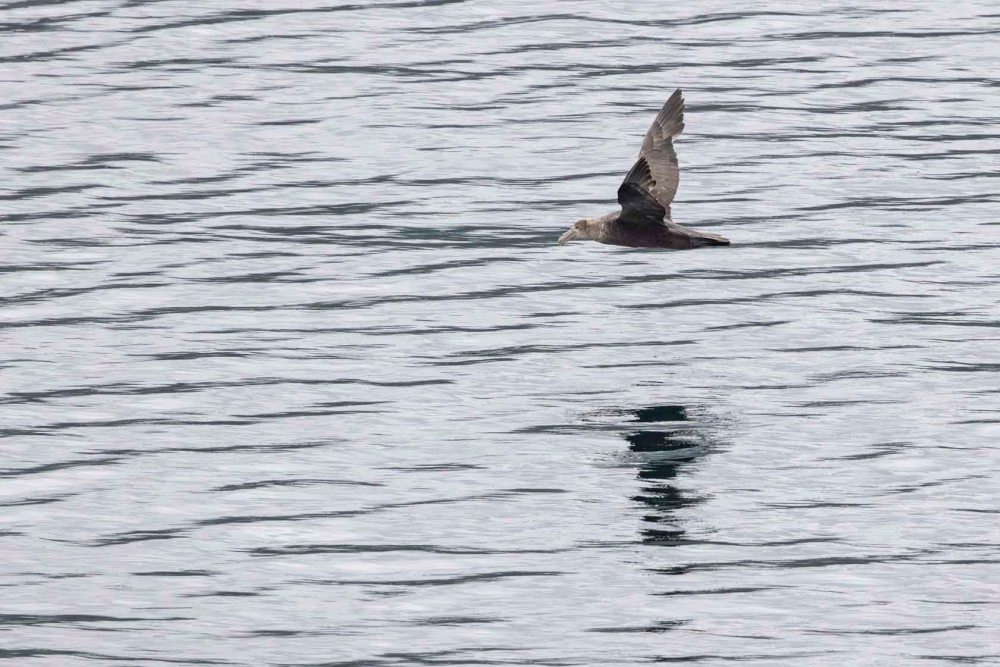
ちょうど、このオオフルマガモが船の側から羽ばたいていきました。南極の鳥で、1メートルぐらいの大きさです。羽を伸ばすと2メートルになると言われています。 Just then, this Southern Giant Petrel took flight from beside the ship. It’s an Antarctic bird, about one meter in size. It’s said that when it spreads its wings, it reaches two meters.
これから何百羽と見ることになるとは、この時は知りませんでした。 At that moment, I had no idea I would come to see hundreds of them.
こうして、初日は穏やかに過ぎていきました。 And so, the first day passed peacefully.
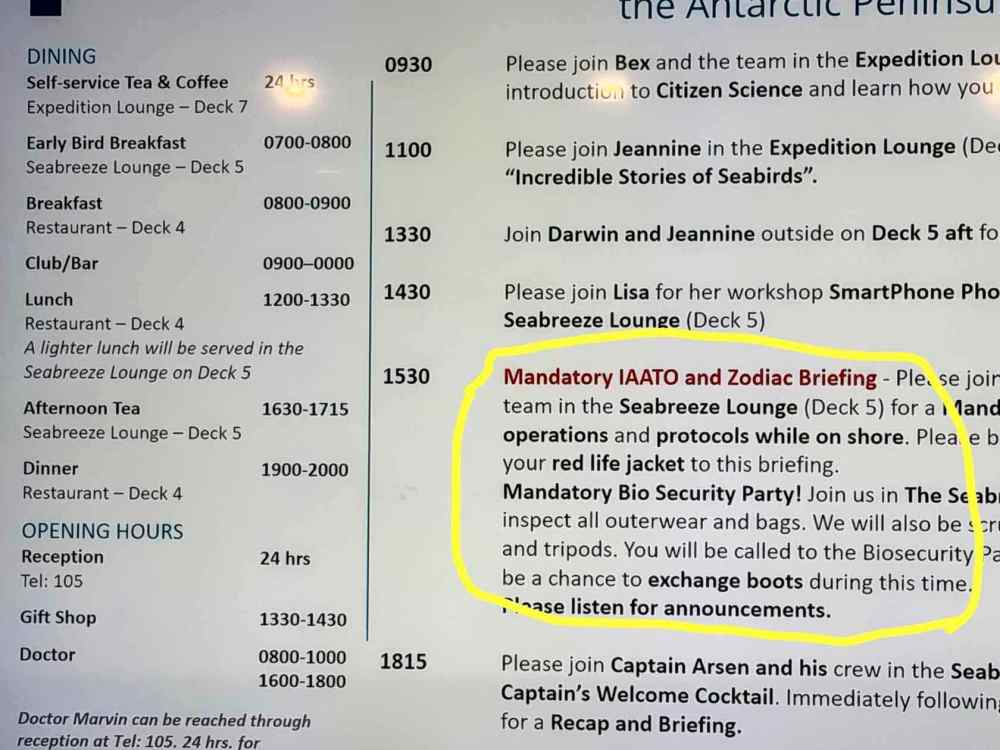
翌日、12月30日の日程が張り出されていました。 The schedule for the following day, December 30th, was posted.
注目は、バイオセキュリティーのチェックがあったことです。南極やそれぞれの島に上陸する際には、島の地面に触れることが許されているのは、支給されたブーツのみです。三脚もダメ、バックパックやカメラも手袋も全てダメです。地面に触れなくても、しゃがむことすら許されませんでした。だから、島に持って行くであろうすべての所持品を持って会場に行き、丁寧に検査されました。とりわけマジックテープ類、ジャケットのポケットの中、バックパックの底の方に溜まっていた小さな砂まで掃除機で吸い取られました。私の場合は、支給されたブーツの底の一角にカビのようなものが付着していたようなので、デッキで消毒してもらいました。 The key point was the biosecurity check. When landing in Antarctica or on any islands, only the issued boots are permitted to touch the ground. Tripods are forbidden, as are backpacks, cameras, gloves—absolutely everything. Even crouching down was forbidden, regardless of whether you touched the ground. Consequently, we took all belongings we planned to bring to the islands to the venue for meticulous inspection. Particular attention was paid to Velcro items, jacket pockets, and even the tiniest grains of sand accumulated at the bottom of backpacks, which were vacuumed out. In my case, a mold-like substance appeared to be attached to one corner of the sole of my issued boots, so they were disinfected on deck.
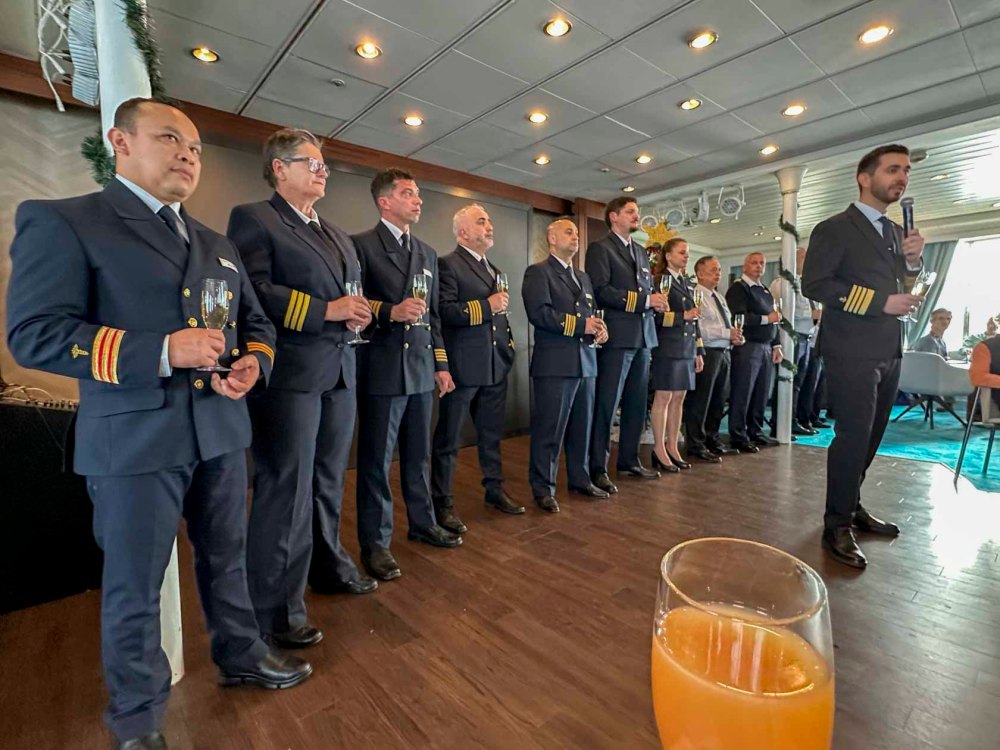
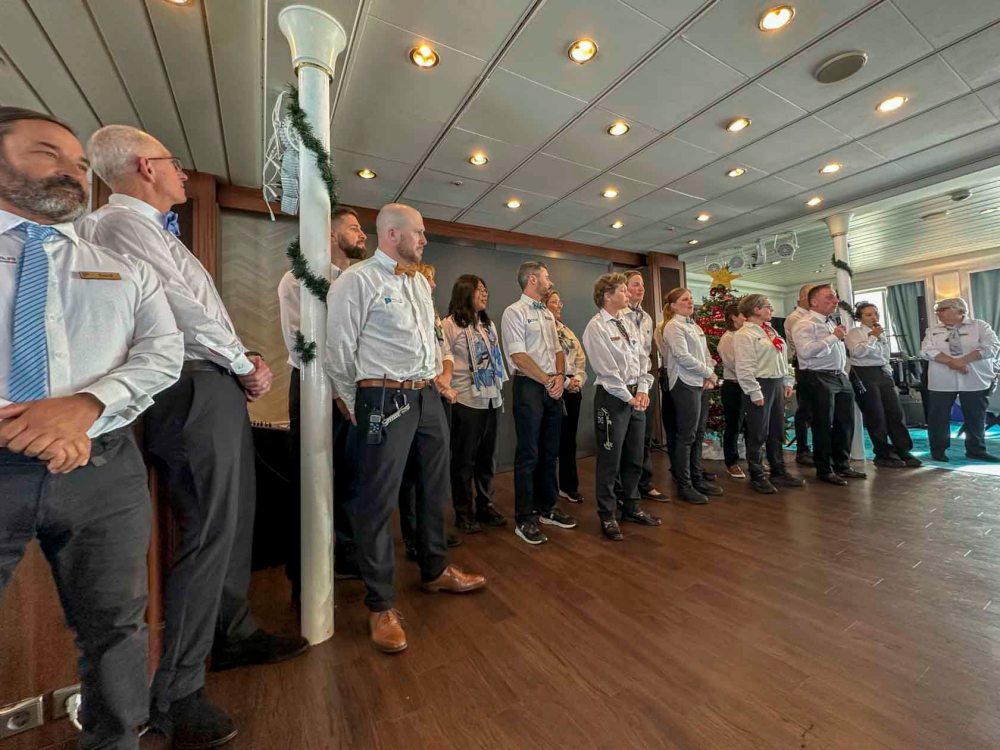
その後、夕食前に船長と船員たちの歓迎のご挨拶がありました。左側の制服を着た人たちはオフィサーです。キャプテンと共に7階のブリッジにいる人たちで、会う機会はほとんどありませんでした。右側の人たちはスタッフメンバーで、何らかのサイエンティストやスペシャリストです。だからほとんど毎日会っていました。 After that, the captain and crew gave a welcome address before dinner. The people in uniforms on the left are officers. They work alongside the captain on the bridge on the 7th floor, and we rarely had the chance to meet them. The people on the right are staff members, scientists or specialists of some kind. So we saw them almost every day.
その他、お掃除、料理、エンジンルーム、など、多くのスタッフメンバーがいました。こんなにたくさんの人たちが私たちのお世話を毎日してくれて、感謝の気持ちでいっぱいでした。記憶が不確かですが、乗客より船のスタッフメンバーの方が多かったと記憶しています。 Additionally, there were many staff members handling cleaning, cooking, the engine room, and more. I was filled with gratitude knowing so many people took care of us every day. My memory is a bit hazy, but I recall there were more crew members than passengers.
この日は更にフランシス ドレイクの世界一周の就航の話を聞かせてもらいました。なぜなら、彼の名前にちなんでつけられたドレイク海峡をこの夜まさに横切ろうとしていたからです。細かい説明は一切なく、超簡単に面白くスキットとしてまとめられていました。よかったら以下のビデオをみてください。(全て英語です。)スキットが始まってからビデオを撮り始めたので、最初の部分はビデオに収められていませんが、趣旨はわかるはずです。 On this day, we also heard about Sir Francis Drake’s circumnavigation voyage. This was because we were about to cross the Drake Passage that very night, named after him. There was no detailed explanation whatsoever; it was simply put together as a super easy and humorously fun skit. If you’d like, please watch the following video. I started recording the video after the skit began, so the opening part wasn’t captured, but you should get the gist.
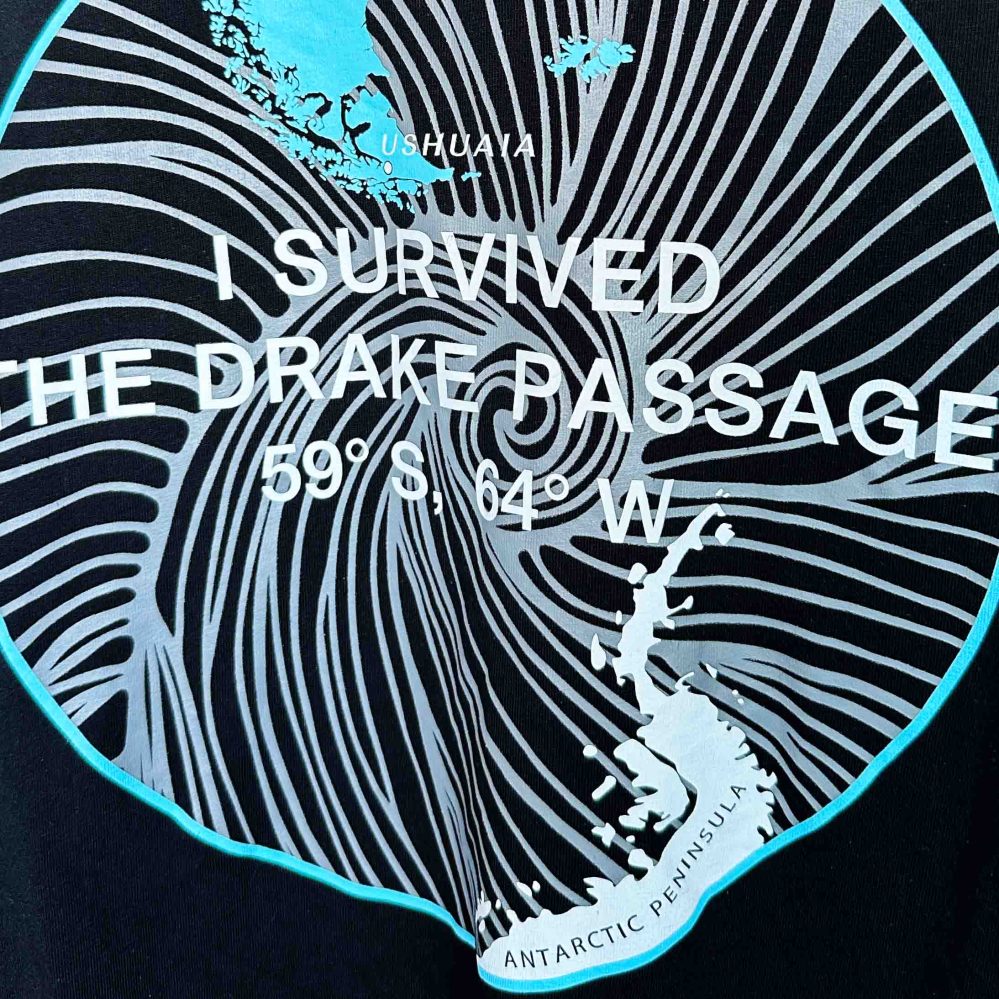
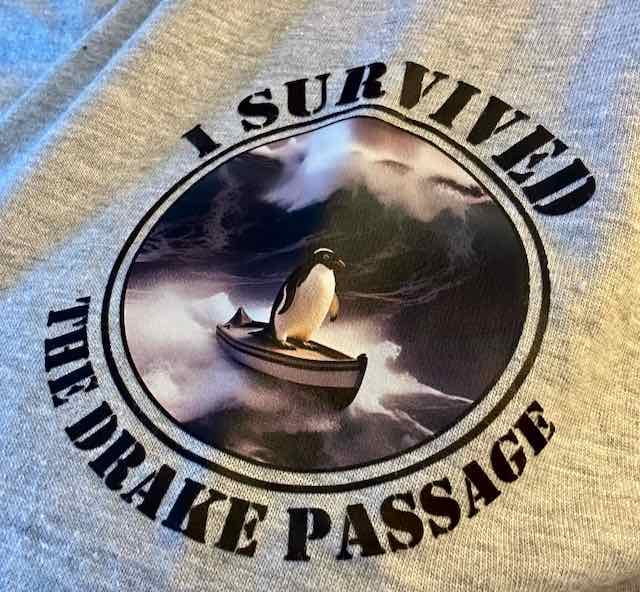
実は、今まで一度も船酔いをしたことがなかったので、たかを括っていました。でも、ここは荒波で有名な場所です。人生初めての船酔いを経験し、舟酔い止めのパッチを耳の後ろに貼りました。そのおかげで、その後の航海は問題なく過ごせました。 Actually, I’d never gotten seasick before, so I was overconfident. But this is a place famous for rough seas. I experienced seasickness for the first time in my life and applied a seasickness patch behind my ear. Thanks to that, I was able to get through the rest of the voyage without any problems.
バンちゃんが買ったT -シャツ。 The T-shirt Ban-chan bought.
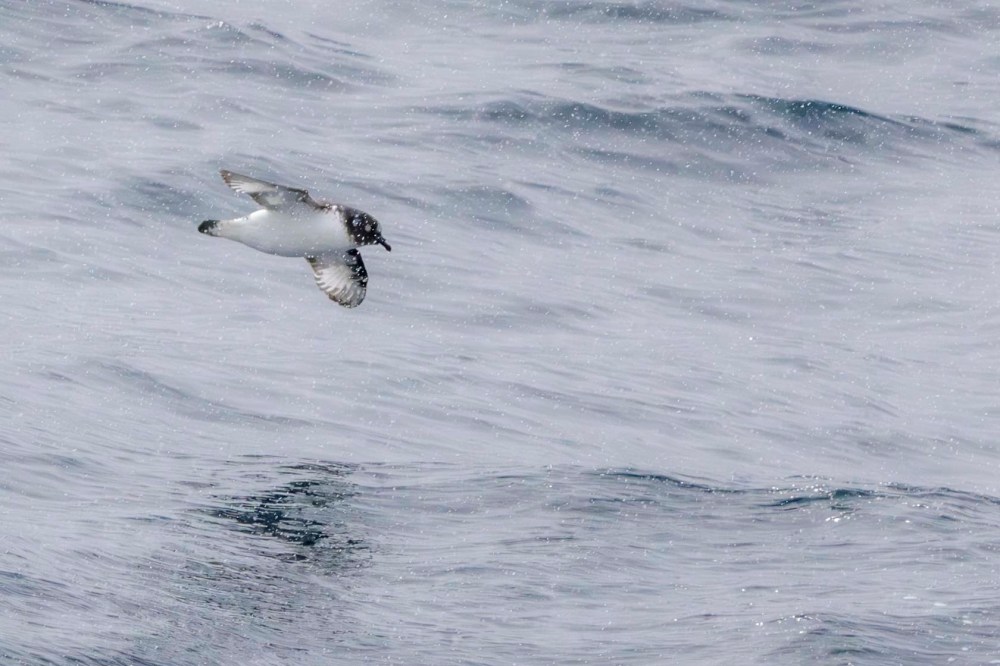
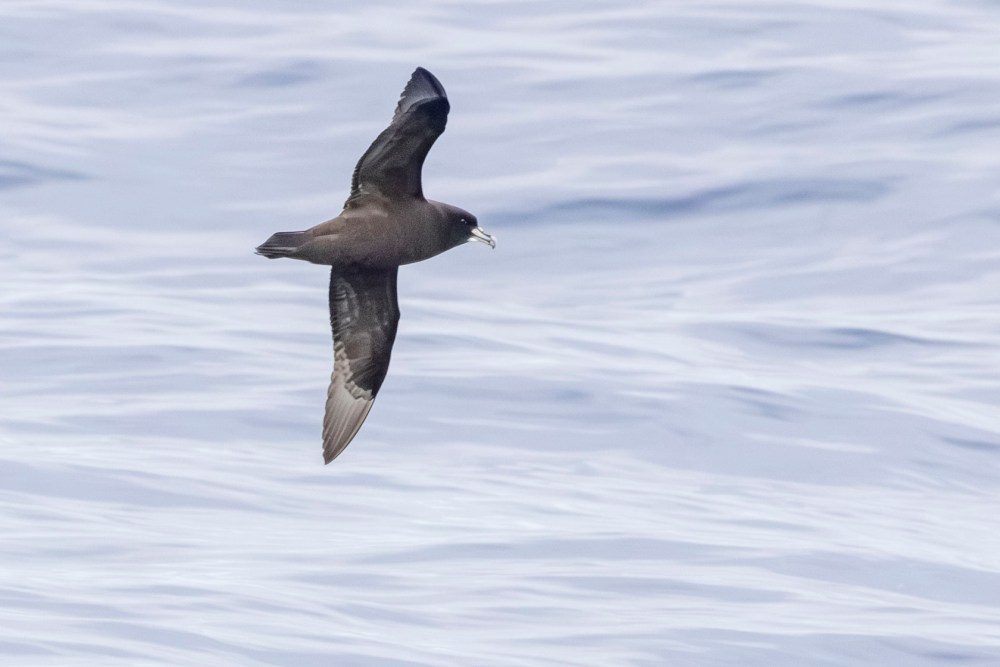
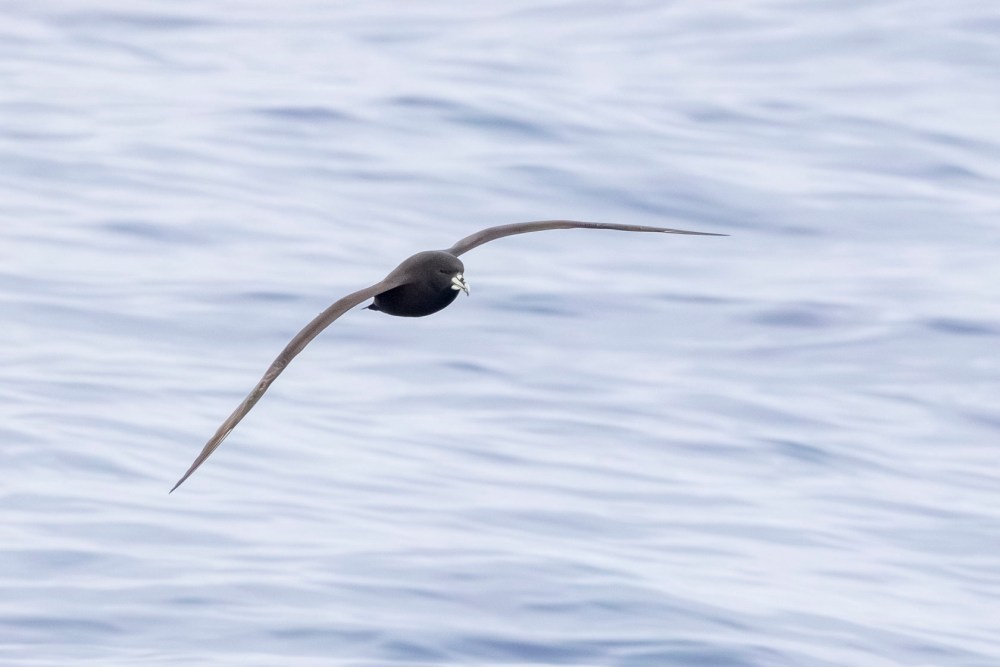
その後は海の上を飛ぶ鳥達を追いかけて、飛ぶ鳥のショットの練習をしました。ノドジロクロミズナギドリです。500枚ぐらい撮って、この2枚だけがなんとか見られるショットでした。 After that, I practiced photographing birds in flight by following the seabirds. This is a White-chinned Petrel. I took about 500 shots, and these two were the only ones that turned out somewhat decent.
フィルム時代の昔では到底できなかったことですよね。デジタルカメラならあとの498ショットはさっさと削除すればいいだけの話ですからね。(笑) Back in the film days, that would’ve been impossible, right? With a digital camera, you can just delete the remaining 498 shots in a flash. (lol)
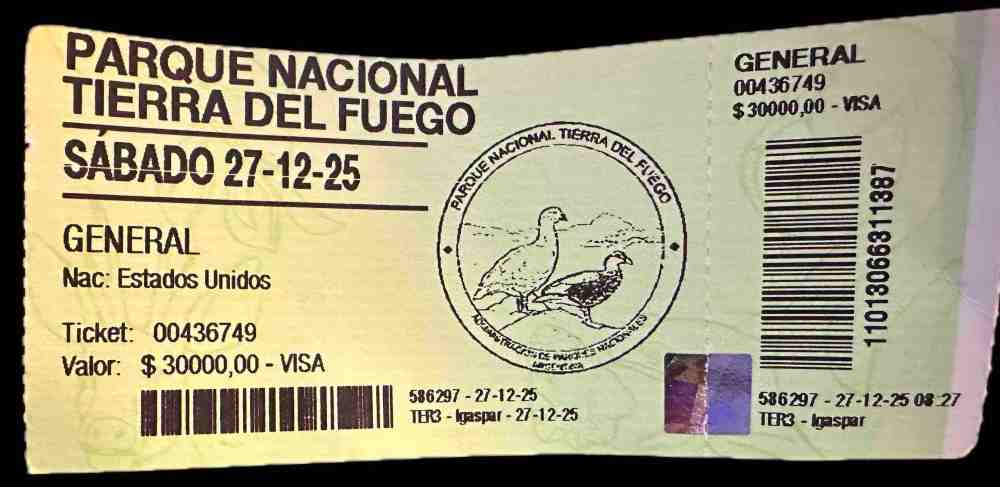
アルゼンチン最南端の街、ウシュアイアはティエラ デル フエゴ島にあります。この島の東側がアルゼンチンで西側がチリと区分されています。そして、アルゼンチン側の島全域がティエラ デル フエゴ州となっています。同名の国立公園はウシュアイアから13号線を西へ向かえば行けます。私たちはバードウォッチングをしていたので、車で移動しましたが、おそらく多くの観光客はかつて囚人たちを乗せて走っていた列車で公園内に入ると思います。 Ushuaia, Argentina’s southernmost city, is located on Tierra del Fuego Island. The eastern part of this island belongs to Argentina, while the western part belongs to Chile. The entire Argentine side of the island constitutes the province of Tierra del Fuego. The national park of the same name can be reached by heading west on Route 13 from Ushuaia. We traveled by car since we were birding, but most tourists likely enter the park via the train that once transported prisoners.
Screenshot
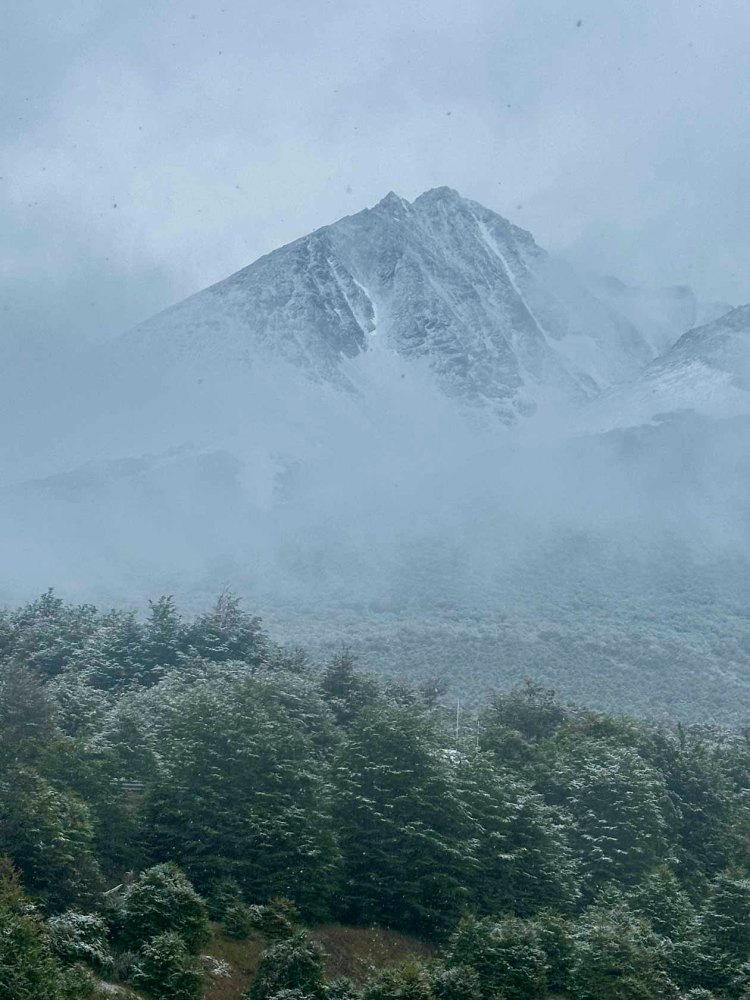
私たちがこの公園を訪れた日は、朝から雪でした。それでも日中は、雨、曇り、晴れと変化の多い日でした。これがウシュアイアの典型的な天気なのかもしれません。 The day we visited this park, it had been snowing since morning. Even so, the weather changed frequently throughout the day—rain, clouds, and sunshine. This is probably typical weather for Ushuaia.
この日も鳥の専門家兼ガイドのエステヴァンと彼の助手ライアネル、そして、鳥をこよなく愛するリサと私たち5人で鳥探しです。昨日と違い、道があるので歩きやすい。それでも時折道から逸れて林の中を走ったりして、スリル満点でした。 On this day too, we went birding with Estevan, our bird expert and guide, his assistant Lionel, Lisa who adores birds, and us. Unlike yesterday, there was a hiking path, making it easier to walk. Even so, we occasionally veered off the trail and ran through the woods, making it thrilling.
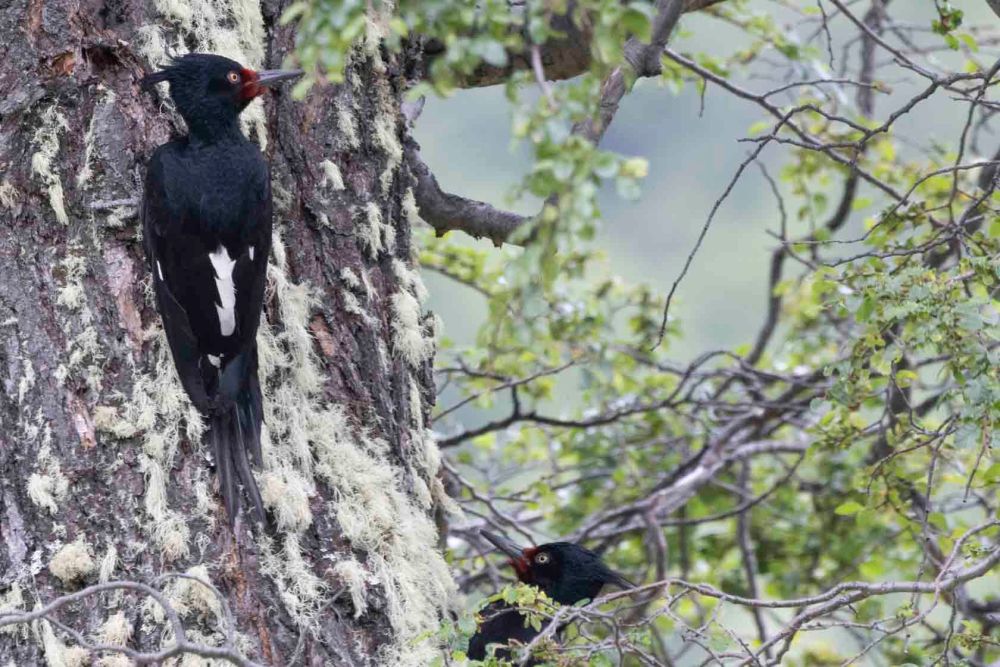
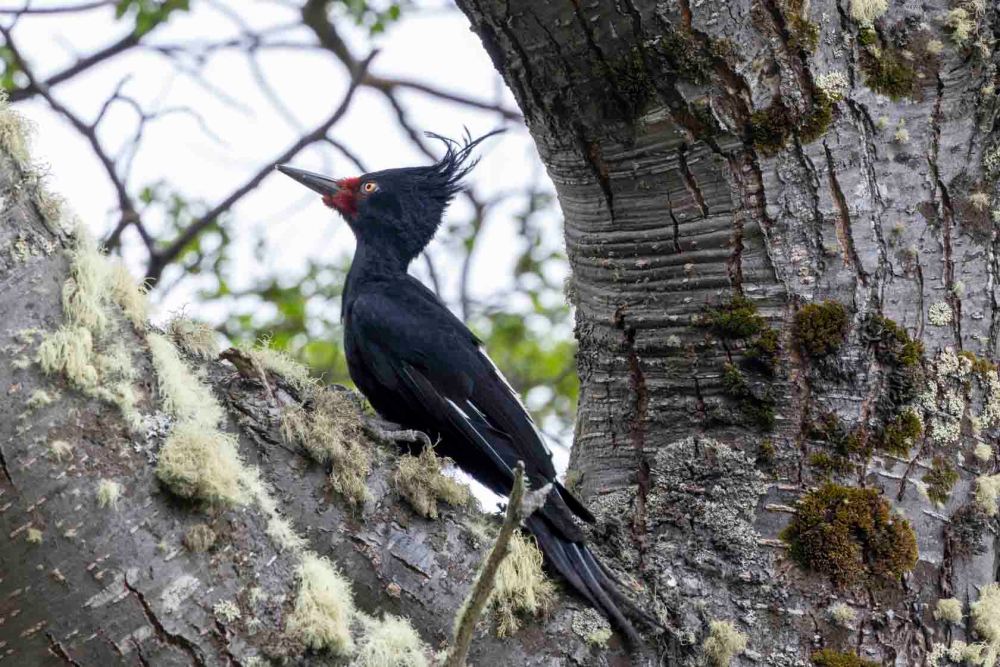
この日のハイライトは何といってもマゼランキツツキです。ぱちぱちぱち! 目標一つ、チェック!!! The highlight of the day was definitely the Magellanic Woodpecker. Clap clap clap! One goal, check!!!
残念ながらオスは見つけられませんでした。でも、これで十分です。 Unfortunately, we couldn’t find the male. But this is enough.
実は、公園中を歩き回っても見つけられなかったので、諦めてビジターセンターでマゼランキツツキのTシャツを買っていたんです。その後、公園入り口付近をうろうろしていたら、いた! Actually, we couldn’t find it even after walking all over the park, so we had just about given up, and all of us bought a Magellanic Woodpecker T-shirt at the visitor center as a consolation prize. Then, while wandering around near the park entrance, there it was!
ライアネルが遠くから聞こえてくる鳴き声を聞きつけ、その声を頼りに林の中を歩き回りました。 Lionel heard the cry coming from afar and walked through the woods, guided by the sound.
”H” という字を描いているようですよね。 It looks like he was drawing the letter “H,” doesn’t it?点描画の完成です。”H”というよりも虫の顔を描いたのかもしれない。(笑) The pointillism painting was complete. Maybe he drew an insect’s face rather than the letter “H”. (lol)
この時に撮った写真の数は400枚以上、ビデオも撮りました。ほとんどのショットはボケてますが、数枚はなんとか使えるものが撮れました。 I took over 400 photos at that time and also shot some video. Most of the shots are blurry, but I managed to get a few usable ones.
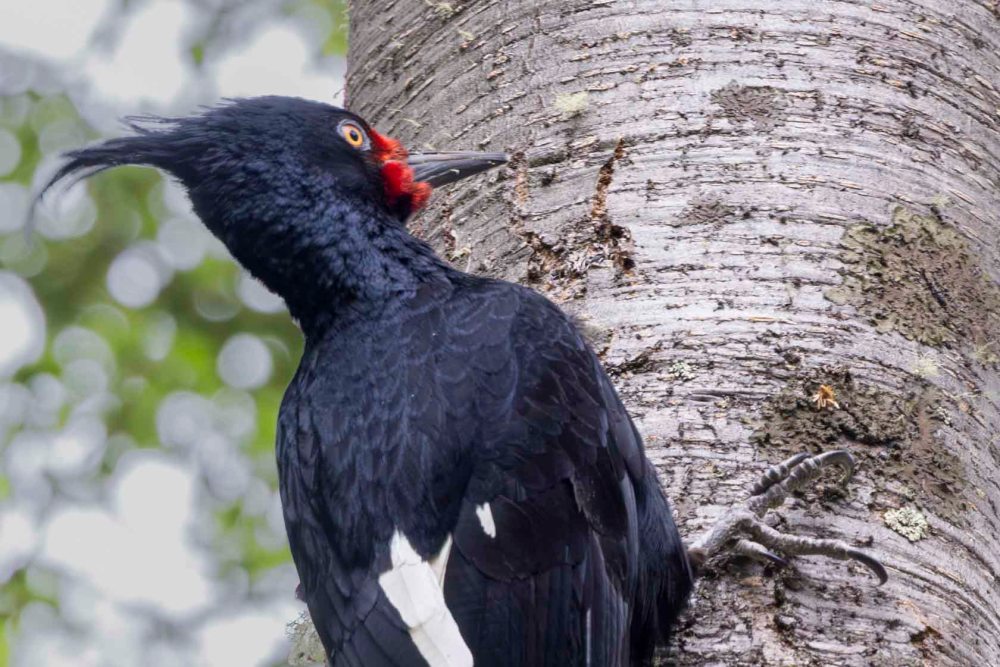
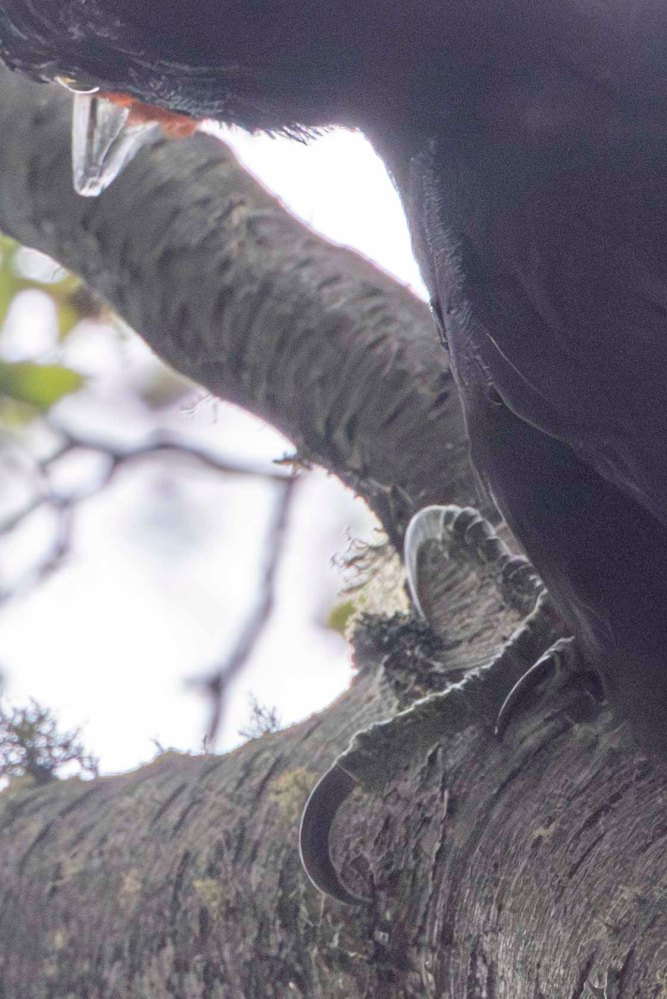
ところで、キツツキの足の指は4本です。そして、足指の形を対趾足と言います。オウムやロードランナーなどと同じで、2本の指が前を向き、2本の指が後ろを向いていることを指します。上の写真では見えにくいので、こちらをご覧ください。4本目の指は見えませんが、2本づつ、使われています。 By the way, woodpeckers have four toes on each foot. The shape of these toes is called zygodactylous feet. Like parrots and roadrunners, this means two toes point forward and two point backward. It’s hard to see in the photo above, so take a look here. The fourth toe isn’t visible, but they use two toes at a time.
こちらも両側に2本づつ足指が見えています。残りの指は上向きに使われているはずです。 Here too, two toes are visible on each side. The remaining toes should be pointing upward.
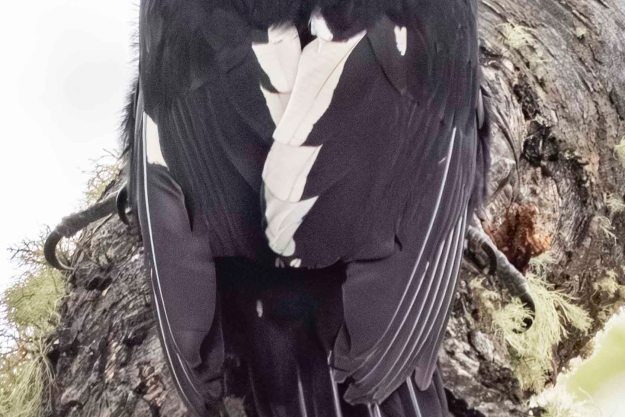
それから、もう一つ、面白い写真をご紹介します。首が180度回っていて、すごく不思議かつ滑稽です。。もちろん、ほとんどの鳥はできるんですが、この顔が背中を向いている姿、おもしろい。 Then, here’s another interesting photo. Its neck is twisted 180 degrees—it’s incredibly strange and comical. Of course, most birds can do this, but seeing its face turned toward its back is just funny.
最後に、再びビデオです。編集してません。手ブレ修正しただけですがこらんください。 Finally, here’s the video. It hasn’t been edited. I only stabilized the shaky footage, but please take a look.
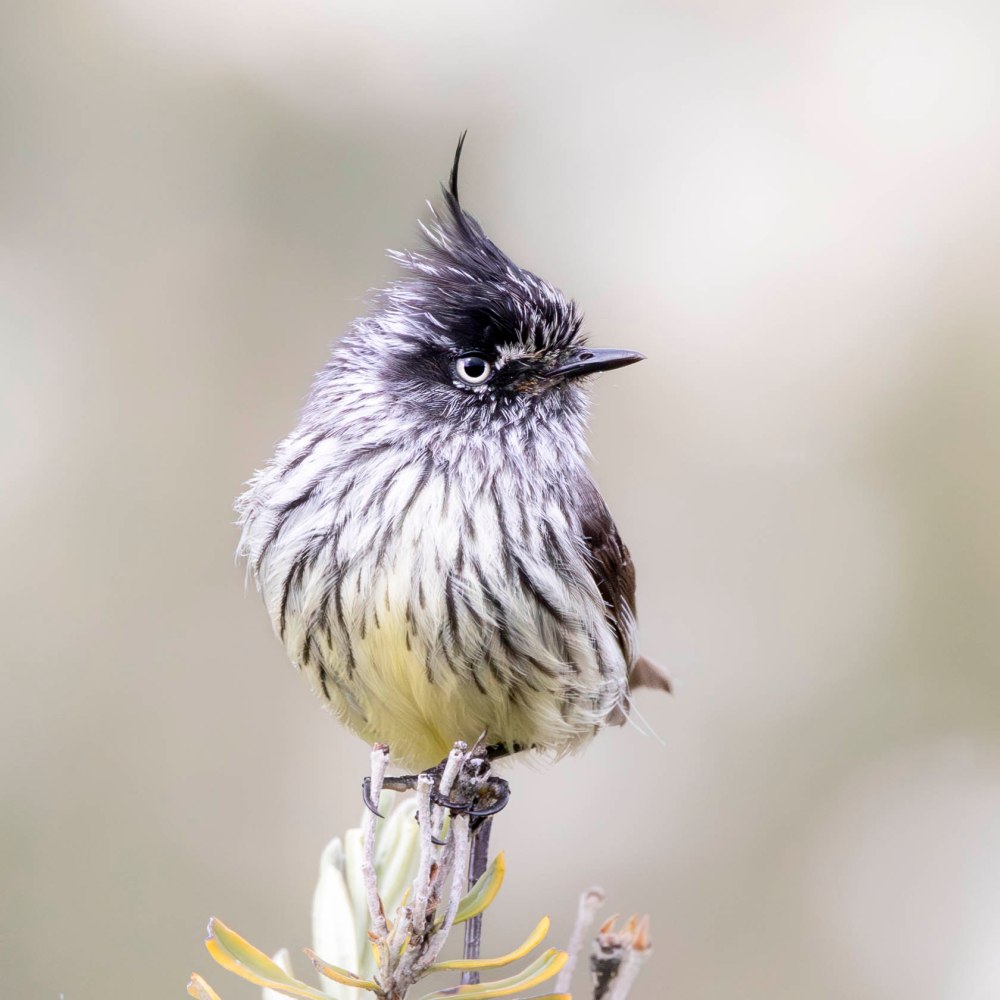
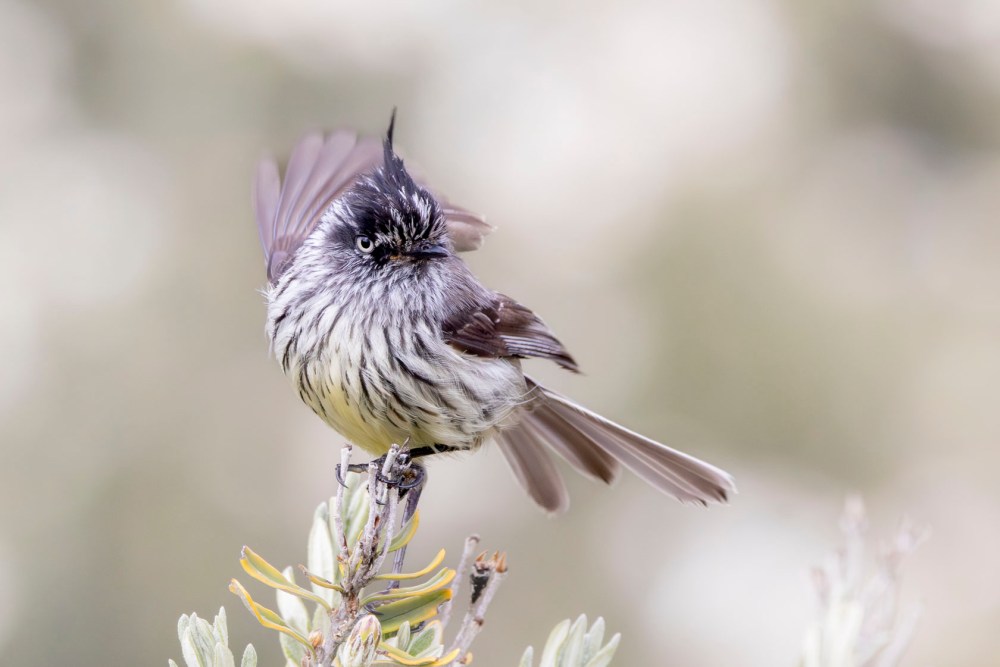
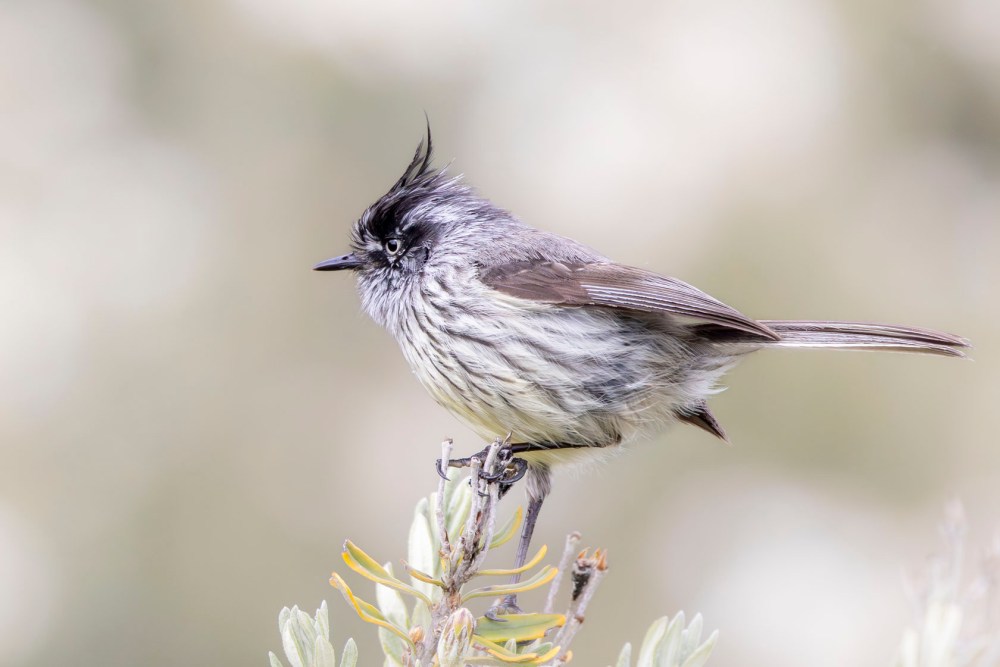
さて、次に紹介する鳥はエボシカラタイランチョウです。めちゃくちゃ可愛くて、しかも素敵に撮れました。大好きな鳥になりました。 Next up is the Tufted Tit-Tyrant. It’s incredibly cute, and I managed to capture it beautifully. It became one of my favorite birds.
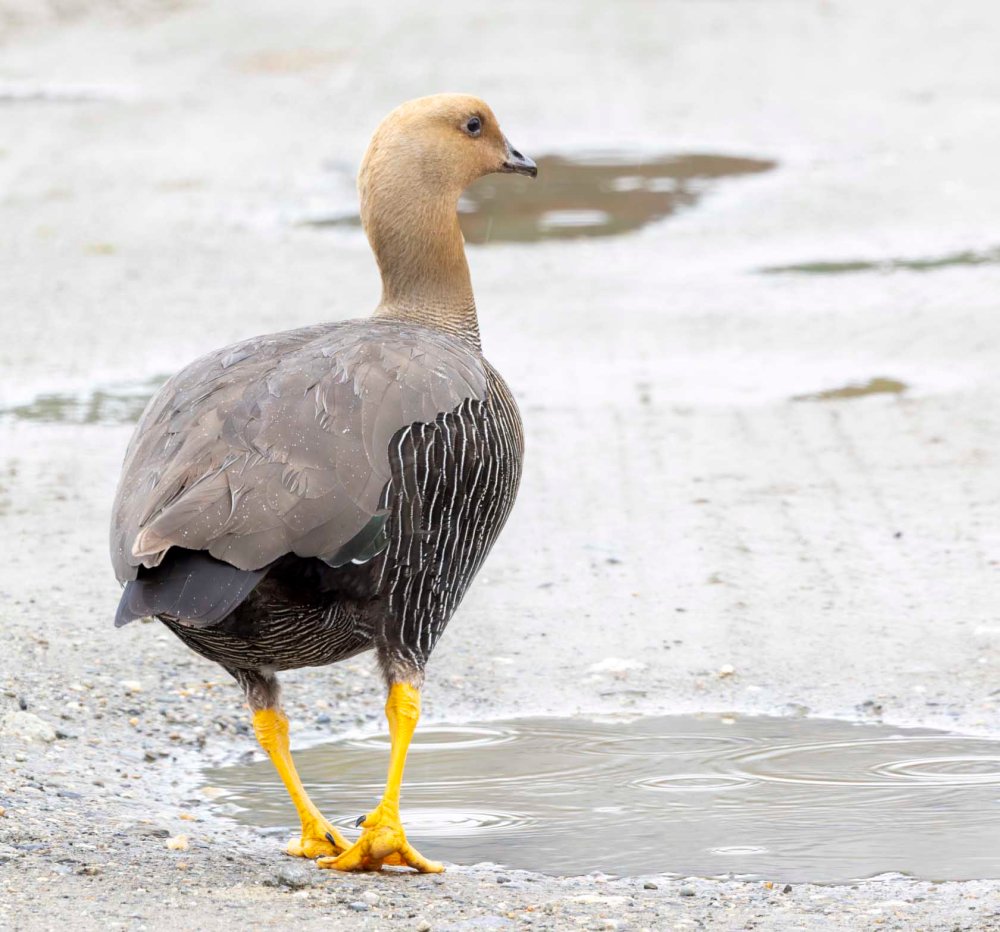
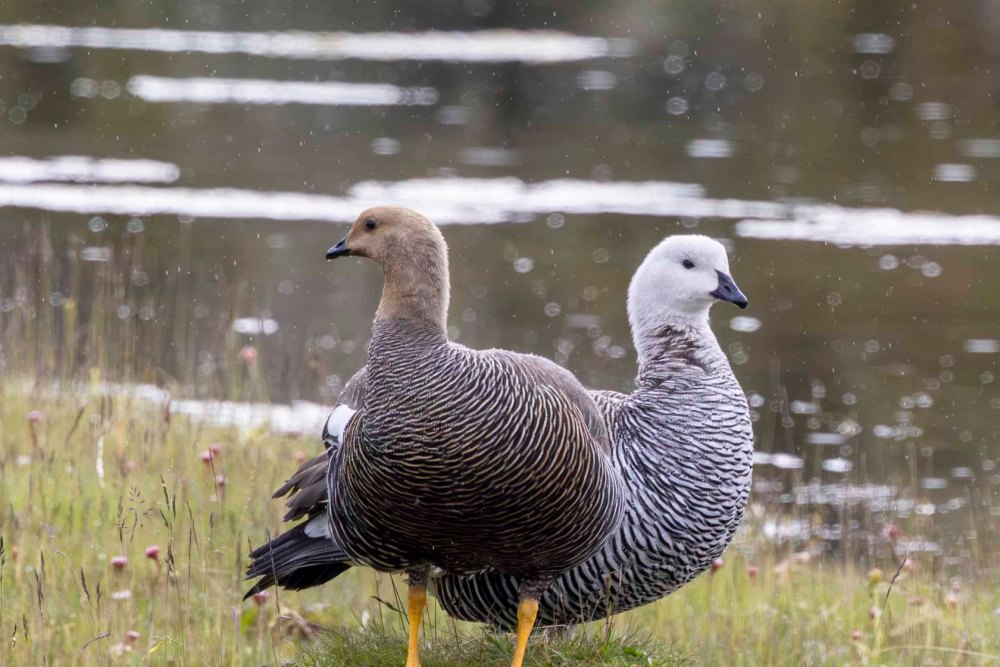
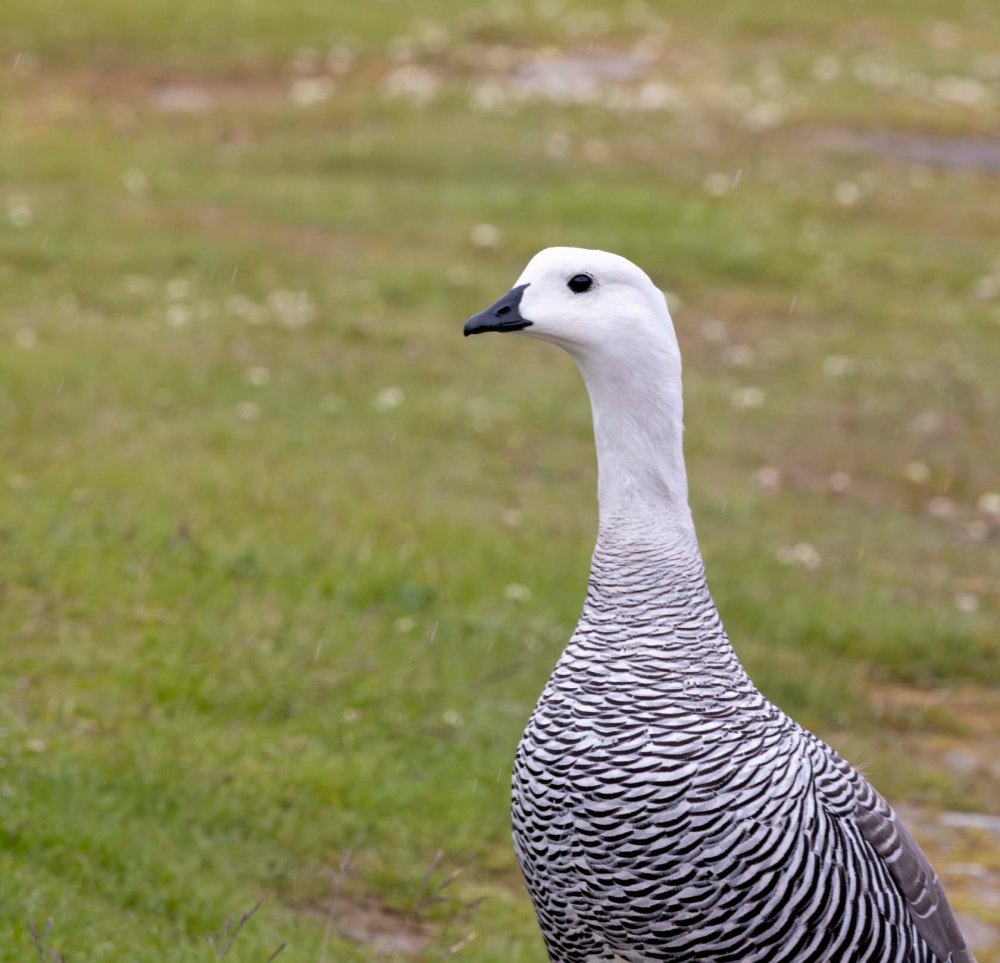
3番目は公園内の至る所で見かけたマゼランガンです。 Third is the Upland Goose which I spotted all over the park.
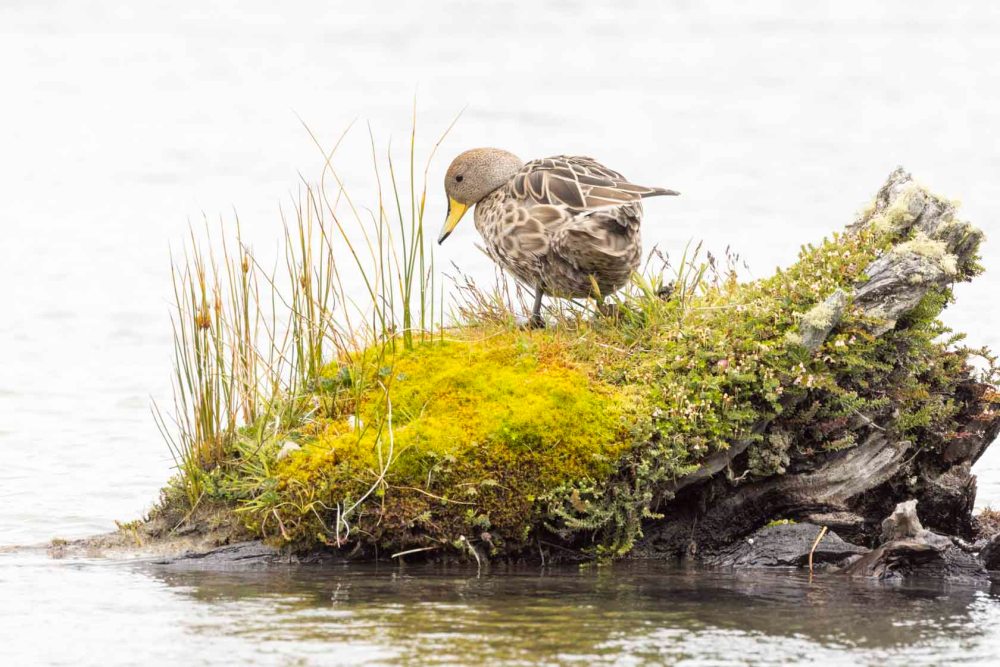
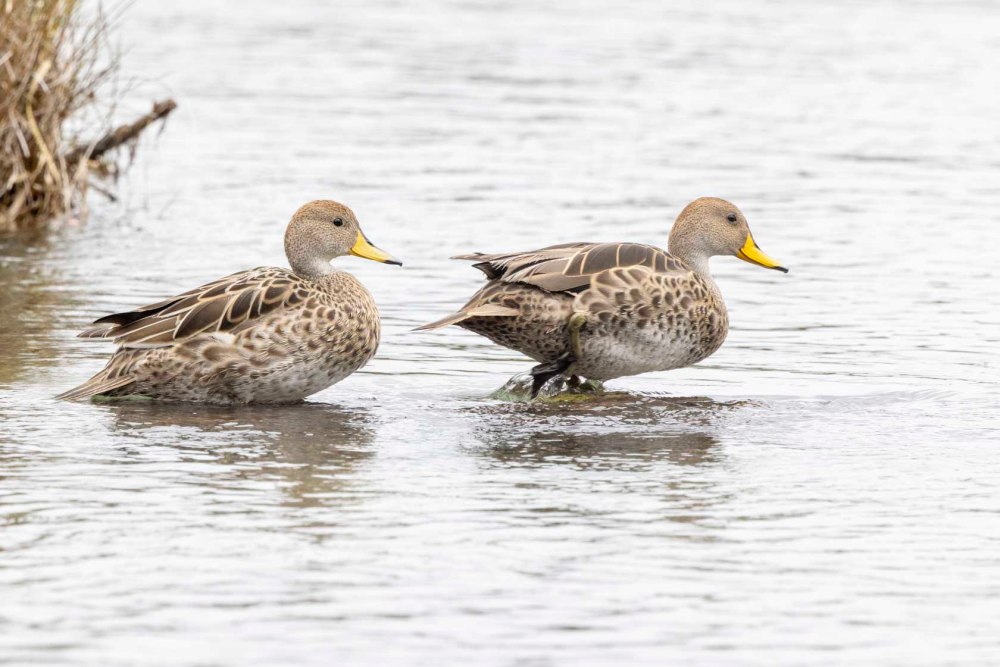
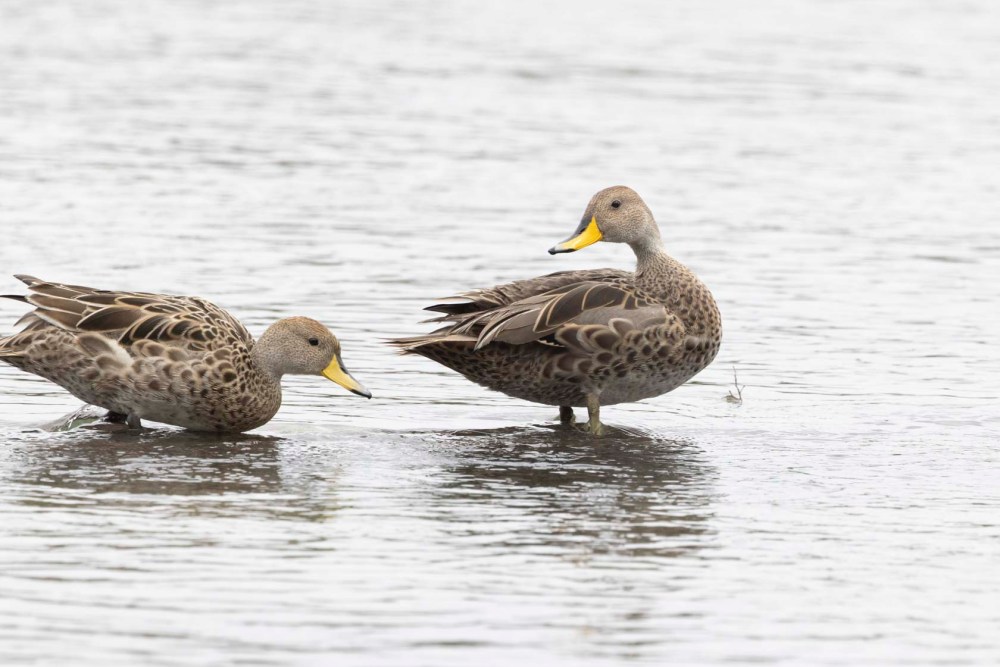
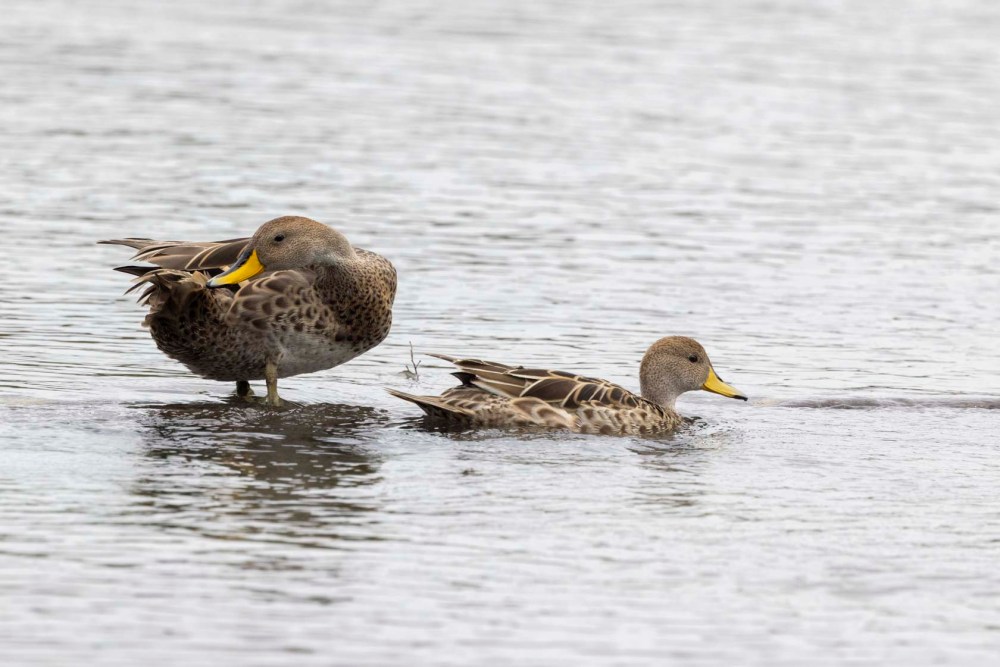
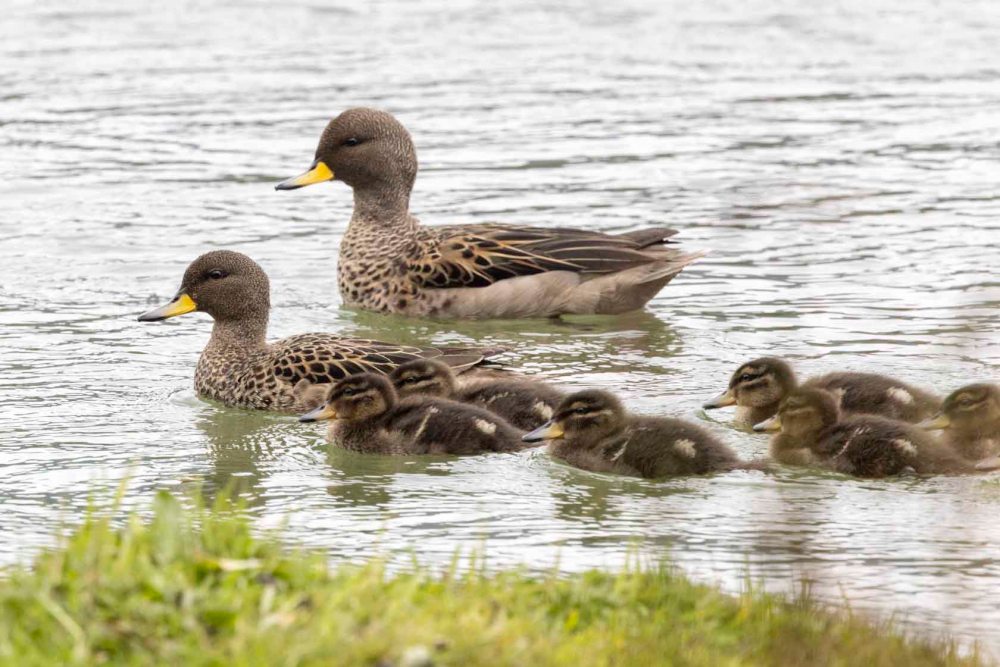
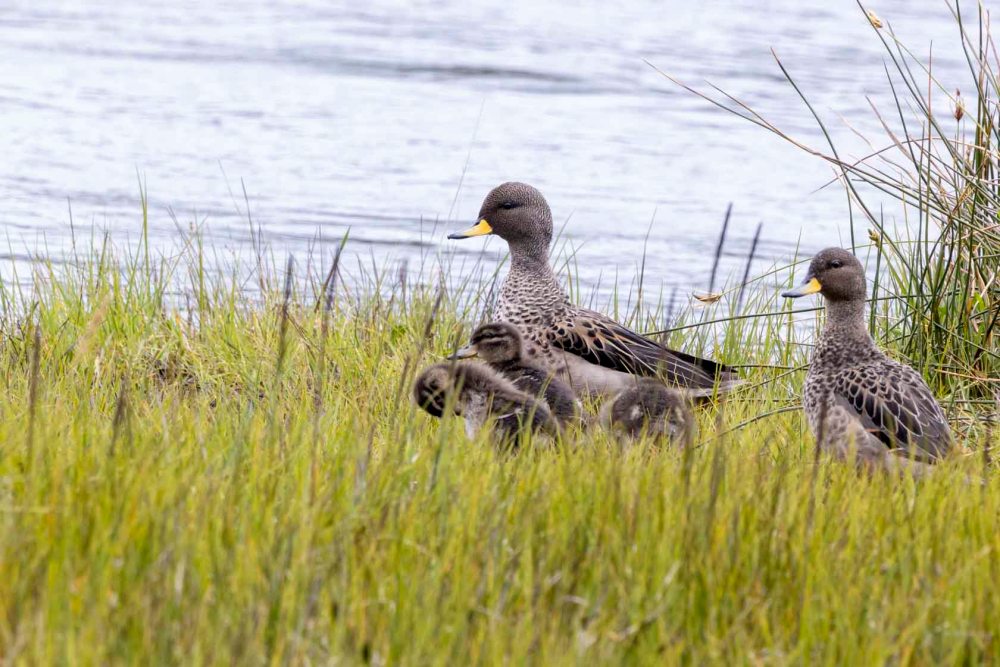
4番目は、キバシコガモです。 The fourth is the Yellow-billed Teal.
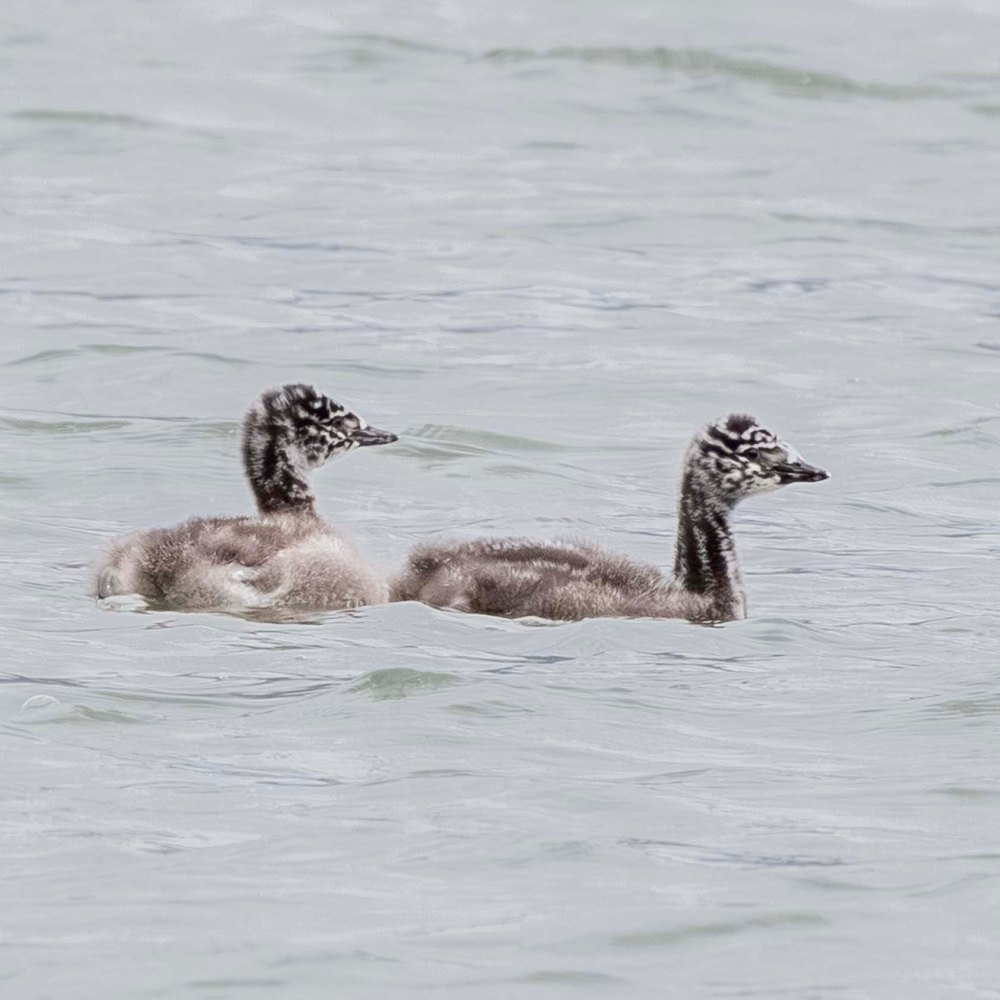
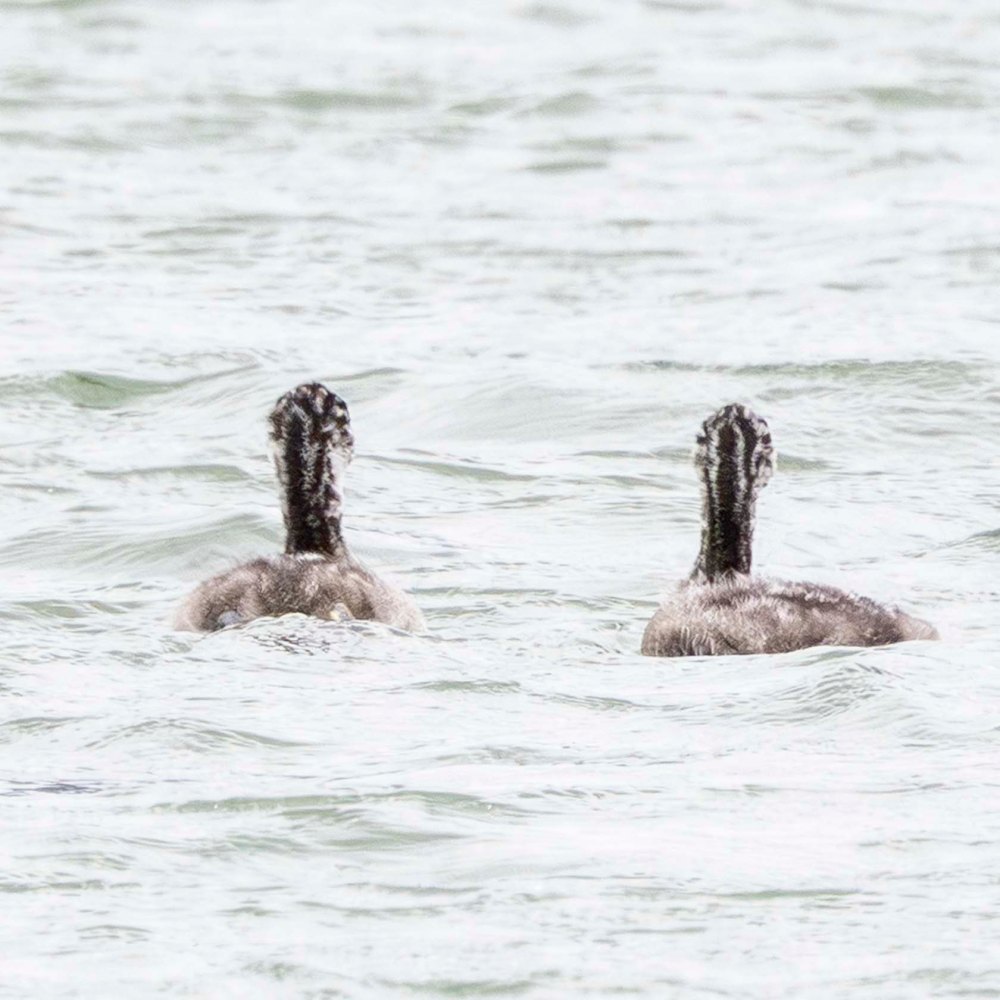
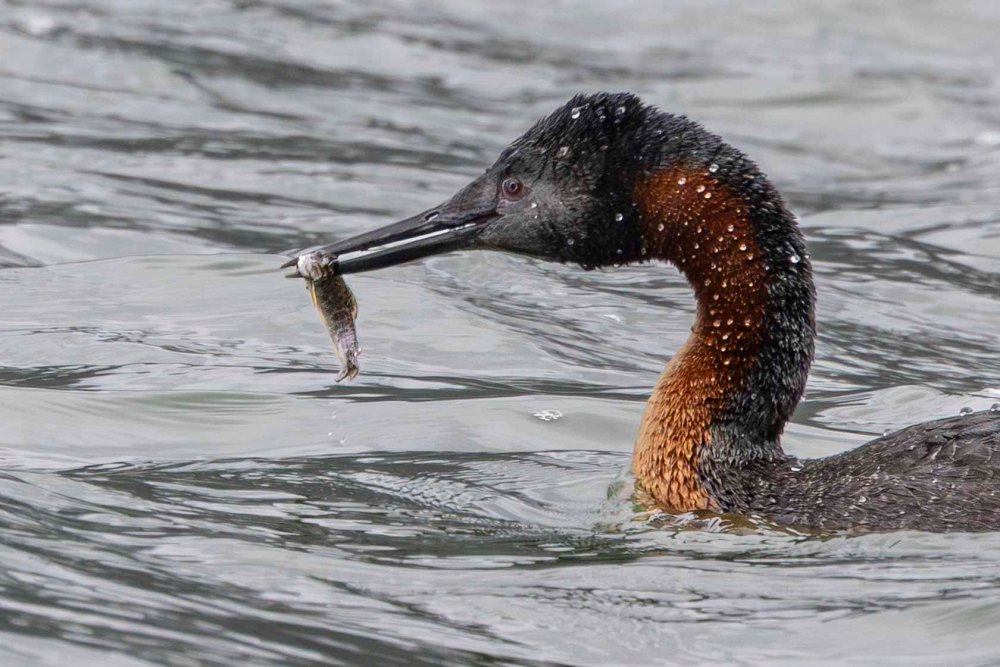
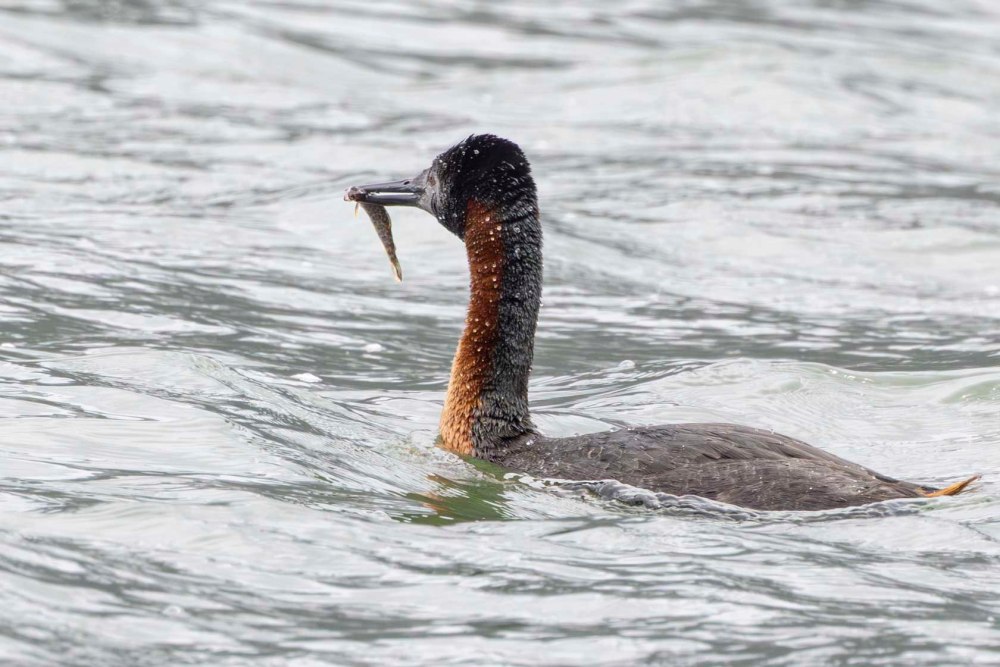
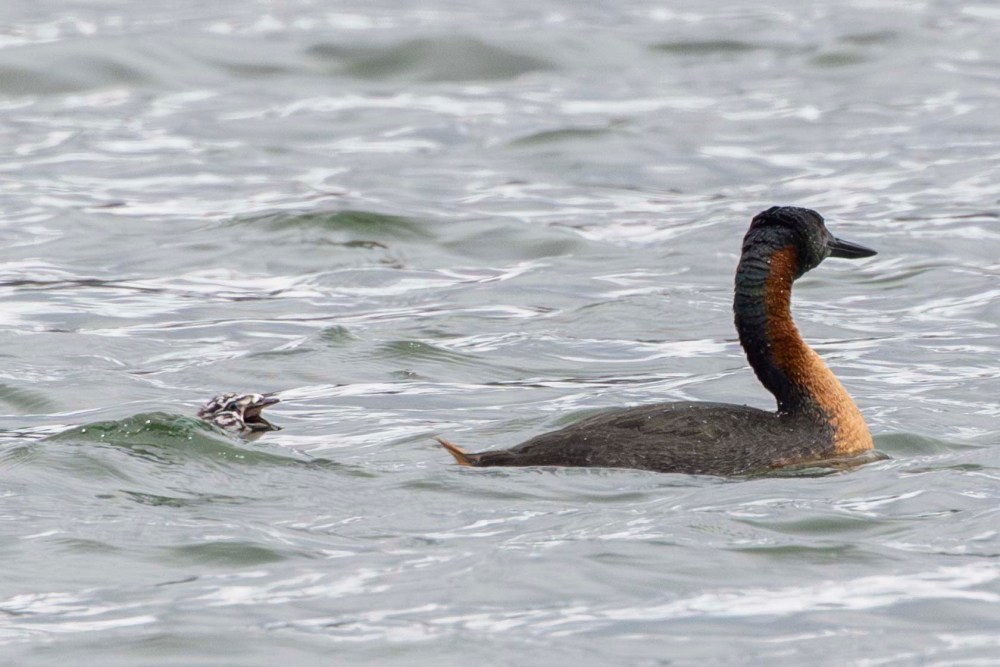
そして、5番目。次の鳥、オオカイツブリのヒナが可愛すぎるんです。この模様、驚いてしまいました。 And fifth bird is the Great Grebe. The chicks are just too adorable. This pattern really surprised me.
そして、お母さん。And their Mom.
「キッズ〜!美味しい魚が釣れたよ。早くおいで〜!」 “Kids! I caught a delicious fish. Come quick!”
「もう食べちゃったよう。もっと〜!」 ”I already ate it. More~!”
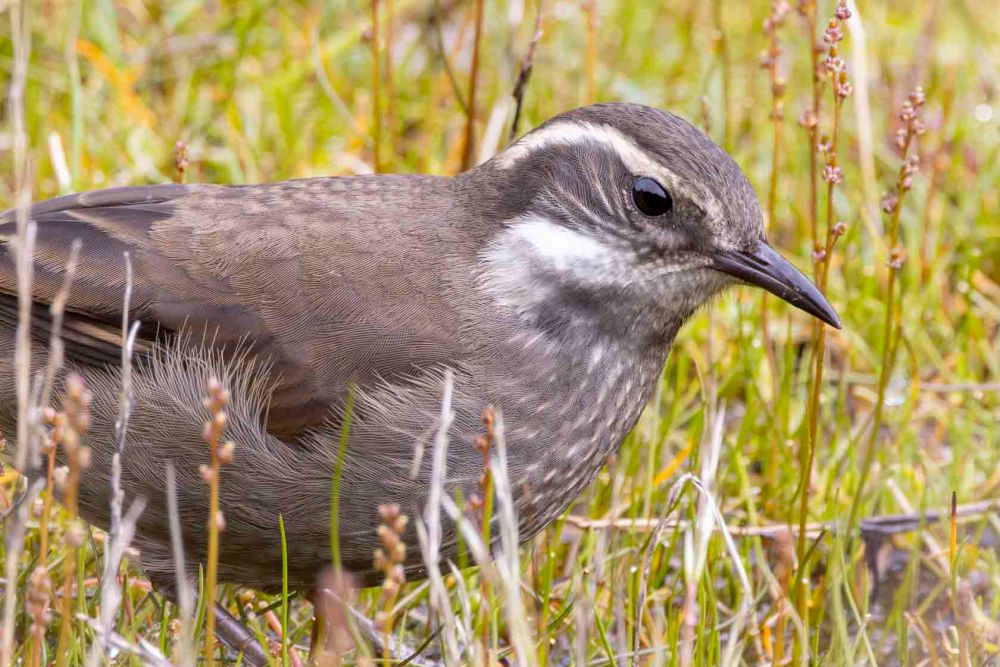
6番目はパタゴニアカワカマドドリです。 The sixth is the Dark-bellied Cinclodes.
オビバネカワカマドドリに良く似ていますが、この種の方がお腹が暗いです。 It closely resembles the Buff-winged Cinclodes, but this species has a darker belly.
この鳥も虫を捕っていたのでビデオにまとめました。ご覧ください。 This bird was also catching insects, so I compiled it into a video. Please take a look.
あー疲れた。ここでちょっと休憩です。 Ah, I’m exhausted. Time for a little break here.
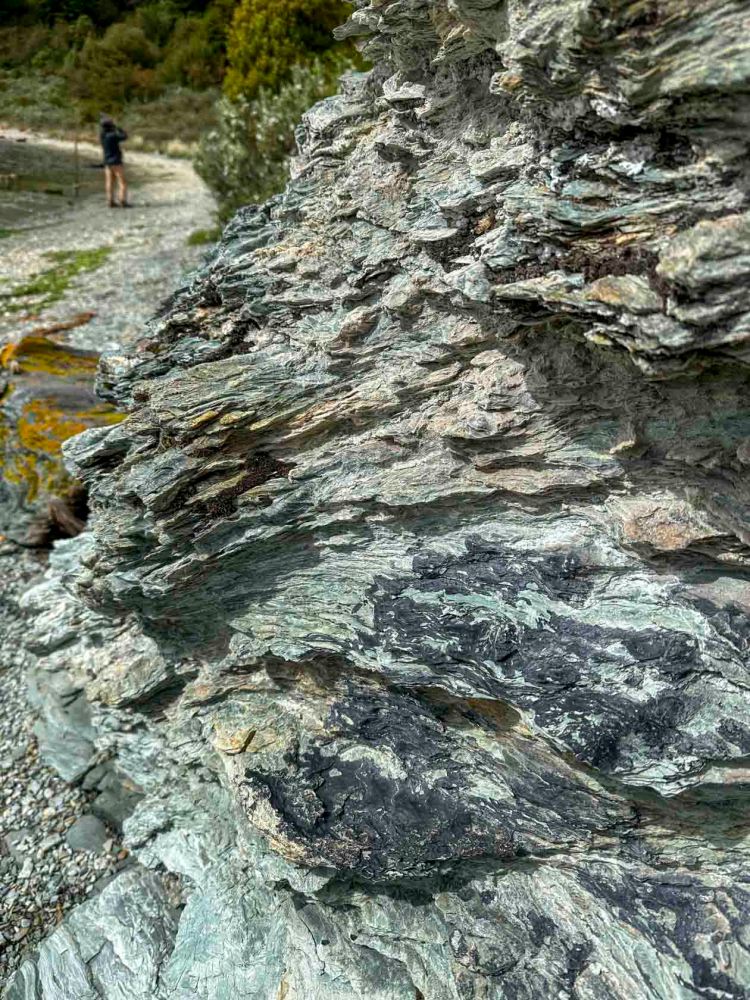
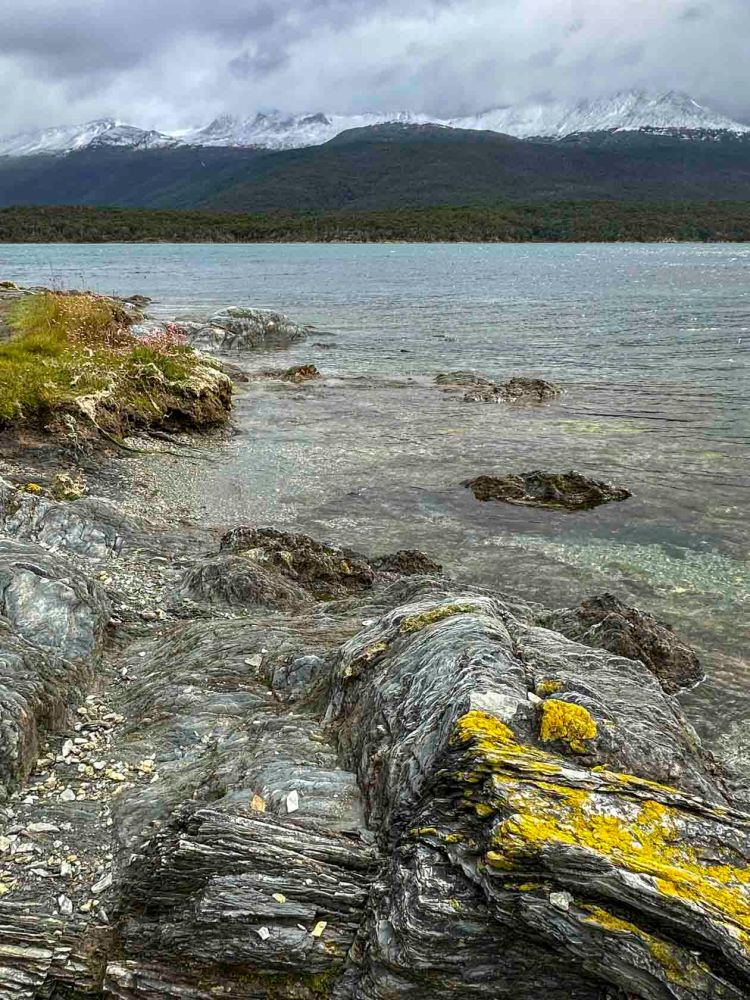
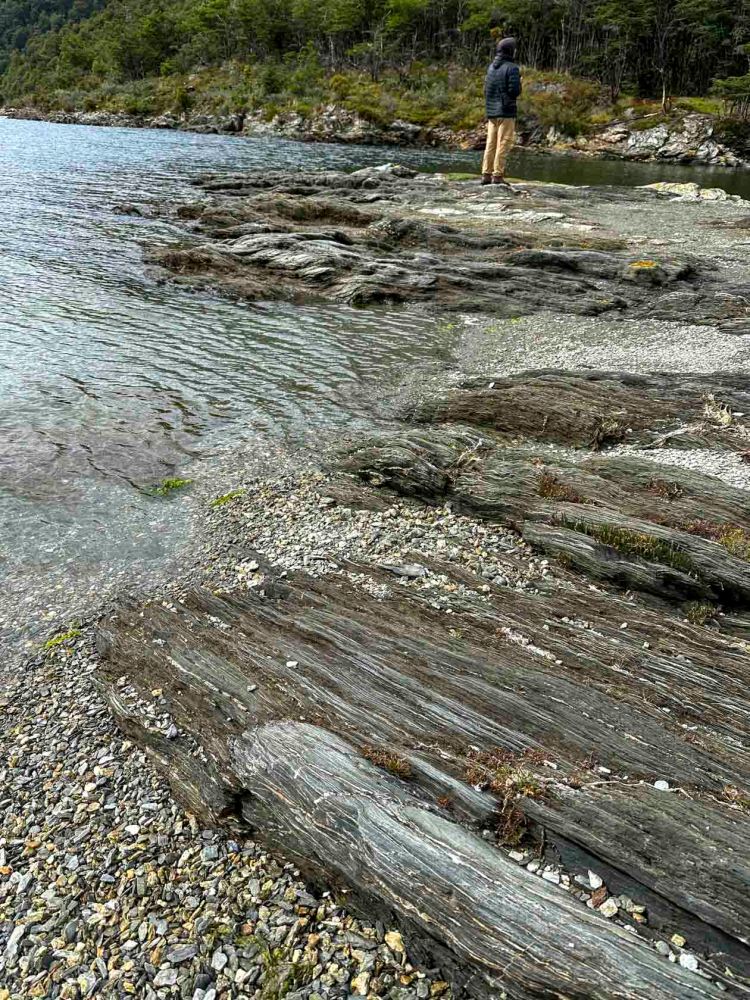
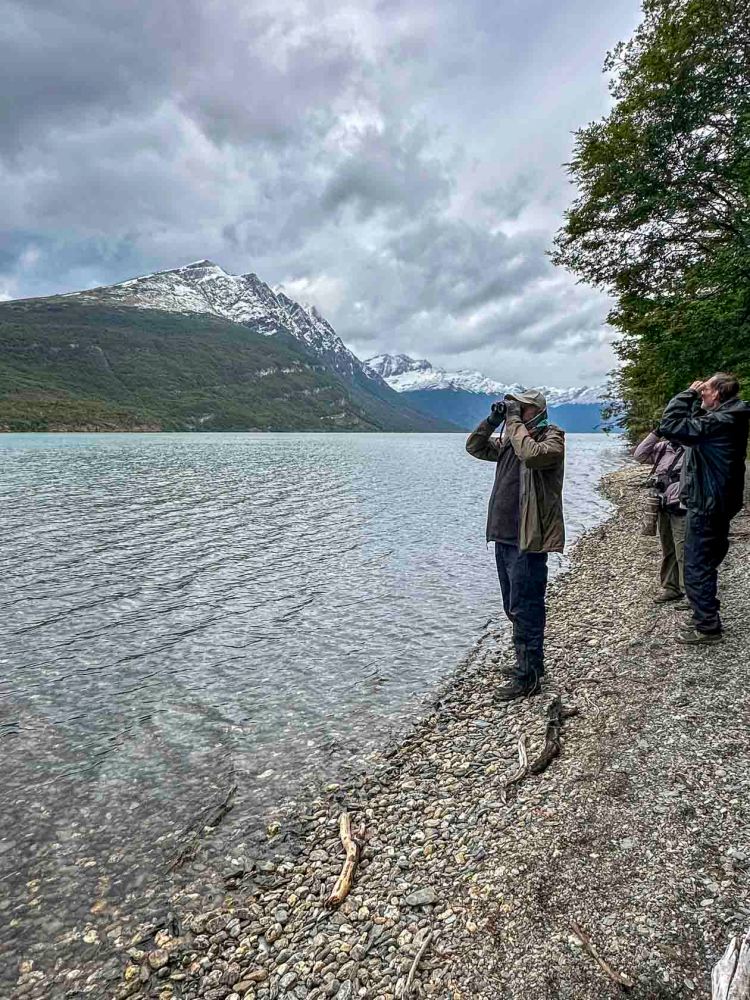
コンドルを探してロカ湖の周りを歩いていた時です。湖岸の岩がなんとも魅力的でした。当然、小さい石を持ち帰りたいと思いましたが、禁止されています。エステバンによると、ウシュアイア空港には観光客が出国の際にチェックされて差し出す石が山のように溜まっているとのことでした。 While walking around Lake Roca searching for Andean Condors, the rocks along the shore were utterly captivating. Naturally, I wanted to take a small stone home, but it’s prohibited. According to Esteban, Ushuaia Airport has a mountain of rocks that tourists submit for inspection when leaving the country.
残念ながらコンドルは見つかりませんでした。ちなみに、バンちゃんは双眼鏡を持っていなかったけれど、持っているふりをしているだけです。 Unfortunately, we didn’t find any condors. By the way, Ban-chan didn’t have binoculars; he was just pretending to have them. hahaha
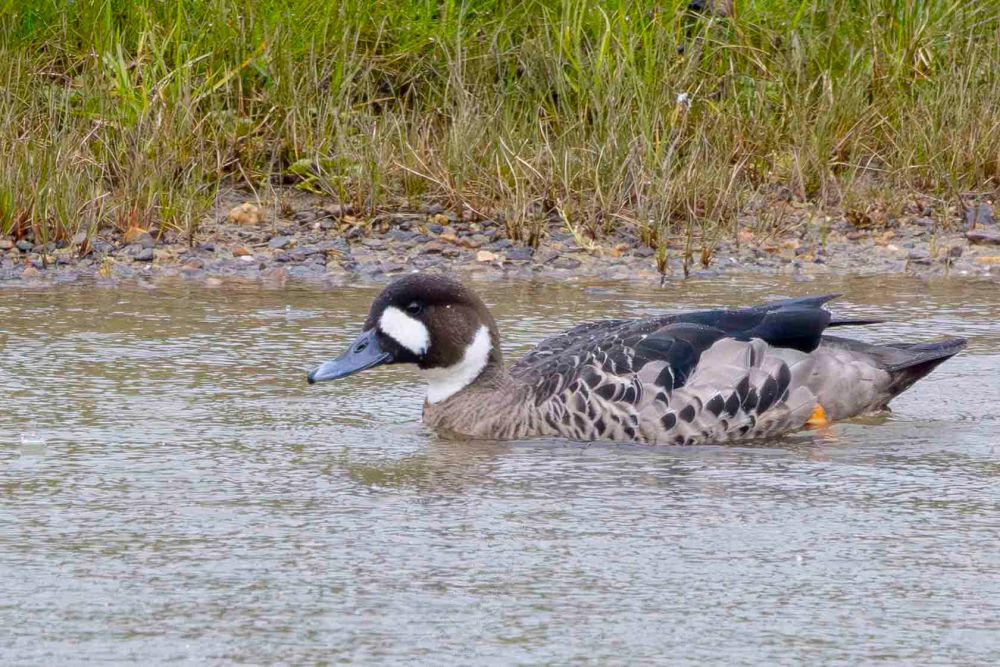
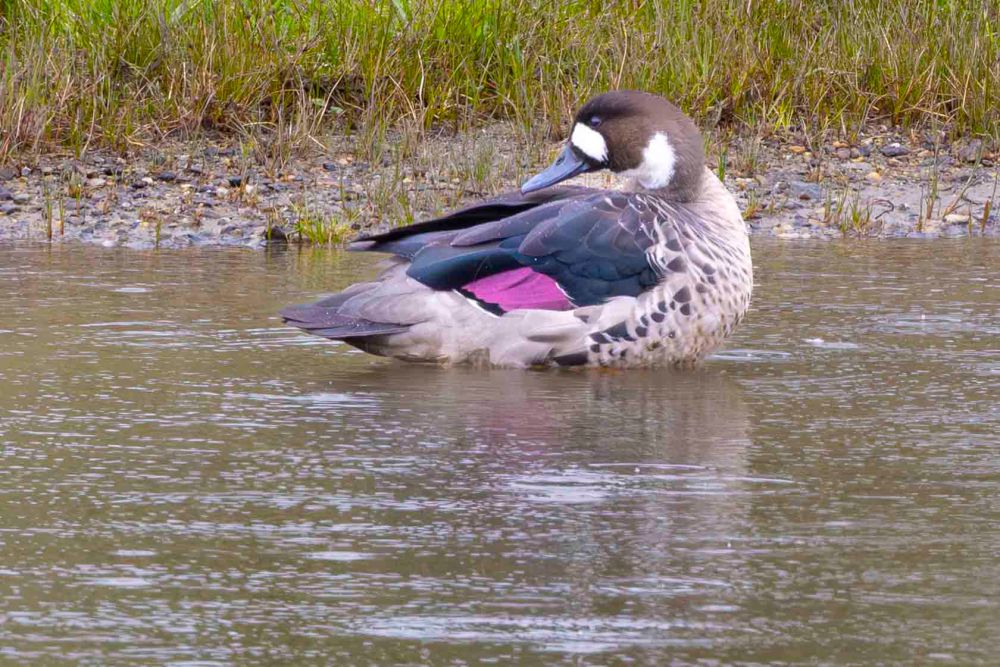
さて、7番目はノドジロガモです。この鳥は顔の白いマーカが老眼鏡に似ていることから、英語で “Spectacled Duck” とも呼ばれています。 Now, the seventh is the Bronze-winged Duck. This bird is also called “Spectacled Duck” in English because the white markings on its face resemble reading glasses.
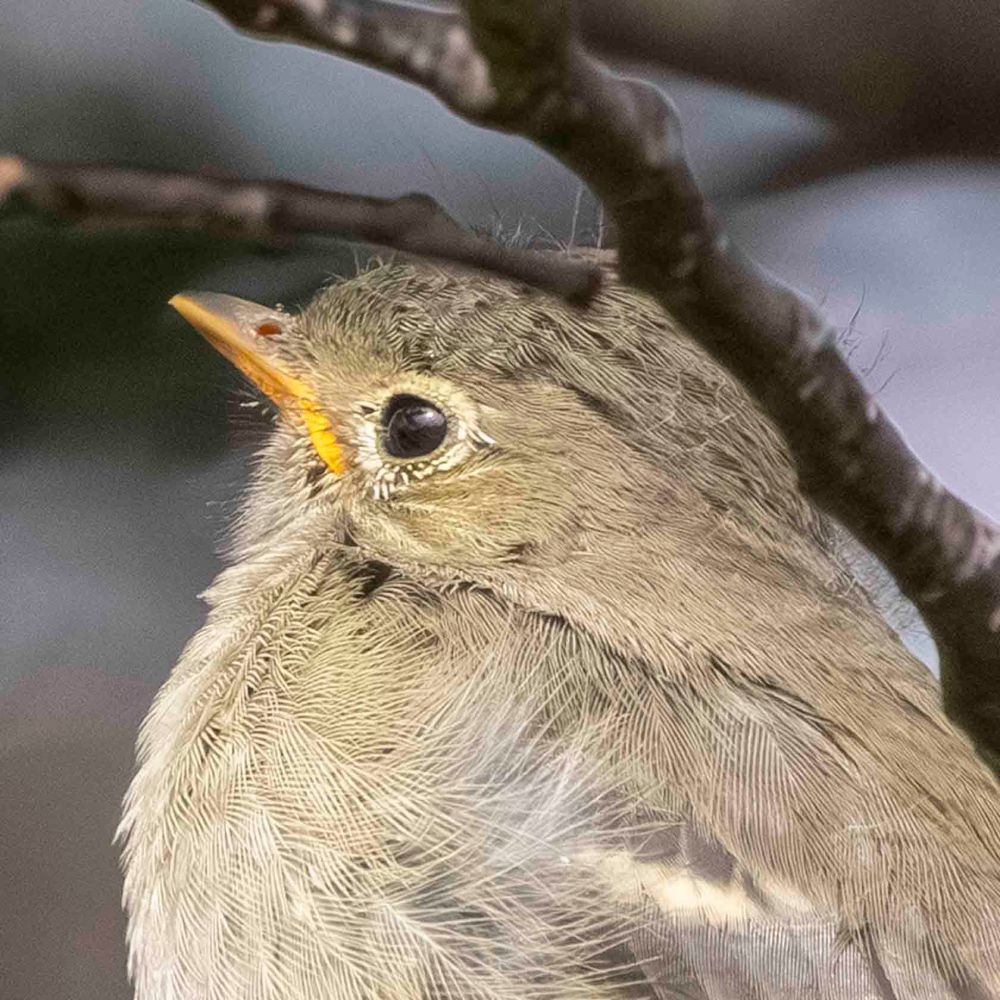
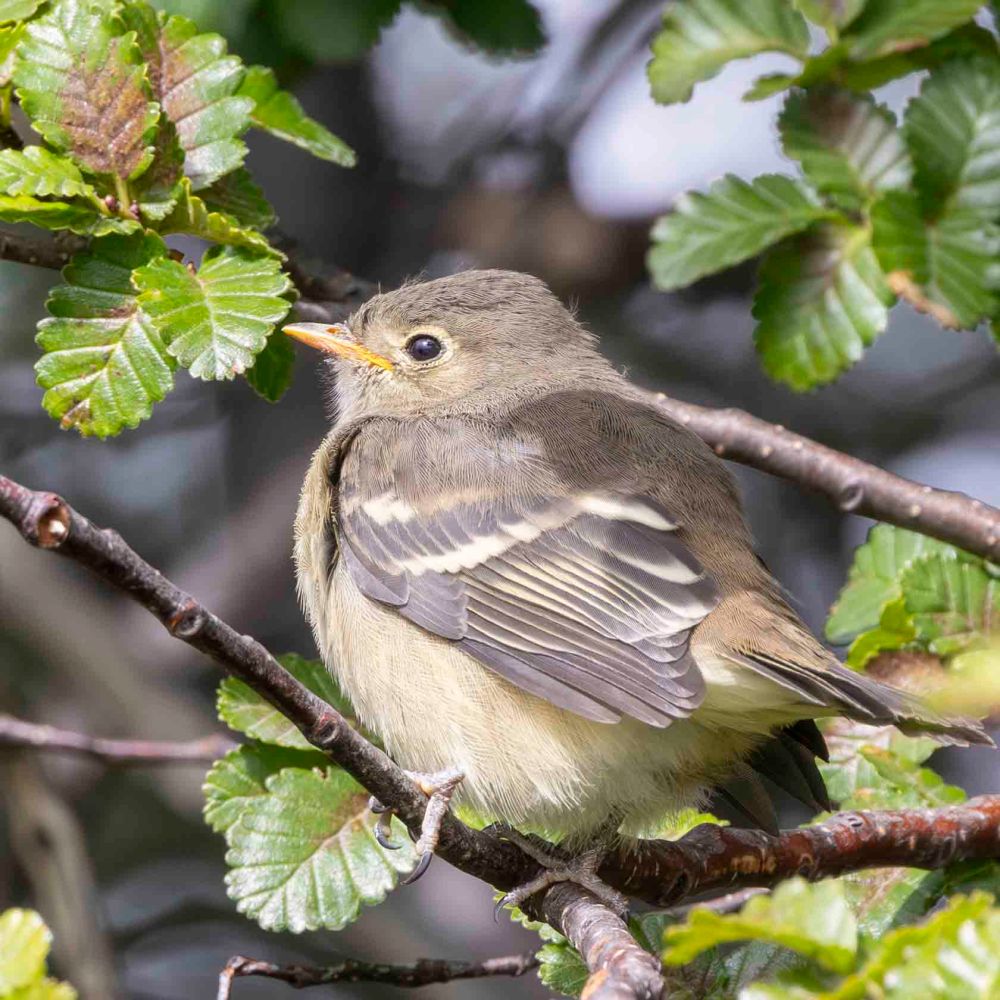
8番目はシラギクタイランチョウの幼鳥です。まだ赤ちゃんの毛がところどころについています。 The eighth is a juvenile White-crested Elaenia. It still has patches of baby down feathers.
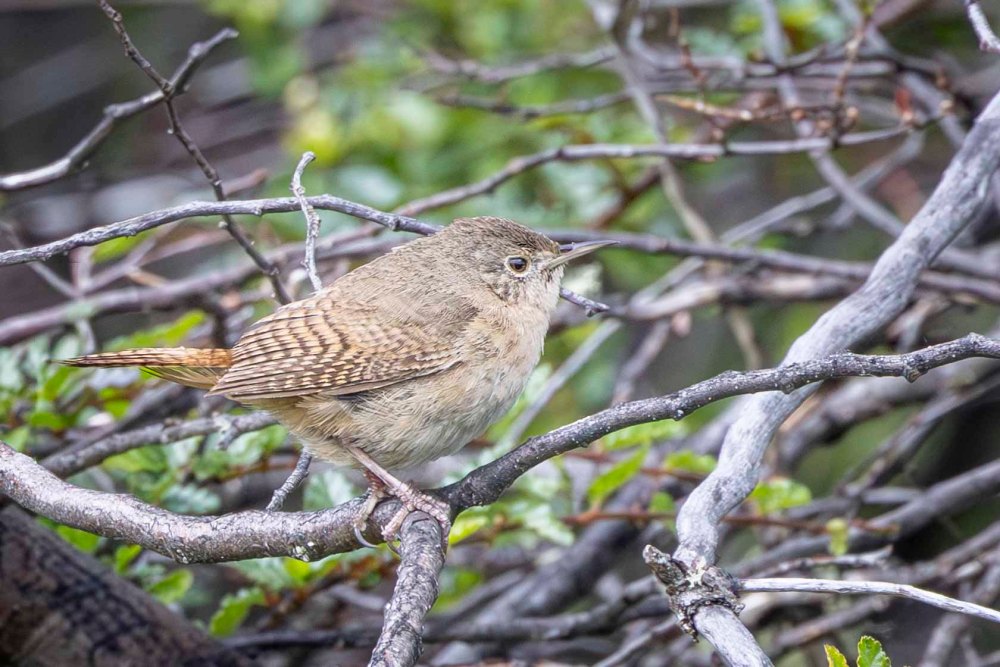
9番目はミナミミソサザイです。家の近くのミソサザイに似てるなー。 The ninth is the Southern House Wren. It looks like wrens near my house.
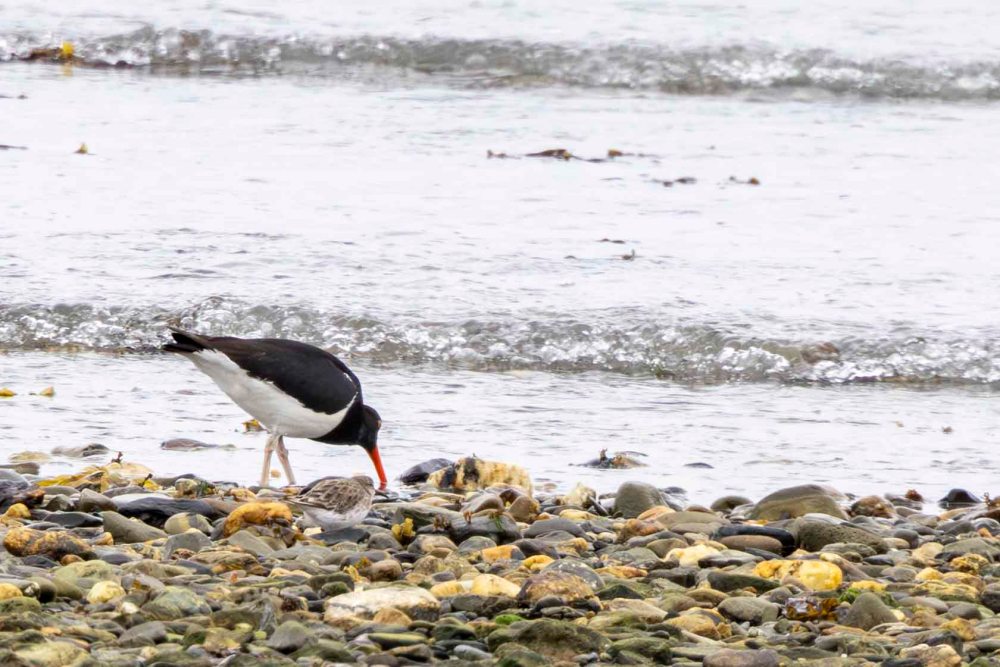
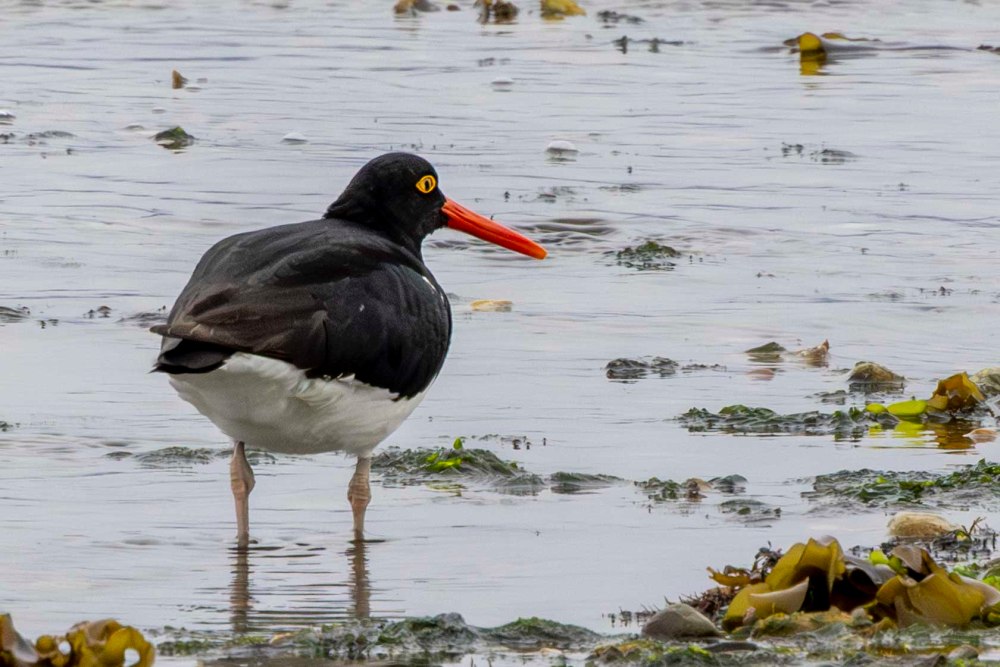
10番目、マゼランミヤコドリ。この地方では、「マゼラン」が名前についた鳥が多いです。歴史に残る偉業を成したマゼランの影響は野生動物にも及んでるんですね。(笑) The 10th is the Magellanic Oystercatcher. In this region, many birds have “Magellan” in their names. The influence of Magellan, who achieved an historic feat, even extends to wildlife. (lol)
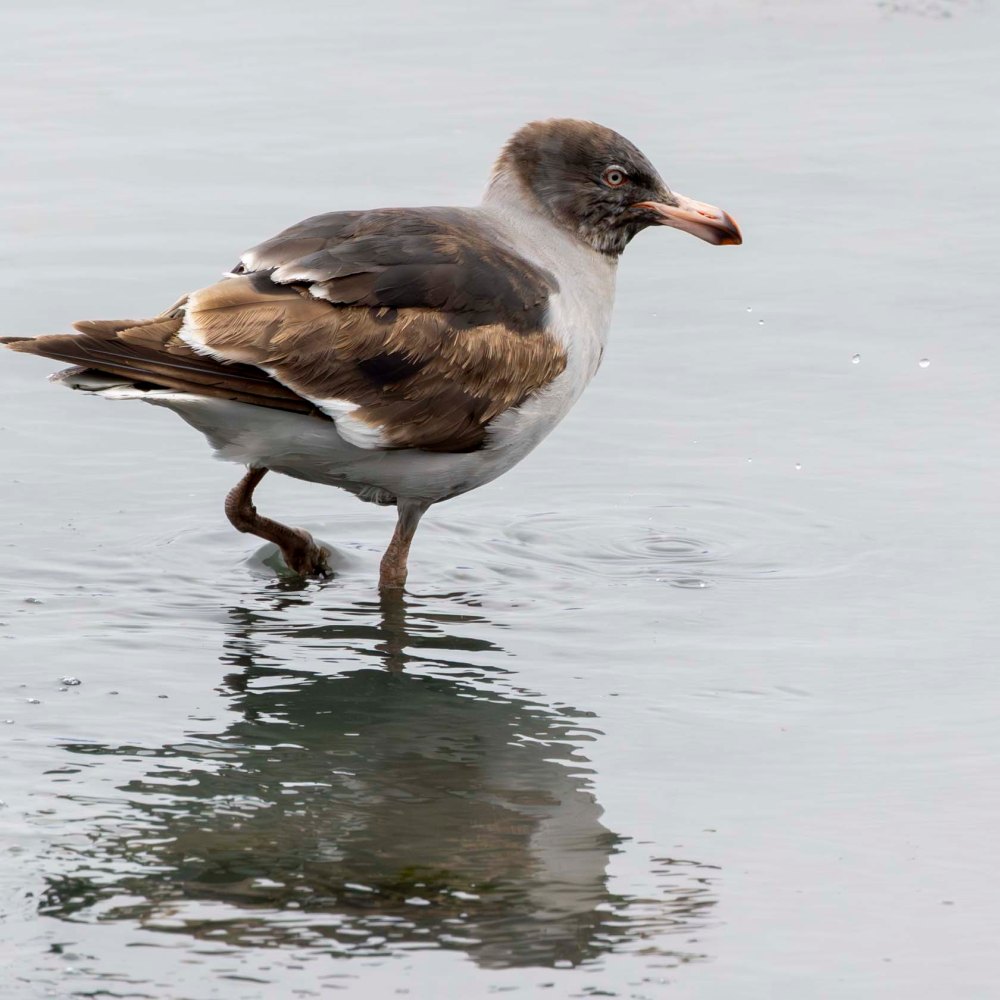
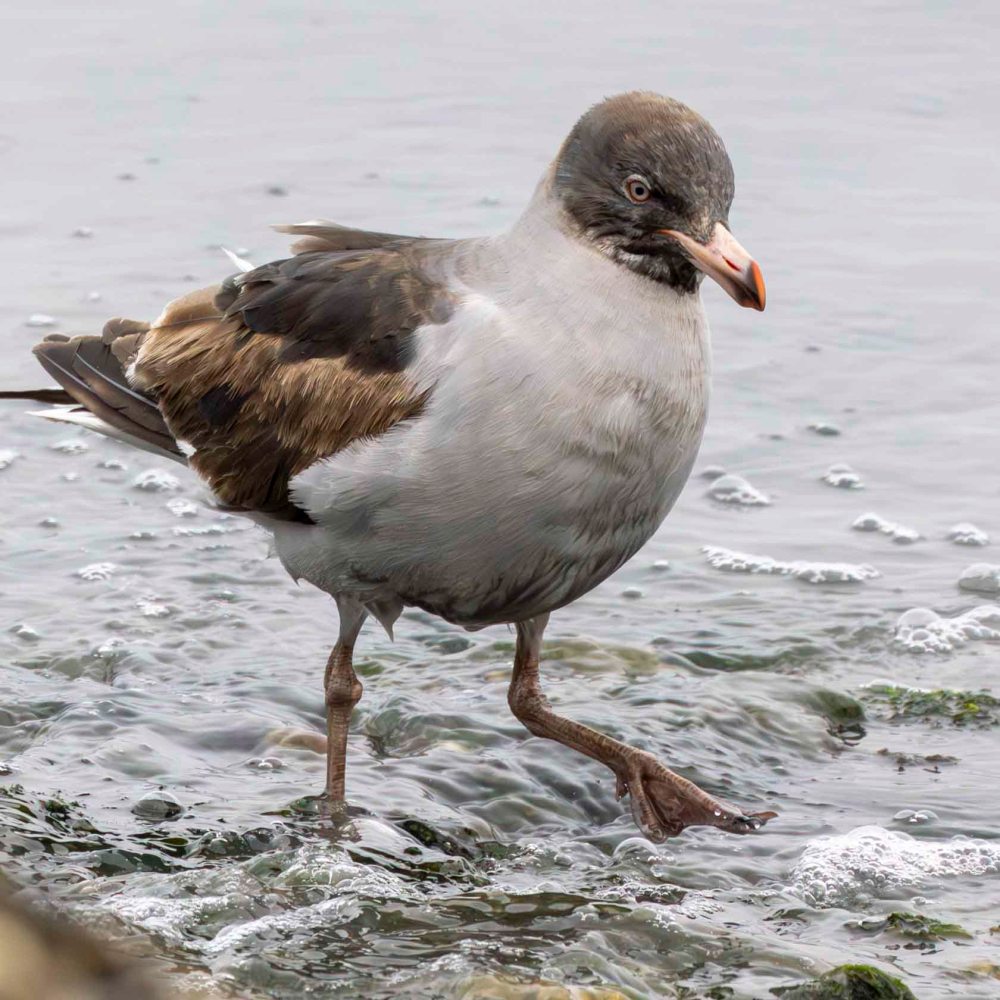
11番目、マゼランカモメの1年目の青年。 Number 11, a first-year juvenile, Dolphin Gull.
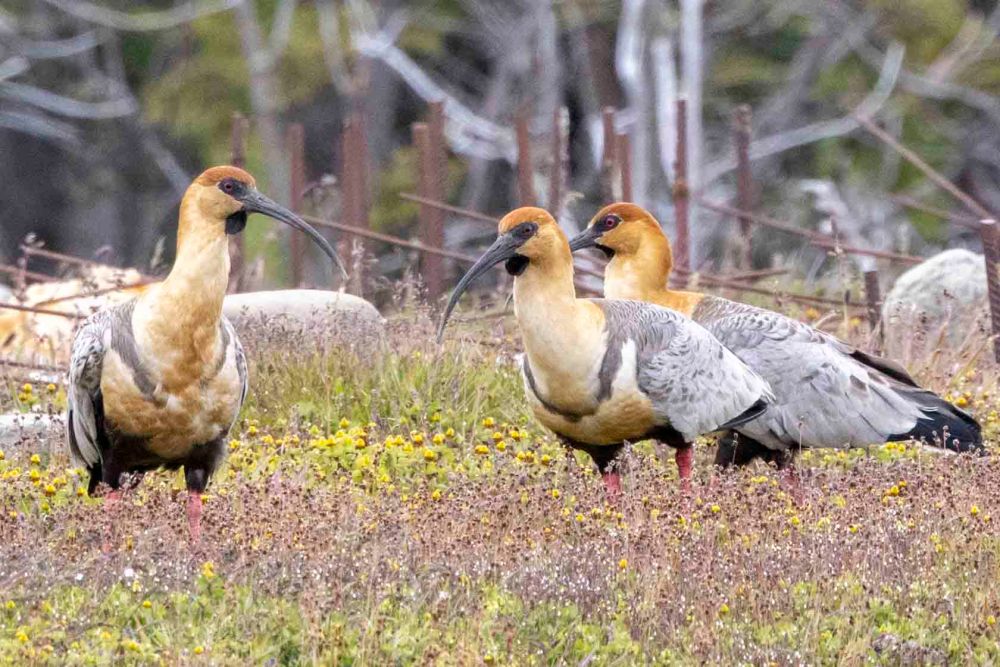
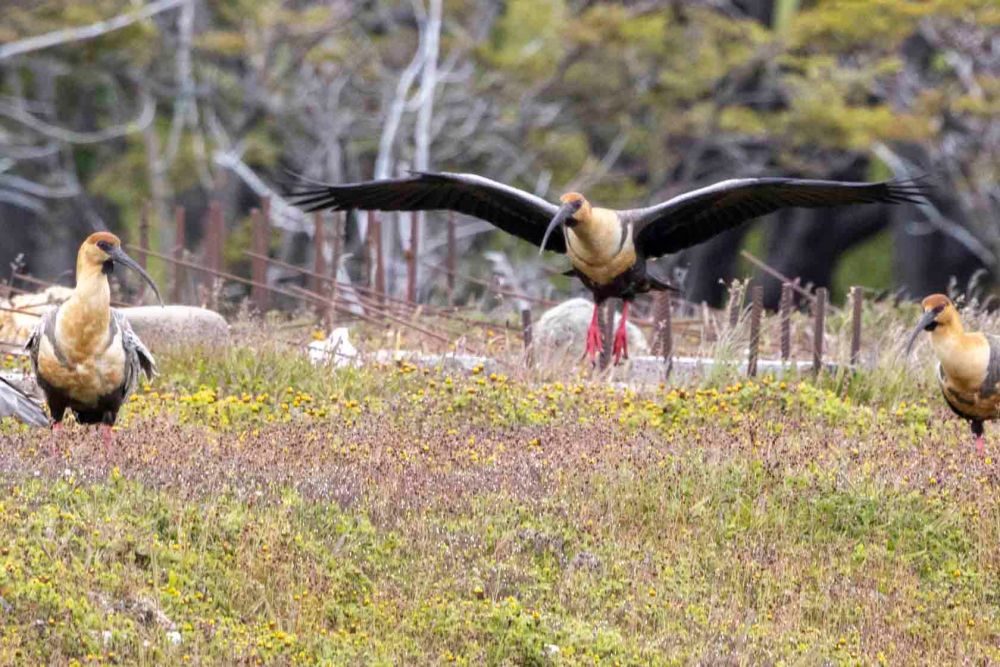
12番目、カオグロトキ。 Number 12, Black-faced Ibis.
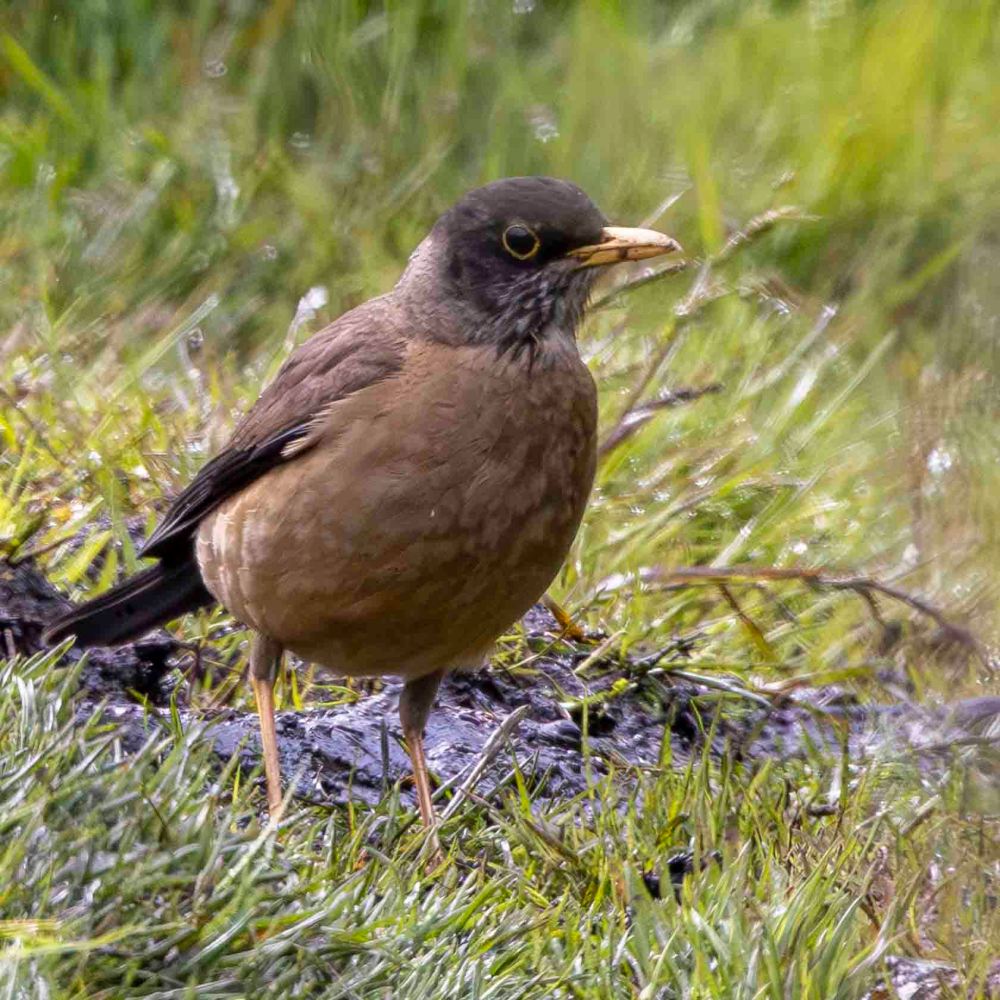
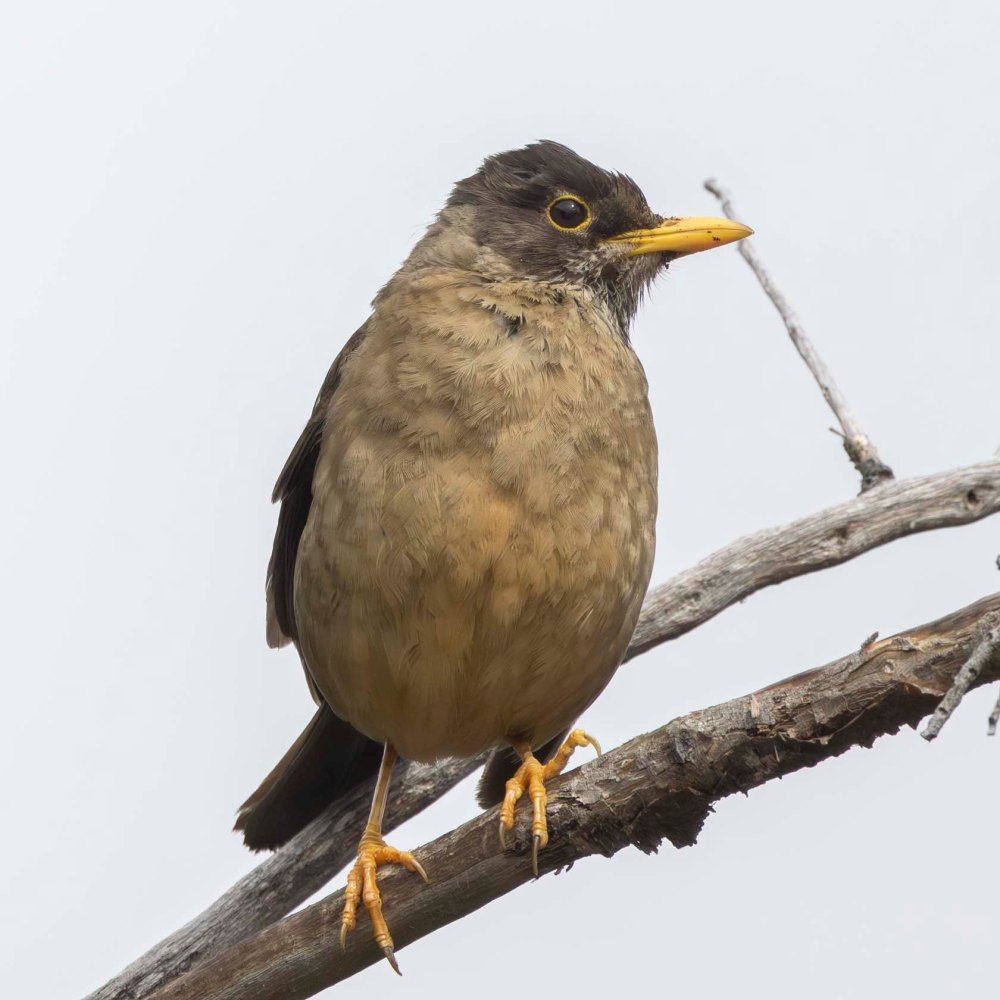
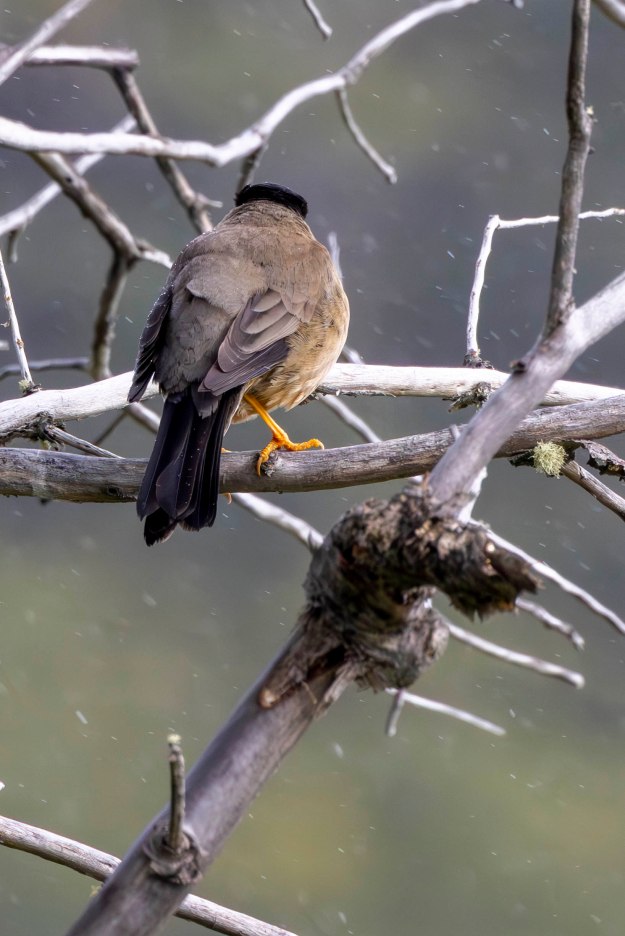
そして最後にツグミ。英語では “Austral Thrush” という名前でその中に亜種が3つあります。ただ、区分が良く分からず、ネットサーチでは大混乱をきたします。だから、一応ここではフォークランドツグミとします。左がフォークランドツグミで、中央がマゼランツグミかもしれません。右は幼鳥です。 And finally, the Austral Thrush. It’s said that it has three subspecies. However, the distinctions are unclear, and searching online leads to great confusion. My guess is that the left image below is the Falkland Thrush, the center one might be the Magellanic Thrush. The right one is a juvenile.
この幼鳥を見てハッとしました。もしかして名前のわからない鳥はこの種かもしれない。 1月21日のブログ、「君の名は」の鳥はフォークランドツグミ?!断然そうだと思います。 Seeing this young bird made me gasp. Could this be the species of the unnamed bird? The bird from the January 21st blog post, “Your Name?”—could it be an Austral Thrush?! I’m absolutely convinced it is now.
今日のブログ作成までに目を通した写真の数は3,000枚ほどです。それでようやくわかりました。君の名は、フォークランドツグミだった! I looked through about 3,000 photos before writing today’s blog. And finally I figured it out. Your name was the Austral Thrush!
これでウシュアイアでのバードウォッチング紀行が終了しました。これから私の鳥データベースをアップデートさせます。そして、次回から舞台を陸から海に移し、船に乗って更に南へ向かいます。お楽しみください。 This concludes my birdwatching journey in Ushuaia. I’ll now update my bird database. Next time, I will shift my focus from land to sea, boarding a ship to head further south. Stay tuned.






 aomi3 now