この日は Red Cliff Desert 保護区内で「ニシアメリカフクロウ」が見られと聞いたので行ってきました。ウロウロしたので正確な距離は分かりませんが、7.5kmを主にスパニッシュ ウォッシュに沿って歩きました。We went to Spanish wash in Red Cliff Desert Reserve because we heard that an owl had been seen there. We are not quite sure of the exact distance, but it was about 4.5 miles out and back along the Spanish wash.
まず、長いトンネルを通り抜けます。 We went through the long dark tunnel first.
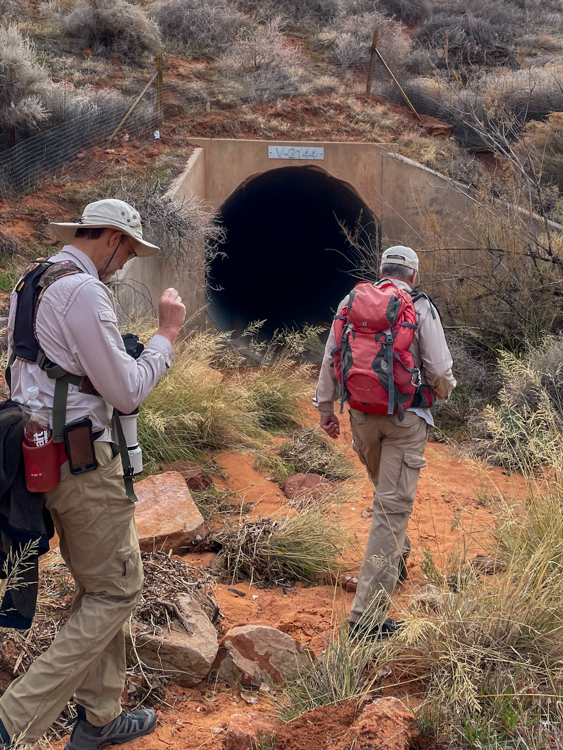
そして、こんな所をズンズン歩いて行きます。 Then, we went through places like this to get to deeper sections.
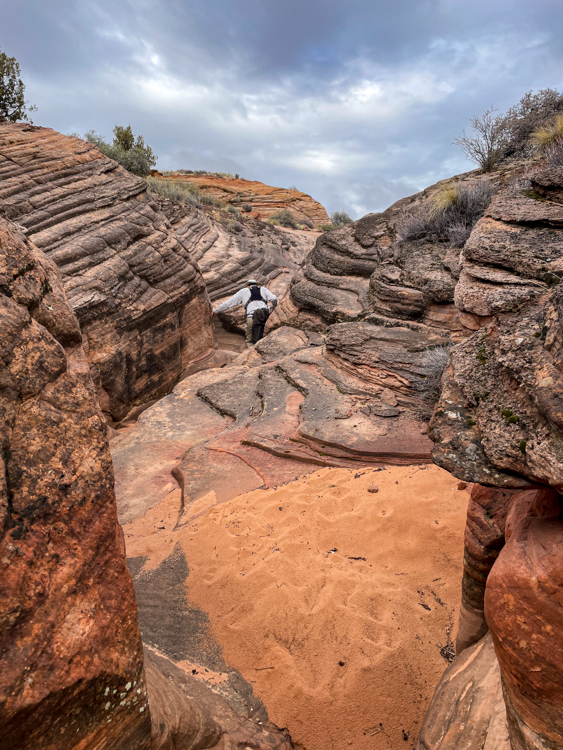
フクロウが最初に発見された場所がここです。 This was the place where the owl had first been spotted.
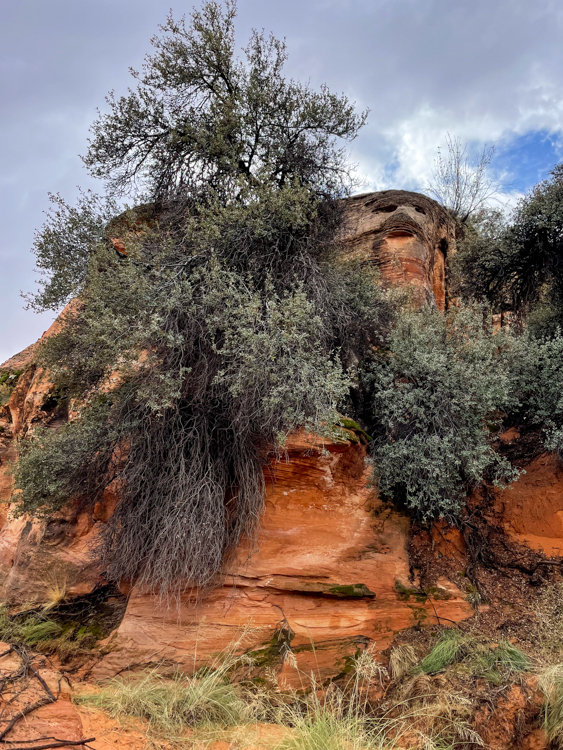
でも、残念ながら、全く姿が見えませんでした。 But we didn’t see any sign of owls there, unfortunately.
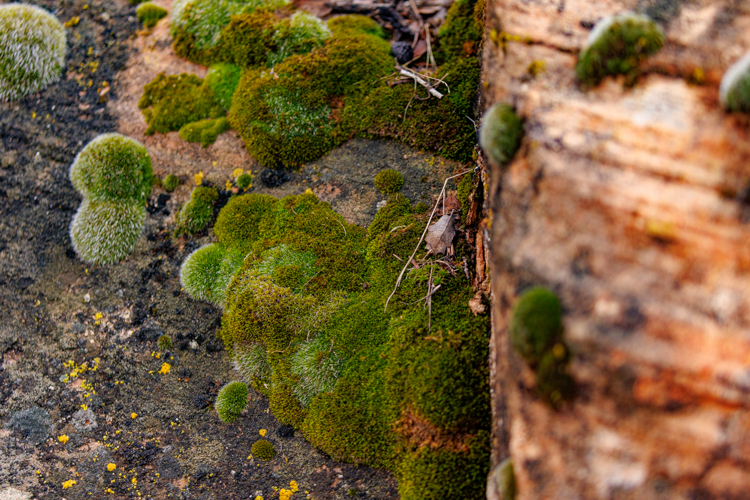
そこで、再びズンズン進んでいくと、周りの丘が夏に比べて緑色になっているのに気がつきました。苔が最近の雨で青々とし始めたんですね。 So we marched on. Then I realized that the hills were greener than before because the moss was greener.
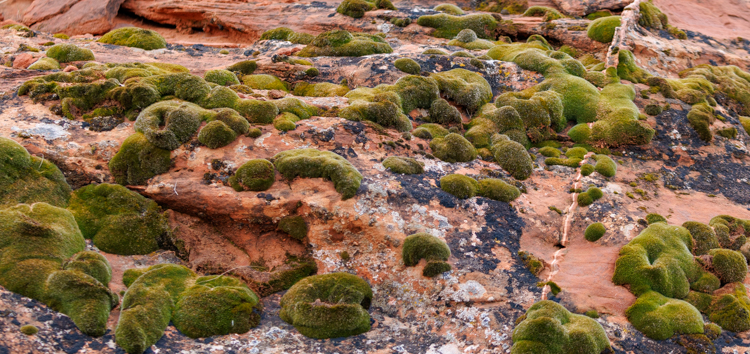
フカフカしています。 It looks so cushiony.
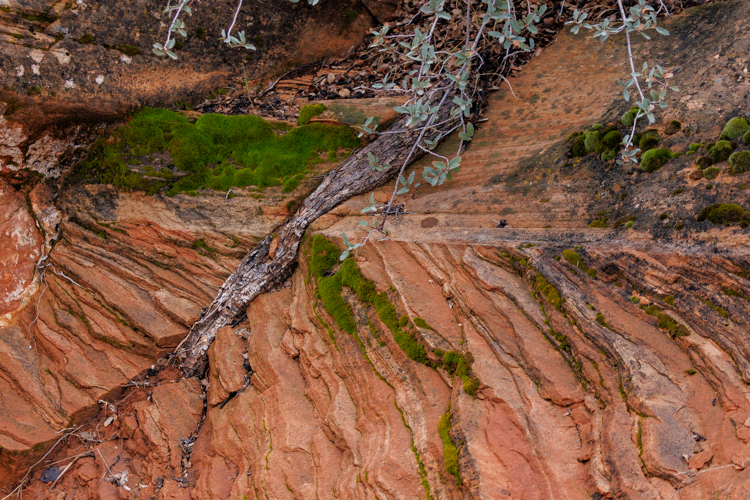
これの写真にも苔が生えているんですが、よく見ると岩の中を突き抜けて伸びているのが見えます。すごい生命力です。きっとこんな根っこがあと100万年もしたら木の化石になっているのかもしれません。 The picture below also shows the moss, but if you look at it closer, you can see a root stretched through the rock. How awesome to see such vitality. I imagine that it will become petrified wood in a million years.
それから更にズンズン進みましたが、フクロウの姿はついに見つけられませんでした。きっと、年末休暇をとっているのでしょう。 We went on a little further in the wash, but couldn’t find any owls. They must have gone on vacation for the end of the year.
諦めた私たちは、帰途、矢じり探しに集中しました。 So we decided to go back along the same path we came in on, but this time, we focused on looking for arrowheads on the ground.
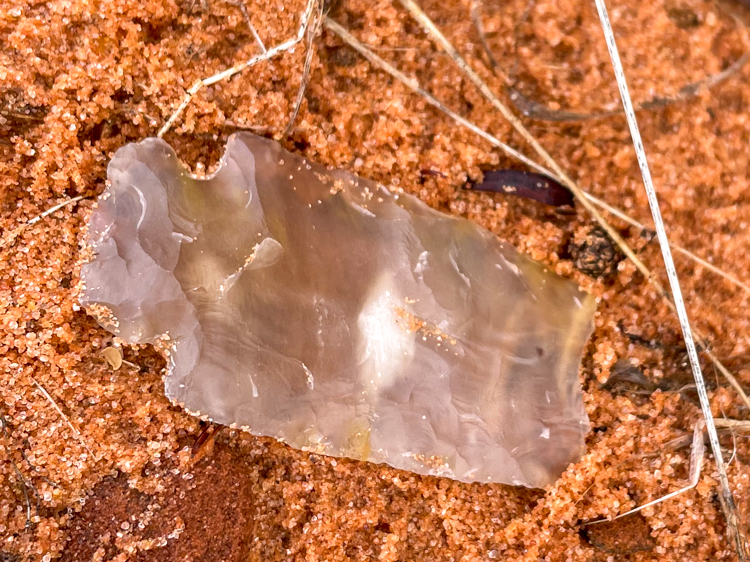
かつてアメリカ先住民が狩猟のためにたくさん作っていたのでしょう。いくつか発見できました。先端は破れてますが、左端の根元が矢じりであったことを証明してくれます。 I imagine that American indigenous people made many arrowheads for hunting. We found a few. The left side of the sample above indicates that it was an arrowhead, although the tip on the right side was broken off.
ところで、これはなんだと思いますか? By the way, what do you think these are?
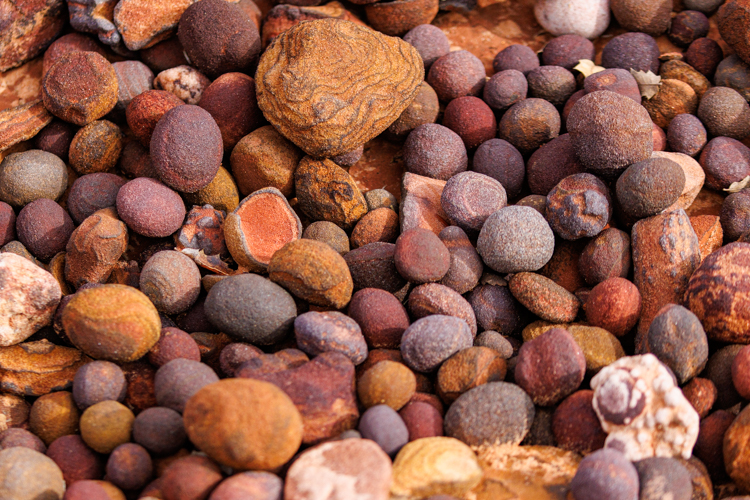
美味しそうでしょ? Aren’t they delicious looking?
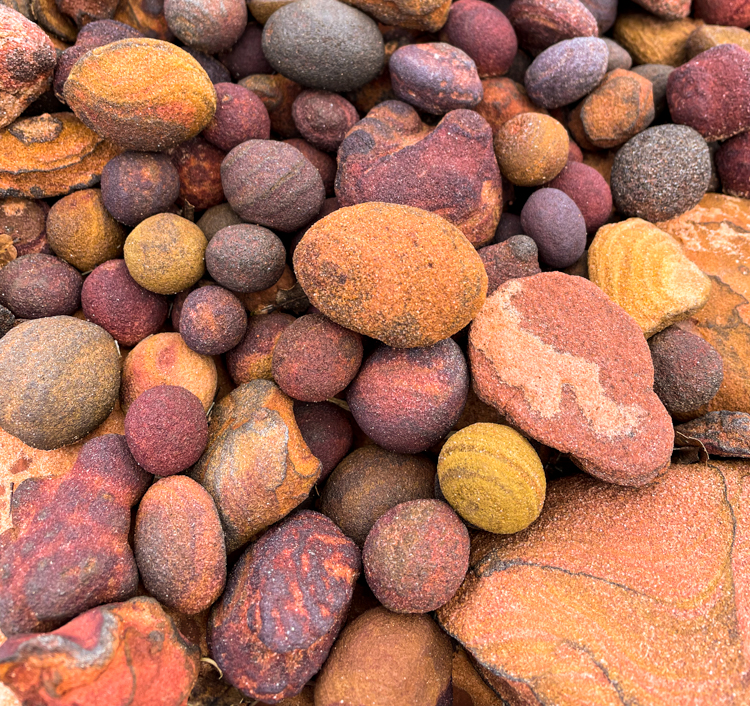
モキマーブルと名付けられているボール状の酸化鉄です。長い年月の後、ナバホ砂岩から鉄分が分離して、鉄が参加することによって赤みを帯び、ボール状になったものです。コンクリーションとも呼ばれています。 They are called “Moqui marbles” or “Moqui balls”. After millions of years, the iron separated from the Navajo sandstone, oxidized, and became a ball. It’s also called a “concretion.”
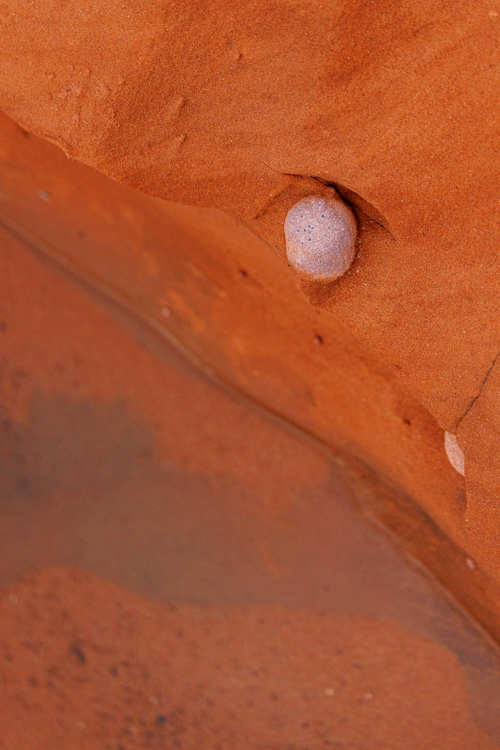
こちらの写真はモキマーブルがまだ完全に分離されていない段階です。雨が降って水にさらされることにより砂岩の侵食が進むと、ポロリと分離するんですね。面白いです。 The picture below shows a moqui ball that is still attached to the sandstone wall. I can see that rain water eroded some of the sand around it. I wonder how long it will take for this particular ball to come out from the wall as the erosion continues. Isn’t it interesting?
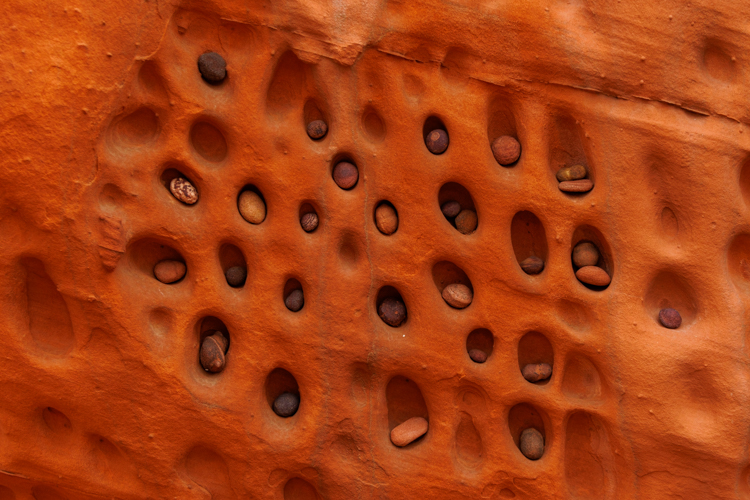
いやいや、こんなことありえないよね?岩壁に見つけたモキマーブルのアパート? At one point, we found a moqui ball apartment. I am sure this was not formed naturally.


 aomi3 now