ブユムシクイとゴジュウカラは共に鳥類の中で最小の鳥のグループに入ります。 Both the Gnatcatcher and the Nuthatch are among the smallest bird groups.
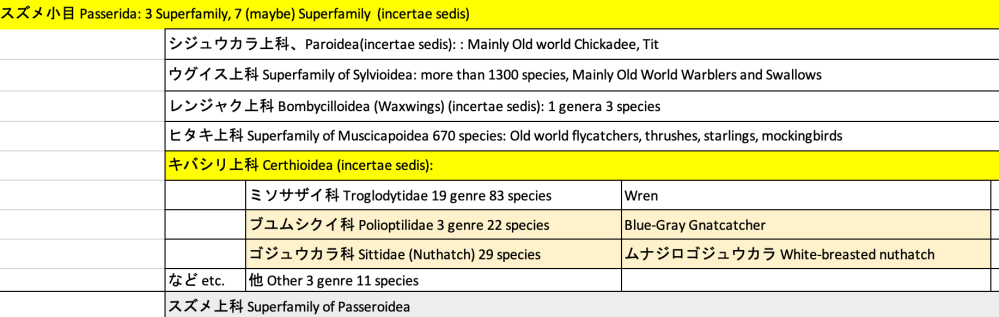
体重も1オンス (30 g)と軽いので、逆さまになって気の幹を走るのが得意です。それが理由で、キバシリ(木の上を走る)という名前がつけられたんですね。 Weighing only 1 ounce (30 g), they are good at running upside down on tree trunks, which is why they were given the name “tree creeper” (tree runner)” in Japanese for the family name.

この分類を始めるまで、これらの鳥の印象は上記の理由で似たような印象を持っていましたが、結構違うことがわかりました。 Before I started this classification, I had the impression that these birds were similar for the reasons mentioned above, but I found that they are quite different.

ブユムシクイの体重はムナジロゴジュウカラの3分の1しかないのに驚きです。アメリカツリスガラよりほんのわずか大きいぐらい。 It’s surprising that the weight of the Blue-Gray Gnatcatcher is only one-third that of the White-breasted Nuthatch, and only slightly larger than the Verdin.

そんな小さなブユムシクイですが、なんと、冬には南に飛んでいきます。長距離ではないけれどね。そして、暖かくなって来たらまた戻ってくるそうです。でも、風に飛ばされて北に行き過ぎてしまうことも多々あるそうです。軽いですからねー。逞しい! Although they are such small birds, they fly south in winter. Not long distances though. Then, when it gets warmer, they come back. However, they are often blown by the wind and go too far north. That’s because they are so light. A tough bird!

私は、結構この鳥がすきです。なぜなら、こんなに小さいのにオスの顔の眉毛が太いVの字でオヤジ顔に見えてしまうからです。 I quite like this bird because, even though it is so small, the male’s unibrow forms a thick V, making it look like an old man’s face.

ムナジロゴジュウカラについてはあまり知識がありません。ただ、習性に特徴があります。 I don’t know much about the White-breasted Nuthatch, but it has some peculiar habits.
英語名のNuthatch は: Nut(木の実) + Hatch (殻を破る)= 木の実の殻を破る鳥 The English name Nuthatch is: Nut + Hatch = A bird that breaks the shells of nuts.

余分に収穫できた木の実などを木の割れ目などに押し込んで貯蔵しておく習性があります。貯蔵された木の実は貯蔵中に自然に割れるというメカニズムを知っているんですね。 They have the habit of storing surplus nuts by pushing them into cracks in trees. They know the mechanism by which stored nuts naturally crack while in storage.

鳥の生態の観察はすればするほど面白くなります。 The more you observe bird life, the more interesting it becomes.
さて、次回から鳥類最大のグループ、スズメ上科、分類表最後のグループに入って行きます。うれしい! Well, from next time we will be moving on to the largest group of birds, the passeroidea superfamily, the last group in the classification chart. I’m excited!

 aomi3 now