Category Archives: Archaeology

バビロンの恐竜 Dinosaur At Babylon


この場所がなぜバビロンと名付けられたのか、確かな理由は誰も知りません。この場所についての文献は、ほとんどないとこのウェブサイトに記載されています。(英文) We do not know why this place was named “Babylon”. There are only a few websites documenting this location, according to this web site managed by Washington county Historical Society.
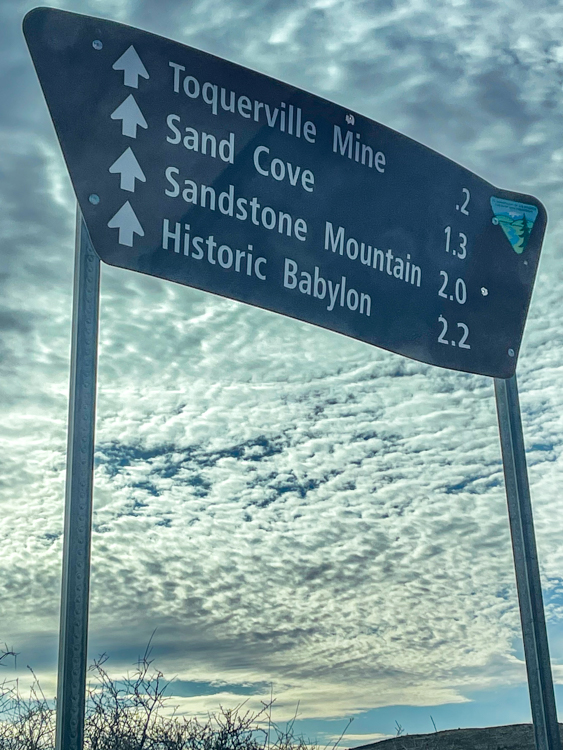
ここがバビロン史跡と言われる理由は、1870年の始めに鉱山があった事から来ています。 It is called “historic” because there was a mine and a mining town named Babylon here at the beginning of 1870.
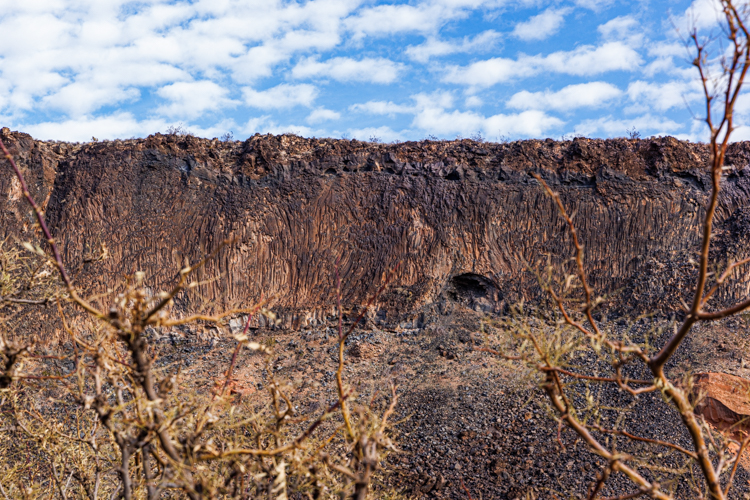
でも、鉱山跡と言えるものほとんど残っていません。私たちは鉱山があったと思われる場所のすぐ近くを流れるバージン川まで降りてみました。 We didn’t see much of the ruins here, but instead we went down to the Virgin river.
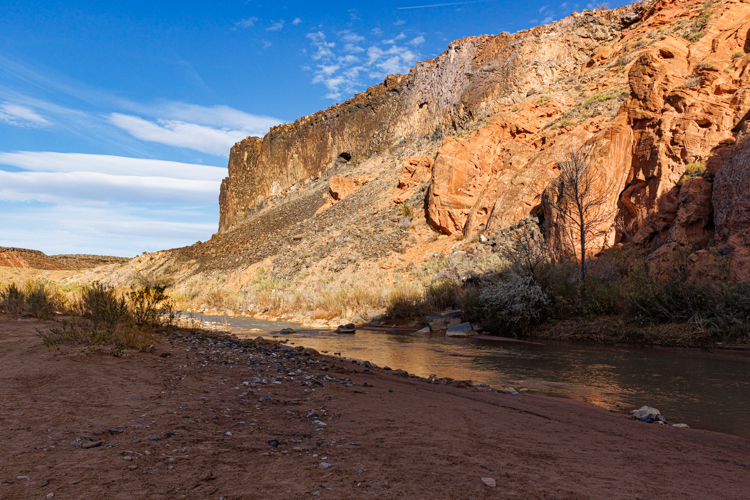
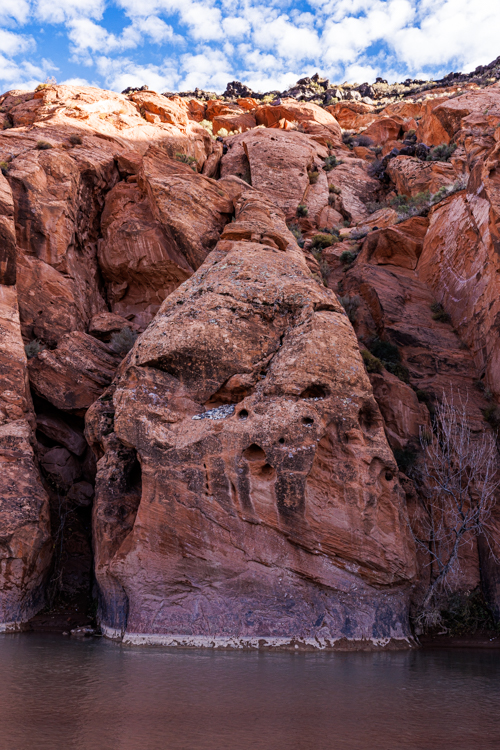
この川はザイオン国立公園内を貫き、渓谷を削りとってきた川として有名です。今は水量がそれほどありませんが、雨の後には水位がぐんと上がるはずです。下の写真、中腹にある棚に砂利が溜まっている事からも水位の変化がわかります。 The Virgin river is known because it carved a deep canyon for millions of years. This canyon was designated Zion National Park.
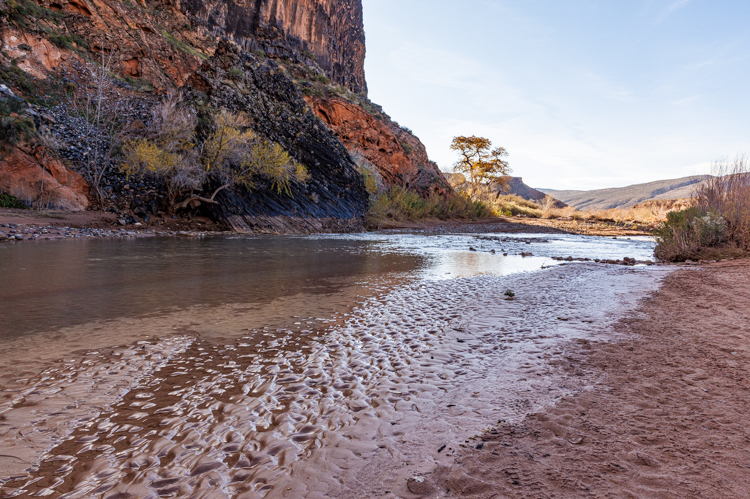
また、ジュラ紀にはこんな河原の沼地を恐竜達が歩き回っていたに違いありません。 I imagine that dinosaurs roamed this area by the riverside during the Jurassic era.
なぜそんなことが言えるのかって?なぜなら、恐竜の足跡がちゃんと残っているからです。 You may ask me why I can say such thing? I say because the actual dinosaur footprints exist near it.
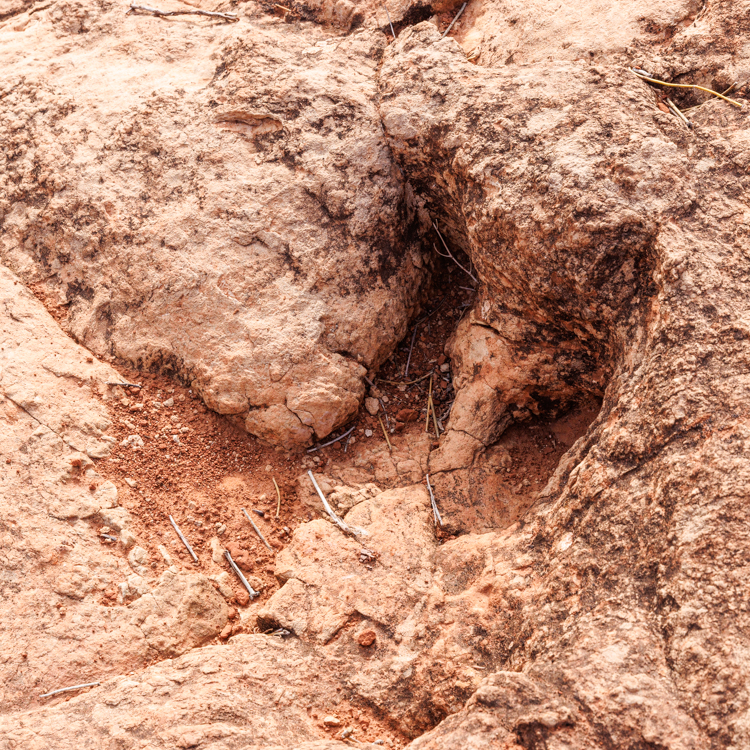
歩幅は約1メートル。 The stride length is about three feet.
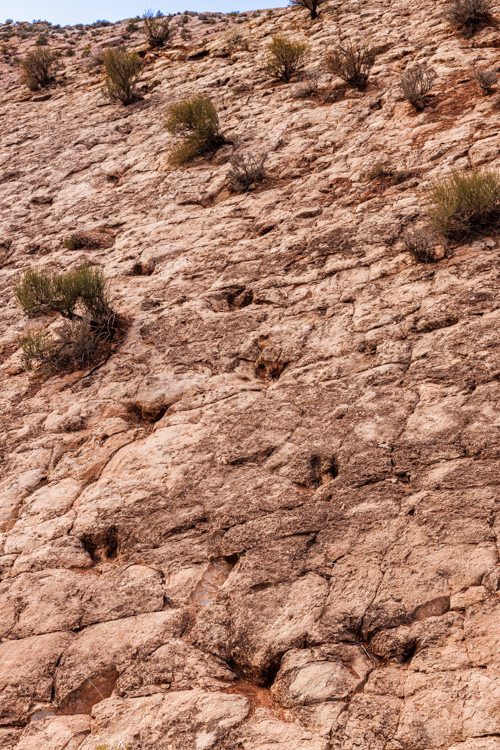
この地層には無数の足跡が残っています。斜めに傾斜した壁に残っている足跡は、その後の大陸移動が激しく何回もあっただろうとも推測させてくれます。 This stratum preserved many footprints very well. And the slanted strata in this area made me guess that many continental movements happened since then.
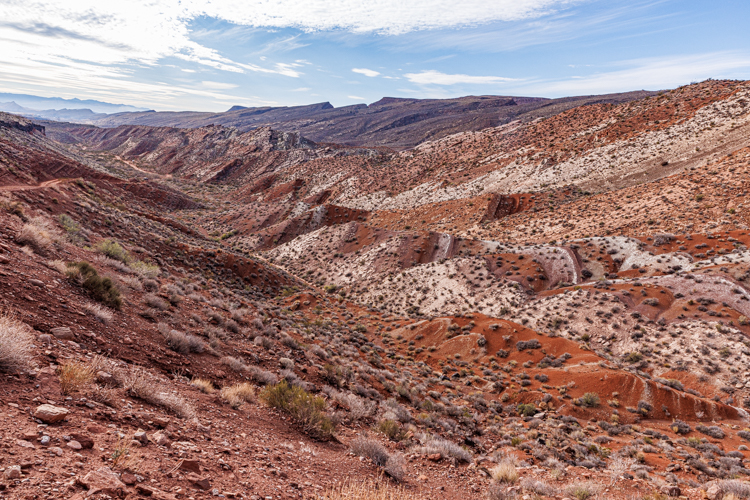
その後、白亜紀にはこの辺一帯は水面下となります。そんな大きな地球の変化を乗り越えて、今でもしっかりと恐竜の足跡が残っていることに感謝します。 After that, the entire area was under the sea during the Cretaceous era. I am awed by the fact that the footprints still keep their shapes well through all the Earth’s changes.
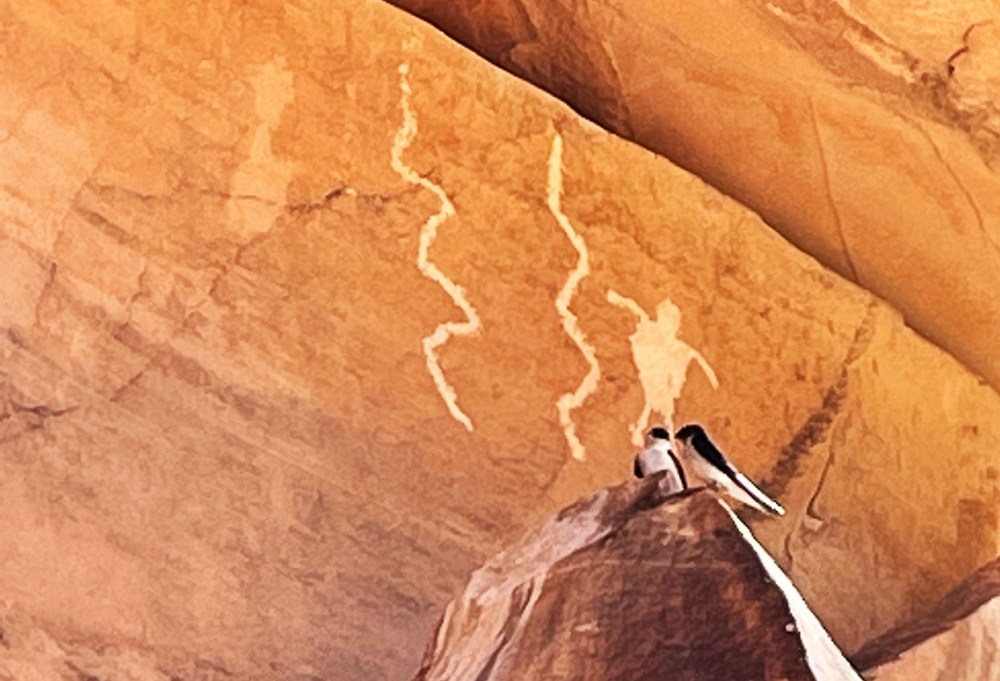
Hike 14: Falling Man


ネバダ州のゴールドビュート国定公園、4km と、とても短い距離ですが、4時間かけて岩場を歩く盛りだくさんのペトログリフ巡りをするハイキングでした。 The hike route was only 2.5 miles, but we spent more than four hours going through the rocky area at Gold Butte National Monument in Nevada. This was because there were petroglyphs everywhere.

説明し出すととても長くなります。だから要点だけをまとめます。アメリカ先住民によって描かれたペトログリフは、古いものは1万年前、新しいものはほんの数百年前のものまである様です。その見分け方は、岩の色、点描画のように、一点一点削られた後の色などで判断されるようです。 This is a very short summary of what I learned yesterday. The petroglyphs were carved by Native Americans. The old ones are 10 thousand years old but newer ones are only 200 years old. We can’t tell clearly but we could guess the age of the petroglyphs by looking at the rock color and the lines of petroglyphs created one dot at a time.

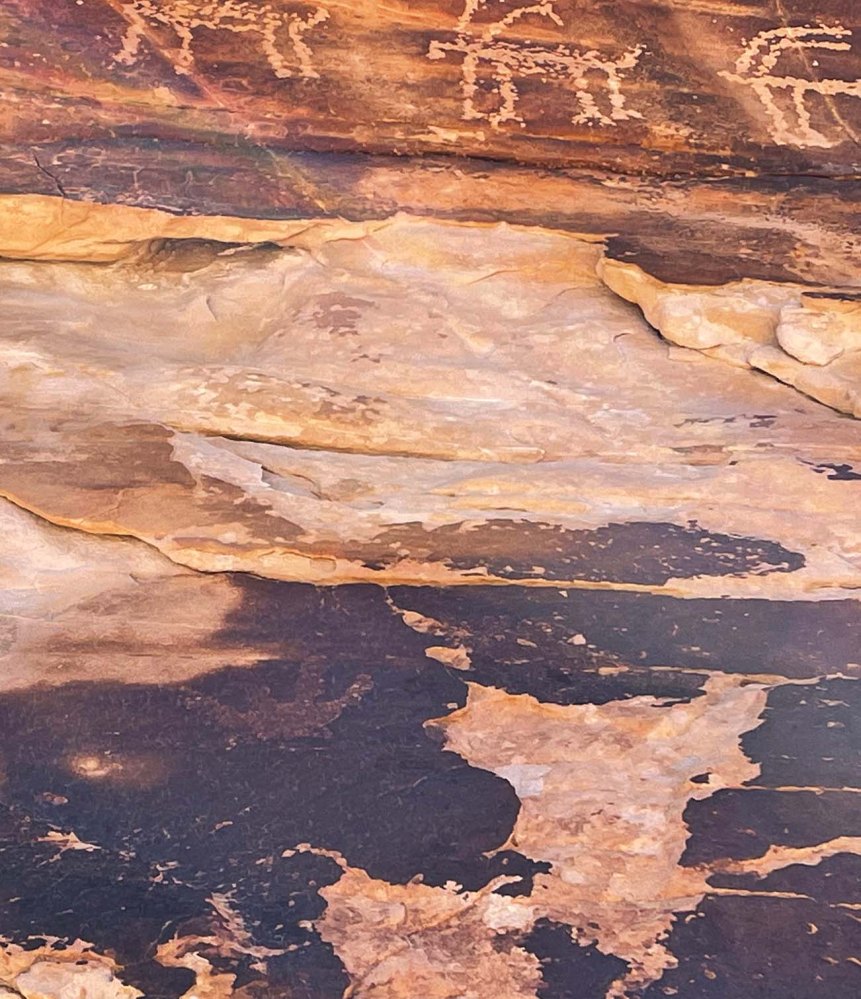
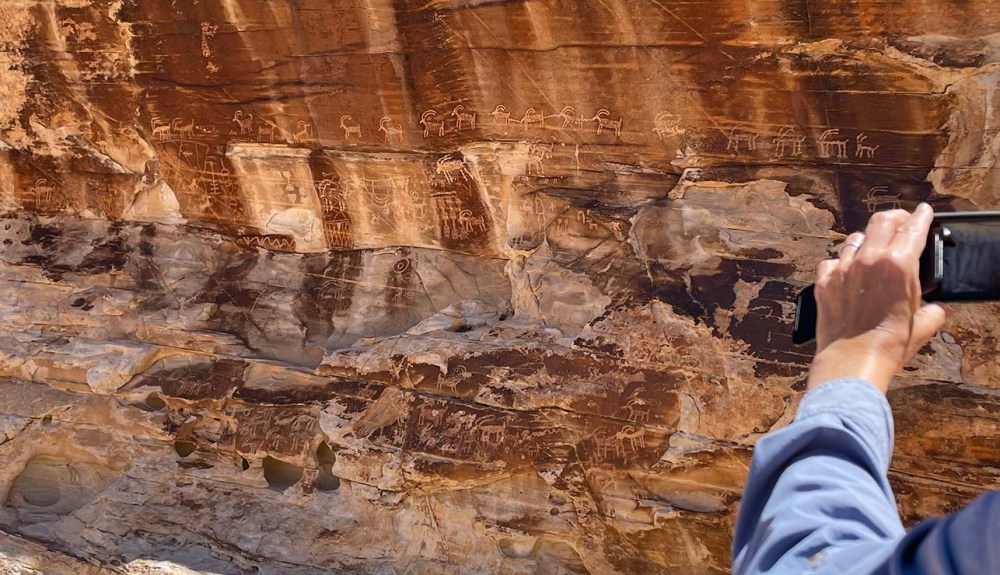
例えば以下の写真です。不鮮明ですが4本指の手が下の方に描かれています。上のヤギと比べるとペティナ(古色化)により多く覆われて、描かれた年代が古い事がわかります。 The picture below is one example. Can you see a hand with four fingers towards the bottom? It is covered by petina more, so it can tell us that the hand is older than the goats along the top.

突起する場所は3箇所です。The hike had three highlights.

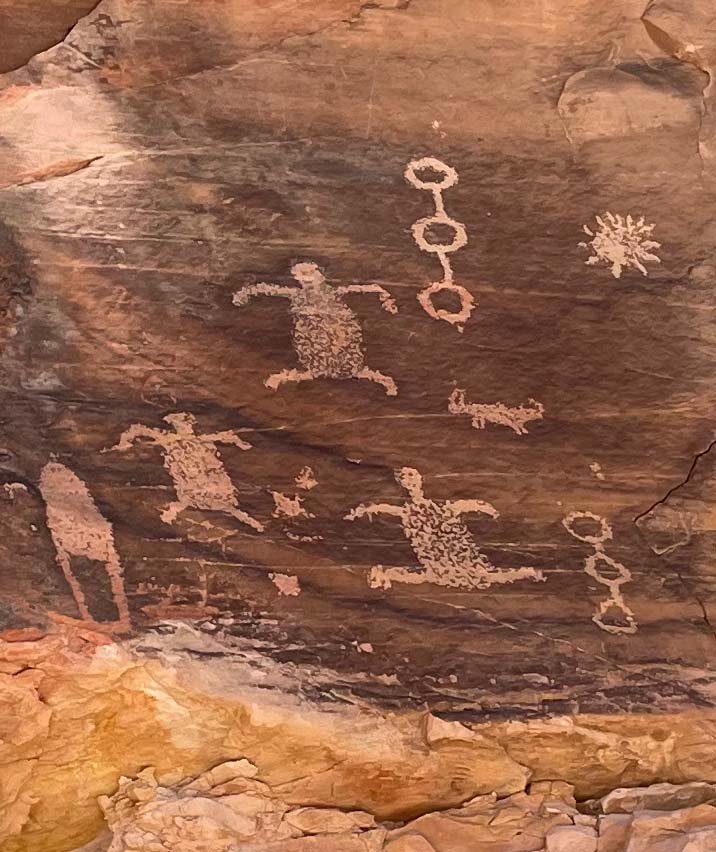
  1. フォーリングマン(転落する男):ペトログリフはこの辺一体に散財しています。そのどれもがマッチ棒のような表現の仕方になっています。例えば、こんな感じ。 Falling Man: You can find so many petroglyphs at this particular area. And almost all of them are carved like stick man pictures. See below picture.

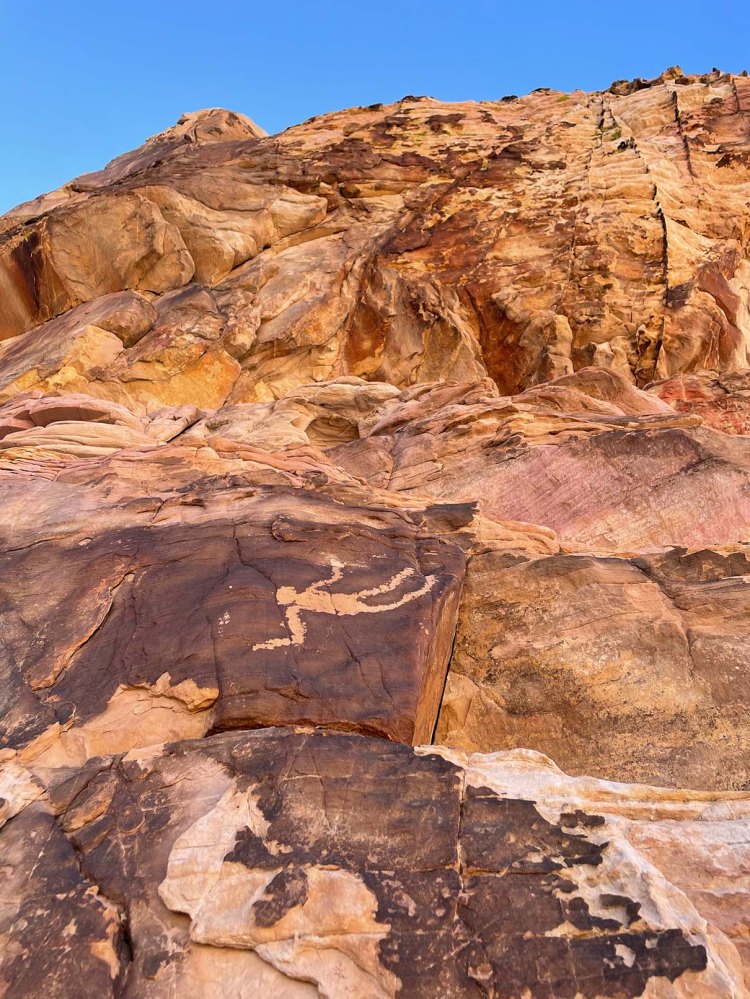
でも、ただ一つ、この絵は明らかに違いました。 However, one was clearly different.

描かれた場所から、親族、もしくは特別な誰かが高い崖の上から転落した様を伝えようとしているのではないかという事です。 正面から見たマッチ棒のような図では表現できない出来事だったので、こう描かれたのではないかということです。The location of the petroglyph is on the side of a high cliff. One theory is that someone very important to the artist had fallen down off the top of the cliff. So he/she couldn’t simply express it with a stick man figure. That caused him/her to do a totally different type of carving from the others.

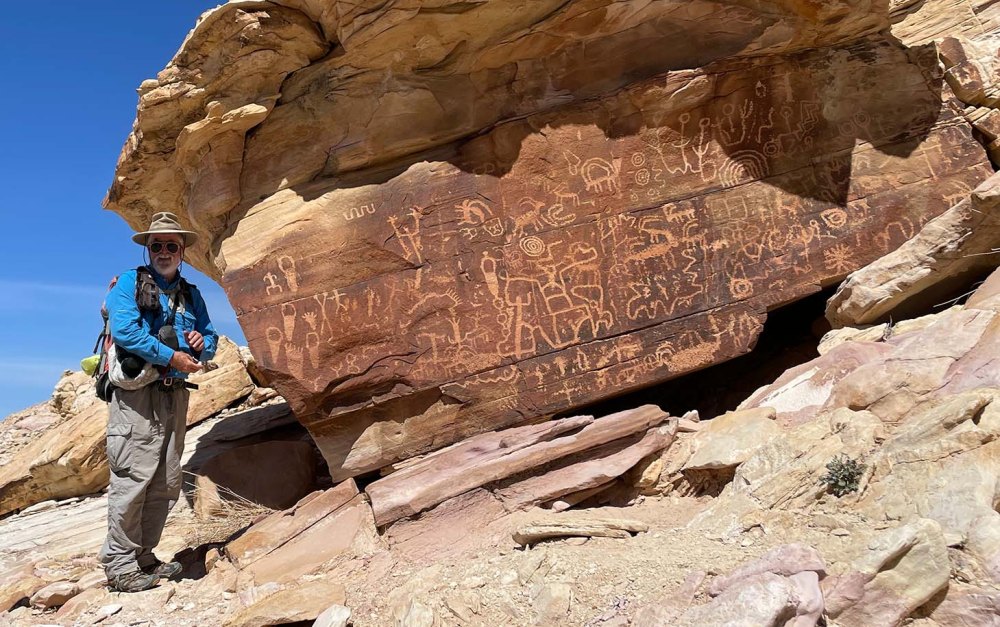
2. ニュースペーパーロック(新聞岩):ペトログリフがギッシリ積み込まれた一枚岩です。ジムブーン博士が絵について諸説を説明してくれました。 Newspaper Rock: it’s named newspaper rock because many petroglyphs are packed onto a single wall of rock. Below picture is Dr. Jim Boone who guided us to these places. He talks about several theories how we could read them.

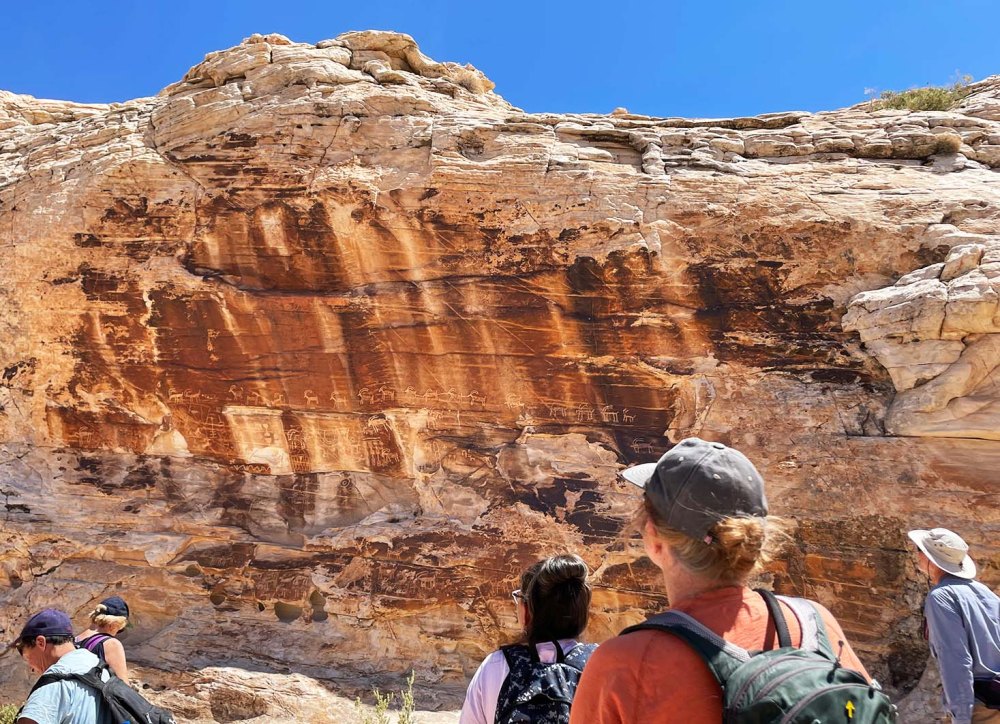
3. 21ぴきのヤギ:ちょっと疲れてきた頃、突然現れた岸壁です。みんなその壁に見入っているところです。 21 Goats: It was towards the end of the hike. We were tired, but the flat cliff face appeared suddenly in front of us. And it shocked us all.

なぜなら名前の通り、やぎが21頭、もしくはそれ以上描かれていたからです。列を成してどこかに行こうとしているところなのでしょうか。This is because 21 or more goats were carved on the rock surface. I wonder where they are going all lined up like that?

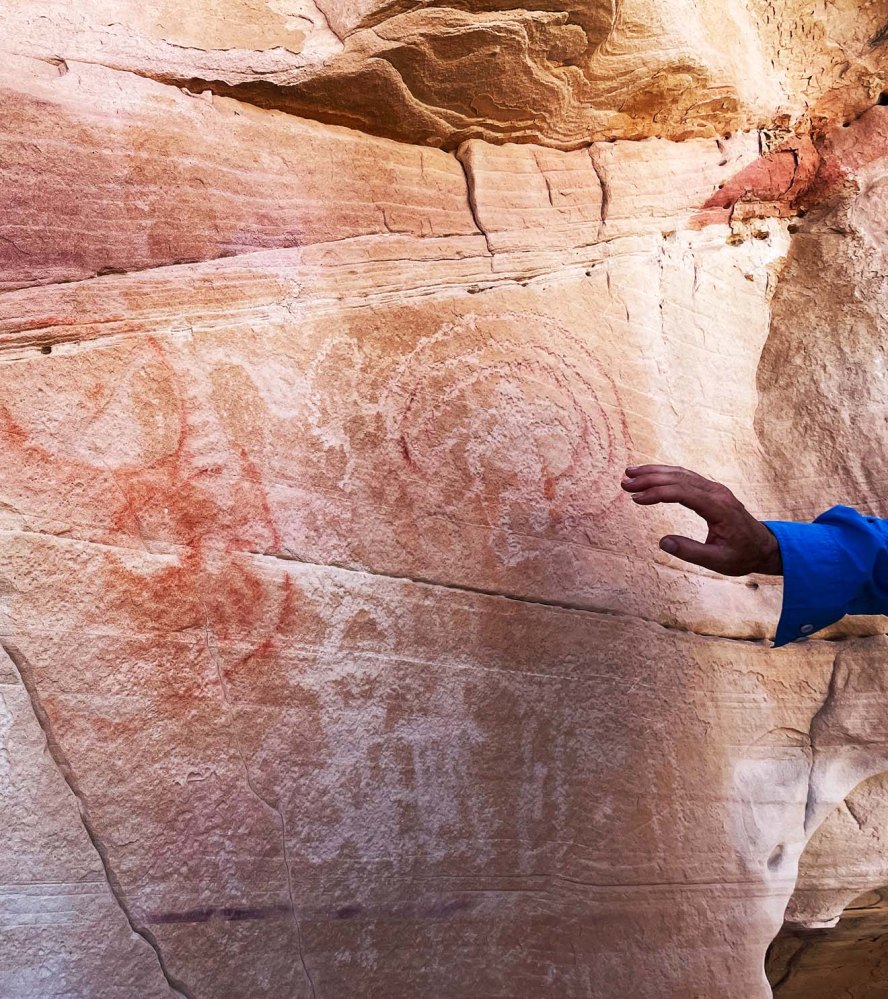
最後に、ペトログリフとペトログラフは別物である事です。ペトロは岩、グリフは彫刻、グラフは絵画です。以下の写真は、両方が混合しています。赤い線がペトログラフです。 For the last, I want to point out about the petroglyphs and petrographs. I didn’t know this, but “petro” is “rock”, and “glyph” is “carving”. And “graph” is “drawing”. The picture below includes both petroglyphs and petrographs. The red color drawings are petrographs.