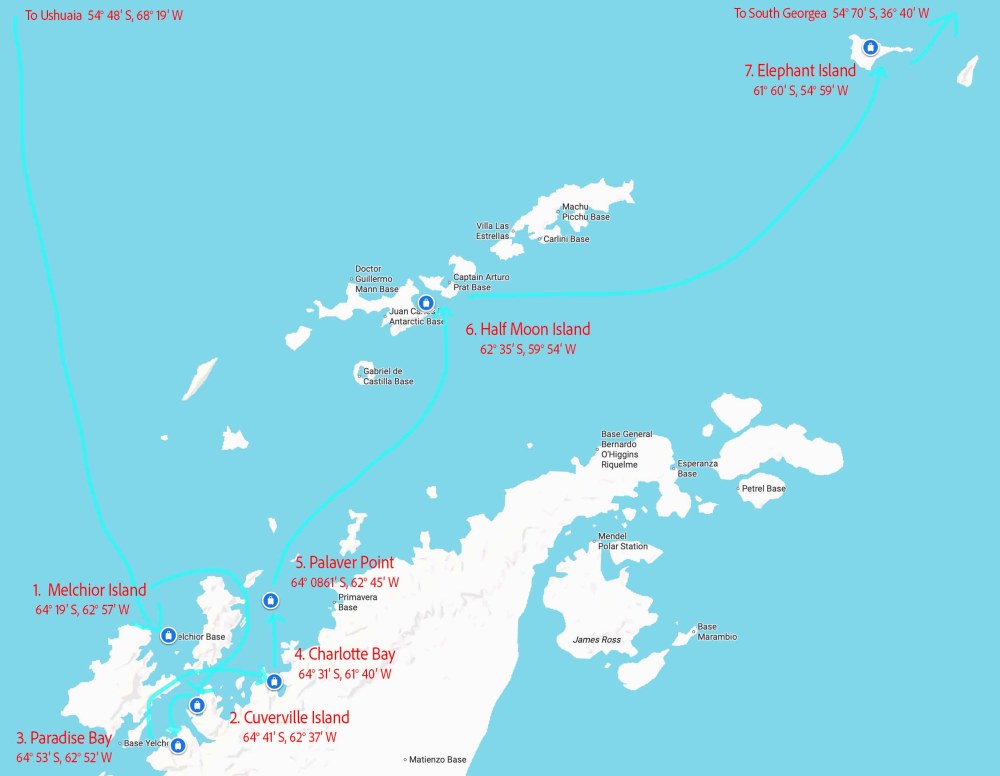
1月3日、私たちを乗せた船は北東に舵を切り、サウスシェットランド諸島の一つ、ハーフムーン島の近くに碇を下ろしました。 On January 3rd, the ship carrying us set a course northeast and dropped anchor near Half Moon Island, one of the South Shetland Islands.
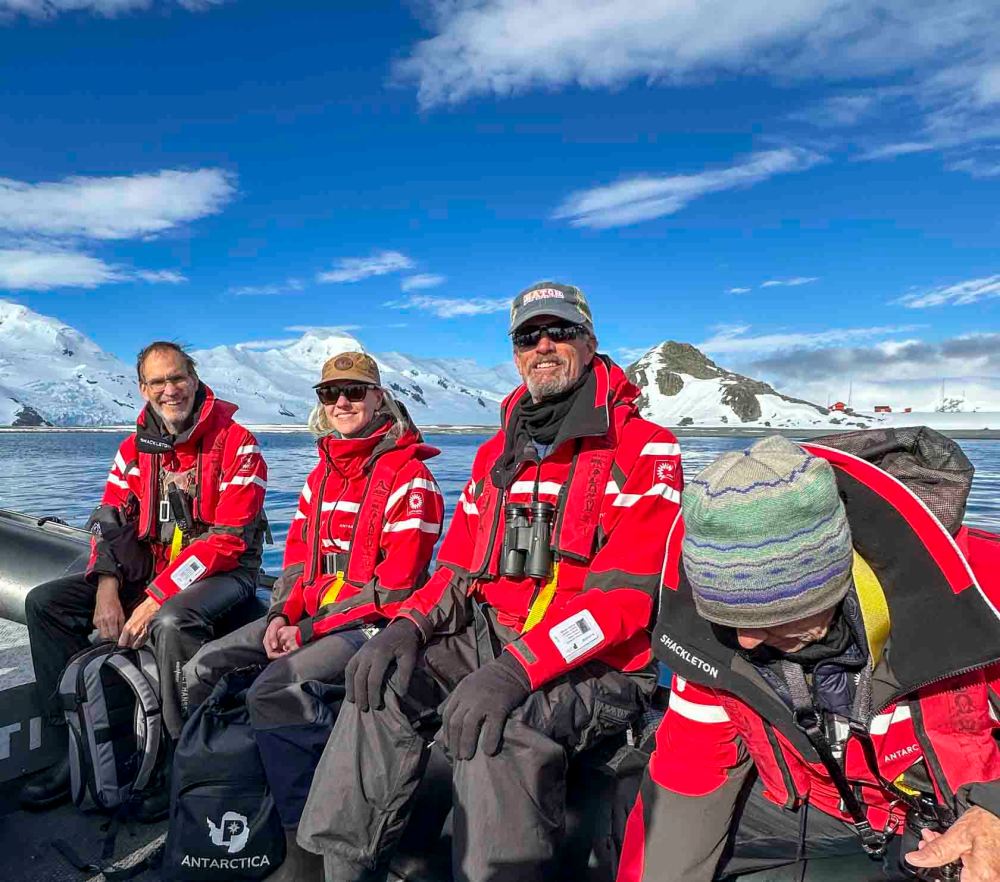
ゴムボートを降りると、空気が違うことに気がつきました。たった2度北上しただけなのに、暖かい。今まではジャケットを2枚も着ていたのに、ここでは1枚脱ぎ捨てました。 Stepping off the zodiac, I noticed the air felt different. Though we’d only travelled two degrees north, it was warmer. Whereas before I’d been wearing two jackets, here I shed one.
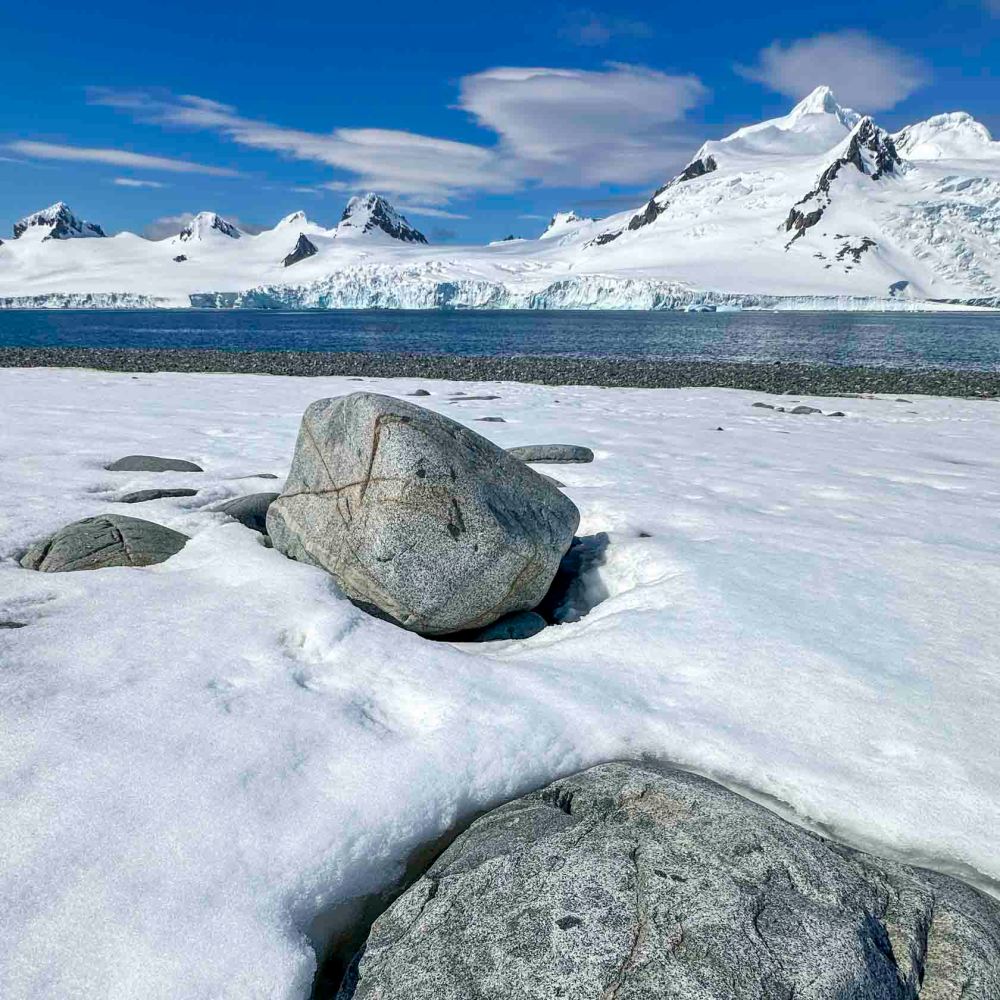
雪も積もっていましたが、露出している岩石に苔や地衣類が付着して綺麗な模様を作り出していました。 Snow had accumulated, yet moss and lichen clung to the exposed rock, creating beautiful patterns.
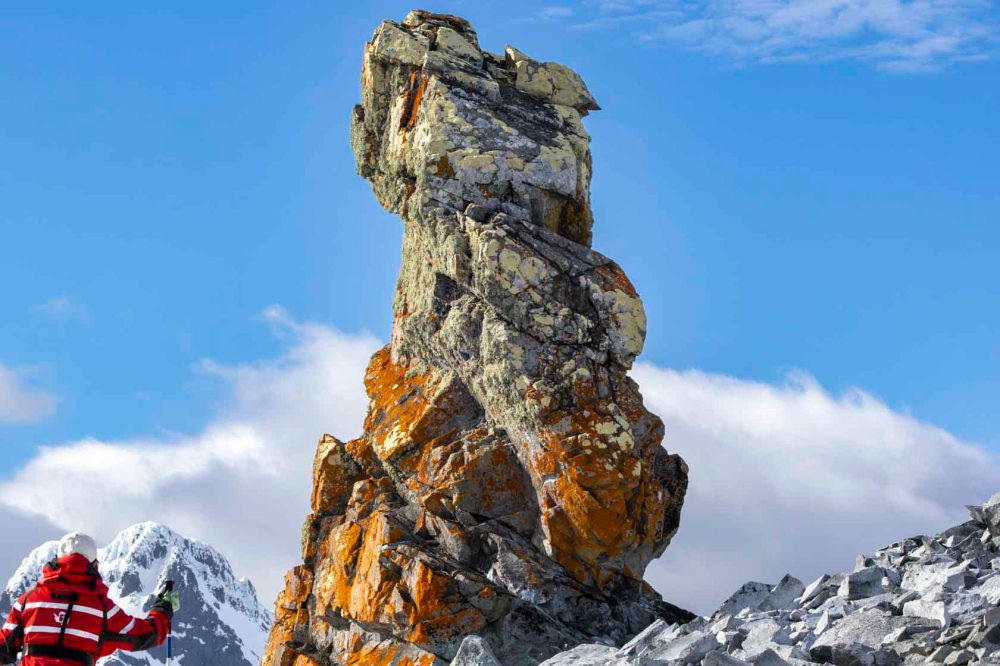
ゴンドワナ大陸は約1.8億年前から分裂が始まり、2,300万年前にはほぼ現在の姿になったと言われています。アフリカ、南アメリカ、インド、オーストラリア、アラビア半島、マダガスカル島、そして南極大陸へと分裂していったそうです。 It is said that the break-up of the Gondwana supercontinent began around 180 million years ago, and by 23 million years ago it had largely assumed its present form. It is thought to have fragmented into Africa, South America, India, Australia, the Arabian Peninsula, Madagascar, and Antarctica.
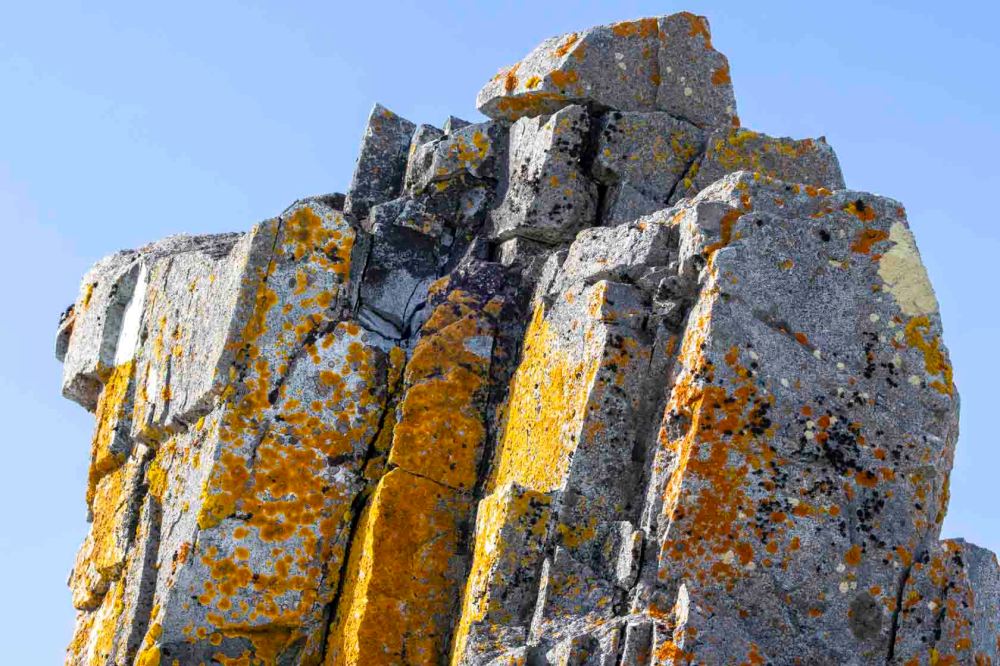
とすると、この岩もゴンドワナ大陸の頃からある石かもしれないと考えたって否定はできないですよね。顕微鏡で解析すれば別ですけど。 Given that, one cannot rule out the possibility that this rock too may date back to the time of the Gondwana continent, right? Though that could only be confirmed by microscopic analysis.
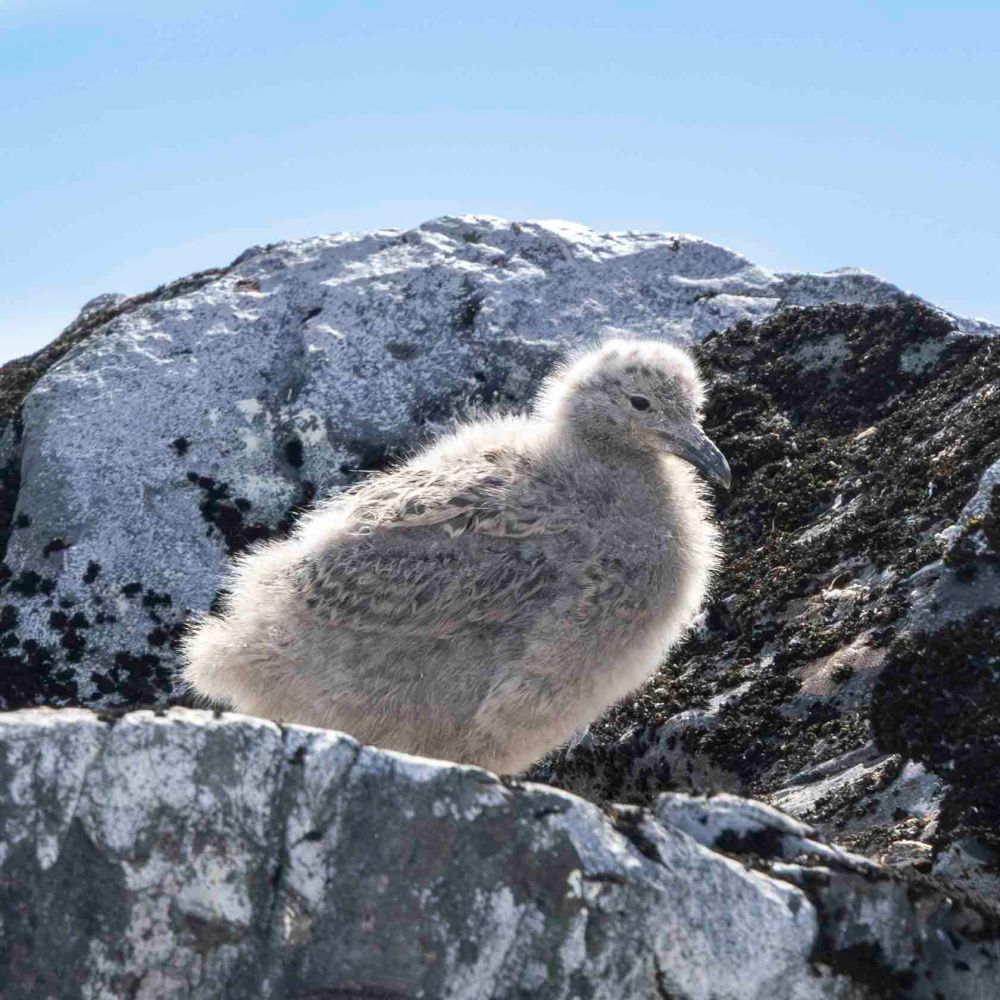
そんなことを考えなが歩いていると、奇妙なものを発見しました。岩棚の上に、大きな毛玉? As I walked along pondering such things, I came across something peculiar. On the rock shelf, a large fuzzball?
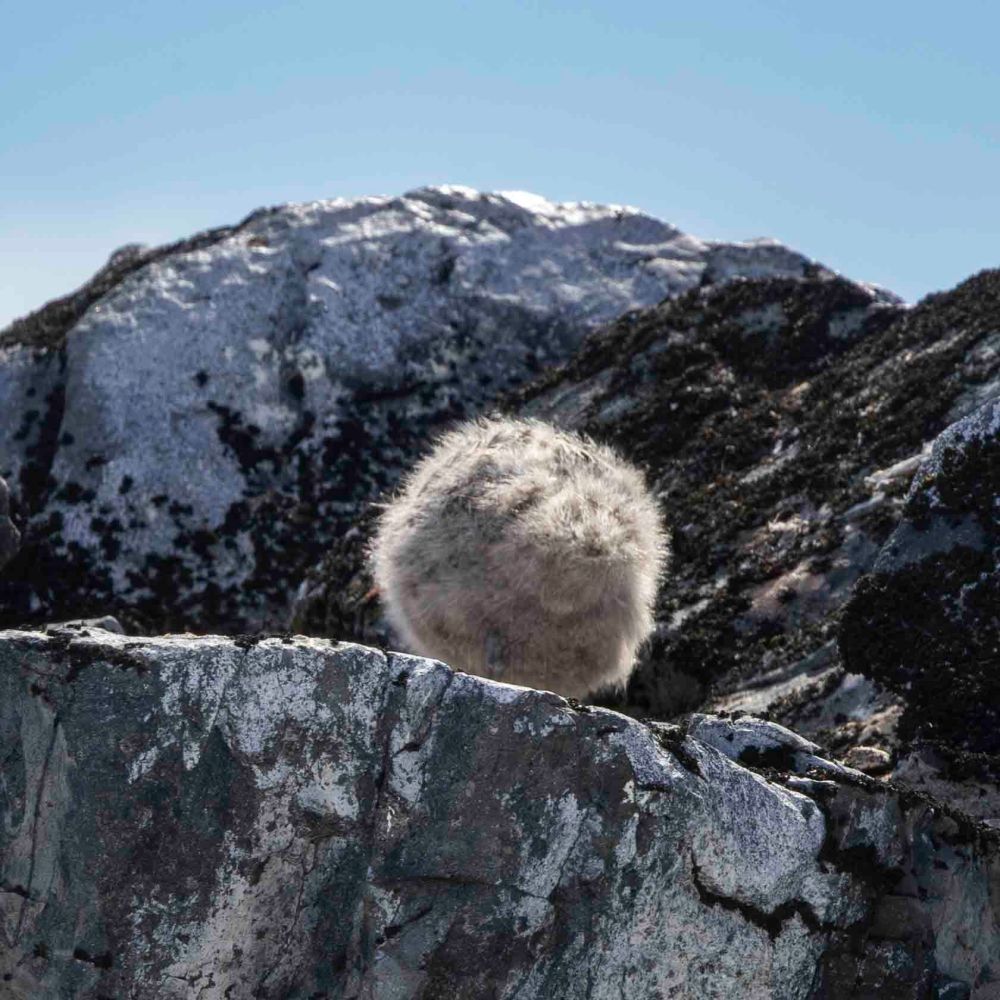
ああ、なんだ、ミナミオオセグロカモメのヒナでした。 Ah, what’s this? It was a Kelp Gull chick.
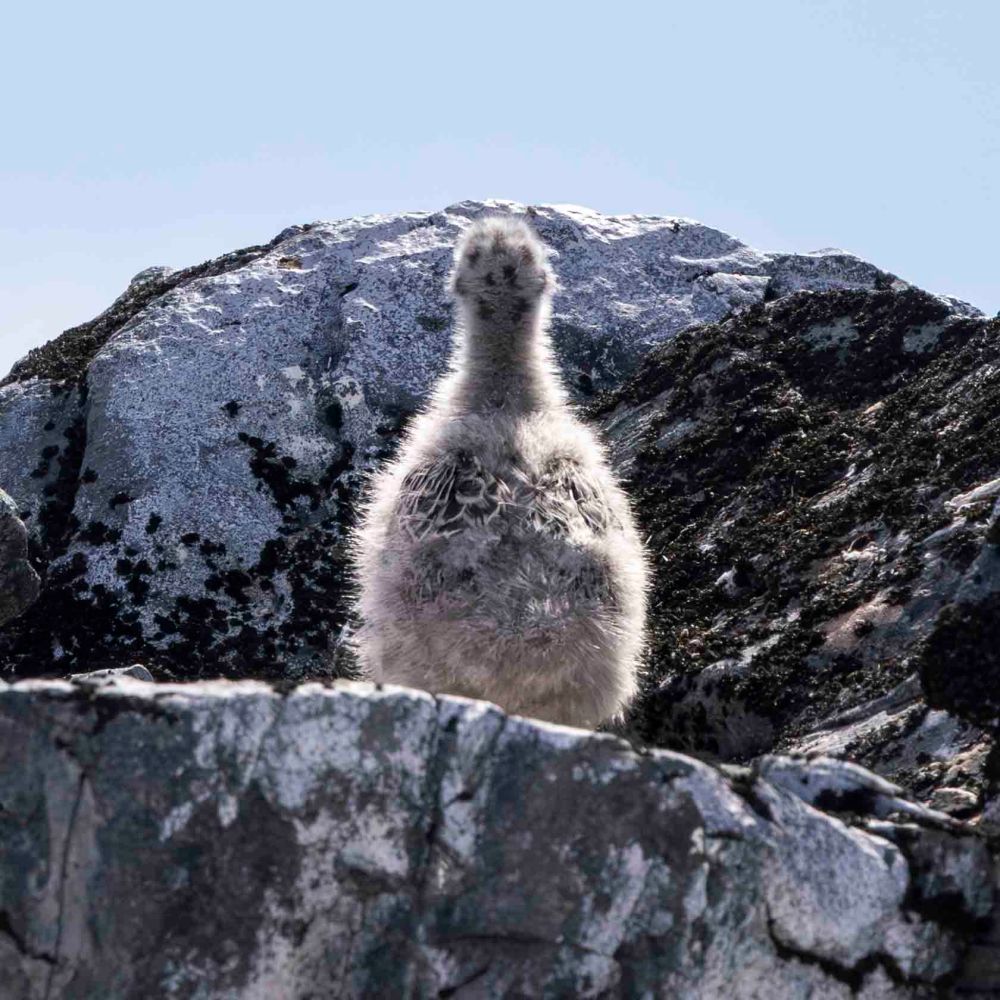
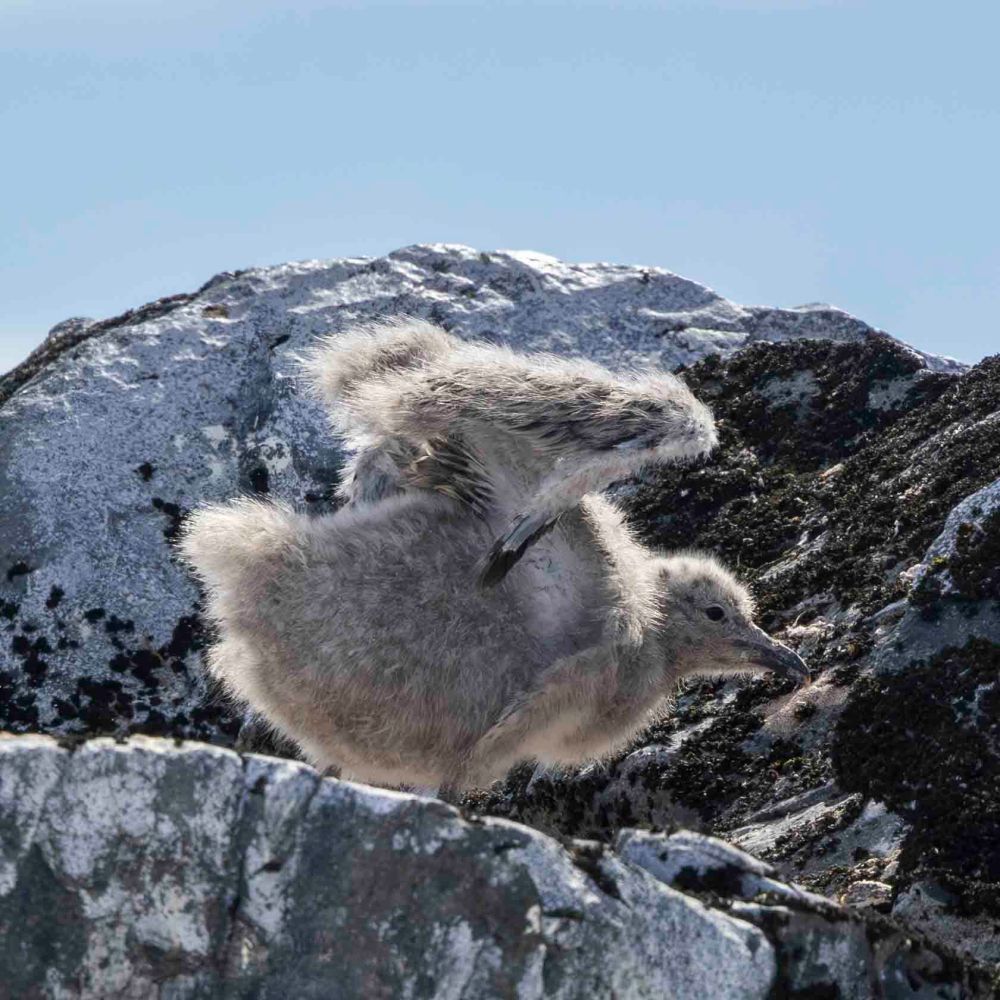
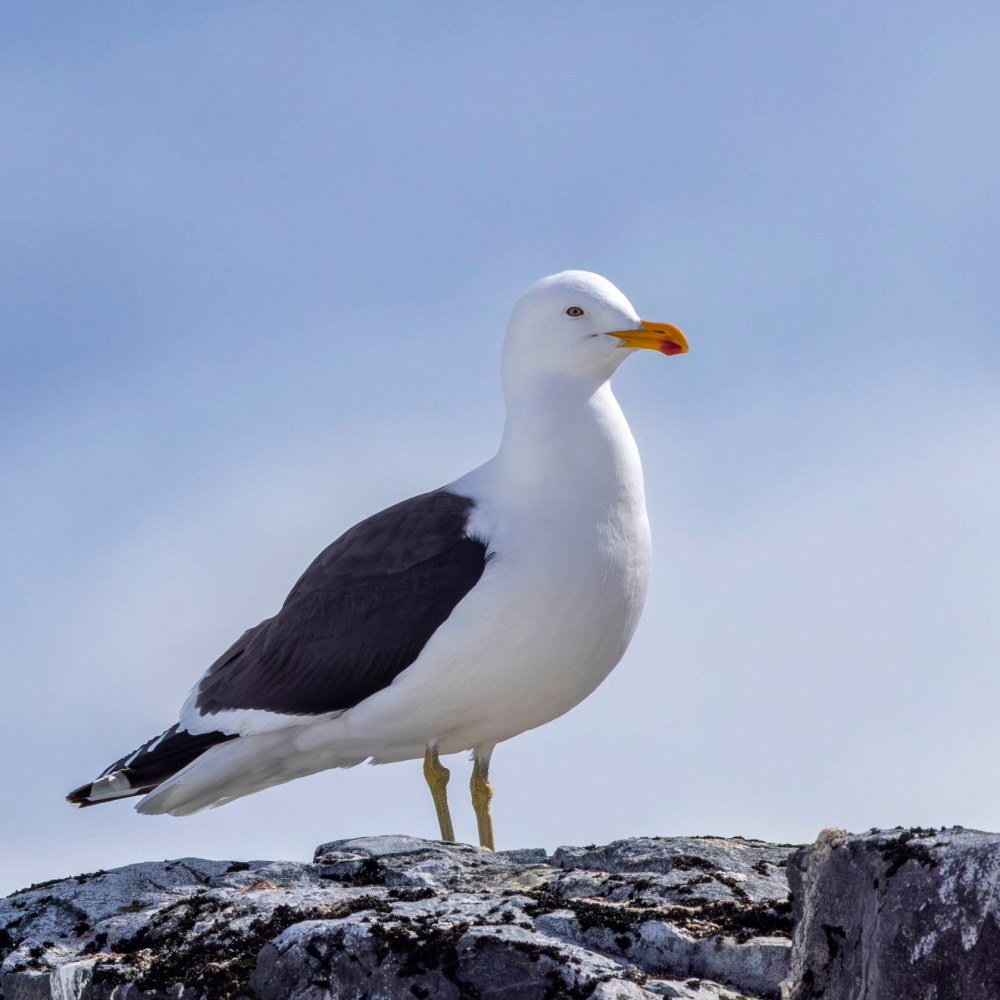
ミナミオオセグロカモメの成長した姿。 The adult form of the Kelp Gull.
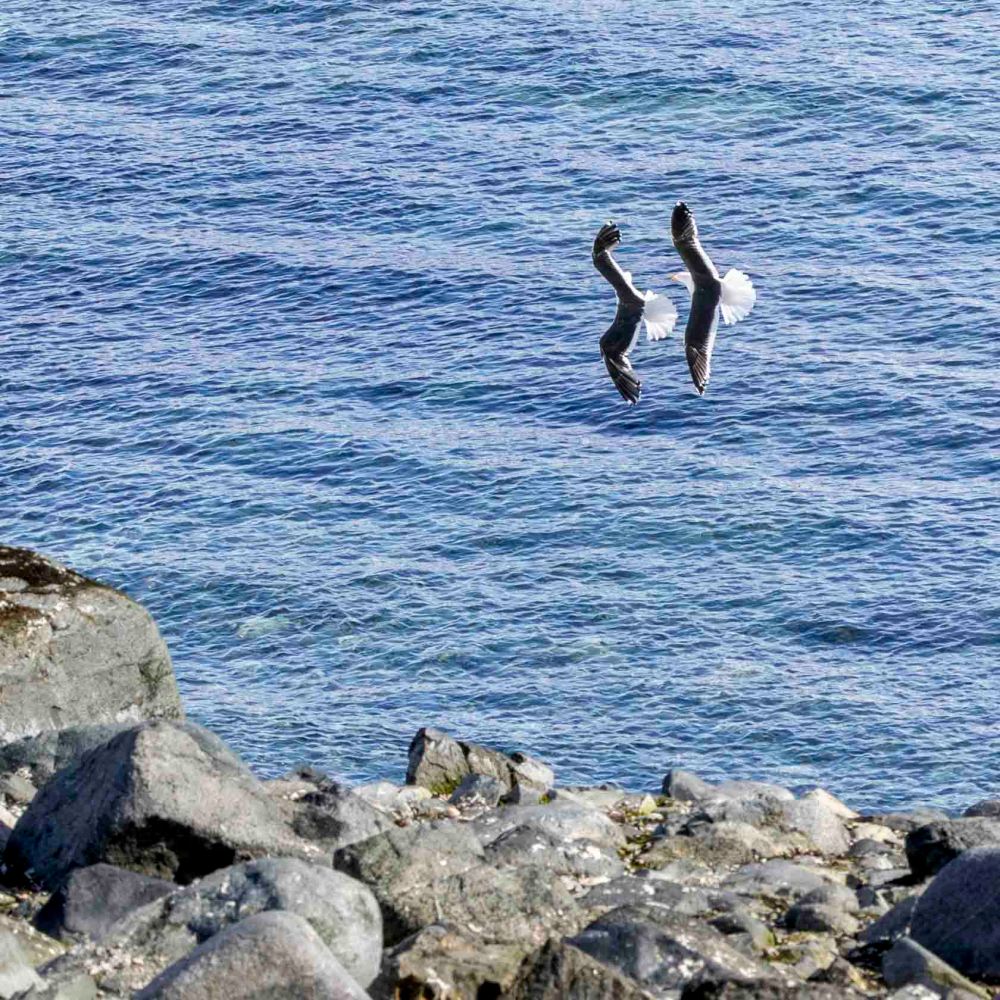
ここでは彼らの巣がいくつか見つかりました。やはり緯度が2度北上すると暖かくなるからヒナも育てられるんですね。 Several of their nests were found here. Indeed, moving two degrees north brings warmer temperatures, allowing them to raise their young.
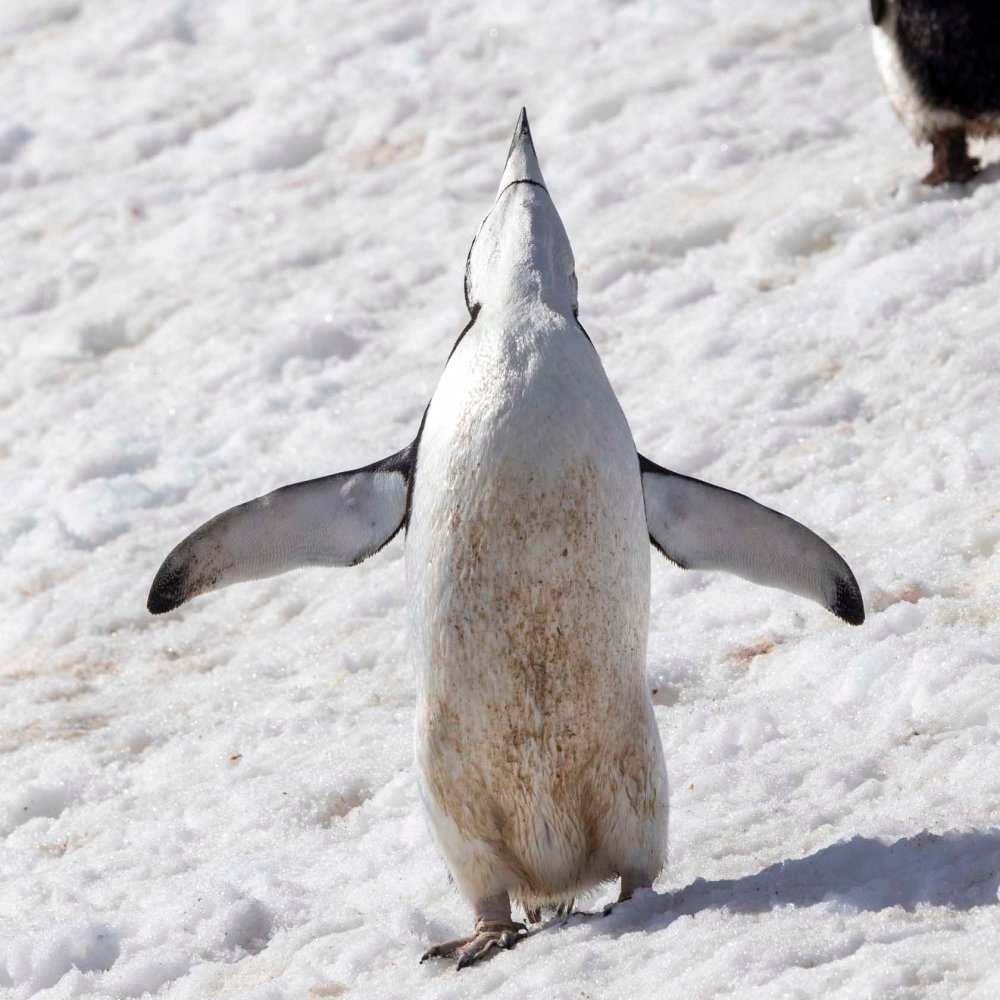
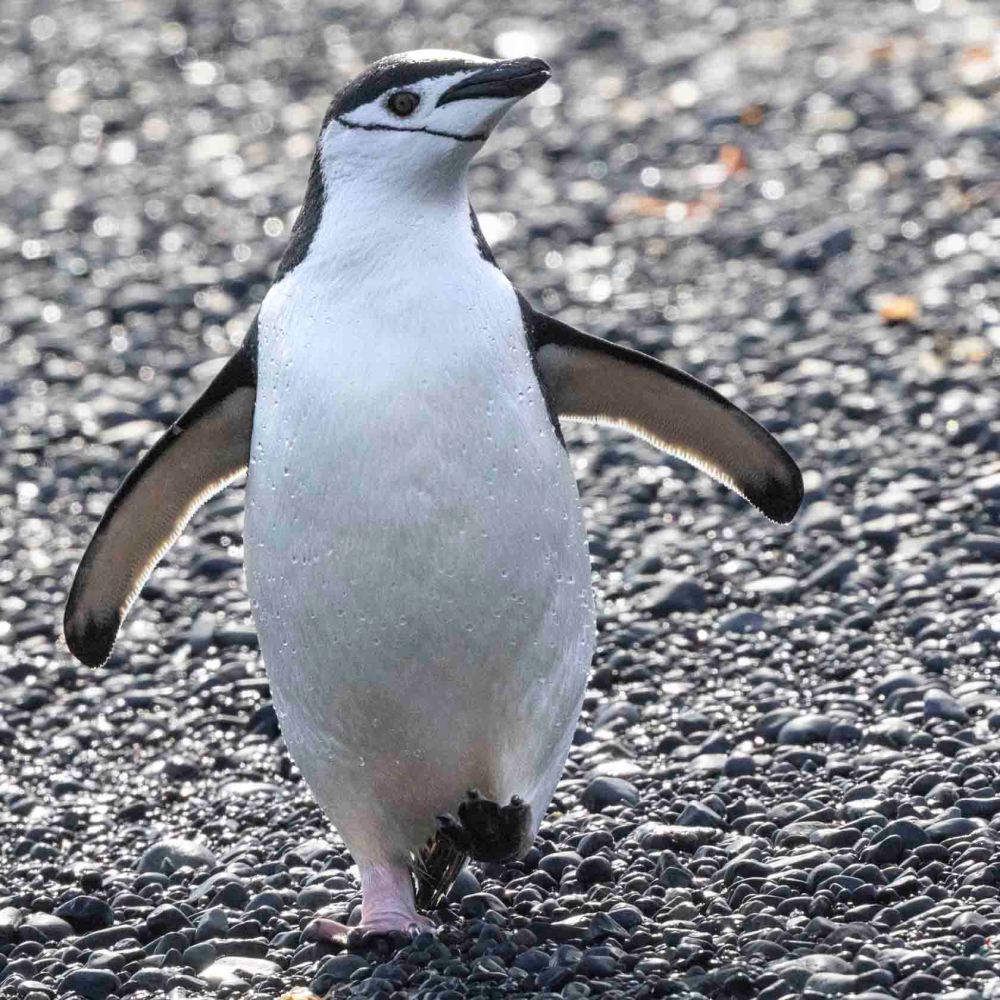
ところで、ペンギンの外見について書きます。今回、たくさんのペンギンを見ることができてわかったことですが、全てのペンギンが真っ白なお腹をしているわけではありません。お腹が汚れたペンギンがたくさんいます。 Now then, I shall write about the penguin’s appearance. Having seen many penguins by this time, I realized that not all penguins have pure white bellies. There are many penguins with dirty bellies.
でも、彼らは海のお風呂に入ってくると、すぐにきれいになるから大丈夫です。ペンギンも私たちと同じようにお風呂に入ることは大切ですね。 But it’s all right, because they become clean as soon as they take a dip in the sea. It’s important for penguins to bathe just as it is for us, isn’t it?
こちらの3人組を見てください。真ん中のペンギンは悲惨なほど泥だらけです。 Look at this trio. The penguin in the middle is wretchedly muddy.
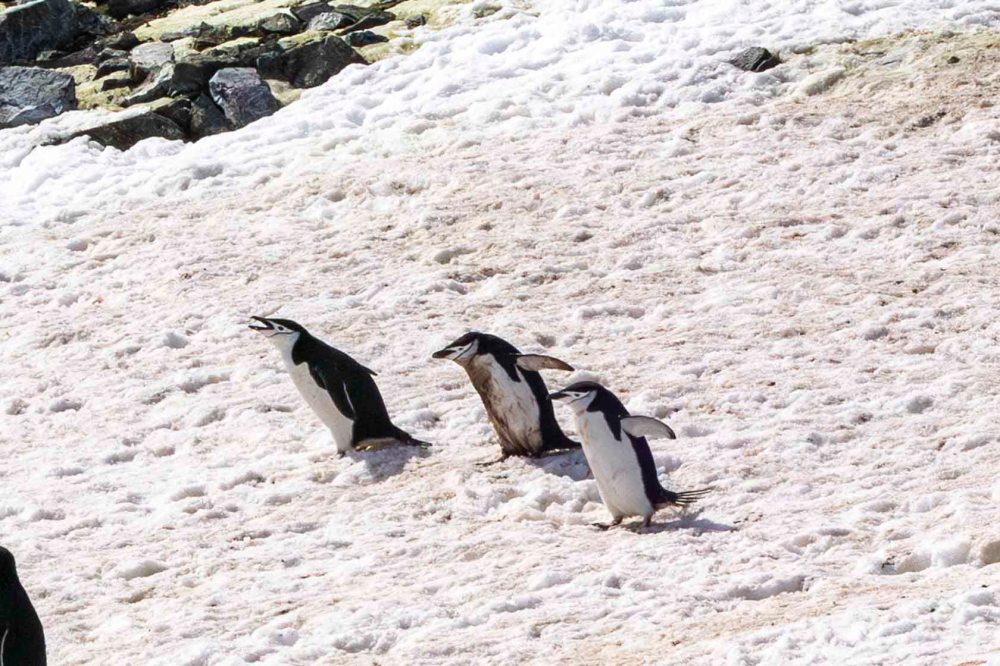
この3人組をしばらく観察した結果、おそらく家族だと結論づけました。なぜなら、彼らは海岸まで一緒に来て、両脇のペンギンは真ん中のペンギンが海に入るのを見守っているようだったからです。真ん中のペンギンはなかなか海に入れなくて躊躇していたんですね。まだ一度も入ったことがなかったのかもしれません。だから子供だと思ったわけです。そんな子供ペンギンを見かねてか、両親ペンギンが助けてくれることになりました。子供ペンギンが諦めないよう後ろから後押ししてくれたんです。その結果、無事入水できたというお話です。 After observing this trio for a while, I concluded they were probably a family. This is because they had come to the shore together, and the two penguins on either side seemed to be watching over the one in the middle as it hesitated to enter the sea. The middle penguin was struggling to get in, showing signs of hesitation. It might never have entered the sea before, which is why I thought it was a chick. Perhaps unable to bear seeing the young penguin struggle, the parent penguins decided to help. They nudged it from behind to encourage it not to give up. And so, the story goes, it managed to enter the water safely.
ラッキーにも、そんな風景をビデオに収めることができました。どうぞ、ご覧ください。 Fortunately, I was able to capture such a scene on video. Please take a look.
ペンギンだって、一番最初の海は怖いんだ! Even penguins find the very first sea voyage frightening!
その後、子供ペンギンはさんざん泳いだ後、帰ってきました。泥だらけの体は海水で洗ったので真っ白になりました。嬉しそうですね。 Afterwards, the baby penguin returned, having swum about to its heart’s content. Its muddy body had been washed clean with seawater, leaving it pure white. It looked rather pleased with itself.
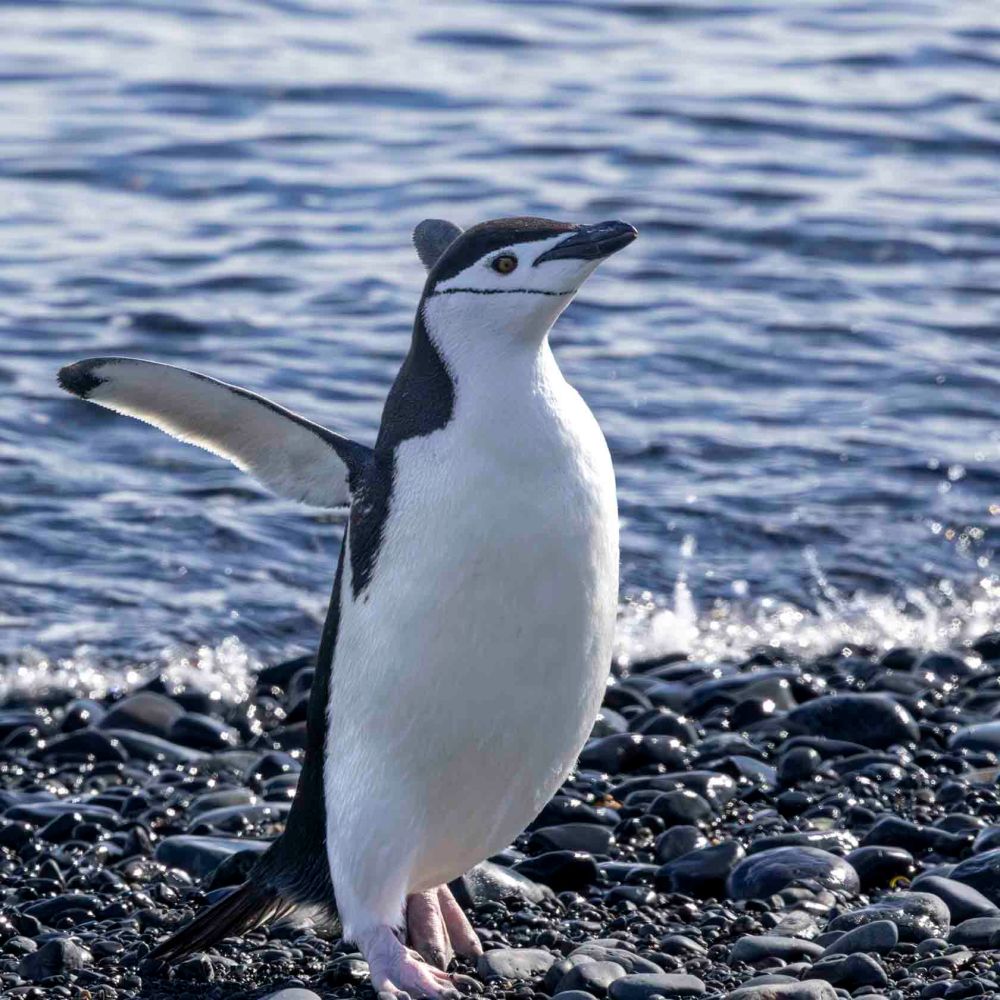
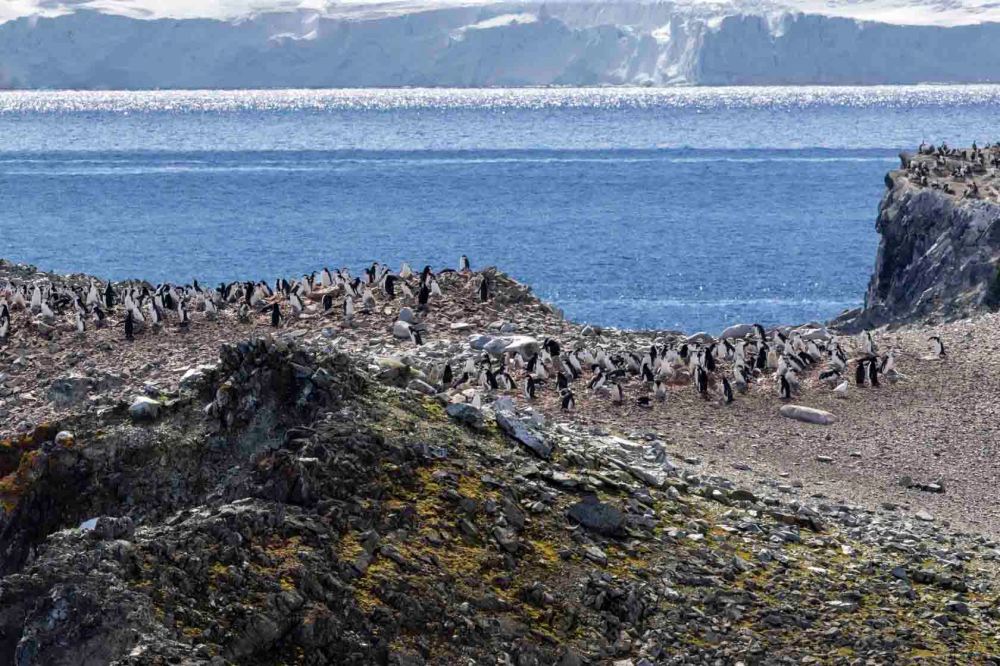
穏やかなハーフムーン島での朝でした。 It was a peaceful morning on Half Moon Island.
 aomi3 now