この鳥について調べようと思いながら忘れていました。今回ついに調べてみると、この鳥特有のおもしろい特徴が見つかりました。もちろん、この鳥だけに限ったことではありませんが、鳥について調べることの楽しさを再発見しました。 I had been meaning to look into this bird, but had forgotten about it. When I finally looked into it this time, I found some interesting features unique to this bird. Of course, this is not limited to this bird alone, but I rediscovered the fun of studying birds.
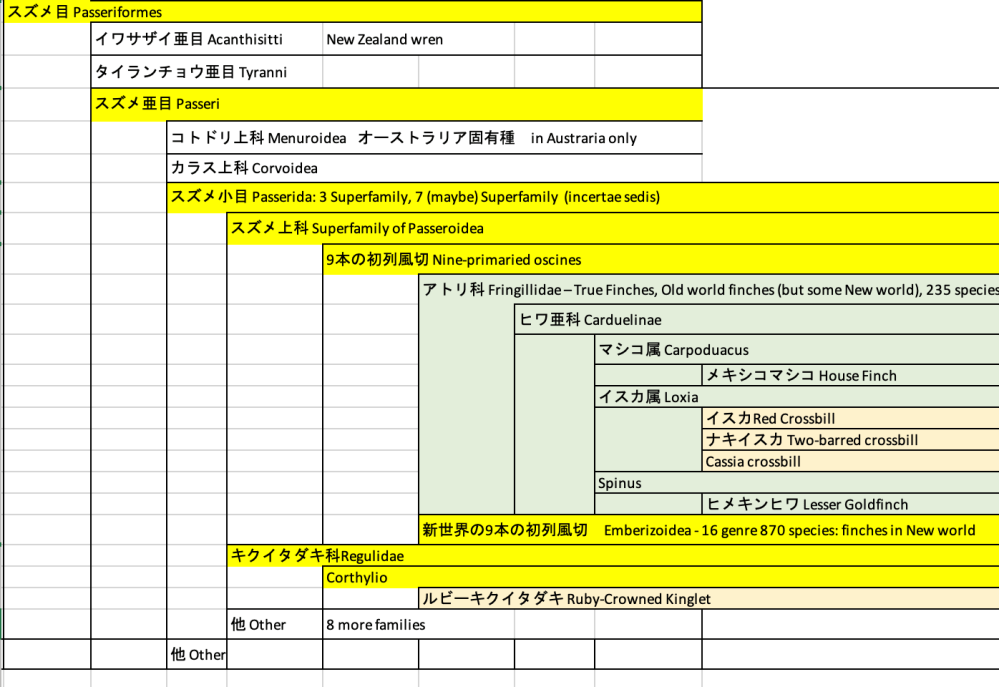
それを話す前に、分類表を訂正しました。下の表の緑色の部分、アトリ科の中にあった3種の鳥を他の科に移動し、新たにイスカ属を加えました。 Before I start talking about it, I have made some corrections to my classification table. In the green part of the table below, I moved three bird species that were in the family Fringillidae to other families and added a new genus, Loxia.
また、前回書いたルビーキクイタダキもキクイタダキ科を追加して収めました。 I also included the Ruby-crowned Kinglet I wrote about last time, by adding Regulidae family to the list.
イスカという鳥は嘴が先端でクロスしているフィンチです。一見、奇形かと思えるようなこんな形状は、実は彼らが生きていく上で成し遂げた適応であると言われています。 The Red Crossbill is a finch with its bill crossed at the tip. This seemingly deformed shape is actually said to be an adaptation they have made in order to survive.
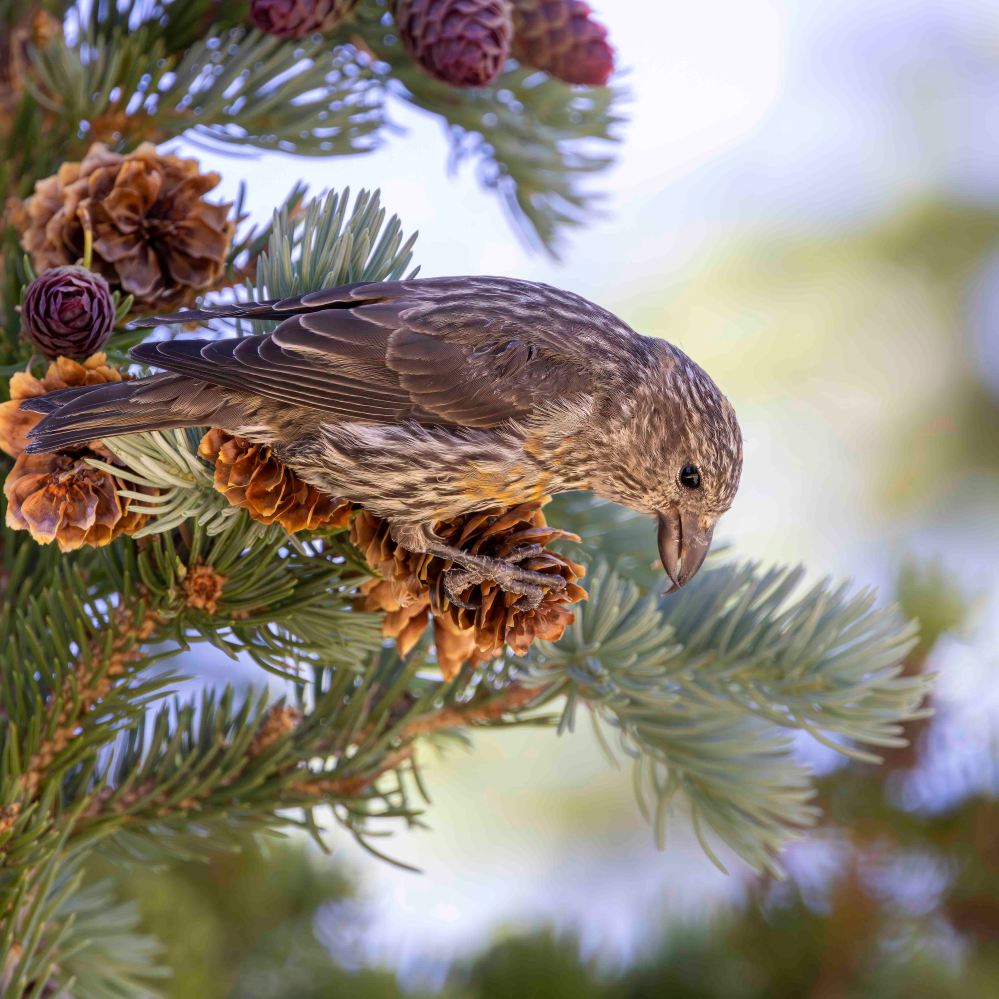
雪が溶けてようやく暖かくなってきた頃の6月、シーダーブレイクス国定公園では幼鳥の鳴き声がそこかしこから聞こえてきて賑やかでした。 In June, when the snow had melted and the weather was finally warming up, Cedar Breaks National Monument was buzzing with the sounds of young birds everywhere.
遅い春の到来に鳥たちだけでなく、私たちもただ歩いているだけで楽しくなりました。そんな時に、初めてイスカに出会いました。 The late arrival of spring made not only the birds, but also us, happy to just walk around. It was during this time that we first encountered a Red Crossbill.
幸い、まだ経験値があまりない幼鳥は、私たちが歩いていても種子を食べることに夢中で即座に飛び去ることはしません。 Fortunately, the young birds, which do not yet have much experience, were too preoccupied with eating seeds that they did not instantly fly away when we walked by.
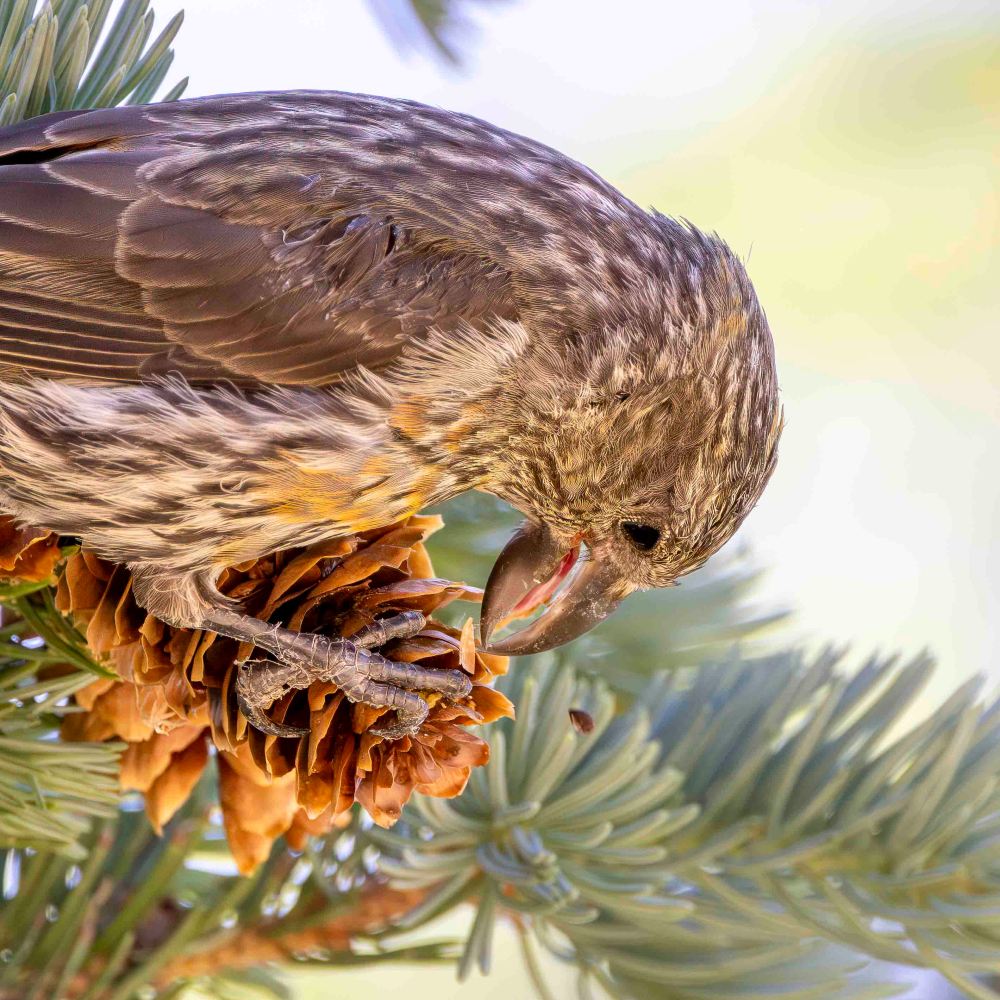
この嘴の形状が松笠の奥にある種をうまく取り出すことを容易にしているということです。 The shape of this beak allows the seeds to be successfully extracted from deep within the pine cone.
嘴がクロスしている鳥は全世界で6種、それらがイスカ属に分類されています。北米では3種です。その中でも注目したいのはカシアクロスビル (Cassia Crossbill) です。つい最近まで赤いイスカの中に分類されていましたが、独立しました。この鳥はアイダホ州のカシア郡という狭い地域にしか生息していません。 There are six species of birds with crossed bills worldwide, and they are classified in the genus Loxia. In North America, there are three species. The most notable of these is the Cassia Crossbill. Until recently, it was classified within the Red Crossbill, but became an independent species. The fact is that this bird is found only in a small area in Cassia county, Idaho.
なぜか? Why?
ここには高熱でないと開花しない松ぼっくりを持つ針葉樹林, Lodgepole pine, があるからです。他の鳥やリスなどが諦めても、カシアクロスビルだけは曲がった嘴を使って器用に種を取り出すことができるんですね。まさに独り占め状態なので、他の場所に食べ物を探しにいく必要がないというわけです。 The reason is that here they have a coniferous forest, Lodgepole pine, with pine cones that will only open with high heat. So only the Cassia Crossbill can dexterously extract the seeds using its curved bill, even if other birds and squirrels give up. They have the whole place to themselves, so they don’t have to go looking for food elsewhere.
カシアクロスビルについて、アイダホ州のアイダホバードのウェブサイトに詳しく載っています。いつか探しに行かなければ! You can read more about Cassia Crossbill on the Idaho Bird website. We must go there and look for it someday! https://idahobirds.net/birding-idaho/cassia-crossbill/
以下、イスカの幼鳥が松笠から種を取り出しているところのビデオです。Below is a video of a juvenile Red Crossbill removing seeds from a pine cone.
 aomi3 now